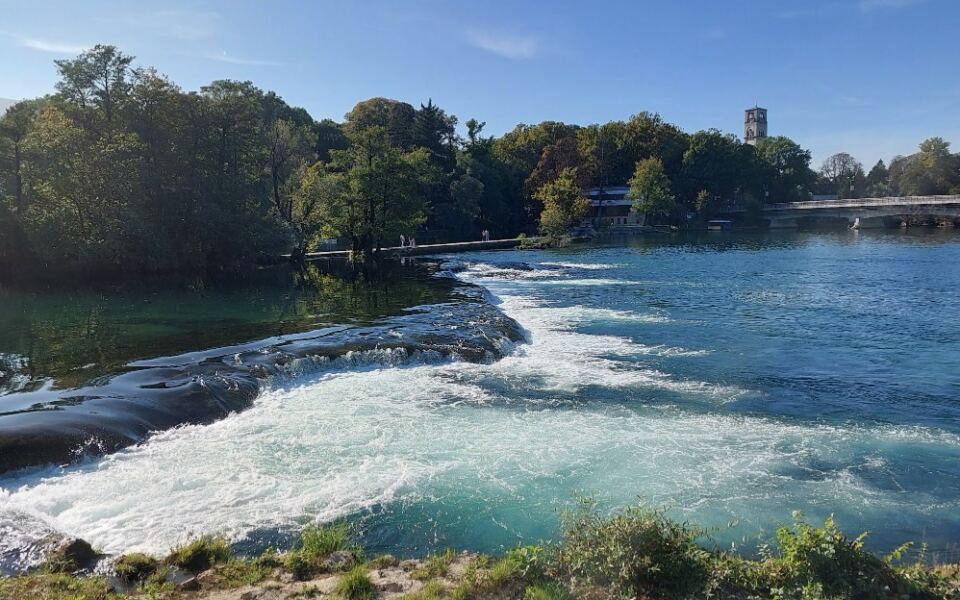
Long before highways and trains, rivers decided where people built their homes. In Europe, many towns still bend, curve, and sparkle around the water that gave them life.
Bridges, cafés, vineyards, and old stone quays all tell the story of a river at work. Come along to meet 14 towns where the water is the real star of the show.
Český Krumlov, Czechia
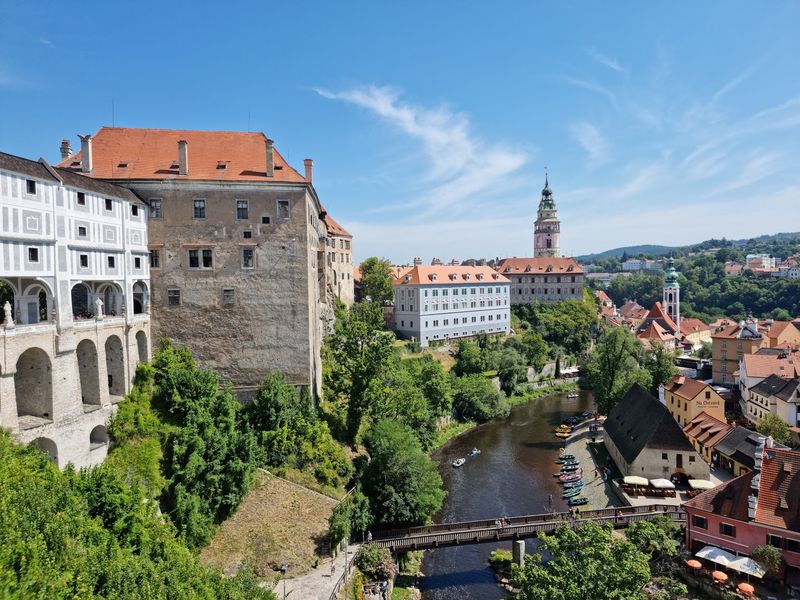
Picture a river so fond of a town that it hugs it in a tight loop. That is the Vltava at Český Krumlov, wrapping the old center below a giant castle.
From the castle tower, the whole layout makes sense at a glance.
UNESCO points to the river bend, the rocky castle hill, and the surrounding land as key parts of the town’s design. Houses, bridges, and narrow lanes all follow the curve of the water.
Walking here feels a bit like strolling along the edge of a horseshoe.
In warm months, the river turns into a playground. Rafts and canoes drift past, and paddlers wave at diners on the riverside terraces.
Bring a dry bag if you want to join in, because splashes are part of the deal.
For the best view, climb up to the castle gardens and look down at the red rooftops circled by green water. Go early in the morning, when mist often floats over the Vltava and the crowds are still asleep.
Afterward, wander the lanes slowly and let the river guide you.
Mostar, Bosnia and Herzegovina
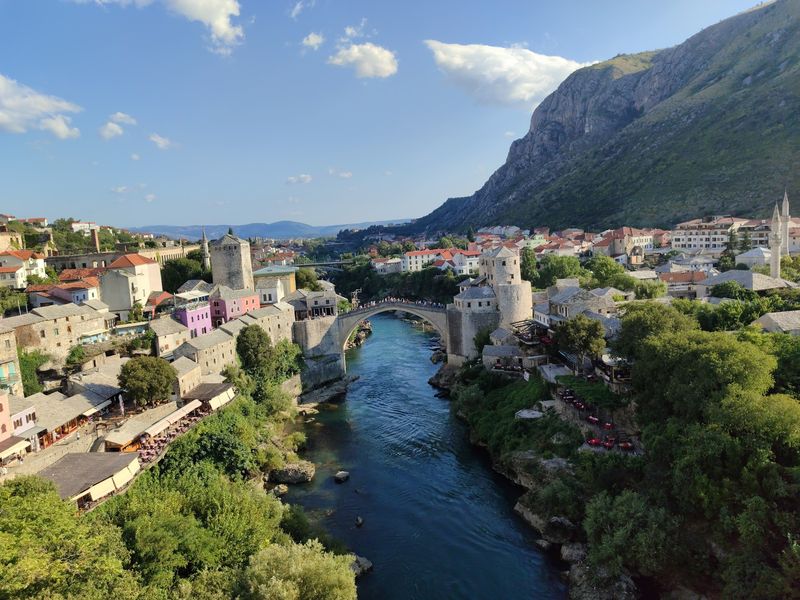
The name Mostar literally comes from the bridge keepers, called mostari, who once guarded the crossing. So yes, this town was named after a job at a bridge.
That tells you everything about how the Neretva shaped its story.
The famous Stari Most arches high above the water between steep stone banks. It links the old neighborhoods on both sides and gives the town its most photographed view.
UNESCO describes the old town as a place shaped by the meeting of river landscape and human creativity.
Cafés and terraces face the water, so even a coffee comes with a front-row seat. Cobbled streets lead down to the banks, where the river glows a bright turquoise.
Sit for a while and watch the light shift across the stone.
In summer, local divers leap from the bridge into the cold river below. It is a long tradition, and crowds gather to cheer.
If you visit, stay a safe distance from the edge and enjoy the show from the riverbank.
Regensburg, Germany
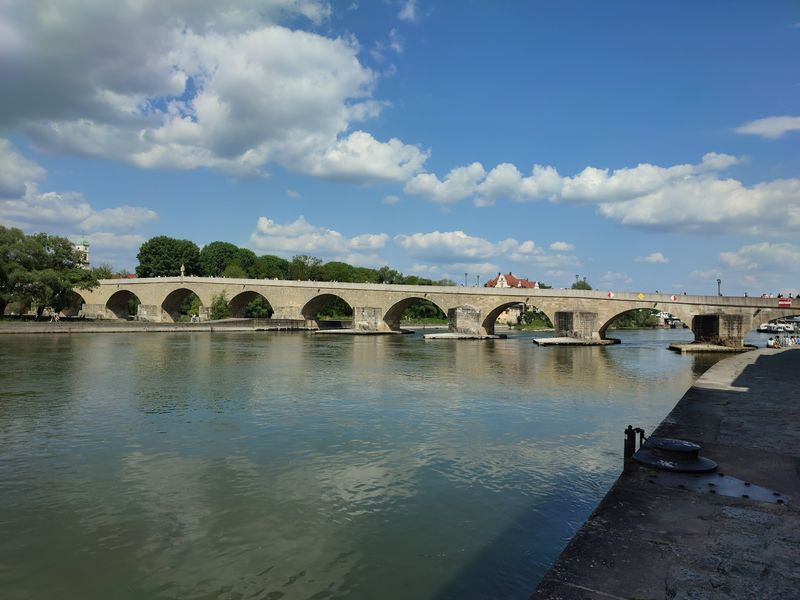
Nine hundred years is a long time for a bridge to keep working. Regensburg’s Stone Bridge, built in the 12th century, still carries people across the Danube.
It once helped make the city a medieval trading powerhouse.
The river linked Regensburg to merchants far away, and wealth followed the boats. Today the historic area includes the old center, some Danube islands, and the district of Stadtamhof across the water.
UNESCO highlights all of them as part of the city’s story.
These days the Danube is where locals unwind. Riverside paths are perfect for a slow walk, and beer gardens near the water are popular on sunny evenings.
Look back from the bridge and the cathedral towers rise over the rooftops.
A handy tip is to cross the bridge on foot and explore Stadtamhof, where the view back toward the old town is superb. Try a sausage from a riverside kitchen along the way, because the city is rather proud of them.
Porto, Portugal
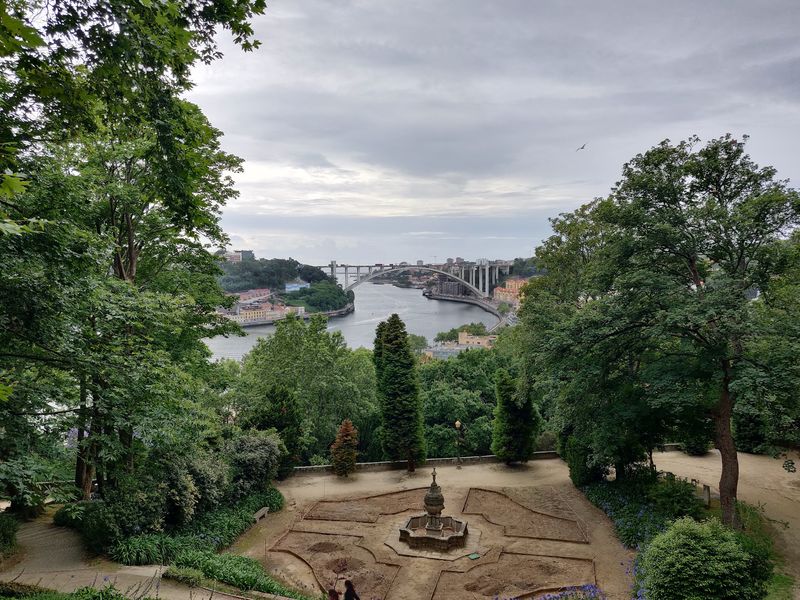
Smell the grilled sardines, hear the gulls, and watch the sun turn the Douro gold. That is a normal evening in Porto.
The river is the soul of this hilly city.
Steep streets tumble down to Ribeira, where bright houses, small restaurants, and old warehouses line the water. Across the river in Vila Nova de Gaia, port-wine lodges recall the days when barrels floated down from the vineyards upstream.
Many of them still offer tastings.
Traditional boats, tall bridges, and relaxed cruises keep the Douro busy. A short river trip shows the city from a fresh angle, with terraces climbing the hills on both sides.
Kids and grown-ups alike enjoy it.
For the best photo, walk across the upper deck of the big iron bridge and look back at Ribeira. Wear comfortable shoes, because every route in Porto seems to go uphill.
Sunset is the star hour here.
Ljubljana, Slovenia
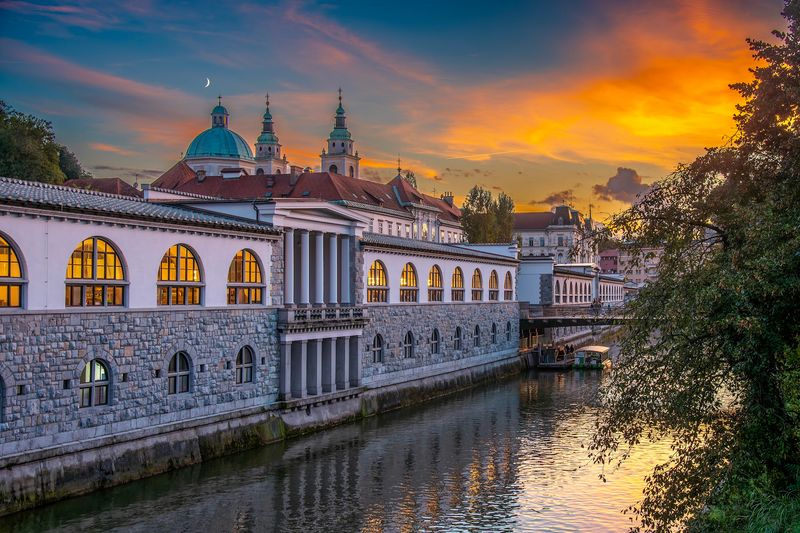
Here is a town where the river doubles as the living room. The Ljubljanica winds through the center under a parade of unique bridges.
Along the banks, cafés set out tables almost to the water’s edge.
Slovenia’s tourism organization highlights how rivers and towns are woven together, and Ljubljana is a perfect example. Architect Jože Plečnik reshaped the waterfront in the 20th century.
His promenades, bridges, and public spaces made the riverside feel like one connected stage.
Locals use the embankments for meeting friends, shopping at markets, and simply sitting in the sun. Small boats glide by, and the whole scene stays friendly and car-free.
It is easy to lose an afternoon here.
Try an evening stroll when the lights come on and reflect in the water. Order a drink at a riverside table and watch the town go by.
Do not miss the Triple Bridge, which is a fine spot to start.
Bamberg, Germany
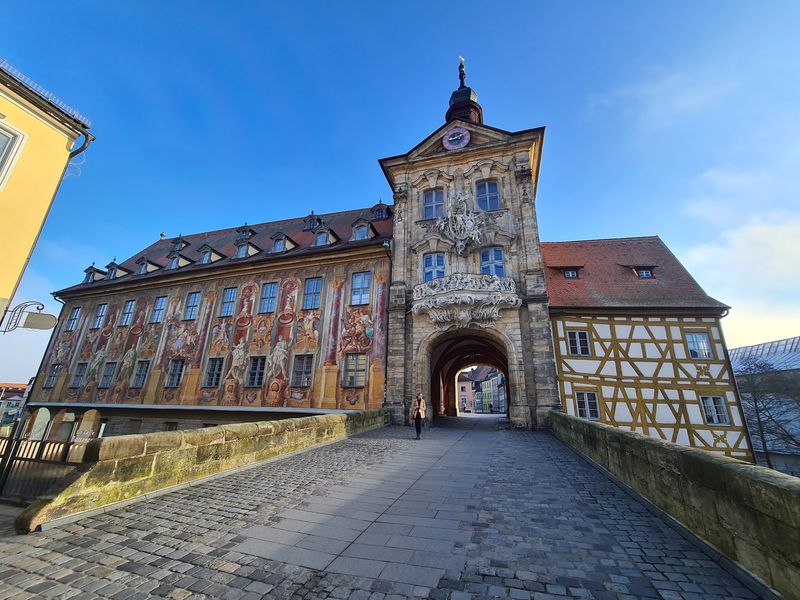
A town hall sitting right in the middle of a river sounds like a mistake, but in Bamberg it is a masterpiece. The Old Town Hall stands on an island in the Regnitz, reached by two bridges.
Painted walls make it look almost cheerful.
Just nearby, the old fishermen’s quarter known as Little Venice lines the water with tiny historic houses. Their balconies hang over the river, and flowers spill from the windows.
It is a favorite photo spot for good reason.
UNESCO calls Bamberg an exceptionally well-preserved Central European town, one where the medieval layout links city life with farming and trade. The river arms are a big part of that pattern.
To see it properly, wander along the riverside paths and cross a few bridges. Each one gives you a new angle on rooftops and water.
Finish with a local smoked beer, a regional specialty that tastes a bit like a campfire in a glass.
Annecy, France
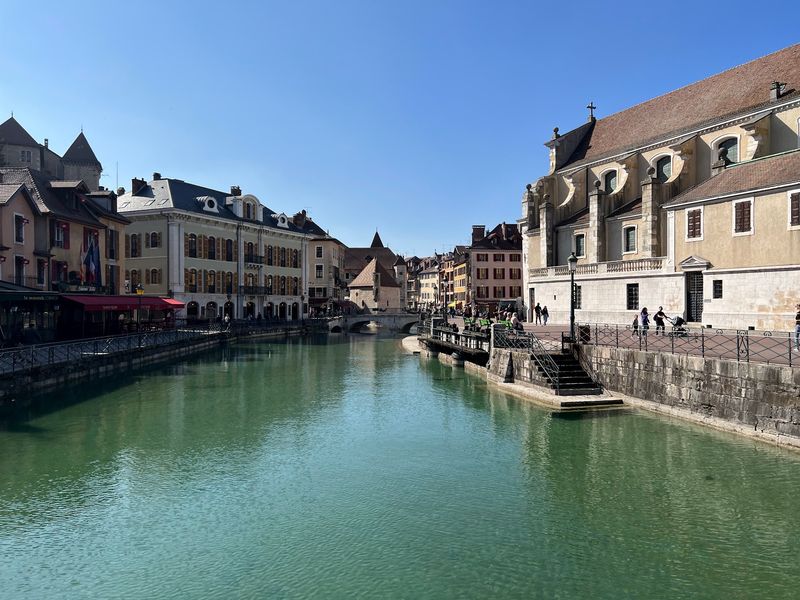
Most people come to Annecy for the lake, yet the little river that leaves it steals the show. The Thiou carries water from Lake Annecy through a maze of canals in the old town.
Pastel buildings and flower-draped bridges crowd the edges.
Long ago, mills and workshops used this flowing water for power. Today the canals are lined with arcades, cafés, and shops, and the center is pleasantly walkable.
You can circle the whole area in an hour without noticing the time.
The Palais de l’Île sits right in the channel, a stone building that looks like it is sailing downstream. It is one of the most photographed spots in town.
Try snapping it from a nearby bridge at dawn, when it is quiet.
Look up as you stroll, because the Alps hover behind the rooftops. Pick up a pastry, find a canal-side bench, and let the day slow down.
Dinant, Belgium
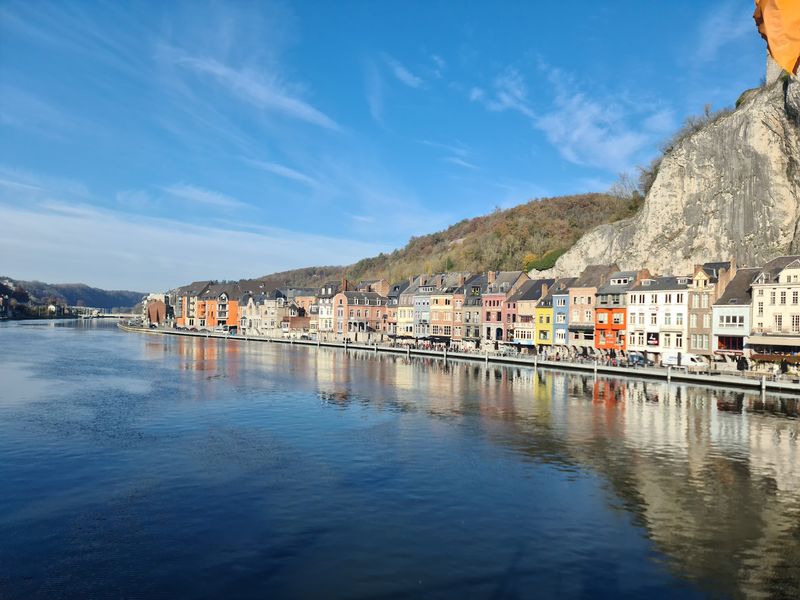
Dinant looks like it got squeezed into a tight spot, and it did. A narrow strip of land sits between the Meuse River and steep limestone cliffs.
The result is one of the most recognizable skylines in Belgium.
Colorful houses line the water, while the Collegiate Church of Notre Dame and the citadel tower above. The church’s bulb-shaped spire is easy to spot from far away.
Bridges matter a lot here because the river splits the town in two.
Historically, the Meuse connected Dinant with busy trade routes. Now it is more about fun.
Boats cruise along the water, riders follow the cycling paths, and terraces fill up on sunny days.
For the classic view, stand on the far bank and look back at the cliffs, church, and river all together. If you have energy, take the cable car up to the citadel for a bird’s-eye look.
Then treat yourself to the local ginger cookies called couques.
Passau, Germany
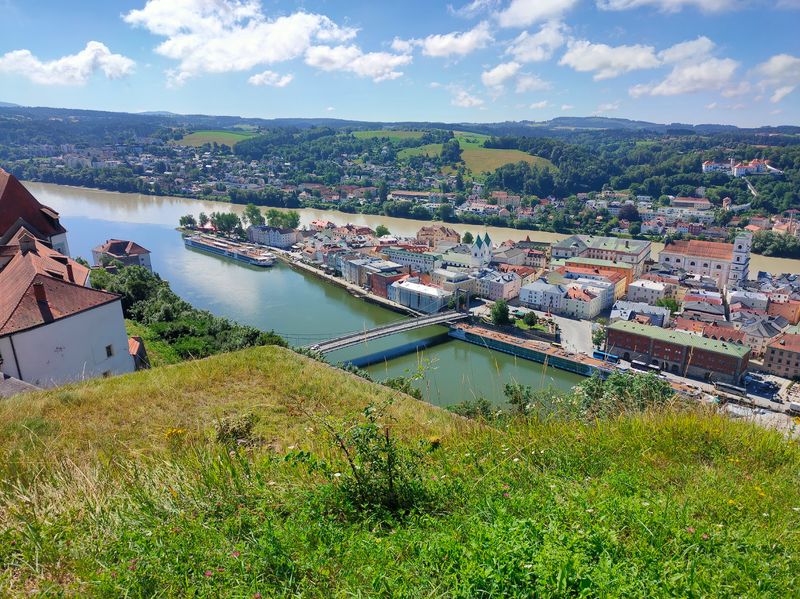
Three rivers walk into a town, and only one leaves with its original color. That is Passau, where the Danube, Inn, and Ilz meet.
The waters flow side by side for a while, each showing a different shade.
The old town sits on a narrow peninsula between them. Baroque towers and church domes rise above the rooftops, and almost every street ends at the water.
From elevated viewpoints, you can watch the rivers blend below.
For centuries, the rivers carried goods and made Passau a place of strategic importance. Today, cruise ships stop here, and riverside paths are popular with walkers and cyclists.
Cafés on the banks keep things lively.
Walk out to the point where the waters meet and take a moment to look around. Then climb up to the fortress for a wide view.
A rainy day is not a problem, since the river mist adds a mood all its own.
Bernkastel-Kues, Germany
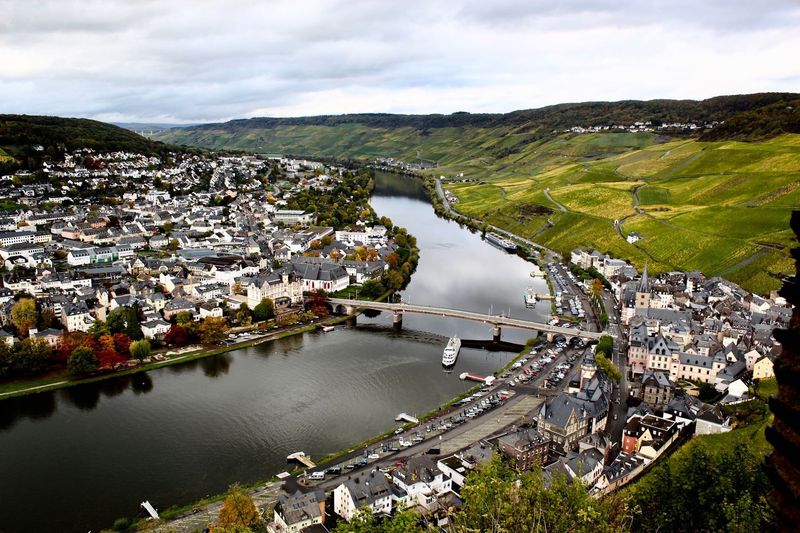
Steep vineyards, a winding river, and a town full of timber-framed houses make Bernkastel-Kues look like a storybook page. The Moselle is the heart of it all.
Without the river, the grapes and the town would not be here.
Vines cling to extremely steep slopes above the water. Growers have worked these hillsides for centuries, and the river helped carry their wine to faraway buyers.
Even now, wine is the main business and the main pastime.
Down by the water, promenades invite you to stroll, and boats offer trips along the valley. Cycling paths follow the river for miles, so a rented bike is a smart choice.
The route is mostly flat, which is a bonus.
The half-timbered market square adds charm, but the real memory is the view of river and vines together. Try a local Riesling at a riverside spot and enjoy the scenery.
Visit in autumn, when the hills turn golden.
Tavira, Portugal
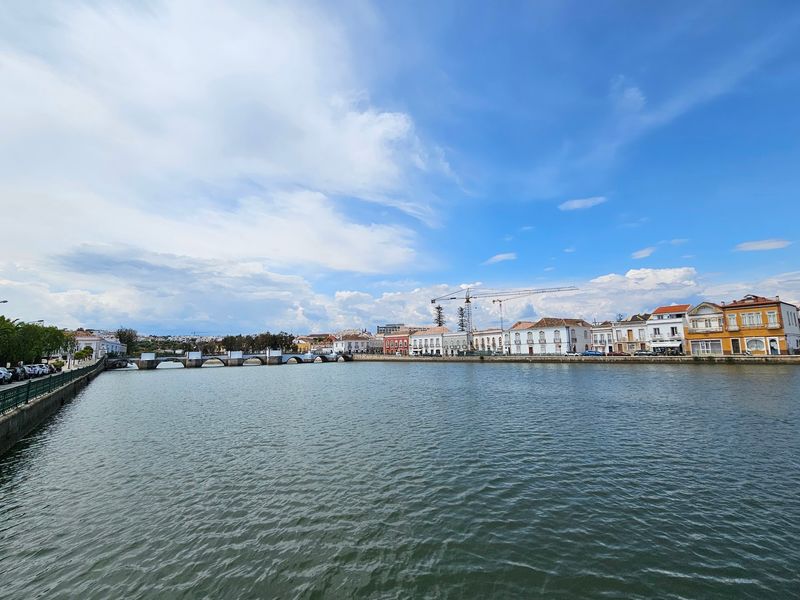
Slow down, because Tavira is not in a hurry. The Gilão River drifts through the middle of town on its way to the Ria Formosa lagoons.
Whitewashed houses and church towers rise on both banks.
Several bridges tie the two sides together, including an old central crossing that is a favorite meeting spot. Fishing and sea trade once shaped the local economy.
The riverfront is still where people gather, whether for coffee, a market stroll, or a chat.
Boats leave from the waterfront heading downstream to the coast and the barrier islands. A ride across the lagoon takes you to sandy beaches that feel far from the crowds.
Pack sunscreen and a hat, since shade is scarce.
Back in town, a seat at a riverside café is the best way to end the day. Order grilled fish, watch the light fade on the tiled facades, and listen to the quiet.
Tavira offers a gentler, more intimate Portugal.
Trebinje, Bosnia and Herzegovina
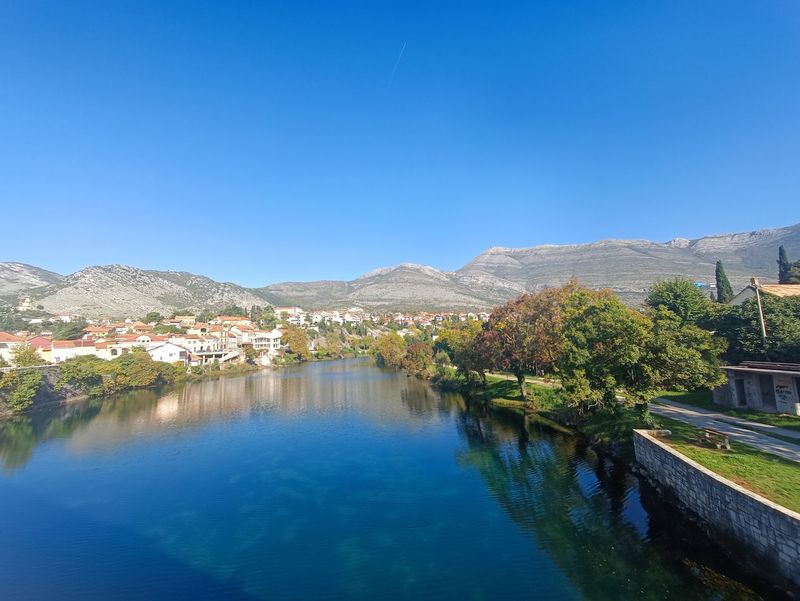
The land around Trebinje is dry and sun-baked, so the green ribbon of the Trebišnjica stands out like a cool drink. The river flows broad and calm, and the town’s mood follows it.
Nobody seems rushed here.
The Arslanagić Bridge is the best-known link between water and architecture. Its stone arches are old and graceful, and visitors often stop to take photos.
Nearby, tree-lined walks and cafés keep daily life close to the river.
Bosnia and Herzegovina’s tourism authority lists Trebinje among river towns where the waterside becomes part of the visitor experience. That fits well.
Locals stroll, chat, and relax along the banks from morning until late evening.
Rather than splitting the town, the river works as a shared green space. A good plan is to wander from the bridge along the promenade, then climb a nearby hill for the view.
Bring a hat in summer, and plan a long, lazy coffee stop beneath the trees.
Ghent, Belgium
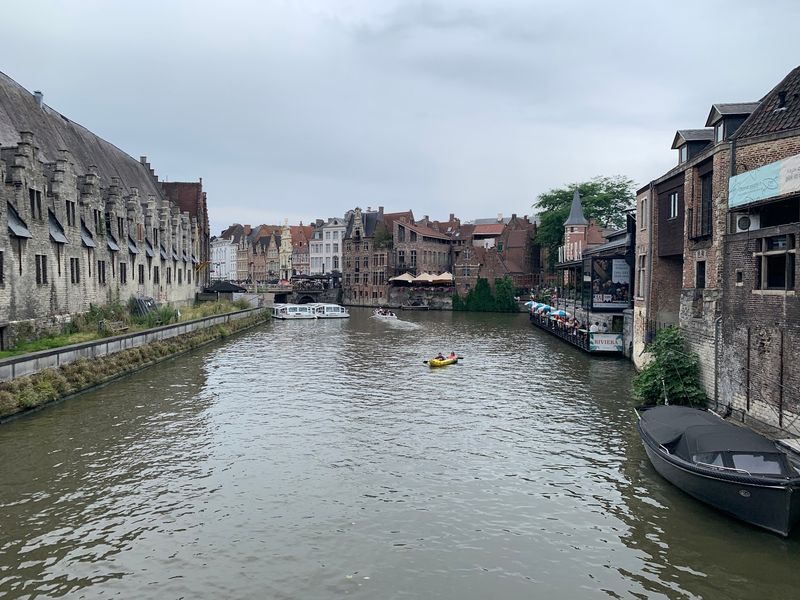
Medieval merchants would hardly believe their loading docks are now party central. In Ghent, the Scheldt and Leie rivers meet, and that spot helped the city grow rich centuries ago.
Warehouses and guild houses still line Graslei and Korenlei.
Back then, goods came off boats right at these quays. Now the same stone edges are packed with terraces, students, and locals enjoying the sun.
It is a lively scene, especially on warm afternoons.
Boats slide under old bridges, and a canal tour gives you a different view of church towers and carved facades. From water level, the details seem much closer.
The guides often share the best local stories too.
If you want a quiet moment, visit early in the morning when the quays are nearly empty. Then come back at dusk, when lights glow on the water.
Ghent proves that a working riverfront can become a public living space and still keep its past.
Bihać, Bosnia and Herzegovina
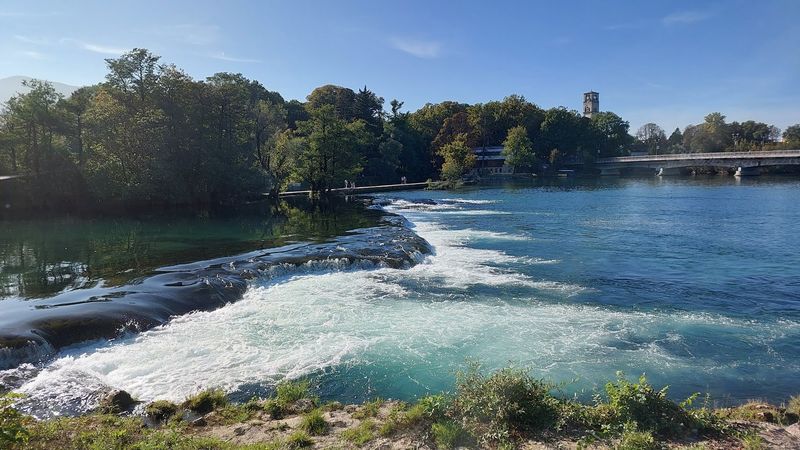
Clear green water rushes right through town, and nobody thinks it is unusual. In Bihać, the Una River is simply part of the day.
It forms islands, bends past parks, and gives residents a cool escape in summer.
Bosnia and Herzegovina’s tourism authority points to Gradska otoka and the central riverside areas as places where the Una feels part of ordinary life. People walk, picnic, and swim here as easily as they might visit a local shop.
The water is so clear that you can often see the pebbles below.
Outside town, the same river runs into Una National Park. There it speeds through rapids and tumbles over big waterfalls.
Rafting and kayaking trips start nearby for those who like adventure.
Start with a gentle walk along the riverbanks in town, then head out to the park for a wilder view. Bring a swimsuit and a towel, and be ready for chilly water.
The link between city and wild river here is hard to forget.
Share this story