Japan moved fast into the modern age, yet a number of towns kept their old streets in surprisingly good shape. Some were busy stops on mountain highways, others were castle towns, canal ports, or fishing villages.
This list covers fifteen places where wooden houses, stone paths, thatched roofs, and waterways still shape daily life. Each stop shows a different side of Japan’s past, so you can pick the style that fits your trip, from mountain trails to quiet island lanes.
Takayama, Gifu Prefecture
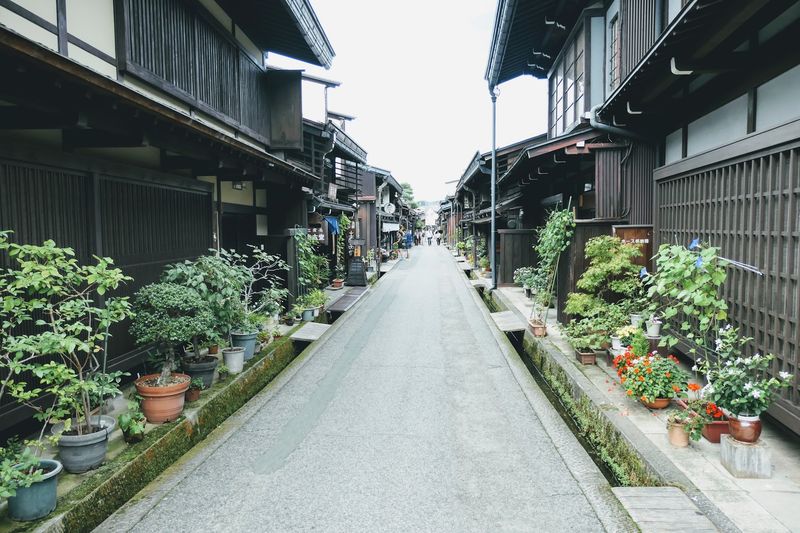
Here is a city where you can step off a modern sidewalk and land in the Edo period. Takayama’s Sanmachi district keeps three main streets lined with dark wooden townhouses, former merchant homes, craft shops, restaurants, and sake breweries.
The Sanmachi, Oshinmachi, and Shimoni-no-machi areas hold enough historic architecture to be designated preservation districts for groups of traditional buildings. That protection is a big reason the old look has lasted.
The town grew as a regional center for merchants and skilled craftspeople during the Edo period, and you can still see that heritage around the old commercial center. It is not a reconstructed historical park.
Sanmachi is part of the working city, so you can walk from present-day Takayama straight into streets that look much older.
Because the district sits inside the town itself, it is easy to explore on foot. Plan to wander slowly, peek into the craft shops, and notice how the dark timber fronts line up along each lane.
Tsumago, Nagano Prefecture
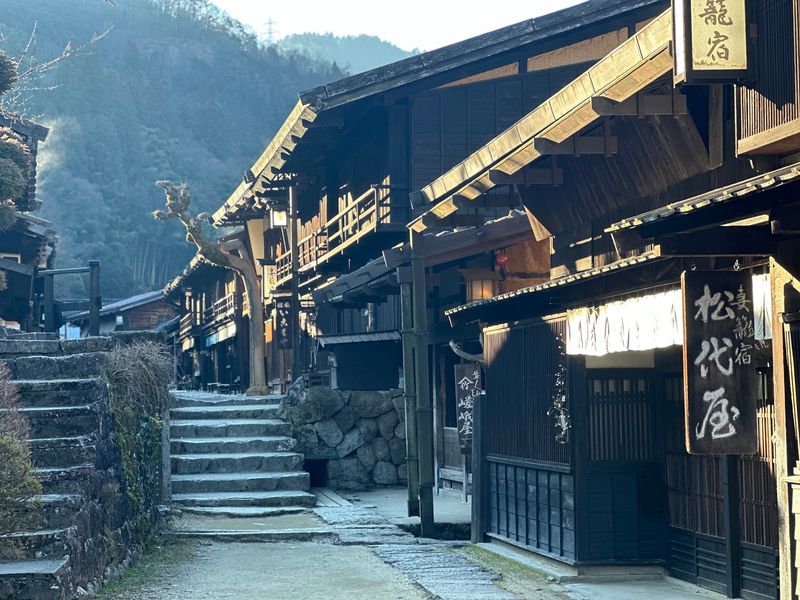
Back in the 1960s, the people of Tsumago made a bold choice: protect the town instead of modernizing it. That early effort is why the place looks the way it does today.
Tsumago was the 42nd station on the Nakasendo, the historic highway connecting Kyoto and Edo. Its main street is still lined with traditional wooden buildings, inns, shops, and homes, making it one of the most cohesive surviving post-town landscapes in Japan.
To protect the view, cars are restricted on the main street during the day and utility lines are concealed. The result is a settlement where the shape and scale of an Edo-period post town are unusually easy to understand.
Hikers have an extra option here. You can walk the preserved section of the Nakasendo between Tsumago and neighboring Magome, which turns a simple town visit into a trail day with history underfoot.
Magome, Gifu Prefecture
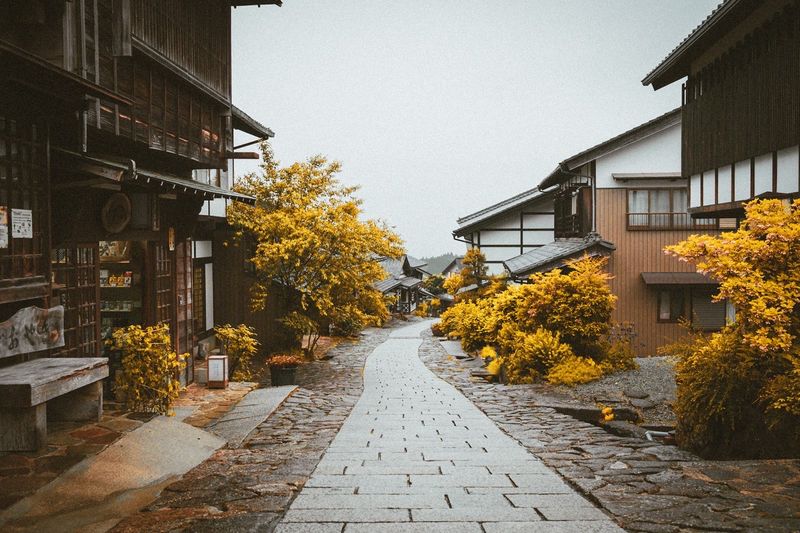
Hills do most of the talking in Magome. The main street is steep and stone-paved, and wooden buildings climb the slope on both sides, which gives the town a different feel from its Nakasendo neighbor Tsumago.
Shops, small museums, restaurants, and traditional inns fill the historic center. The mountain location helped shape the compact settlement visitors see now.
Magome once housed travelers moving between Kyoto and Edo, so the layout still reflects the needs of people on the road. Japan’s national tourism organization describes both Magome and Tsumago as preserved post towns.
The trail connecting the two remains one of the most popular ways to experience the old Nakasendo on foot. If you walk it, think about which direction suits you.
Starting at the top of Magome means a mostly gentler start, while the climb waits for the way back. Either way, wear comfortable shoes for the stone paving.
Narai, Nagano Prefecture
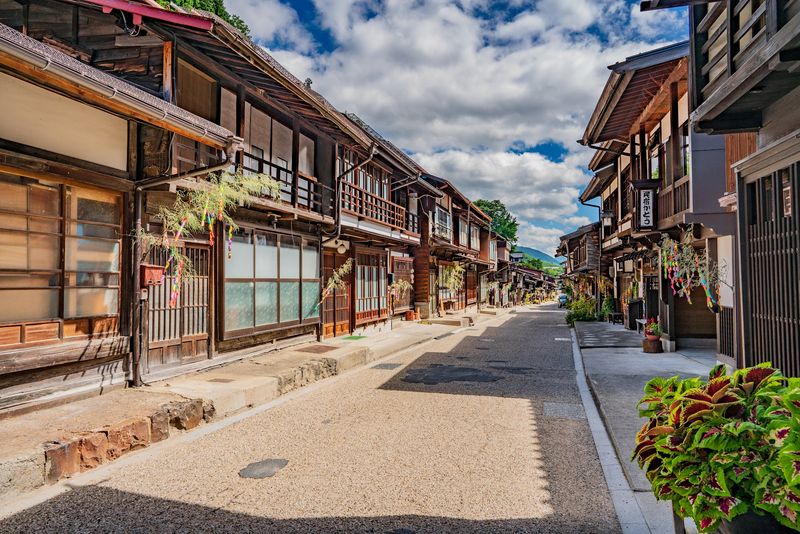
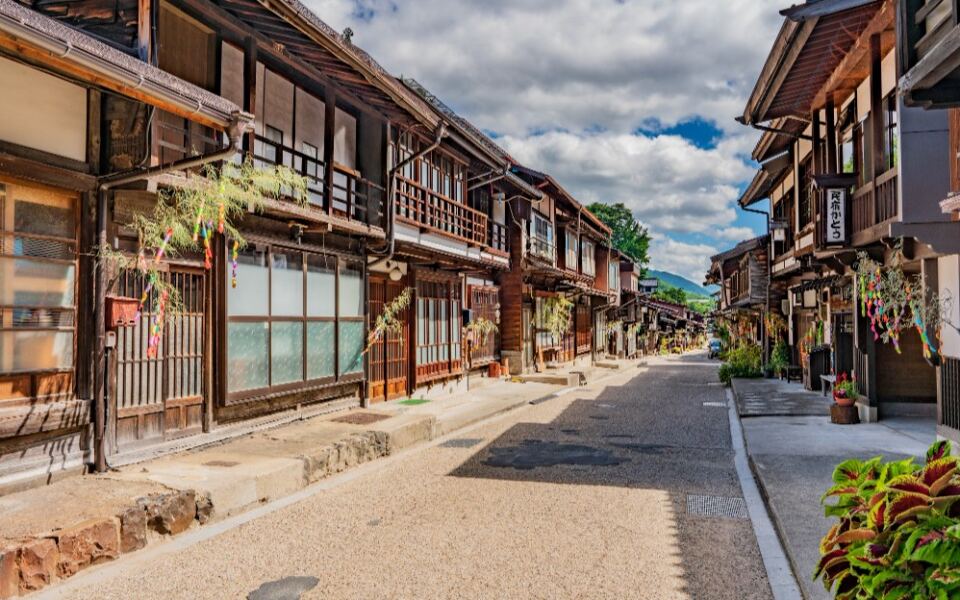
About a kilometer of old street is a lot by post-town standards. Narai’s historic main street stretches roughly that far, making it longer than many other preserved districts in the Kiso Valley.
Farther north along the Nakasendo, the town was one of the route’s post towns and grew into a substantial settlement serving travelers crossing the mountains. Traditional wooden buildings line both sides of the road.
Inns, shops, residences, and small businesses keep the scale of the old settlement. Walking the full length gives you a real sense of how big a busy post town could be.
The Japan National Tourism Organization specifically identifies Narai as remarkably well preserved, and it highlights the atmosphere created when lanterns illuminate the old buildings in the evening. If you can, stay long enough to see the street change after dark, since the lantern light is one of the town’s noted features.
Ouchi-juku, Fukushima Prefecture
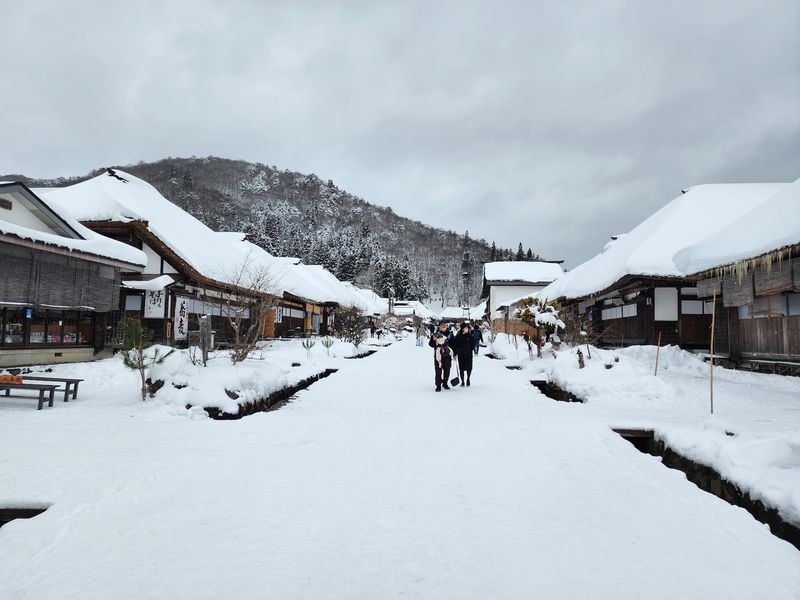
Thatched roofs set Ouchi-juku apart from Japan’s wooden merchant towns. The rows of steep roofs look more like a mountain village than a city street.
The settlement was once an Edo-period post town on a route linking Aizu with Nikko, providing lodging and services to travelers. Many of those traditional buildings remain grouped along the broad central road.
The area is officially protected as a nationally designated group of traditional buildings. Former houses now hold restaurants, souvenir shops, and other visitor businesses, and some traditional lodging remains available if you want to stay overnight.
Try to find a spot above the village for a wider look. From up there you can see how consistently the old roofs and the street layout have been preserved, which is harder to notice from the road.
It makes a good stop for anyone curious about rural architecture.
Kakunodate, Akita Prefecture
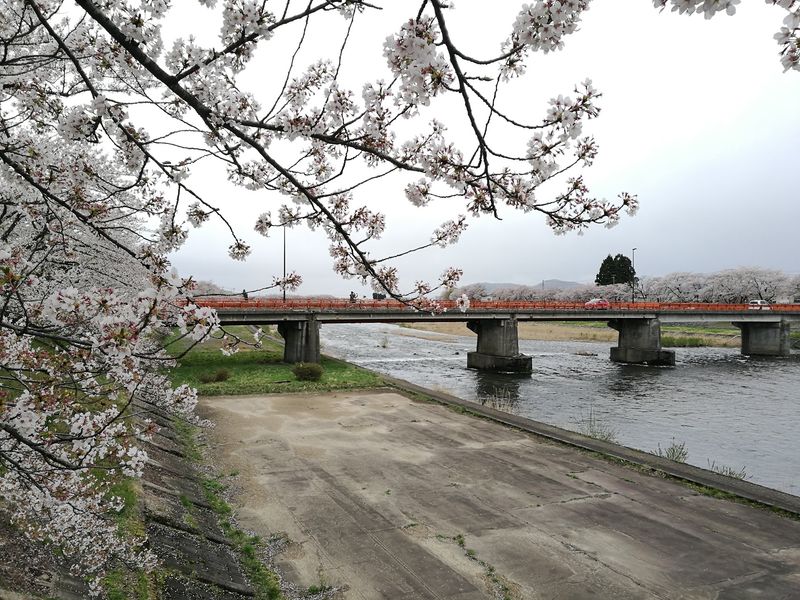
Around 80 samurai families once lived in Kakunodate’s warrior district, and their neighborhood is still the heart of the town. Wide streets are bordered by traditional gates, dark wooden fences, large trees, and former samurai residences.
Kakunodate developed as a castle town in the early 17th century. That history explains the orderly layout, where the samurai quarter was planned as its own area.
Several historic homes remain open to visitors, including the Aoyagi and Ishiguro residences. Others contribute to the streetscape from behind their walls and gates, so even a simple stroll feels like a tour.
The surviving district is considered one of Japan’s best-preserved areas associated with samurai life. Rows of weeping cherry trees add another distinctive element to the historic avenues, which makes spring a natural time to think about visiting.
Kurashiki, Okayama Prefecture
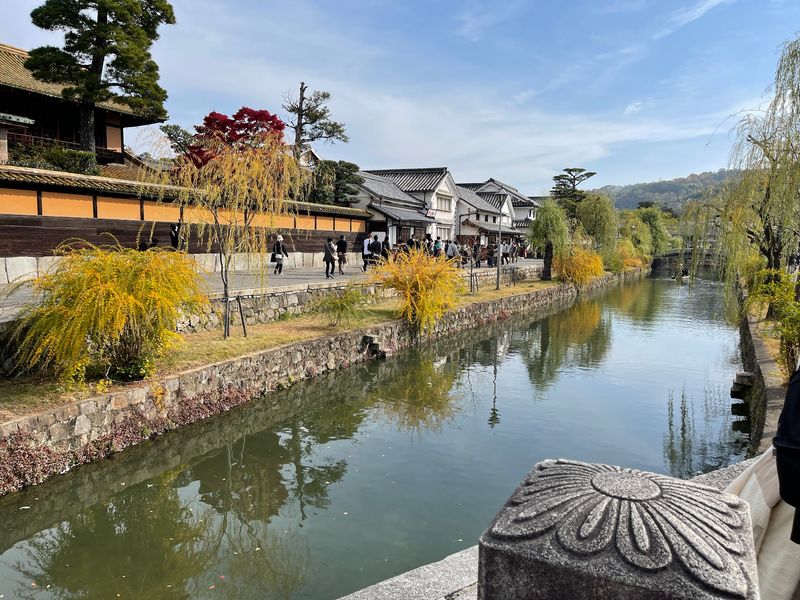
Swap the mountain post-town scene for canals and white plaster walls, and you have Kurashiki. The Bikan Historical Quarter features black-and-white storehouses and former merchant properties beside the water.
The area developed as an important commercial center, and many surviving buildings date from the Edo and Meiji periods. Historic warehouses and homes now contain museums, cafes, shops, and accommodations, yet the architecture stays closely tied to the district’s trading past.
The willow-lined Kurashiki River and stone bridges give the neighborhood its recognizable appearance. Plan some time just to follow the canal and look at the building details.
Access is a real advantage here. The quarter is only about a 10-minute walk from Kurashiki Station, so it is one of the easiest preserved townscapes on this list to reach.
That makes it a handy choice if you are short on time or traveling without a car.
Hagi, Yamaguchi Prefecture
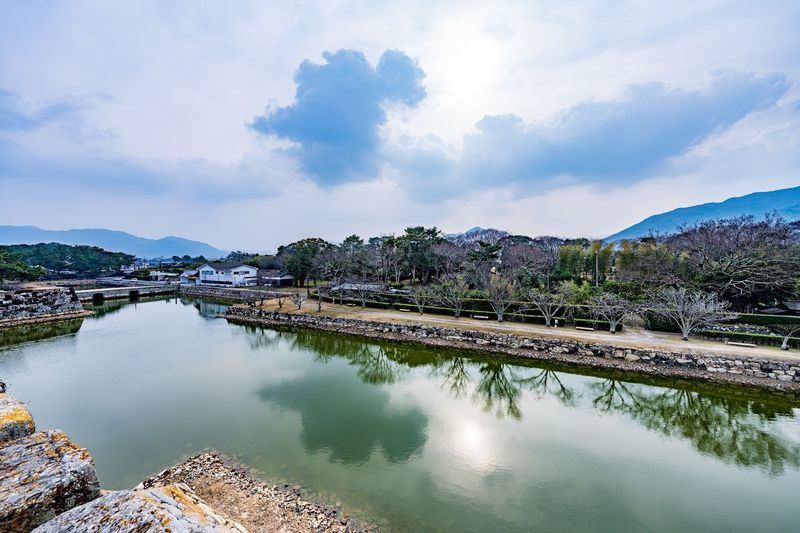
Many former castle towns lost their old street patterns long ago. Hagi kept not only historic houses but parts of the Edo-period layout itself.
Narrow lanes run between white walls, former samurai properties, merchant residences, and gardens, where citrus trees often appear above the walls. The historic center includes streets such as Kikuya Yokocho and Edoya Yokocho, along with surviving residences open to the public.
The layout is preserved so well that you can still explore the old castle town using maps based on the Edo-period street plan. That makes it a fun place to navigate with a historic map in hand.
Part of Hagi’s historic landscape is also included within the UNESCO World Heritage listing connected to the Sites of Japan’s Meiji Industrial Revolution. Give yourself time to wander without a strict schedule, since the lanes reward slow walking.
Sawara, Chiba Prefecture
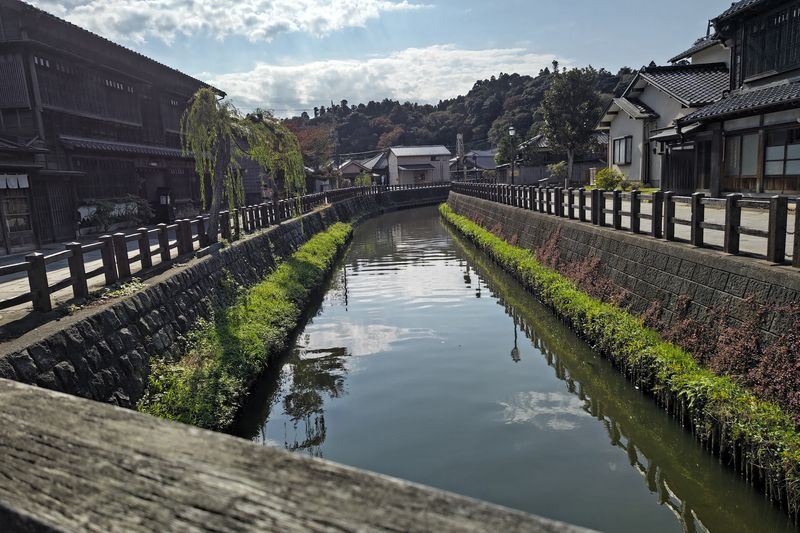
Nicknamed “Little Edo,” Sawara gives you an old merchant town without a long trip from Tokyo or Narita. That makes it unusually easy to fit into a trip.
The town flourished during the Edo period as a center for transporting rice and other goods by water. The canals that supported that economy remain central to the historic district.
Traditional merchant houses, warehouses, longstanding businesses, bridges, and waterways line the old center. Some businesses trace their history back generations, so Sawara feels like a living commercial district rather than a static display.
Its historic area has changed relatively little compared with many former Edo-period trading towns, which is how it earned its nickname. Take a slow walk along the water and pay attention to the shopfronts, since many of them are still in daily use.
Uchiko, Ehime Prefecture
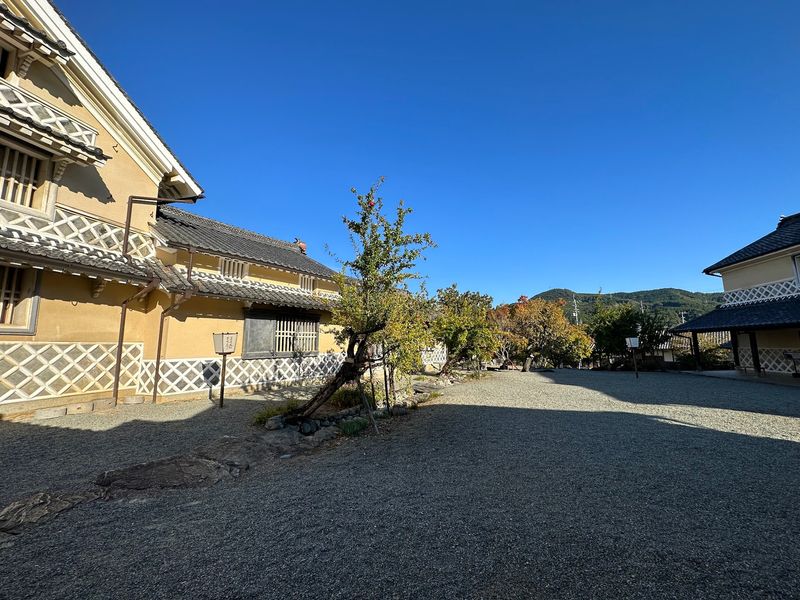
Wax, paper, and raw silk built Uchiko’s fortune, and the wealth they created is still easy to see. The Yokaichi-Gokoku preservation district holds the proof.
For roughly 600 meters, the historic street is lined with traditional homes and former merchant buildings, many distinguished by pale yellow plaster. Historic residences associated with wealthy wax merchants survive alongside working homes and businesses.
What stands out is that many structures have stayed inhabited rather than being moved into an open-air museum. People still live and work along the street, which keeps it from feeling staged.
Local residents have played a major role in maintaining the district’s cohesive appearance. The street is short enough to walk in a relaxed visit, so it pairs well with other stops in Ehime Prefecture.
Imai-cho, Nara Prefecture
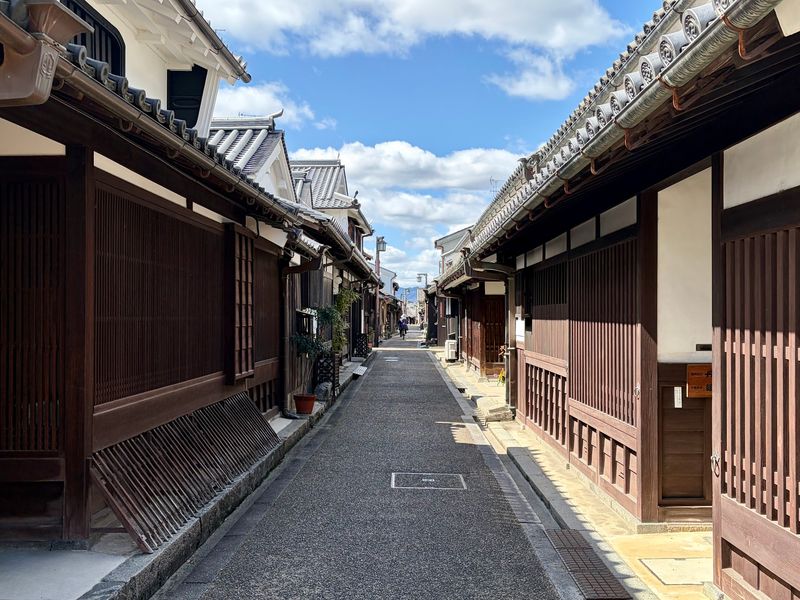
More than 500 traditional-style buildings remain inside Imai-cho, which is a remarkable number for one settlement. That scale makes it one of Japan’s largest preservation districts for traditional architecture.
It may be less internationally famous than Takayama or the Nakasendo towns, but the surviving architecture is exceptional. The community sits in Kashihara and began as a temple town before becoming a wealthy merchant center during the Edo period.
Wooden residences, old shops, sake-related businesses, narrow lanes, and historic townhouses remain densely grouped together. You get a feeling of continuous old streets rather than a single showpiece lane.
Modern utility lines have also been moved underground in parts of the district, which helps preserve the historic look. It is a good pick if you prefer quieter places and want to see how large a preserved neighborhood can be.
Tsuwano, Shimane Prefecture
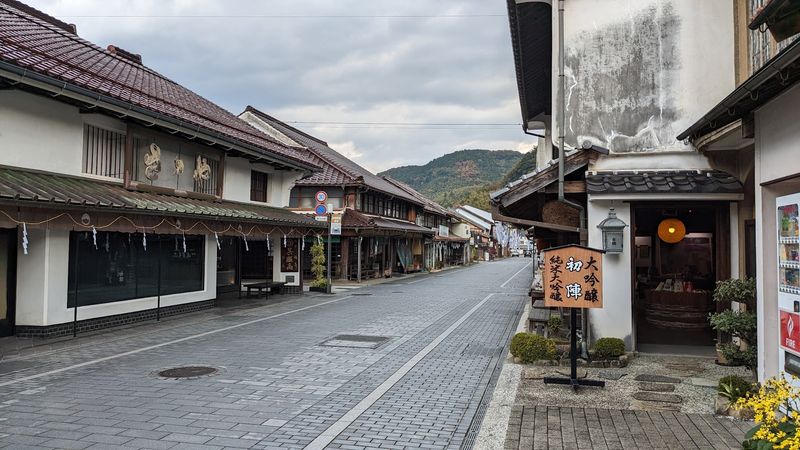
Koi swim right beside the street in Tsuwano. Small canals run along Tonomachi-dori, and the colorful fish have become one of the town’s best-known features.
The street preserves elements of both merchant and samurai life. Traditional buildings with dark timber fronts and white plaster stand beside the narrow waterways, while sake breweries and traditional sweet shops still operate from historic-looking storefronts.
Moving toward the former castle area, the streetscape changes from commercial properties to buildings and spaces associated with the samurai who once governed the town. That shift lets you read the old social layout as you walk.
Together, the canals and old architecture create one of western Japan’s most recognizable historic town scenes. It is a compact area, so a relaxed visit works well, with time to stop at the shops.
Omihachiman, Shiga Prefecture
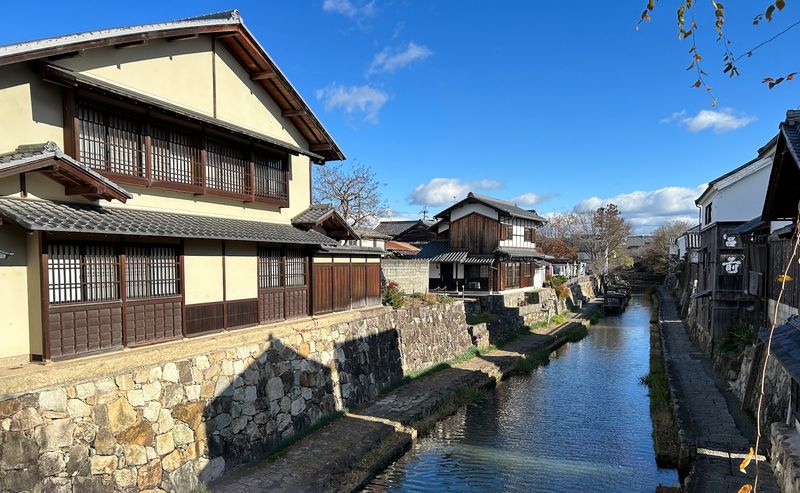
Merchants from the Omi region once built trading networks that reached across Japan, and Omihachiman was one of their home bases. Their legacy remains visible around Shin-Machi Dori and the Hachiman-bori Canal.
Traditional merchant properties and old streets survive within the town. The canal recalls the transportation system that helped make Omihachiman an important commercial center.
The mix of water, merchant architecture, temples, and old residential streets gives the town a different feel from Japan’s former samurai or post-town districts. Instead of one famous lane, you get a network of places to explore.
Its location near Lake Biwa also makes it an easy historical addition to a trip through the Kansai region. If you are already traveling in that area, it can round out an itinerary with a look at Japan’s merchant history.
Ine, Kyoto Prefecture
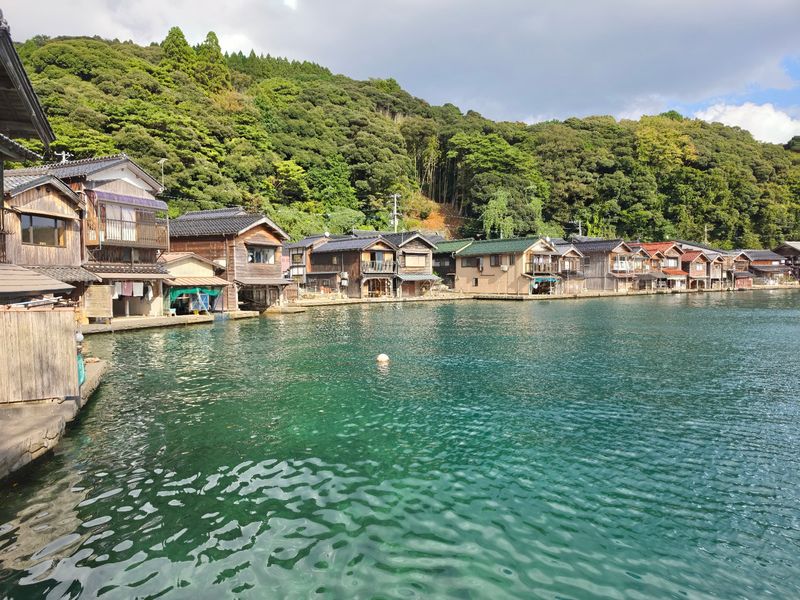
Not every preserved town is full of merchant houses or samurai residences. Ine is a small fishing community on the Sea of Japan coast, and its famous buildings are boathouses.
These wooden structures, called funaya, stand directly along the edge of Ine Bay. Around 230 remain along roughly five kilometers of shoreline.
Traditionally, boats could be stored on the lower level while living or working space occupied the floor above. Some have been adapted for accommodations and tourism, but the fishing-village landscape stays closely tied to the local community.
Seen from the water, the continuous line of boathouses forms one of Japan’s most distinctive surviving traditional settlements. Looking at them from a boat or from across the bay helps you grasp how the whole village faces the sea.
Mitarai, Hiroshima Prefecture
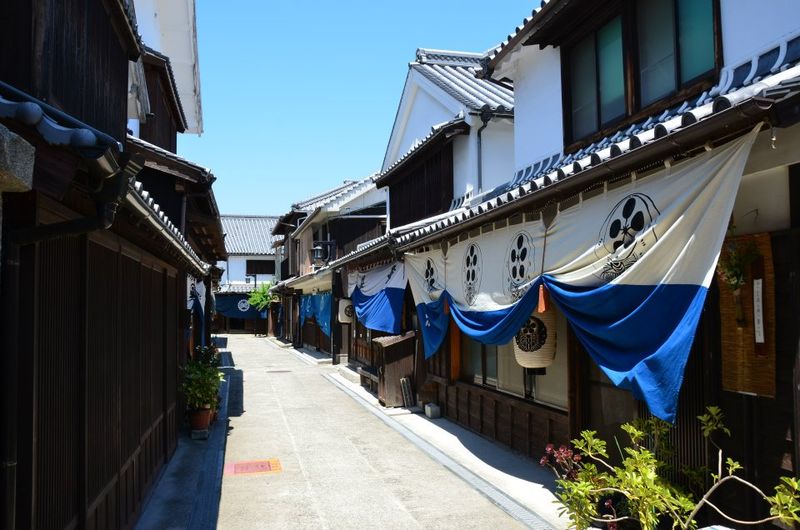
Ships once waited here for favorable winds and tides, and that waiting shaped an entire town. Mitarai developed on an island in the Seto Inland Sea as a port, and its maritime prosperity produced a compact settlement.
Merchant homes, inns, teahouses, shrines, temples, and other buildings are squeezed into a network of narrow streets. Because the properties are mixed together, the town reads like a small working harbor from the past.
The old settlement survives within Kure City’s Osaki Shimojima island area. It was designated an Important Preservation District for Groups of Historic Buildings in 1994.
Merchant properties, religious buildings, and former hospitality businesses remain side by side, so walking through Mitarai gives a clear impression of how a small Japanese port town once functioned. Bring a bit of patience for island travel, and let the narrow lanes set your pace.
Share this story