Baklava gets all the attention. It shows up on almost every menu near a Greek harbor, usually next to a scoop of ice cream and a photo of a sunset.
The islands, however, have been quietly baking a much longer list of sweets for centuries, and most of them never leave the family kitchen or the village bakery. Some are pinched by hand into tiny flower shapes.
One is made with watermelon, of all things. Another was named after a prime minister who simply could not stop eating it.
Many of these treats are tied to weddings, Easter, baptisms, and New Year customs, which is why tourist menus rarely bother with them. Below are twelve island desserts worth hunting down, with notes on what goes into them, where they come from, and how to find them.
Bring an appetite and a little patience, because the best ones are often sold out by noon.
1. Karpouzopita, Milos, Greece
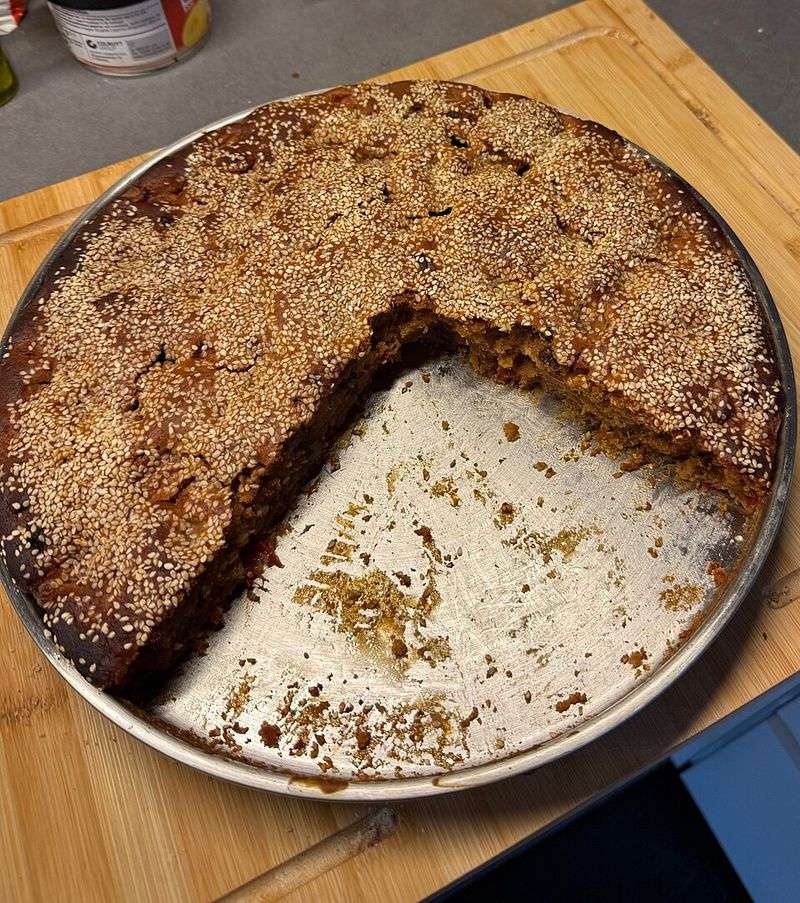
Pie made from watermelon sounds like a dare, yet on Milos it is a summer classic. The name joins two Greek words, karpouzi for watermelon and pita for pie.
No pastry crust is involved. Cooks grate or dice the fruit, then mix the pulp and juice with flour, sugar, honey, olive oil, and cinnamon.
Some families add semolina, chopped walnuts, ground cloves, or raisins. Every household seems to have an opinion on which version is correct.
The batter goes into an oiled pan lined with sesame seeds. More sesame is scattered on top before baking, giving the pie a golden surface and a soft, pudding-like center.
Islanders eat it warm or cold, and plenty of them happily call it breakfast. The recipe exists because Milos summers produce more watermelons than anyone can slice.
Nearby Folegandros bakes its own version, so island hoppers can run a taste test. Look for it in village bakeries from July to early September.
One slice is usually enough, though few people stop there.
2. Melachrino, Naxos, Greece
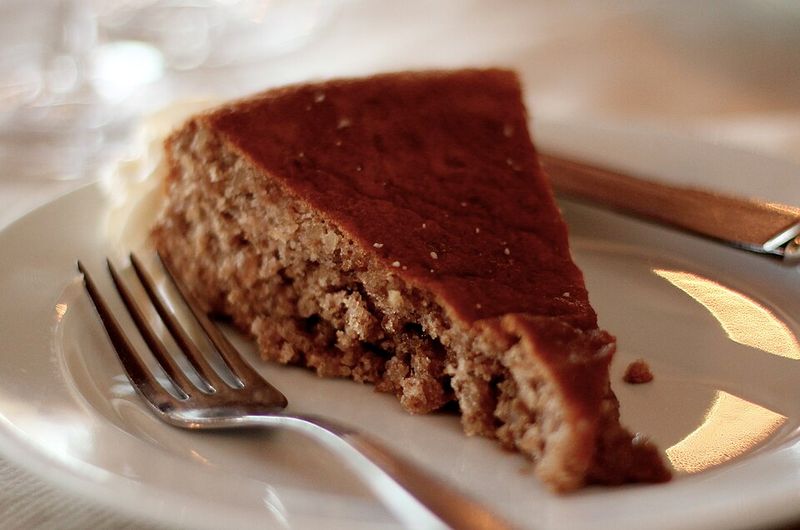
Naxos grows enough citrus to keep an entire island busy, and melachrino puts that harvest to work. The dessert is a dark, walnut-based cake that leans on local citrus instead of fancy decoration.
Its name comes from the Greek word for a darker shade, which matches the deep brown crumb produced by plenty of chopped walnuts and spices. Bakers typically soak the finished cake in a citrus syrup.
Unlike a light sponge cake, melachrino is dense and moist. A small square goes a long way, making it ideal after a big lunch.
Citrus farming has shaped Naxos for centuries. The island is famous for its kitron tree, a relative of the lemon, and local producers turn it into preserves and syrups.
That history makes melachrino a fitting edible introduction to the island. It is more of a home and bakery cake than a restaurant dessert.
Visitors in Chora or the mountain village of Halki can find it at small pastry shops. Pair a slice with a Greek coffee and you will understand why locals rarely skip it.
3. Melekouni, Rhodes, Greece
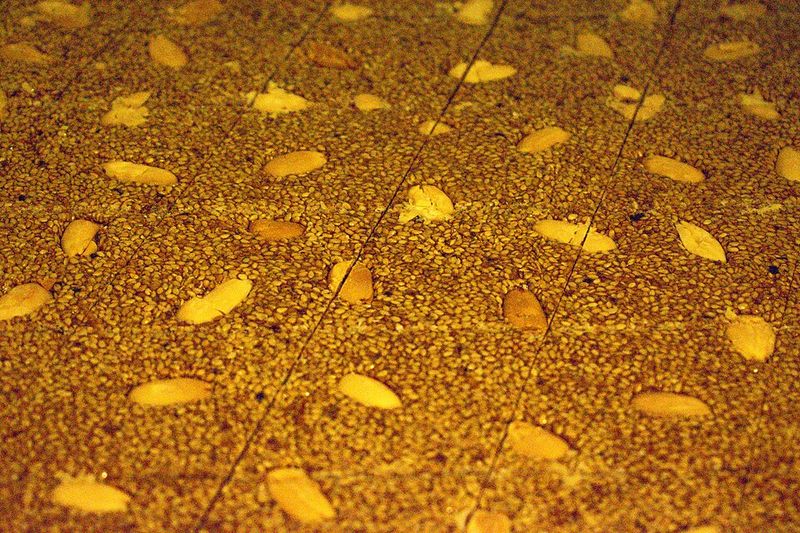
Wedding invitations on Rhodes once came with something better than a printed card. Families handed out melekouni, a chewy sesame and honey sweet, to share the good news.
The name comes from the Rhodian dialect. Meli means honey, and kouni refers to sesame seeds.
Recipes often add almonds, cinnamon, nutmeg, and orange zest or juice. Cooks roast the sesame and almonds, boil the honey with citrus juice, then combine everything while it is still warm.
The mixture is flattened and cut into diamond or octagon shapes once cool. Each piece ends up soft, flexible, and golden brown.
In village tradition, women gathered to make big batches together before weddings, baptisms, and engagements. The sweet stood for joy, long life, and a growing family.
Melekouni is not the same as pasteli, the hard sesame bar sold across Greece. It stays bendy instead of brittle and carries more spice.
Shops in Rhodes Old Town sell packaged versions, but village bakeries make the real thing. It also packs well, so it survives the trip home in a suitcase.
4. Venizelika, Myrina, Lemnos, Greece
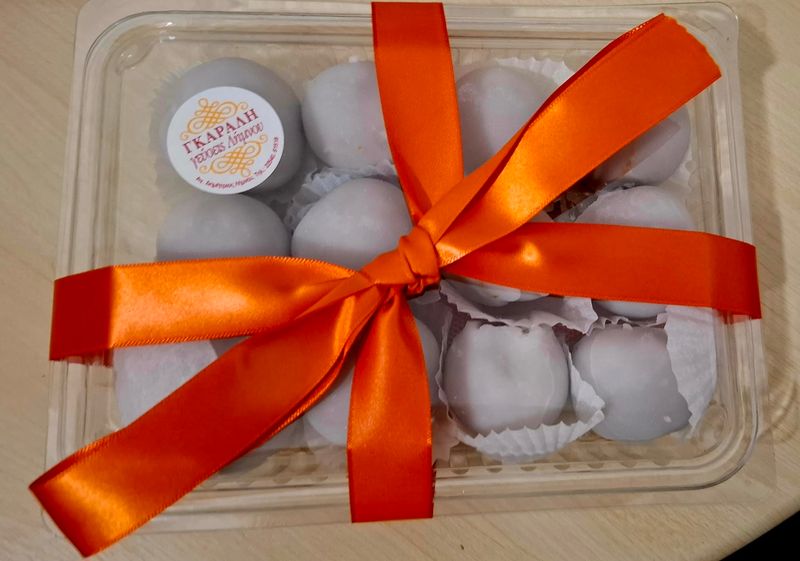
Few desserts can say a prime minister named them. According to local stories, statesman Eleftherios Venizelos visited Lemnos and kept reaching for a plate of small sweets that had no name yet.
Accounts differ on whether the visit was in 1912 or 1934. Either way, the islanders started calling them venizelika, and the name stuck.
The center is a ball of ground almonds, sometimes mixed with walnuts, dark chocolate, cocoa, and sugar syrup. Bakers shape walnut-sized rounds and let them firm up.
Next comes the clever part. Each ball is dipped in a white vanilla fondant known in Greece as ypovrichio, or the submarine sweet.
The pale shell over a dark middle makes them easy to spot. Cut one open and the contrast is striking.
Making them takes patience, so prices reflect the handwork.
In Lemnian homes, venizelika are offered to guests at weddings, baptisms, and big celebrations. Serving them is a sign of hospitality.
Confectioners in Myrina sell them year-round. Buy a box early in your trip, since they make excellent edible souvenirs.
5. Sykomaides, Corfu, Greece
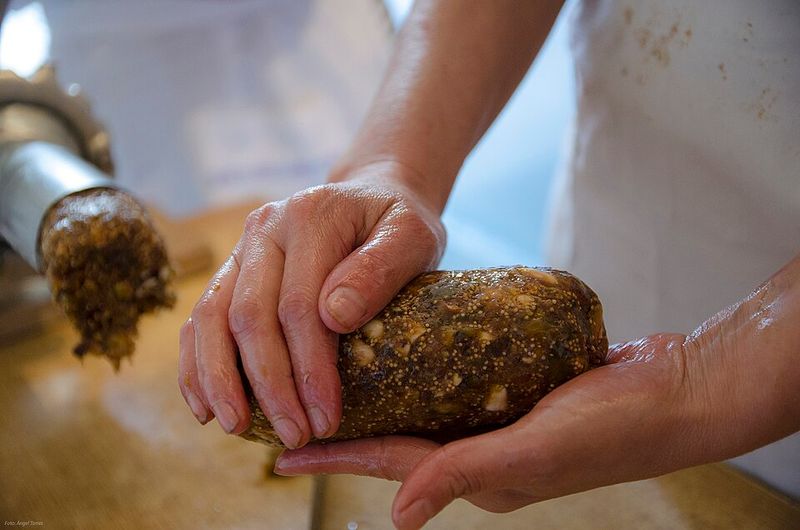
Black pepper in a dessert sounds like a kitchen mistake, but on Corfu it is the secret ingredient. Sykomaides are dense fig cakes that skip the cream, syrup, and pastry entirely.
Dried figs form the base. Cooks chop or mash them, then season the mixture with black pepper and other traditional flavorings, sometimes adding nuts or spices.
The pepper gives the sweet a surprising kick. It also makes sykomaides more interesting than a plain fruit candy.
The paste is pressed into compact rounds or small cakes. Some families wrap them in fig leaves and let them dry for several days.
Preserving the harvest was the original goal. Figs ripen in late summer, and turning them into sturdy cakes meant families had a sweet supply well into winter.
Corfu’s history under Venetian and British rule left a mark on its kitchens, yet sykomaides stay firmly rural and homemade.
Look for them at farm shops, village markets, and food stores in Corfu Town. A thin slice next to some cheese makes an easy snack.
6. Melitinia, Santorini, Greece
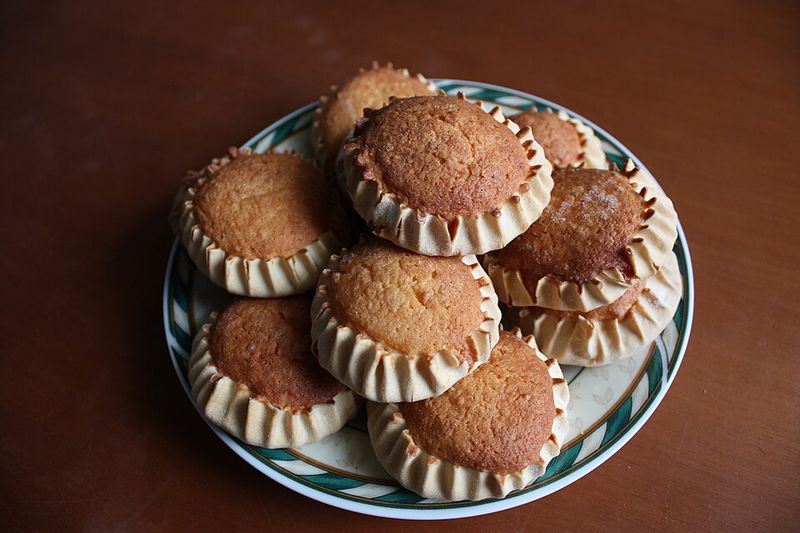
Santorini sells a lot of sunset photos, but locals save their real bragging rights for a tiny Easter pastry. Melitinia are small, open-faced shells filled with sweet cheese, and each edge is pinched by hand into a neat, flower-like pattern.
The filling usually starts with fresh, unsalted soft cheese such as myzithra or anthotyro. Sugar goes in next, along with mastic, vanilla, or lemon zest, depending on the family recipe.
Pinching the edges is a skill passed down through generations. In many homes, women gather in the kitchen before Easter and shape dozens at a time, chatting as they work.
Historically, melitinia showed off household resourcefulness. Some cooks used leftover bread dough, local goat cheese, and thyme honey to make them.
They also appear at weddings and baptisms, so the season stretches beyond spring. Cinnamon is often dusted on top after baking.
They belong to a larger family of Aegean cheese tartlets with roots in ancient Greek cheesecakes.
Your best bet is a traditional bakery in Fira or Pyrgos during the weeks around Easter. Ask early in the day, since bakers rarely make extra.
7. Kalitsounia, Chania, Crete, Greece
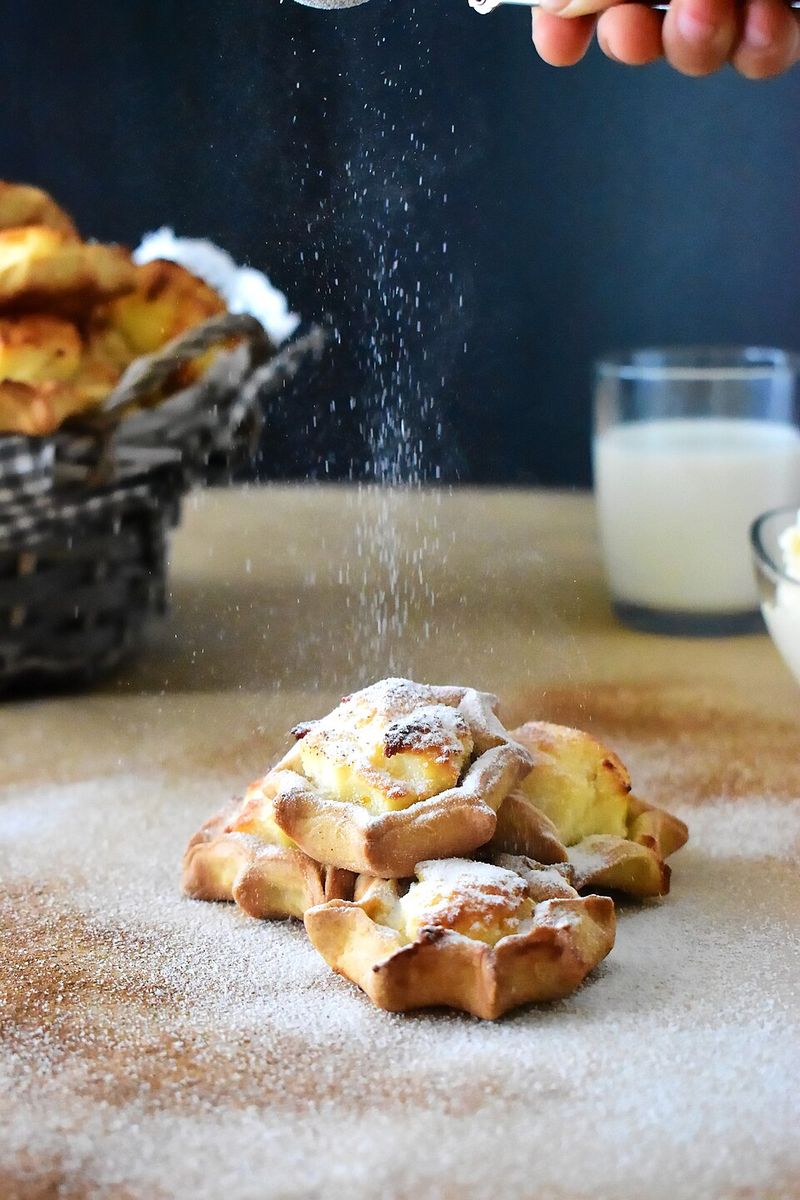
Ask ten Cretan grandmothers how to make kalitsounia and you might get ten slightly different answers. The one thing they agree on is the cheese.
Sweet versions use fresh myzithra, a soft, unsalted whey cheese made from sheep and goat milk. It is mixed with sugar, eggs, and cinnamon, plus vanilla or lemon zest in some kitchens.
Shape matters here. Open versions with pinched edges are called lychnarakia, meaning little lamps, while closed square or triangle ones are known as anevata.
The dough is simple, made with flour, olive oil, milk, and sometimes eggs. Some cooks fry the pastries in olive oil, while others bake them.
A drizzle of thyme honey often finishes the job. Easter is their big season, but Cretans also serve them at family gatherings throughout the year.
Chania and Rethymno take them most seriously. Bakeries in both old towns stack them in their windows, and mountain villages make their own.
Travelers who cannot find myzithra at home can swap in ricotta. The result is close enough to earn a polite nod from any Cretan.
8. Ladopita, Lefkada, Greece
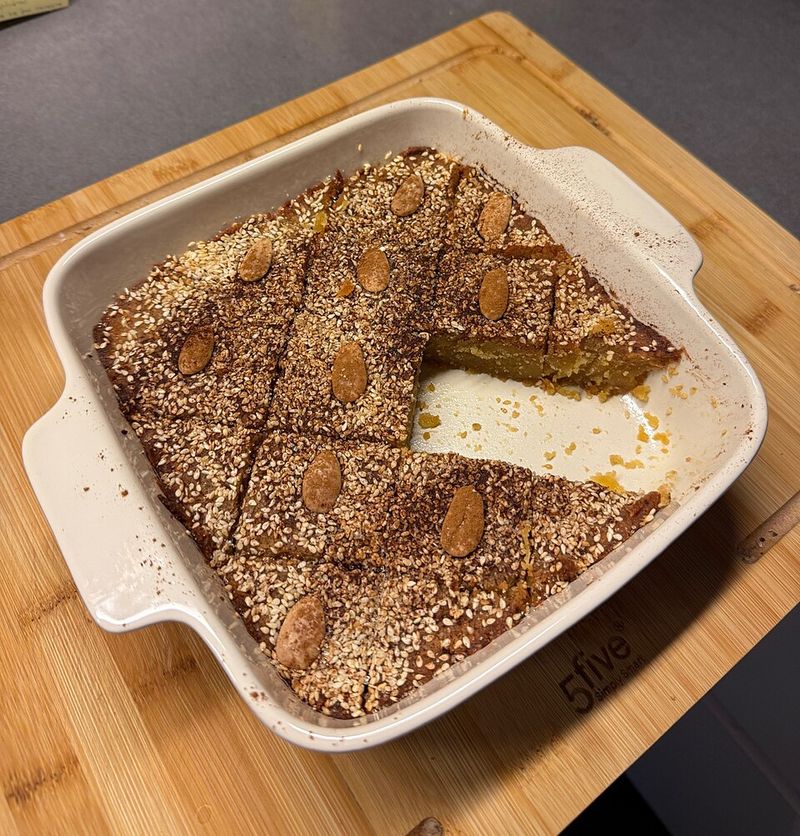
Olive oil is the star of this Lefkada dessert, right down to the name. Ladopita literally means oil pie.
Despite the name, there is no flaky phyllo. The dessert is dense and sliceable, closer to a baked halva than a pie.
Cooks heat a generous amount of extra virgin olive oil and roast flour and semolina in it. A syrup of water, sugar, honey, cinnamon, and cloves is then stirred in.
The thick mixture is spread into a pan and topped with sesame seeds and blanched almonds. After baking, it is cut into diamonds or squares.
Lefkada also uses ladopita as its New Year cake, or vasilopita. A coin is hidden inside, and whoever finds it in their slice is said to have good luck all year.
Its staying power is impressive. Ladopita keeps for days without a fridge, which made it practical for large wedding feasts in the past.
Bakeries in Lefkada Town sell it, especially around the holidays. A few slices travel well in a lunch box during beach days.
9. Rozedes, Chora, Kythira, Greece
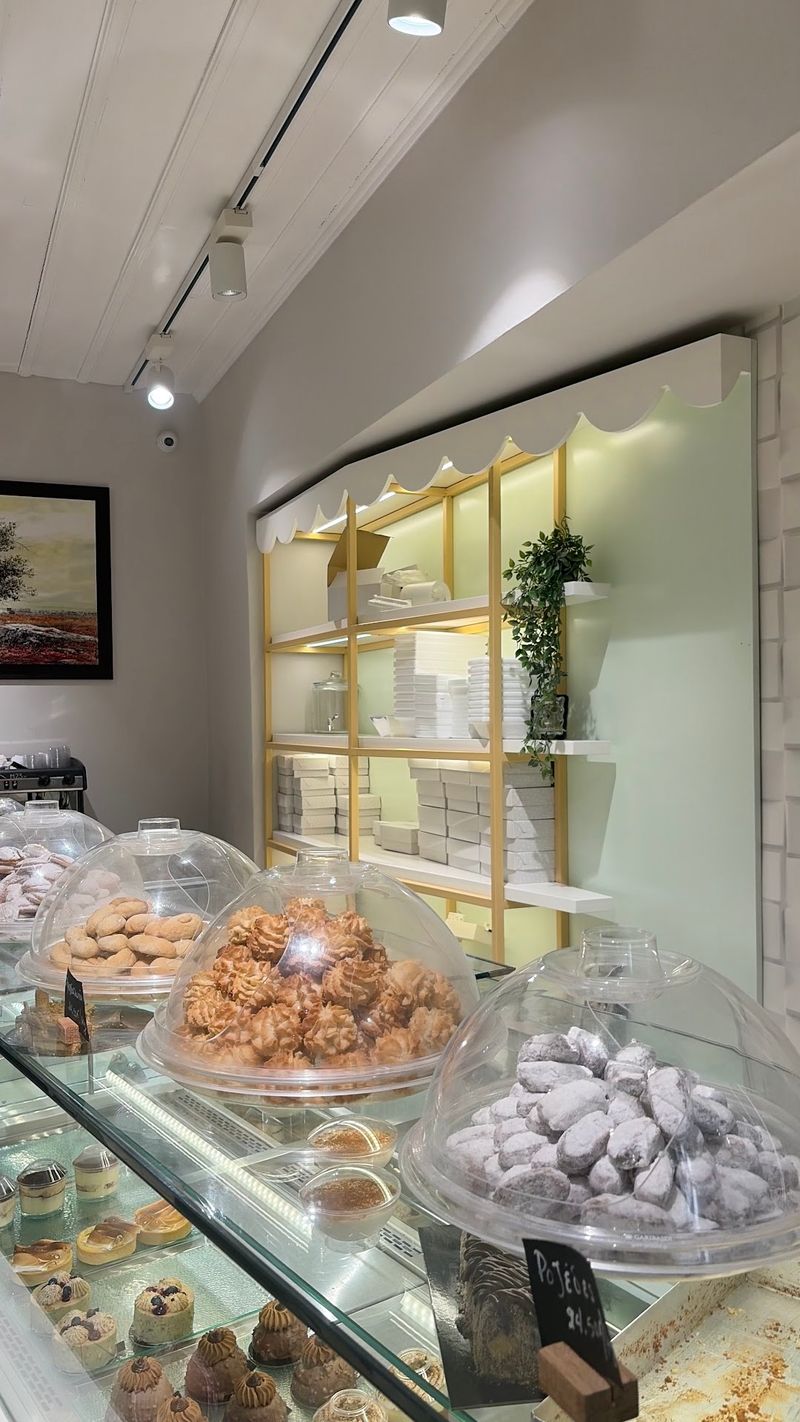
Kythira sits off the southern tip of the Peloponnese, far from the busy ferry routes, and its sweets have stayed delightfully old-fashioned. Rozedes are a good example.
These small treats are made from almonds, honey, and sugar. Nothing more is needed, since the almond does most of the work.
The recipe reflects what Kythiran households had on hand for generations. Almond trees grew well on the island, and honey came from local beekeepers.
Rozedes belong to a larger family of island sweets. Kythira is also known for delicate fried pastries and traditional puddings, so dessert fans have plenty to explore.
Many visitors miss rozedes completely because restaurants rarely list them. They are more likely to appear at bakeries, family celebrations, and religious feast days.
Chora, the island capital, is the best place to start looking. Small shops near the main square often carry local almond sweets, and owners are usually glad to explain them.
Buy a mixed bag if you can. Comparing rozedes with other Kythiran almond treats is a fun way to learn the island’s sweet history, one bite at a time.
10. Amygdalota, Spetses, Greece
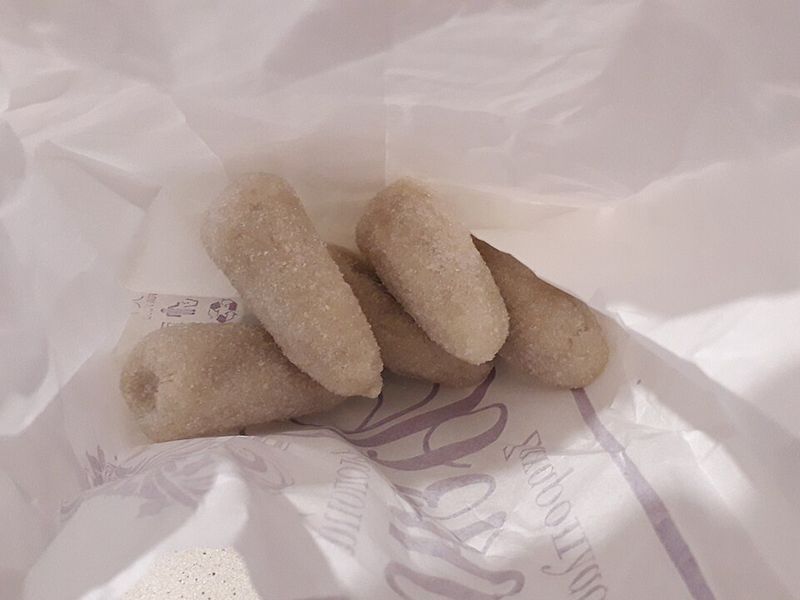
Spetses has a long tradition of making almond sweets, and amygdalota are among the island’s most recognizable treats. These small confections are made with ground almonds, sugar, and fragrant rosewater, creating a soft texture without relying on flour or elaborate pastry dough.
The Spetses version is often shaped into small pears and coated with powdered sugar. Some recipes include a little lemon juice or other flavorings, but almonds remain the main ingredient.
Amygdalota have traditionally been served at weddings, baptisms, and family celebrations. Their simple ingredients and elegant appearance make them especially suitable for special occasions.
The sweets also reflect the importance of almonds in Greek island cooking. Before elaborate cakes became widely available, families relied on nuts, honey, and sugar to prepare treats for guests.
Traditional confectioneries on Spetses continue to make amygdalota, often packaging them in boxes for visitors to take home. Look for them in pastry shops around Dapia, the island’s main harbor.
11. Loukoumia, Ermoupoli, Syros, Greece
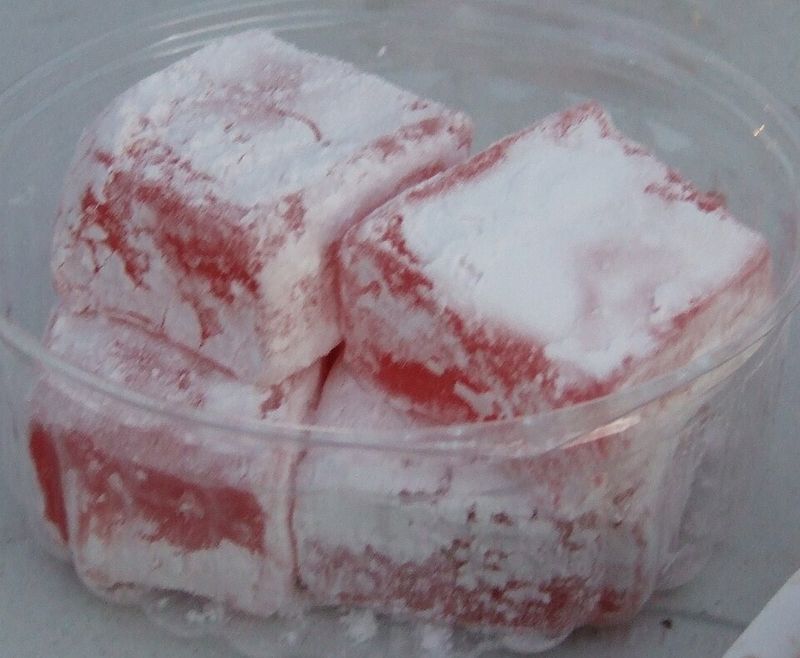
Syros has been making loukoumia for generations, turning a simple combination of sugar, starch, and water into one of the island’s most famous edible souvenirs. These small, soft cubes are traditionally flavored with rosewater, mastic, or citrus and finished with a generous coating of powdered sugar.
The island’s confectionery tradition developed during the nineteenth century, when Ermoupoli became an important commercial center. Greek confectioners helped establish loukoumia production, and the sweet eventually became closely associated with Syros.
Unlike cakes or pastries, loukoumia require no baking. The ingredients are cooked together until thick, poured into trays, and allowed to set before being cut into individual pieces.
Traditional producers sometimes include nuts, while others focus on classic flavors such as rose or mastic. Boxes containing several varieties are commonly sold in confectioneries throughout Ermoupoli.
Loukoumia are often served alongside Greek coffee or offered to visitors as a gesture of hospitality. Their long shelf life also makes them practical gifts for travelers.
Several traditional sweet shops on Syros continue producing loukoumia using established recipes. Visitors exploring Ermoupoli can find them in confectioneries near the harbor and throughout the town’s historic commercial streets.
12. Xerotigana, Chania, Crete, Greece
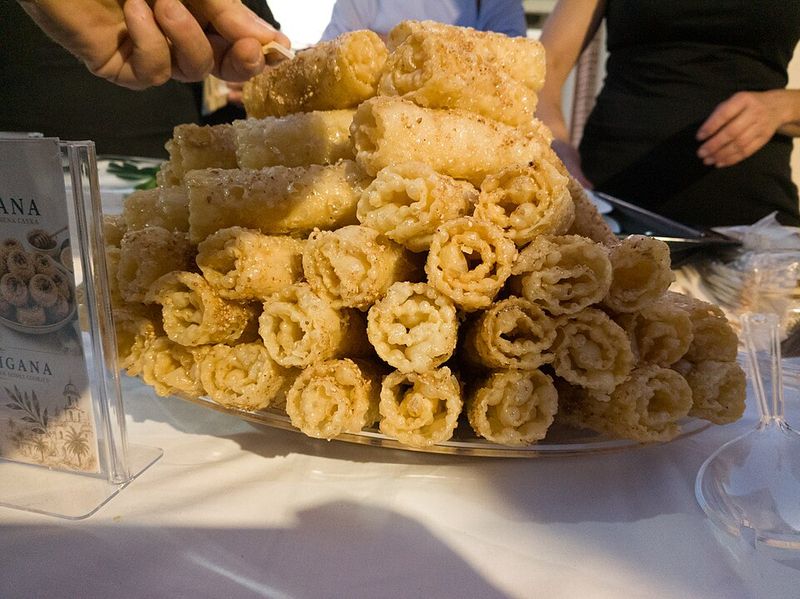
Few Greek island desserts require as much careful shaping as xerotigana. These traditional Cretan pastries begin as thin strips of dough that are twisted, folded, or rolled into elaborate shapes before being fried in hot oil.
Once cooked, the pastries are coated with honey syrup and often sprinkled with sesame seeds, cinnamon, or chopped walnuts. The result is a crisp dessert that looks almost too delicate to survive the journey from the kitchen to the table.
Xerotigana have a particularly strong connection to Cretan weddings. Families traditionally prepared large quantities for celebrations, and the pastries became associated with hospitality, happiness, and good fortune.
Making them requires practice. The dough must be rolled extremely thin, while the cook works quickly to shape each strip as it fries.
Experienced bakers can produce impressive spirals and ribbon-like arrangements.
Although weddings remain an important part of their history, xerotigana are also prepared for Christmas and other festive occasions. Traditional pastry shops across Crete sell them, particularly in Chania and Rethymno.
Visitors can look for packaged versions in local bakeries or try freshly prepared xerotigana at traditional celebrations. Their elaborate shapes make them one of the most visually distinctive sweets in Cretan cuisine.
Share this story