Deep beneath North America lies a geological giant that scientists have largely ignored—until now. The Tintina Fault, stretching from Canada’s Yukon Territory into Alaska, has been quietly building stress for thousands of years. Recent research reveals this overlooked fault could unleash a devastating earthquake, threatening millions and critical infrastructure across multiple regions.
Hidden Fault, Hidden Danger

Geologists are sounding alarms about a fault line that has stayed under the radar for over a century. The Tintina Fault runs from Canada’s Yukon Territory all the way into interior Alaska, covering hundreds of miles of remote wilderness. First discovered back in 1912, this massive geological feature has been largely forgotten because it barely rumbles.
Modern technology is changing everything we thought we knew. Drone surveys and satellite imaging now show the fault may be storing enormous amounts of stress deep underground. Scientists worry this energy could suddenly release in a magnitude 7.5 earthquake or even stronger, which would be catastrophic for nearby communities.
The region includes parts of Alaska, British Columbia, Alberta, and Montana—all potentially at risk. What makes this particularly alarming is how unprepared these areas might be for such a powerful seismic event.
Unearthing Geological Clues
Cutting-edge research published in Geophysical Research Letters is rewriting what we understand about this fault. Scientists combined laser scans with 3D terrain models to examine how the land has shifted over enormous time spans. Their findings paint a troubling picture of accumulated stress waiting to break free.
One displaced terrace they studied dates back an incredible 132,000 years. Another site, called the Flat Creek Beds, goes back 2.6 million years and shows lateral shifts exceeding 4,100 feet—that’s nearly a mile of movement! Researchers also calculated that roughly 20 inches of slip has built up and hasn’t been released yet.
These measurements suggest major ruptures happened in the distant past. The fault isn’t dormant—it’s just operating on a timescale far longer than human memory can track.
Threats to Infrastructure & Communities

Imagine a magnitude 7.5 earthquake striking beneath one of North America’s most vital energy arteries. The Tintina Fault runs directly under the Trans-Alaska Pipeline, which carries oil across 800 miles of wilderness. A rupture here could cause environmental disaster and economic chaos simultaneously.
Fairbanks, a city of over 125,000 people, sits dangerously close to the fault zone. Beyond the city, highways, river systems, and remote towns dot the landscape—all vulnerable to shaking, landslides, and infrastructure collapse. Because these regions are so isolated, emergency response would face enormous challenges getting help to affected areas.
Perhaps most concerning is that official seismic hazard models, including the USGS 2024 Alaska model, don’t fully account for this threat. Communities may lack proper building codes or emergency plans for an earthquake of this magnitude.
A Call to Shift Focus

Why has such a dangerous fault received so little attention? Dr. Michael West of the Alaska Earthquake Center explains that humans struggle to take seriously threats that operate on thousand-year cycles. We focus on dangers we can see and experience within our lifetimes, leaving long-term geological hazards in the shadows.
Compare this to California’s San Andreas Fault, which gets constant monitoring, media coverage, and research funding. Meanwhile, Tintina sits in geological obscurity despite potentially harboring equal or greater risk. The difference isn’t in the science—it’s in human psychology and resource allocation.
Researchers are now urging governments and agencies to prioritize this overlooked danger. They want robust monitoring systems deployed, hazard maps updated, and infrastructure assessments conducted throughout the fault’s influence zone before disaster strikes.
The Science of Silent Faults

Not all earthquake faults behave the same way. Some constantly release energy through small tremors, while others stay eerily quiet for centuries. The Tintina belongs to this second, more dangerous category—what geologists call a low-activity or quiescent fault.
Think of it like stretching a rubber band extremely slowly. For generations, nothing seems to happen, but tension keeps building invisibly. Eventually, the rubber band reaches its breaking point and snaps violently. That’s essentially what’s happening deep underground along the Tintina Fault right now.
The longer a fault stays quiet, the more stress it can accumulate. When release finally comes, it tends to be sudden and powerful. This pattern makes silent faults particularly treacherous because they offer few warning signs before a major event occurs.
Learning from Past Mistakes

History offers sobering lessons about ignoring geological warnings. In 2011, Japan’s Tohoku earthquake caught many by surprise despite sitting in a known earthquake zone. The magnitude 9.0 quake triggered a tsunami that killed thousands and caused the Fukushima nuclear disaster. Scientists had warned about the possibility, but preparations proved inadequate.
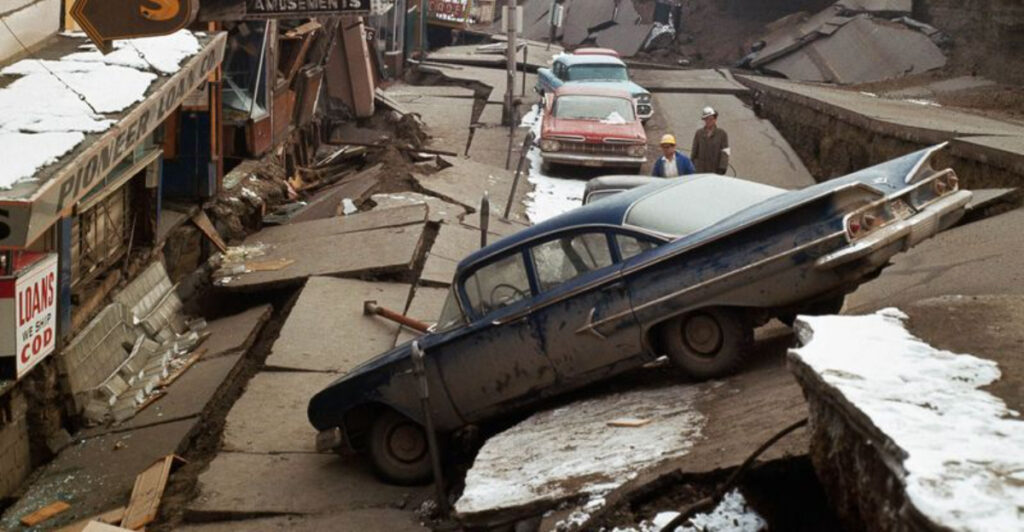
Closer to home, the 1964 Alaska earthquake—magnitude 9.2—remains the most powerful ever recorded in North America. It devastated Anchorage and coastal communities, causing widespread destruction. That event taught engineers valuable lessons about building in seismically active regions.
The Tintina Fault presents an opportunity to get ahead of disaster rather than react to it. By taking warnings seriously now, communities can retrofit buildings, strengthen pipelines, and develop evacuation plans before the ground starts shaking.
What Happens Next

So what should happen now that scientists have raised the alarm? First, seismic monitoring networks need significant expansion throughout the fault zone. Currently, the remote regions along Tintina have far fewer sensors than more populated areas, creating dangerous blind spots in our understanding.
Government agencies must update their hazard maps and building codes to reflect this new risk assessment. Engineers should evaluate critical infrastructure like the Trans-Alaska Pipeline for earthquake resilience. Communities need education programs so residents understand what to do when shaking starts.
Perhaps most importantly, funding must follow the science. Research into the Tintina Fault remains underfunded compared to more famous geological features. By investing in understanding this threat now, we can potentially save lives and billions of dollars when the inevitable earthquake eventually arrives.
Share this story