Oklahoma has a way of surprising visitors with landmarks that stop you completely in your tracks. Tucked onto a university campus in Tulsa, one bronze sculpture rises so high into the sky that you can spot it before you even park the car.
Standing 60 feet tall and weighing a staggering 30 tons, the Healing Hands monument is the kind of roadside wonder that turns a casual detour into a genuinely unforgettable experience. Whether you come for the history, the artistry, or simply the sheer spectacle of it all, this is one Oklahoma stop that earns every bit of the attention it gets.
Where the Sculpture Stands and What It Represents
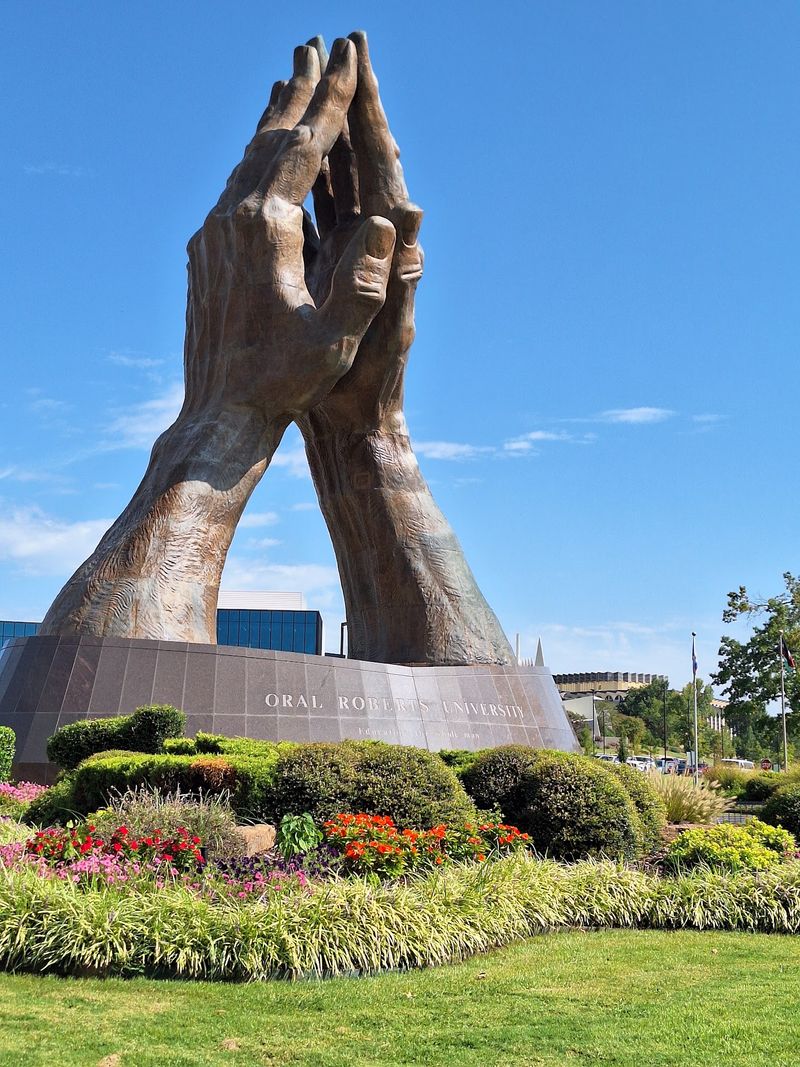
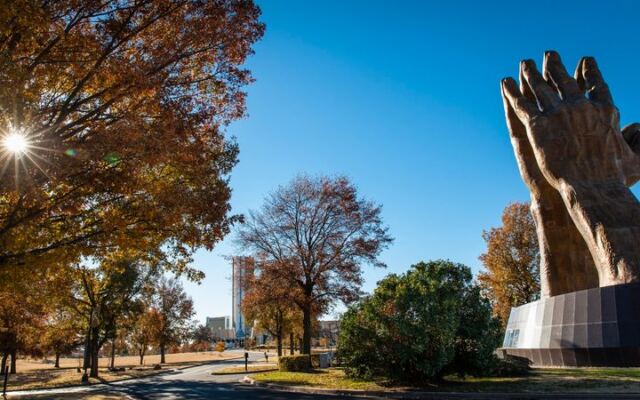
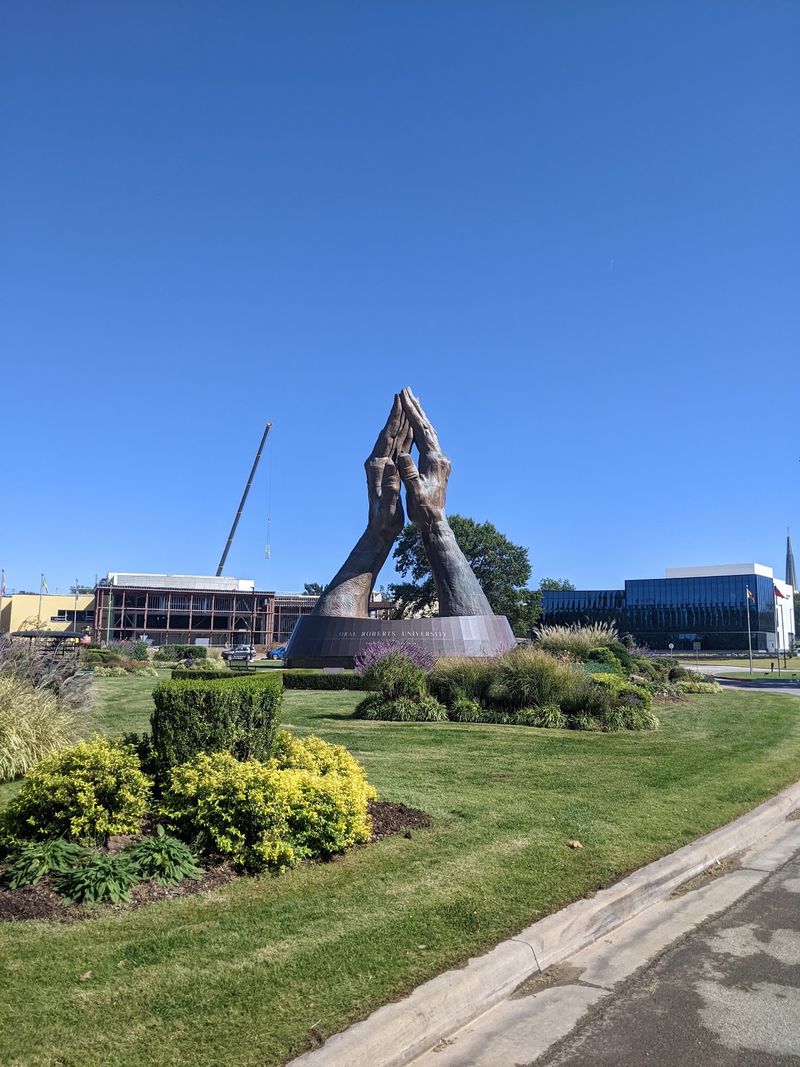
Planted firmly at the entrance of Oral Roberts University in Tulsa, Oklahoma, the Healing Hands sculpture commands attention the moment you arrive on campus. Known widely as the Praying Hands, the monument serves as both a spiritual statement and a physical landmark that anchors the entire university grounds.
Oral Roberts, the famous televangelist who founded the university, envisioned the sculpture as a symbol representing the blending of faith and medicine. That dual meaning gives the monument a purpose beyond its jaw-dropping size, connecting it to a broader story about healing, belief, and human hope.
Visitors approaching for the first time often describe the experience as surreal. From a distance, the hands look large.
Up close, standing beneath them, the scale shifts entirely and the sculpture becomes something almost impossible to fully take in at once. The well-kept garden setting, complete with trimmed shrubs and benches, frames the monument beautifully and gives the entire space a sense of quiet reverence that feels intentional and deeply considered.
The Origins Behind a 30-Ton Bronze Giant
Few sculptures in the American South carry as layered a backstory as this one. The Healing Hands monument was not originally built for Oral Roberts University at all.
When it was first created in the 1980s, it stood at the City of Faith Medical Research Center, also known as the CityPlex Towers, elsewhere in Tulsa.
The statue was conceived as a visual declaration of the connection between spiritual faith and medical healing, a concept central to Oral Roberts’ ministry and mission. Over time, as circumstances changed around the City of Faith facility, the sculpture was relocated to the university campus where it has remained ever since, finding what feels like its permanent and most fitting home.
The story of its creation is also tied to a personal account described in Oral Roberts’ book “Expect a Miracle,” which references healing attributed to a man named Gregory Brown. That personal dimension adds emotional weight to what might otherwise be appreciated purely as a feat of engineering and artistry.
Knowing the backstory transforms a sightseeing stop into something with genuine historical and cultural texture worth exploring.
The Staggering Scale That Photos Cannot Capture
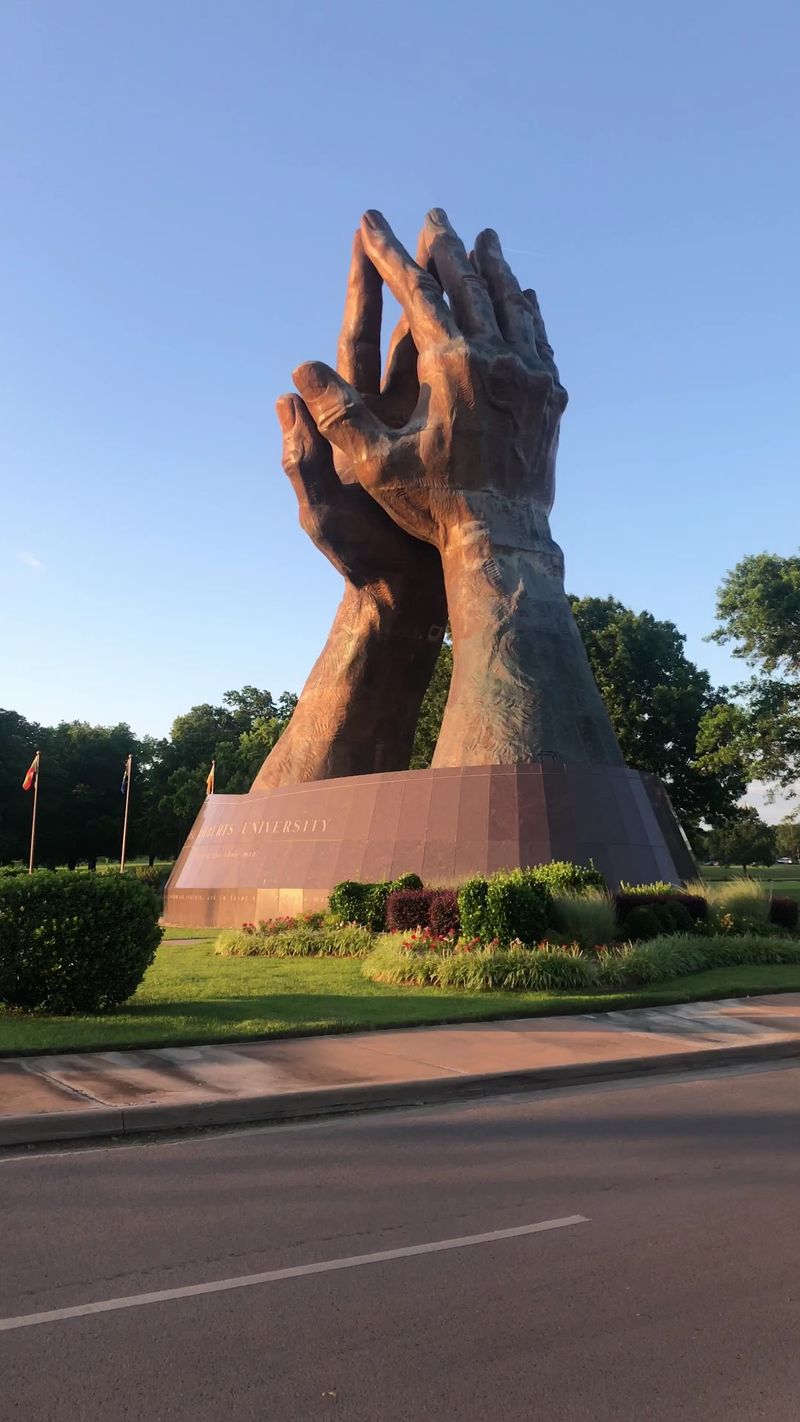
Numbers can hint at the size, but they never fully prepare you. At 60 feet tall and weighing 30 tons, the Healing Hands sculpture is recognized as the world’s largest set of praying hands, a title that becomes instantly believable the moment you step out of your car and look up.
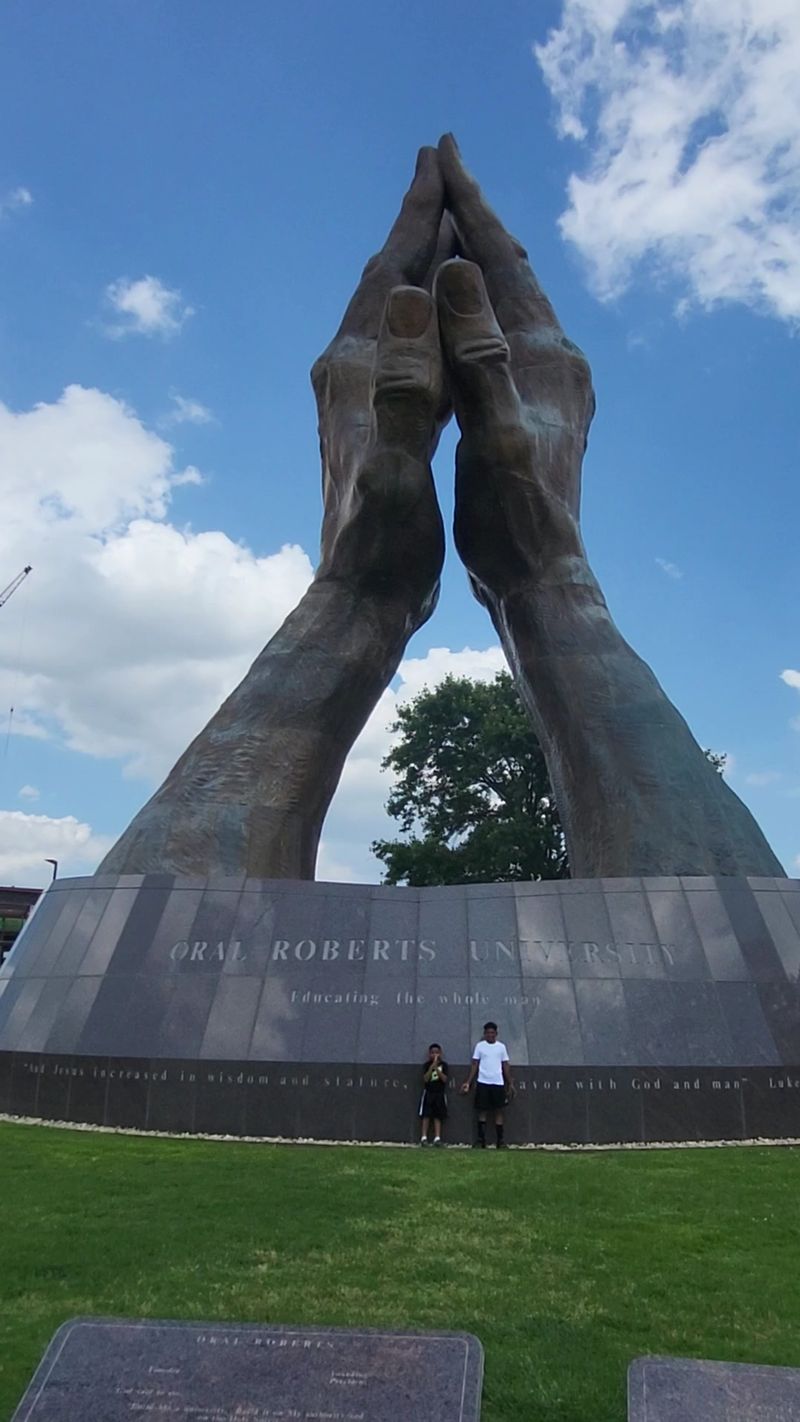
Visitors consistently report that photographs, no matter how well composed, fail to translate the true scale of the monument. One common observation is that people standing near the base look almost like tiny figures, which is part of what makes the in-person experience so striking compared to scrolling past images online.
Getting close enough to study the surface detail is equally rewarding. The bronze casting captures fine textures and contours across the hands that demonstrate serious craftsmanship, especially impressive given the enormous dimensions involved.
The way light plays across the surface changes throughout the day, making morning visits feel different from afternoon ones. Visitors who have returned at different times of day note that the sculpture transforms noticeably depending on the angle and quality of light, giving it an almost living quality that keeps drawing people back for another look.
International Flags Ringing the Monument
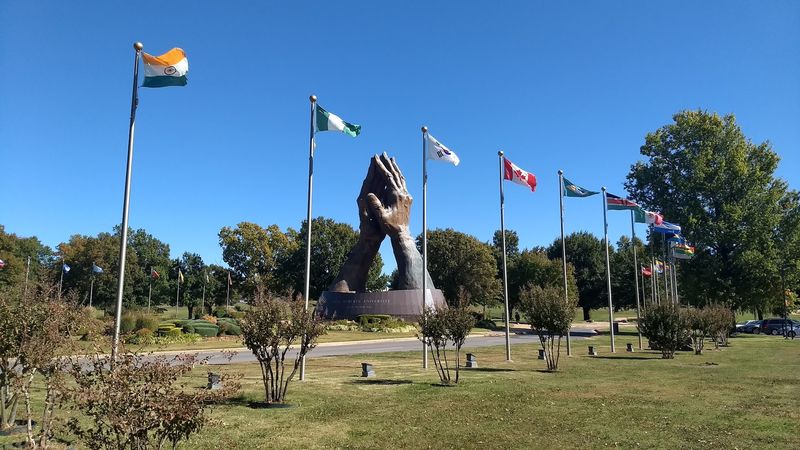
Surrounding the Healing Hands sculpture, a ring of international flags from countries across the globe adds a layer of meaning that many first-time visitors do not expect. The flags represent the global reach of Oral Roberts University’s mission and student body, turning the sculpture plaza into something that feels more like a gathering point for the world than just a campus landmark.
The visual effect of dozens of colorful flags flying in the Oklahoma breeze alongside the towering bronze hands is genuinely striking. The contrast between the earthy tones of the sculpture and the bright colors of the flags creates a scene that photographs exceptionally well from multiple angles, especially when the wind picks up and the flags extend fully.
For visitors who appreciate context along with spectacle, the flags serve as a useful reminder that the university attracts students internationally and carries an identity that extends well beyond Tulsa city limits. Several visitors have mentioned the flags as an unexpected highlight of the stop, adding a worldly dimension to what they initially expected to be a straightforward photo opportunity.
The combination of the sculpture and flags together creates a setting that feels layered, thoughtful, and genuinely worth pausing to absorb fully.
The Campus Architecture Surrounding the Sculpture
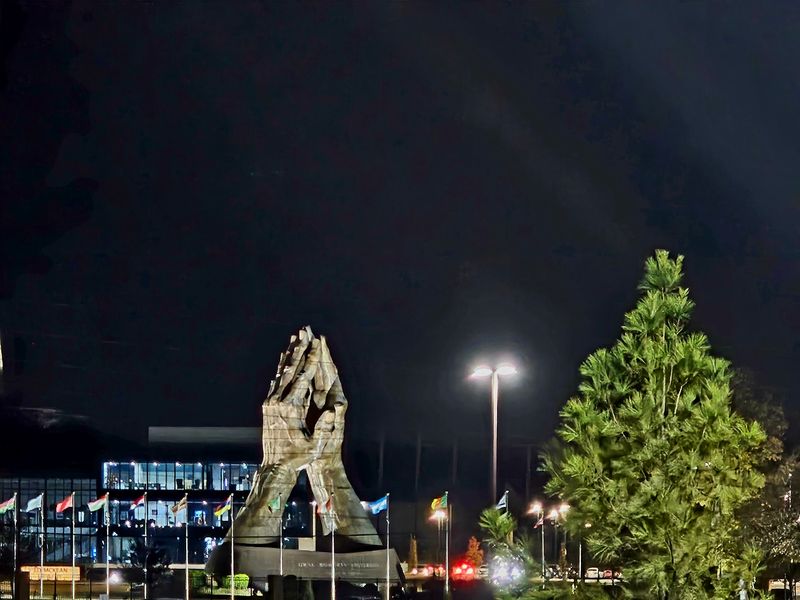
Oral Roberts University is not a typical campus, and the architecture makes that clear almost immediately. The buildings throughout the grounds feature bold, futuristic design choices that reflect the visionary ambitions of the university’s founder, creating a setting that feels unlike any other college campus in Oklahoma.
Walking the grounds around the Healing Hands sculpture means passing structures that draw their own share of admiring glances. The overall aesthetic is cohesive in a way that amplifies the impact of the sculpture itself, placing it within an environment that was clearly designed to inspire and impress rather than simply to function.
Visitors who appreciate architecture often find that a quick stop to see the sculpture turns into a longer campus stroll simply because the surrounding buildings reward curiosity. The attention to landscaping throughout the campus matches the care given to the sculpture’s immediate garden setting, with trimmed hedges and maintained grounds creating a polished environment.
Whether you come specifically for the Healing Hands or discover the wider campus by accident, the architectural character of Oral Roberts University adds genuine value to the visit and makes it more memorable than a single landmark alone could manage.
Nighttime at the Sculpture and How Lighting Changes Everything
After sunset, the Healing Hands sculpture becomes an entirely different experience. Lighting illuminates the bronze surface in ways that daylight cannot replicate, casting dramatic shadows and highlighting the sculptural detail with a warmth that feels almost theatrical against the Oklahoma night sky.
Multiple visitors have noted that the nighttime version of the monument is every bit as compelling as the daytime version, and some have argued it is even more powerful. The glow that emanates from the base and catches the contours of the hands gives the sculpture an almost otherworldly presence, making it feel larger and more imposing than it does in broad daylight.
Because the sculpture is accessible around the clock every day of the week, there is no barrier to planning a nighttime visit. Families, couples, and solo travelers passing through Tulsa after dark have all found the detour worthwhile.
The parking area nearby makes access straightforward regardless of the hour, and the well-maintained surroundings remain clean and welcoming even late in the evening. For anyone who visits during the day and feels moved by the experience, returning after dark offers a genuinely fresh perspective that many regulars say they find even more affecting than their first daytime encounter.
The Spiritual Atmosphere and Who Feels Most at Home Here
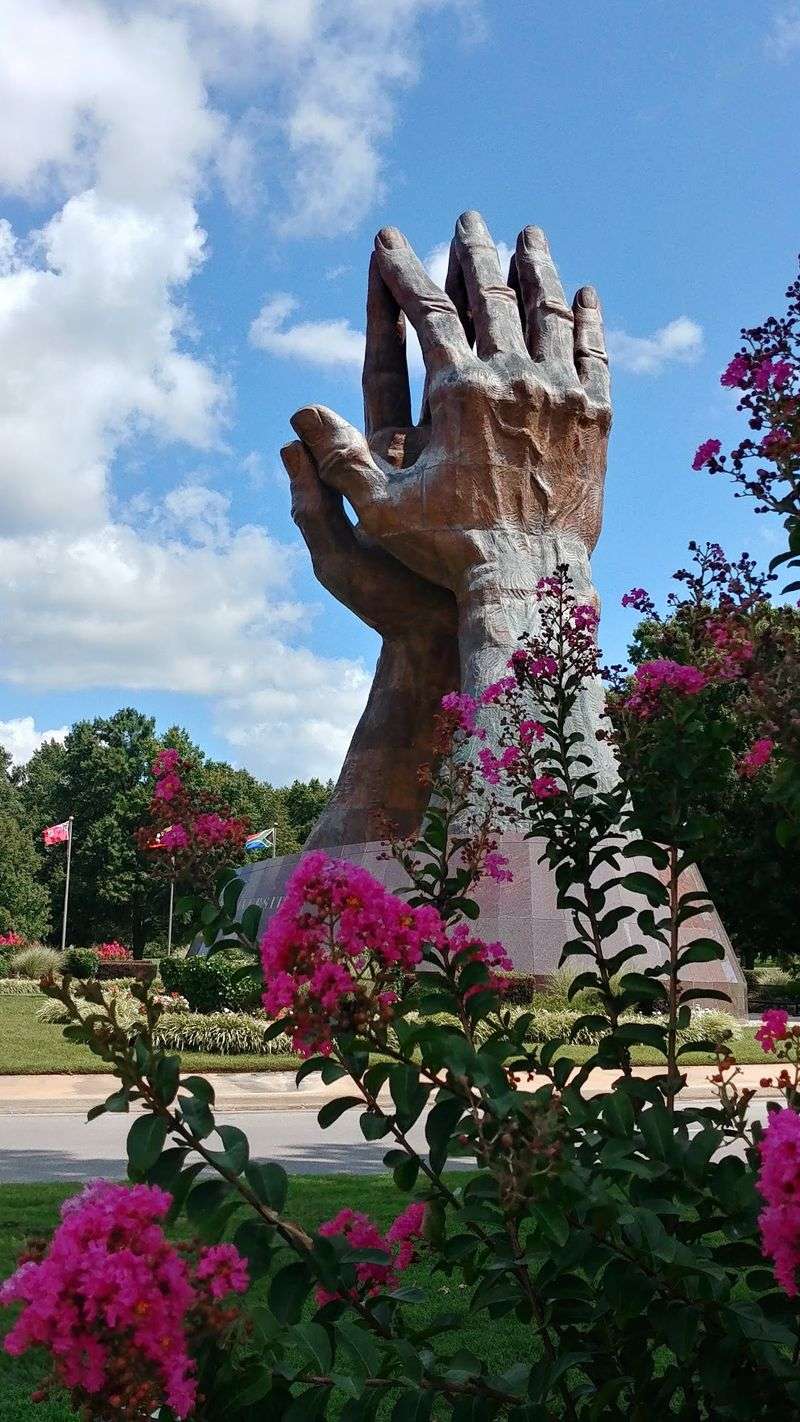
Calm settles over you quickly at this spot. The garden surrounding the Healing Hands sculpture was clearly designed with reflection in mind, featuring benches positioned for quiet sitting and landscaping that muffles the noise of the surrounding city in a gentle, almost deliberate way.
Visitors with a personal faith connection often describe the experience as moving beyond what they anticipated. Several people have mentioned being so affected by standing beneath the hands that they stopped to pray spontaneously, feeling the weight of the sculpture’s symbolism in a way that photographs had never conveyed.
That kind of response speaks to how effectively the monument communicates its intended meaning.
That said, the appeal is not limited to those with religious backgrounds. Art enthusiasts, history buffs, and curious road-trippers without any particular spiritual connection have all found value in the stop.
The craftsmanship alone justifies the visit for anyone who appreciates large-scale sculpture and the logistical challenge of creating something so detailed at such an extreme scale. The tranquil atmosphere makes it a natural pause point on a busy Tulsa itinerary, offering a few quiet minutes that feel genuinely restorative regardless of what brings you there in the first place.
Photography Tips for Capturing the Full Scale
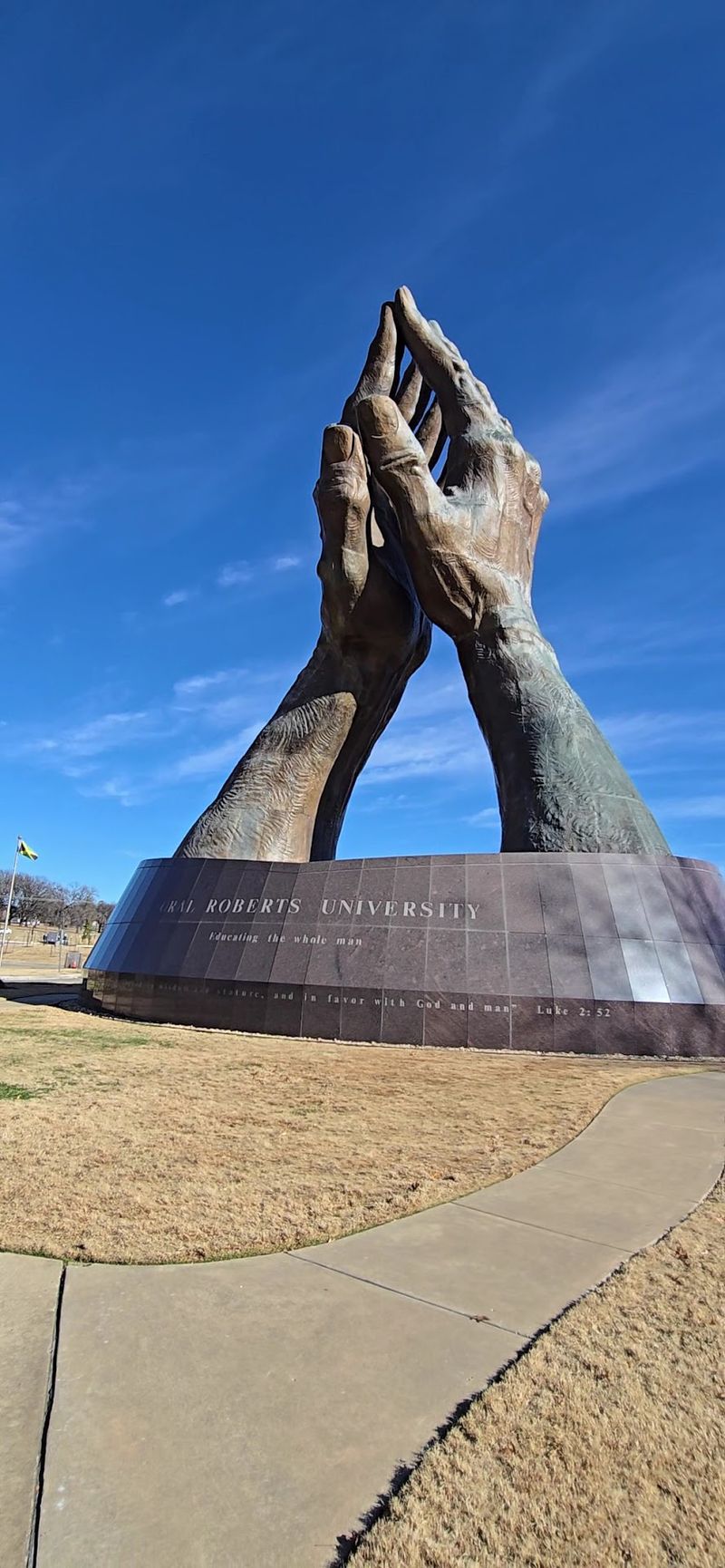
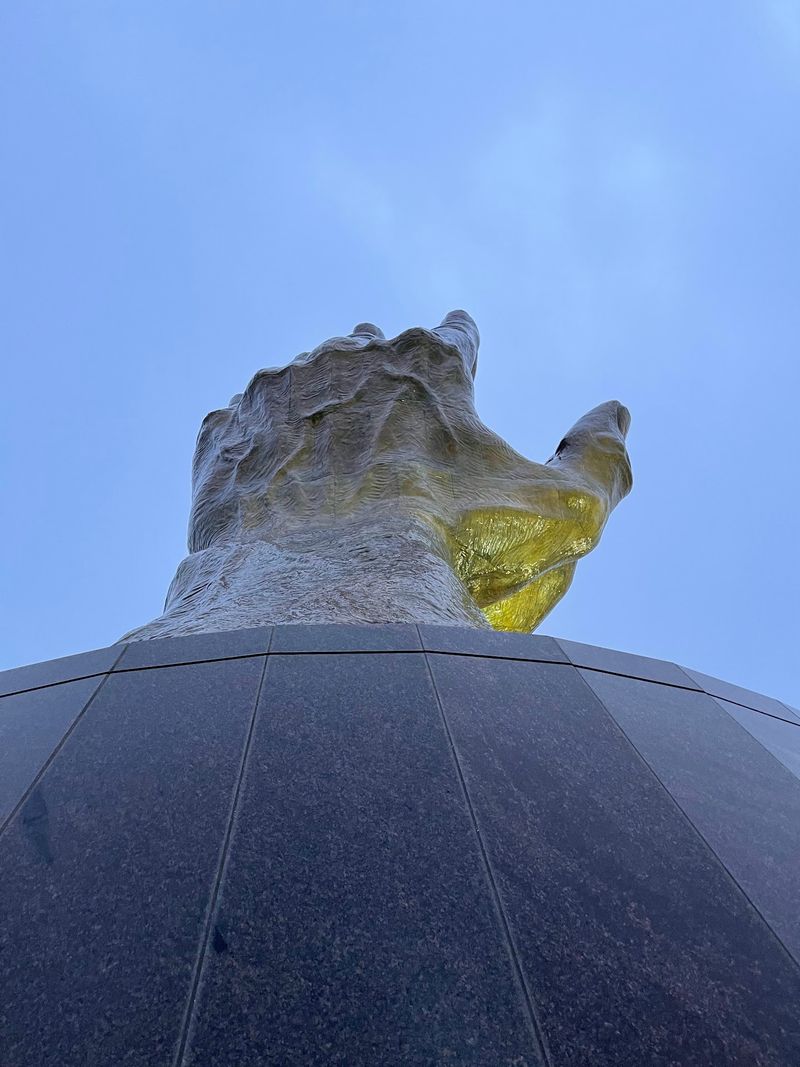
Getting a satisfying photo of the Healing Hands sculpture takes a bit of planning because the sheer size works against standard shooting angles. Standing directly beneath the hands and pointing the camera upward produces dramatic results but makes it nearly impossible to fit the entire sculpture into a single frame without distortion.
Backing up significantly and using a wide-angle lens or the widest setting on a smartphone gives the best chance of capturing the full 60-foot height in one shot. Including a person in the foreground helps communicate scale in a way that solo sculpture shots simply cannot, giving viewers a genuine sense of how enormous the monument truly is.
Early morning light falls gently on the bronze surface and tends to produce warmer tones that flatter the material, while midday sun can create harsh shadows depending on the season. The international flags surrounding the monument offer additional compositional options, especially when the wind cooperates and extends them fully.
Visitors interested in detail shots will find the surface texture of the bronze rewarding to capture up close, where the craftsmanship becomes most visible. Nighttime shots with the monument illuminated against a dark sky represent another compelling option that many photographers find worth the extra effort to attempt.
Practical Details for Planning Your Visit
Planning a visit to the Healing Hands sculpture is about as uncomplicated as a road trip stop gets. The monument is open 24 hours a day, seven days a week, with no admission fee required to view it from the grounds.
Free parking is available in a small lot nearby, with only a short walk separating you from the sculpture itself.
The Welcome Center on campus is staffed and visitor-friendly during regular hours, offering a convenient stop for anyone who needs directions or facilities. Visitors have noted the staff there as helpful and approachable, making the campus feel welcoming rather than restricted to students and faculty alone.
The address places the sculpture within Tulsa’s south side, making it an easy addition to a broader Tulsa itinerary that might include other city attractions. For travelers passing through on a road trip, the 24-hour accessibility means there is no wrong time to stop.
Phone contact is available through the university at 918-495-6161 for anyone with specific questions, and additional information can be found through the official ORU website. Whether you have 15 minutes or an hour to spend, the sculpture and its surrounding campus offer more than enough to fill whatever time you bring with you.
Share this story