High above Lhasa, the cliffs of Drak Yerpa hide caves where famous Buddhist masters once meditated. The air is thin, the views are huge, and the quiet feels almost magical.
People have walked these slopes for more than a thousand years. Here are ten things that make Yerpa a place you will not forget.
A Mountain Retreat Older Than Most Cities
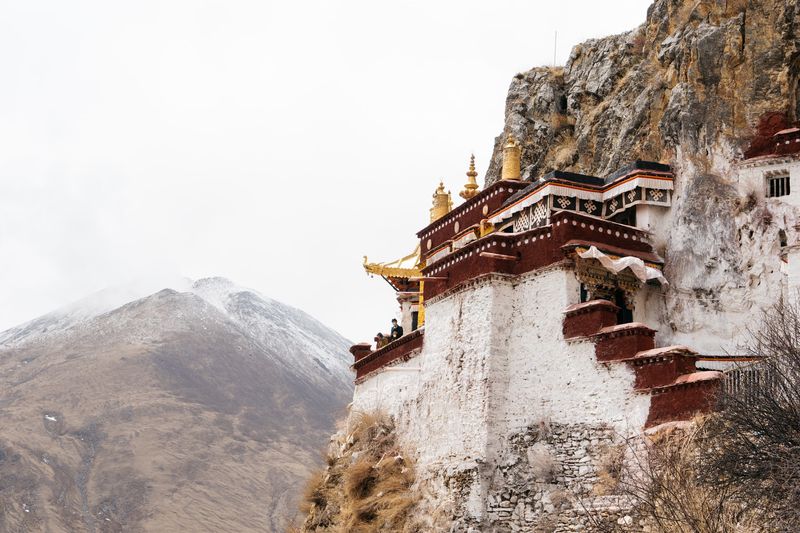
Some places feel old. Yerpa feels ancient.
Its story reaches back to around the 7th century, when Tibet’s first great kings were shaping the country.
Many visitors call it the first retreat center in Tibet. Monks and hermits came here to find silence, and the cliffs gave them plenty of it.
Caves were carved or found in the rock, and each one became a private room for deep thought.
Walking here, you can feel how long people have been drawn to this hillside. Stone steps are worn smooth.
Smoke from juniper incense drifts past old walls. Pilgrims move slowly, partly from devotion and partly from the altitude.
A Tibetan saying claims that Lhasa is the holy land of Tibet, and Yerpa is the holy land of Lhasa. Skipping it is like sewing a new robe and forgetting the collar.
That is a pretty strong sales pitch for a mountain, and most visitors agree it holds up.
Bring patience, a camera, and a sense of curiosity. The history here is not behind glass.
It is built right into the rock around you.
Guru Rinpoche’s Famous Meditation Cave
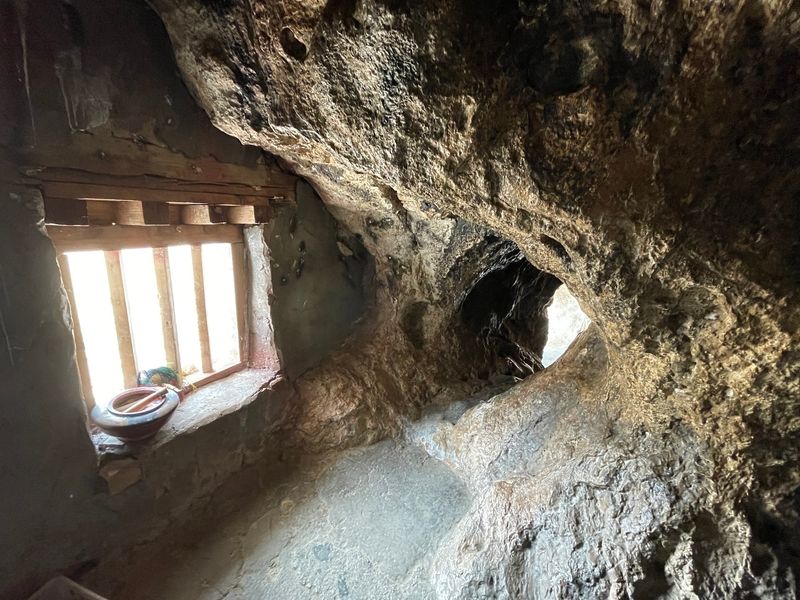
Picture a teacher who brought Buddhism to Tibet, sitting alone in a cold cave for months. That is the story told about Guru Rinpoche, also called Padmasambhava, at Yerpa.
In the 8th century he is said to have meditated here.
Tradition links him to a group of 108 meditation caves scattered across the cliffs. Some are tiny and dark.
Others have small altars, faded paintings, and the soft glow of butter lamps.
Duck your head when you enter. Many caves have low ceilings, and the rock does not care how tall you are.
Inside, the air is cool and still, and voices drop to a whisper without anyone asking.
Pilgrims often touch their foreheads to the cave walls as a sign of respect. Visitors are welcome to watch quietly.
Ask before taking photos inside, since some spaces are for prayer first and pictures never.
Wear shoes with good grip. The paths around the caves are rocky, and a calm mind helps more than fast feet.
The Great Masters Who Sat Here
The guest list at Yerpa reads like a who’s who of Tibetan history. Visitors mention Songtsen Gampo, the first Karmapa, and the Indian teacher Atisha among those who meditated here.
Not bad for a mountain with no hotel.
Atisha came in the 11th century and spent years teaching students in the area. His footsteps, so the story goes, still echo in local memory.
Later, Tsongkhapa, who founded the Gelug school, practiced in strict retreat on these slopes.
Because of these figures, Yerpa became an important training ground for the Gelug tradition. Even several Dalai Lamas are said to have meditated in caves here.
Guides and local pilgrims love sharing which cave belonged to whom. If you can, ask a monk or a knowledgeable local, and listen closely.
Stories change a little with each teller, which makes them even more fun.
Take a notebook. Names and dates pile up fast, and the best tales deserve to be written down before the thin air scrambles your memory.
Breathless at 4,500 Meters
One reviewer put it simply: take your breath, take your time. Yerpa sits around 4,500 meters, or about 14,000 feet, and your lungs will notice before your eyes do.
Lhasa itself is already high. Add another climb up steep steps, and even short stairways feel like marathons.
Another visitor said the way up was a bit tiring, but then it became spectacular.
Spend a few days in Lhasa before you come. Drink lots of water, walk slowly, and skip heavy meals before the trip.
A headache is a signal to rest, not to push harder.
Pack layers. Mornings can be chilly, and the sun at this height is strong.
Sunscreen, sunglasses, and a hat are not optional.
Pause often, and not only to breathe. Each stop gives you a new angle on the valley below.
The slower pace turns out to be a gift, because you notice more.
Getting There From Lhasa
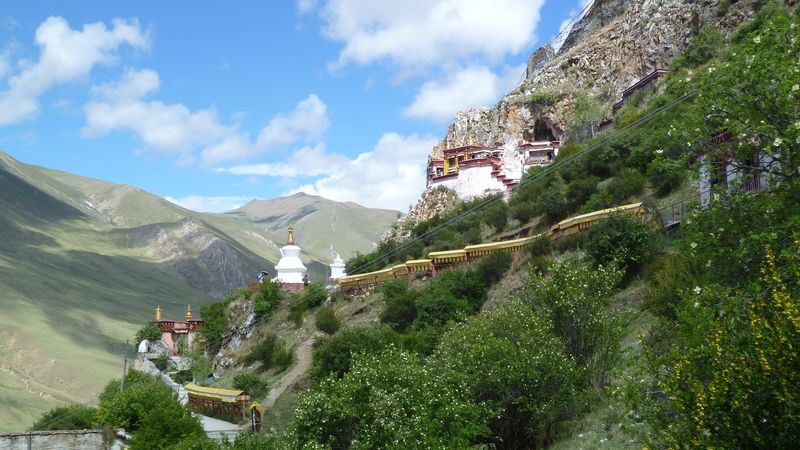
Missing the coach is a rite of passage for some travelers. One visitor did exactly that and ended up hiring a car instead.
The trip worked out fine.
Yerpa lies roughly 30 kilometers northeast of Lhasa, in the Dagze area. Reviewers describe it as about an hour away.
Public coaches have run there, but schedules can be tricky, so ask your hotel before you plan.
Hiring a driver gives you freedom. You can stop for photos, start early to beat the crowds, and return when you are ready.
Share the cost with other travelers to keep it friendly on the wallet.
Remember that travel rules in Tibet can change, and visitors often need proper permits and arrangements. Check current requirements well before your trip.
Your guidebook may spell the name differently. One German visitor noticed the place listed as Drayerba.
Do not worry. Names shift between languages, but the mountain stays put.
The Cliffside Temples
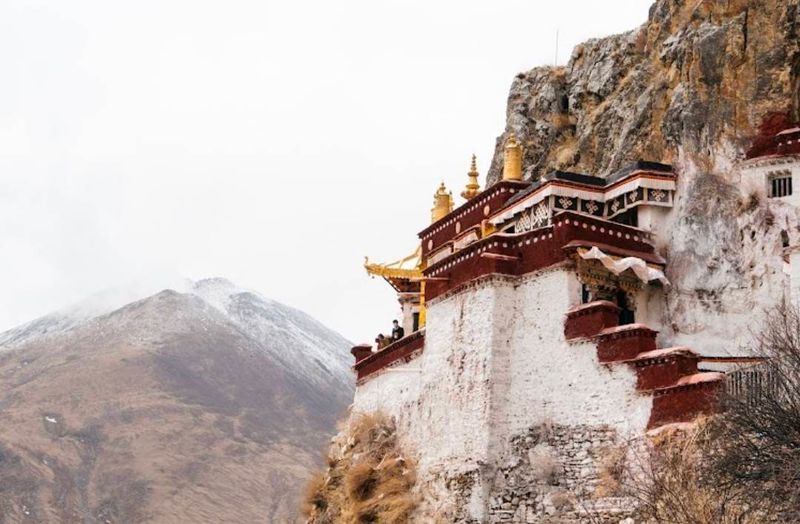
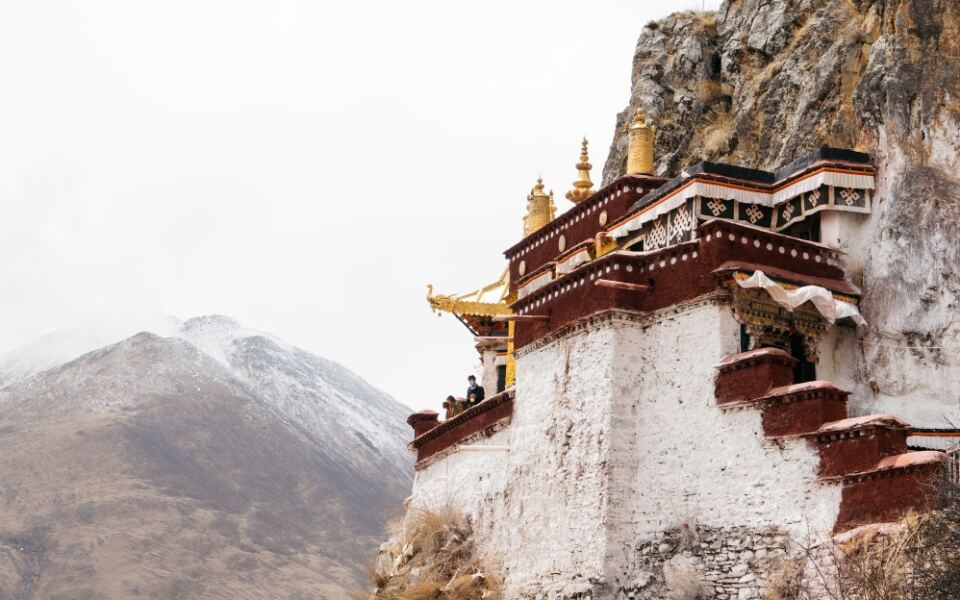
Buildings stuck to a cliff always make visitors pause. At Yerpa, temples cling to the rock as if they grew there.
Whitewashed walls and dark window frames stand out against the brown mountain.
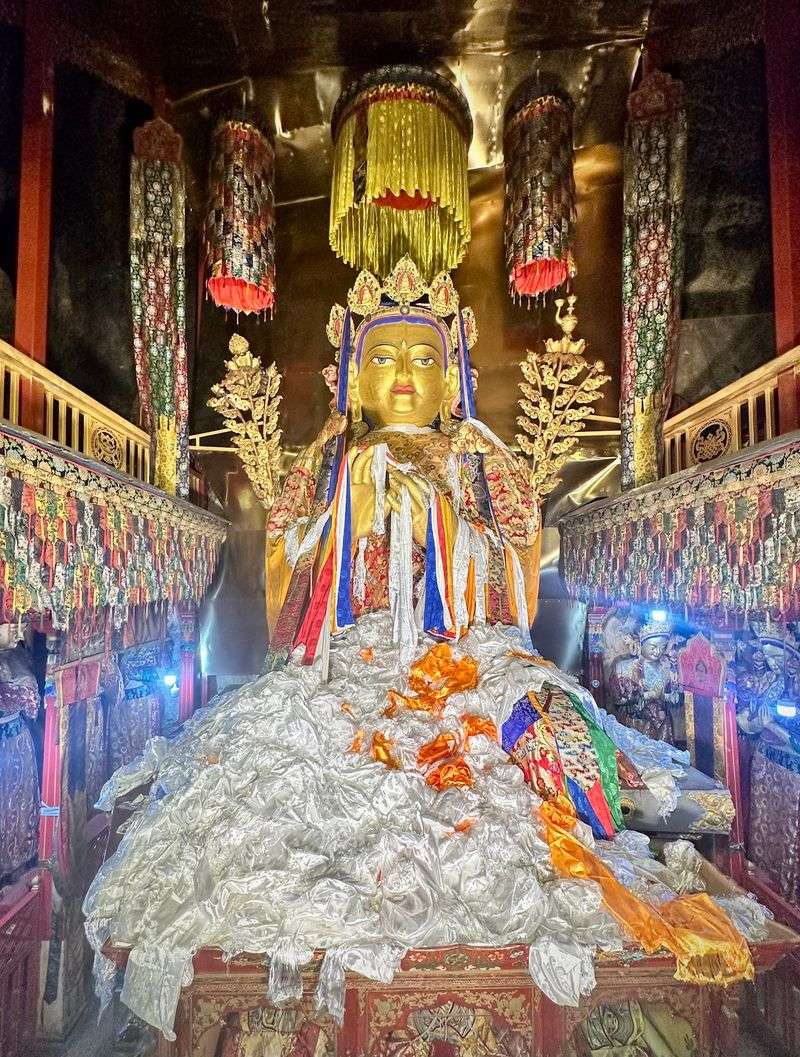
The main hall holds a statue of Maitreya, the future Buddha. Local legend says this Maitreya wears shoes, which is a rare and charming detail.
Look closely and see if you can spot it.
In 1647, the Fifth Dalai Lama built a four-story Gelug monastery here. It included halls for protector deities and rooms for the Dalai Lama himself.
Over the centuries, the site grew and changed.
Before the Cultural Revolution, monks from the Gyuto monastery used Yerpa as their summer retreat location. That history adds another layer to the walls you see today.
Move quietly inside the halls and walk clockwise, as pilgrims do. Small donations for butter lamps are appreciated.
The smell of butter and incense will stay with you long after you leave.
Views That Quiet the Mind
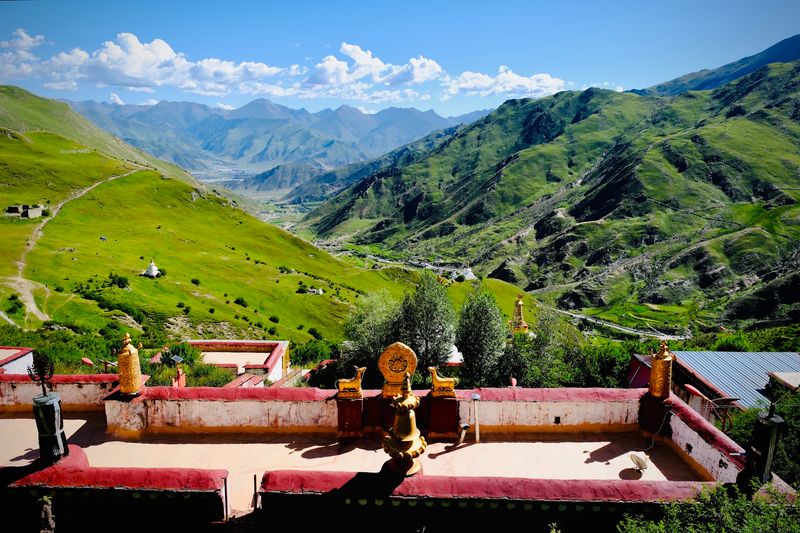
Stand still for a minute and you might hear nothing but wind. That is the charm of Yerpa.
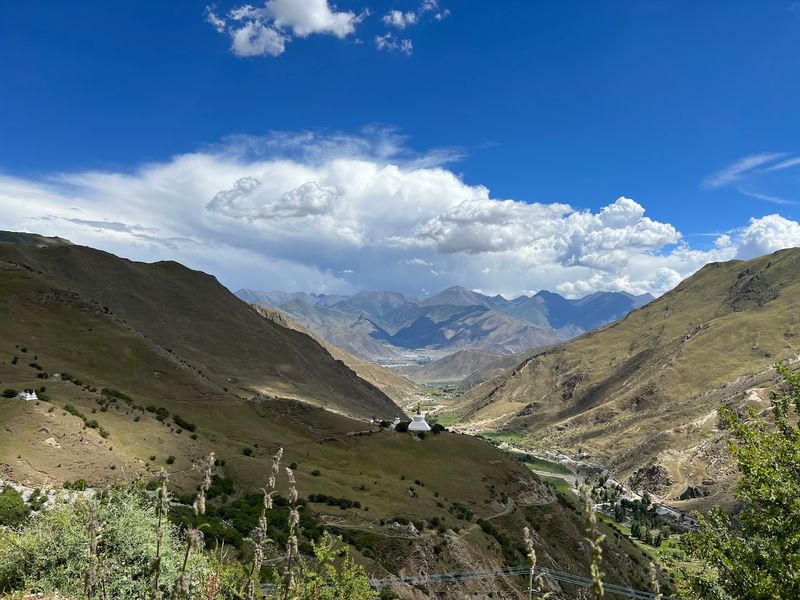
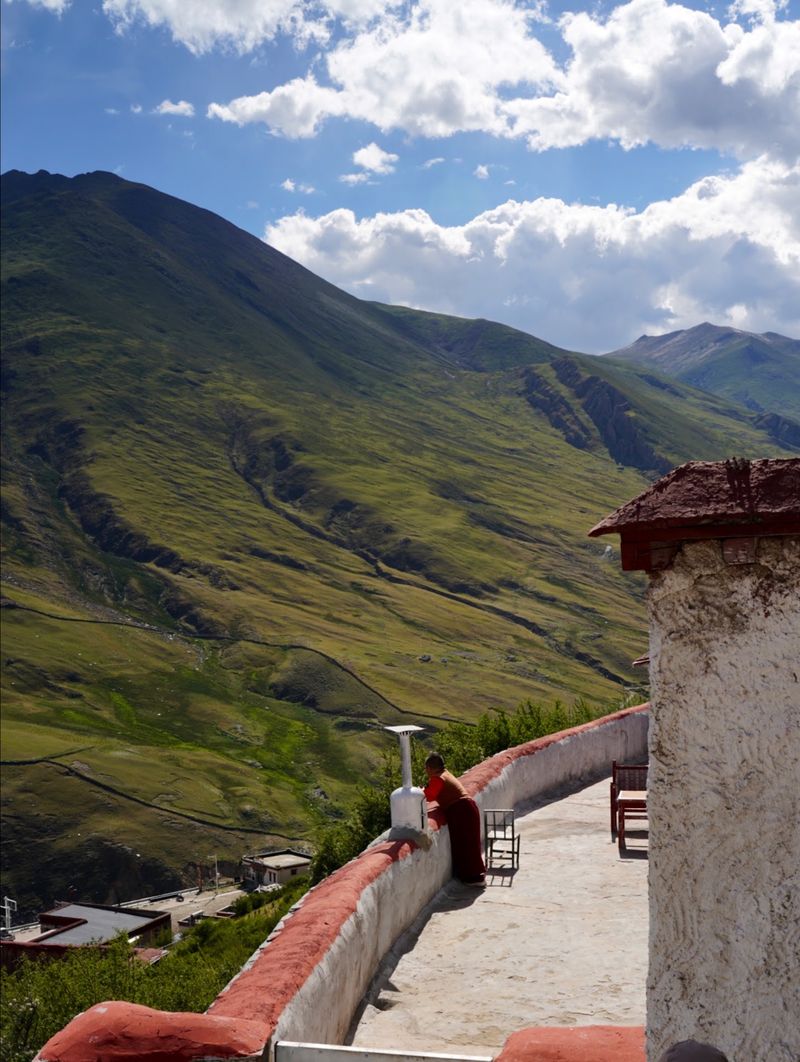
The valley opens wide below, and snowy mountains line the horizon.
One visitor wrote about the thin air and the vast view giving a feeling of not needing anything from the world. Another said you are alone with yourself here.
It is hard to argue when you are standing there.
Pick a flat rock and sit. Watch clouds slide shadows across the slopes.
Count the prayer flags and see how many colors you can spot.
Photographers love the early hours, when light is soft and the crowds are small. Afternoon brings sharper contrast and brighter skies.
Either way, bring a wide lens if you have one.
Phones tend to run low in cold air, so keep a spare battery in an inner pocket. And leave a few minutes with no screen at all.
The view deserves your full attention.
Pilgrims, Prayers, and Festival Days
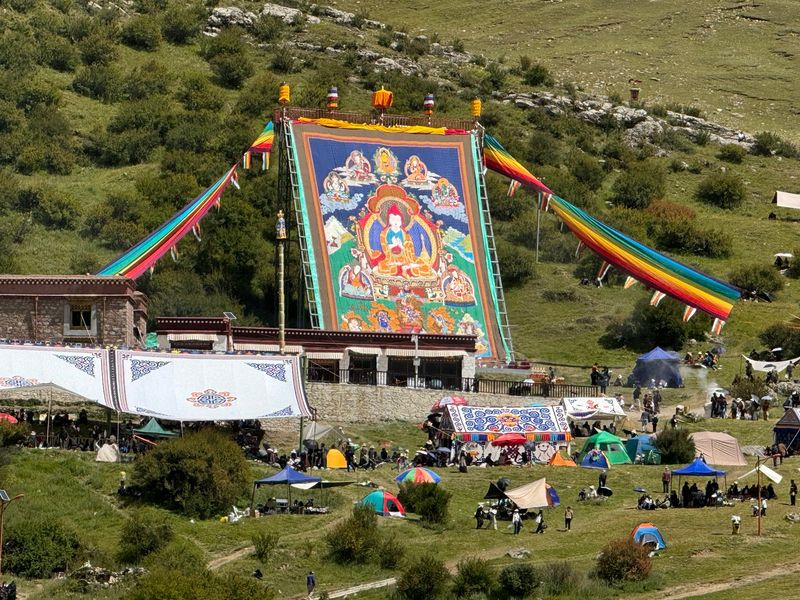
Imagine arriving on a day when the whole hillside is celebrating. A German visitor did just that and found a festival in full swing.
Colorful clothes, chanting, and incense made the climb feel like a party with a purpose.
Even on regular days, local Tibetans come to pray and enjoy the outdoors. Families bring snacks and spin prayer wheels.
Elders walk slowly and murmur mantras, such as om mani padme hum.
As a visitor, follow their lead. Walk clockwise around shrines, keep your voice low, and never touch religious items without permission.
A smile goes a long way when you share no language.
Festival days can be crowded, so expect slower paths and more noise. The reward is a deeper look at living tradition.
Ask your guide about local calendar dates before booking.
Whether quiet or festive, the mood stays warm. People here are generous with their time, and many will happily show you their favorite spot.
Yaks, Trails, and Monastery Walks
Yaks are the unofficial welcome committee. One traveler listed snowy peaks, yaks, and trekking between monasteries as highlights, all within an hour of Lhasa.
Trails wind around Yerpa, linking caves, small shrines, and nearby monastery buildings. Some paths are gentle.
Others climb steeply on loose stones. Choose the route that fits your energy.
Keep a respectful distance from the yaks. They look calm, but they are big animals with horns.
A zoom lens is a safer friend than a close selfie.
Bring snacks, water, and a light rain jacket. Weather can change quickly in the mountains.
A walking stick helps on downhill sections, where knees complain first.
Do not rush the circuit. The best moments often come between sights, like a monk lighting incense or a bright flag snapping in the wind.
Treat the trail as part of the destination, not just the way to it.
Monks Living the Simple Life
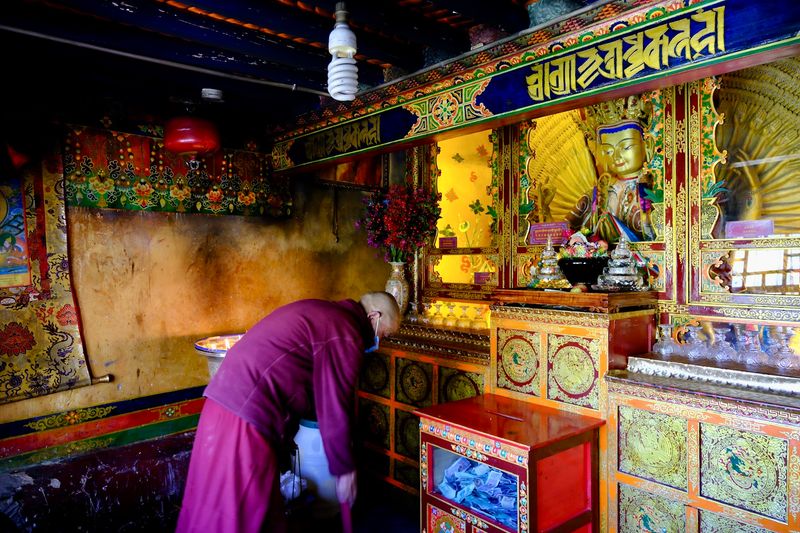
Life up here is not about comfort. Visitors have noticed monks living simply in the mountains, with few possessions and plenty of devotion.
One traveler compared their discipline to a scholar content with a bowl of rice and a ladle of water.
Small hermitages dot the slopes. Some are tucked behind rocks, with smoke rising from tiny chimneys.
Inside, days are shaped by prayer, study, and silence.
Treat these spaces with respect. Do not wander into private areas, and avoid pointing cameras at people without permission.
A quiet nod is often the best greeting.
If you want to give something, small offerings at temples are the usual route. Ask your guide what is appropriate.
Kindness and good manners matter more than gifts.
Leaving Yerpa, many visitors say they feel lighter and clearer. A few hours among people who live with so little can make your own to-do list look surprisingly short.
That may be the most useful souvenir of all.
Share this story