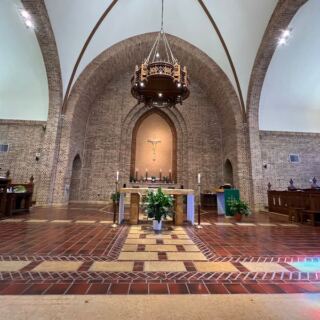
Churches are supposed to be places of calm and quiet reflection, but some have a rather different reputation. A handful of these sacred buildings have collected legends so bizarre, so persistent, and so delightfully unsettling that they have become famous for their mysteries rather than their architecture. Think hidden treasures locked beneath stone floors, phantom coaches charging through ancient graveyards, and ghostly congregations sitting silently in rotting pews. The 13 churches in this article span continents and centuries, yet they all share one thing: stories that refuse to go away no matter how many historians try to debunk them.
Some legends are rooted in real historical events, others have grown entirely from local imagination, and a few exist somewhere in the blurry middle ground where fact and folklore shake hands. Get comfortable, because these are not your average Sunday morning stories.
1. Rosslyn Chapel, Roslin, Scotland
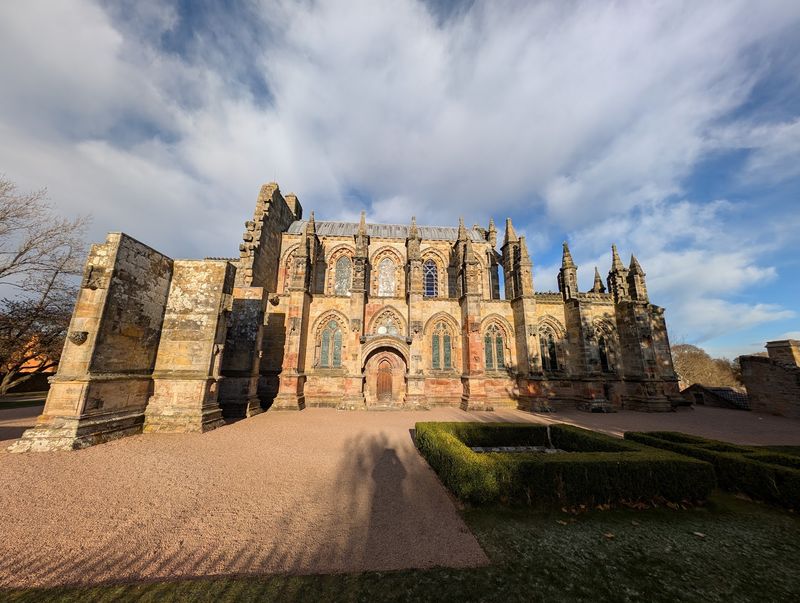
No church on earth has collected quite as many wild theories per square foot as this elaborately carved 15th-century chapel in Roslin. Legends connect Rosslyn with the Knights Templar, Freemasonry, hidden treasure, and the Holy Grail, making it the undisputed champion of religious conspiracy theories.
The Sinclair family, who founded the chapel, reportedly left coded messages carved into its stonework, and enthusiasts have spent decades trying to crack them. A sealed crypt beneath the chapel fuels constant speculation about what might be stored inside, with theories ranging from ancient manuscripts to Scotland’s crown jewels.
Historians generally point out that hard evidence for most of these claims is remarkably thin. Even so, the legends have become completely inseparable from the chapel’s identity, drawing visitors who arrive less interested in prayer than in the possibility of uncovering a centuries-old secret.
2. St. Michan’s Church, Dublin, Ireland
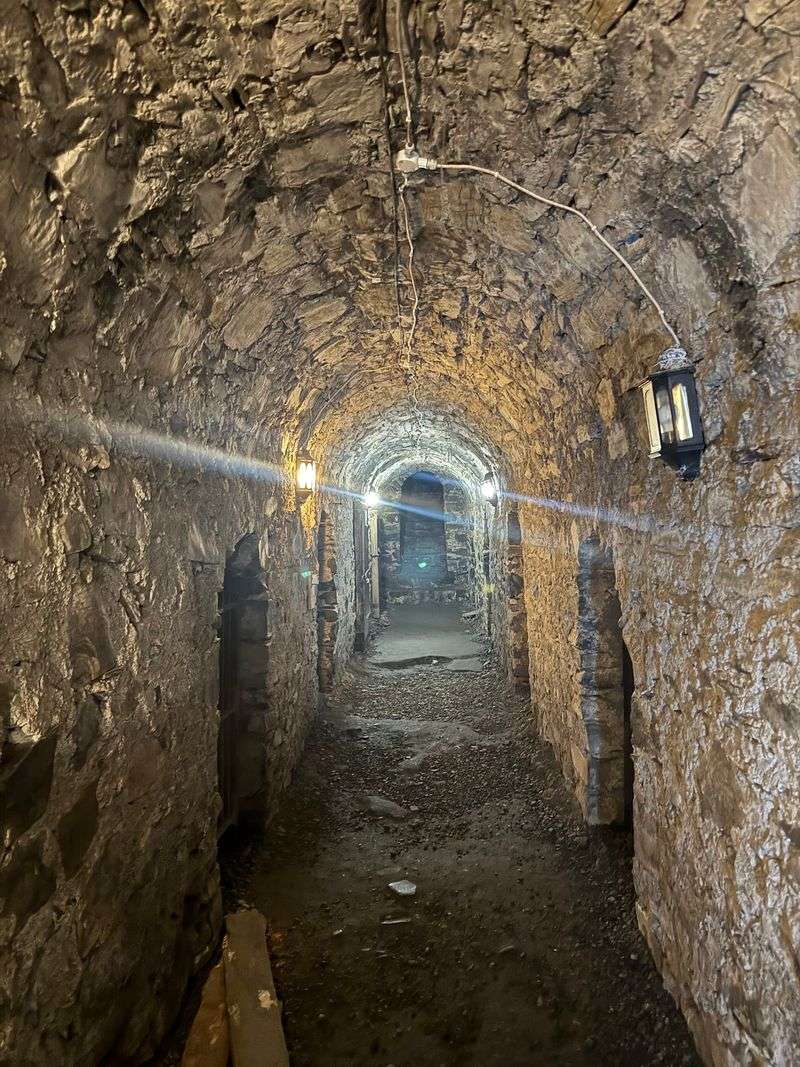
Beneath the floorboards of this unassuming Dublin church lies one of Ireland’s strangest tourist attractions: a network of crypts containing naturally mummified human remains. The dry air, limestone walls, and possibly methane gas from the surrounding marshland have preserved bodies for centuries in a state that makes historians and visitors equally wide-eyed.
Among the crypt’s most famous residents are the Sheares brothers, executed after the 1798 Irish Rebellion, and a towering figure nicknamed “the Crusader,” believed to have fought in medieval Crusades. Other mummies carry names like “the Nun” and “the Thief,” titles that blur historical fact with creative local storytelling.
For years, visitors were encouraged to touch the Crusader’s extended hand for good luck, though that practice was eventually stopped following vandalism. The crypts remain open for guided tours, offering a genuinely unusual encounter with Dublin’s layered past.
3. St. Mary’s Church, Whitby, England
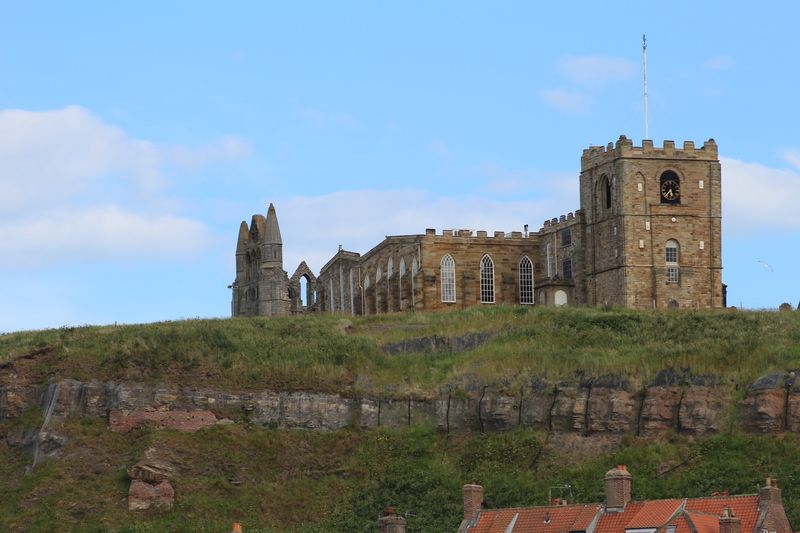
Sitting high above Whitby harbour with the ruins of Whitby Abbey looming beside it, St. Mary’s Church practically wrote its own Gothic reputation before Bram Stoker ever arrived in town. Stoker set a pivotal scene from his novel Dracula in this very churchyard, with the vampire scrambling up the famous 199 steps after his ship wrecks in the harbour below.
Stoker even borrowed the name of Dracula’s first English victim from a real gravestone in the churchyard, a detail that has turned the cemetery into a literary pilgrimage site. Local folklore piles on further with tales of a phantom coach pulled by headless horses, said to charge toward the church doors on dark nights.
Witnessing the spectral carriage is considered an omen of misfortune by those who take the legend seriously. Whitby leans into its Gothic identity enthusiastically, and St. Mary’s sits at the very heart of that identity.
4. Holy Trinity Church, Bosham, England
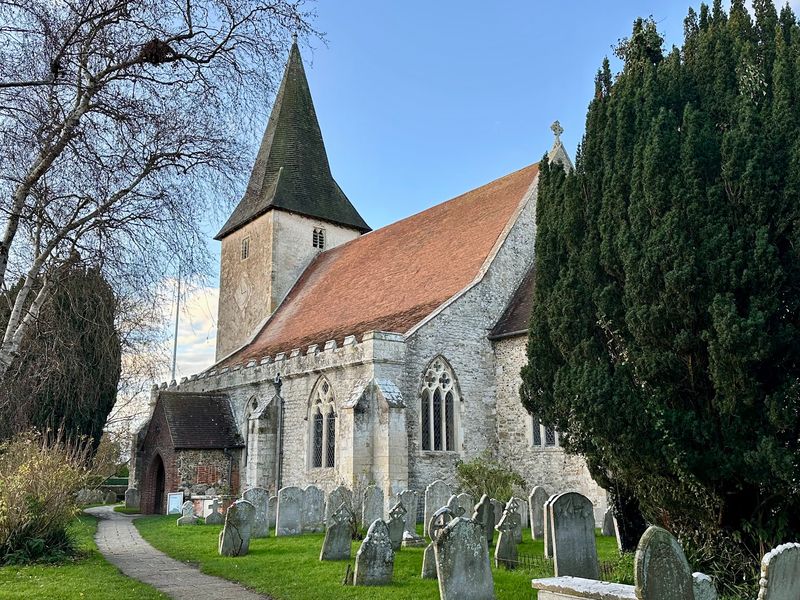
An old story attached to this ancient Saxon church claims that a daughter of King Canute drowned in a nearby millstream around 1020 and was buried within its walls. For centuries, that remained a local curiosity with no physical proof to back it up.
Then, in 1865, restoration workers discovered a small stone coffin near the chancel arch containing the remains of a child estimated to be around eight years old. The craftsmanship of the coffin matched Canute’s era closely enough to send the legend into overdrive, and a modern memorial has since been placed in the church floor acknowledging the tradition.
Historians remain cautious, noting that the child’s identity cannot be confirmed with any certainty. The church also appears in the Bayeux Tapestry, showing King Harold praying there before his voyage to Normandy, adding another layer of royal history to an already remarkable building.
5. Chapel of the Holy Cross, Sedona, Arizona
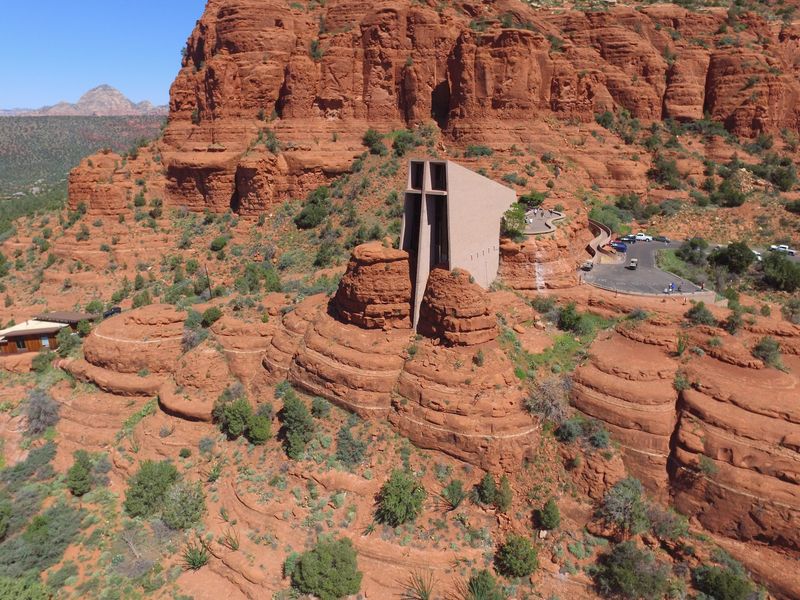
Built directly into Sedona’s towering red rock formations and completed in 1956, this modernist chapel attracts two very different kinds of visitor: those who come to pray and those who come to feel the energy. New Age traditions claim the chapel sits near a powerful spiritual vortex, an invisible energy center said to promote healing, inspiration, and spiritual clarity.
Marguerite Brunswig Staude, the visionary who commissioned the chapel, designed it as a sanctuary for people of all backgrounds, intending it to harmonize with the landscape rather than dominate it. That philosophy has worked almost too well, because the chapel’s location has become as famous as its architecture.
Visitors regularly report an unusually strong sense of peace or connection while on the grounds, descriptions that fuel the vortex belief regardless of any scientific basis. The result is a sacred site that carries a distinctly unconventional layer of mystery alongside its striking concrete and glass design.
6. St. Dunstan-in-the-East, London, England
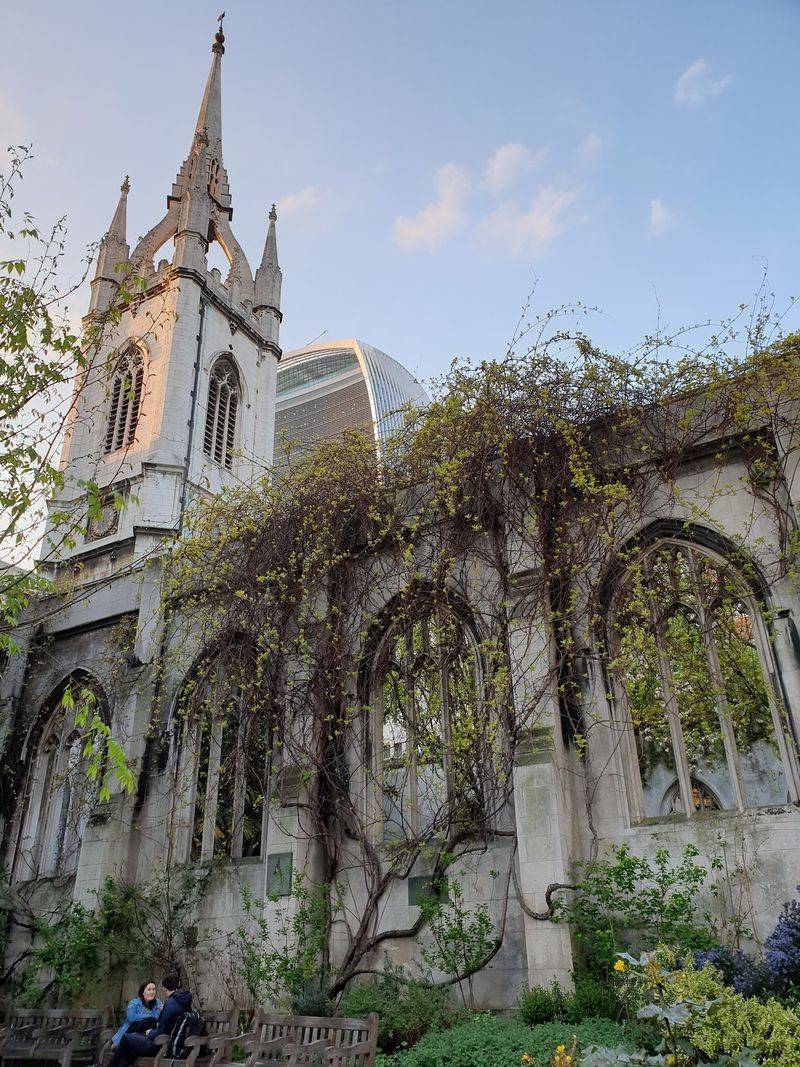
A direct hit during the Blitz in 1941 reduced most of St. Dunstan-in-the-East to a roofless shell, but the City of London chose not to rebuild it. Instead, the ruins were converted into a public garden in 1970, and the result is one of London’s most atmospheric hidden corners, where plants climb through ancient stone arches and history sits quietly in every crumbling wall.
The church had already survived the Great Fire of London in 1666, with Sir Christopher Wren designing its distinctive steeple during the rebuild. That tower still stands today, adding architectural grandeur to the garden’s ruined setting.
Ghost stories and tales of strange encounters have naturally attached themselves to such an evocative place. Adding historical intrigue, the church is named after St. Dunstan, a 10th-century monk whose own legends include a memorable confrontation with the Devil, giving the site a supernatural backstory that predates its wartime ruins by a thousand years.
7. St. Mary’s Church, Clophill, England
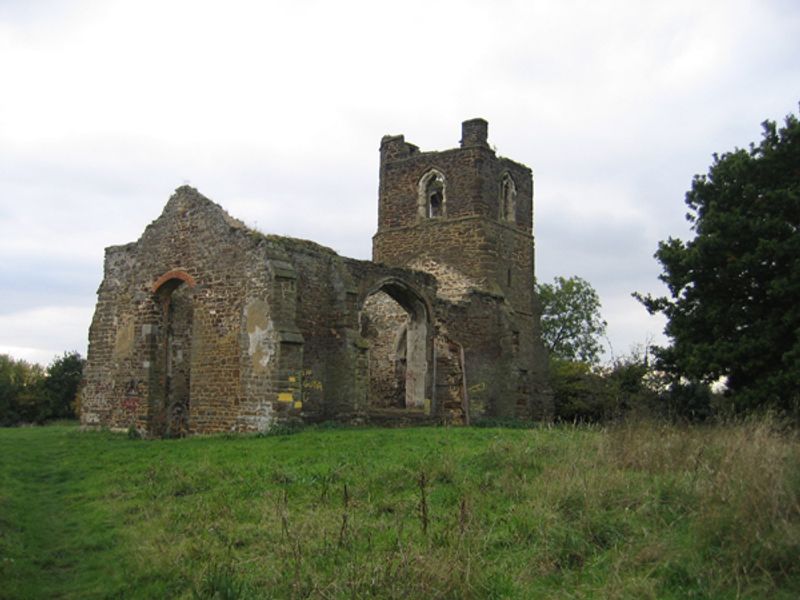
Abandoned in the mid-19th century after a new village church was built, Old St. Mary’s in Clophill was left to decay on its isolated hilltop, and that isolation proved to be an open invitation for trouble. Local folklore already claimed the church faced west rather than the traditional east, a detail some interpreted as evidence that darker forces had influenced its construction.
The church gained national attention in 1963 when a human skull, later identified as belonging to a local woman named Jenny Humberstone, was found arranged in a ritualistic manner inside the ruins. Similar incidents in 1969 and 1975, involving animal remains and painted symbols, cemented its reputation as a site for alleged occult activity.
Paranormal investigators and curious visitors continue to report shadowy figures, unexplained lights, and a persistent sensation of being watched. Bedfordshire has no shortage of historic sites, but none have gathered quite this particular collection of unsettling stories.
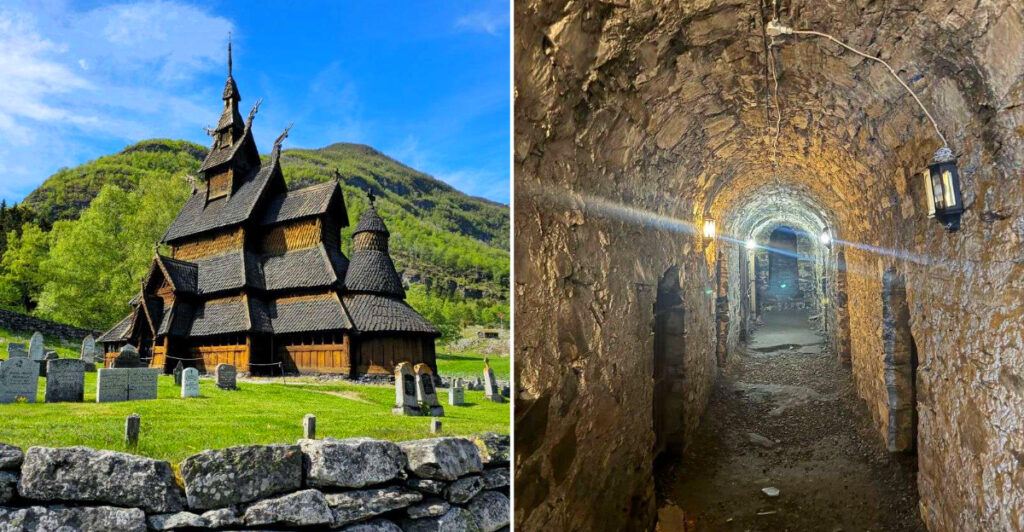
8. Borgund Stave Church, Borgund, Norway
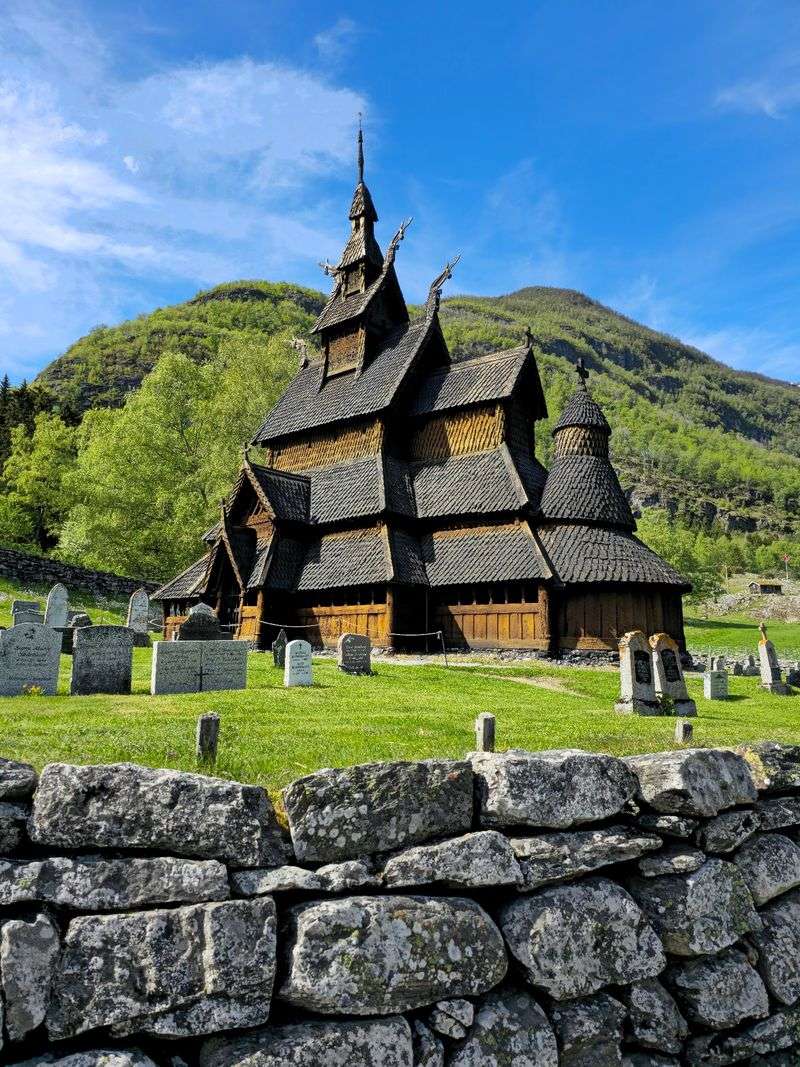
Built around 1180 to 1200, the Borgund Stave Church looks less like a place of Christian worship and more like something a Viking shipwright designed on a particularly creative afternoon. Its multi-tiered roofs are decorated with intricately carved dragon heads, a feature borrowed directly from pre-Christian Norse tradition and intended to ward off evil spirits.
The entire structure was built without metal nails, using interlocking timber joints that reflect the same woodworking tradition used to construct Viking longships. Inside, runic inscriptions reference Norse mythology, revealing that older beliefs did not simply vanish when Christianity arrived in Scandinavia.
This blend of pagan imagery and Christian purpose has inspired countless stories about the uneasy transition between two very different spiritual worlds. The church is now one of Norway’s best-preserved stave churches and a UNESCO-listed site, though its dragon heads still suggest that its builders were hedging their spiritual bets quite deliberately.
9. St. Nicholas Church, Pluckley, England
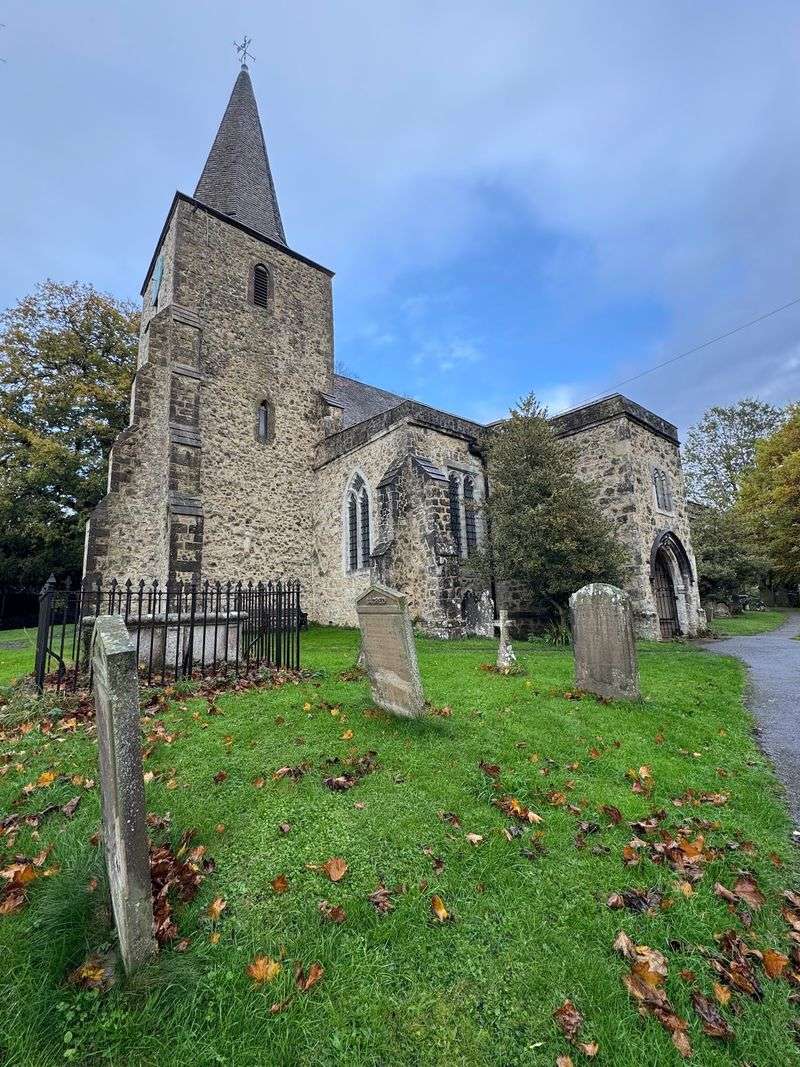
Pluckley has been marketed as England’s most haunted village for decades, and its medieval church sits at the center of that reputation like a very old, very patient ghost magnet. Dating back over 900 years, St. Nicholas Church and its surrounding cemetery have attracted paranormal investigators, folklore enthusiasts, and genuinely curious visitors in roughly equal numbers.
Two of the village’s most famous reported apparitions are directly connected to the church grounds. The “White Lady” is said to be a young woman buried in multiple coffins within an oak sarcophagus, whose figure has been observed inside the church itself. The “Red Lady,” believed to be a member of the Dering family, reportedly roams the churchyard searching for a child.
Beyond these specific figures, accounts of unexplained knocking sounds, flickering lights, and an overall sense of unease keep the church firmly on the paranormal circuit. Whether the stories are true or not, they have made Pluckley genuinely famous.
10. St. James Church, Cooling, England
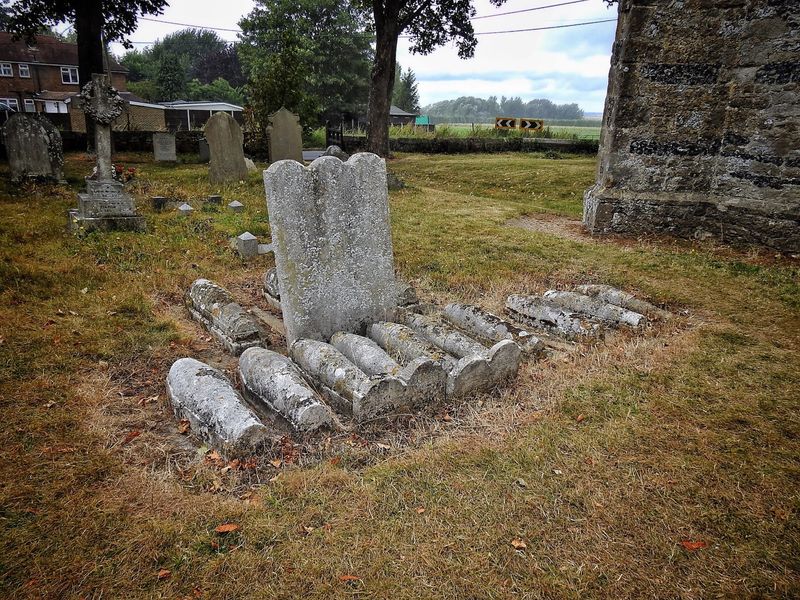
Charles Dickens knew exactly what he was doing when he chose the churchyard of St. James Church in Cooling as the setting for the opening scene of Great Expectations. The flat, windswept Kent marshes surrounding the church create a backdrop so bleakly atmospheric that it practically writes dramatic fiction on its own.
The distinctive row of small headstones that inspired Pip’s encounter with the convict Magwitch are real. They mark the burial sites of 13 infants from the Comport and Rose-Baker families who passed away between the late 18th and mid-19th centuries. Dickens reduced the number to five for his novel, but the originals remain, weathered and low to the ground, exactly as he found them.
Local stories have since added further layers of mystery to the churchyard, building on its literary fame. Visitors who make the trip across the marshes often find the location every bit as unsettling as Dickens intended it to be.
11. St. Andrew’s Church, Toddington, England
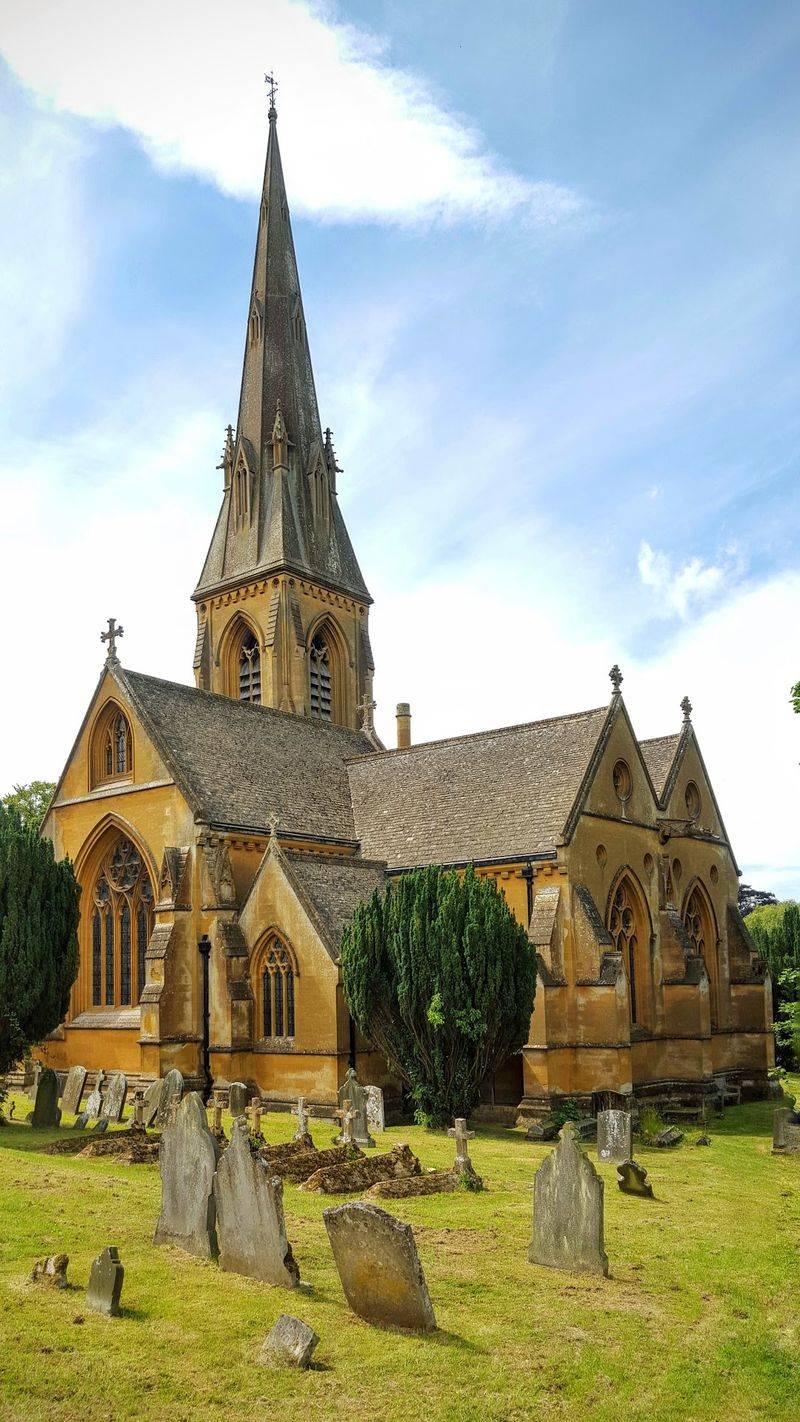
Most medieval churches accumulate legends involving saints or monarchs, but St. Andrew’s in Toddington went a different route entirely, collecting a story about a screaming skull. According to local tradition, the skull of Lady Anne Wentworth rests within the church, and anyone who attempts to move or remove it will face severe and immediate misfortune.
The legend insists that the skull will produce unearthly screams or trigger poltergeist-like disturbances if disturbed, a threat that has apparently been convincing enough to keep it in place. The specific historical identity of the Lady Anne Wentworth in question is difficult to pin down, existing more firmly in oral tradition than in verifiable records.
This kind of “screaming skull” tradition appears in several English locations, but Toddington’s version has given this otherwise peaceful church an unexpectedly eerie reputation. Visitors arrive expecting a quiet medieval building and leave with a story worth telling at dinner.
12. St. Botolph’s Church, Skidbrooke, England
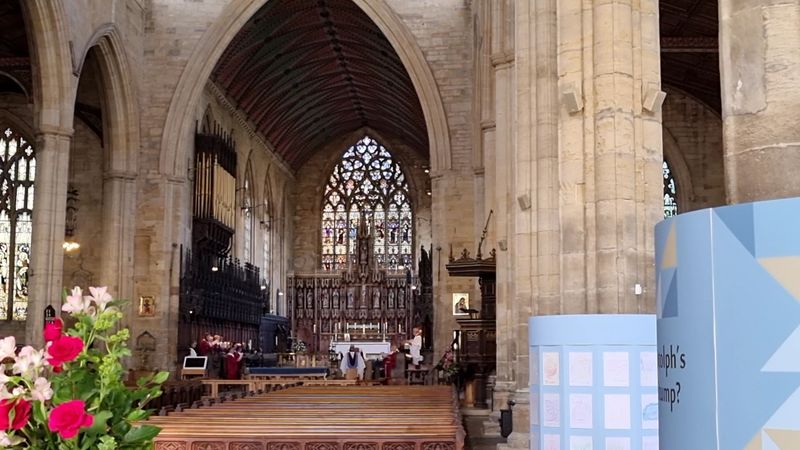
Few churches have earned a nickname quite as dramatic as “the Demon Church,” but St. Botolph’s in Skidbrooke has done exactly that. Declared redundant for regular worship in 1973, this medieval building stands in flat, remote Lincolnshire countryside with no nearby neighbors to notice what happens after dark.
Reports of alleged occult gatherings date back to the 1970s and 1980s, with investigators periodically finding evidence of rituals including candles, painted pentagrams, and animal remains within the building. Whether these incidents were the work of organized groups or opportunistic thrill-seekers has never been fully established.
Paranormal accounts add another dimension, with visitors claiming to see a ghostly monk, observe unexplained lights in the sky, and hear sounds of storms during calm weather. The line between documented strange occurrences and accumulated folklore blurs considerably at Skidbrooke, which is perhaps exactly why the church continues to draw curious visitors from across the country.
13. St. Mary’s Church, Painswick, England
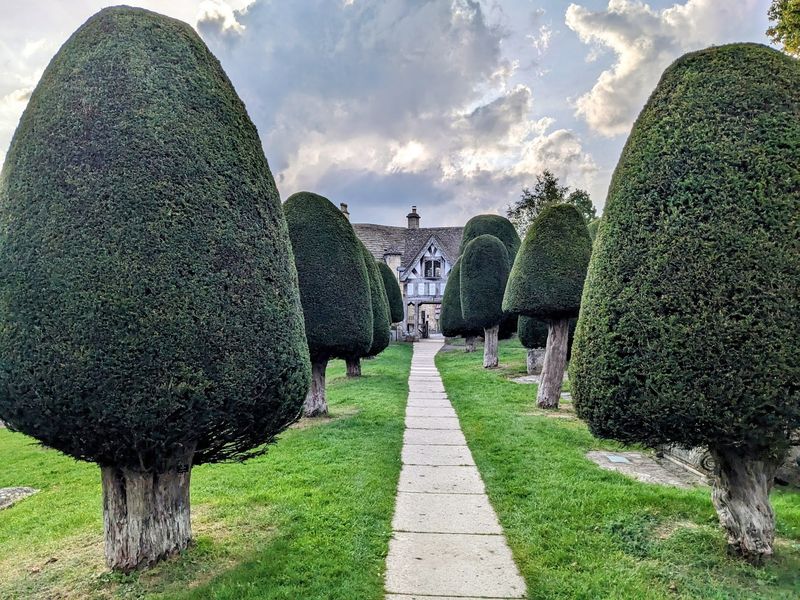
The churchyard of St. Mary’s in Painswick is famous for its collection of carefully clipped yew trees, but the number of those trees is where things get interesting. Local legend insists that exactly 99 yew trees can grow in the churchyard, and that if a 100th is ever planted, the Devil will personally ensure it does not survive.
A 100th tree was reportedly planted in the year 2000 to mark the millennium, and it initially appeared to thrive. Then, in 2007, a different established yew toppled during a storm, which local storytellers promptly attributed to diabolical intervention rather than bad weather.
Visitors who attempt to count the trees rarely arrive at the same number twice, which either suggests imprecise counting or a supernaturally fluid arboreal situation. Either way, the legend of the Devil’s yew trees remains one of the Cotswolds’ most charming and stubbornly persistent pieces of folklore.
Share this story