Oklahoma has a way of hiding its best surprises behind flat highways and ordinary road signs. You might drive through the southwestern part of the state expecting nothing unusual, and then suddenly the land rises, the rocks turn red, and something massive and horned steps out of the brush just a few feet from your car window.
Wichita Mountains Wildlife Refuge is that kind of place, the kind that makes you pull over, catch your breath, and completely rethink what you thought you knew about this state. It is free to enter, wild in the best possible way, and absolutely worth every mile of the drive.
Where the Wichita Mountains Meet the Oklahoma Plains
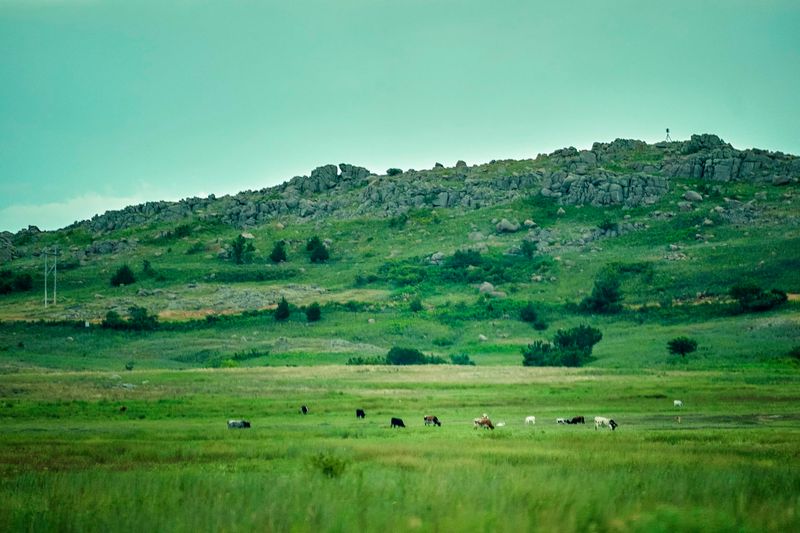
Tucked into the southwestern corner of Oklahoma, the Wichita Mountains Wildlife Refuge sits near the small community of Indiahoma, roughly 15 miles north of Lawton. The address is 32 Refuge Headquarters Road, and the drive in already signals that something different is ahead.
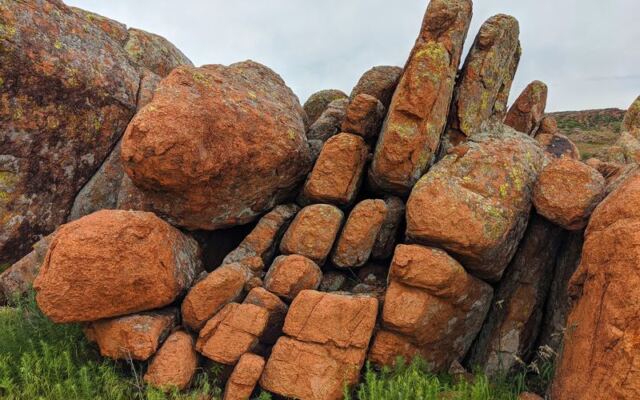
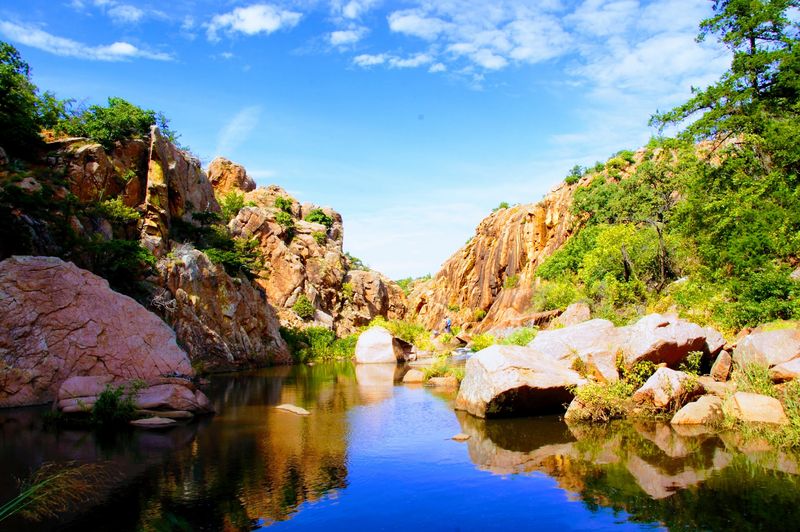
Unlike the flat, featureless terrain that stretches across much of the state, this refuge rises into ancient granite peaks that geologists say are among the oldest exposed rock formations in North America. The contrast hits visitors almost immediately.
One moment you are cruising through rolling plains, and the next, enormous boulders and rugged ridgelines dominate the horizon.
Managed by the U.S. Fish and Wildlife Service, the refuge covers roughly 59,020 acres of mixed-grass prairie, rocky outcrops, and scattered lakes.
Visitors often describe the experience as stepping into a completely different world. The scenery is beautiful in a very natural way, with rocky mountains, open fields, and big skies layered together in a scene that feels far removed from everyday life.
Arriving here for the first time tends to leave people genuinely stunned by how much Oklahoma was hiding all along.
The Longhorn Herd That Has Called This Place Home for Over a Century
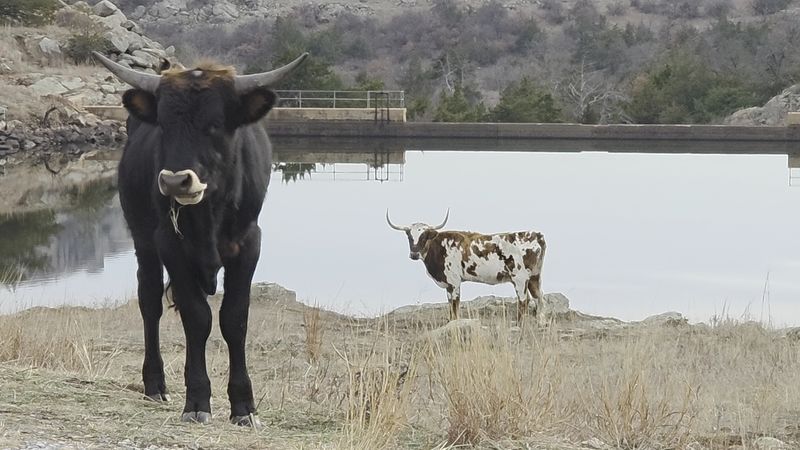
Long before road trips and wildlife selfies were a thing, longhorn cattle were already living inside the boundaries of what would become this refuge. The herd here traces its roots back to a conservation effort launched in the early 1900s, when the Texas Longhorn breed was on the verge of disappearing entirely from the American landscape.
A small founding group of longhorns was brought to the refuge to preserve the breed, and their descendants still roam these hills today. Spotting one along a back road is a genuine thrill.
Their horns can stretch to impressive widths, and they carry themselves with a quiet authority that feels completely at home against the rugged granite backdrop.
Visitors frequently mention longhorn sightings as one of the unexpected highlights of their trip. People who come expecting only bison often drive around a bend and find a longhorn standing calmly in the middle of the road, completely unbothered.
The refuge currently maintains a managed herd, and sightings are common throughout the park on scenic drives and along hiking trails. Seeing these animals in a natural setting, rather than a pen or a ranch, makes the encounter feel genuinely rare and memorable.
Bison: The Symbol That Roams Every Corner of the Refuge
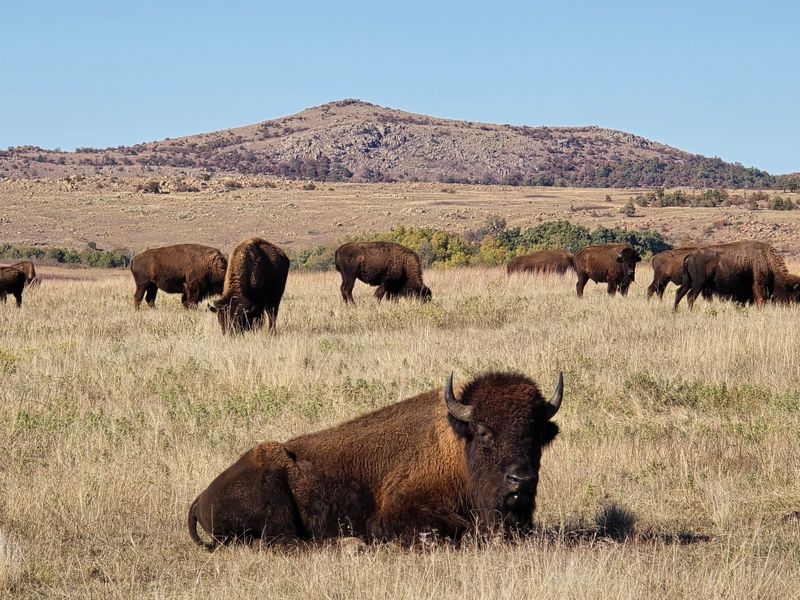
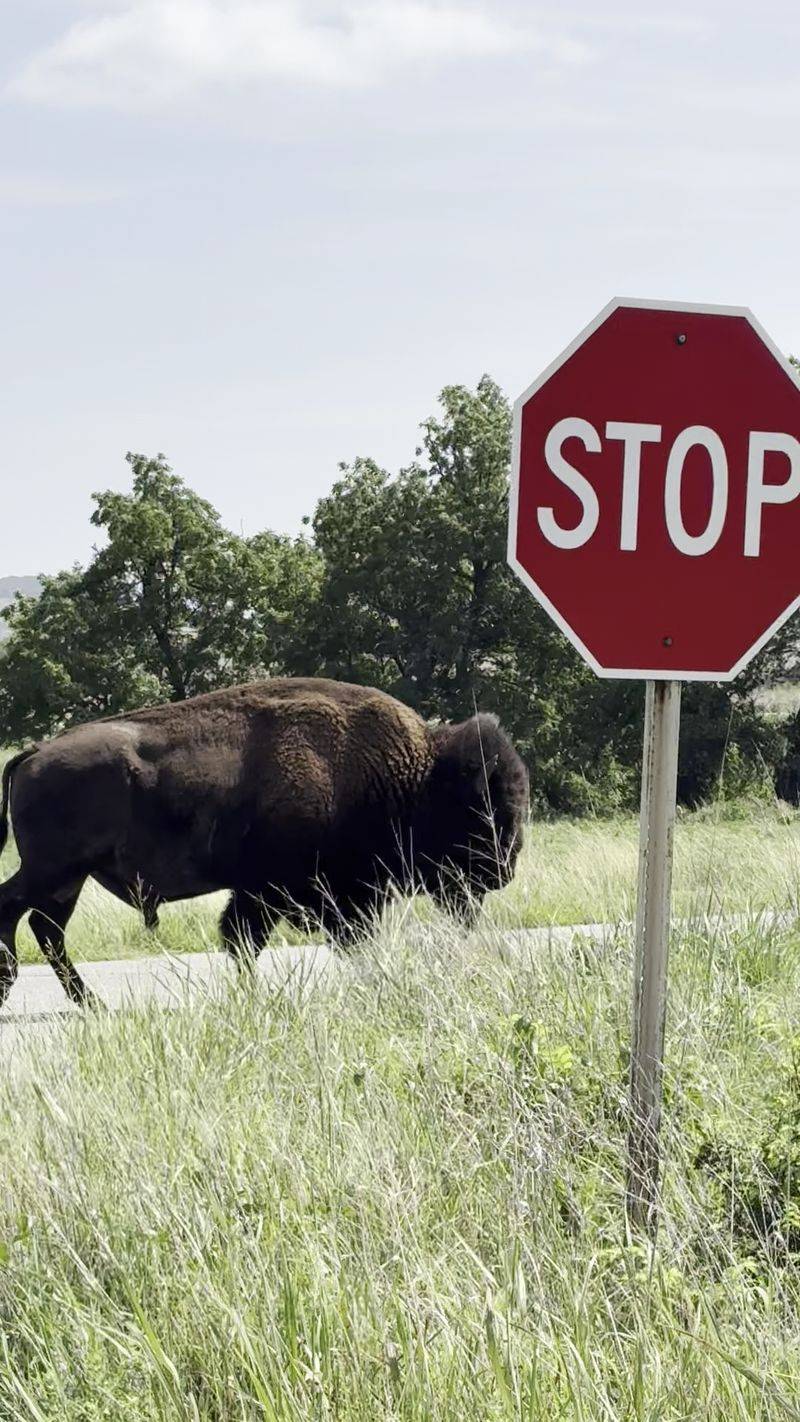
Mention the Wichita Mountains to anyone who has visited, and bison come up almost immediately. The refuge is one of the most accessible places in the country to see these iconic animals up close, and the encounters can be startlingly personal.
Bison roam freely across the grasslands and regularly wander right up to park roads.
The herd here also has deep conservation roots. In 1907, the New York Zoological Society shipped 15 bison to the refuge as part of a national effort to pull the species back from near-extinction.
That founding group grew into the thriving herd visitors see today, which numbers in the hundreds. Driving slowly through the refuge and finding a bison grazing just a few yards from your window is the kind of wildlife moment most people only expect from documentaries.
Visitors consistently describe the bison encounters as the highlight of their trip. Seeing them up close is described as pretty awesome, and many people compare the slow drive through the refuge to a safari experience.
Common sense and respectful distance are essential, since these are wild animals with unpredictable behavior. Still, the opportunity to observe them in open grassland, on their own terms, is something genuinely hard to find anywhere else in Oklahoma.
Prairie Dog Town: The Refuge’s Most Charming Side Street
Prairie Dog Town is exactly what it sounds like, and it is every bit as delightful as the name promises. Tucked within the refuge, this established colony of black-tailed prairie dogs has become one of the most talked-about stops in the park, racking up hundreds of mentions from visitors who stumbled upon it and immediately fell in love.
Pull up near the colony and you will find dozens of small, sandy mounds dotting the ground, each one a doorway into an underground community. The prairie dogs pop up, stand alert on their hind legs, bark at each other, and occasionally sprint between burrows in a flurry of activity that is genuinely hard to stop watching.
Kids and adults alike tend to spend far longer here than they planned.
One visitor noted they still had not made it to Prairie Dog Town on their second trip, which says something about how much else there is to see at the refuge. Making it a priority is well worth the effort.
The colony sits in an open area that makes observation easy, and the prairie dogs are habituated enough to human presence that they go about their business without much fuss. Bring a camera with a decent zoom, because the close-up shots are irresistible.
Mount Scott and the Views That Stop Hikers in Their Tracks
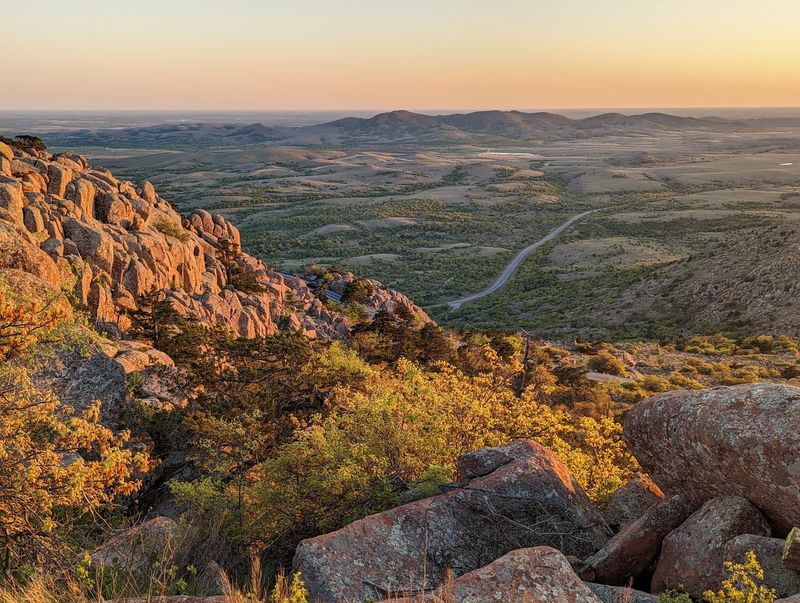
Mount Scott is the kind of place that earns its own sentence in almost every visitor review. Standing as one of the tallest points in the refuge, it offers a paved road to the summit, making the panoramic views accessible to just about anyone willing to make the drive.
From the top, the landscape stretches out in every direction, revealing just how vast and varied this corner of Oklahoma really is.
On clear days, visitors can see layers of granite ridges, shimmering lakes, and open grassland rolling toward the horizon. The contrast between the red-tinted rock and the green prairie below creates a color palette that photographers find endlessly rewarding, especially in the last few hours before sunset when the light turns warm and dramatic.
Hikers who push beyond the paved summit road find even more to explore. The surrounding trails offer scrambles across exposed rock faces and quieter vantage points away from the overlook crowd.
Visitors frequently call Mount Scott a must-see and rank it among the best spots in the entire refuge. Even a quick stop at the top, just long enough to take in the view and breathe the elevated air, tends to leave people feeling like they got something genuinely special out of their visit to southwestern Oklahoma.
Hiking Trails That Range from Easy Strolls to Rocky Scrambles
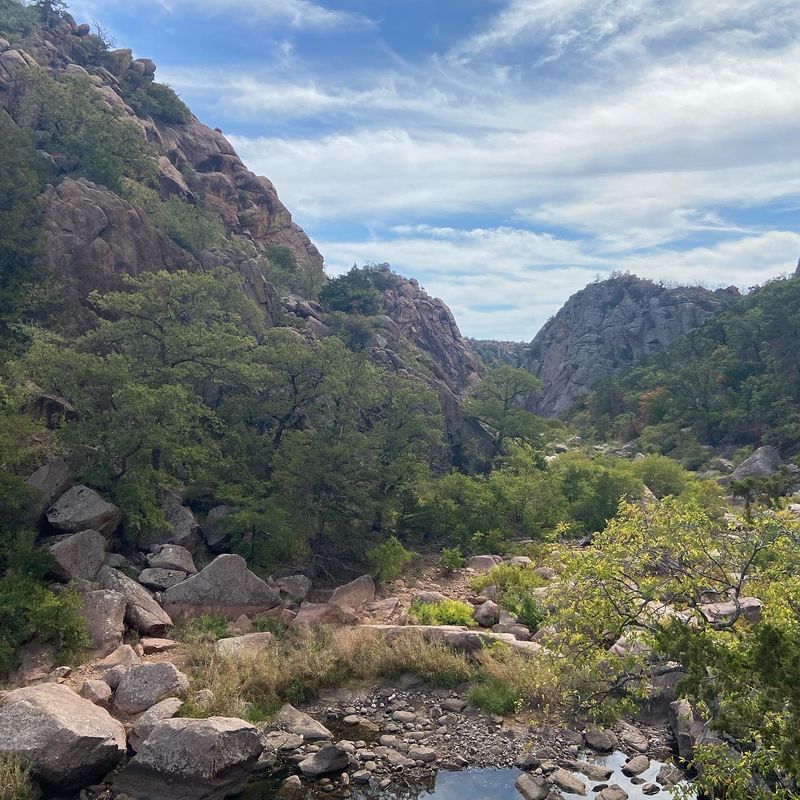
Hiking is the most popular activity at the refuge by a wide margin, and the trail network reflects just how seriously this place takes the outdoor experience. With options ranging from gentle lakeside walks to demanding rock scrambles, the refuge genuinely has something for every fitness level and every kind of adventurer.
Trails like Little Baldy and the Narrows offer distinct personalities. Little Baldy rewards hikers with open summit views after a manageable climb, while the Narrows trail cuts through a striking canyon that visitors describe as a great find.
Many of the paths follow natural rock surfaces rather than groomed dirt trails, which means navigation can require some attention, and trail markers are not always abundant.
That sense of rawness is part of the appeal. Visitors who prefer well-paved, clearly signed routes may want to stop at the visitor center first for guidance on which trails best match their comfort level.
Those who embrace a bit of rock hopping and occasional route-finding tend to fall hard for this place. One hiker described it as a five-star feast for the eyes around every corner, especially in late spring when wildflowers bloom between the granite slabs and birdsong fills the air.
The trails here reward patience and a willingness to slow down.
The Visitor Center: Your Best First Stop Inside the Refuge
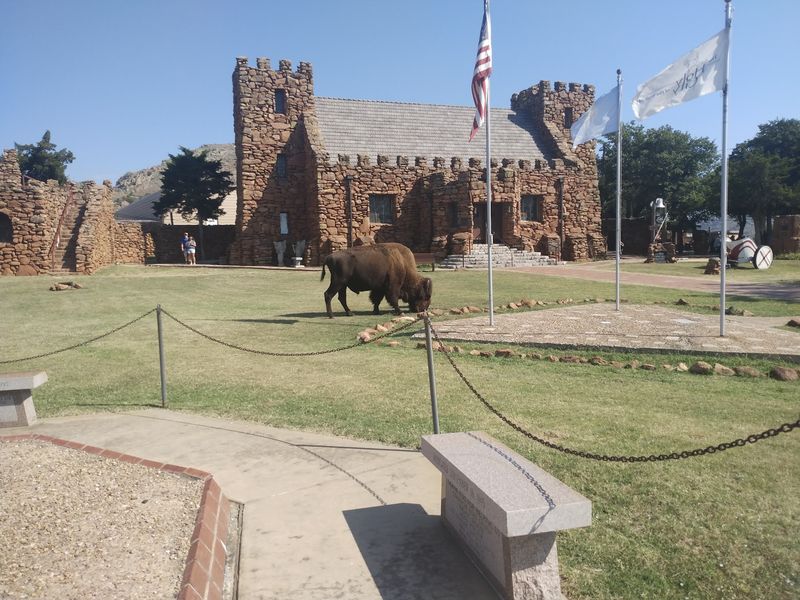
Skipping the visitor center at Wichita Mountains would be a genuine mistake. Positioned near the refuge entrance, it serves as both an orientation hub and a small museum, and visitors consistently praise it as one of the highlights of the entire trip.
The staff are friendly, the bathrooms are reliably clean, and the information available inside can genuinely improve your day in the field.
Inside, exhibits cover the natural and cultural history of the refuge, including the conservation stories behind the bison and longhorn herds. Spending an hour here before heading out gives context to everything you will see on the trails and roads.
Rangers and volunteers on hand can recommend specific trails based on your fitness level, point out where animals have been spotted recently, and flag any conditions worth knowing before you head out.
One practical note worth keeping in mind: cell service is unreliable or nonexistent throughout much of the refuge. Picking up a trail map and getting your bearings at the visitor center before venturing out is genuinely useful, not just optional.
A small gift shop rounds out the stop, offering souvenirs and field guides for those who want to take a piece of the refuge home. First-time visitors especially tend to find the museum well worth their time before hitting the trails.
Elk, Deer, and the Quieter Wildlife That Shares This Land
Bison and longhorns tend to get top billing at the refuge, but the supporting cast of wildlife here is just as impressive. Elk are a regular presence, especially near the lakes and meadows where they graze in the cooler hours of the day.
Spotting a bull elk standing at the edge of a treeline is one of those quiet, unhurried moments that stay with visitors long after they leave.
White-tailed deer are common throughout the refuge and are often remarkably approachable. Campers in particular report deer wandering directly into their sites, seemingly unbothered by human company.
Wild turkey, coyotes, and roadrunners round out the mammal and bird roster, and the skies above the refuge support an impressive variety of bird species that dedicated birders find well worth the trip on their own.
The diversity of wildlife here reflects the ecological richness of the mixed-grass prairie and granite upland habitat. Because the refuge is managed with conservation as the primary goal, animal populations are allowed to behave naturally within their environment.
Visitors who take their time, drive slowly along the back roads, and keep their eyes on the treelines and lakeshores tend to rack up sightings that surprise even experienced wildlife watchers. Patience here pays off in a very satisfying way.
Lakes, Picnic Spots, and the Art of Doing Absolutely Nothing
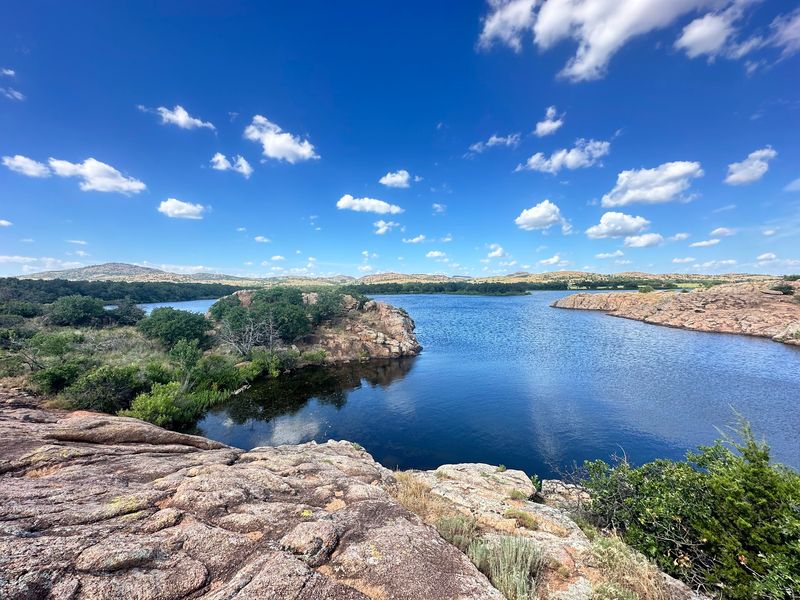
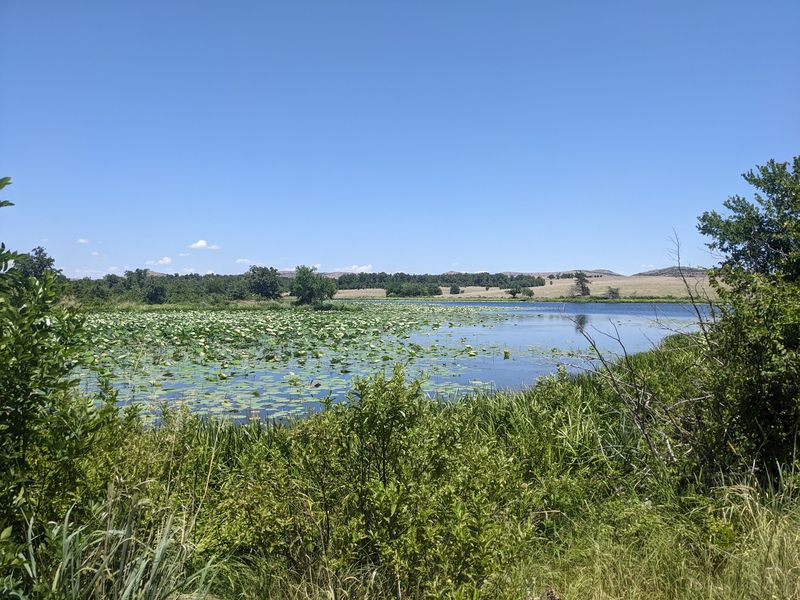
Not every great outdoor experience needs to involve a strenuous hike or a wildlife chase. The refuge includes several lakes that invite visitors to simply stop, sit, and absorb the surroundings at whatever pace feels right.
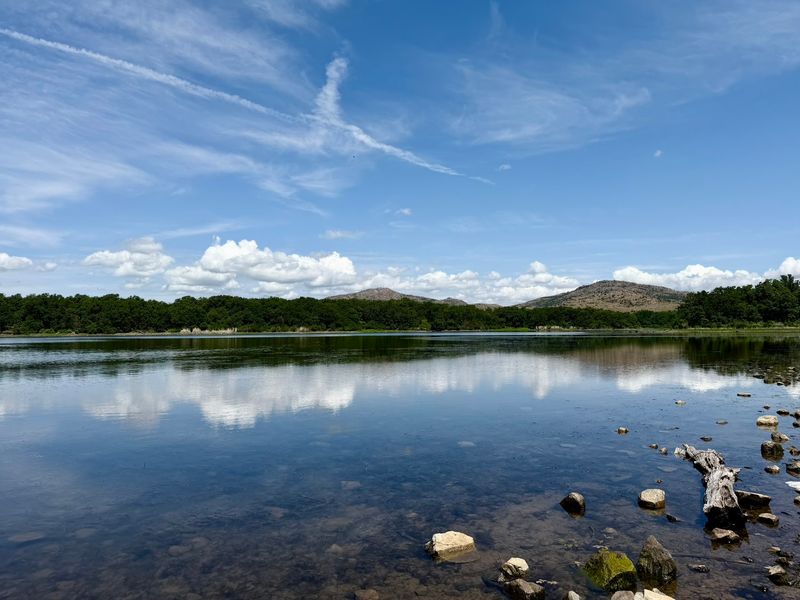
The combination of still water, rocky hills, and open sky creates a setting that is genuinely calming in a way that is hard to manufacture elsewhere.
Picnic areas are scattered throughout the refuge, many of them positioned near the water. Families with young kids, couples looking for a low-key afternoon, and solo travelers who just need a reset from daily life all find these spots welcoming.
Some campsites are located directly adjacent to the lakes, with trails departing right from the campsite, making the transition from breakfast to a morning walk seamlessly easy.
The small dams that connect the lakes are another quiet highlight. Driving past them on a scenic loop and watching waterfowl navigate the calm water is the kind of simple pleasure that gets underestimated until you are actually there experiencing it.
Visitors who arrive expecting an action-packed adventure sometimes find that their favorite moment was just sitting lakeside with no particular agenda. The refuge is generous in that way, offering something rewarding for whatever energy level you happen to bring on a given day.
The Holy City of the Wichitas: A Surprising Cultural Corner
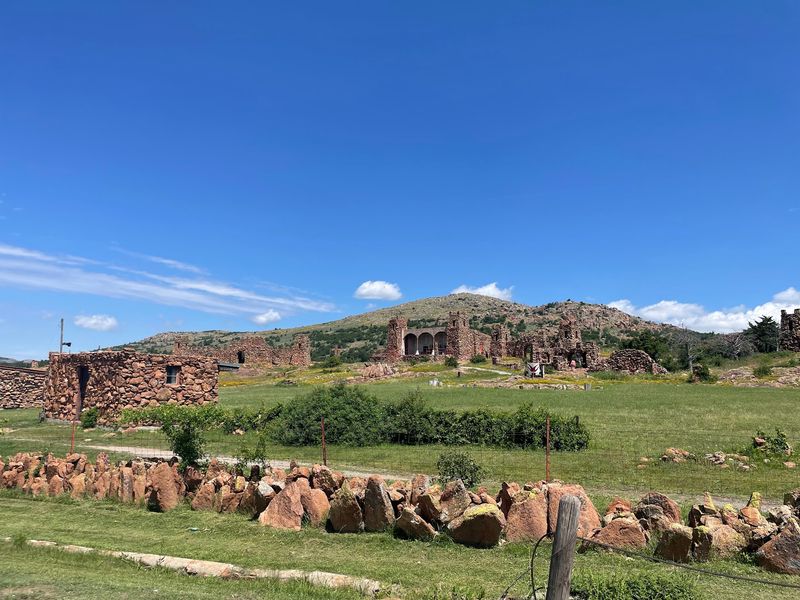
Hidden within the refuge is one of its most unusual and overlooked attractions: the Holy City of the Wichitas. Built in the 1930s and used annually for an Easter pageant that draws large crowds, this outdoor amphitheater and collection of stone structures feels genuinely unexpected in the middle of a wildlife refuge.
Stumbling across it for the first time tends to prompt a double-take.
The stone buildings and open-air stage sit against a backdrop of granite hills, creating a setting that is both rustic and oddly theatrical. The Easter Pageant held here is one of the longest-running outdoor religious dramas in the United States, though the site is accessible to visitors year-round and does not require any particular occasion to explore.
For visitors who enjoy layering history and culture into their outdoor adventures, the Holy City adds a dimension to the refuge that goes well beyond wildlife watching. It is the kind of place that sparks genuine curiosity, and walking through the stone structures while surrounded by the natural landscape of the Wichita Mountains gives the stop a reflective, unhurried quality.
One reviewer mentioned making plans to visit the Holy City on a return trip, which suggests it tends to linger in the imagination even after the rest of the refuge has been explored. Worth carving out time for it.
Camping Inside the Refuge: Waking Up Where the Wildlife Lives
Spending a night inside the refuge changes the experience entirely. Camping here means falling asleep to crickets and birdsong, and waking up to the possibility that an elk or deer has wandered into your campsite overnight.
Several camping areas are available within the refuge, with facilities that visitors describe as good and well-maintained.
Some sites are positioned directly beside the lakes, offering immediate access to both the water and nearby hiking trails. The combination of a lakeside location and wildlife activity right outside the tent makes for a camping experience that feels genuinely immersive rather than just convenient.
Families, solo campers, and groups all find the refuge campgrounds welcoming, and the setting beats most developed campgrounds in the region by a significant margin.
One visitor who stayed at site 51-B specifically mentioned the lake access and trail proximity as standout features, noting that deer came directly into the camping area. That kind of close wildlife encounter is almost impossible to plan for and completely impossible to replicate in a hotel room.
For anyone considering a weekend away from city life, camping at the refuge offers a reset that goes deeper than a single-day visit can provide. Booking in advance is advisable, especially during spring and fall when the weather is ideal and visitor numbers climb.
Rock Climbing Among Ancient Granite: A Hidden Pursuit at the Refuge
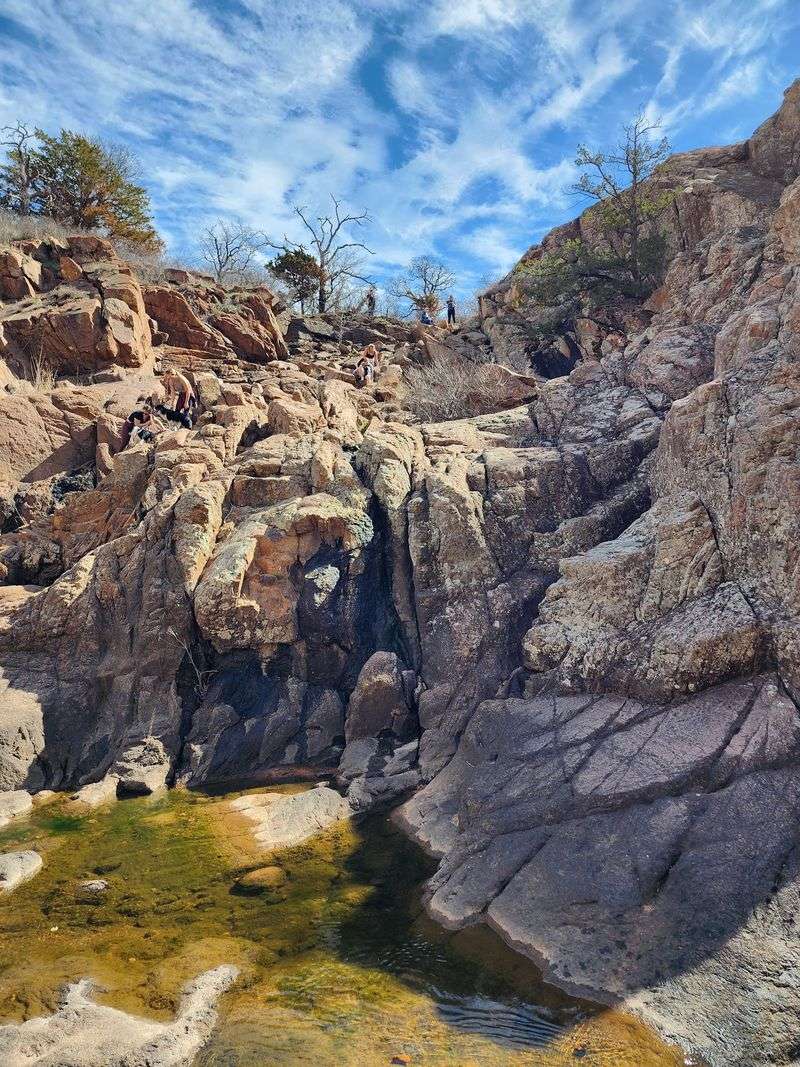
Rock climbing does not always make the headline list when people talk about the Wichita Mountains, but it absolutely should. The ancient granite formations throughout the refuge have attracted climbers for decades, offering a range of routes across boulders and faces that suit both beginners and experienced technical climbers looking for something genuine and unpolished.
The rock here is old, rough-textured, and grippy in a way that makes climbing feel rewarding even on shorter routes. The setting adds a layer that indoor climbing gyms simply cannot replicate: real exposure, real wind, real wildlife in the background.
Spotting a longhorn wandering past the base of your climb is not unusual, and it tends to make for an unusually good story afterward.
Climbers who visit for the first time often come back specifically for the rock. The refuge does not heavily market itself as a climbing destination, which keeps the crags relatively uncrowded compared to more well-known spots in other states.
For Oklahoma-based climbers, or those road-tripping through the region, the refuge represents one of the more underrated climbing areas in the southern plains. Stopping at the visitor center for any current access or permit information before heading to the rock is always a smart move, since conditions and access can vary by season and location within the refuge.
Practical Details: Hours, Cost, and How to Get There
Getting to the Wichita Mountains Wildlife Refuge is straightforward, and the cost of entry is one of the best deals in the entire state: free. The refuge charges no admission fee to enter, which makes it accessible for families, solo travelers, and anyone passing through southwestern Oklahoma who wants to add something memorable to the drive.
The refuge headquarters is located at 32 Refuge Headquarters Road in Indiahoma, Oklahoma 73552. The visitor center and refuge grounds are open daily from 9 AM to 5 PM, seven days a week.
Phone inquiries can be directed to 580-429-3222, and the official website at fws.gov/refuge/Wichita_Mountains carries current information on trail conditions, camping reservations, and seasonal programs.
Lawton is the nearest major city, sitting about 15 miles to the south and offering lodging, fuel, and food options for visitors who prefer to base themselves outside the refuge. Cell service inside the refuge is limited to nonexistent in many areas, so downloading maps ahead of time or picking up a printed trail map at the visitor center is genuinely practical advice rather than just a precaution.
Plan for at least half a day, though most visitors who arrive in the morning find themselves still exploring well into the afternoon, often wishing they had more time.
Who Will Love This Place Most and Why It Earns a Return Trip
Wichita Mountains Wildlife Refuge has a rare quality: it rewards almost every kind of visitor without demanding anything specific in return. Families with young kids get the thrill of seeing massive animals up close without the cost of a zoo or the exhaustion of a long international flight.
Hikers get trails that range from casual to genuinely challenging, all wrapped in scenery that punches well above what most people expect from Oklahoma.
Nature photographers find the refuge endlessly productive. The combination of bison, longhorns, prairie dogs, elk, dramatic granite formations, and reflective lakes gives a dedicated shooter enough material for multiple visits without repeating the same shot twice.
Solo travelers looking for a quiet reset from city noise will find the refuge’s open spaces and limited cell service a surprisingly effective remedy.
Perhaps most telling is how often visitors mention planning a return trip. The refuge is large enough that even a full day of exploring leaves sections unseen, and seasonal changes bring different wildlife activity and light conditions throughout the year.
Spring wildflowers, fall colors, and winter solitude each offer a version of the refuge worth experiencing. For a place that costs nothing to enter and delivers experiences that stick with people for years, Wichita Mountains Wildlife Refuge makes a genuinely strong case for being the best free outdoor destination in Oklahoma.
Share this story