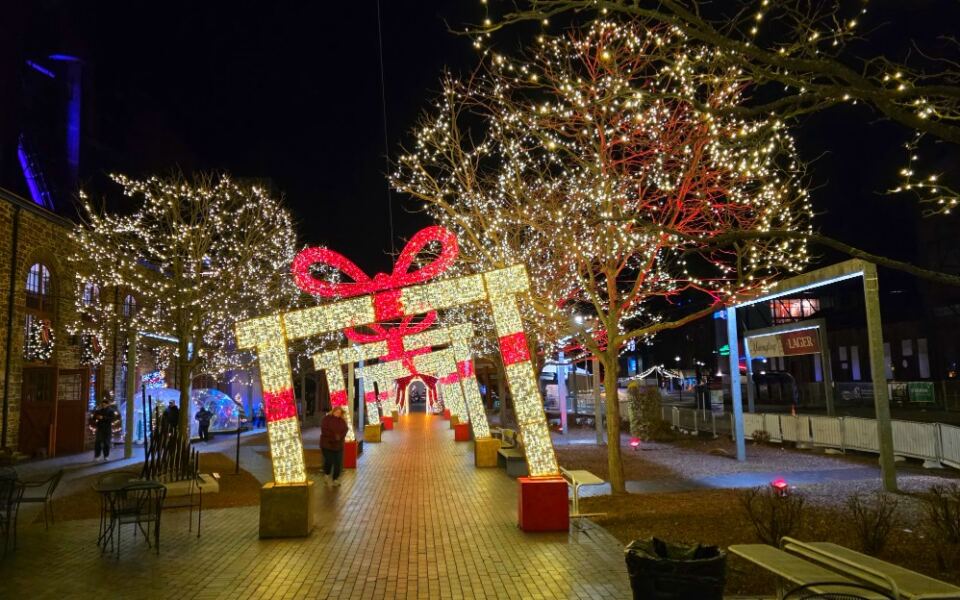
Five blast furnaces, rusted and towering, watch over a holiday market full of glass ornaments and wooden nesting dolls. That pairing sounds odd on paper.
In one Pennsylvania city, it has become a winter tradition.
The furnaces once helped make steel for bridges and buildings across America. Today they glow with colored lights while shoppers browse heated tents below.
Ice carvers shape blocks with chainsaws nearby, and Santa takes visits from wide-eyed kids.
I like places that mix old and new without hiding either one. Here, the history stands right behind you while you sip hot chocolate and look for gifts.
It feels honest and a little surprising.
The market draws its idea from a centuries-old German custom. So how did a steel town end up hosting one of the most talked-about holiday markets on the East Coast?
A German Tradition Planted Beside the Blast Furnaces
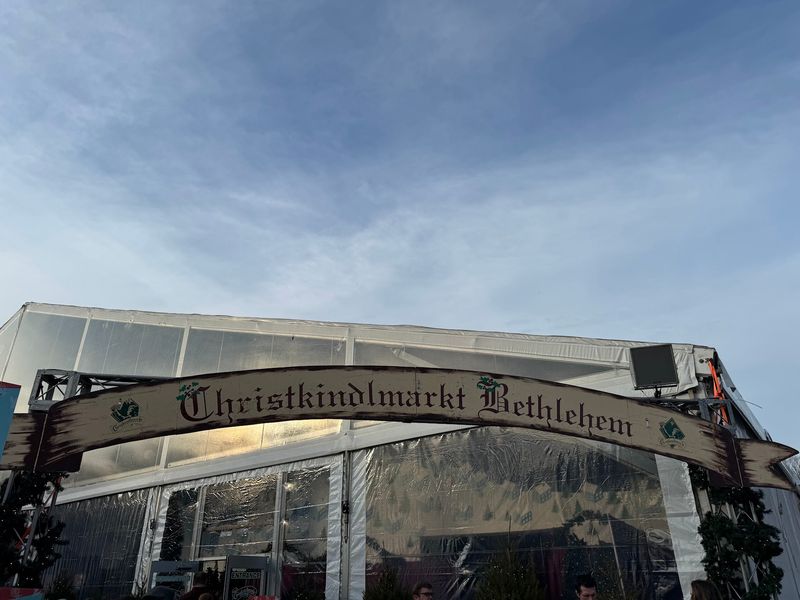
Christkindlmarkt sits at 711 E 1st St in Bethlehem, Pennsylvania, on the grounds of the SteelStacks campus. The nonprofit ArtsQuest runs the event each holiday season.
Its name comes from the German word for a Christ Child market, a custom that dates back centuries in Europe.
Bethlehem already calls itself the Christmas City, USA. The nickname goes back to 1937, and the town takes it seriously.
Hosting a German-style market fits right in with that history, since Moravian settlers with German roots founded the city in 1741.
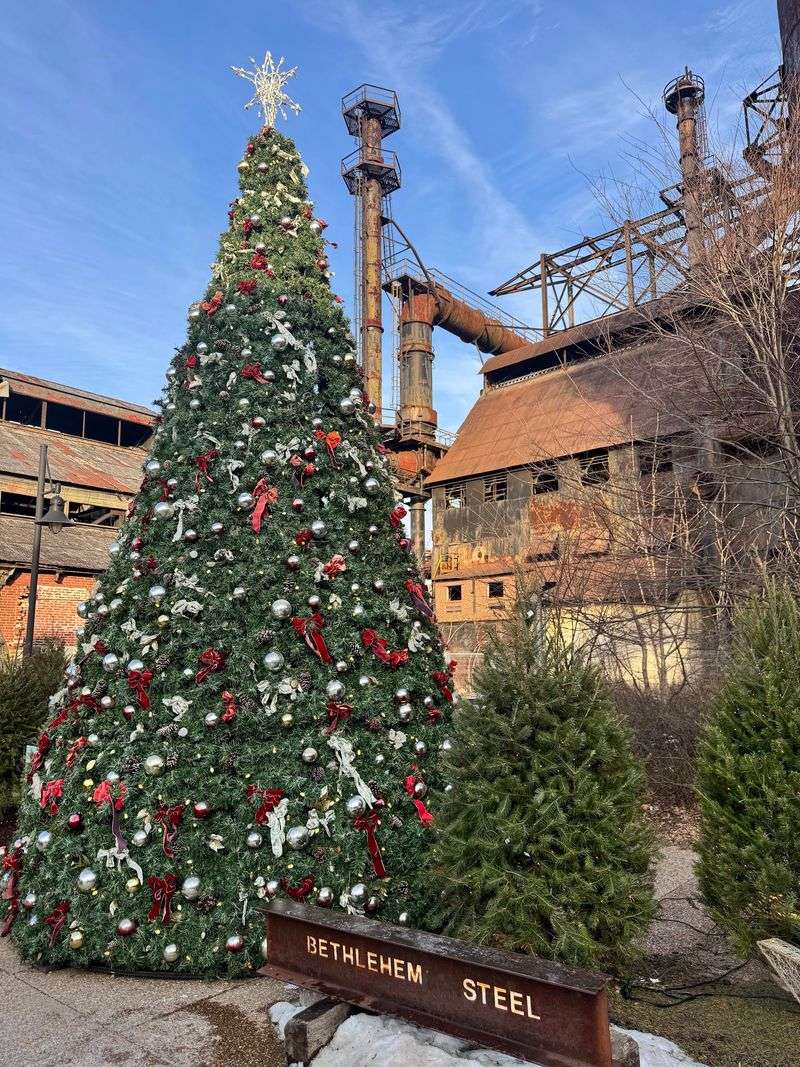
The setting is what grabs attention first. Large tents sit beneath the old Bethlehem Steel blast furnaces, which stopped making iron decades ago.
Now they serve as a lit-up backdrop for holiday shopping.
I find that contrast hard to resist. Most Christmas markets lean on cobblestones and church steeples, but this one leans on industrial history.
The steel giants stay visible from nearly every corner of the grounds.
The market usually opens around Thanksgiving and runs through December, mostly Thursday through Sunday. Checking the ArtsQuest schedule before driving out saves frustration.
Once you arrive, the next big question is where to start shopping.
Rows of Artisans Under Heated Tents
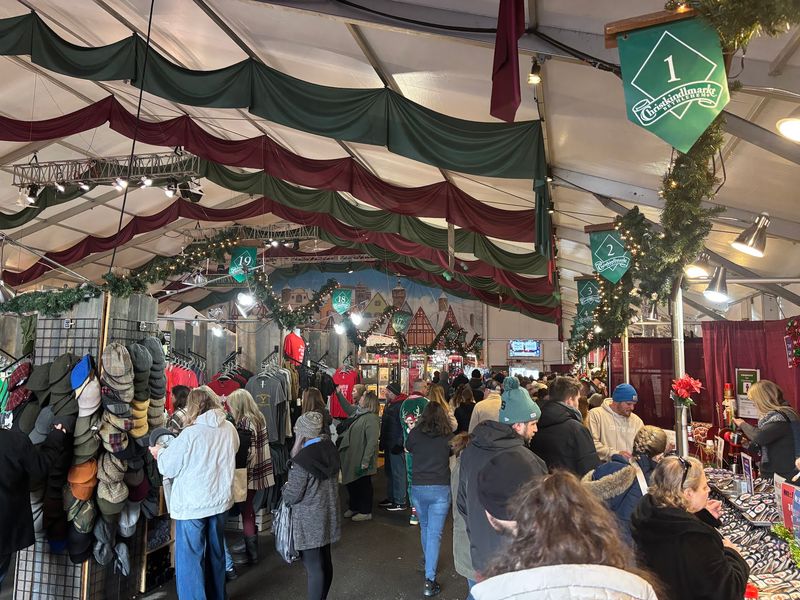
Cold fingers make shopping miserable, so the heated tents are a smart choice. Vendors set up in several large tent structures, which keeps browsing comfortable even when the wind picks up.
That matters in a Pennsylvania December.
The vendor lineup leans toward handmade work. Expect jewelry, pottery, woodwork, knitted items, glass ornaments, and holiday decor.
ArtsQuest selects artisans for the market, so the booths feel closer to a juried craft show than a random flea market.
Some vendors offer free samples of things like sauces, snacks, or sweets. That makes slow wandering more fun.
Nobody minds a tasting break between ornament booths.
The aisles can feel tight on busy weekends. If you dislike crowds, a weekday afternoon or Thursday visit tends to be calmer.
Bringing a small bag instead of a big backpack also helps.
I’d plan to walk through every tent once before buying anything. Prices and styles vary a lot from booth to booth.
A quick first lap helps you spot the pieces you actually want.
One booth in particular brings a direct link to German Christmas shopping, and it deserves its own mention.
Ornaments With a Rothenburg Connection
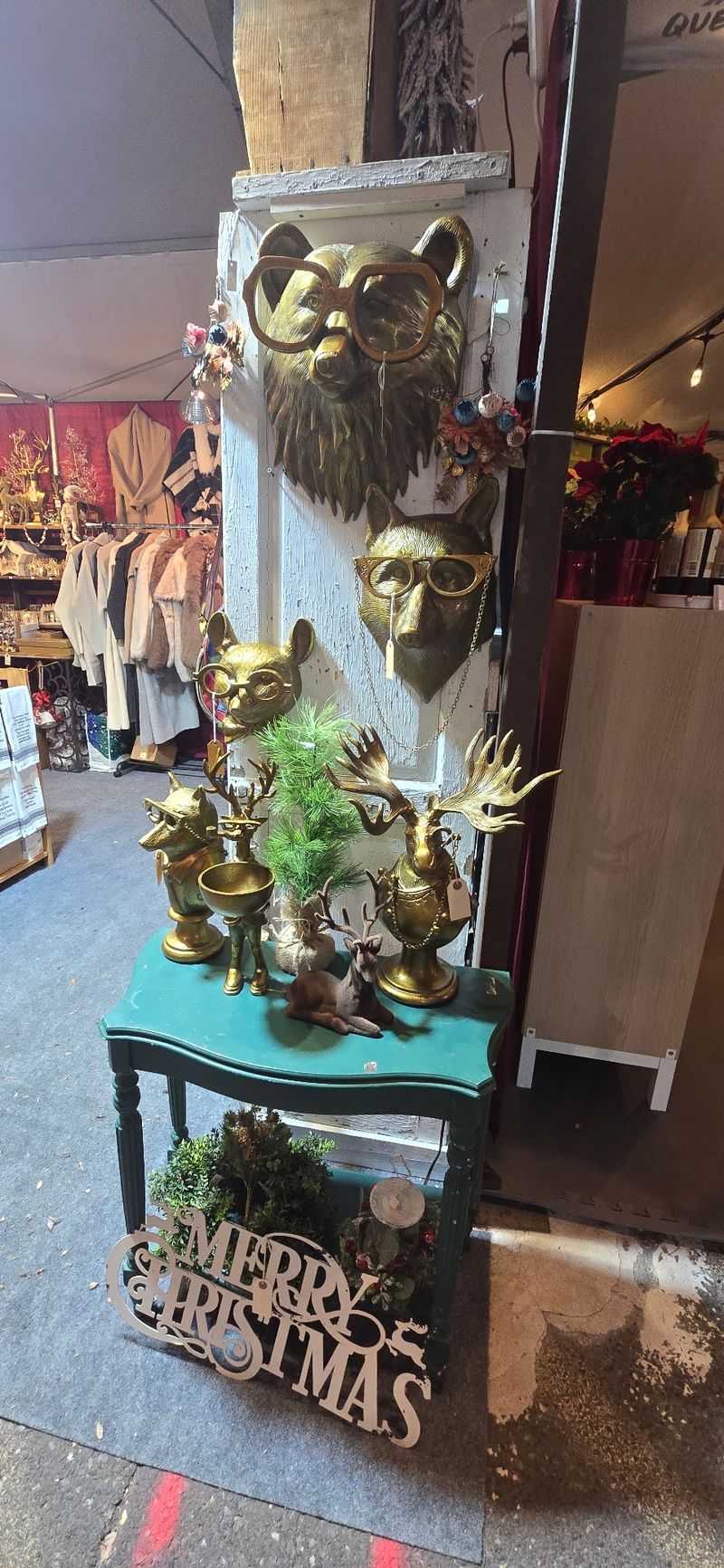
Käthe Wohlfahrt is a famous name in German Christmas decor. The company started in Rothenburg ob der Tauber, a walled town in Bavaria.
Its collection has appeared at Christkindlmarkt, giving shoppers a taste of a classic German Christmas store.
Think wooden nutcrackers, smoking-man figurines, delicate glass ornaments, and tiered Christmas pyramids that spin from candle heat. These pieces follow old German craft styles.
Many families collect them one item at a time over many years.
Other booths add their own European touches. Nesting dolls show up at the market, including some shaped like Christmas trees.
Glass-blowing work and hand-painted ornaments also appear among the vendors.
I like the idea of picking one ornament each year from a place like this. It turns a single trip into a small family tradition.
Years later, each piece on the tree tells you which season you visited.
Fragile items need care on the walk back to the car. Ask vendors for extra wrapping if you buy glass.
Speaking of the walk, the grounds outside the tents hold some of the most interesting sights at the market.
Chainsaws, Ice, and a Crowd That Stops to Watch
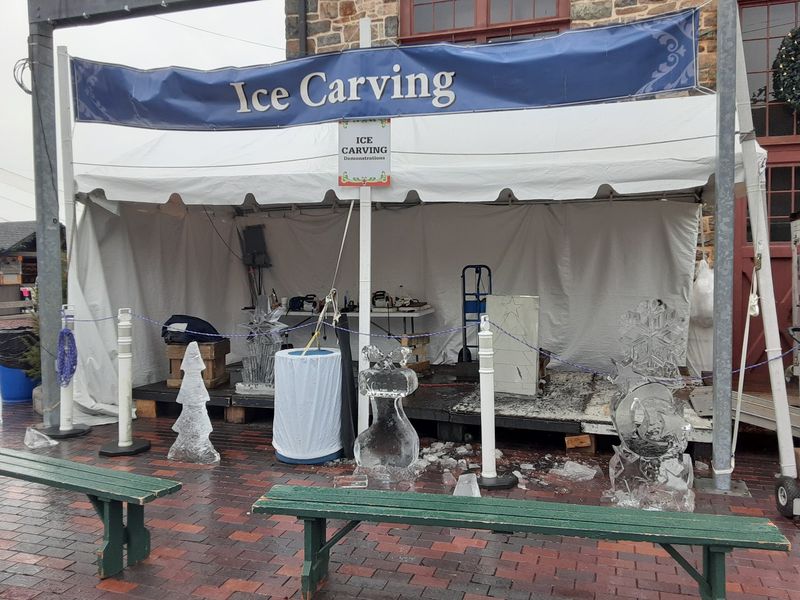
Few things pull a crowd faster than a person carving ice with a chainsaw. Ice carving demonstrations are a regular part of Christkindlmarkt.
Artists turn solid blocks into holiday figures while visitors watch from a safe distance.
The process moves quicker than most people expect. Carvers rough out a shape with the saw, then switch to chisels and smaller tools for detail.
Flakes of ice spray into the air the whole time.
Finished sculptures often stay on display around the grounds. Kids especially enjoy spotting them while walking between tents.
They also make good photo stops.
Check the market schedule for demonstration times. Carvings are planned events, and timing your visit around one adds a lot to the day.
Weather can affect how long finished pieces last, so earlier in a cold stretch is often better.
I’d make a point of catching at least one carving from start to finish. Watching a plain block become a reindeer or snowflake teaches you a lot about the skill involved.
After standing in the cold, though, warming up becomes the next priority.
Fire Pits, Igloos, and Places to Thaw Out
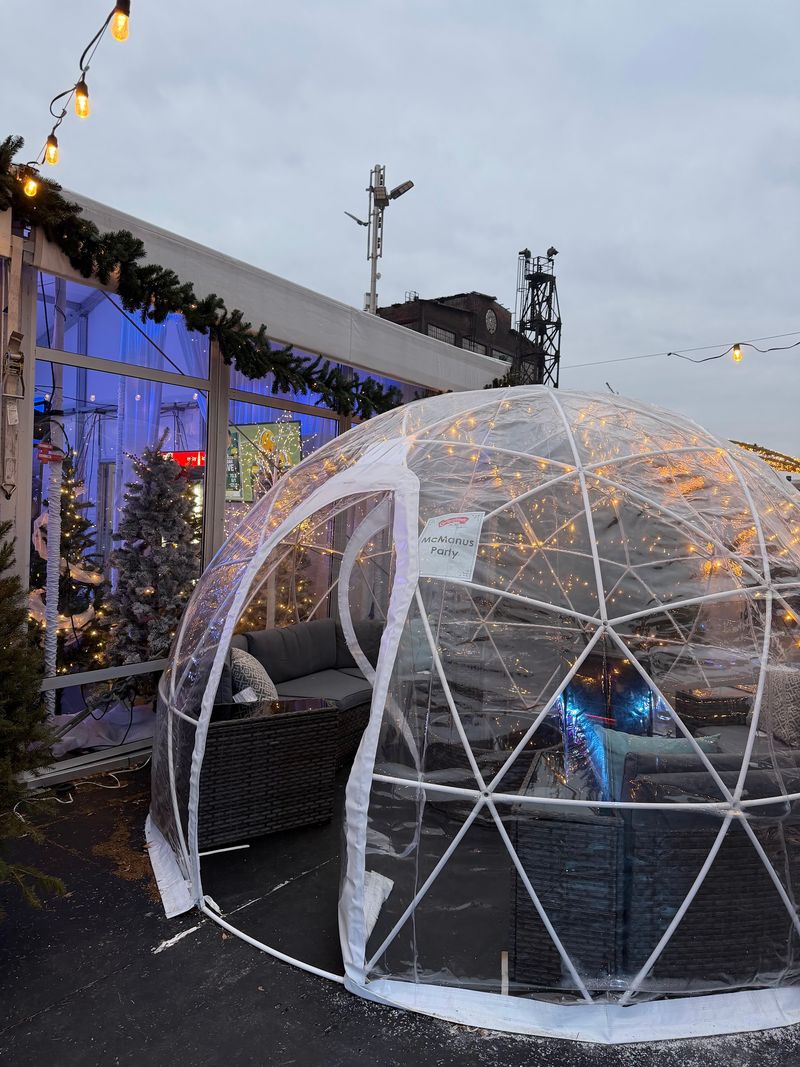
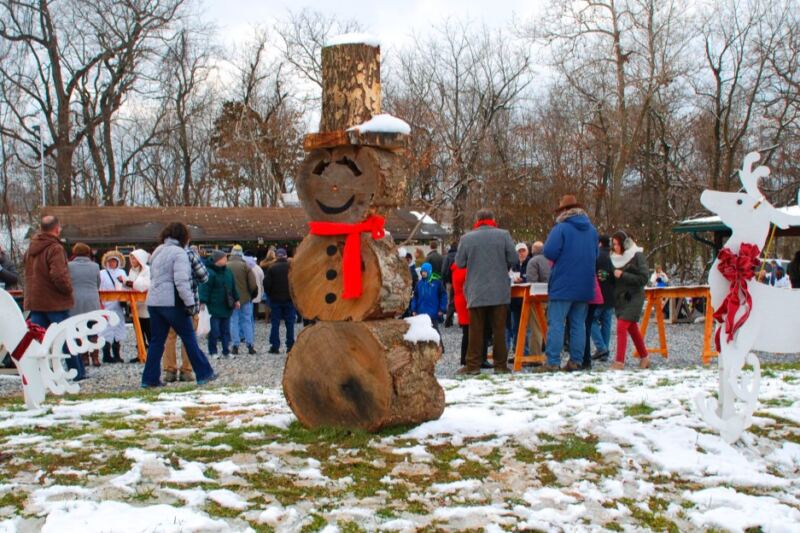
December in eastern Pennsylvania can bite. The market answers that with fire pits spread around the outdoor areas.
Families gather there to warm their hands between shopping trips.
Clear igloo-style domes have also been set up on the grounds in past seasons. They give small groups a sheltered spot to sit together.
Lit from inside at night, they look cheerful against the dark sky.
Hot chocolate is easy to find, and it pairs well with a seat by the fire. That small break can turn a long day into a relaxing one.
Kids tend to need those pauses more than adults admit.
Dressing in layers is the most practical tip here. You will move between heated tents and cold open air many times.
A light layer underneath a warm coat makes those switches easier.
Gloves, a hat, and comfortable shoes matter too. The grounds cover a fair amount of space, and pavement gets cold underfoot.
Warm toes help you stay longer.
Once you’ve warmed up, your stomach will probably remind you that it’s mealtime. The food choices here cover more ground than many people expect.
Potato Pancakes, Strudel, and a Surprise Slice of Pizza
Hungry shoppers have plenty of choices at Christkindlmarkt. A decorated food tent holds several vendors, and food trucks often park nearby.
That spread helps when lines grow long.
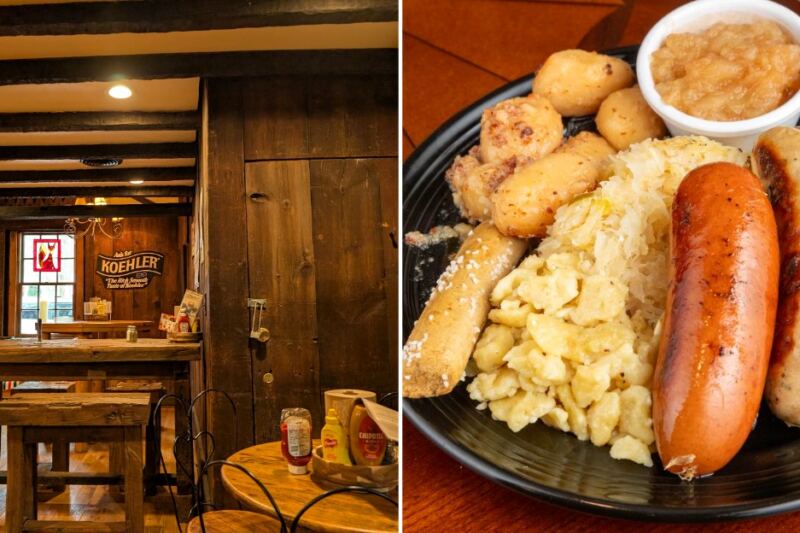
European-style dishes fit the market theme. Goulash, potato pancakes, and strudel have all appeared on vendor menus.
These dishes match the German and Central European roots of the event.
Not everything follows the theme, though. Pizza has been served at the market too, which might surprise first-timers.
Vegetarian options have also been available, which helps groups with mixed diets.
The food tent fills up at lunchtime, especially on weekends. Eating a little earlier or later than the main rush can save time.
Food trucks outside offer a good backup if the tent feels packed.
I’d pick one traditional dish and one sweet treat to split. That approach lets you try more without filling up too fast.
Hot chocolate makes an easy finish.
Menus change from season to season, so treat this as a sample, not a guarantee. Food is only one part of the evening experience, and the lights tell their own story after sunset.
Steel Giants Wearing Holiday Colors
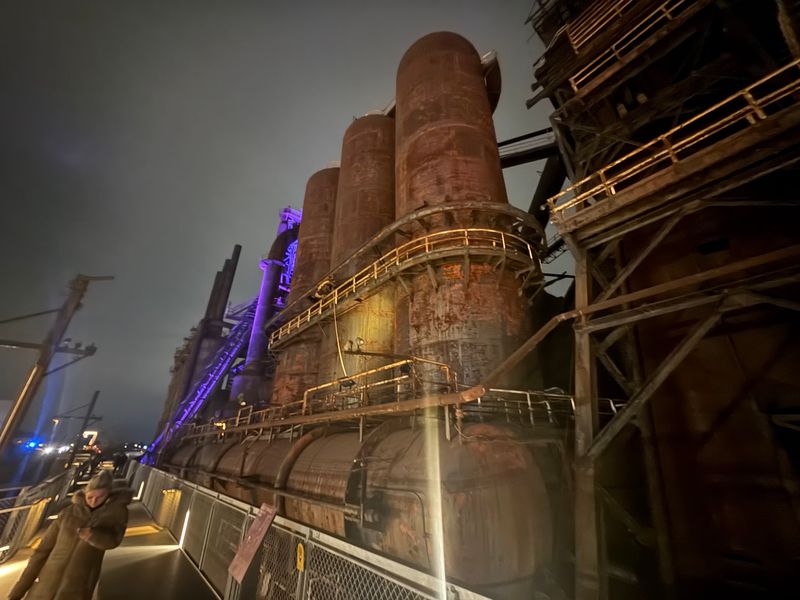
Bethlehem Steel once ranked among the largest steel makers in the United States. Its plant in Bethlehem closed in the 1990s, leaving behind the towering blast furnaces.
Instead of tearing them down, the city kept them as part of the SteelStacks arts campus.
At night, the furnaces glow under colored lights. That glow hangs over the market like a giant ceiling decoration.
It’s one of the clearest reasons this event feels different from others.
Steel from this plant helped build the Golden Gate Bridge and many New York skyscrapers. Standing below the furnaces adds weight to a simple shopping trip.
You’re browsing ornaments in the shadow of real industrial history.
The Hoover Mason Trestle runs alongside the furnaces. It’s an elevated walkway built on an old rail line, and it offers closer views of the structures.
Daylight is the better time to explore it.
I’d plan the visit to catch both daylight and dusk. You get the history in clear view first, then the lights later.
Of course, the most popular figure at the market isn’t made of steel at all.
Santa, Skates, and Little Ones in Mittens
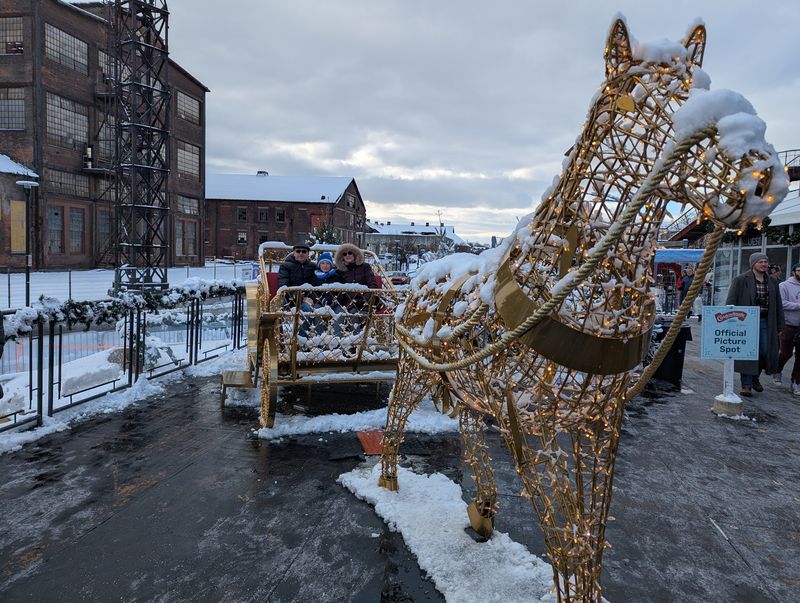
Kids usually head straight for Santa. Christkindlmarkt offers visits with him, and photos are a big part of the fun.
Some families return year after year to see him again.
Ice skating has also been part of the experience at SteelStacks. Sessions usually require separate tickets, and skate aids for young children may cost extra.
Booking a time slot ahead keeps the day organized.
Smaller treats keep children busy too. The ice sculptures, glowing lights, and colorful booths give them plenty to point at.
Caroling and holiday music add to the festive mood.
Budget planning helps with families. Admission, skating, food, and gifts can add up quickly for a group.
Setting a spending plan before arriving keeps surprises small.
Strollers can be tricky in crowded tent aisles. A carrier for babies or a quieter weekday visit may work better.
Taking breaks by the fire pits also helps prevent meltdowns.
I like that the market works for several ages at once. Grandparents shop, parents eat, and kids chase Santa.
Getting everyone there smoothly, though, depends on a few planning details.
Tickets, Timing, and the Parking Puzzle
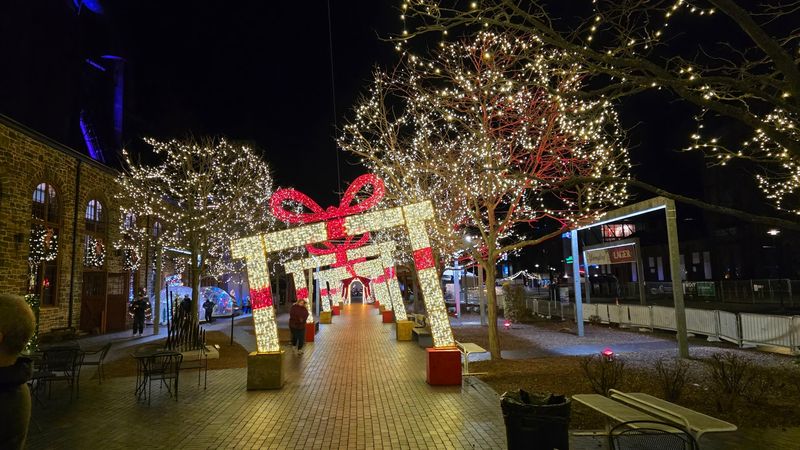
Admission is required for much of the market’s open hours. Buying tickets online in advance has offered a small discount in past seasons.
Evening entry has sometimes been free, so check current policies before you go.
Weekends draw the heaviest crowds, especially Thanksgiving weekend. Thursdays tend to feel calmer.
The market usually closes earlier on Sundays, which shortens your time under the evening lights.
Parking takes some patience. Free parking exists near the SteelStacks campus, but spaces fill fast on busy days.
Extra lots sit farther away, which means a longer walk in the cold.
Arriving early solves many of these problems at once. You find better parking, shorter food lines, and easier browsing.
The tents feel much roomier before the afternoon rush.
Bus trips also bring groups to the market. That option removes the parking hassle completely.
Some tour companies around the region run holiday trips to Bethlehem.
I’d keep the official ArtsQuest page handy while planning. Hours and dates can shift from year to year.
With the logistics handled, the rest of Bethlehem is worth a look too.
Christmas City Spirit Beyond the Tents
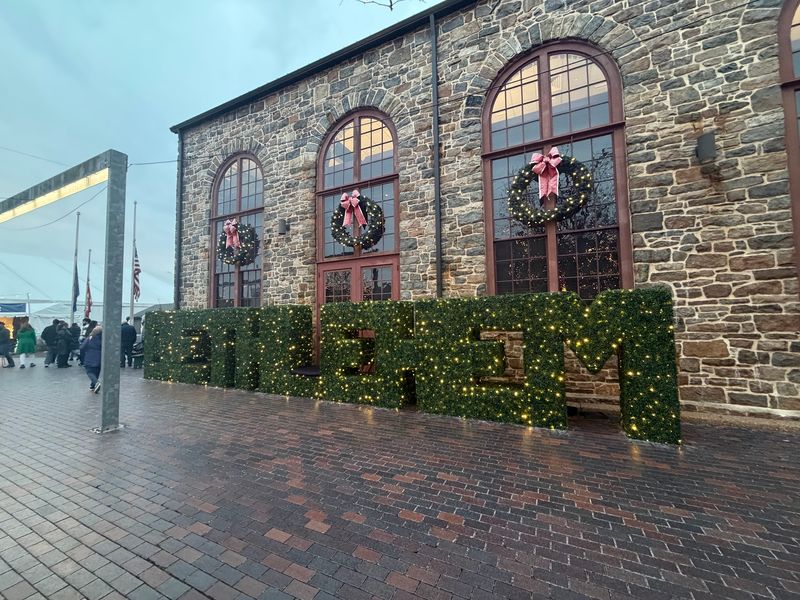
Bethlehem’s holiday spirit doesn’t stop at the market entrance. The city has decorated for Christmas for generations.
Its historic downtown sits a short drive across the Lehigh River from SteelStacks.
Moravian stars hang throughout town. The many-pointed design traces back to Moravian schools in Germany in the 1800s.
You’ll see the stars glowing in windows and above doorways.
Many homes and shops place single white candles in their windows. The custom adds a soft glow to the old stone streets.
It connects the holiday season to the town’s long Moravian history.
A Christmas trip here works well as a full day. Shop at Christkindlmarkt, then drive over to the historic district in the evening.
Seeing both sides of the city shows how its steel and Moravian roots fit together.
I find that combination the most rewarding part of planning a visit. One side tells the story of American industry.
The other tells the story of the settlers who named the town on Christmas Eve in 1741.
Together, they explain why a steel town took on a holiday nickname and kept it.
Share this story