Most people think great architecture only exists in big cities or famous tourist spots. But some of the world’s most jaw-dropping buildings are hiding in places you have probably never heard of. Remote mountain villages, isolated farming communities, and forgotten valleys are home to structures built centuries ago with nothing but local stone, wood, and sheer human cleverness. These places were shaped by necessity, tradition, and a deep connection to the land around them.
From houses carved into volcanic rock to cottages painted like embroidered fabric, each region on this list tells a story that no textbook quite captures. Some of these communities have survived wars, floods, and centuries of isolation to remain standing today. Others nearly vanished before being rediscovered and protected. Get ready to rethink everything you thought you knew about where remarkable architecture actually lives.
1. Hollókő Old Village, Hollókő, Hungary
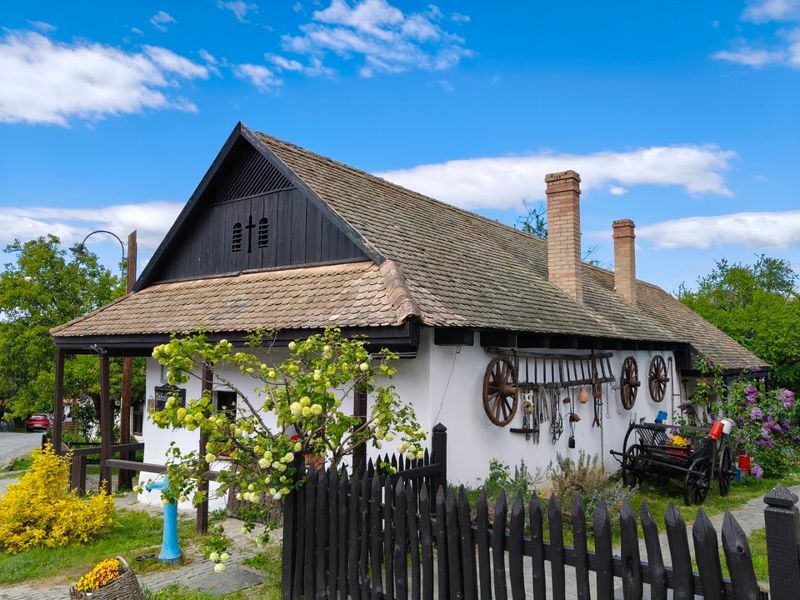
Time did not so much stop in Hollókő as it simply decided this village was too charming to disturb. A UNESCO World Heritage Site since 1987, this Palóc settlement in the Cserhát hills preserves one-story peasant homes with whitewashed walls and distinctive hipped gable roofs.
Each house features a “hambitus,” a porch running along the front facade, supported by wooden pillars carved with openwork patterns. The village layout follows a “comb structure,” where growing families built new homes behind existing ones rather than spreading outward, keeping the settlement wonderfully compact.
Most of the current buildings date from the 17th and 18th centuries, rebuilt after a major fire in 1909 that destroyed much of the original thatching. A small Roman Catholic church with a wooden turreted tower, constructed entirely without nails, anchors the skyline. Hollókő remains a real, inhabited community rather than a staged attraction.
2. Vlkolínec, Ružomberok, Slovakia
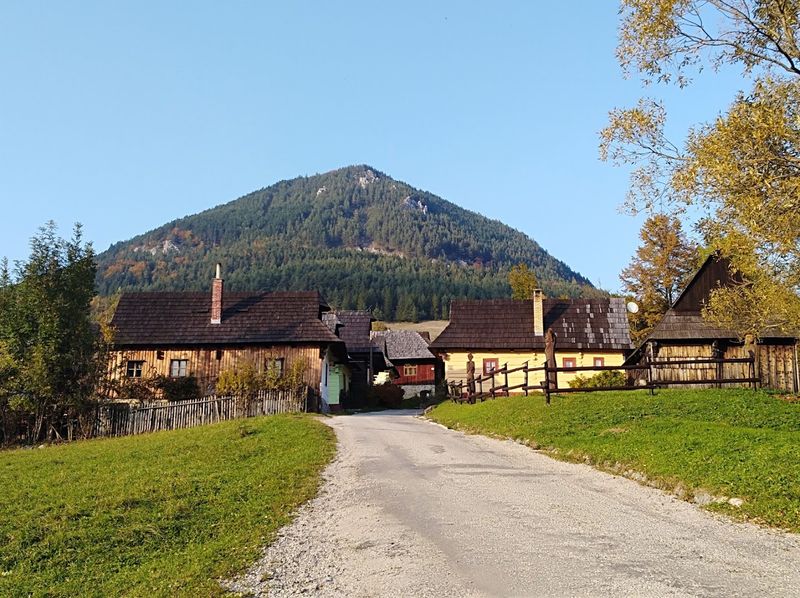
Forty-five traditional log houses tucked beneath forested Slovak mountains make Vlkolínec one of Central Europe’s most complete surviving rural settlements. UNESCO awarded it World Heritage status in 1993, recognizing just how rare this level of architectural integrity has become.
The houses stand on high stone foundations that level the sloping ground, with walls built from hewn logs sealed with moss and clay, then painted in blues, roses, and whites. Steeply pitched gabled roofs covered in hand-chiseled wooden shingles reflect a direct response to the region’s heavy seasonal snowfall.
Each dwelling traditionally contained three rooms: an entrance area doubling as a kitchen, a pantry, and a main living space. A wooden belfry from 1770 and a log well from 1860 add to the village’s historic character. Real families still live here, which means every lane and fence belongs to an active community, not a reconstruction.
3. Čičmany, Žilina Region, Slovakia
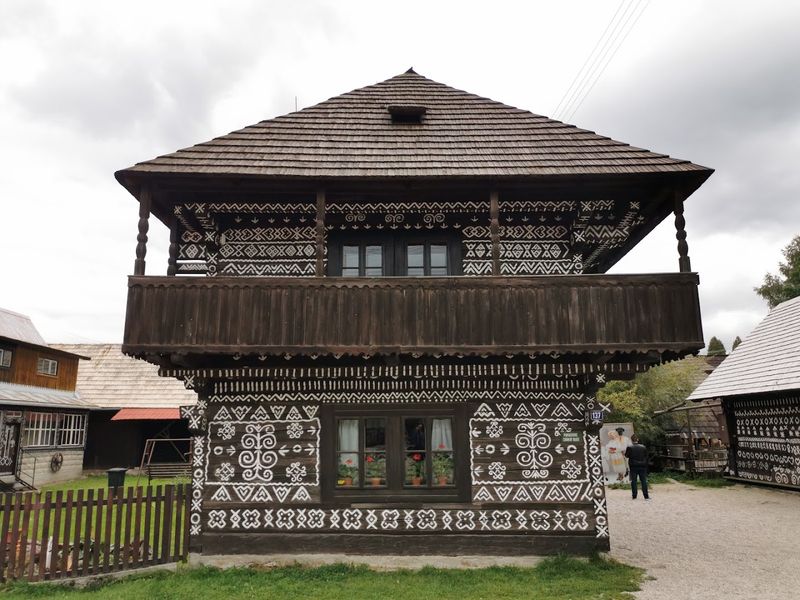
Nobody decorates a house quite like the residents of Čičmany, a Slovak village whose dark timber exteriors are covered from foundation to roofline in elaborate white geometric patterns. What began as a practical measure, applying lime to protect wood from moisture, gradually became one of the most distinctive folk art traditions in all of Europe.
The designs feature squares, triangles, spirals, stars, hearts, and stylized animals, all drawn directly from local embroidery traditions. Some patterns are believed to carry protective symbolic meaning, though the visual effect alone is extraordinary. After a devastating fire in 1921, architect Dušan Jurkovič helped restore the village, ensuring the decorative style was faithfully maintained.
More than 130 traditional houses now form an open-air gallery shaped entirely by everyday rural craftsmanship. The Čičmany pattern has even appeared on Slovak Olympic team uniforms, proof that a small mountain village can leave a surprisingly large cultural footprint.
4. Zalipie, Lesser Poland, Poland
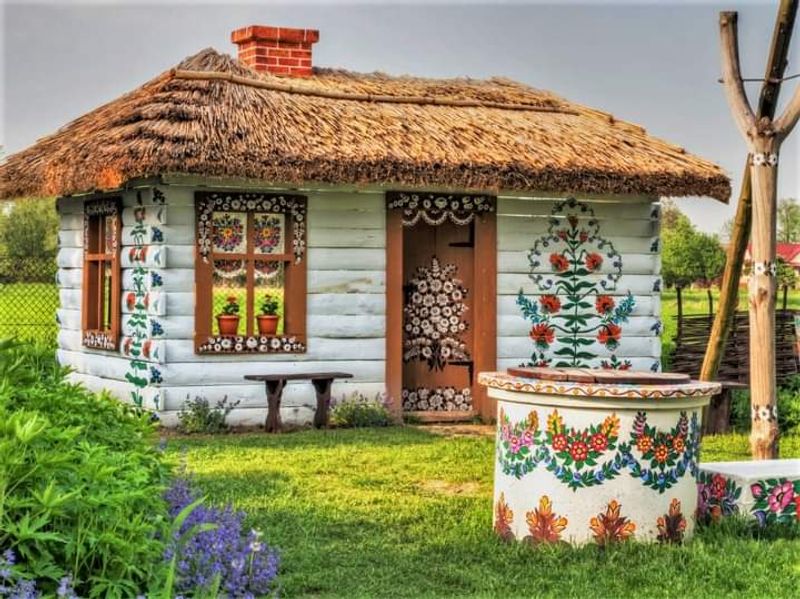
Flowers cover everything in Zalipie, and that is not an exaggeration. Cottage walls, ceilings, fences, wells, furniture, and even farm outbuildings are decorated with bold, hand-painted floral compositions that have made this quiet agricultural village one of Poland’s most visually striking communities.
The tradition started in the late 19th century when local women used white lime to cover soot stains on interior walls, a side effect of kitchens without proper chimneys. As better paints became available, the designs expanded into vivid, full-color flower arrangements inspired by the surrounding landscape. The practice passed from mother to daughter across generations.
An annual “Malowana Chata” (Painted Cottage) competition, established in 1948, keeps the tradition actively alive. The Felicja Curyłowa Farmstead, now a museum dedicated to the village’s most celebrated artist, displays her exuberant floral work across every surface of her property. The nearby House of Women Painters hosts workshops for those hoping to learn the craft firsthand.
5. Piódão, Arganil, Portugal
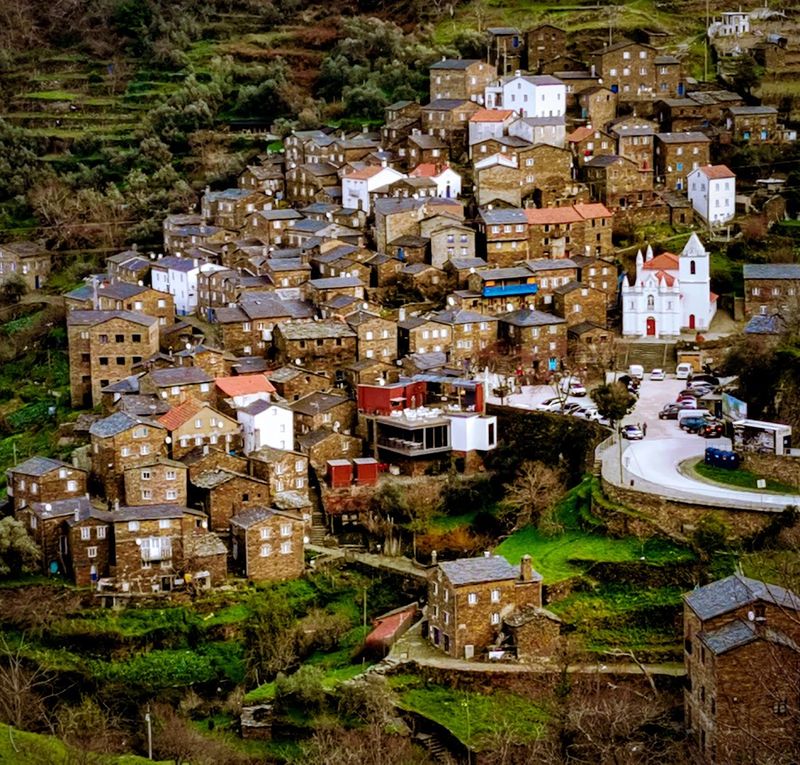
Piódão does not look constructed so much as it looks grown directly from the mountainside. Every house in this Serra do Açor village is built from locally quarried schist, a dark metamorphic rock that gives the settlement its unmistakable earth-toned appearance. Slate slabs cover the roofs, maintaining the same consistent palette throughout.
The one deliberate contrast is the vivid blue paint applied to every door and window frame. Local accounts suggest this tradition may have developed from a single paint supplier or evolved as a quiet marker of community identity. Either way, the result is a visual rhythm that makes Piódão instantly recognizable.
The dark stone walls are not just aesthetic; they absorb heat efficiently during the day and release it slowly at night, providing natural insulation in a demanding mountain climate. Piódão’s first proper road arrived only in 1974, which explains why its 17th-century character remains so remarkably intact. It is now officially listed among Portugal’s protected Historical Villages.
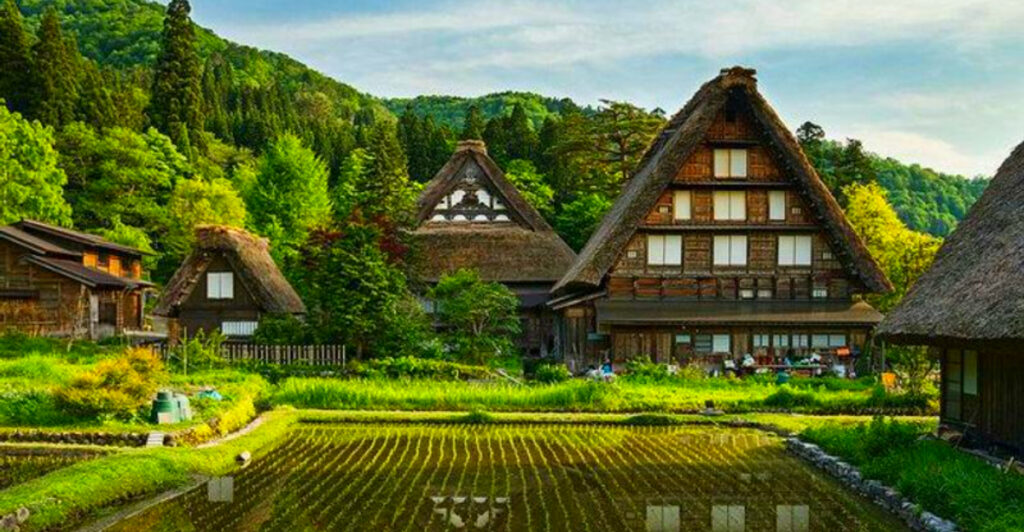
6. Shirakawa-go, Shirakawa, Japan
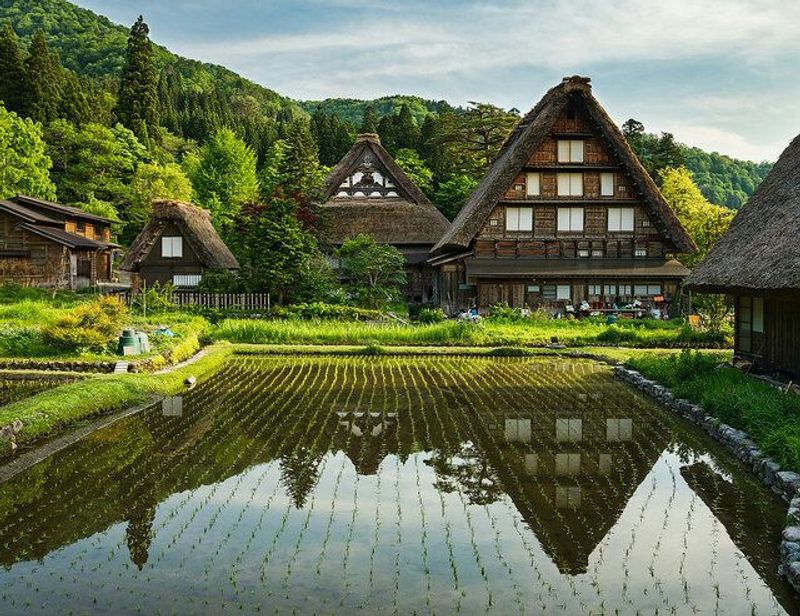
At roughly 60 degrees, the roofs of Shirakawa-go’s farmhouses are among the steepest in traditional architecture anywhere in the world. Built to shed the enormous winter snowfall of central Japan’s mountain valleys, these gassho-zukuri structures, whose name translates as “hands pressed together in prayer,” can rise to five stories without a single nail holding them together.
Wooden beams are slotted and bound using natural fiber ropes, creating flexible joints that have survived centuries of heavy loads. The spacious upper floors served a very practical purpose: raising silkworms, which became the region’s primary industry from the 18th to the early 20th century. Heat rising from ground-floor open hearths kept those upper levels warm and dry, ideal conditions for sericulture.
UNESCO inscribed Shirakawa-go and neighboring Gokayama as a World Heritage Site in 1995. Many of the 250 to 300-year-old farmhouses remain inhabited, and some accept overnight guests, offering a rare chance to experience this engineering tradition from the inside.
7. Ushguli, Mestia Municipality, Georgia
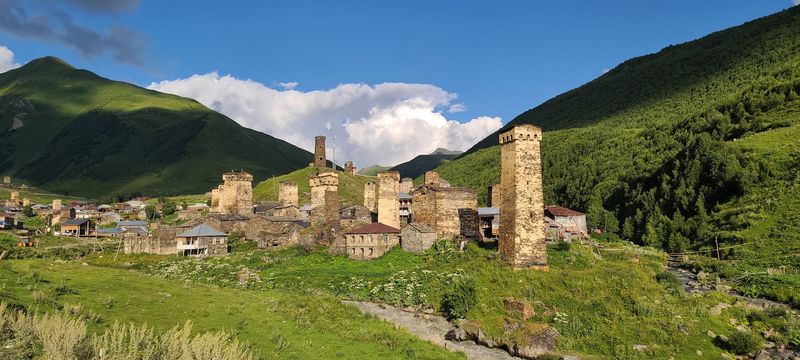
Few skylines in Europe carry the raw historical weight of Ushguli, a cluster of medieval villages in Upper Svaneti, Georgia, where stone defensive towers dating from the 9th to 12th centuries rise above every rooftop. These Svan towers, known locally as koshki, typically stand between three and five stories tall, reaching up to 25 meters, with walls that thicken at the base and taper upward for stability.
Built during Georgia’s medieval Golden Age, the towers served as combined refuges, watchtowers, and symbols of clan prestige. Narrow embrasures in the upper levels allowed defenders to monitor the surrounding terrain without exposure. Adjacent residential houses, called machubi, traditionally sheltered both families and livestock on the ground floor, with upper levels reserved for summer living and storage.
Ushguli sits at 2,100 to 2,200 meters above sea level, making it one of Europe’s highest continuously inhabited settlements. Its UNESCO World Heritage designation in 1996 helped protect the village of Chazhashi, which alone contains over 200 towers, from unregulated development.
8. Khinalig, Quba District, Azerbaijan
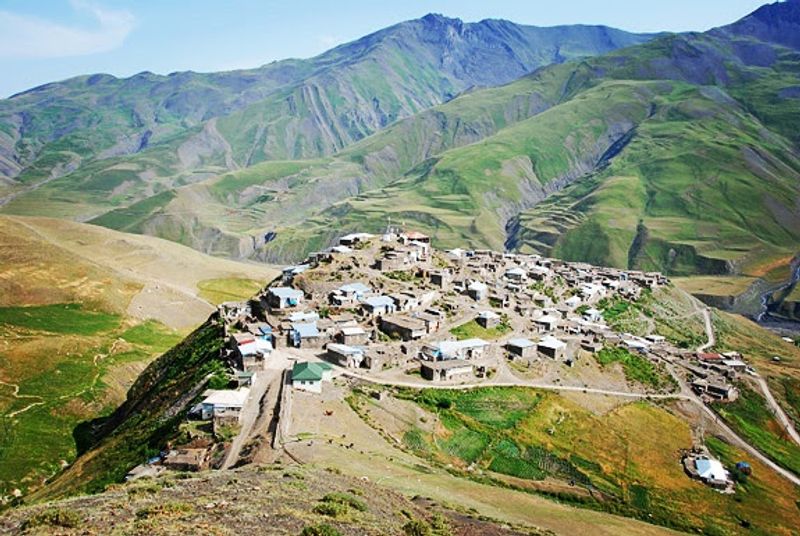
Over 5,000 years of continuous settlement have produced one of the most unusual village layouts in the entire Caucasus region. In Khinalig, houses are stacked so tightly against the steep mountainside that the flat roof of one dwelling becomes the front yard of the home directly above it, creating a cascading, terraced effect that no urban planner could have designed on purpose.
River stone, clay mortar, rock, and straw are the main building materials, all sourced from the immediate surroundings. Thick stone walls were essential for surviving winters where temperatures can drop to minus 30 degrees Celsius. Flat rooftops double as outdoor work areas for drying crops and storing firewood during warmer months, maximizing every usable surface on the limited terrain.
This dense, contiguous construction also served a defensive function, allowing villagers to move between homes without venturing outside during raids. Khinalig received UNESCO World Heritage status in 2023, recognizing both its architectural uniqueness and its preservation of the rare Khinalug language, spoken nowhere else on earth.
9. Kandovan, Osku County, Iran
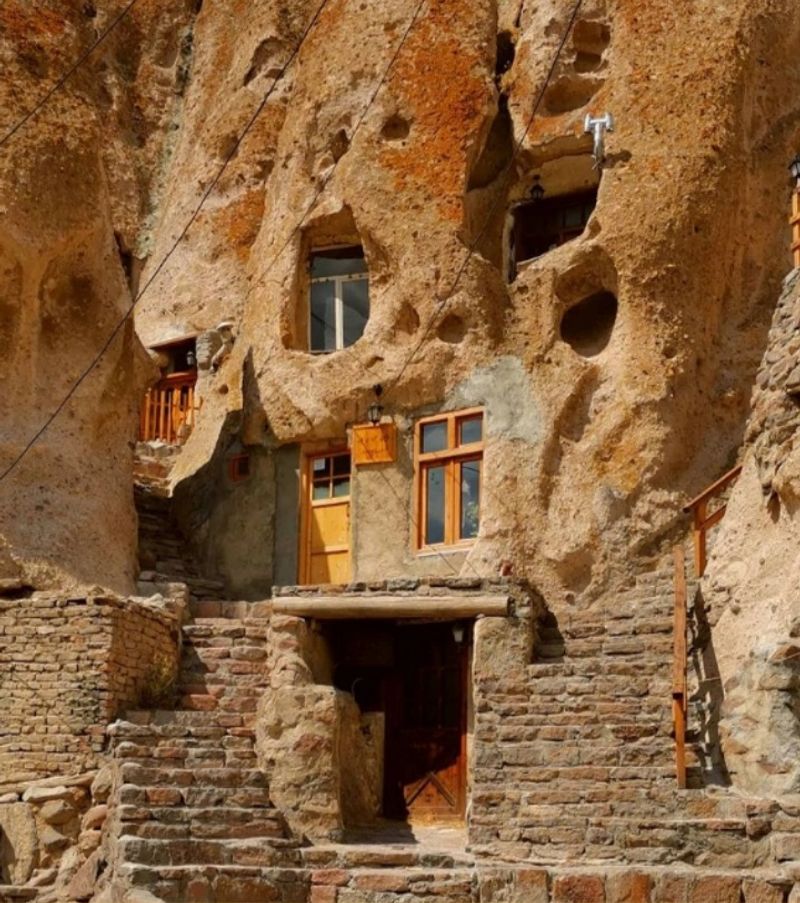
Kandovan is the kind of place that makes you question what a house actually needs to be. On the volcanic slopes of Mount Sahand in northwestern Iran, local residents have spent centuries carving their homes directly into cone-shaped volcanic formations called karaan, creating multi-story dwellings complete with carved staircases, windows, porches, and storage rooms.
The volcanic tuff that forms these cones is soft enough to carve with basic hand tools yet durable enough to support permanent habitation. Ground floors typically shelter livestock, whose body heat contributes to warming the upper living quarters, a practical detail that reveals how carefully every design choice was made. The rock itself provides natural insulation, keeping interiors cool in summer and relatively warm through harsh winters.
Archaeological evidence suggests human presence in the area for thousands of years, with the current village believed to have been established around 700 to 800 years ago, possibly by communities seeking refuge during Mongol invasions. Kandovan remains a fully inhabited village today, not a preserved ruin.
10. Theth, Shkodër County, Albania
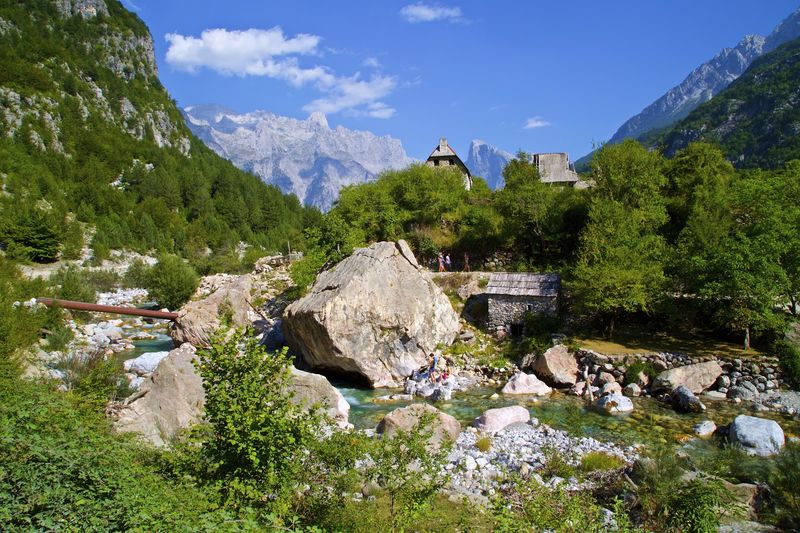
Surrounded by some of the sharpest limestone peaks in the Balkans, Theth is a village where the architecture and the landscape are completely inseparable. Traditional stone houses with steep timber roofs are scattered across meadows and separated by streams, their layout shaped entirely by the terrain rather than any formal planning.
The most historically significant structures are the kulla, fortified defensive towers standing three to five stories tall with thick stone walls and narrow windows. These towers were not just military architecture; they were legal institutions. Under the Kanun, the traditional Albanian law code, a man involved in a blood feud could seek refuge inside a kulla and remain protected from retaliation for a set period.
The Lock-in Tower of Theth served as both a refuge and a place for mediated reconciliation, a function that reveals how deeply the built environment was woven into the social fabric of this community. Oral traditions trace the village’s founding to 17th-century settlers who sought to maintain their Catholic faith in isolation, a detail that explains much of Theth’s remarkably preserved character.
11. Leshten, Garmen Municipality, Bulgaria
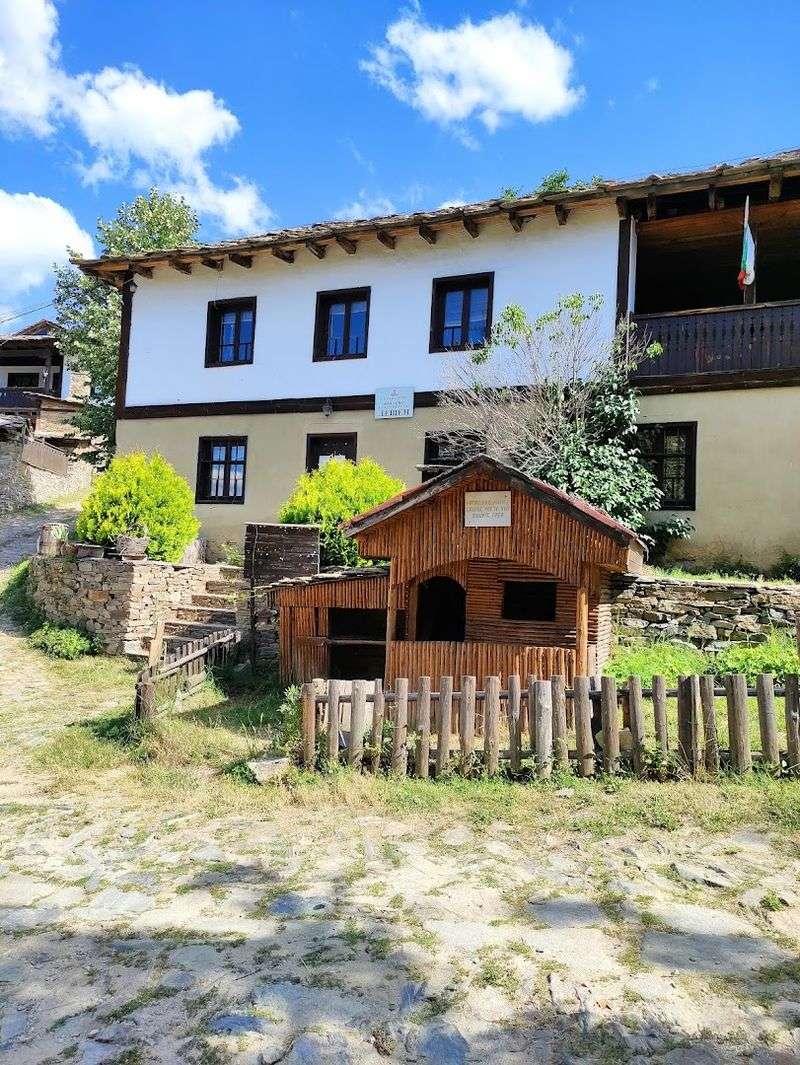
Bulgaria’s National Revival period produced some of the country’s most distinctive rural architecture, and Leshten preserves it better than almost anywhere else. Perched in the Western Rhodope Mountains, this architectural reserve contains stone houses with clay-plastered upper floors, wooden balconies, and hand-cut stone or slate roofs that have remained largely unchanged for two centuries.
The building style associated with the Kovachev construction school is defined by spacious yards, decorative verandas, and a practical layering of materials: stone for the ground floor’s durability and wood for the warmth and flexibility of upper levels. Many properties overlook the Pirin Mountains, a view that the original builders clearly took into account when positioning their homes.
Once a lively trade center in the early 19th century, Leshten now operates at a quieter pace, with many restored houses offering overnight accommodation. Visitors who stay beyond the afternoon discover a village that reveals more of itself after the day-trippers leave, including a modern clay-and-straw house with a thatched roof that has become an unexpected local landmark.
12. Kaiping Diaolou and Villages, Kaiping, China
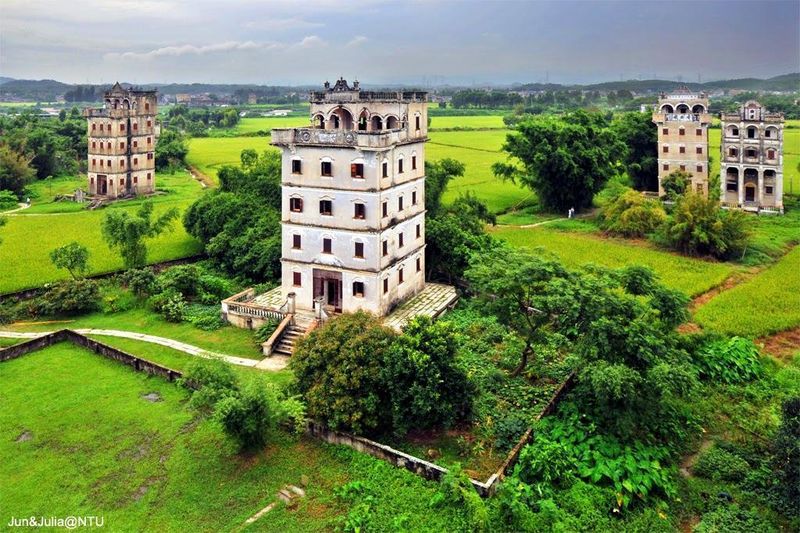
Nobody expected to find Baroque columns and Gothic arches rising above rice paddies in rural Guangdong, yet that is precisely what the Kaiping Diaolou deliver. These fortified multi-story towers, inscribed as a UNESCO World Heritage Site in 2007, are the architectural result of a remarkable transnational story involving Chinese emigrants, overseas wealth, and a very real need for protection back home.
Construction of the towers peaked between the 1920s and 1930s, funded largely by Kaiping natives who had accumulated wealth in North America, Australasia, and Southeast Asia. They returned with architectural postcards, imported materials, and ambitious ideas, blending Romanesque, Islamic, Baroque, Rococo, and Art Deco styles onto structures designed to repel bandits and withstand flooding.
Early towers used stone, rammed earth, and brick, while later versions employed reinforced concrete, a rare material in rural Asia at the time. Approximately 1,800 diaolou still stand across the region today. Their watchtower floors, narrow windows, and 360-degree views reflect a practical defensive logic beneath all that decorative ambition.
13. Wae Rebo, Manggarai Regency, Indonesia
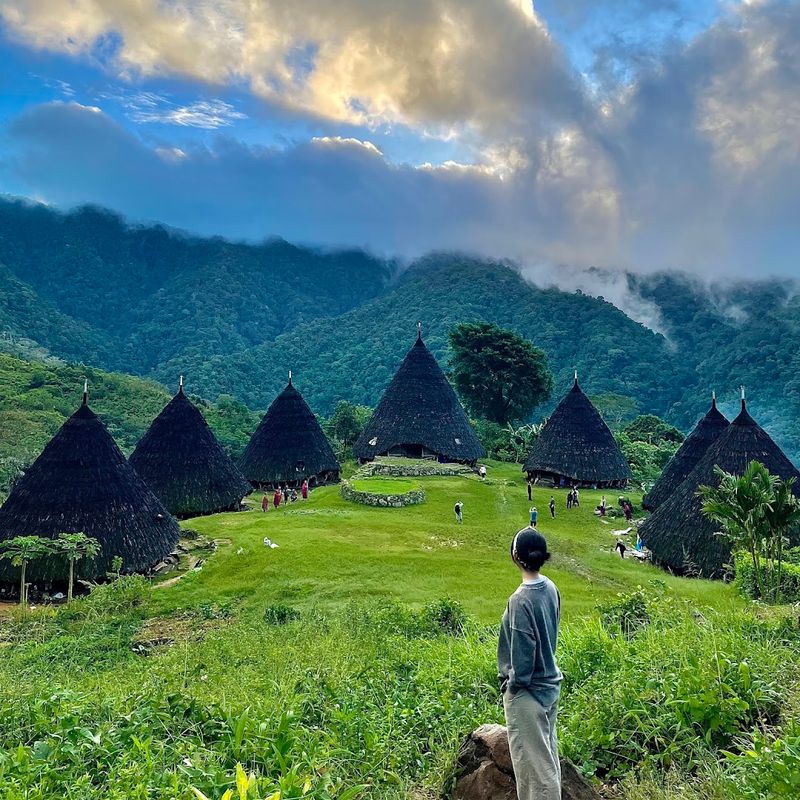
Wae Rebo earns its nickname, “the village above the clouds,” not through poetic license but through geography: the settlement sits between 1,000 and 1,200 meters above sea level in the mountains of Flores, accessible only by a challenging uphill trek through dense forest. What greets arrivals at the top is a circle of seven towering conical houses unlike anything else in Southeast Asia.
These structures, called mbaru niang, rise up to 15 meters and are covered from pointed tip to near ground level in layers of palm leaves and sugar palm fibers. Inside, five distinct levels serve separate communal functions, from everyday living on the ground floor to sacred ancestral offerings at the very top. The entire structure is built without nails, using worok wood, bamboo, and rattan bindings.
The seven houses are arranged around a central stone altar called the Compang, symbolizing community unity in the Manggarai tradition. After traditional building skills began fading in the early 21st century, a restoration effort from 2008 to 2011 revived the techniques and rebuilt all seven original structures. UNESCO recognized the effort with its Asia-Pacific Award of Excellence for Cultural Heritage Conservation in 2012.
14. Bena Traditional Village, Ngada Regency, Indonesia
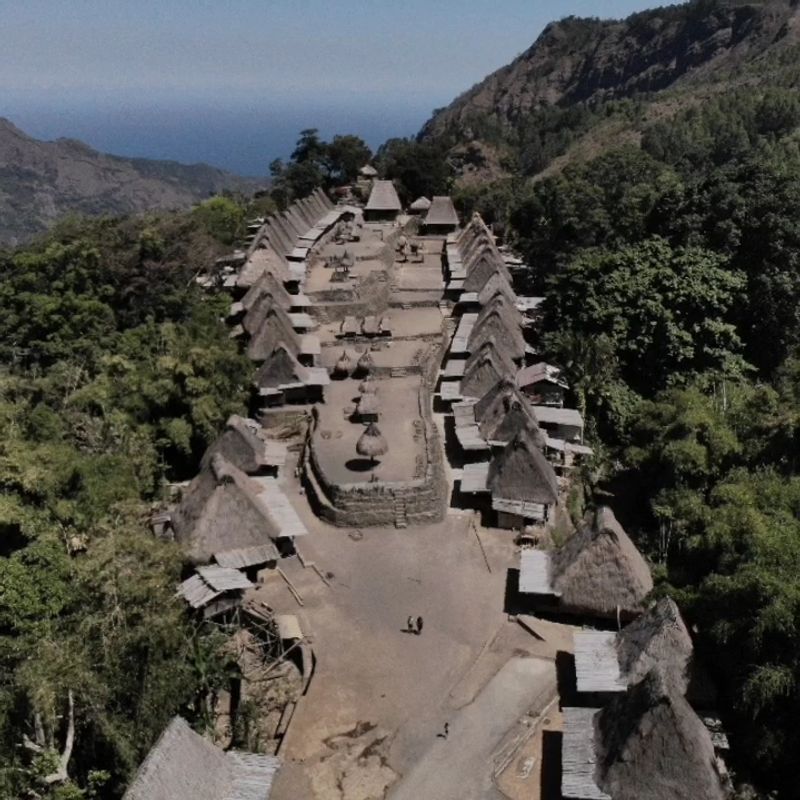
Believed to be over 1,200 years old, Bena Traditional Village on the island of Flores is one of the oldest continuously inhabited traditional settlements in Indonesia. Nine indigenous Ngada clans live here, and the village layout they maintain reflects a social and spiritual order that has not fundamentally changed across dozens of generations.
Two parallel rows of Sa’o houses face each other across a long ceremonial courtyard, their high peaked roofs thatched with reeds or palm leaves. The courtyard itself is populated with ancient megalithic stones and two distinct types of ancestral shrines: the ngadhu, umbrella-shaped thatched poles representing male ancestors, and the bhaga, miniature hut-like structures symbolizing female ancestors and domestic sanctuary.
Animal skulls and buffalo horns from ceremonial sacrifices decorate many house facades, with roof ornamentation varying by family lineage. Mount Inerie rises directly behind the village, and local tradition holds that the volcano is home to protective ancestral spirits. Farming and weaving continue as the main livelihoods, making Bena a working community rather than a preserved exhibit.
Share this story