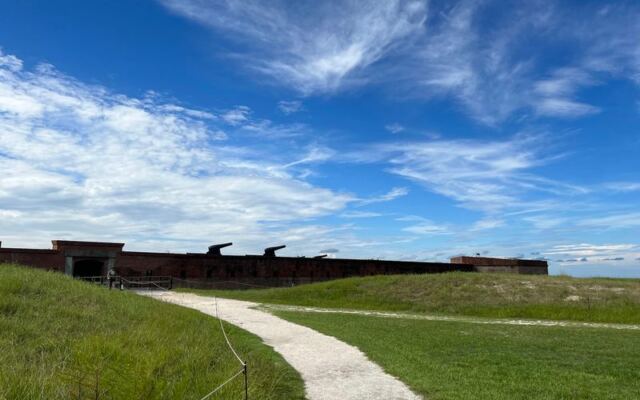
A brick fortress with giant cannons on its walls still watches over a river mouth in Florida, and you can climb right up and stroll along the top. Getting into the fort itself costs about the same as a gas station snack.
Inside, the rooms look ready for the next roll call. Interpreters in period clothing sometimes appear, and a flag with a star count most folks have never seen flies overhead.
Then there’s the beach just outside the walls. People comb the sand there for fossilized shark teeth, and plenty actually go home with one.
I like how one afternoon can swing from barracks to bike trails to shell hunting without a second car trip. I can’t imagine a cheaper way to time travel.
So what does it feel like to stand where those drills once happened?
The Brick Lookout at the Very Top of Florida’s Atlantic Coast
Few state parks can claim a view of two states at once. Fort Clinch State Park sits on the northern tip of Amelia Island, where Florida runs out of coastline and Georgia waits across the water.
The park wraps around the mouth of the St. Marys River and Cumberland Sound. That location was no accident, since whoever held this spot could watch every ship sliding in and out.
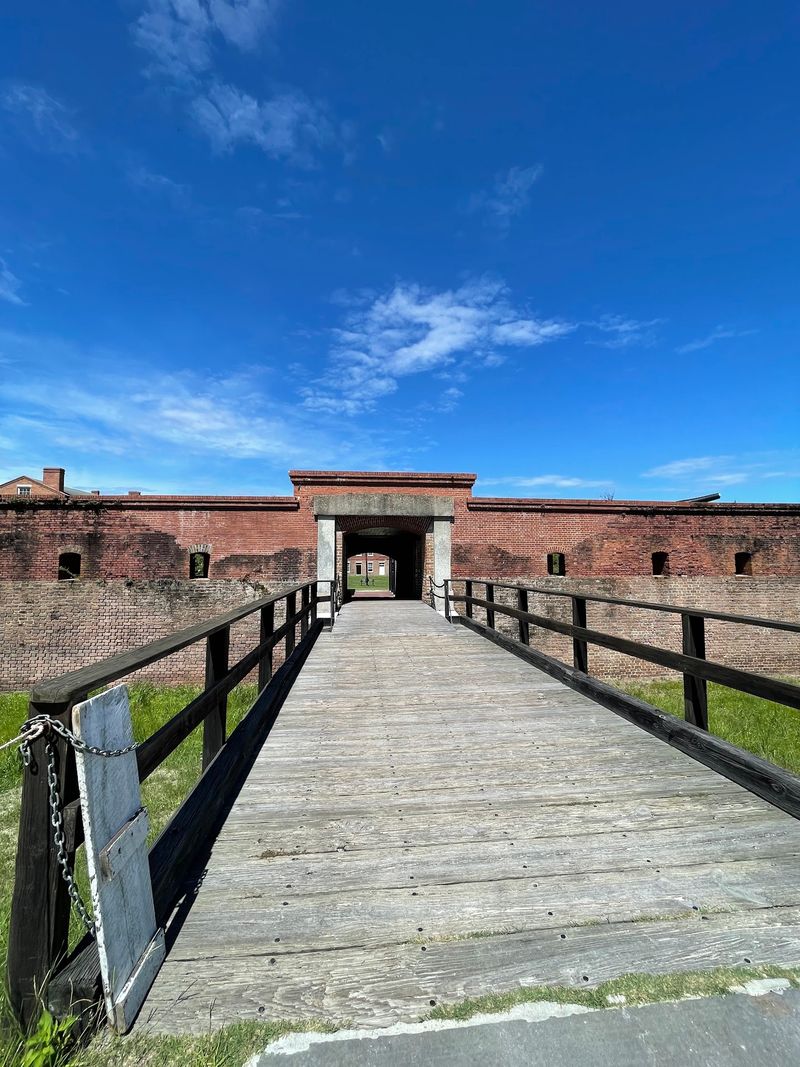
At its center stands a five-sided brick fort, the kind you usually only see in textbooks. Around it spreads a surprisingly wild landscape of maritime forest, dunes, marsh, and open beach.
Most people come for the fort and stay longer than planned. The park offers camping, nature trails, fishing, biking, and beach access all inside the same gate.
Amelia Island itself carries a relaxed, Old Florida feel, with Victorian streets and quiet beaches nearby. The fort gives that easygoing island a dramatic, history-packed bookend at its northern edge.
Think of it as a museum, a nature preserve, and a beach day rolled into one ticket. Not bad for a corner of the map many travelers zip right past on Interstate 95.
A Fort That Kept Changing Hands and Then Got a Second Life
Construction started back in 1847, long before the brick walls you see today were finished. The fort took its name from General Duncan Lamont Clinch, a notable figure in early Florida military history.
Building a masonry fort on a sandy island was slow, stubborn work. Crews were still laying brick when the turbulent 1860s arrived and the fort changed hands.
Confederate troops held it first, then Union forces took control in 1862. The garrison stayed active for years, which is why the living history today focuses on the 1864 period.
Here’s a fun twist. The fort was briefly called back into service in 1898 during the Spanish-American conflict, then quietly faded again.
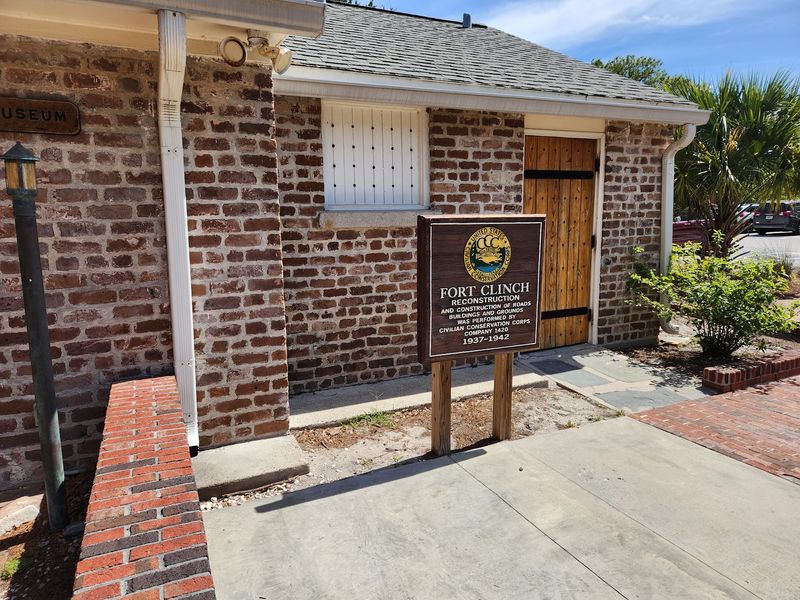
Enter the Civilian Conservation Corps in the 1930s. Young workers restored crumbling sections and helped turn the grounds into one of Florida’s earliest state parks, which opened in 1938.
So the walls tell more than one story. You’re looking at mid-1800s engineering, later military updates, and Depression-era craftsmanship all stacked into the same sturdy brick.
Up on the Ramparts With the Cannons and the Sea Breeze
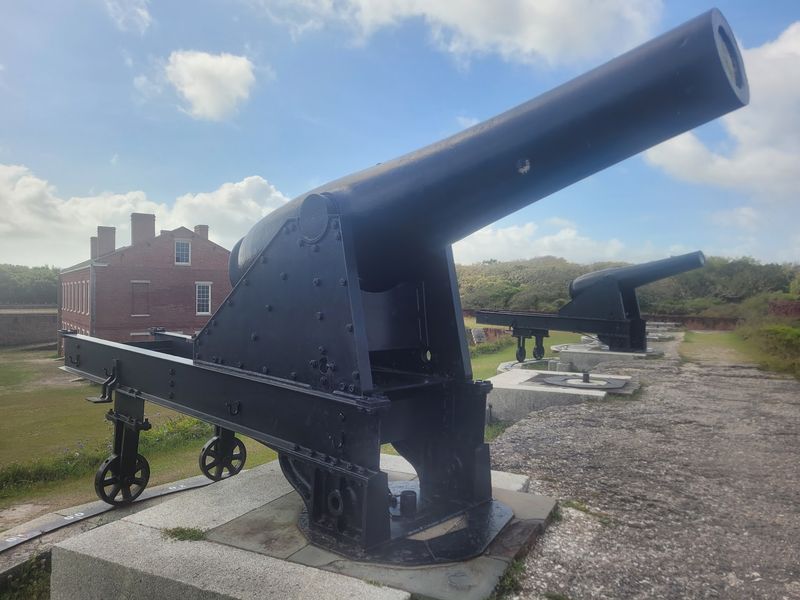
Climb the stairs and the whole place opens up. The ramparts give you a wide-open view of the water, the marshes, and the inlet the fort was built to guard.
Massive cannons sit along the walls, and they’re bigger than most people expect. Standing beside one makes it easy to understand why ship captains took this fort seriously.
Bring your curiosity for the horizon, too. Donated viewing binoculars help you scan the water, and boats of all sizes pass through the sound.
Every so often, something unusual heads out to sea. Submarines from the naval base across the water in Georgia have been spotted cruising past the fort.
Sunset is a favorite time to soak in those marsh views from the park. The light turns the water gold and the old brick glows a warm, rusty orange.
Walking the walls, you can almost hear the drill commands bouncing off the masonry. It’s a rare chance to pace the exact paths where troops once stood their watch, minus the heavy wool uniforms.
Barracks, Hallways, and Stairs Worth Getting Lost In
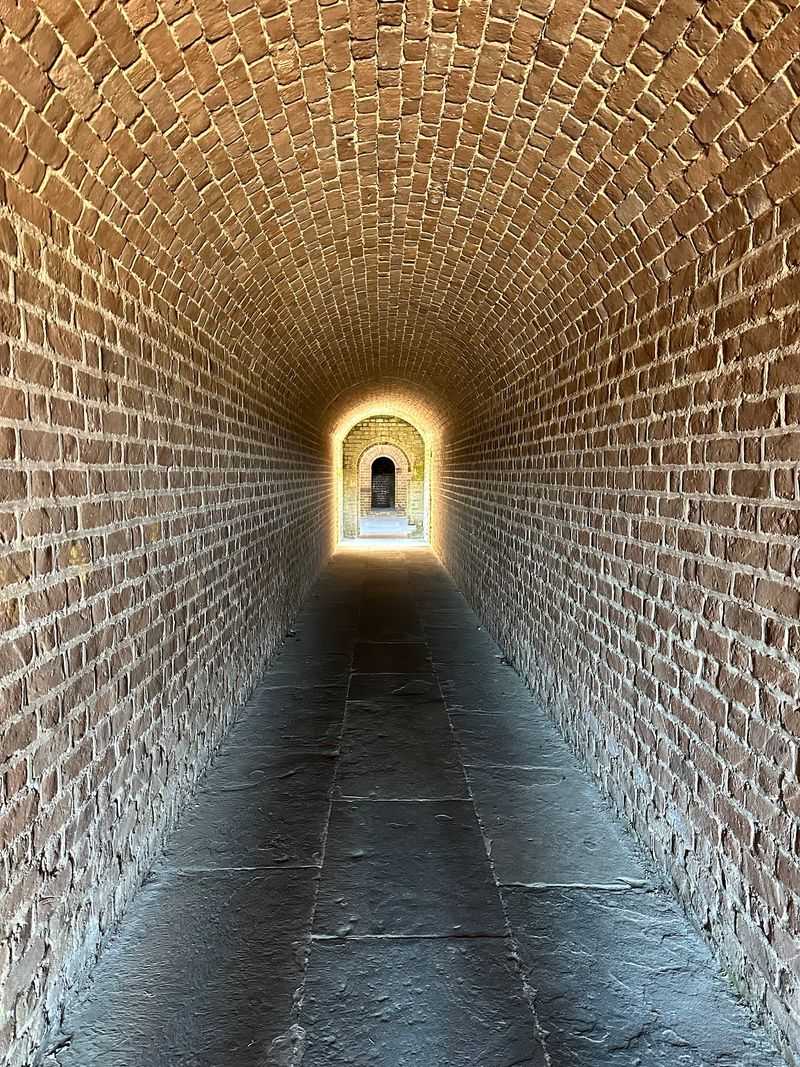
Kids treat the interior like a giant puzzle box. Brick passageways, staircases, and tunnels connect rooms in ways that reward anyone who peeks around one more corner.
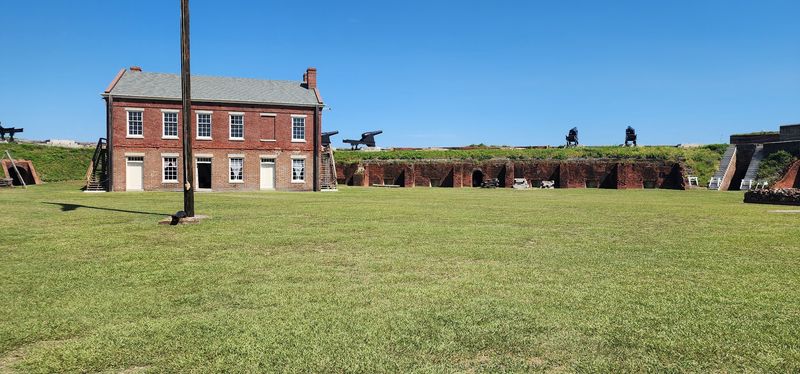
The restored buildings show how daily life worked inside the walls. You’ll find barracks lined with bunks, along with rooms that once served as workspaces and living quarters.
Interpretive displays explain what happened in each space. They share enough detail to spark interest without burying you in tiny print.
Families with school-age children get a bonus. Lessons about the 1800s suddenly feel real when you can stand inside the very rooms described in a history book.
The tour is self-guided, so you set the pace. Linger in the barracks, race up the stairs, or circle back to a favorite room as many times as you like.
Fair warning for planners: some buildings may be closed on a given day. Still, the fort is mostly open to explore, and the paths around the grounds stay clear and easy to follow.
Consider this the most fun you’ll ever have reading old floor plans with your feet.
Living History That Answers Back
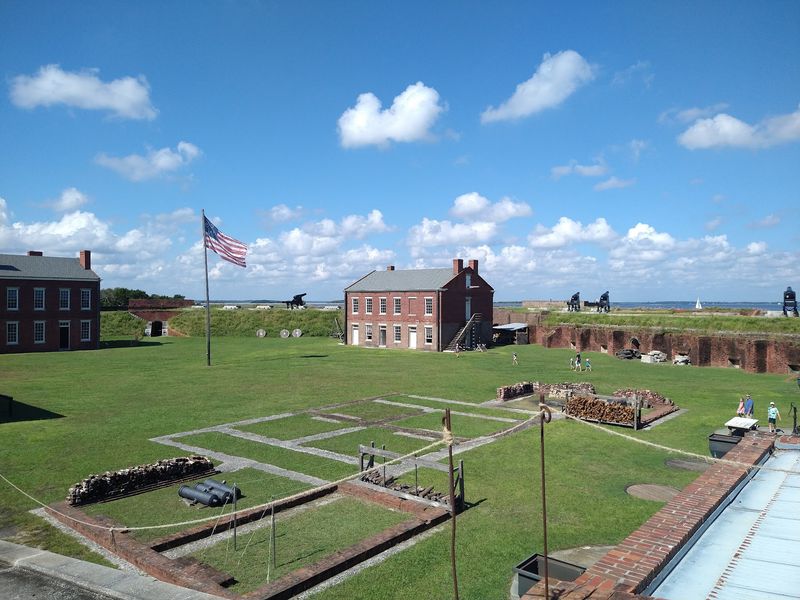
Ask a question and you might get an answer straight out of 1864. Costumed interpreters at the fort portray the garrison that lived here during the Union occupation.
They demonstrate daily routines, from duties around the fort to the small details of a soldier’s life. It’s history with a voice, a face, and occasionally a very sturdy pair of boots.
Special events take things up a notch throughout the year. Reenactments fill the parade ground with uniformed volunteers, and the atmosphere shifts from museum to living village.
Some visits come with a surprise. Occasionally a pirate ship even stages a playful invasion of the fort, which is about as memorable as a field trip gets.
Staffing varies, so the number of interpreters on site can change from day to day. Checking the park’s event calendar before you go helps you catch the livelier weekends.
Even on a quiet day, the fort feels lived in. The rangers and volunteers are known for being friendly and knowledgeable, and they clearly enjoy sharing the story of these walls.
The Museum and Gift Shop You Pass Through on the Way In
Your fort visit starts with a smart little routine. You pay at the gift shop, walk through the museum, and then step out toward the fort itself.
That order works beautifully. By the time you reach the brick walls, you already know who built them, who lived there, and why it mattered.
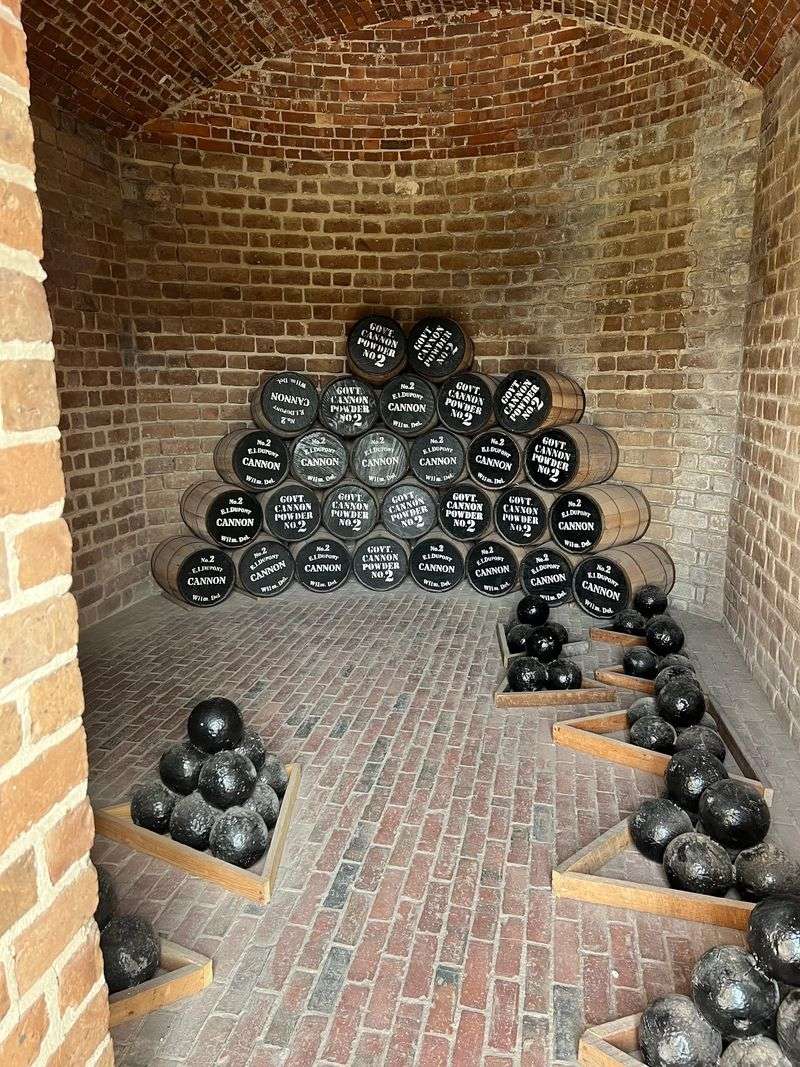
The museum packs in historical relics and readable exhibits. It’s the kind of space where even the reluctant history fan stops to read just one more panel.
Keep an eye out for the flags. An American flag with an unusual star pattern from the era catches the attention of many who pass through.
The gift shop deserves its own mention. It’s well stocked, cheerful, and refreshingly affordable, which makes picking out a souvenir a lot less stressful.
Clean restrooms nearby are another small win before you head out into the sun. Small comforts like that make a long day of exploring much more pleasant.
Give yourself a few minutes here instead of rushing. The background you pick up turns the fort from cool old building into a story you can follow room by room.
Shark Teeth, Seashells, and a Shoreline Built for Wandering
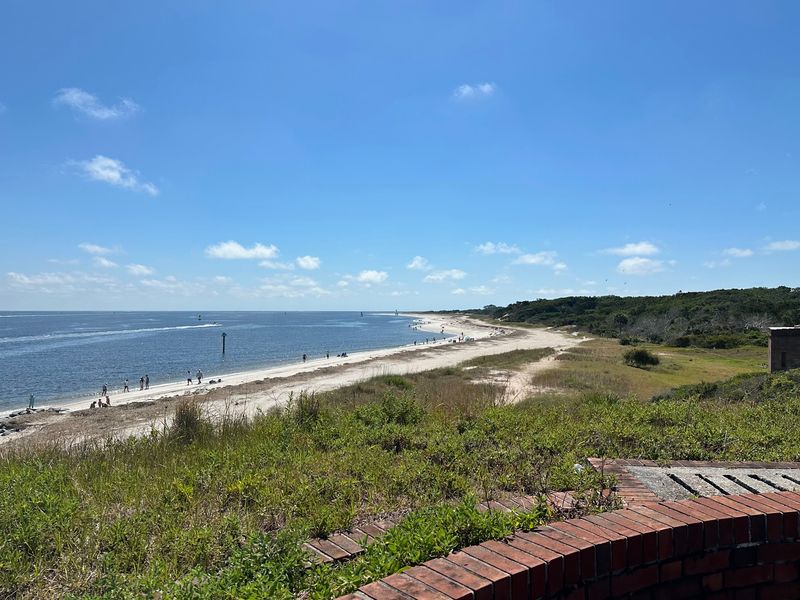
Small black triangles in the sand are the real treasure here. The beach at Fort Clinch State Park is a favorite hunting ground for fossilized shark teeth.
Some people find one within minutes, while others walk away empty-handed but grinning. Either way, scanning the tide line becomes oddly addictive once you start.
Shells turn up along the shore, too. Bring a small bag, but leave anything still living right where you found it.
Beach access points are spread across the park, so you’re never far from the sand. The shoreline feels wide and calm, with a secluded quality that’s hard to find in busier parts of Florida.
Anglers can try their luck from the fishing pier or along the shore. Salt air, gentle waves, and that brick fort in the background make an unbeatable combination.
A river walk adds another angle on the water. It’s a quieter stroll that shows off the marshy side of the island.
Honestly, this might be the only beach where history buffs and shell collectors argue over who’s having the better day.
Spanish Moss Tunnels, Bike Trails, and Curious Critters
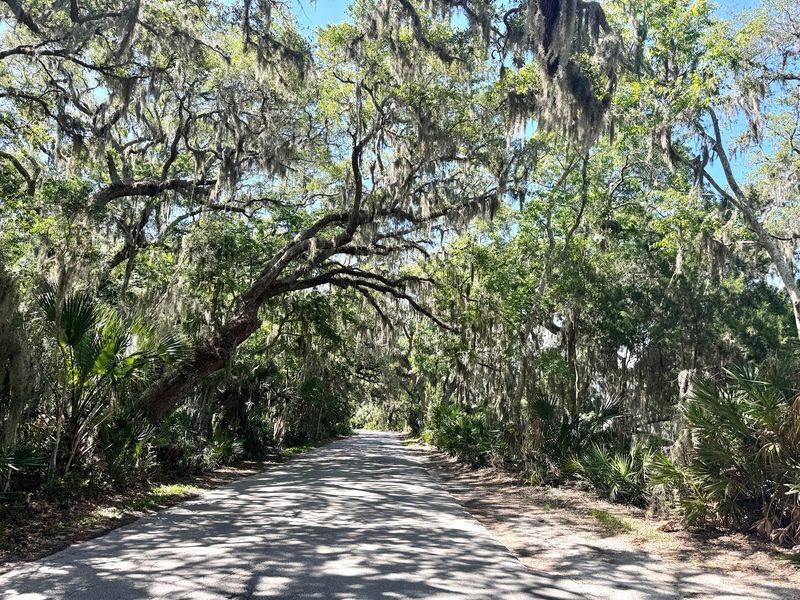
The drive to the fort is an attraction all by itself. A long, winding road cuts through a maritime forest where live oaks drip with Spanish moss.
Go slowly and keep watch along the edges. Deer, bright red cardinals, and even gopher tortoises searching for a snack make regular appearances.
Cyclists have plenty to love here. The park offers multiple hiking and off-road biking trails that wind through the forest and around the island’s interior.
E-bikes are a popular choice for covering more ground in the heat. They make it easy to hop from trailhead to beach to fort without wearing yourself out.
Families looking for a scavenger hunt get a sneaky bonus. Several geocaches are hidden throughout the park, adding a treasure-map twist to an ordinary hike.
Pets are welcome in many areas, though some restrictions apply. A leash and a quick look at the rules keep everyone happy.
Toss a small trash bag in your pack and leave the trails even nicer than you found them. That green canopy is worth protecting.
Two Campgrounds With Very Different Personalities
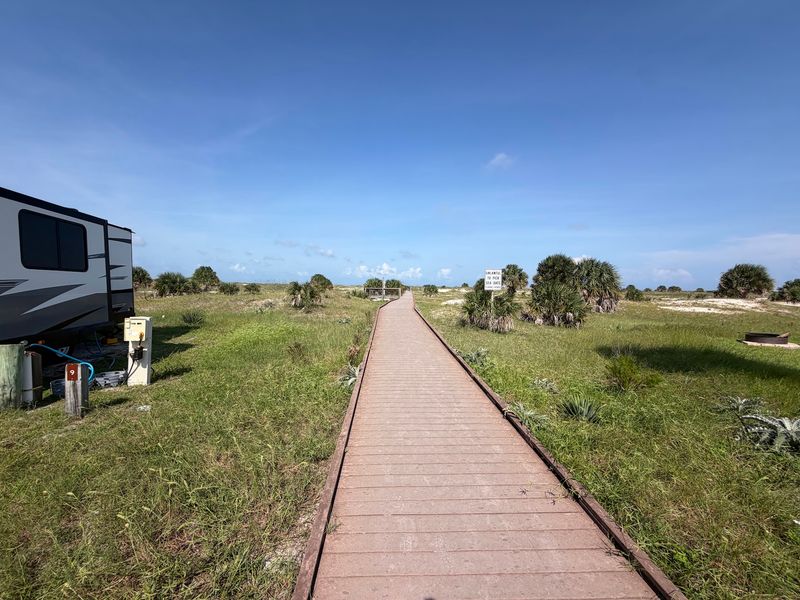
Shade or signal? That’s the big choice when you camp here, because the park runs two campgrounds with distinct personalities.
The Amelia River campground sits under a thick tree canopy. It stays cooler and cozier, though cell coverage and satellite internet can be spotty beneath all those branches.
The beachside campground trades shade for open sky and ocean breezes. Campers who need a connection for work or streaming tend to prefer it.
Sites come with a fire ring and a picnic table, and many fit a pickup and travel trailer. Some are roomy, while others feel snug, so check site sizes when you reserve.
The bathhouses earn plenty of praise. They’re air-conditioned, kept very clean by volunteers, and include laundry facilities, which is a big deal on a longer stay.
RV campers should note there are no direct sewer hookups at sites. A dump station handles that job instead.
Staff have a reputation for quick, friendly help when something goes sideways. Waking up a short bike ride from a historic fort is a pretty great way to start the morning.
Know Before You Go, Then Stay Longer Than You Planned
Good news for budget travelers: the price of admission is pleasantly small. A modest per-vehicle fee gets you into the park, and the fort adds a small per-person charge.
You’ll find the entrance at 2601 Atlantic Ave, Fernandina Beach, FL 32034. The park generally opens at 8 a.m. and closes at sundown, while the fort keeps shorter daytime hours.
Parking is plentiful, with accessible spots near the fort. Once inside, the drive to the fort takes a while, so build in time to enjoy that mossy road.
North Florida summers run hot, and exploring involves plenty of walking. Pack water, sunscreen, and comfortable shoes, especially if you plan to hit the beach afterward.
Weekdays and off-peak hours can feel delightfully uncrowded. A few hours covers the highlights, but a full day lets you add trails and shark tooth hunting.
So is it worth the trip? For anyone who loves Old Florida, affordable adventures, and a good story told in brick, Fort Clinch State Park makes a strong case for returning again and again.
Share this story