Two early submarines sit inside an old brick industrial building, and admission costs nothing. That detail alone made me stop scrolling.
The same building holds full-size silk machinery, a punch-card loom, locomotive history, and a 1920s medicine display. Rocks and minerals glitter nearby.
A comedy legend even gets his own corner.
I like how one small New Jersey museum manages to explain an entire working city through objects you can stand beside. It feels less like a lecture and more like a well-stocked attic run by people who care.
Plenty of folks drive past it for years before finally stepping through the door. I can’t help wondering how many other surprises are waiting in plain sight across New Jersey.
So what exactly is packed inside those old factory walls?
A Free Museum Built Around the Story of Silk City
Silk City has a scrapbook, and it fills an entire industrial building. The Paterson Museum traces how this New Jersey city made things, invented things, and shaped the country along the way.
The museum describes itself as an industrial heritage showcase. Exhibits cover archaeology, mineralogy, and inventors, plus a deep look at local manufacturing.
That mix sounds random until you realize Paterson actually touched all of it.
Admission is free, which feels almost suspicious given how much is inside. Donations are welcome, though, and they help keep the collection in good shape.
Kids get in free too, so a family outing won’t drain anyone’s wallet.
Plan on roughly an hour to two hours for a relaxed look. Some people linger longer once the machinery pulls them in.
The pace is entirely yours, since nothing here rushes you along.
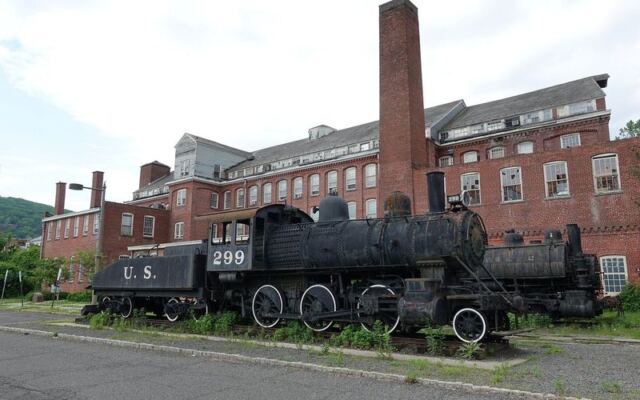
The building itself matters as much as the displays. You’re learning about factories while standing in one, and that changes how everything lands.
It’s a smart setup for a city whose whole identity grew out of mills, looms, and engines.
Hamilton’s Big Idea Beside the Great Falls
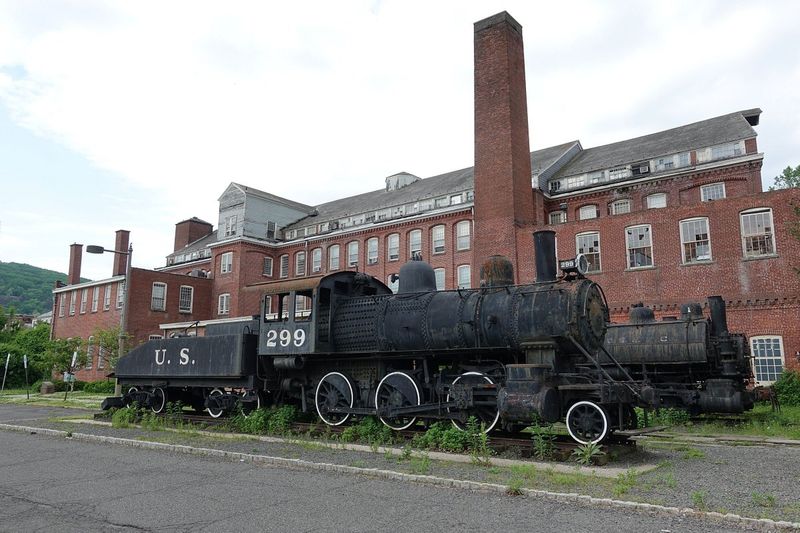
Alexander Hamilton looked at a roaring waterfall and saw a factory town. That vision is where the museum’s story really begins.
Hamilton proposed building a manufacturing city here, using the Great Falls of the Passaic as a power source. Water turned wheels, wheels turned machines, and Paterson grew into an industrial powerhouse.
The museum gives his role expanded attention, showing how important his plans were for New Jersey and the young nation.
It’s a fun twist for anyone who only knows Hamilton from a hit musical. Here, he’s less about duels and more about blueprints.
The exhibits connect his big-picture thinking to the actual machines that followed.
Geography plays a starring role too. The falls sit about a block away, now part of the Great Falls National Historical Park.
Seeing the water in person makes the museum’s explanations click instantly.
So the setting isn’t just backdrop. It’s the reason the city exists at all.
Few museums get to point out the window and say, there’s the engine that started everything, still rushing along after more than two centuries.
The Punch-Card Loom That Steals the Spotlight
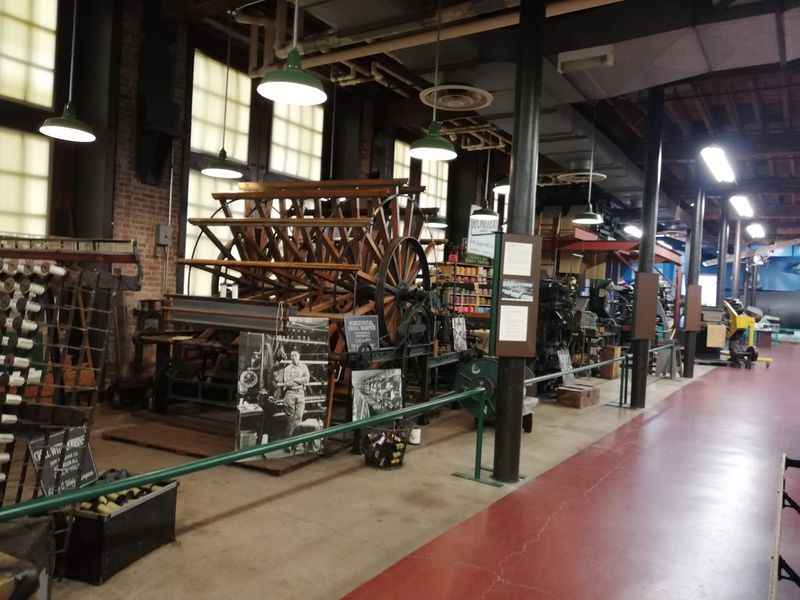
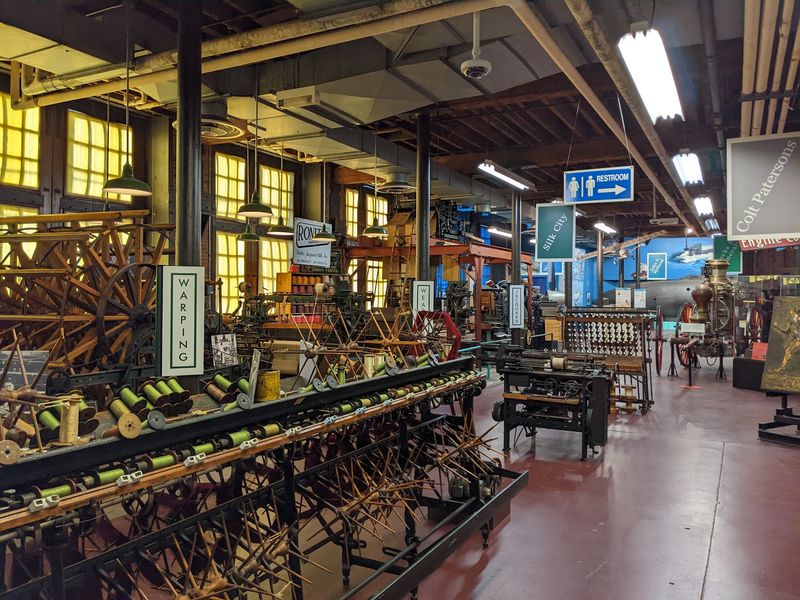
Long before laptops, a loom was reading punch cards. The Jacquard head loom at the Paterson Museum shows that idea in full, clattering-looking detail.
Punch cards told the loom which threads to lift, creating complex woven patterns automatically. That same concept later helped inspire early computing.
Some visitors who arrive for other exhibits end up calling this machine the real highlight.
It sits among a larger collection of full-size silk manufacturing equipment. These are real industrial machines, not tiny models behind glass.
The scale alone tells you how serious Paterson’s silk business once was.
Silk is the reason for the city’s famous nickname. Mills here produced so much of it that Silk City stuck for good.
The museum’s machinery helps you understand the work behind every shimmering bolt of fabric.
Fans of tech history should budget extra time right here. It’s oddly satisfying to trace a line from woven ribbons to modern code.
Who knew a textile machine could feel like a distant ancestor of your phone? Grandparents and teenagers might finally agree on something interesting.
Two Holland Submarines You Won’t See Coming
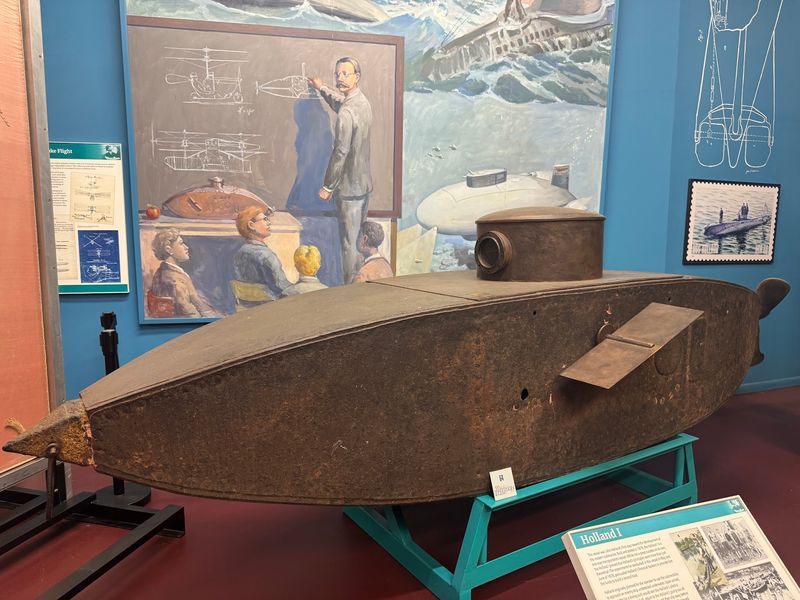
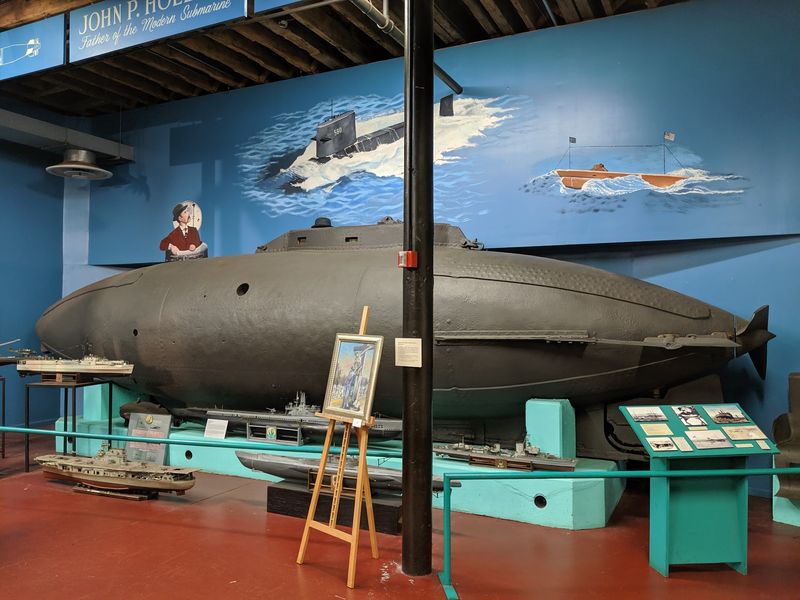
Submarines are the last thing most people expect in a city museum. Yet two of them sit right here, and they’re the exhibit people mention most.
Both connect to John Philip Holland, the inventor associated with early submarine development. His original vessels are displayed inside the Paterson Museum.
They look rugged, compact, and wonderfully experimental.
Standing near them, you get a sense of how bold early underwater travel really was. These weren’t sleek modern craft.
They were early tries at something that sounded close to impossible.
The submarines also show how Paterson attracted inventors and big ideas. A city built on machines naturally drew people eager to build new ones.
Holland’s work fits neatly into that story of tinkering and ambition.
Kids tend to find these especially memorable, and honestly, adults do too. Something about a real submarine indoors feels a little magical.
It’s the kind of surprise that turns a quick stop into a story you’ll repeat later. Bring a camera, because friends may not believe you otherwise when you describe your afternoon at a New Jersey history museum.
Locomotives, Airplane Engines, and Serious Horsepower
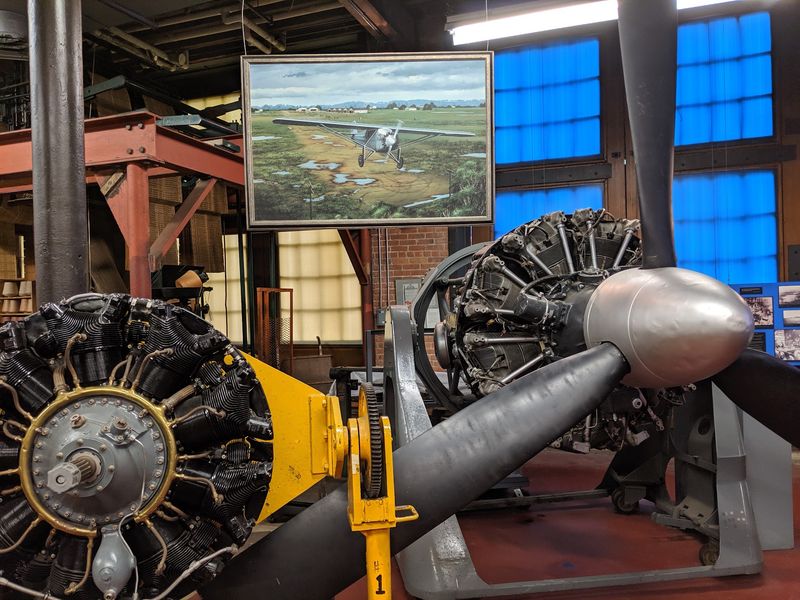
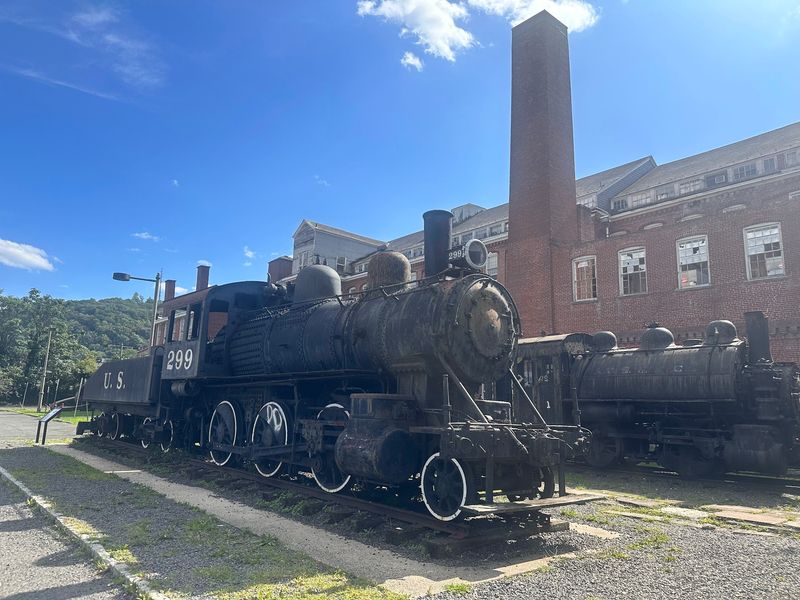
Paterson didn’t stop at fabric. The city also built locomotives and airplane engines, and the museum makes room for both.
Locomotive history here reflects a period when Paterson shops helped move America by rail. Exhibits connect that work to the broader industrial boom.
Train fans will feel right at home among the displays.
Airplane engines add another layer. Paterson’s manufacturing reach extended into aviation, showing how the city kept adapting as technology changed.
There’s also material touching on the Wright brothers, linking local industry to flight’s early era.
Electrical transmission wire production shows up in the story too. Altogether, it paints Paterson as a true workshop city, where one kind of skill led to the next.
Mills gave way to engines, and engines pushed toward the sky.
What makes this part stick is the hands-on scale. You’re looking at actual industrial pieces, not just photographs.
The objects quietly explain how ordinary workers in New Jersey helped power trains, planes, and everyday life. Machinery lovers could happily spend a long stretch right in this section without noticing the clock.
Colt’s Early Factory Story in Paterson
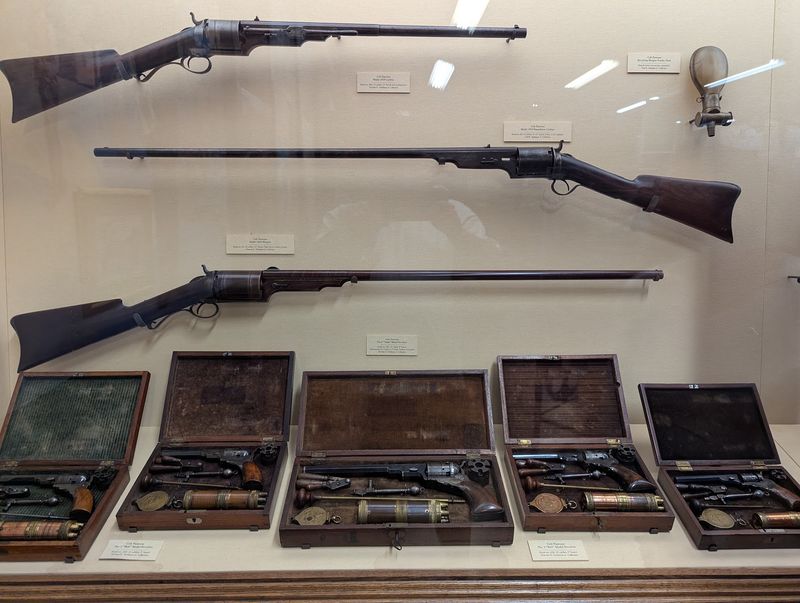
Samuel Colt’s famous company has roots in this city. The museum includes an exhibit on early Colt manufacturing in Paterson, and history buffs seek it out.
The display fits the museum’s larger theme of local invention and production. Paterson’s mills and skilled workforce gave inventors a place to experiment and build.
Colt’s early venture is one chapter in that busy industrial story.
For many visitors, the appeal is the business history behind a recognizable American name. It shows how a single city could launch enterprises that later became widely known.
Learning that origin feels a bit like discovering a famous person grew up down the street.
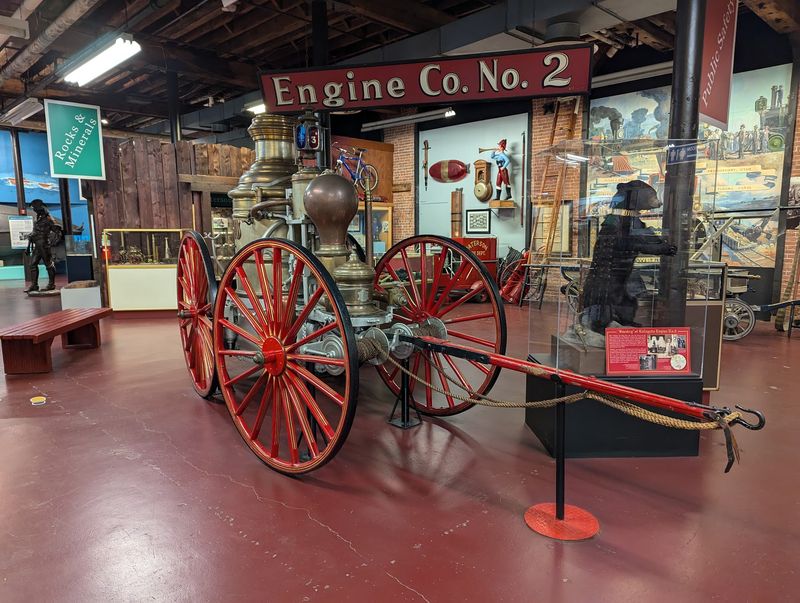
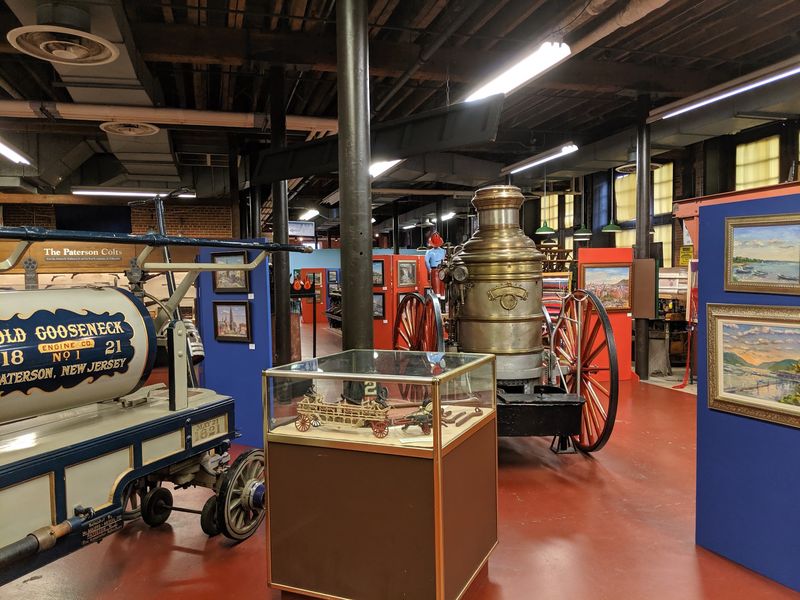
Nearby exhibits on the Paterson Police Department, Fire Department, and military branches round out the civic side of the collection. Old firefighting equipment is a fun detour.
It shows how the city protected all those busy mills and neighborhoods.
Together, these displays highlight how industry and community grew side by side. Factories needed workers, and workers needed services.
The museum treats both as part of the same evolving Paterson picture.
Sparkly Minerals and a Peek at the Ground Beneath
Rocks might not sound thrilling, until you see these. The mineral collection is a colorful, slightly funky assortment that wins over plenty of visitors.
Specimens come from Paterson and from around the world. Gemstones, crystals, and fossils fill the cases with surprising variety.
It’s the perfect break after a stretch of heavy machinery.
Local geology connects back to the whole Paterson story. The land shaped the falls, and the falls shaped the city.
Seeing minerals from right here helps tie the earth to the industry built on top of it.
Younger visitors often gravitate toward this section first. Bright colors and odd shapes are easy to love at any age.
Budding geologists might leave with a brand-new hobby.
The museum’s archaeology focus adds even more depth. Exhibits explore the region’s ancient past alongside its rocks and crystals.
You get a sense that Paterson’s story started long before any loom or engine arrived. It’s a reminder that New Jersey history runs deep, sometimes literally underground, waiting for curious eyes.
Indigenous Life in Northern New Jersey
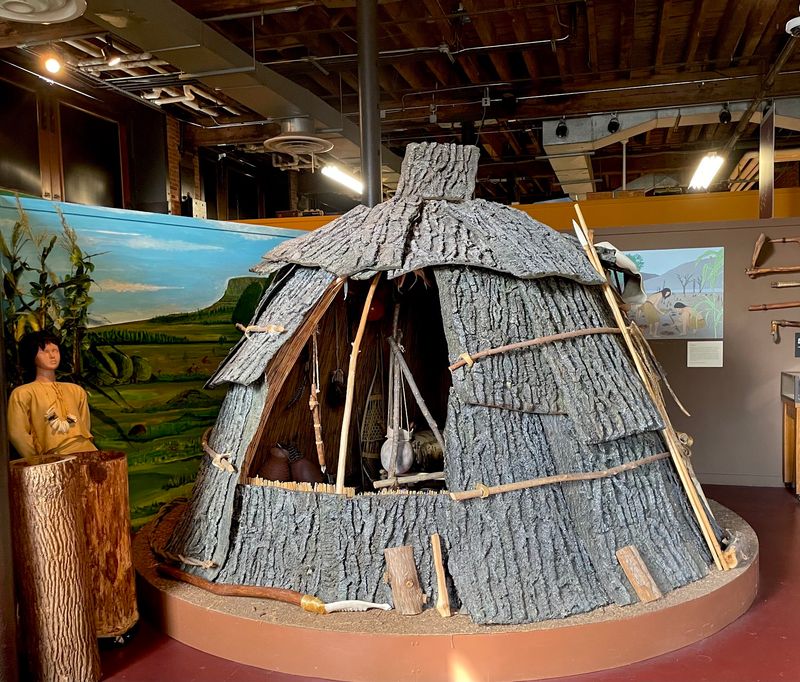
Long before Hamilton arrived, people called this region home. The museum’s Native American history exhibits highlight indigenous life in northern New Jersey.
These displays add important context to the city’s story. Visitors appreciate seeing the land’s earlier communities given real attention.
It reminds everyone that Paterson’s past didn’t begin with factories.
Artifacts and well-organized signage help guide you through this section. The museum’s archaeology focus supports the exhibit with objects that connect to the region.
It’s a thoughtful counterweight to the noisy industrial halls nearby.
Pairing this section with a walk to the Great Falls makes a meaningful combination. The falls held significance long before they powered mills.
Considering that longer timeline gives the whole visit more weight.
For families, this area opens up great conversations. Kids working on school assignments often find helpful material across the museum, and this section adds valuable perspective.
The exhibits encourage questions about who lived here, how they lived, and how the landscape changed over time. Slow down here, since the details reward careful reading and genuine curiosity.
Old Medicines, Sports Heroes, and Lou Costello
Who’s on first? In Paterson, it might be Lou Costello.
The beloved comedian was from this city, and the museum proudly gives him a spot.
Pop culture threads run throughout the collection. Sports legends like Larry Doby, who broke barriers in American League baseball, get recognition too.
These exhibits show how Paterson shaped entertainment and athletics, not only industry.
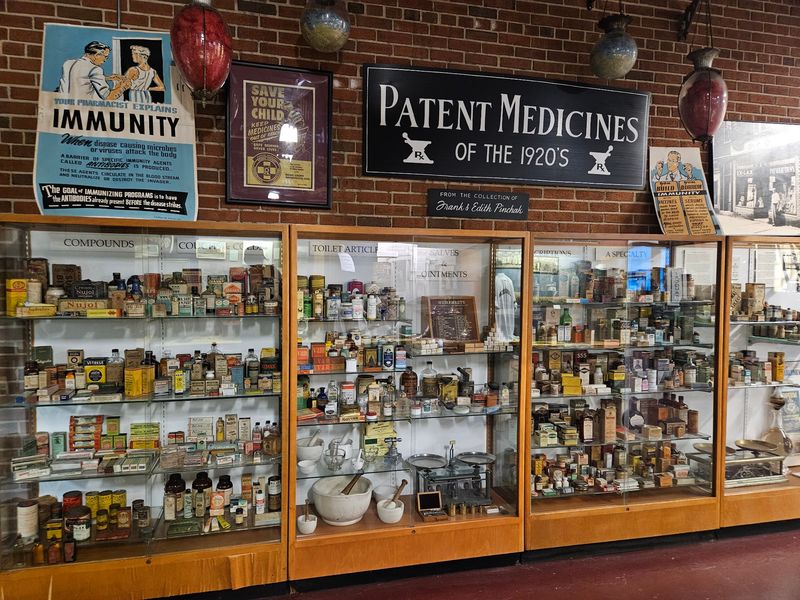
Then there’s the 1920s medicine display. Old bottles and pharmaceutical products offer a quirky glimpse into early twentieth century health care.
Some of those labels are pure time-travel material.
A diner exhibit adds more everyday nostalgia. It’s a reminder that city history includes ordinary places where people gathered.
These lighter sections balance out the giant machines beautifully.
The museum also features a rotating art and exhibition gallery. Fresh displays mean repeat visits can offer something new.
That eclectic spirit is part of the charm here. One minute you’re studying engines, and the next you’re grinning at a comedy icon from your own New Jersey backyard.
Who Will Love This Workshop of Curiosities
History lovers are obvious fans, but the audience runs much wider. Families, students, engineers, and curious day-trippers all find something to chew on here.
Exhibits are organized well, with clear signage that helps first-timers follow along. The atmosphere feels charming and personal rather than grand or intimidating.
Lifelong Paterson residents and out-of-towners can enjoy it equally.
Staff members earn warm praise, and some guides make the visit especially lively. A knowledgeable guide can turn artifacts into stories.
That personal touch suits a museum this rooted in community.
Families with homework-bound kids should take note. The well-documented displays help students learn far beyond assignment basics.
Free entry for kids makes it an easy pick.
One comfort tip matters in warmer months. The building lacks central air, so it can feel warm inside.
Dress lightly in summer and bring water for the car. There’s no food on site either, so eat beforehand or plan a nearby stop.
With those basics covered, everyone can focus on the fun stuff.
Hours, Parking, and Getting to Market Street
Weekday explorers have the advantage here. The Paterson Museum opens Monday through Friday, from 9:30 AM to 4:30 PM.
Saturdays and Sundays are closed, so weekend planners will need a weekday off. Check ahead before heading out, especially around holidays.
A quick confirmation saves a wasted trip.
You’ll find the museum at 2 Market St, Paterson, NJ 07501. Free parking is available on site, which is a welcome perk in a busy city.
The building is easy to access once you arrive.
Admission is free for everyone, with donations gladly accepted. That makes it one of the most budget-friendly outings in New Jersey.
Spending a couple of hours costs only your gas and time.
Food isn’t available inside, so plan meals around your visit. Fast food sits close by if you need something quick.
Pair the museum with a stroll to the Great Falls about a block away for a fuller day. Together, the two stops tell Paterson’s story from water to machine in one easy afternoon.
A Small Museum With a Big Workshop Heart
Some museums dazzle with marble. This one wins you over with machinery, minerals, and a pair of unexpected submarines.
The Paterson Museum does something clever. It explains a whole city through the objects that city made, used, and loved.
Silk looms, locomotives, engines, and medicines all point back to people who worked and invented here.
The exterior may not look flashy. Inside, though, a preserved industrial space holds floor-to-ceiling history.
That contrast feels right for a city built on practical grit.
Free admission removes any excuse to skip it. Weekday hours take a little planning, but the payoff is generous.
Add the Great Falls nearby, and you’ve got a satisfying slice of New Jersey heritage.
Paterson residents may find fresh pride in details they never noticed. Visitors from nearby towns might rethink what this city means.
Either way, it’s a place worth knowing, and worth sharing. Go curious, wander slowly, and let the old machines tell their stories.
You may leave seeing Silk City with completely new eyes.
Share this story