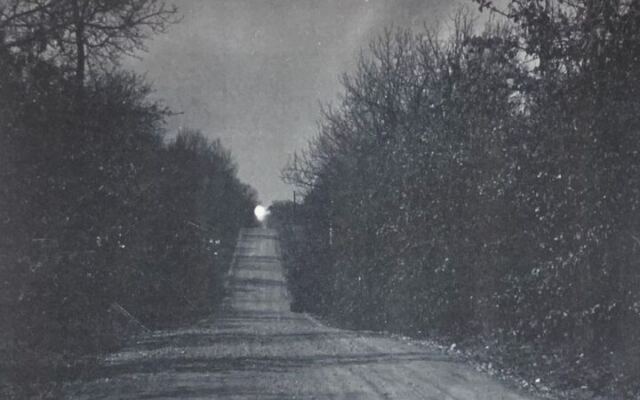
Some of the best Oklahoma discoveries start on a quiet backroad that looks like nothing at all. No big sign, no crowd, just gravel, dark trees, and a story that locals have passed along for generations.
The tale here is about a glowing orb that people say bobs and drifts in the distance. Curious about what folks actually report, and what is only folklore?
Let’s follow the road and sort it out.
E 50 Road gives the legend a real-world setting
Every good legend needs an address, and this one has a real one. The Spook Light is tied to E 50 Road, also called Spooklight Road or the Devil’s Promenade, near Quapaw in northeastern Oklahoma.
It is a country road, not a theme park, and that plain setting is part of the charm.
For orientation, Oklahoma’s official tourism listing gives coordinates of 36.943993, -94.618034. Punch those into a map app and you will see how close the area sits to the Missouri line.
That closeness explains why Joplin, Missouri, shows up in so many retellings of the story.
The City of Joplin also publishes a route to E 50 Road from I-44. It describes a stretch of roughly 1.5 to 2 miles as the viewing area.
Treat that as general location guidance only, since road conditions and places to stop can change.
Nothing about the coordinates or the directions promises a sighting. They simply tell you where the legend lives, and what you see once you get there is another matter entirely.
Witnesses describe a glow that seems to shift and vanish
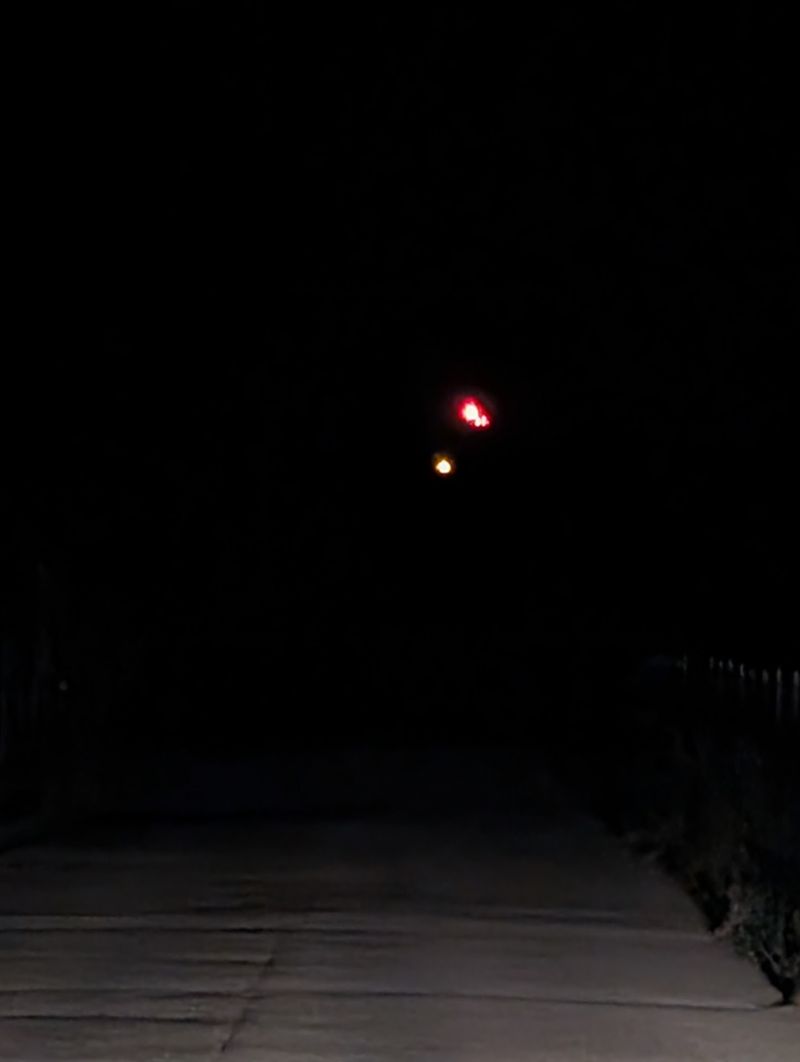
Ask ten people about the Spook Light and you may hear ten versions. Witnesses talk about a distant glow that seems to bob, sway, or drift over the road.
Others say it flickers, brightens, dims, or simply winks out and returns.
Colors vary too. In KGOU’s look at the legend, the light comes across as an elusive glow that people try to catch in the dark.
Some tellers describe it as small and steady, others as larger and restless.
The Missouri Department of Conservation, in its Spooklight feature, records accounts of different colors, shapes, apparent movement, and how long the light lingers. Those are reported experiences, not fixed traits that anyone has measured.
That variety matters. Night distances are hard to judge, and eyes play tricks in the dark, so a description tells us what someone saw, not what caused it.
Still, the shifting, now-you-see-it quality is exactly what makes the story fun to tell around a kitchen table.
The story’s early timeline blends oral lore and later records
Dates are slippery with this legend. Some tellers say the light has been seen since the 1880s, and a number of sources repeat an 1881 report.
But that is oral tradition and repeated claims, not a verified first sighting.
KGOU says reports are often placed in the late 1800s, yet the phenomenon was reportedly first documented in a newspaper in 1935.
An Oklahoma Humanities account points instead to a 1936 newspaper investigation. It says that investigation recorded stories reaching back to the 1880s.
The City of Joplin’s page is one place the older date circulates. So here is a handy rule: a story told by grandparents is lore, while a dated newspaper page is a record.
The legend’s true age stays uncertain, and that is fine for a tale that lives on memory.
Could distant headlights explain the glow?
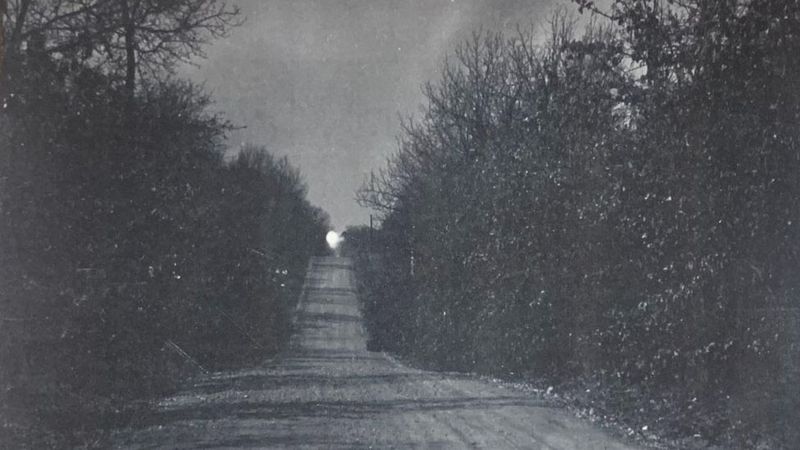
Here is the explanation many skeptics reach for first: car headlights, seen from far away. Over long, dark stretches of land, distant vehicle lights can look like a single wobbling glow.
Viewing conditions in the air may stretch and blur them further.
There is a hands-on story behind this idea. In KGOU’s reporting, Allen Rice’s group saw a similar effect when another group flashed car headlights from the far side of the wooded area.
Rice, writing for Oklahoma Humanities, described that test as unscientific. He was honest that it was a field trip, not a controlled study.
So what does it add up to? Headlights are a reasonable, ordinary suspect, and the test is suggestive.
But it does not prove that every report has the same cause, and nobody has settled the question for good. The mystery stays open, just a little less spooky for some.
Origin stories belong to folklore, not verified history
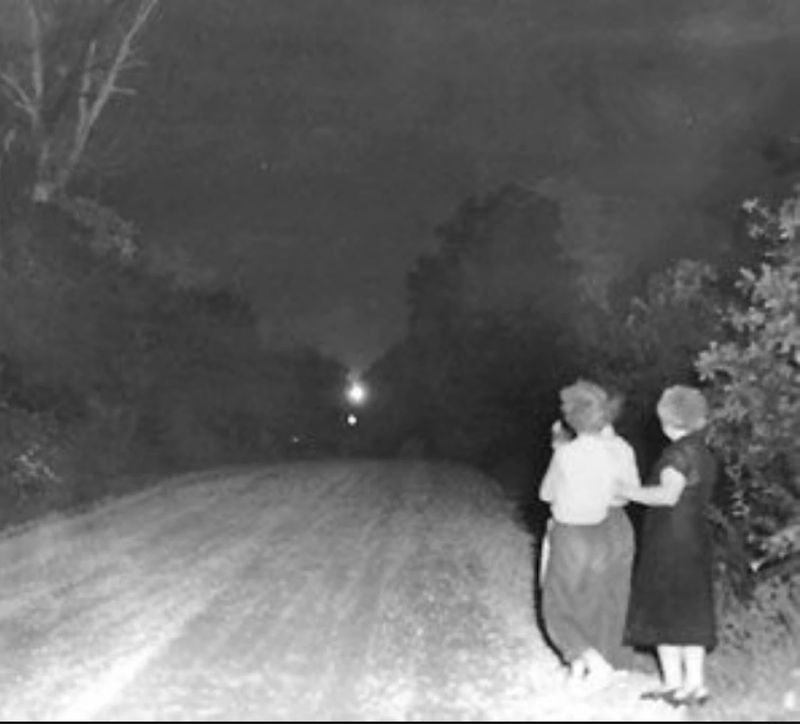
Where there is a mystery, there is a tale to explain it. Local origin stories about the Spook Light often involve a sad romance, including a Quapaw lovers’ story.
These are legends, handed down by word of mouth, and they come in many versions.
The Missouri Department of Conservation records such tales as folklore, not as proven history. The City of Joplin likewise lists a range of theories without establishing any of them.
It is important to be fair here. These stories should not be treated as documented tribal history, and there is no need to retell the darker versions to enjoy the legend.
Think of them as campfire seasoning. They give the road a personality and explain why people lean in, but they sit in a separate bin from the question of what the light physically is.
The supposed investigation remains part of the uncertainty
Another often-repeated detail is a 1946 investigation by the U.S. Army Corps of Engineers.
KGOU describes this as a supposed inquiry, and the wording matters.
Then comes a twist in the paper trail. A 1981 newspaper piece, preserved by the Gateway to Oklahoma History, says a researcher could not locate the often-cited study documents.
So what can we say? We cannot say the Corps solved the mystery, and we cannot say it failed to solve it.
The claim is out there, but the paperwork behind it is disputed.
That is a handy lesson for any local legend. When a source says an official report exists, ask to see the report.
Until someone produces it, the investigation is a reported claim rather than an established finding.
A visit calls for patience and attention to the road
Planning a trip? Start with the City of Joplin, which offers a route from I-44 and describes a stretch of about 1.5 to 2 miles as the viewing area.
Use that as a rough guide, not a promise that any spot is suitable today.
TravelOK warns on its listing that nearby construction may make it hard to stop and look. So check local conditions before you go, and follow every posted sign and construction control.
One reported local custom, mentioned by KGOU, is to park, switch off the vehicle lights, and wait quietly. That is a tradition people describe, not a rule, and it guarantees nothing.
Safety comes first. Do not stop where you block traffic or sight lines, and stay out of the roadway.
Respect private property, and never chase the light. Oklahoma law, found in Title 47 of the state statutes, bars parking in specified hazardous or signed locations and requires following construction-area traffic controls.
Bring patience, and expect that you may see nothing at all. If a safe, legal place to wait is not available, the better choice is to move on and enjoy the drive.
The enduring draw is the story, not a promised sighting
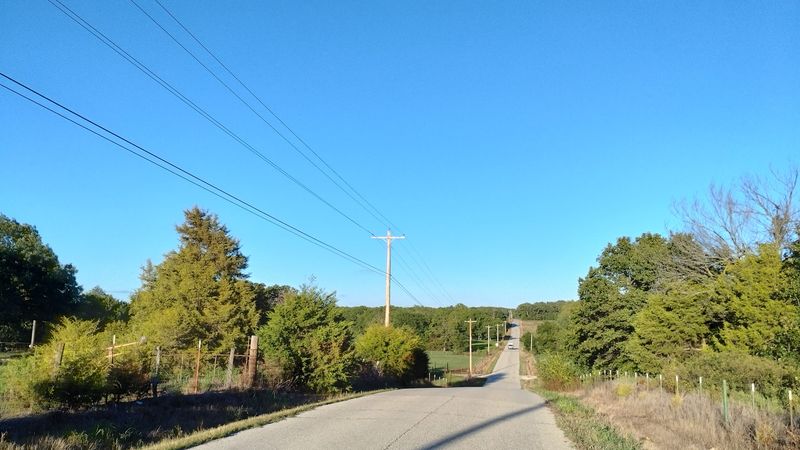
Put it all together and the Spook Light is really a layered story. There is a real road near Quapaw, witnesses who describe a shifting glow in different ways, headlights as a plausible theory, and folklore that came along for the ride.
Some say the legend is old, and KGOU’s reporting shows how people keep asking what it is. The Missouri Department of Conservation shows how many shapes the tale can take.
Nothing says fall brings better odds, and you may see no light at all.
The one thing you can count on is the story. Some mysteries are best when they stay a little out of reach.
Share this story