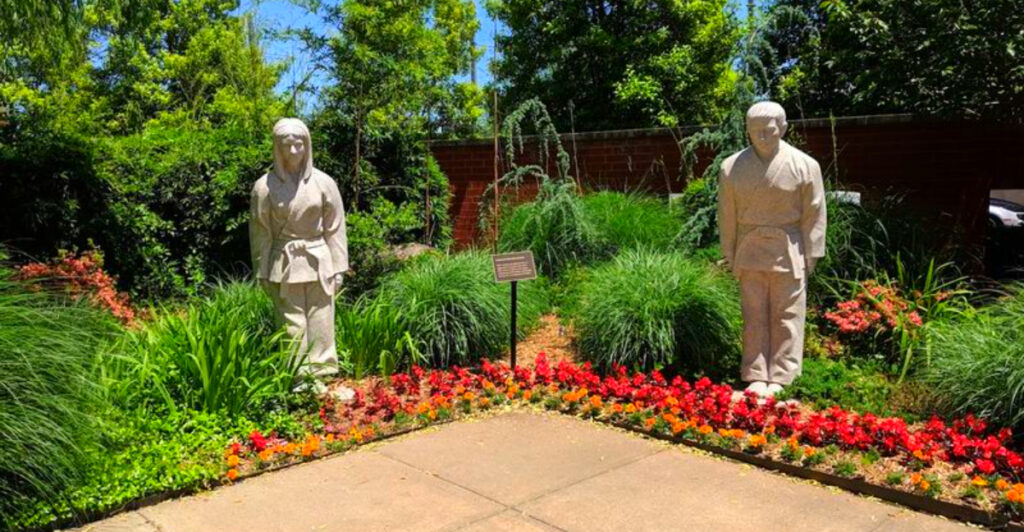
There is a place in downtown Little Rock, Arkansas, where the sound of the city fades the moment you pass through an ancient-style gate painted in brilliant ceremonial colors. It is not a museum, not a theme park, and certainly not what most people expect to find tucked beside a convention center along the Arkansas River. What waits inside is a fully realized Korean garden, complete with mythological stone guardians, a star-shaped reflective pool, a granite wall honoring martial arts masters, and sculptures that carry centuries of meaning. The whole space was built to honor one man whose influence on martial arts touched over a million lives worldwide, and whose story began halfway across the globe before finding its permanent home in Arkansas.
Every element here, from the hand-carved wooden gate to the imported clay roof tiles, tells a piece of that story. Read on to discover what makes this garden one of the most quietly extraordinary spots in the entire American South.
A Serene Stop at the Heart of the City
Right in the middle of downtown Little Rock, Arkansas, there is a place that stops people mid-stride. The H.U. Lee International Gate and Garden sits at 101 East Markham Street, adjacent to the Statehouse Convention Center and just steps from the Main Street Bridge over the Arkansas River.
Its location in the River Market District makes it easy to reach on foot from nearby hotels, restaurants, and riverfront attractions. Despite being surrounded by the familiar sounds of urban life, the garden creates its own distinct atmosphere the moment you approach its entrance.
The positioning feels almost intentional in a philosophical sense, a space dedicated to harmony and balance placed precisely where the city’s energy is at its highest. The garden is open twenty-four hours a day, every day of the week, with no admission fee required. Whether you are a curious local or a first-time visitor to Arkansas, this is the kind of stop that rewards anyone willing to slow down and pay attention.
Through the Intricate Gateway of Hongsalmun
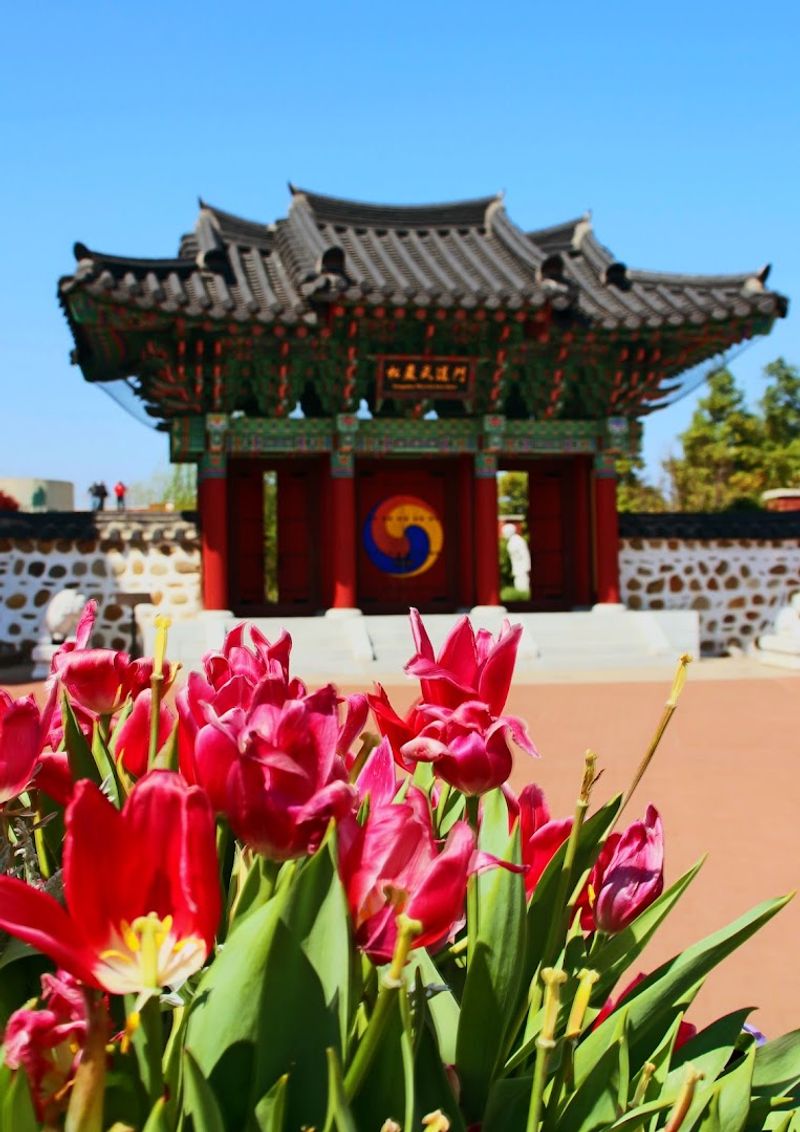
Few architectural details in Arkansas are as visually commanding as the gate that gives this garden its name. Built in the traditional Korean Hongsalmun style, the structure was hand-carved by a team of South Korean artisans who traveled specifically to Little Rock in 2007 to complete the work.
The gate is painted in five symbolic colors drawn from the philosophy of Um-Yang: blue for wood, red for fire, yellow for earth, white for metal, and black for water. These are not decorative choices made for visual appeal alone; each color carries a philosophical weight that connects the structure to centuries of Korean tradition.
Perhaps the most remarkable construction detail is that the gate was assembled almost entirely without nails, relying instead on traditional Korean joinery techniques, with only the imported clay roof tiles secured by them. The gate weighs approximately eight tons and uses Douglas fir timber as its primary material. Up close, the craftsmanship feels deliberate and deeply considered, every carved surface a quiet declaration of cultural pride.
Fierce Guardians Standing Watch at the Entrance
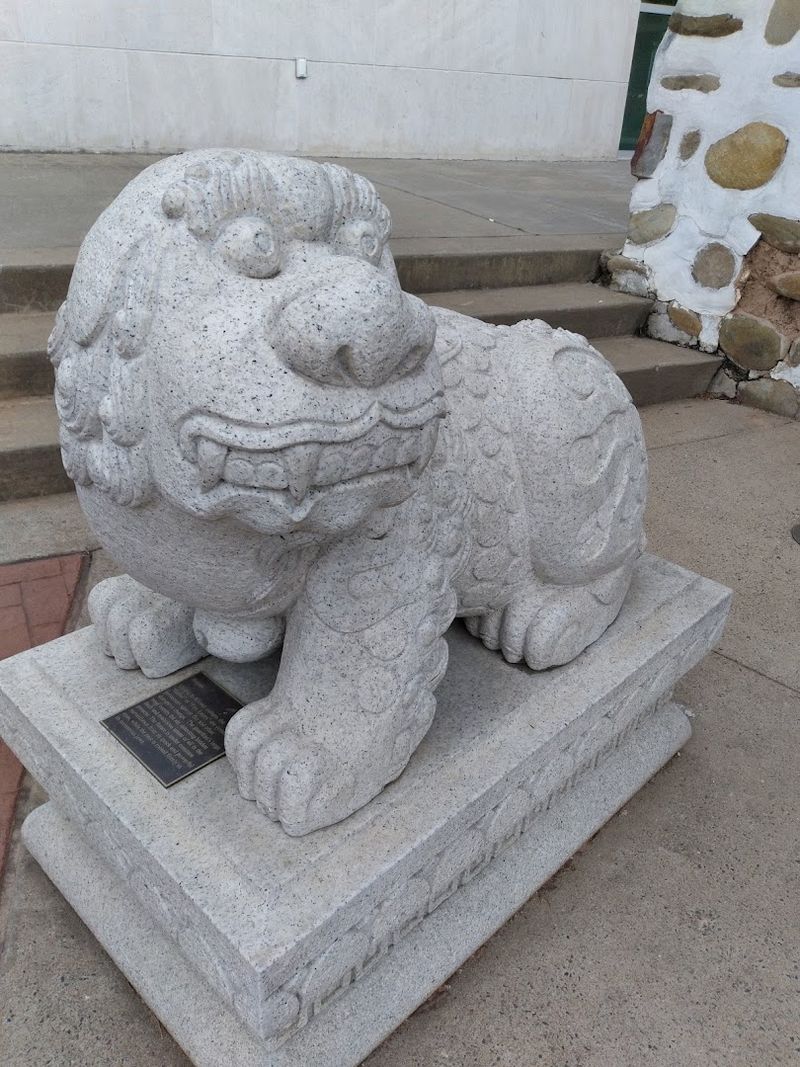
Just past the gate, two stone figures stand with an air of quiet authority that is impossible to ignore. These are the Korean Foo Dogs, also referred to as Haitai statues, mythological creatures from Korean folklore long associated with protection against harmful forces.
What makes their presence here particularly striking is a fact that many visitors do not realize until they read the garden’s informational materials: these are reportedly the only Haitai guardian statues displayed outside of Korea. That detail alone transforms them from interesting sculptures into something far more significant, a rare cultural artifact standing watch in the American South.
Their expressions are stern but not unwelcoming, with wide-set eyes and broad features carved with considerable precision. Walking past them feels like crossing a threshold in more ways than one, leaving the ordinary world behind and entering a space governed by different values. The statues set the tone for everything that follows inside the garden, anchoring the entire experience in Korean mythology and tradition.
The Visionary Life of Eternal Grand Master H.U. Lee
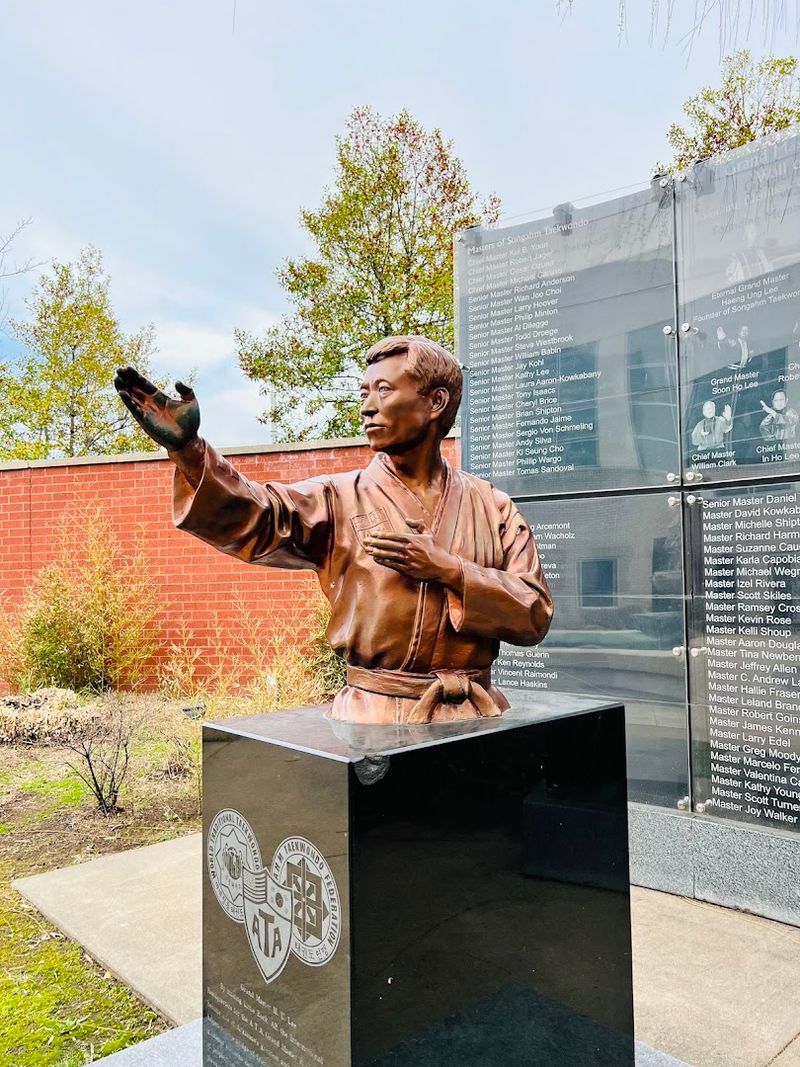
Every great garden has a reason for existing, and this one was built to honor a man whose life story is genuinely remarkable. Haeng Ung Lee was born in China in 1936 to Korean parents, and after his family returned to Korea following World War II, he began his martial arts training in earnest.
He founded his own Taekwondo school in 1959 and later came to the United States in 1962 at the invitation of a former student, an American military officer named Richard Reed. Noticing inconsistencies in how Taekwondo was being taught across the country, Lee founded the American Taekwondo Association in Omaha, Nebraska, in 1969.
By 1977, he had relocated the ATA headquarters to Little Rock, reportedly drawn by the way the central Arkansas hills reminded him of his Korean homeland. He developed the Songahm Taekwondo style, emphasizing character, discipline, and respect alongside physical skill. Though he passed away in October 2000, he was posthumously honored as a 10th-degree black belt and Eternal Grand Master, a title that now greets every visitor to this garden.
The Songahm Star Reflective Pool and Its Symbolic Fountain
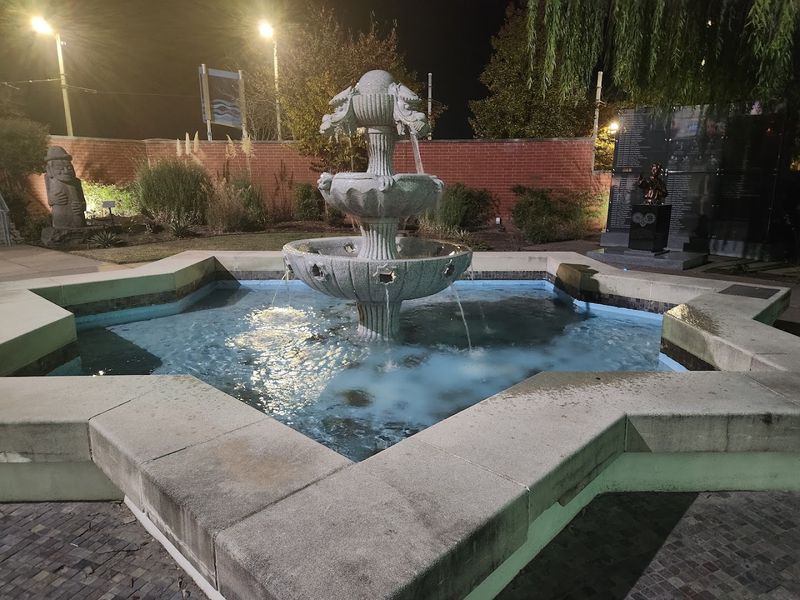
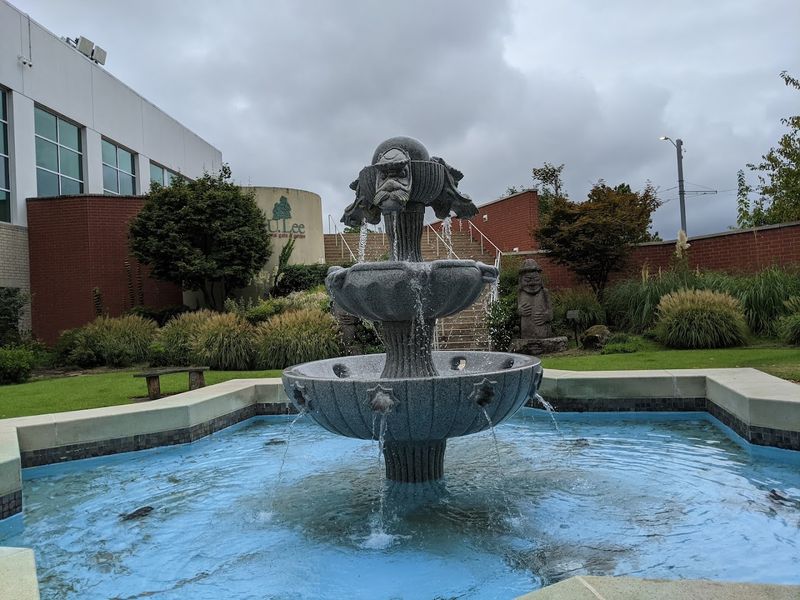
At the center of the garden, a reflective pool shaped into the Songahm Star draws visitors naturally toward it. The star is the central symbol of the American Taekwondo Association, and seeing it rendered in still water surrounded by lush plantings gives the symbol a meditative quality that words struggle to capture.
Benches line the pool’s perimeter, and the invitation to simply sit and watch the water is one that most visitors accept without much hesitation. The surface of the pool acts as a mirror, catching reflections of the sky, surrounding trees, and the garden’s architectural elements in a way that feels genuinely calming.
Rising from the pool is a nine-foot-tall fountain with a layered design loaded with meaning: three dragon heads on the top bowl, six dragon claws on the middle tier, and nine Songahm stars around the base. Water flows from a pearl at the very top downward through each level, symbolizing the spread of knowledge from master to student. The number nine appears throughout the ATA curriculum, making its presence here both intentional and deeply fitting.
The Wall of Vision: Names Carved in Granite
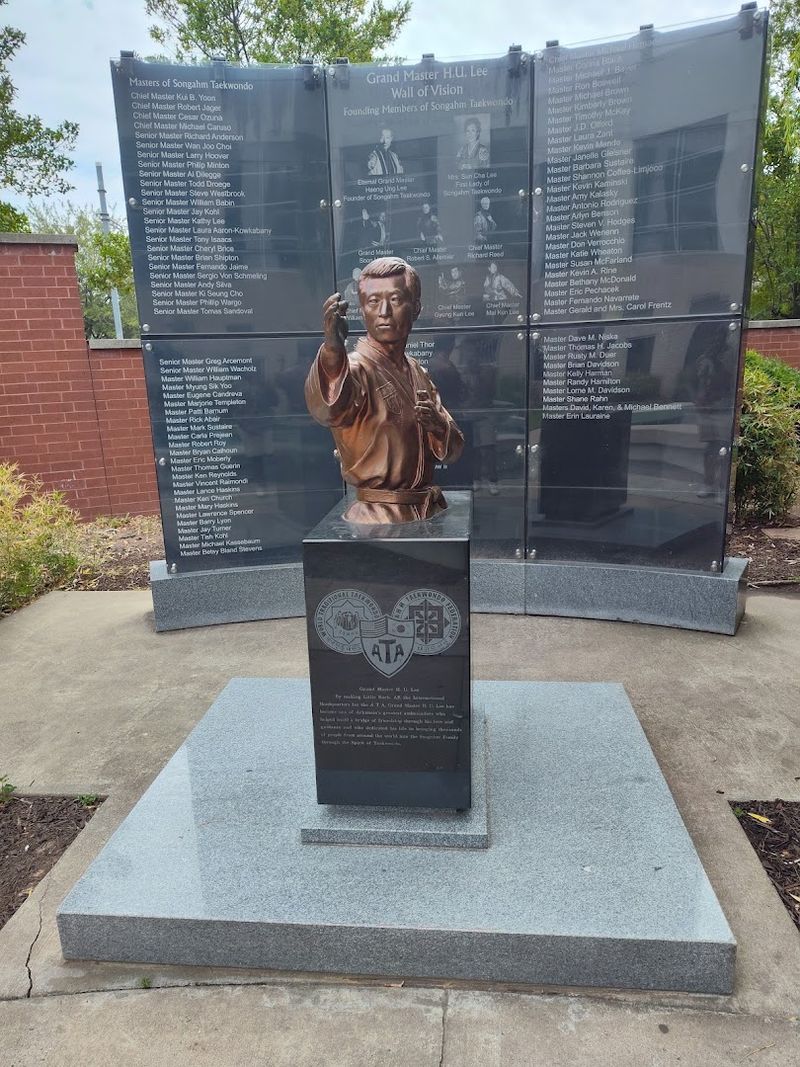
Behind the bust of Grand Master Lee, an eleven-foot-tall slab of polished Chinese black granite rises with quiet authority. This is the Wall of Vision, and its surface is inscribed with the names of ATA Masters who have dedicated their careers to carrying forward the principles of Songahm Taekwondo.
The wall weighs more than eleven tons, and its dark, reflective surface gives it a monumental presence that feels entirely appropriate for what it represents. These are not just names etched in stone; they are a lineage, a permanent record of individuals who chose to make Grand Master Lee’s philosophy the guiding force of their professional lives.
South Korean artisans were responsible for crafting this piece, adding another layer of international collaboration to a garden already rich with cross-cultural effort. Standing before the Wall of Vision, you get a clear sense of how far-reaching the ATA’s community truly is. It transforms what might otherwise feel like a personal memorial into something much broader, a tribute to an entire movement built on discipline, respect, and the steady transmission of knowledge across generations.
Harubang Statues: Jeju Island’s Stone Sentinels in Arkansas
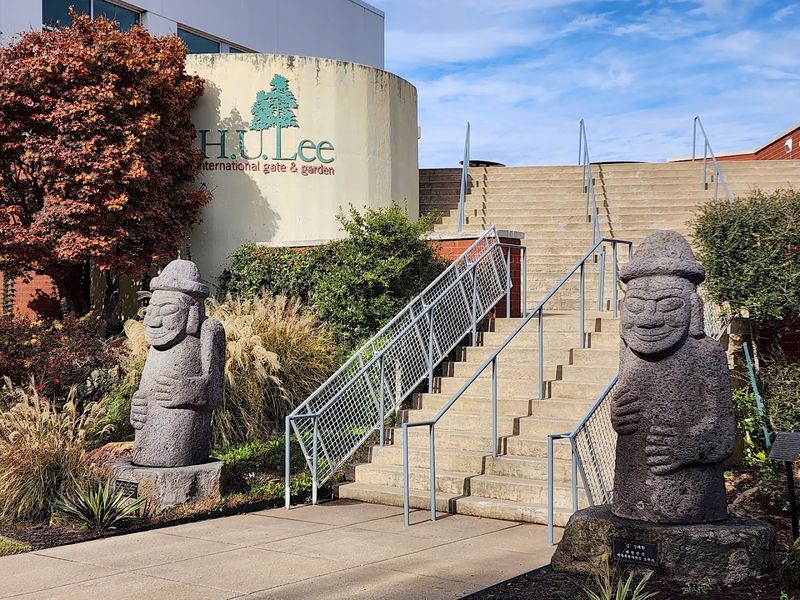
Scattered across the garden with an almost playful confidence, the Harubang statues bring a distinctly regional flavor of Korean culture to Little Rock. Originally from Jeju Island, known historically as Cheju Island, these figures are carved from basalt and volcanic rock, giving them a rough-hewn texture that contrasts beautifully with the garden’s more polished elements.
Their faces are immediately memorable: wide eyes, broad noses, and faint smiles that hover somewhere between stern and approachable. Traditionally, Harubang statues stood outside the gates of fortresses on Jeju Island, serving as protective figures for the communities within.
Here in Arkansas, they continue that ancient role, adding a layer of folk tradition to a garden already rich with formal symbolism. Their presence speaks to a specific geographic and cultural connection with South Korea, a direct gift from a particular island with its own distinct identity within the broader Korean cultural landscape. Finding them among the garden’s greenery feels like a small, delightful discovery, as if the garden itself is rewarding attentive visitors with unexpected details the further they explore.
The Bee Ryong Bong: Staff of the Flying Dragon
Among all the artifacts in the garden, one carries a title that immediately sparks curiosity: the Bee Ryong Bong, or Staff of the Flying Dragon. Recognized as the most valued artifact of Songahm Taekwondo, this piece holds a place of honor within the garden’s layout that signals its importance before you even read its description.
The staff’s surface tells the history of Songahm Taekwondo through its design, representing the evolution of the style and the philosophy that Grand Master Lee spent decades developing and refining. It functions as a visual timeline of a martial art, condensing decades of tradition into a single sculptural form.
What makes this particular artifact even more interesting is its origin: it was created not in Korea but right here in Arkansas, sculpted by local artists David and Bre Harris of Arkansas Light and Time Design. That local authorship adds an unexpected dimension to the garden’s story of cultural fusion, proving that the legacy of Songahm Taekwondo has taken genuine creative root in American soil, producing new expressions of an ancient tradition.
Nine Turtles and the Wisdom They Carry
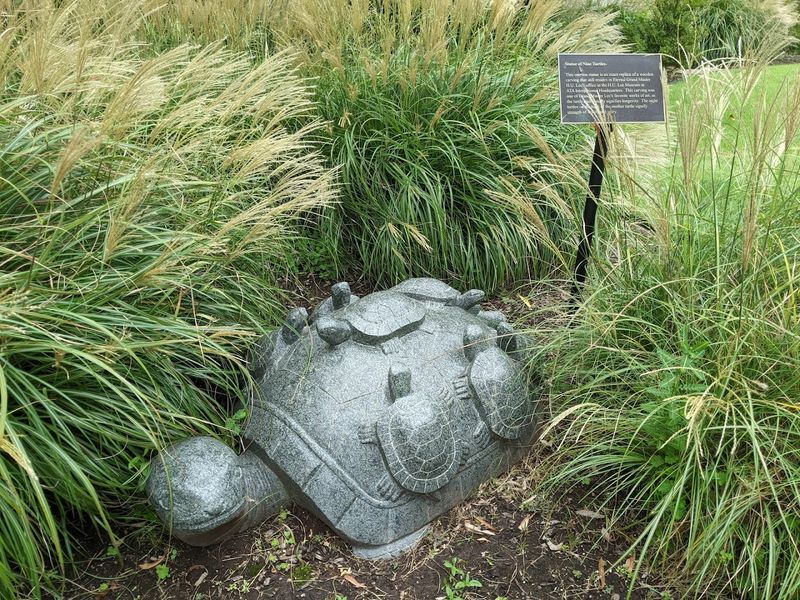
Crafted from polished granite and measuring roughly two feet tall, three feet wide, and four feet long, the Statue of Nine Turtles is one of the garden’s most personally meaningful pieces. The grouping features one large turtle surrounded by eight smaller ones, and its design is drawn directly from a wooden carving that once sat in Grand Master Lee’s private office.
Turtles carry deep symbolic weight in East Asian cultures, representing longevity, steadfastness, and enduring wisdom. Nine of them together amplify those qualities, while also nodding to the number’s recurring significance throughout the ATA’s Taekwondo curriculum and Korean cultural tradition.
The decision to replicate a piece from Grand Master Lee’s personal space for public display says something meaningful about the garden’s intentions. This is not just a showcase of Korean aesthetics; it is an attempt to share something genuinely intimate, a window into the values and personal symbolism that guided one man’s extraordinary life. The turtles sit quietly among the garden’s other sculptures, easy to overlook at first glance, but deeply rewarding for anyone who pauses long enough to learn their story.
Living Landscape: Korean Flora Rooted in Arkansas Soil
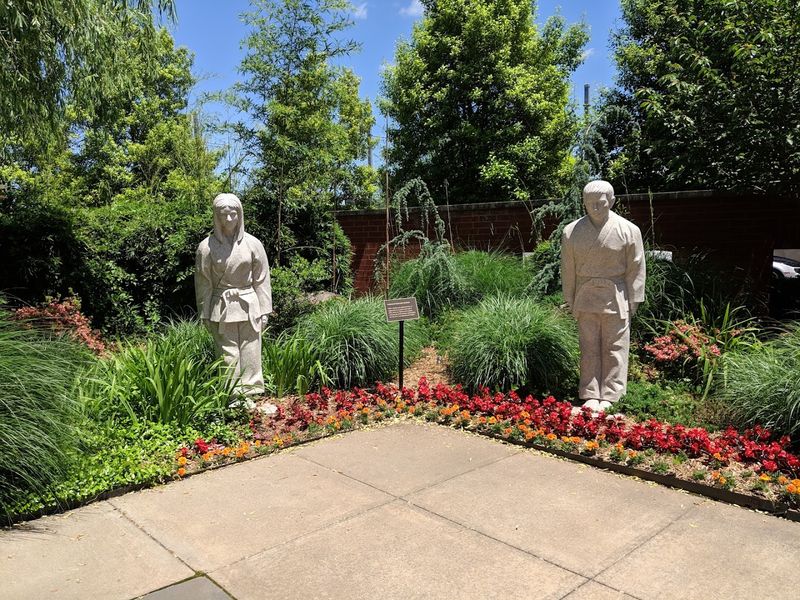
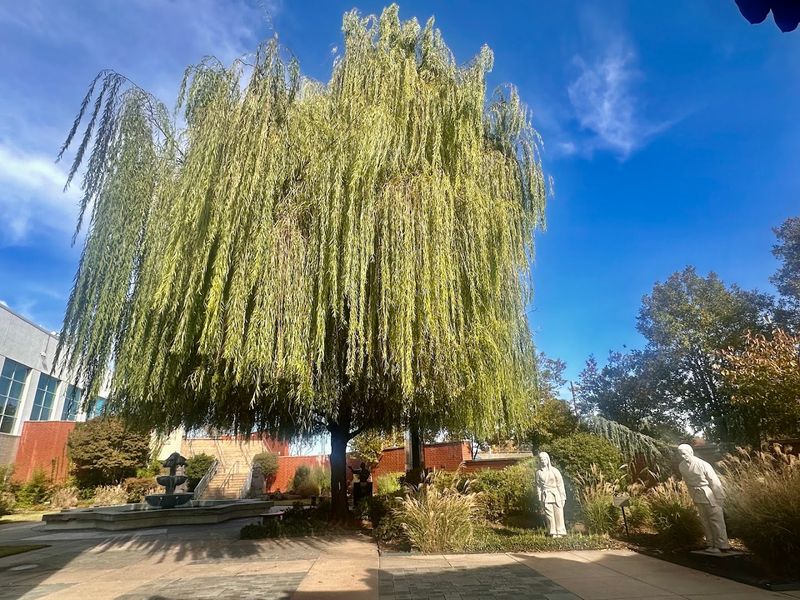
The plants growing throughout the garden are not chosen at random. Each species was selected to provide visual interest across all four seasons while honoring East Asian horticultural traditions, blended thoughtfully with native Arkansas boulders that anchor the design in its Southern setting.
Kwanzan cherry trees offer delicate spring blossoms, while Trident maples deliver a fiery autumn display. Mugo pines provide year-round evergreen structure, and the Japanese bloodgood tree adds dramatic dark foliage that deepens the garden’s color palette. Bamboo groves create a soft rustling sound in the breeze, and gardenias and azaleas contribute fragrance and vivid bursts of seasonal color.
The weeping willow tree, noted by many visitors as one of the garden’s most beautiful living features, trails its branches gracefully near the water elements, completing a landscape that feels both carefully designed and naturally alive. Weeping cedars add further texture and movement. Together, these plants transform the garden from a collection of sculptures and architecture into a breathing, evolving space that rewards repeat visits throughout the year as its character shifts with each passing season.
Share this story