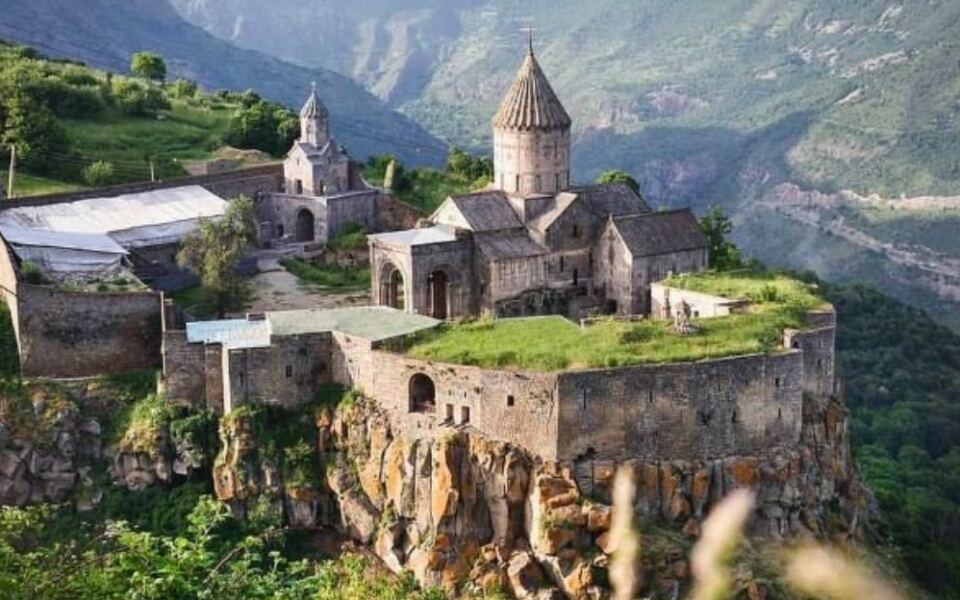
Perched on the edge of the Vorotan Gorge in southern Armenia, Tatev Monastery has watched over the mountains for more than a thousand years. It was once a busy center of learning, faith, and art.
Today, visitors come for the cliffs, the carved stone, and a record-breaking cable car ride. Here are ten things that make this place unforgettable.
A Name That Means Give Wings
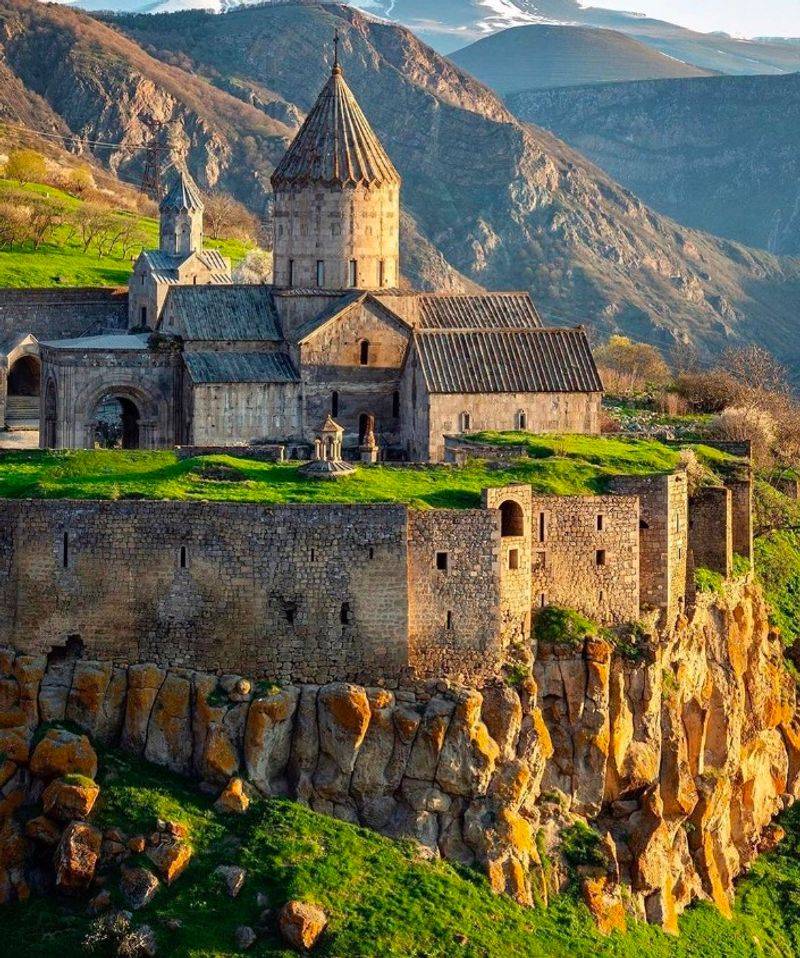
Legend says the name Tatev comes from the words Ta Tev, meaning give wings. Look at the setting and it makes sense.
The monastery sits so high that clouds sometimes drift below its walls.
The story goes that a master builder was working on the church and got stuck on the top. He prayed for wings, and he got down safely.
Nobody can prove it, but locals tell it with a straight face.
The tale fits the place well. Even visitors who arrive by car feel a little lifted when the complex appears on its rocky shelf.
The sheer drop on one side makes the name feel earned.
The monastery dates back to the 9th century, though a holy site stood here even earlier. Over the centuries, it grew into one of the most important spots in Armenia.
Kings, scholars, and pilgrims all made the long trip.
Bring a camera, because the first view is the one everyone remembers. Stand back from the edge and let the scale sink in.
Then say the name out loud. It sounds like a wish, and the mountain seems to agree.
Wings of Tatev Cable Car
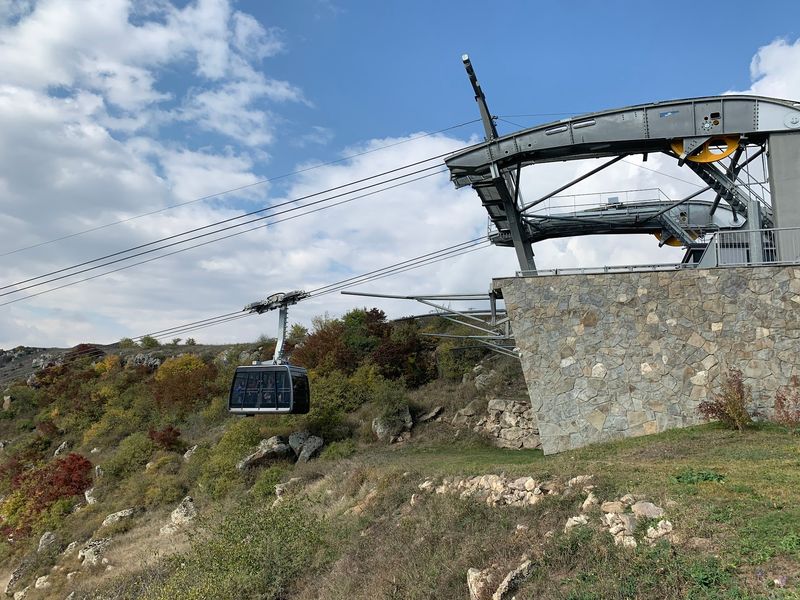
Twelve minutes, one gorge, zero traffic. The Wings of Tatev is the world’s longest non-stop double-track cable car, and it carries you right to the monastery.
The cabin floats over a canyon so deep that the river looks like a thread. Seats are limited, so most people just stand at the windows and stare.
Expect quiet gasps around the middle of the ride.
Some reviewers say the tickets feel pricey. Others call the ride the best part of the day.
A smart plan is to go up by cable car and come back by the same route, or the other way around, so you see the gorge from both directions.
You can also drive up the winding road in about twenty minutes. That works fine, but you miss the dramatic first view of the monastery appearing among the peaks.
The ride adds a little thrill to the history.
Check the schedule before you go, since windy weather can pause service. Arrive early if you want shorter lines.
Keep your phone ready, because the best photos happen mid-air.
The Vorotan Gorge Views
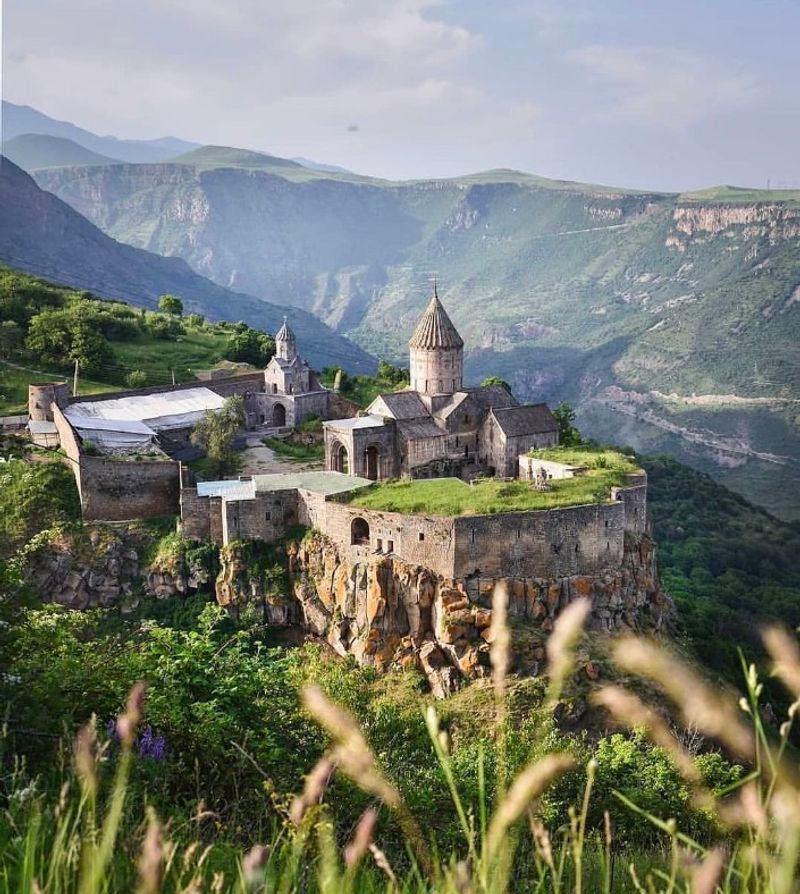
Walk to the edge of the complex and the ground simply stops. Below you, the Vorotan Gorge falls away in green and grey layers, with mountains stacked behind it like folded paper.
Reviewers mention the gorge views again and again, and it is easy to see why. The light changes the scene every hour.
Morning brings soft mist, while late afternoon turns the rock golden.
Photographers love the spots along the outer walls, where stone arches frame the valley. Even a basic phone camera makes the shot look professional.
Still, no picture quite captures the depth.
A word of caution from past visitors: the safety barriers are not great. Keep a safe distance from the cliff edge, and hold on to kids.
The view is just as good from a few steps back.
Give yourself time to simply sit and look. Listen for wind, birds, and distant bells.
The gorge has been carving itself for a very long time, and it is in no hurry to impress you, yet it does.
Church of Saints Paul and Peter
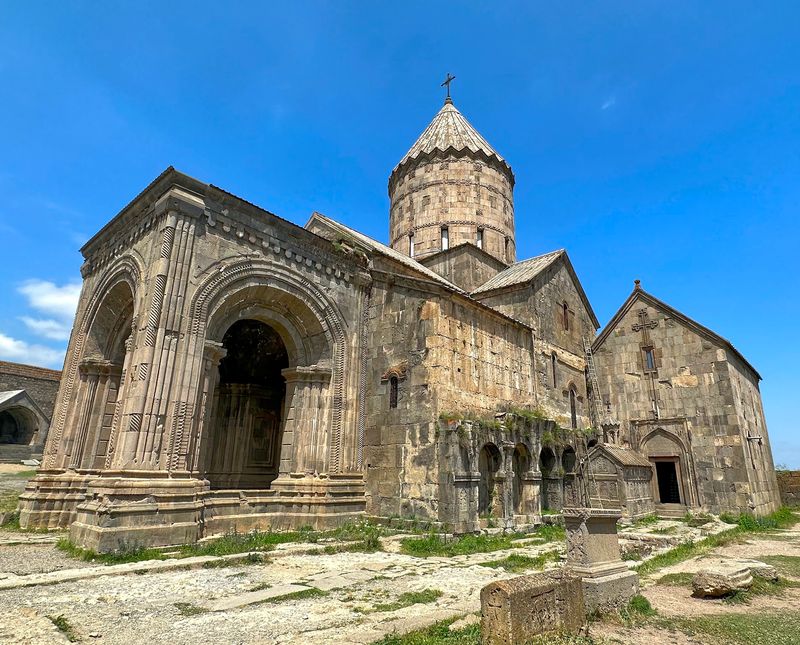
Step inside and the air cools instantly. The main church at Tatev, dedicated to Saints Paul and Peter, feels hushed and ancient, with thick stone walls and dim, glowing corners.
It was completed in the early 10th century, and its dome and simple lines show classic Armenian church design. There are no flashy decorations here.
The beauty comes from proportion, shadow, and old stone.
This is still a working church, so treat it with respect. Women are asked to cover their hair, and you can borrow cloth near the entrance.
Speak softly and keep your phone on silent.
Look closely at the carved details around the doors and windows. Reviewers love the wooden doors with their detailed carvings.
Small touches like these reward slow visitors.
If you time it right, you may catch candles flickering or a quiet prayer in progress. That living quality sets Tatev apart from a museum.
It is not just old, it is still in use, and you can feel it.
The Swaying Pillar of Gavazan
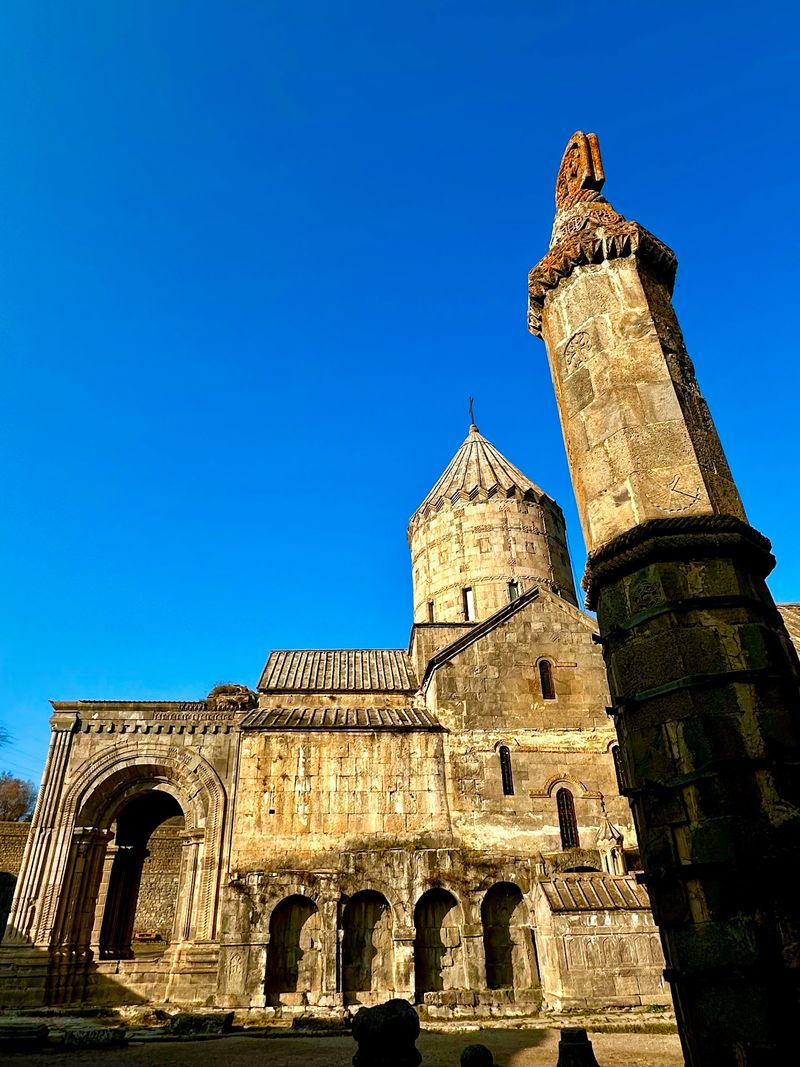
Here is a stone pillar that was built to wobble. The Gavazan, a tall octagonal column in the courtyard, was designed to sway when the ground shook or when something disturbed it.
Legend says the column once moved enough to warn of earthquakes. It was also said to be a kind of early alarm system.
Whether or not every story is true, the engineering was clever for the Middle Ages.
Sadly, an earthquake in the 1930s damaged it, and the pillar no longer moves the way it once did. Even so, it stands proudly in the yard, topped with a cross.
Many visitors walk right past it, so slow down.
Look at how the stonework fits together. Medieval builders had no modern tools, yet they made something that balanced weight and motion.
It is a small lesson in smart design.
Read the nearby signs if you can, or ask a guide to explain. Stories stick better when you stand right beside the object.
Take a photo with the church in the background for a classic shot.
A Medieval University on a Mountain
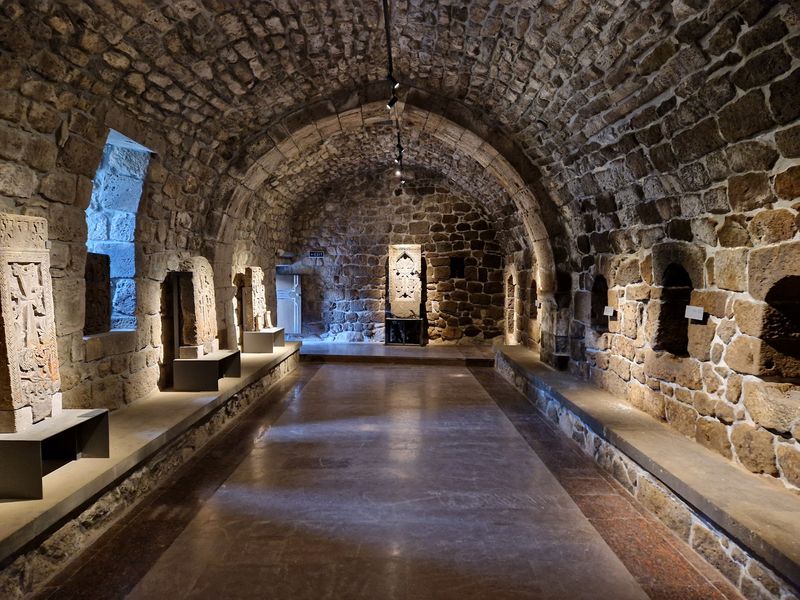
Long before modern campuses, students climbed a mountain to study here. The University of Tatev, active in the 14th and 15th centuries, was one of the great learning centers of medieval Armenia.
Scholars taught philosophy, theology, music, painting, and manuscript work. Monks copied books by hand and trained new generations of thinkers.
It was a mountaintop school with a view that probably made homework harder.
Walking through the old rooms, you can picture the classrooms and libraries. Reviewers love exploring the half-ruined chambers and passages.
Some look abandoned, which adds to the mystery.
Not every corridor is easy to walk. Uneven steps and dim rooms can be tough for older visitors or anyone with trouble walking.
Wear shoes with good grip.
Spend a minute thinking about the effort it took to carry books, food, and supplies up here. Learning mattered a lot to the people of Tatev.
That spirit still hangs in the air, and it makes the stones feel more alive.
Khachkars and Hidden Carvings
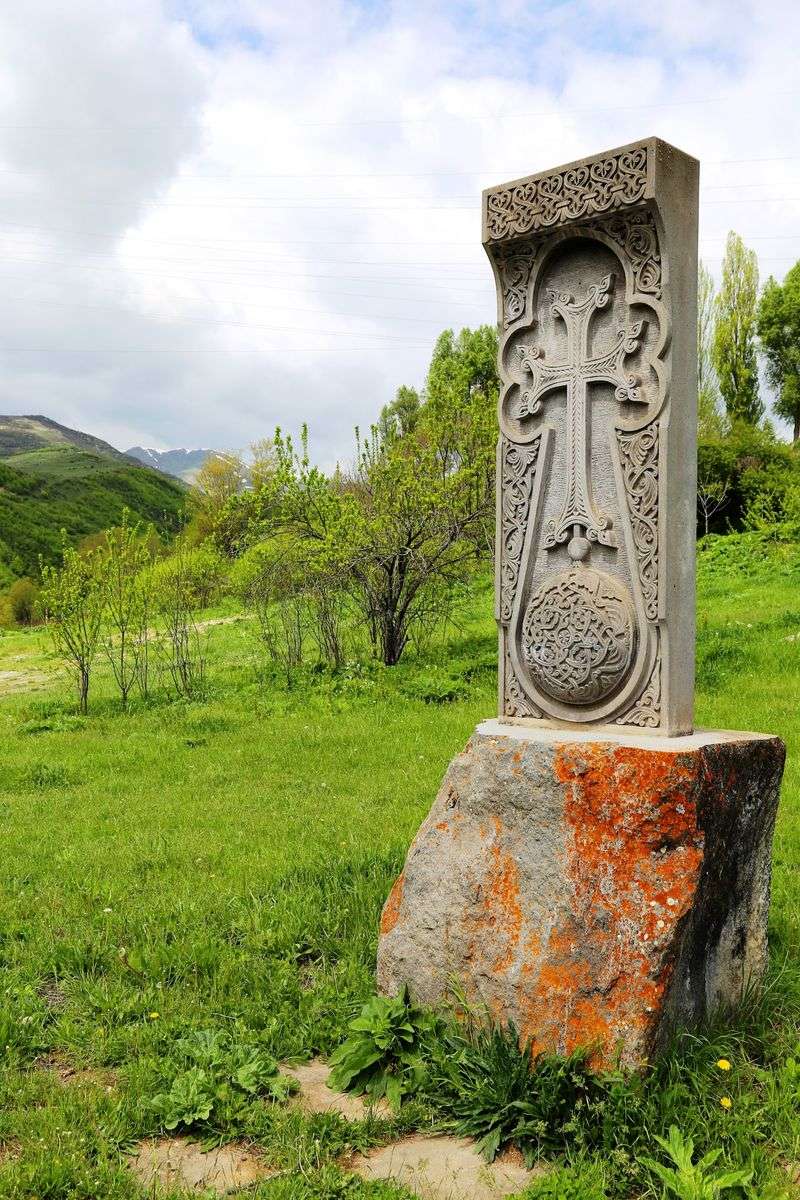
Stone can look like lace if the carver is talented enough. At Tatev, khachkars, the famous Armenian cross-stones, stand in clusters and alone, each covered in tiny patterns.
No two are exactly the same. You will spot crosses, vines, rosettes, and geometric shapes carved in careful detail.
Some stones are older than the buildings around them.
Keep your eyes open for smaller ornaments hidden on the walls. A reviewer called them hidden ornaments, and they really do feel like a treasure hunt.
Look near doorways, window edges, and corners.
Khachkars are a big part of Armenian identity, and UNESCO recognizes the craft as cultural heritage. They were made to honor events, people, and faith.
Standing near them feels like reading a stone diary.
Bring patience and a little curiosity. Lean in, but do not touch the carvings, since oils from hands can wear them down.
A slow walk here is better than a quick snapshot, because the details reward every extra minute.
The Small Oil Press Museum
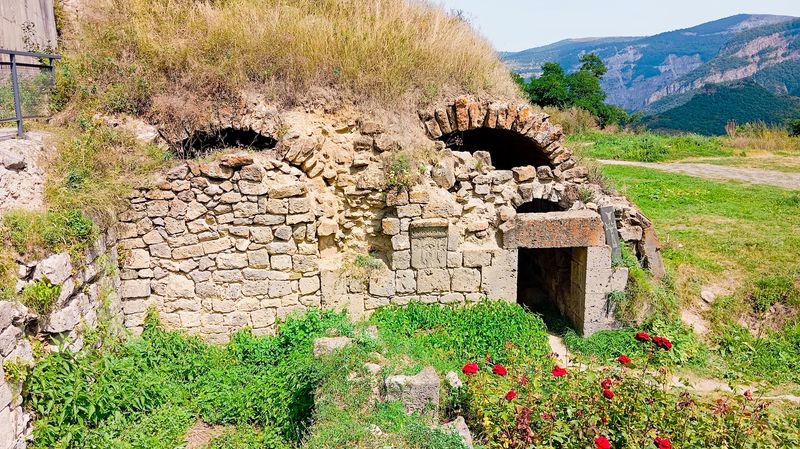
Hidden near the entrance is a tiny museum with a surprisingly tasty story. It shows how the monks pressed oil, a skill developed right here at the monastery.
Oil was precious back then. It fed lamps, cooked food, and supported daily life.
A working press meant a community could stay independent on its remote mountain.
The museum is small, so you can see it in minutes. Look at the heavy wooden beams and stone wheels that did the hard work.
Reviewers call it fascinating, and it makes a nice break from the big church.
Nearby, you may find a few more mini exhibitions worth a quick look. They add useful context about daily life, farming, and monastery crafts.
Reading a couple of signs helps the rest of the visit make more sense.
Entry to the complex is free, and museum visits are simple and relaxed. If you have kids, this is a good stop because everything is easy to understand.
Tiny place, big lesson.
Gata, Lavash, and Local Souvenirs
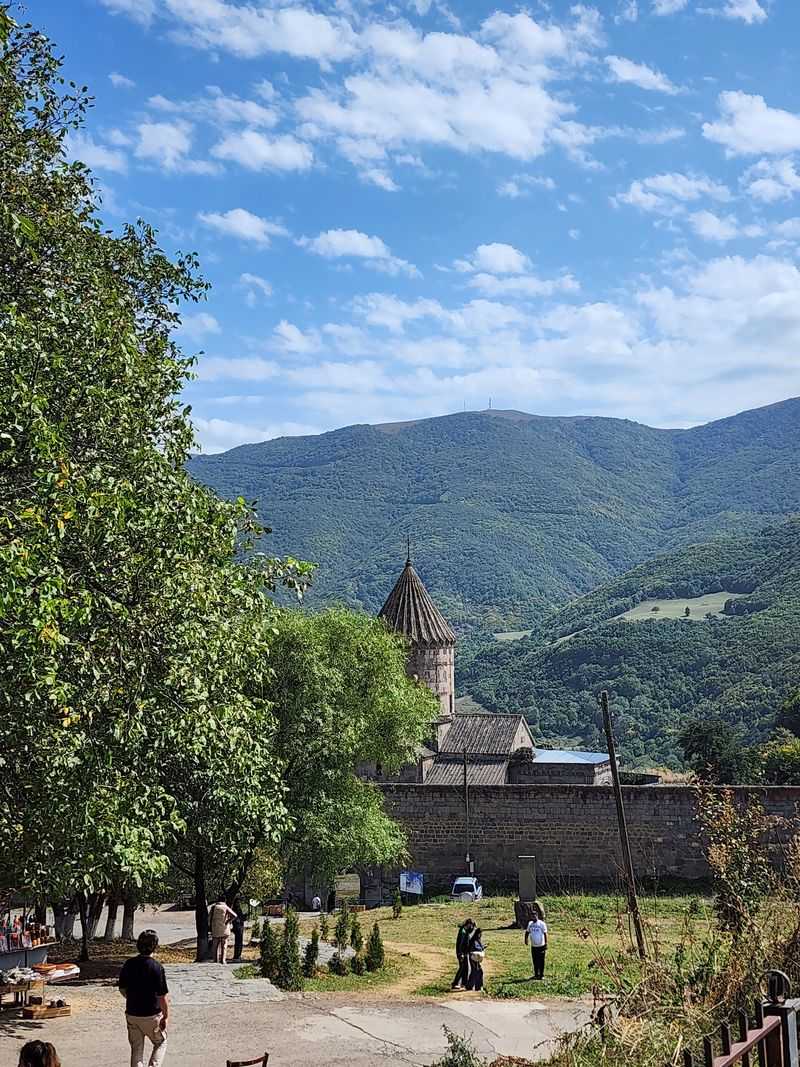
Nothing beats the smell of fresh lavash near a mountain church. Local women set up stalls near the monastery, selling warm bread, sweet gata, and handmade gifts.
Gata is a flaky, buttery pastry, often filled with a sugary mix. One reviewer mentioned walnut gata, which sounds like an excellent reason to stop.
Buy one before you climb, and another for the road.
Souvenir shopping here is friendly and low pressure. You can find jams, dried fruit, woven items, and small keepsakes.
Prices are usually fair, and a smile goes a long way.
Bring a little cash in small bills, since some stalls may not take cards. It also helps the families who run them.
Buying locally is a lovely way to remember the trip.
There are cafes and restaurants nearby if you want a sit-down meal. Many serve Armenian classics with a view.
Save time for lunch, because mountain air makes everyone hungry.
Getting There and Visiting Smart
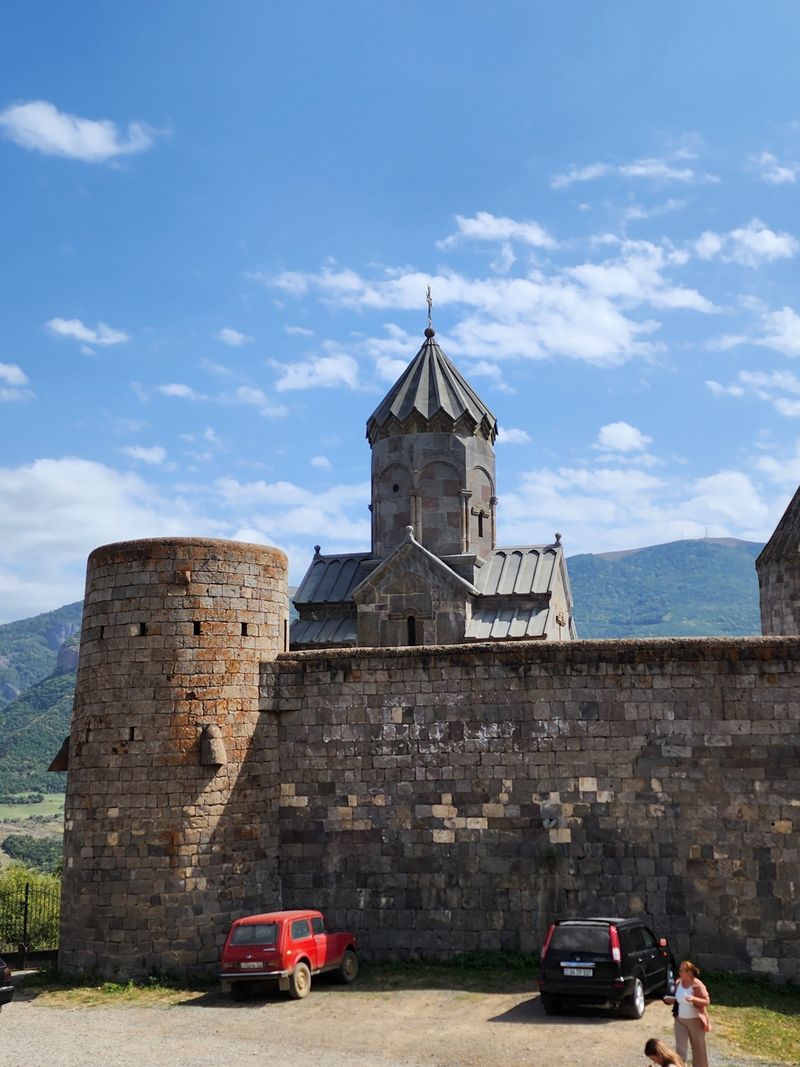
Plan ahead, because Tatev is a long way from the capital. Reviewers say the drive from Yerevan takes around four hours, so many travelers stay overnight in Goris.
You have three main options. Take the Wings of Tatev cable car, drive up the road in about twenty minutes, or hike if you love a challenge.
One traveler walked part of the trail from Devil’s Bridge and called it tough but beautiful.
The site is open around the clock, and entry to the complex is free. Cable car tickets and taxis cost extra.
Crowds can build up in the middle of the day, so aim for early morning or late afternoon.
Wear comfortable shoes with good grip, since the ground is rough and uneven. Bring water, sunscreen, and a light jacket, because mountain weather changes fast.
Restrooms and parking are available near the complex.
Most of all, do not rush. Several visitors say Tatev deserves a slow visit.
Give it two or three hours, and you will leave with better memories and fewer blurry photos.
Share this story