Some bridges retired long ago into the comfortable role of tourist attraction, cordoned off and admired from a safe distance. These thirteen stone bridges never got that memo. They still carry shoppers, commuters, school kids, and curious travelers across rivers every single day, just as they have for centuries. A few were built by Ottoman engineers whose names still appear in history books.
Others inspired Nobel Prize-winning novels or sparked legends about midnight deals with the Devil. One was even relocated stone by stone to save it from a rising reservoir. What unites them all is simple: they were built to last, and last they have. From the Balkans to France and Italy, each bridge on this list is a functioning piece of living history, not a relic behind glass.
Cross one of these and you are walking the same path as generations before you.
1. Stari Most, Mostar, Bosnia and Herzegovina
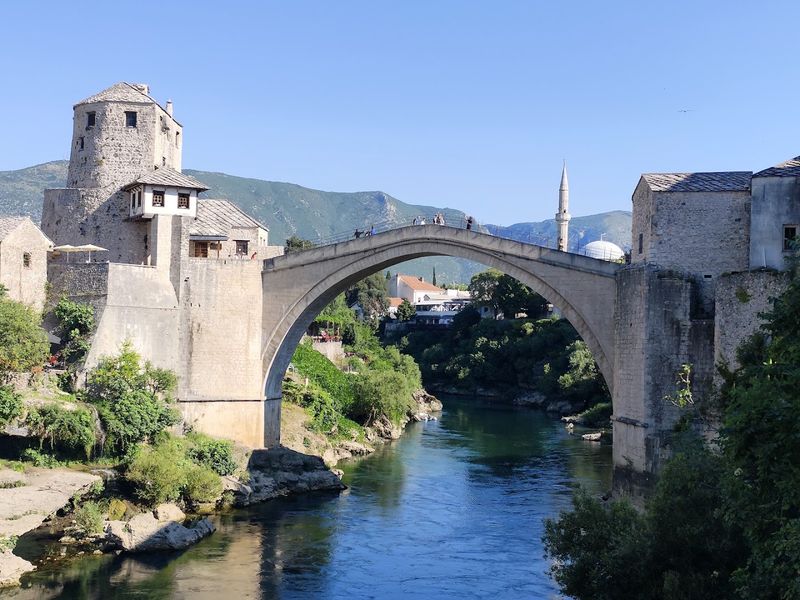
Built in 1566 under Suleiman the Magnificent and designed by Mimar Hayreddin, Stari Most once held the record as the widest man-made arch bridge in the world. Its single graceful span rises 24 meters above the Neretva River and stretches 30 meters across, resting on foundations of local tenelija limestone.
The original bridge was destroyed during the 1990s conflict and rebuilt using the same traditional Ottoman techniques, reopening in 2004. UNESCO recognized the Old Bridge Area as a World Heritage Site in 2005, honoring both its engineering and its role as a symbol of reconciliation.
Today the bridge is a pedestrian-only crossing, connecting the historic neighborhoods on both banks of the Neretva. An annual diving competition, now part of the Red Bull Cliff Diving World Series, continues a tradition dating back centuries. Locals cross it daily without a second thought, which is exactly what makes it extraordinary.
2. Stone Bridge, Skopje, North Macedonia
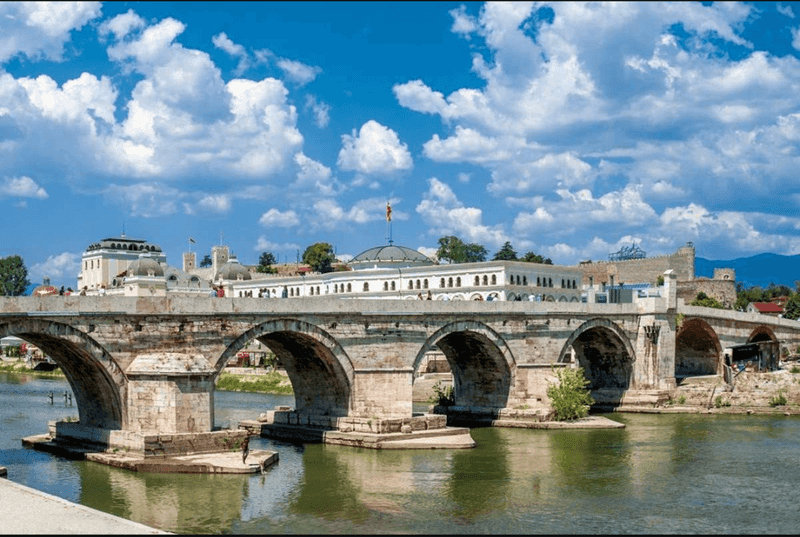
Skopje’s Kamen Most has connected Macedonia Square to the Old Bazaar since the Ottoman period, with its current structure dating to between 1451 and 1469 under Sultan Mehmed II. Built on older Roman foundations, it spans 214 meters across the Vardar River on twelve semicircular arches supported by solid stone columns six meters wide.
The bridge appears on Skopje’s official coat of arms and city flag, which says everything about its place in local identity. Thousands of pedestrians cross it every day, whether heading to work, browsing the bazaar stalls, or simply cutting across the city center.
After dark, the bridge is illuminated and becomes a popular spot for evening walkers and photographers capturing reflections in the Vardar. Despite the dramatic modern development surrounding it, the Stone Bridge remains the calm, reliable constant at the center of a city that has reinvented itself many times over.
3. Stone Bridge, Prizren, Kosovo
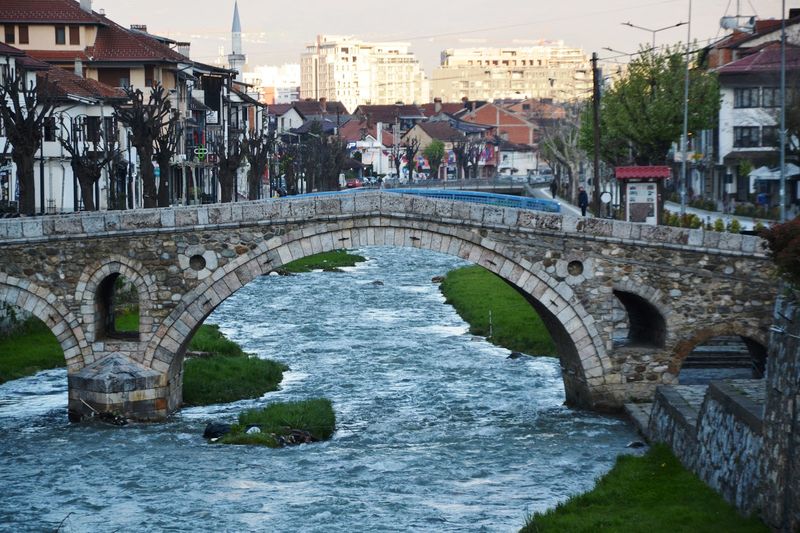
Prizren is widely regarded as Kosovo’s cultural capital, and its Stone Bridge has been part of that identity since the 16th century. The original Ottoman structure featured three carved stone arches built with lime plaster, linking the Shatërvan Square area to the Saraçhane district across the Lumbardhi River.
Floods in November 1979 completely dismantled the original crossing, but residents pushed hard for its reconstruction. Work began in 1982, and the rebuilt bridge, measuring 17 meters in length, was inaugurated the same year, faithfully replicating the original Ottoman style.
Surrounded by mosques, artisan workshops, and riverside cafés, the Stone Bridge sits at the center of daily life in the old town. It is a protected cultural monument and a popular meeting point where locals gather in the evenings and visitors stop to photograph the river and the layers of history stacked up on both banks. Few crossings feel this alive.
4. Pont Vell, Besalú, Catalonia, Spain
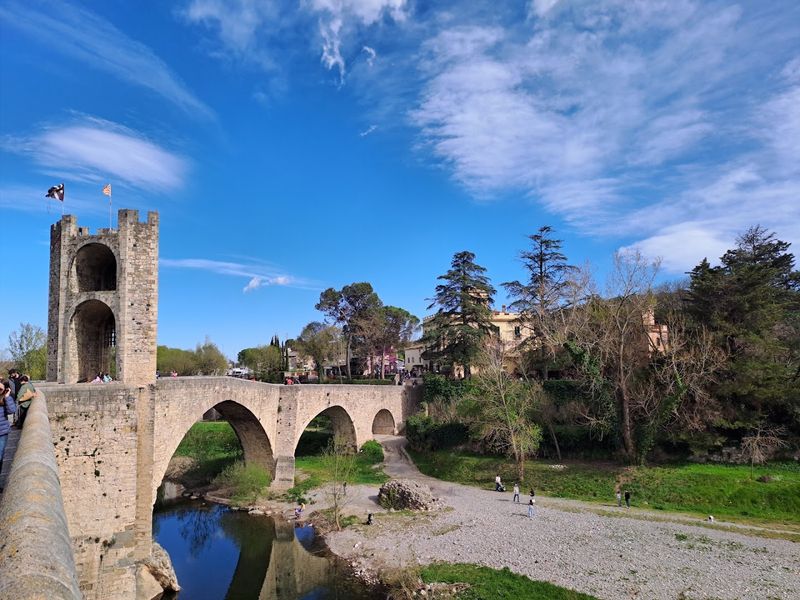
The Pont Vell is the first thing most visitors see of Besalú, and it sets expectations immediately. This fortified Romanesque bridge, first documented in 1075, crosses the Fluvià River on eight unequal arches built directly onto the river’s natural bedrock, a practical solution that has kept the structure standing for nearly a thousand years.
A hexagonal defensive tower rises from its center, complete with loopholes at the top. In medieval times, that tower housed a toll booth where everyone entering the town paid a fee. Today, no toll is collected, but the gateway still marks a clear boundary between the modern world and the remarkably preserved medieval center beyond.
The bridge was destroyed during the Spanish Civil War in 1939 and rebuilt in the early 1960s using the original design. Pedestrians cross it freely every day, arriving at cobbled streets, Romanesque churches, and artisan shops that feel entirely unchanged from centuries past. It is a working portal, not a prop.
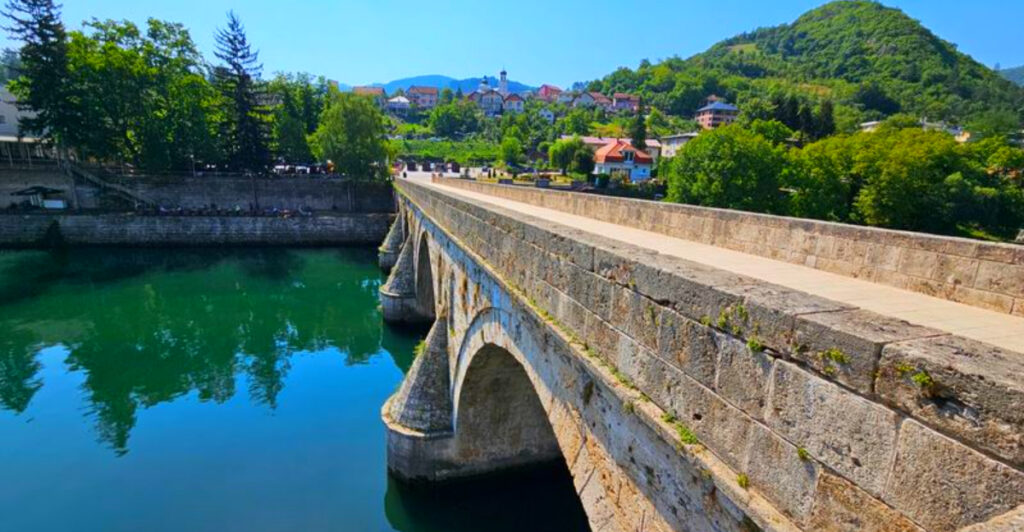
5. Mehmed Paša Sokolović Bridge, Višegrad, Bosnia and Herzegovina
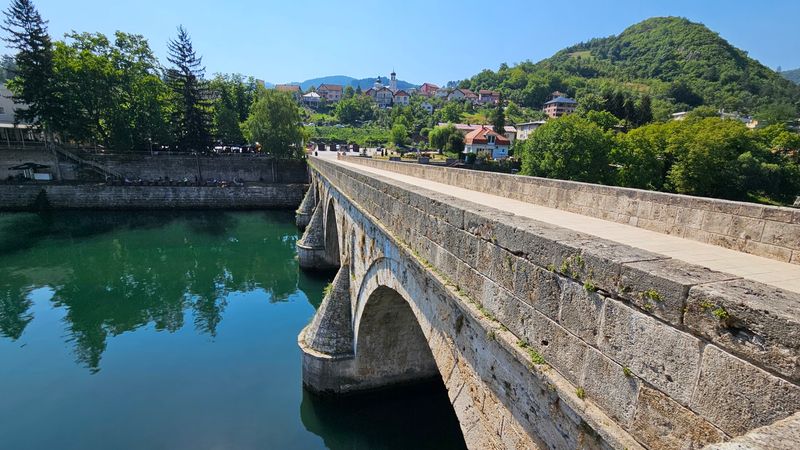
Commissioned by Grand Vizier Mehmed Paša Sokolović and designed by the legendary Ottoman architect Mimar Sinan, this bridge was completed in 1577 and stretches an impressive 179.5 meters across the Drina River. Its eleven masonry arches vary in span from 11 to 15 meters, a design that art historians frequently compare to Italian Renaissance architecture for sheer elegance of proportion.
The bridge once formed part of the main road connecting Sarajevo to Istanbul, making it a critical artery for trade and travel across the Ottoman Empire. It suffered damage in both World Wars but was restored with Turkish support and continues to stand as a UNESCO World Heritage Site.
Ivo Andrić immortalized it in his Nobel Prize-winning novel, giving the bridge a literary fame that matches its architectural one. Residents of Višegrad still use it as their favorite gathering spot, and pedestrians cross it daily for views of the Drina that have not changed in centuries.
6. Puente Romano, Cangas de Onís, Asturias, Spain
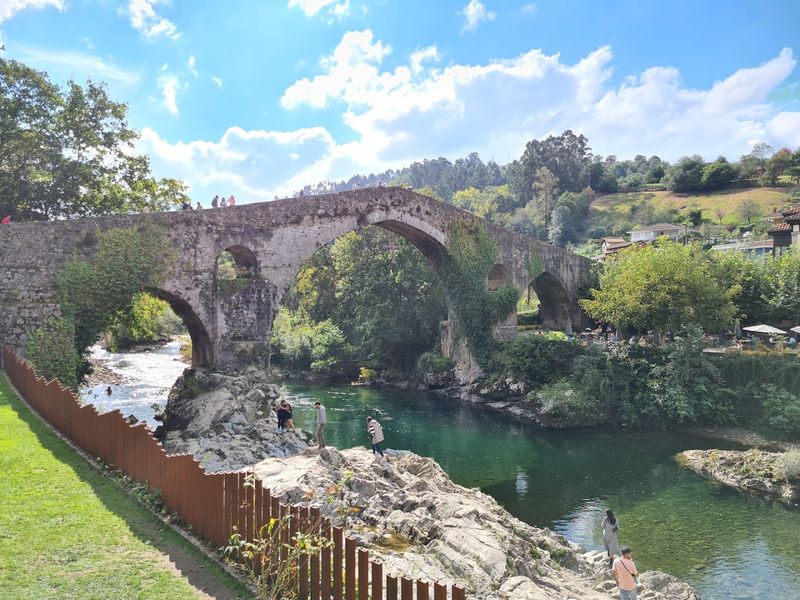
The name says Roman, but the bridge says medieval, and that small contradiction has fueled debate among historians for years. Known locally as El Puentón, this bridge crosses the Sella River on three unequal stone arches, with the central arch raised significantly higher than the others, giving it a bold, asymmetric silhouette that is instantly recognizable.
The current structure dates to the late 13th or early 14th century, built during the reign of King Alfonso XI of Castile. A replica of the Victory Cross, the Cruz de la Victoria, hangs suspended beneath the central arch as a symbol of the Christian victory at the Battle of Covadonga, a defining moment in the Reconquista. The cross also appears on the town’s coat of arms.
Declared a historic artistic monument in 1931, the bridge is now pedestrian-only and open around the clock. Visitors stroll across its rounded stones to admire the jade-green Sella River and the Picos de Europa peaks rising in the distance. Locals treat it as a perfectly ordinary part of their route home.
7. Ponte Gobbo, Bobbio, Emilia-Romagna, Italy
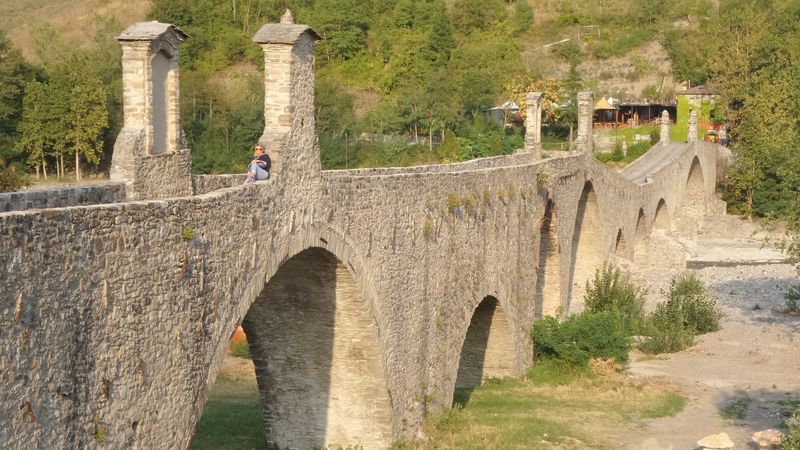
No bridge in Europe has a more entertaining origin story than Bobbio’s Ponte Gobbo. According to local legend, Saint Columbanus struck a deal with the Devil to build the bridge overnight, then outsmarted him by sending a dog across first. An enraged Devil reportedly kicked the structure, leaving it with its famously uneven, hunchbacked profile.
Stretching 273 meters across the Trebbia River on eleven arches of wildly different heights and widths, the bridge traces its roots to Roman times, with the current upper structure largely built by monks from San Colombano Abbey in the 7th century. Its irregular silhouette is so distinctive that some art historians have suggested it appears in the background of Leonardo da Vinci’s Mona Lisa.
Today the Ponte Gobbo is exclusively pedestrian, offering residents and visitors a characterful route across the Trebbia. The uneven stone surface requires a bit of attention underfoot, but the views of the colorful riverside town and the surrounding valley make every careful step worthwhile.
8. Ponte della Maddalena, Borgo a Mozzano, Tuscany, Italy
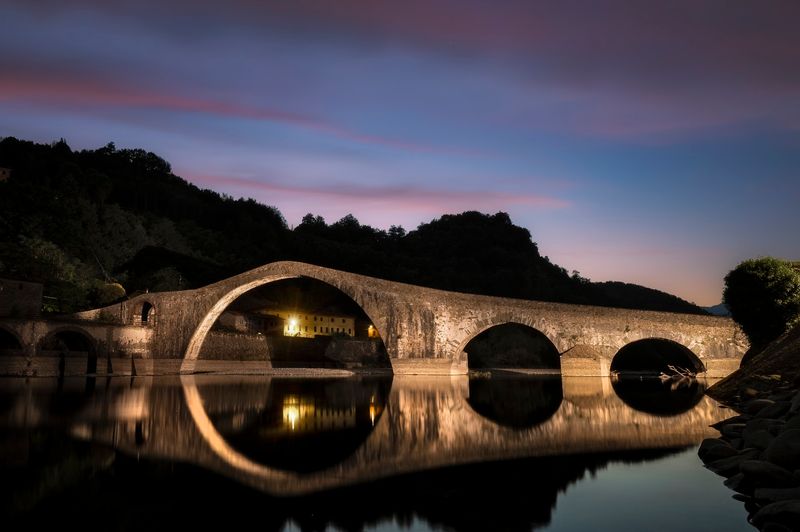
Locally nicknamed the Devil’s Bridge, the Ponte della Maddalena in Borgo a Mozzano pulls off a genuinely impressive architectural trick: its central arch soars dramatically while the flanking arches step down in uneven stages, creating a profile that looks more like a sculpture than a road. The bridge crosses the Serchio River and likely dates to around 1080, commissioned by Countess Matilda of Tuscany.
The devilish nickname comes from a familiar legend. A master builder, behind schedule and desperate, allegedly made a pact with Satan to finish the construction overnight. Townspeople foiled the deal by sending an animal across first, cheating the Devil out of his prize. The resulting fury supposedly bent the bridge into its current lopsided shape.
Once a critical crossing on the Via Francigena pilgrimage route, the bridge is now pedestrian-only and remains a beloved landmark in Tuscany. Locals walk across it regularly, and visitors arrive specifically to photograph its extraordinary silhouette reflected in the calm Serchio below.
9. Latin Bridge, Sarajevo, Bosnia and Herzegovina
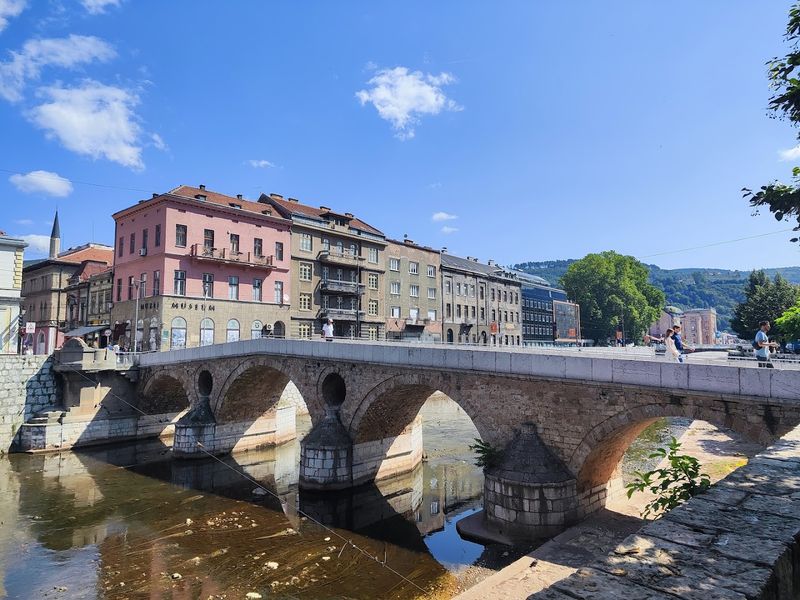
Most bridges carry people. This one also carries the weight of a world-altering event. The Latin Bridge in Sarajevo is where, on June 28, 1914, Gavrilo Princip shot Archduke Franz Ferdinand, an act that triggered a chain of events leading to World War I. The northern end of the bridge is now marked with a small museum dedicated to that moment.
The bridge itself is considered Sarajevo’s oldest surviving stone crossing, with records pointing to a wooden predecessor from 1541 and a stone replacement around 1565. Its current four-arch form was reconstructed between 1798 and 1799 after severe flood damage in 1791. The circular openings above the piers, designed to reduce flood pressure, are distinctive enough to appear on the official seal of Sarajevo.
Today the Latin Bridge is closed to motor vehicles, functioning as a pedestrian and cyclist route between Baščaršija and the city’s surrounding streets. Its modest scale makes it feel less like a monument and more like a quiet, everyday part of the city’s fabric.
10. Šeher-Ćehaja Bridge, Sarajevo, Bosnia and Herzegovina
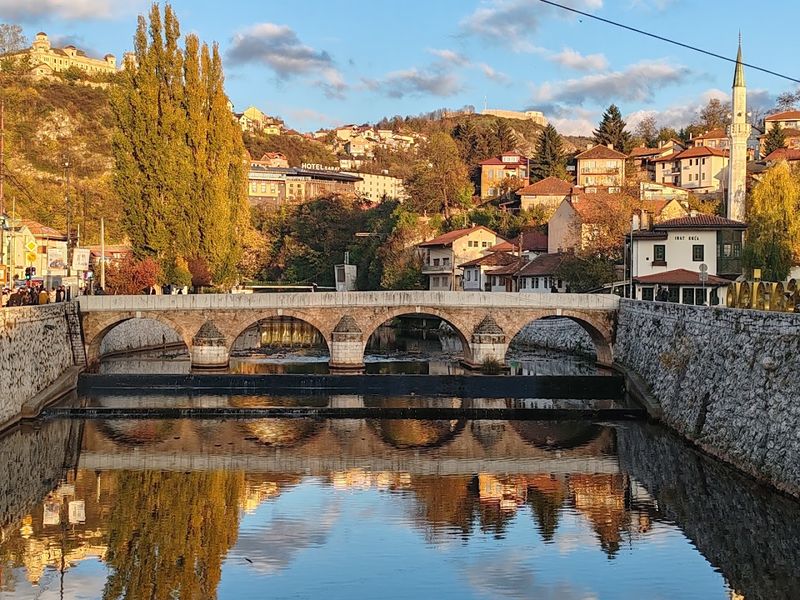
A short walk from the bustle of Baščaršija, this four-arched Ottoman crossing stands as one of Sarajevo’s oldest and most elegant bridges. The Šeher-Ćehaja Bridge, whose name translates roughly as Mayor’s Bridge, was built around 1585 and 1586, constructed from tufa and limestone in a style that reflects the careful craftsmanship of the period.
Floods damaged it repeatedly over the centuries, in 1619, 1629, and 1843, each time prompting repairs that kept the bridge in service. Bosnia and Herzegovina designated it a National Monument in 2005, recognizing both its architectural integrity and its historical continuity as a working crossing.
Unlike Sarajevo’s more famous bridges, this one operates at a quieter pace, attracting residents out for evening strolls and visitors who have wandered slightly off the main tourist path. Its location near the historic City Hall and the House of Spite makes it a natural stop for anyone exploring the older corners of the city. Peaceful, functional, and genuinely historic in equal measure.
11. Kriva Ćuprija, Mostar, Bosnia and Herzegovina
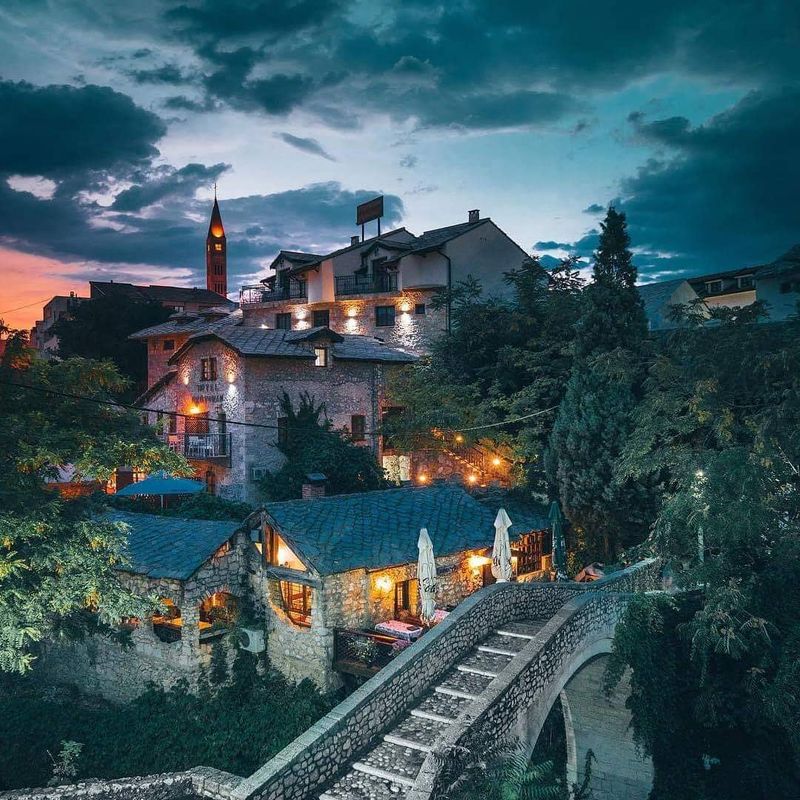
Thirty meters from the famous Stari Most, a smaller bridge quietly holds its own piece of history. Kriva Ćuprija, meaning Crooked Bridge, was built in 1558 by Ottoman architect Ćejvan Kethoda as a test run before he tackled the far larger challenge of the Old Bridge across the Neretva River. That makes it the oldest single-arch stone bridge in Mostar, predating its celebrated neighbor by eight years.
The asymmetric arch that gives the bridge its nickname was not a mistake. The Radobolja stream’s banks sit at slightly different heights, and the architect adjusted the design accordingly. Like Stari Most, it was built from tenelija limestone blocks interlocked with oak pegs. Floods in 1999 and 2000 caused it to collapse, but it was meticulously rebuilt in 2001 using salvaged original stones and matching new ones from the same quarry.
Today the Crooked Bridge is a pedestrian crossing within Mostar’s UNESCO-listed Old Town. Its smaller scale and calmer setting offer a genuinely different experience from the crowds that gather at Stari Most just around the corner.
12. Arslanagić Bridge, Trebinje, Bosnia and Herzegovina
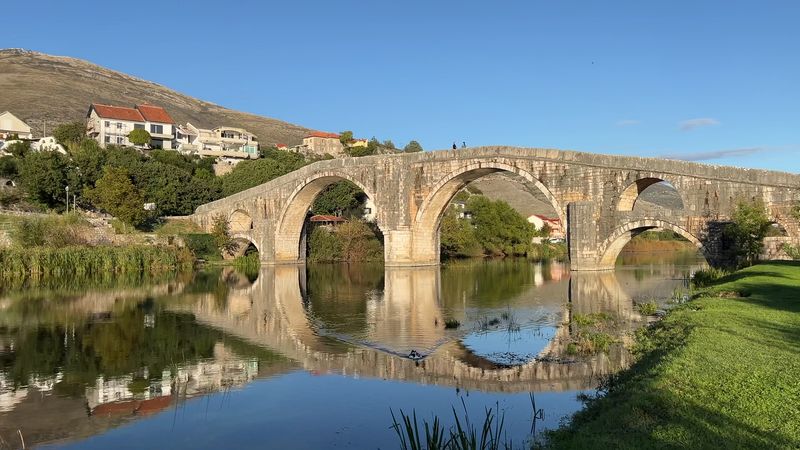
Very few historic bridges can claim they were moved to survive, but the Arslanagić Bridge has exactly that story. Built in 1574 by Mehmed Pasha Sokolović as a trade link for salt merchants traveling between Herceg Novi and Dubrovnik, the bridge originally stood several kilometers upstream on the Trebišnjica River.
When the construction of the Grančarevo Dam in 1966 threatened to submerge its original location, workers dismantled the bridge stone by stone and reassembled it at its current site downstream. The process took nearly six years, and the bridge reopened in 1972. Its design features two large semi-circular arches flanked by five smaller ones, spanning 92.25 meters in total.
The bridge takes its current name from Arslan-aga, an Ottoman official who collected tolls here after arriving in Trebinje in 1687. Today it is a pedestrian-only zone, and the calm Trebišnjica reflects its arches with remarkable clarity. It remains a cherished national monument and one of southern Bosnia’s most photogenic everyday crossings.
13. Pont Vieux, Espalion, Aveyron, France
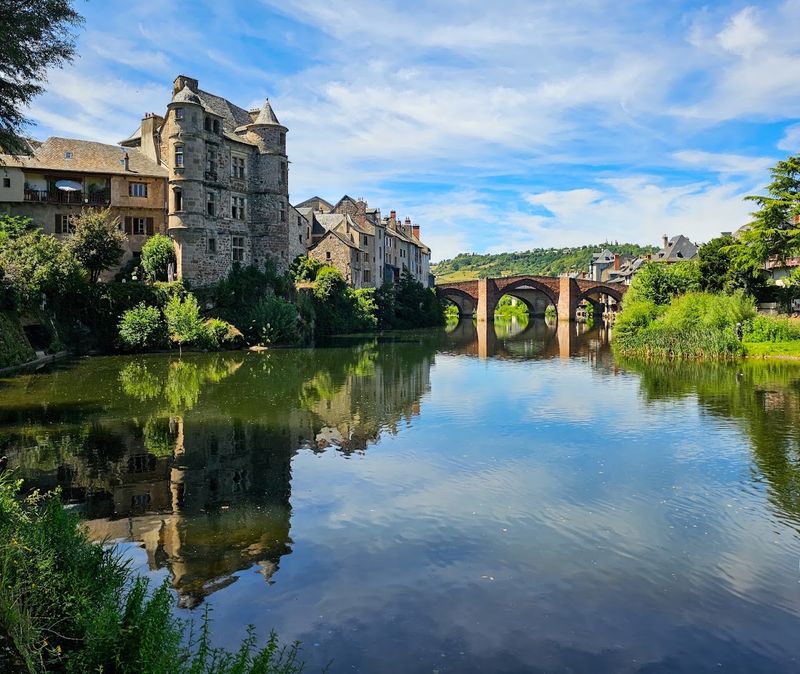
Built from the warm pink sandstone that defines this corner of southern France, the Pont Vieux in Espalion has been crossing the Lot River since the 13th century. First mentioned in documents from 1060, it later became a recognized stop on the Pilgrim’s Way to Santiago de Compostela and earned its place as part of a UNESCO World Heritage Site designation.
In its medieval heyday the bridge featured towers, shops, and even a drawbridge, making it more of a commercial hub than a simple crossing. The towers were removed in the 18th century and the bridge was widened in the 17th, but its Gothic arches and pink stone character remain intact.
Today it is reserved exclusively for pedestrians, and the traditional stone buildings with wooden balconies lining both banks, former tanneries known as calquières, give every crossing a genuinely historic atmosphere. Each year around May 25th, the bridge welcomes livestock herds during the transhumance to Aubrac, a local tradition that connects this ancient structure directly to the rhythms of rural French life.
Share this story