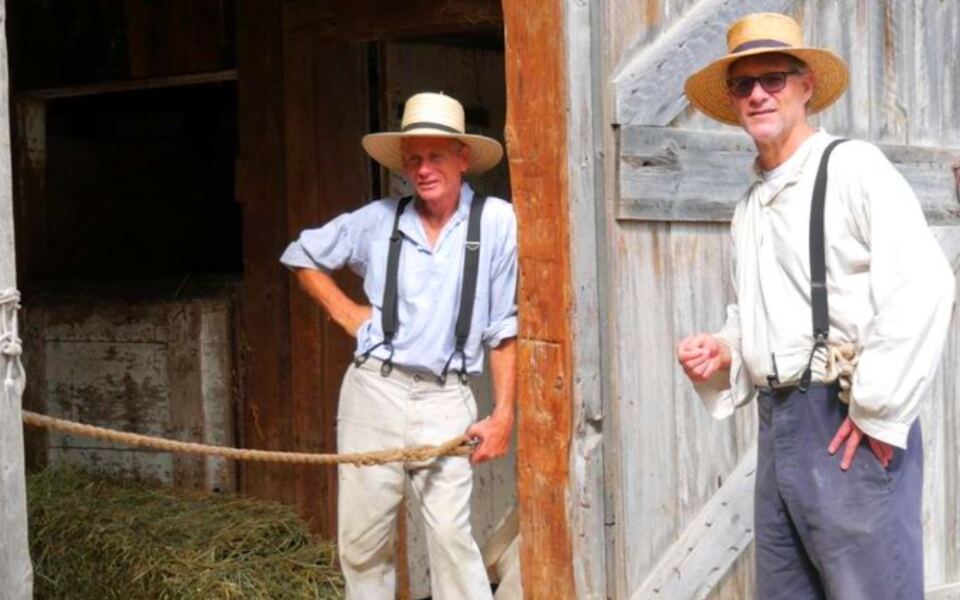
Most museums ask you to look but not touch. These places have a different policy entirely.
Across North America and Australia, a handful of remarkable living-history villages have rebuilt the 1800s from the ground up, complete with working farms, period tradespeople, costumed interpreters, and unpaved streets that have never heard of Wi-Fi. Whether your personal vision of the past involves a frontier blacksmith shop, a gold-rush mining town, or a Victorian port full of tall ships, there is a destination on this list that will put you right in the middle of it.
Some let visitors try historic crafts themselves. Others recreate entire communities so thoroughly that the modern world starts to feel like the strange and unfamiliar one.
From rural New England to the Australian outback, these 13 destinations do not just show history. They make you part of it.
1. Fanshawe Pioneer Village, London, Ontario, Canada
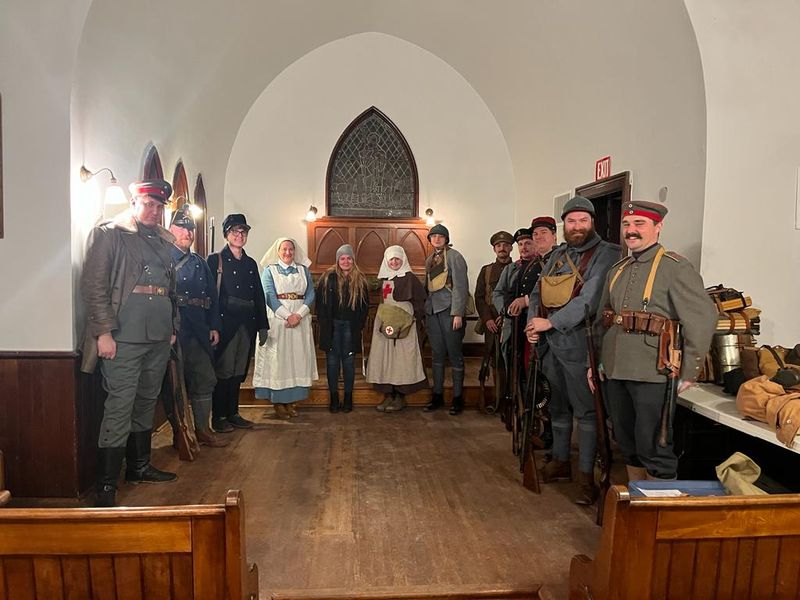
One century of change can look like a completely different world, and Fanshawe Pioneer Village makes that point by covering the full stretch from 1820 to 1920 within a single heritage site. The village sits just outside London, Ontario, and its collection of 19th-century homes, church buildings, workshops, and fences creates a compact but visually rich portrait of rural Middlesex County life.
Demonstrations throughout the site help bring daily routines back to life rather than leaving visitors to guess at what actually happened inside these buildings. The combination of wooden structures, open green spaces, and period details gives the place an unhurried, approachable quality that works well for visitors who prefer their history without the intensity of a large-scale production.
Fanshawe is also a practical choice for travelers who want a genuine living-history experience without driving hours to reach a major attraction. The village rewards a relaxed visit, and its century-wide scope means there is always something new to notice on a second or third trip.
2. Sovereign Hill, Ballarat, Victoria, Australia
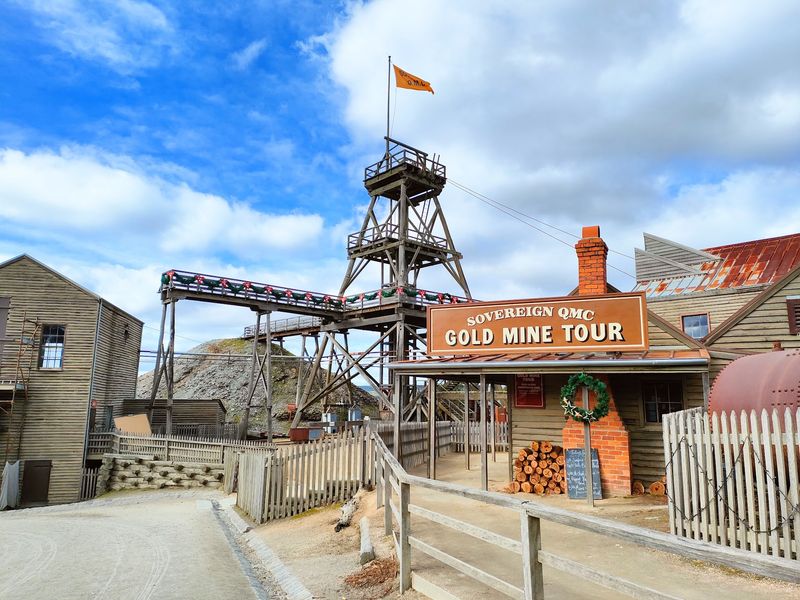
Gold does that to a place. When prospectors flooded into Ballarat in the 1850s, one of the richest alluvial gold rushes in world history exploded across the Victorian landscape, and Sovereign Hill has spent decades reconstructing exactly what that looked like.
The 25-hectare open-air museum sits directly on ground connected to the original rush, which gives it a geographic credibility that purpose-built recreations cannot claim.
More than 60 historically recreated timber buildings line gravel streets, with costumed staff and volunteers populating bakeries, blacksmith shops, and general stores throughout the site. Visitors can pan for real gold in the creek and keep whatever tiny specks they find, which makes this one of the few living-history experiences where you might actually profit from your visit.
Underground mine tours, historic trade demonstrations, and the Gold Pour demonstration, where pure gold is melted and poured, add further depth. The site also recreates the Red Hill Mine, where the Welcome Nugget, the world’s second-largest gold nugget, was discovered beneath Ballarat’s famous soil.
3. Genesee Country Village & Museum, Mumford, New York
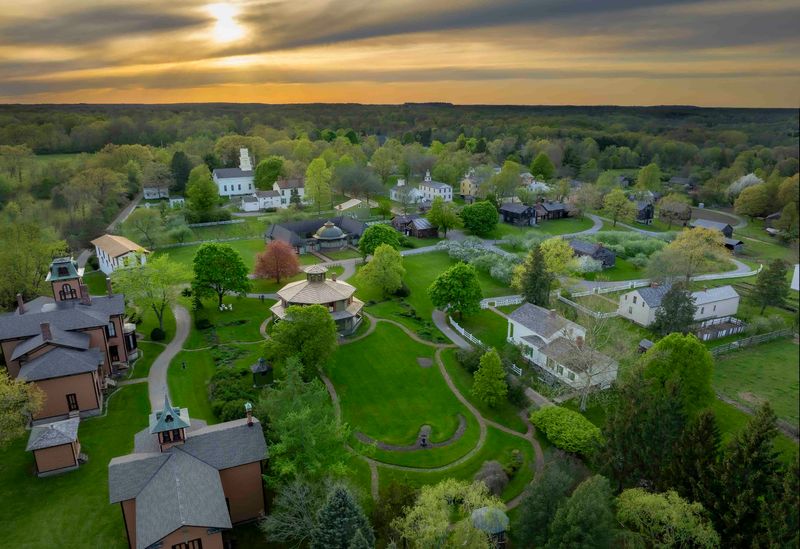
New York’s largest living history museum does not settle for one version of the 1800s. Genesee Country Village and Museum uses 68 historic buildings to walk visitors through three distinct phases of western New York history, from rough early settlement through the polished gaslight era of the late 1800s.
Each district has its own visual character, and moving between them gives a clear sense of how dramatically life changed across a single century. Interpreters work in 14 different historic trades, including blacksmithing, pottery, and tinsmithing, while heirloom animals graze and period gardens supply the kitchens.
The gardens are not decorative. Produce grown on site actually goes into meals prepared in the historic kitchens, and fibers from those same gardens get dyed and used in craft projects.
As the third-largest living history museum in the entire United States, this place has the scale to back up every claim it makes about the past.
4. Kings Landing, Prince William, New Brunswick, Canada
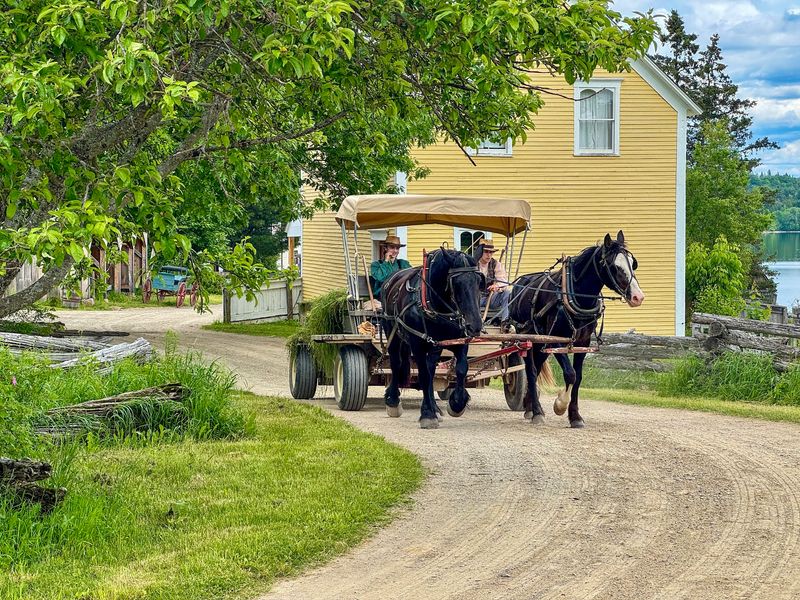
Built on the banks of the Wolastoq, also known as the Saint John River, Kings Landing has a backstory as interesting as the history it preserves. The entire village was established in the late 1960s when historic buildings from the Saint John River valley were relocated to save them from flooding caused by the Mactaquac Dam construction project.
Today, those rescued structures form a 300-acre site with roughly 70 historic buildings, more than 70,000 artifacts, and a full cast of costumed interpreters who demonstrate millwright work, traditional crafts, and period food preparation. Horse-drawn wagon rides carry visitors through the settlement in appropriately unhurried fashion.
The riverfront setting gives Kings Landing a visual quality that purely landlocked villages cannot match. Characters throughout the village are based on real people from New Brunswick’s past, which adds a layer of historical specificity that turns a walk through the grounds into something closer to meeting actual 19th-century residents.
5. Upper Canada Village, Morrisburg, Ontario, Canada
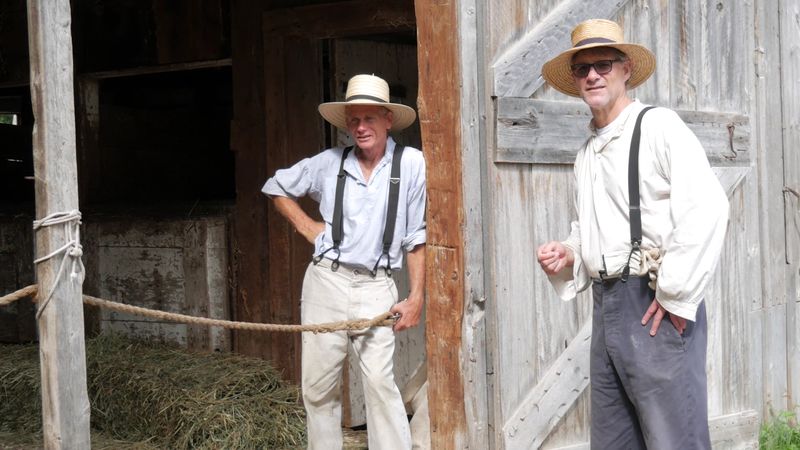
Upper Canada Village is unusually precise about which year it is recreating. The entire site is set in 1866, and every detail, from the crops in the fields to the trades in the workshops, reflects that specific moment in rural English Canadian history.
More than 40 historic buildings make up the community, and most of them were relocated here before the St. Lawrence Seaway project flooded the so-called Lost Villages upstream.
Visitors can watch bread being baked, flour being milled, and wool being processed from raw fiber into finished cloth. Craftspeople practice blacksmithing, cabinetmaking, tinsmithing, and coopering in period workshops throughout the site.
Transportation options lean firmly into the era as well. Horse-drawn carriage rides and wagon rides are available, and tow scow rides on the canal offer a particularly rare experience.
Heritage vegetables and livestock breeds complete a picture of 1866 rural life that is grounded in genuine agricultural and domestic history.
6. Greenfield Village, Dearborn, Michigan
Henry Ford collected more than cars. Greenfield Village in Dearborn is the result of his obsession with preserving American history in physical form, and several of its districts put visitors directly into the 1800s.
Firestone Farm recreates an 1880s working farm with seasonal agricultural demonstrations and historic cooking, while Liberty Craftworks gives artisans space to weave, throw pottery, and practice other traditional crafts.
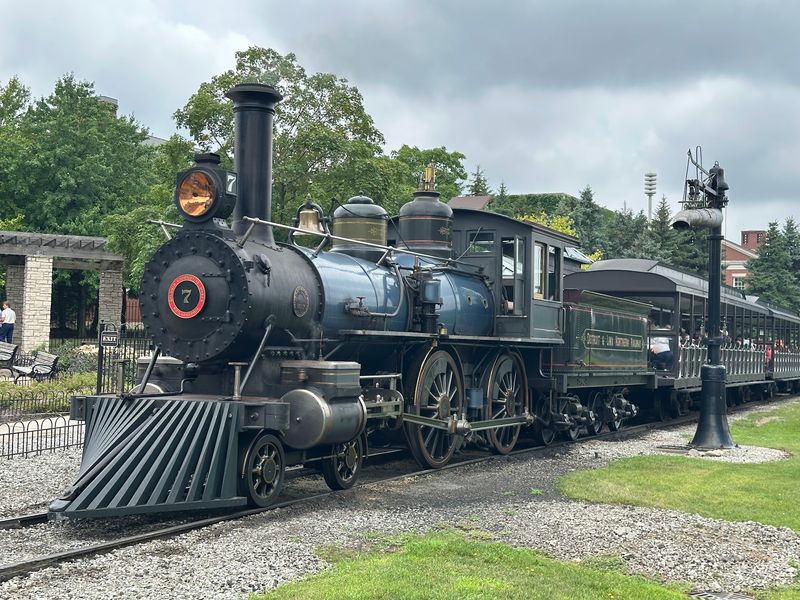
Railroad Junction is where things get particularly interesting for anyone curious about the shift from rural to industrial America. An operating railroad and a late-19th-century roundhouse illustrate the period when steam power was fundamentally reorganizing how goods, people, and ideas moved across the country.
The village covers a broad span of American history, but the 19th-century sections are detailed enough to stand on their own as a destination. Farm fields, period buildings, and working artisans create a layered experience that rewards visitors who take their time moving between districts rather than rushing through.
7. Living History Farms, Urbandale, Iowa
Two very different versions of 19th-century Iowa exist side by side at Living History Farms, and the contrast between them is one of the most educational things about the place. The 1850 Pioneer Farm shows frontier agriculture in raw form, with log-house domestic work and crops tended using the same methods Iowa’s earliest settlers would have used.
A short tractor-drawn cart ride away, the 1876 Town of Walnut Hill presents a completely different picture. By 1876, the frontier had grown into something more organized.
Walnut Hill includes a blacksmith, broom maker, general store, newspaper office, drugstore, millinery shop, bank, doctor’s office, and schoolhouse, all serving as a supply hub for surrounding farms.
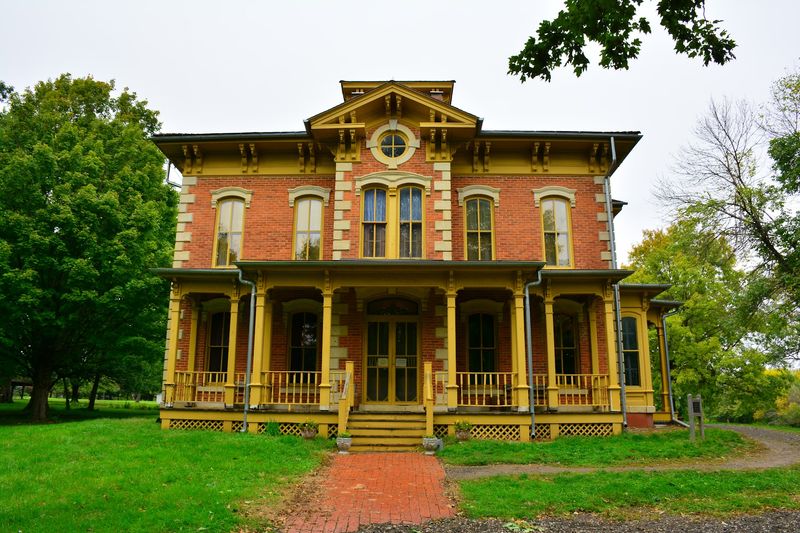
The Italianate Victorian Flynn Mansion and its adjoining 1870 barn add an extra layer of period detail to the town district. Visitors can even play baseball using 1876 rules, which is either a history lesson or a very unusual workout, depending on your athletic ambitions.
8. Frontier Culture Museum, Staunton, Virginia
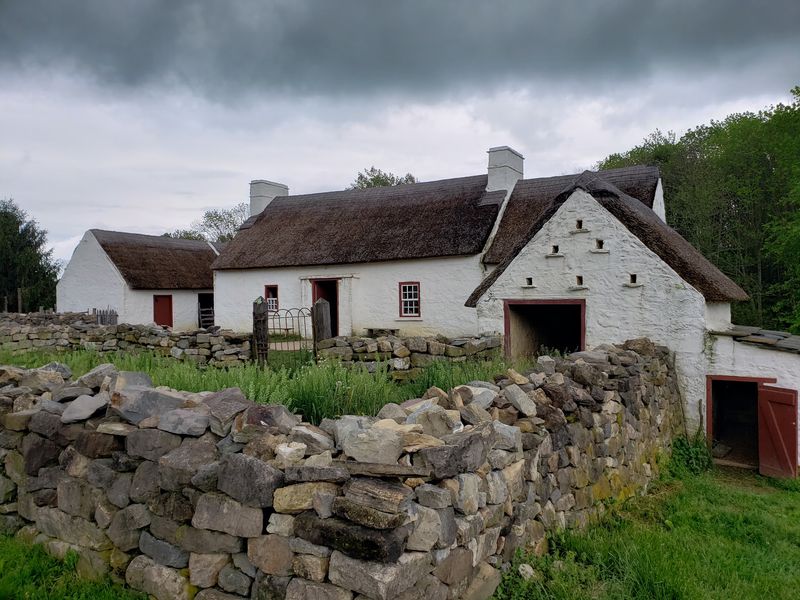
Most living-history museums pick one culture and recreate it. The Frontier Culture Museum in Staunton takes a more ambitious approach by showing how multiple cultures combined to shape life in the Shenandoah Valley and the wider American frontier.
European, African, and Indigenous traditions all contributed to what eventually became a distinctly American folk culture, and the museum’s exhibits make that layered history visible.
American exhibits include Valley of Virginia farm settings representing the 1820s and 1850s, alongside an 1840s schoolhouse and an African American church modeled after the Mount Tabor United Methodist congregation, representing the 1860s. A costumed Irish blacksmith actively working at a forge is one of the more memorable figures visitors encounter on the grounds.
The result is a living-history experience that feels less like a single frozen moment and more like an ongoing conversation between different communities and traditions. Visitors who pay attention to the connections between exhibits leave with a genuinely richer understanding of how the American frontier actually developed.
9. Conner Prairie, Fishers, Indiana
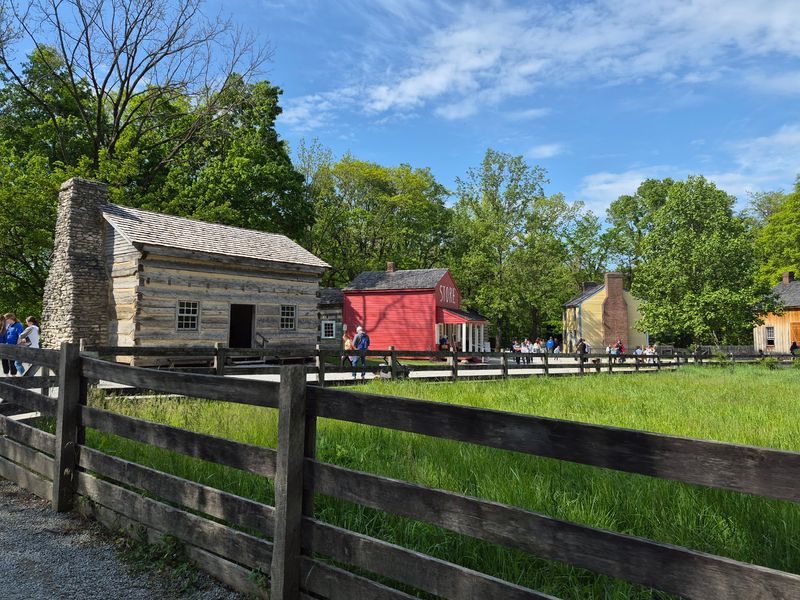
At the heart of Conner Prairie sits 1836 Prairietown, a carefully researched fictional community that draws on genuine Central Indiana history to recreate what a small settlement would have looked like during that particular year. The word “fictional” here does not mean inaccurate.
Every structure and every story is grounded in documented regional history, making Prairietown one of the more historically rigorous immersive experiences in the Midwest.
Visitors are actively encouraged to participate rather than simply observe. A one-room schoolhouse is open for exploration, period interpreters portray Prairietown residents and engage in conversation, and guests can help with actual chores alongside the working tradespeople scattered throughout the site.
That interactive format makes Conner Prairie especially well-suited for families with children who find traditional museums hard to engage with. When a kid can help churn butter or assist a period blacksmith, history becomes something they are part of rather than something being explained at them from behind a display case.
10. Mystic Seaport Museum, Mystic, Connecticut
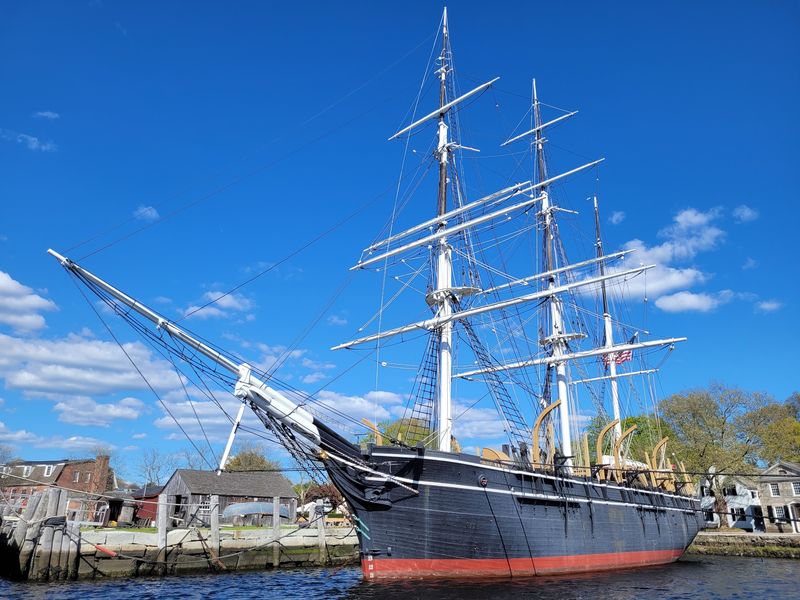
Not every 19th-century story happened on a farm. Mystic Seaport Museum in Connecticut tells a version of the 1800s built around ships, waterfront commerce, and the specialized trades that kept a New England port functioning.
Its recreated seaport contains historic buildings relocated from around the region, with interpreters demonstrating the work of coopers, printers, shipsmiths, and shipcarvers.
The centerpiece of the entire museum is the Charles W. Morgan, an 1841 whaleship with an extraordinary resume.
It is the world’s oldest surviving merchant vessel, the only remaining wooden whaling ship from the 19th-century American merchant fleet, and America’s oldest commercial ship still afloat. After its whaling career ended in 1921, the Morgan was preserved and eventually arrived at Mystic in 1941.
In 2014, following a five-year restoration, the ship completed its 38th voyage, this time focused on raising awareness for maritime heritage and ocean sustainability. Visitors can board the vessel and stand on the same decks that carried it across the world’s oceans for nearly a century.
11. Westfield Heritage Village, Rockton, Ontario, Canada
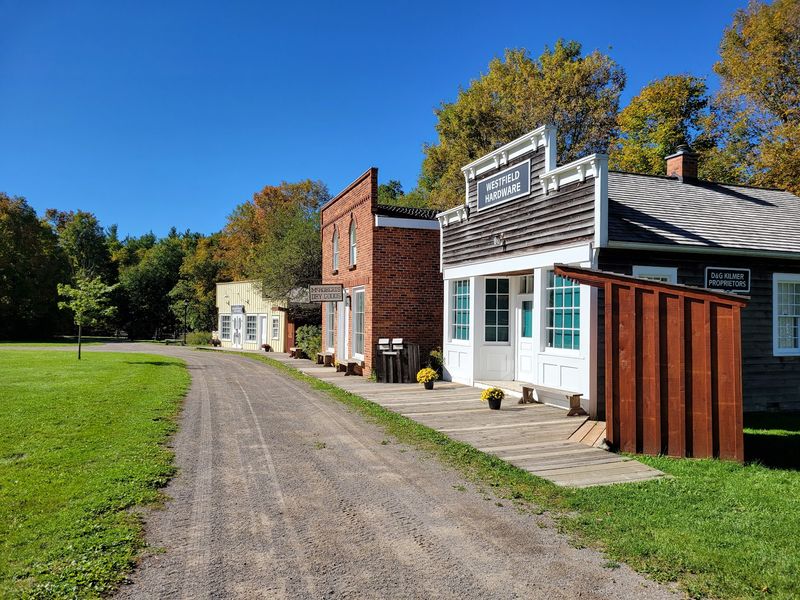
Tucked into a large conservation area in Rockton, Ontario, Westfield Heritage Village might be the most naturally beautiful setting on this entire list. More than 35 restored historic buildings are distributed among woods, meadows, and walking trails, which means the surrounding landscape is doing as much work as the buildings themselves to create a convincing sense of another era.
On designated Sundays, holidays, and special-event days, selected structures open with costumed interpreters, hands-on crafts, and period demonstrations. The event-based format means a visit here requires a little planning, but the payoff is a setting that feels genuinely removed from the modern world rather than simply adjacent to it.
The conservation area context is a meaningful part of what makes Westfield different from urban heritage sites. Visitors wander between period structures without a city skyline or a parking garage interrupting the view, which makes it considerably easier to mentally place yourself in the slower, quieter rhythms of 19th-century rural Ontario.
12. Stuhr Museum, Grand Island, Nebraska
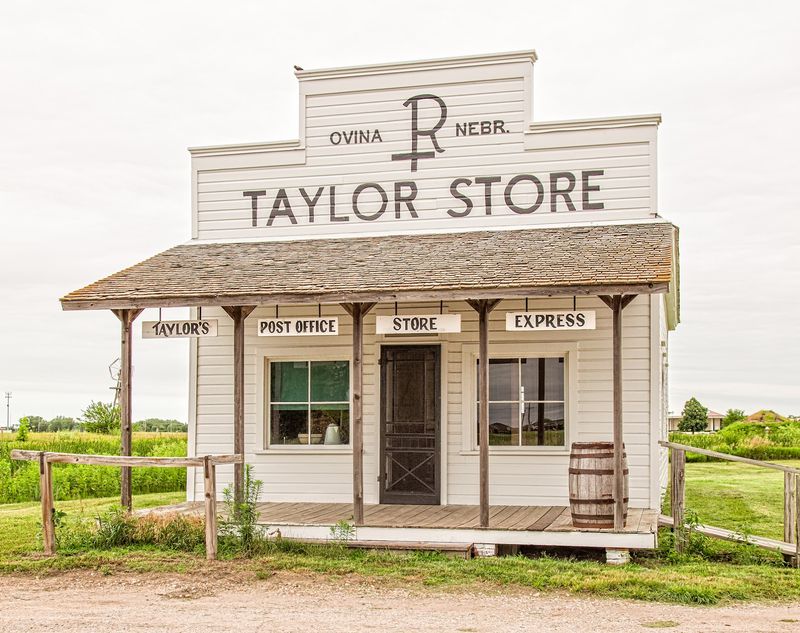
Railroad Town inside the Stuhr Museum is one of the more specific living-history recreations anywhere in the American Midwest. Interpreters portray Nebraska life as if the year is exactly 1891, and the four-block town they inhabit contains more than 60 structures, including a blacksmith shop, tinsmith shop, planing mill, mercantile, post office, and places to eat and shop in period style.
Hands-on activities here go well beyond observation. Visitors can craft simple tin objects, try woodworking, stamp leather, decorate miniature hats at the Millinery Shop, or take a turn at old-fashioned laundry, which is considerably less convenient than a washing machine but considerably more memorable.
Railroad Town also carries some notable history within its residential buildings. The boyhood home of Leo B.
Stuhr, for whom the museum is named, sits in the town, as does the birthplace of American actor Henry Fonda. That combination of trade history, hands-on programming, and genuine historic homes makes this one of Nebraska’s most underrated attractions.
13. Old Sturbridge Village, Sturbridge, Massachusetts
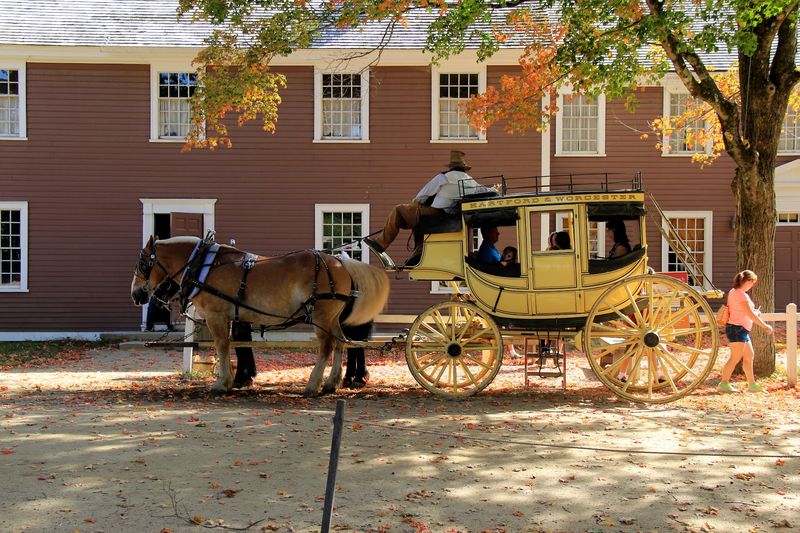
More than 40 historic buildings spread across 200 acres of rural Massachusetts, and not one of them feels like a showpiece behind a velvet rope. Old Sturbridge Village recreates a working New England community of the 1830s, where costumed historians spend their days doing actual 19th-century jobs rather than simply describing them.
Blacksmithing, pottery, printing, textile production, farming, and hearth cooking all happen on a regular schedule throughout the village. The layout includes gardens, farm animals, workshops, and unpaved paths that connect the whole scene into a convincing rural landscape.
Visitors can wander freely between a working farm, a meetinghouse, a district schoolhouse, and trade shops where craftspeople practice skills that most of the modern world has completely forgotten. The 1830s setting hits a particularly interesting moment in American history, just before industrialization began to change everything about how ordinary people lived and worked.
Share this story