There is a museum in Oklahoma City where the past does not feel distant. The National Cowboy and Western Heritage Museum pulls you straight into the story of the American West, from the open range to the silver screen, and it does it with a kind of confidence that only comes from decades of getting it right.
For Oklahomans, this place carries the weight of something personal, a reminder that the cowboy spirit is not just mythology but a lived tradition rooted in this very soil. Plan to stay a while, because one visit is rarely enough.
The Museum on NE 63rd Street
Right on the northeast side of Oklahoma City, at 1700 NE 63rd Street, the National Cowboy and Western Heritage Museum sits on a stretch of land that feels appropriately wide open. The building itself is substantial, with architecture that hints at the rugged grandeur waiting inside.
A large free parking lot greets visitors from the start, which already sets the tone for a place that seems to have thought of everything.
The museum has earned a 4.8-star rating across more than 6,400 reviews, a number that reflects genuine enthusiasm rather than polite approval. Families from across the country make detours to get here, and plenty of Oklahoma City regulars keep coming back because one pass through the galleries never quite covers it all.
The scope is genuinely ambitious. Collections span Western fine art, Native American artifacts, firearms history, rodeo culture, Hollywood westerns, and the working lives of real cowboys.
The museum does not simplify the story for easy consumption; it tells the whole thing, and that commitment to completeness is exactly what makes it worth your afternoon.
Prosperity Junction and the Indoor Cattle Town
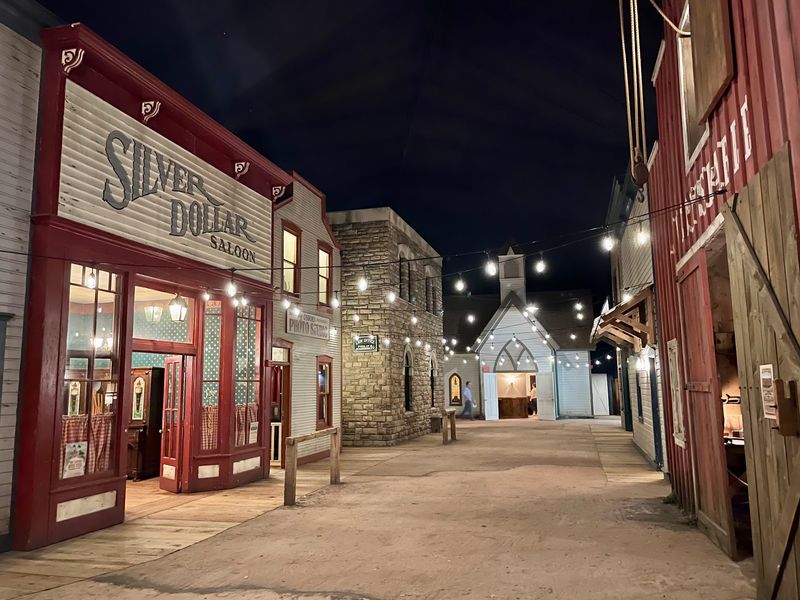
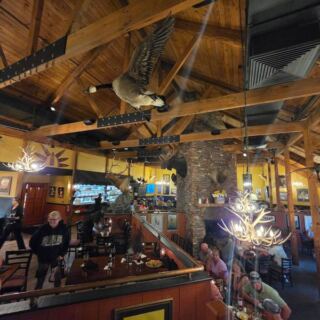
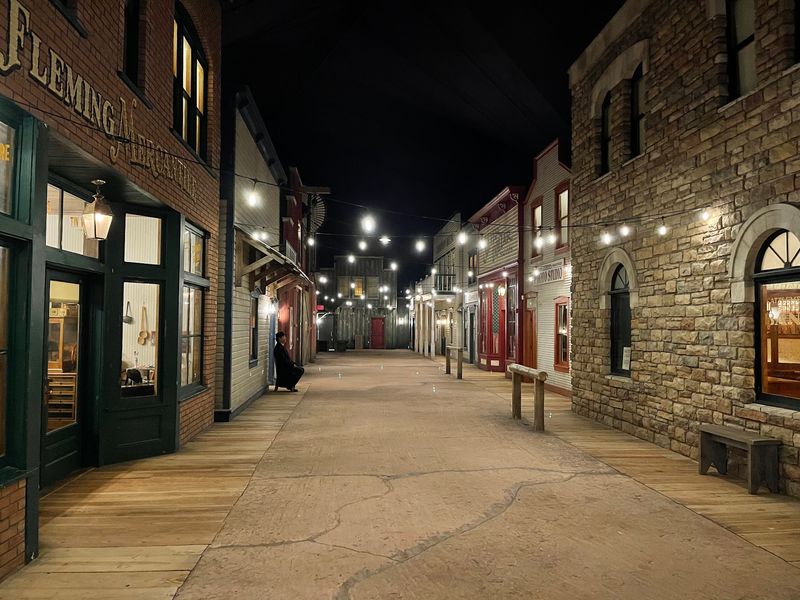
Prosperity Junction is the kind of exhibit that stops people mid-stride. Built as a life-sized indoor replica of a 19th-century cattle town, it rises beneath 40-foot ceilings and fills the space with a sense of scale that photographs cannot fully capture.
The authentic saloon, the blacksmith shop, the church, the general store, all of it assembled with the kind of detail that makes you check over your shoulder for a tumbleweed.
One visitor noted that the replica even smells like a barn inside, which is either a remarkable feat of atmosphere or a testament to the museum’s commitment to full sensory immersion. Either way, it works.
The town feels lived-in rather than staged, and the effect of wandering its wooden boardwalks is genuinely transportive.
Kids tend to go wide-eyed here, but adults often linger just as long, reading the signage and peering into the shop windows. Prosperity Junction alone justifies the trip from anywhere in the state, and for Oklahomans who grew up watching westerns on Saturday afternoons, walking through it carries a particular, satisfying charge.
The End of the Trail and the Fine Art Galleries
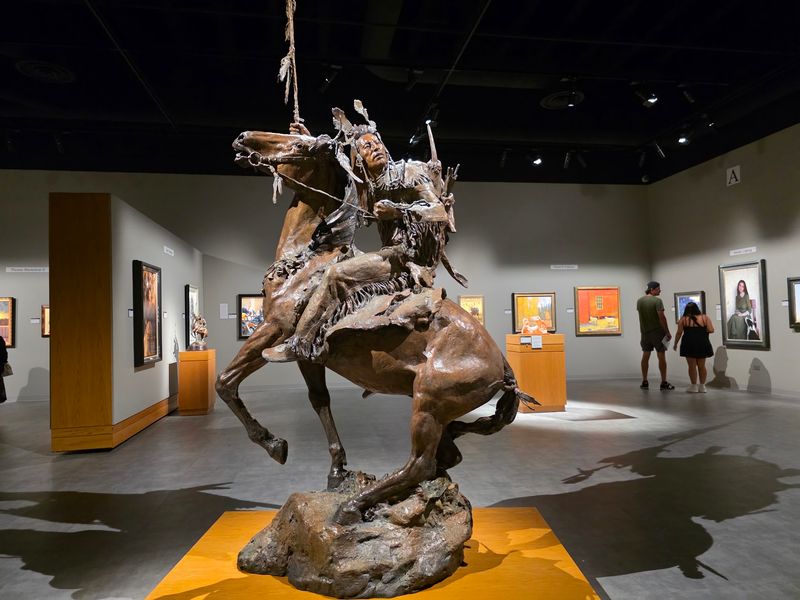
Turn left after entering the museum and the western fine art wing opens up around you, a collection that holds its own against any dedicated art museum in the region. The paintings here span generations of Western subject matter, rendered with the kind of craft that rewards slow looking.
Landscapes, portraits, working cowboys, and ceremonial scenes fill the galleries in thoughtful sequence.
The centerpiece that draws the most pauses is the massive sculpture known as The End of the Trail, James Earle Fraser’s iconic work depicting a weary Native American warrior slumped on horseback. Seeing it in person rather than in a textbook is a different experience entirely.
The scale and the quiet sorrow of the piece carry a weight that reproduction cannot convey.
Beyond the anchor sculpture, the collection includes firearms with ornate craftsmanship, Native American artifacts presented with care and context, and clothing from both frontier life and ceremonial traditions. The museum earns its reputation here not just by assembling objects but by placing them in a narrative that respects the full complexity of Western history rather than flattening it into a simple frontier romance.
The Rodeo History Collection
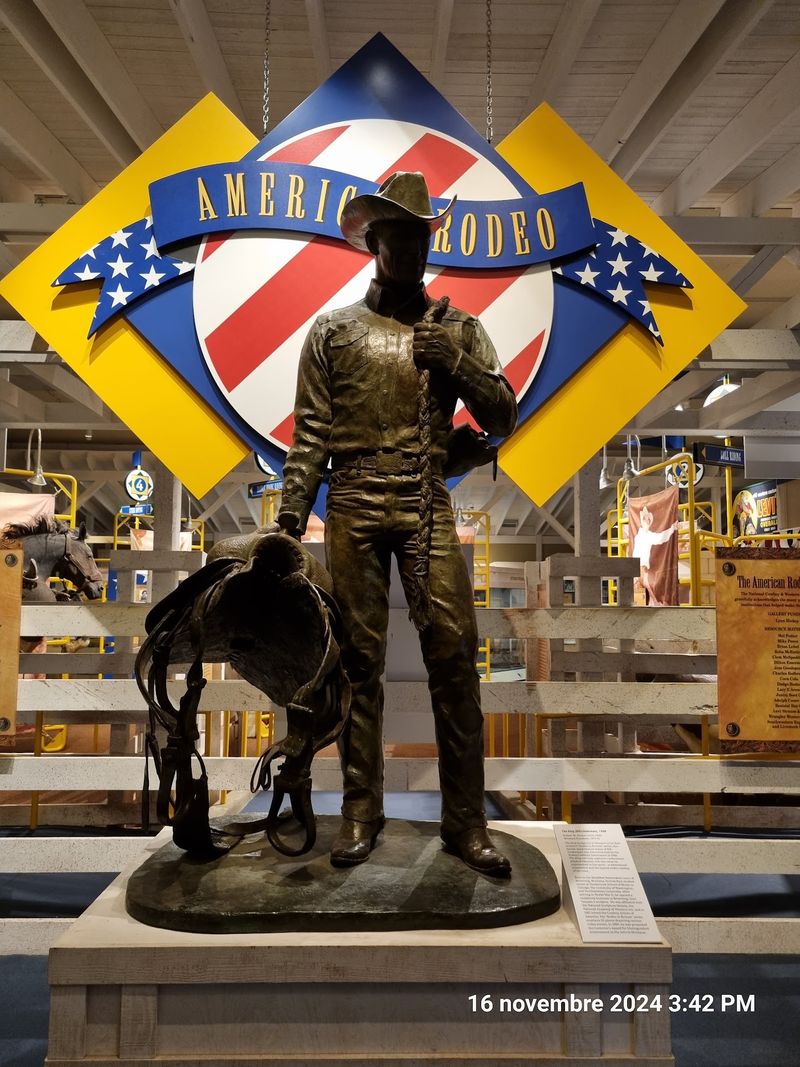
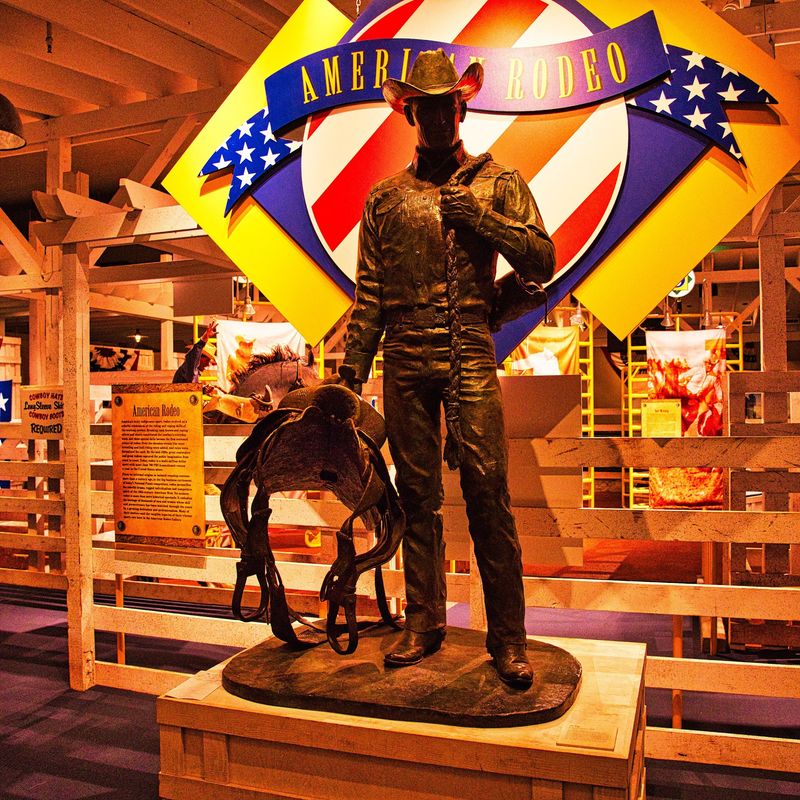
Rodeo is not a footnote at the National Cowboy and Western Heritage Museum; it is a full chapter. The collection dedicated to professional rodeo and bull riding history is one of the most detailed in the country, tracing the sport from its working ranch roots through to the modern arena spectacle that fills stadiums today.
Championship belt buckles, worn leather chaps, and competition photographs tell the story of athletes who made their living eight seconds at a time.
Several visitors have mentioned the rodeo section specifically as a reason they planned their trip, and a portion of the exhibit was temporarily closed for renovation during recent visits. The museum has signaled that the renovated rodeo section will be ready in fall, giving dedicated fans a reason to plan a return trip with purpose.
Professional Bull Riding history gets its own dedicated space, which feels right for an Oklahoma audience that has watched the sport grow from regional tradition to national broadcast. The depth of the collection here goes well beyond trophy cases; it examines the culture, the community, and the competitive evolution of an athletic tradition that is genuinely Oklahoman at its core.
Hollywood Westerns and the Silver Screen Section
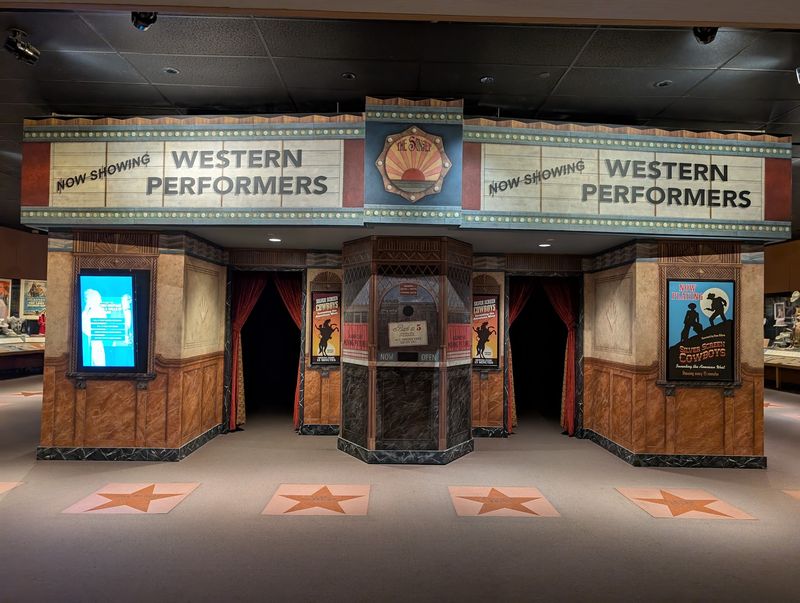
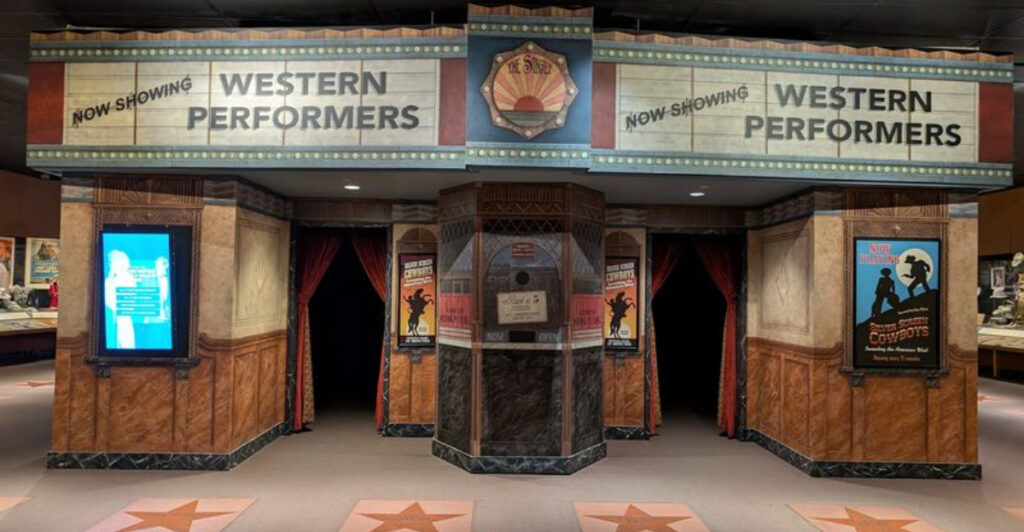
For anyone who spent childhood Saturday mornings glued to reruns of Gunsmoke or The Lone Ranger, the Hollywood westerns section of the museum feels like a reunion with old friends. Film memorabilia, costumes, and photographs from the golden age of western cinema are arranged in a way that honors the genre’s genuine cultural reach without tipping into kitsch.
The section captures how Hollywood shaped the public imagination of the West, sometimes accurately and sometimes not, and the museum is honest about that tension. Props, wardrobe pieces, and production stills from beloved series and films sit alongside context that connects the fiction to the reality it drew from.
The result is a display that fans of classic westerns will find deeply satisfying.
A Wells Fargo stagecoach replica on the property adds a tactile dimension that purely visual exhibits cannot match; visitors have the chance to actually sit in it and get a sense of the cramped, jostling reality of 19th-century travel. The movie section, as multiple visitors describe it, tends to be one of the most talked-about stops on the full museum loop, a place where pop culture and genuine history shake hands.
Barbed Wire, Horses, and the Working West
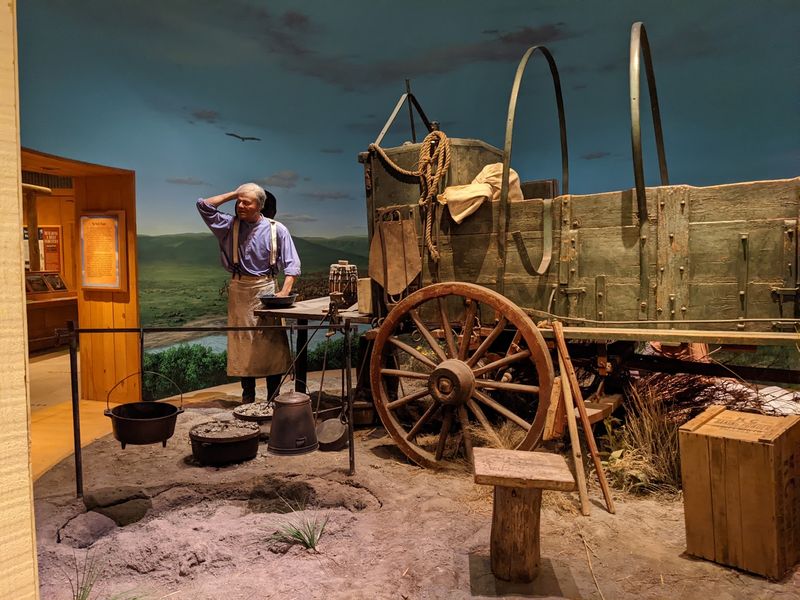
Not every museum has the confidence to dedicate serious exhibit space to barbed wire, but the National Cowboy and Western Heritage Museum understands that the fencing of the open range was one of the most consequential technological shifts in American history. The barbed wire displays trace the evolution of various styles and their impact on land ownership, cattle drives, and the gradual closing of the frontier.
It is the kind of exhibit that sounds dry in a brochure and turns out to be genuinely fascinating in person.
The horse-focused section earns equal attention, particularly from visitors who already have a connection to the animal. Saddles, bridles, bits, and working equipment from different eras and regional traditions are displayed with enough detail to satisfy serious equestrians while remaining accessible to anyone simply curious about how the cowboy relationship with horses actually functioned day to day.
Together, these exhibits form the practical backbone of the museum’s larger argument: that the American West was built on specific tools, specific animals, and specific skills, not just mythology. For Oklahomans with ranch family histories, these rooms tend to prompt the most personal stories and the most lingering looks at the glass cases.
The Annie Oakley Center and Family Activities
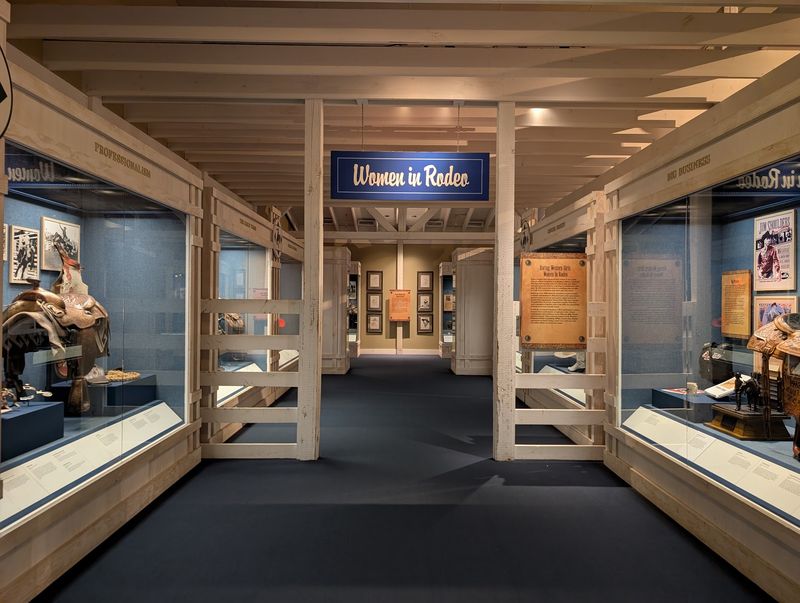
The Annie Oakley Center gives younger visitors a place in the museum that feels genuinely designed for them rather than merely tolerated by the adults-first layout of many heritage institutions. Interactive activities are woven throughout, and the center provides enough hands-on engagement to keep kids curious and moving rather than restless.
Scout groups have made the trip from neighboring states specifically for the programming here, and the staff is noted for being helpful in organizing group visits.
Five dedicated kids’ activity stations are spread across the museum, including one inside the Route 66 exhibit, which means the interactive elements are not all clustered in one corner but distributed throughout the experience. That approach keeps children engaged across the full circuit rather than burning out their attention in the first twenty minutes.
The outdoor area includes a playground, which functions as a natural pressure valve during a long visit. When museum fatigue sets in, as it will with younger children, a few minutes outside resets everyone’s patience.
Families with kids in the middle school range tend to find the interactive elements particularly effective, especially the hands-on activities that ask for participation rather than passive observation.
The AI Cowboy Photo Booth
Among the museum’s more unexpected pleasures is a self-service AI photo booth that dresses visitors in authentic cowboy gear using image processing technology. The system adjusts pose and styling to match the classic Western aesthetic, and the results, by multiple accounts, are genuinely impressive rather than the novelty gimmick the concept might suggest.
Groups tend to linger here longer than they planned, cycling through poses and comparing results.
The booth is free to use, which makes it a no-risk addition to the visit and a natural crowd-pleaser at the end of the museum loop. Friends and families have reported sharing the photos widely after their visits, which gives the museum an organic social presence that no advertising campaign could replicate as naturally.
What makes the booth work beyond the technology is its context. Getting your portrait taken in cowboy gear inside a museum dedicated to cowboy culture lands differently than the same experience at a mall kiosk.
The setting gives it weight, and the photos tend to carry a genuine warmth when people look back at them later. It is a small detail that the museum gets exactly right.
The Chuck Wagon Festival and Seasonal Events
The museum does not limit its programming to what sits behind glass. The Chuck Wagon Festival is one of the signature annual events, drawing visitors for a full day of outdoor cooking, live music, and activities that extend the Western heritage experience well beyond the gallery walls.
Real fire pits are set up across the grounds, and cooks prepare cherry, peach, and boysenberry cobblers the old-fashioned way, in cast iron over open flame.
The food spread at the festival leans hard into tradition: Indian fry bread, hominy with green chili stew, cowboy stew with biscuits. These are not approximations or festival-food concessions; they are the real preparations, made on-site with the kind of care that makes the event feel like a community gathering as much as a museum program.
Children’s activities run throughout the day, and the atmosphere carries the easy, unhurried energy of an Oklahoma summer event done properly.
Shuttle buses run from the parking area to the museum entrance during the festival, a logistical detail that keeps the crowd moving comfortably. For Oklahoma families looking for a day that combines genuine education with genuine enjoyment, the Chuck Wagon Festival is the kind of event that earns its own spot on the annual calendar.
The Outdoor Gardens and Exterior Exhibits
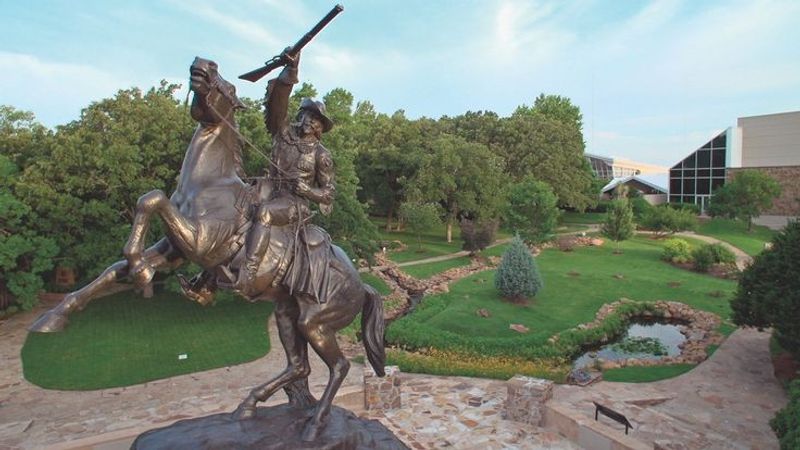
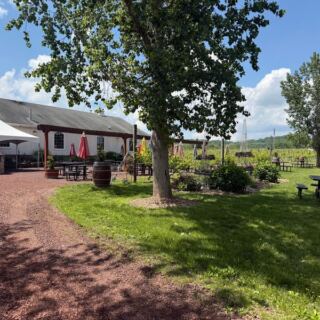
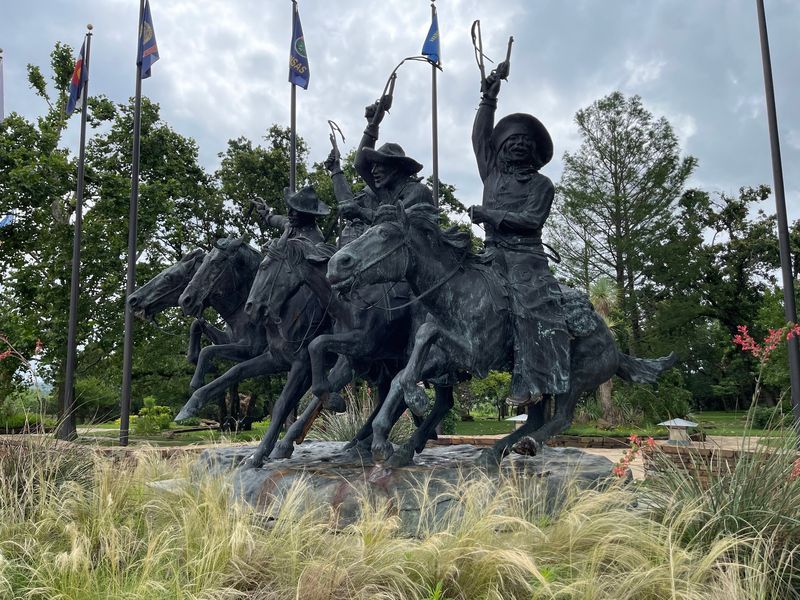
Beyond the front doors, the museum extends across a well-maintained outdoor area that includes a garden and additional exhibits worth the extra time. The grounds offer a different kind of engagement from the interior galleries, with sculptures and installations set against open sky rather than climate-controlled walls.
On a clear Oklahoma day, the outdoor circuit is a genuine pleasure.
Several visitors have admitted to running short on time before reaching the gardens, which is an easy mistake given how much the interior holds. Building the outdoor walk into the plan from the start is the smarter move, especially if the weather cooperates.
The playground sits within the exterior area as well, making the outdoor section a natural break point for families with younger children who need room to move.
The garden design complements the museum’s overall aesthetic without trying to compete with the interior collections. It functions as a breathing space between exhibit halls, a place to process what you have seen before heading back inside for another pass.
Visitors who give the outdoor area proper attention consistently describe it as one of the quieter, more reflective parts of an otherwise richly packed experience.
Visiting Hours, Admission, and Getting There
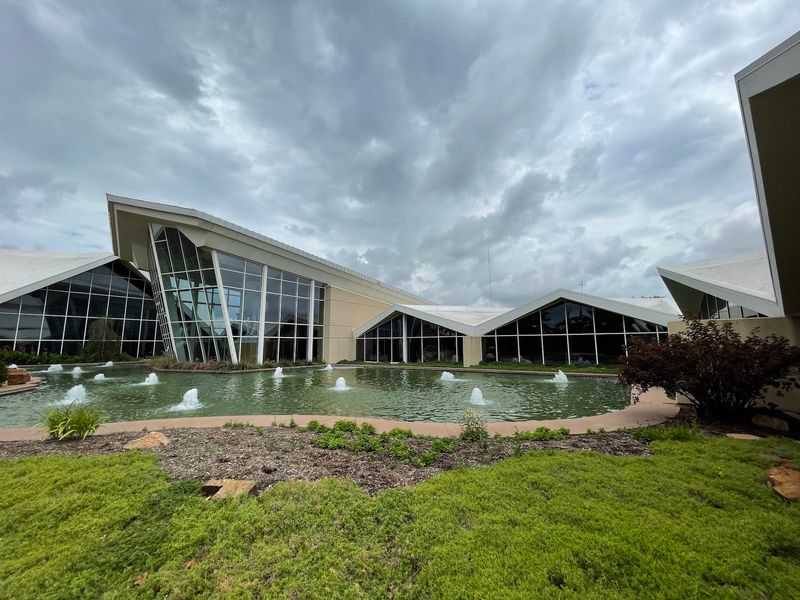
Planning the visit is straightforward, and the museum makes the logistics easy from the moment you arrive. The free parking lot is large, and overflow parking comes with shuttle service to the front entrance, so even busy days do not turn into a parking scramble.
The museum is located at 1700 NE 63rd Street in Oklahoma City, easily reachable from most parts of the metro without any complicated navigation.
Standard hours run Monday through Thursday from 10 AM to 5 PM, with extended hours on Friday and Saturday until 8 PM. Sunday hours run from noon to 5 PM.
The Friday and Saturday evening window is a genuinely useful option for visitors who want to avoid peak daytime crowds or who are working around a full travel schedule.
Admission carries a price that multiple visitors have described as worth every penny given the scale and quality of what is inside. The museum also offers memberships for families who find themselves wanting to return, which is a common reaction after a first visit.
Reach the museum directly at 405-478-2250 or through nationalcowboymuseum.org for current pricing and event schedules. Give yourself at least two and a half to three hours, and honestly, more if you can manage it.
Share this story