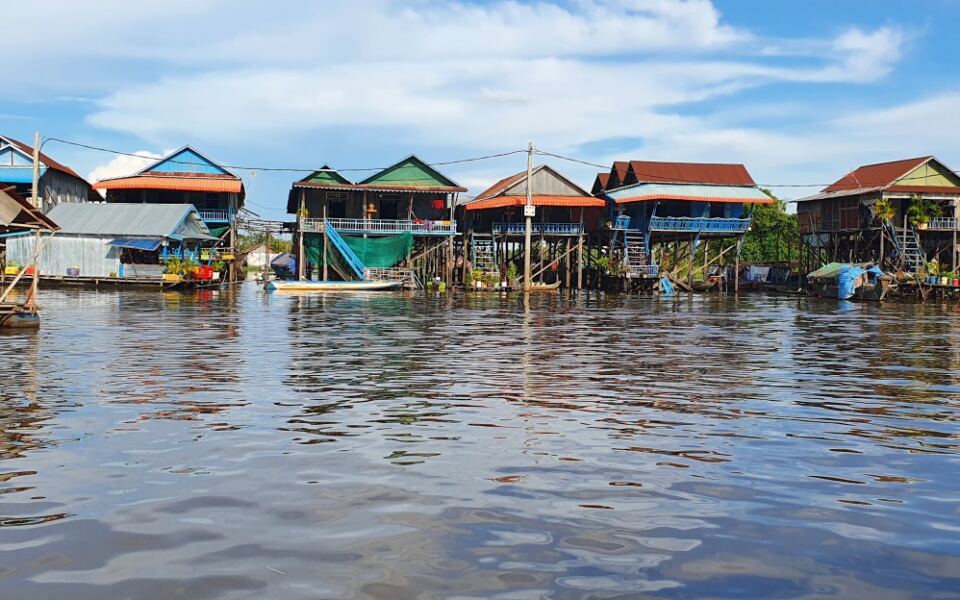
Picture a village where the houses stand on wooden legs as tall as a tree. In Kampong Phluk, Cambodia, the water of Tonlé Sap rises every year, and life simply climbs higher.
Here is a look at ten things that make this floating-season community so fascinating. Get ready to meet stilts, fish, flooded forests, and a lot of friendly waving.
Houses on Giant Stilts
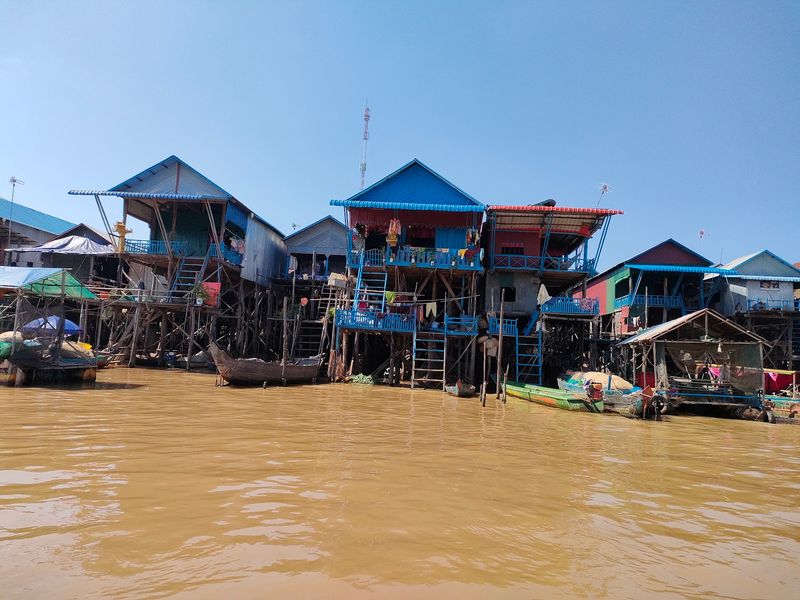
Look up, way up. The first thing you notice in Kampong Phluk is that the homes seem to be tiptoeing above the ground.
Some stilts reach the height of a two-story building, and the families living on top are perfectly relaxed about it.
The reason is simple. During the rainy season, the water of Tonlé Sap swells and swallows the land below.
When the lake is full, the floor of a house may sit just above the waterline, so the stilts keep beds, kitchens, and TVs dry.
In the dry season, the scene changes. The space under each home turns into a shady living room.
Hammocks swing, kids play, and fishing nets hang out to dry in the breeze.
Walk slowly and take photos from a respectful distance. These are real homes, not stage sets.
A smile and a wave usually get a warm one back. Early morning light makes the weathered wood glow, so it is a lovely time to look around and see how daily life unfolds at this lofty level.
The Lake That Breathes
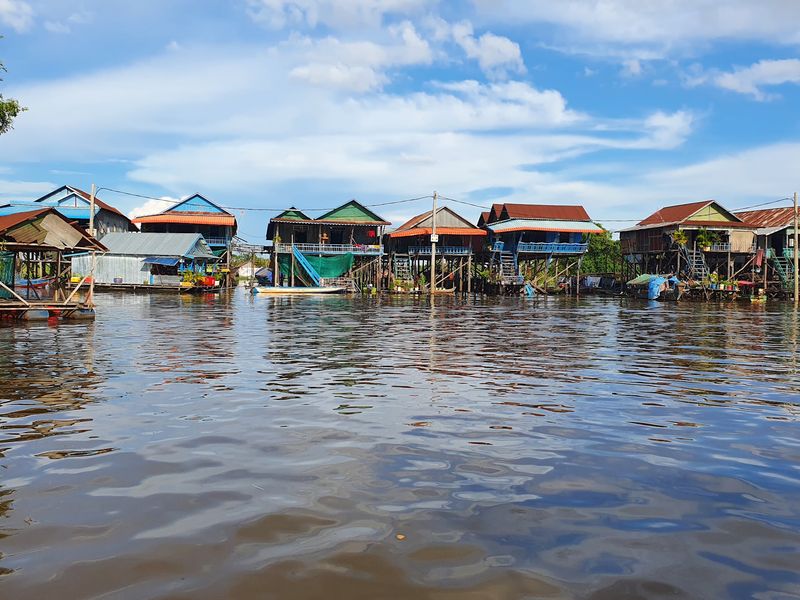
Here is a quirky fact: Tonlé Sap is a lake that changes direction. In the rainy season, the Mekong River gets so full that it pushes water backward into the lake.
Then, when the dry season comes, the water flows out again.
This yearly pulse makes Tonlé Sap one of the largest freshwater lakes in Southeast Asia. Its size can grow several times over, which is why the whole region around Kampong Phluk looks so different from month to month.
Locals read this rhythm the way you read a calendar. They know when to fish, when to move boats, and when to climb the ladder for the night.
If you visit, try to learn which season you are in. High water means you glide right up to the doorsteps by boat.
Low water means a dusty road and a long walk to the river. Both are interesting, and each shows a different side of the same village.
Ask your guide to explain what the water level is doing that week.
The Flooded Forest
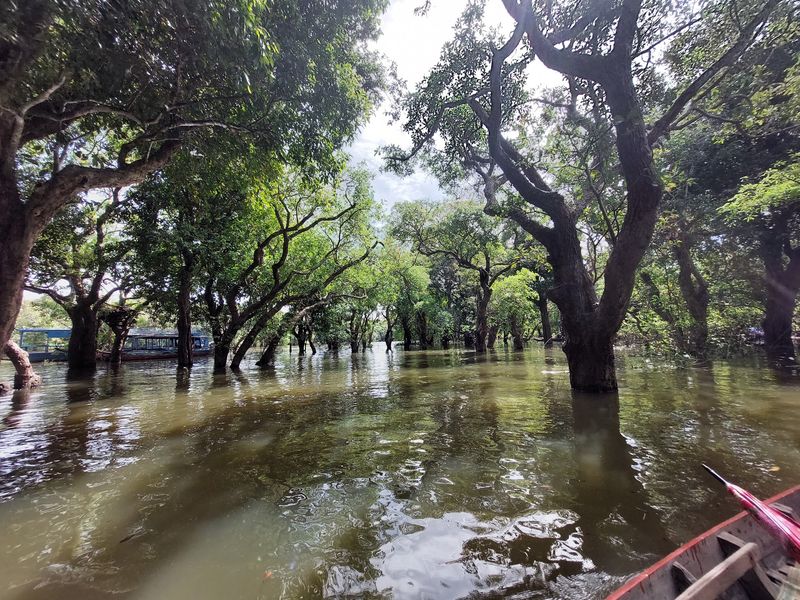
Silence arrives first, then the green. Beyond the village, boats slip between treetops that poke out of the water, and the air feels cool and damp.
Birds call from branches that would be above your head on dry land.
This is the flooded forest, and it is a nursery for fish. When the water rises, young fish hide among the roots and branches, safe from big hunters.
That helps keep the lake full for the families who depend on it.
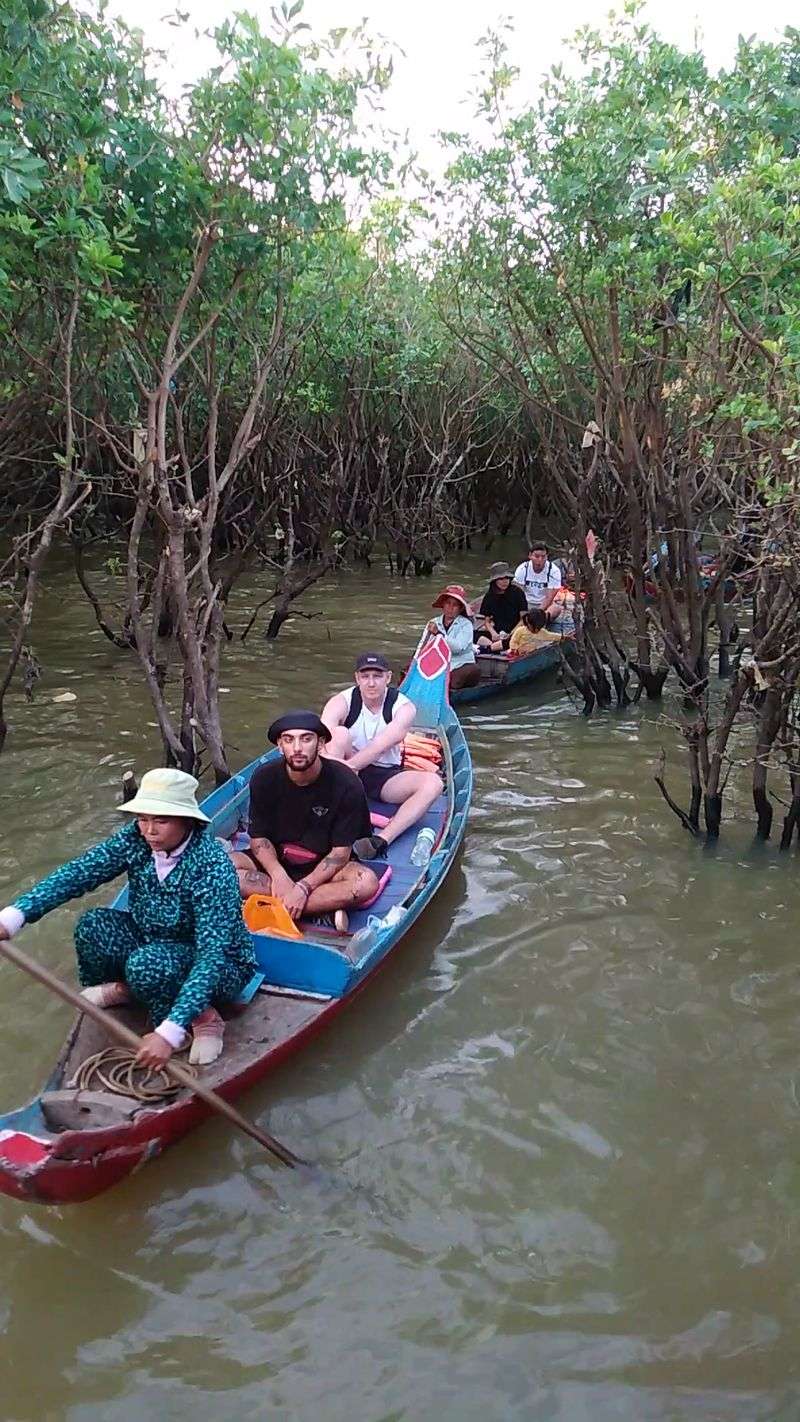
Visitors often take a small rowboat to explore this area. The paddler guides you through narrow gaps in the trees while you try not to duck too late.
Bring a hat and sunscreen, since the sun bounces off the water. A light rain jacket is smart too.
Keep your hands inside the boat, because branches are close. Go slowly, listen carefully, and you may spot herons, kingfishers, or even a snake dozing on a limb.
Fishing for a Living
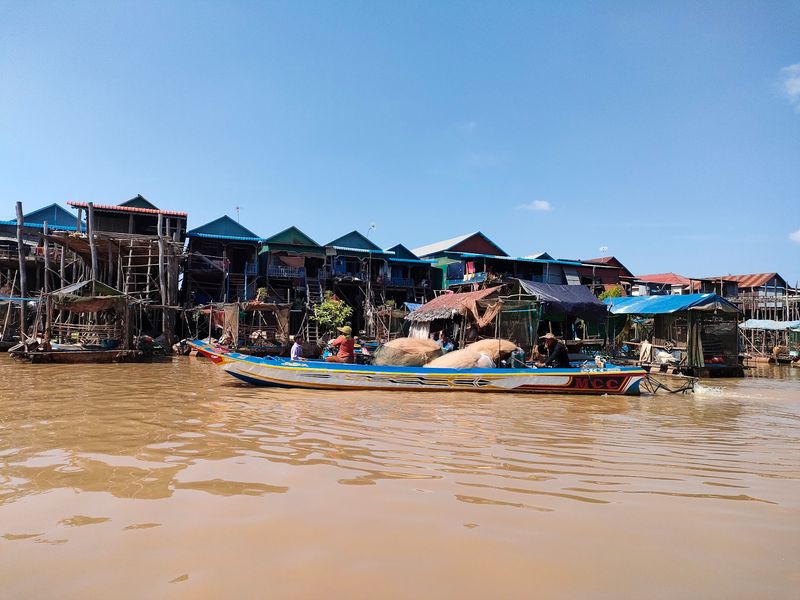
Ask almost anyone in Kampong Phluk what they do, and the answer is probably fish. Many families rise before the sun, load nets into slim boats, and head onto the water.
The catch feeds the family and supplies local markets.
Tonlé Sap is known for its rich supply of freshwater fish. Small fish are turned into prahok, a salty fermented paste that Cambodian cooks love.
Others are dried in the sun on racks and sold across the country.
The work is not easy. Weather, water levels, and fishing rules all shape each day.
Many villagers also take on other jobs, like boat driving, to balance the seasons.
As a visitor, you can support the community in simple ways. Buy snacks or crafts from local sellers, and ask before photographing someone at work.
If you see nets drying, notice the careful knots. Each repair tells a story of long hours and steady hands, and that patience is a big part of village life.
Boat Rides Through the Village
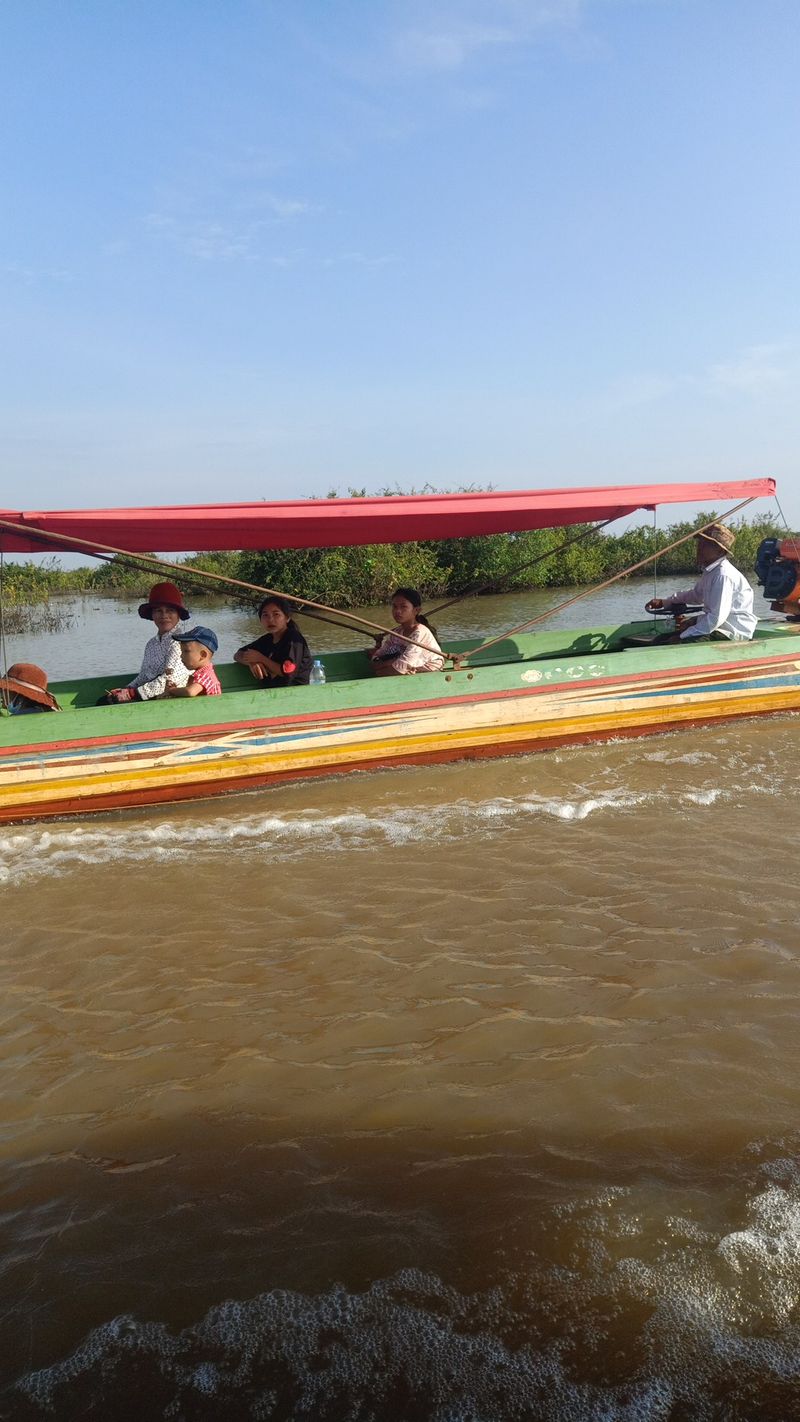
The engine hums, the wake spreads, and suddenly the village slides past your seat. A boat ride is the classic way to see Kampong Phluk, and it works best when the water is high.
Homes line the channel, and you glimpse kitchens, shrines, and laundry swaying on lines.
Most trips start from a landing area not far from Siem Reap, and a ride usually runs about an hour or a little more. Prices vary, so check what is included before you step aboard.
Sit on the shady side if you can. Water glare is strong, and a cap helps.
Keep your phone strap around your wrist, since a drop would mean a very wet goodbye.
Notice how normal everything feels to locals. Children paddle in plastic tubs, and neighbors chat from doorways.
Treat the ride like a visit to someone else’s street, not a zoo, and you will come away with warmer memories and better photos.
Kids Who Paddle Before They Bike
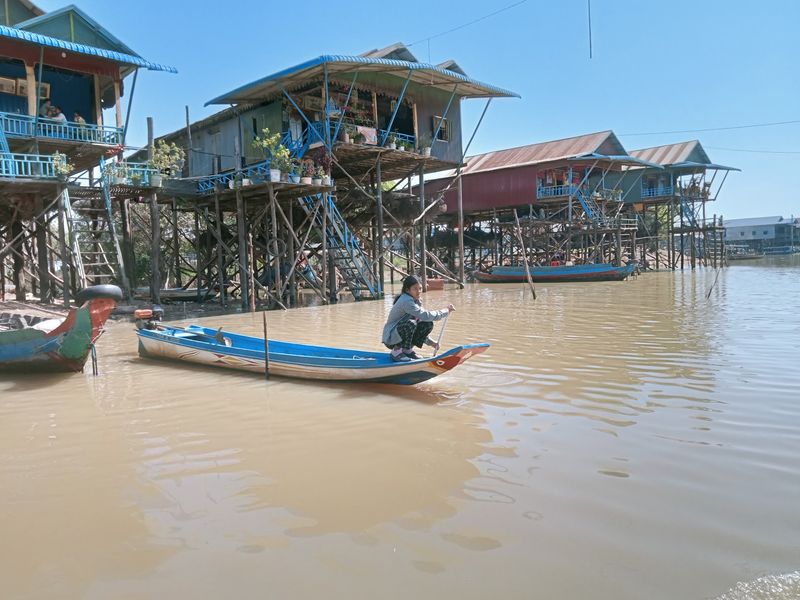
“Where is your bike?” you might ask a kid here. The answer could be: “Right there,” with a finger pointing to a tiny boat.
Children in Kampong Phluk learn to swim and paddle at a very young age.
During flood season, the water is the road. Kids may row to school, visit friends, or help carry supplies, all with surprising skill.
It is common to see small hands working a paddle like a pro.
School life adapts to the water too. There is a school built to handle the seasons, and classes carry on while the lake changes outside the windows.
Visitors sometimes bring pencils or notebooks to share. A better idea is to ask your guide about supporting the school through a proper channel, so help is well planned.
Also remember that kids are not props. A friendly hello, a smile, and permission from a parent before taking pictures go a long way.
Sunset Over the Water
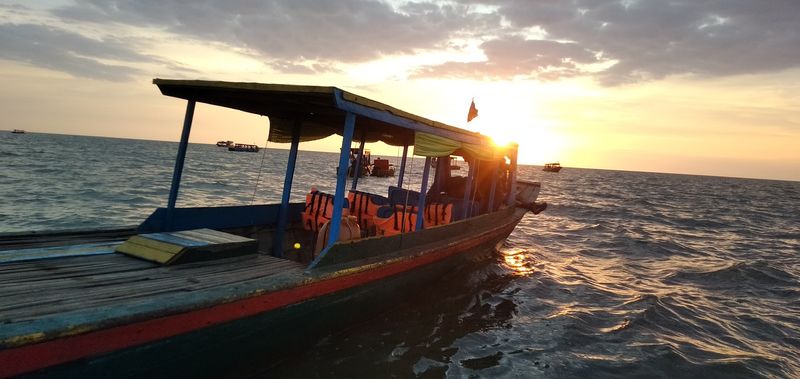
Golden light spills across the lake, and everything slows down. Sunset is the star show in Kampong Phluk, especially when you reach the open waters where the river meets Tonlé Sap.
The sky turns orange, pink, and a deep violet.
Boats become dark outlines against the glow. Fishermen head home, and birds cross the sky in lazy lines.
It is the kind of moment that makes people put their phones down, at least for a minute.
Plan ahead so you do not miss it. Tours that include sunset often leave in the afternoon, and the ride back happens in fading light.
Bring a light jacket, because the breeze can feel cool on the water.
Mosquitoes may appear after dusk, so pack repellent. Keep your camera steady by bracing your elbows on your knees.
Even a simple phone photo can look amazing when the sky does the heavy lifting. Linger a little before heading back.
Dry Season Surprise
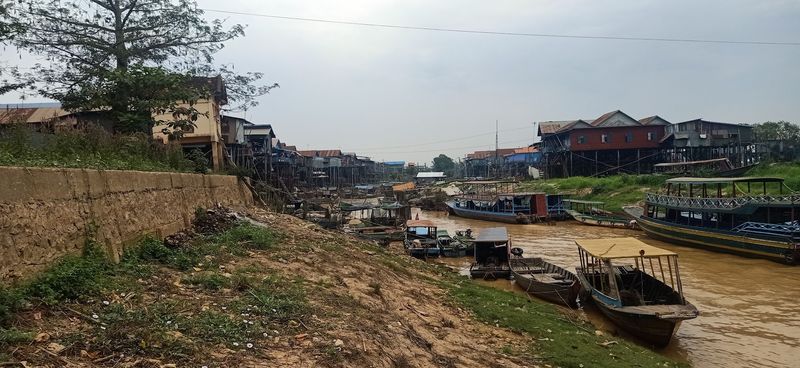
Visit in the dry months, and you may rub your eyes. The water has pulled back, and what looked like a floating village now stands on a muddy bank like a row of giants.
Stilts that seemed odd before suddenly make complete sense.
Boats rest on the mud, and the channel shrinks. Boat tours may run on a shorter route or from a different point, so ask your driver what is possible.
Walking and tuk-tuk rides become the main ways to explore.
This season brings its own charm. You can see the full height of each house, the carved ladders, and the tools tucked below.
Children play games in the open space, and dried fish gleam on racks.
Temperatures can be hot, so carry water and wear light clothes. Start early and rest in shade at midday.
Many travelers love how different the village looks, and some even prefer it for photos. Either season tells the story well.
Floating Shops and Crocodile Farms
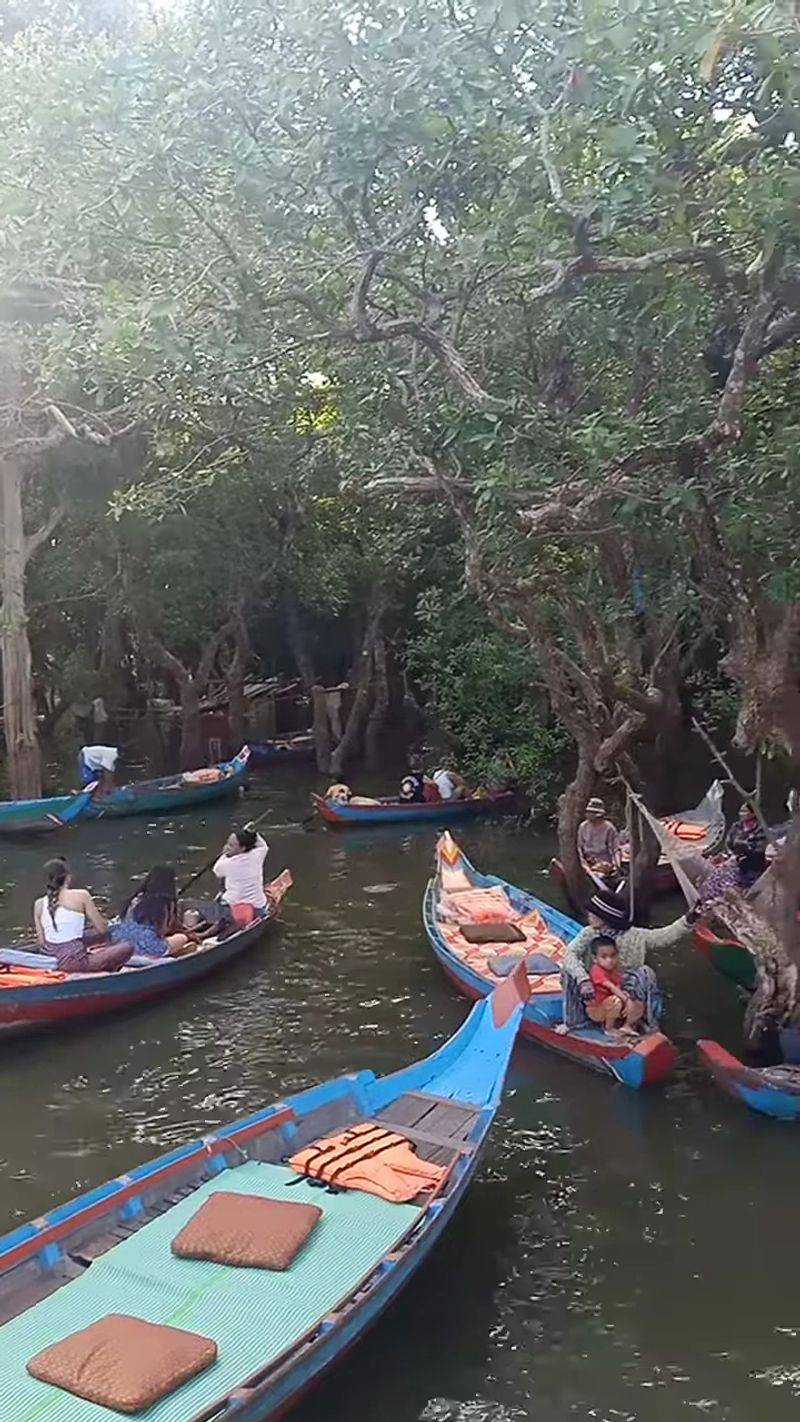
Shopping here can mean a boat pulling up beside yours. Small floating vendors sell snacks, drinks, and simple goods right on the water.
It is convenience, village style.
You may also notice crocodile pens in the area. Some families raise crocodiles for sale, and a few places let visitors peek.
Think carefully before joining, and ask about how animals are treated, since standards differ.
Buying a cold drink or a bag of fruit from a floating seller is a small way to add to local incomes. Carry small bills, since change can be tricky on a rocking boat.
Smiles and a little bargaining are normal, but keep it friendly.
Skip single-use plastic where you can. Carry a refillable bottle and take your trash back with you.
The lake is both a pantry and a playground for the villagers, and every bit of care helps keep it healthy for the families who live right on it.
Planning Your Visit
Good news: this village is an easy day trip from Siem Reap. The ride takes around 30 to 45 minutes by tuk-tuk or car, and many tours bundle transport and boat time together.
Booking through your hotel or a trusted guide keeps things simple.
Timing matters. Water is highest from roughly September to November, and the dry season runs through spring.
Both are worth seeing, but check the water level if boating through the forest is your main goal.
Pack sunscreen, a hat, a refillable bottle, and cash in small bills. Wear shoes with grip, since ladders and docks can be slippery.
A thin rain jacket is a smart extra.
Above all, travel with kindness. Ask before taking photos of people, keep voices low near homes, and choose tours that treat villagers fairly.
When you leave with good memories and a lighter footprint, everyone wins, from the tuk-tuk driver to the family waving from a high porch.
Share this story