There is a place in Idaho where the smell of old books, polished wood, and adventure hang in the air like a campfire story that never quite ends. It holds the rifles, the trophies, the photographs, and the handwritten words of a man who spent decades convincing millions of Americans that the outdoors was worth protecting, worth celebrating, and worth writing about with everything you had.
Most people have never heard of this spot before arriving, yet they leave having discovered one of the most quietly compelling destinations in the entire Pacific Northwest. The center honors a writer whose name appeared in millions of households every month for nearly forty years, a man whose opinions on cartridges sparked debates that still echo in hunting camps today.
What awaits inside is a carefully preserved world of expeditions, conservation ideals, and literary passion that feels surprisingly personal for a museum. Read on, because the full story is far richer than any single headline could capture.
Unveiling a Legend’s Home Base: Address, Setting, and First Impressions
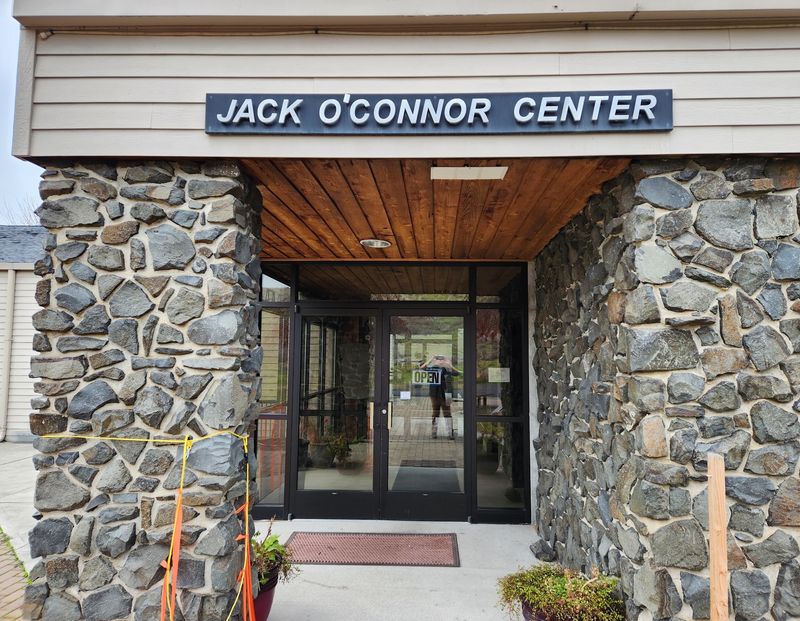
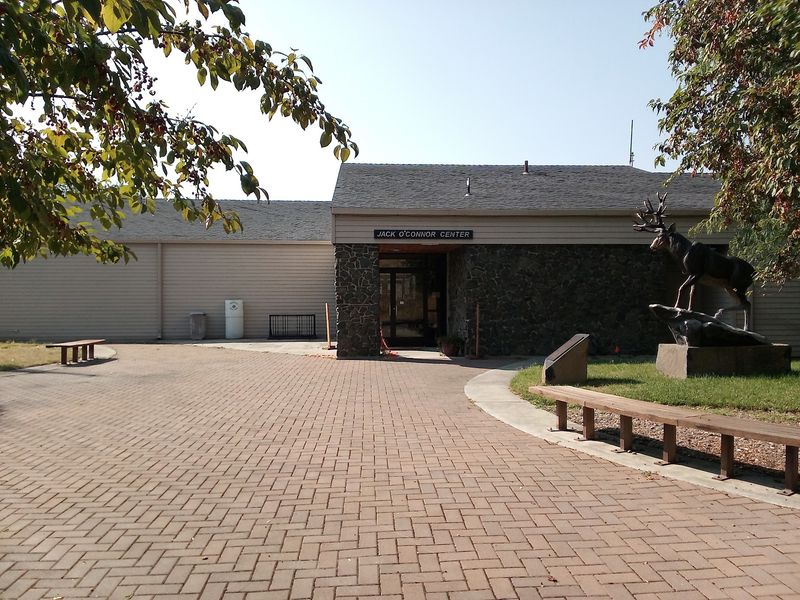
Few museums announce themselves quite so dramatically as this one does. The Jack O’Connor Hunting Heritage and Education Center sits at 5600 Hells Gate Road inside Hells Gate State Park in Lewiston, Idaho, perched on a hilltop that commands sweeping views of the Snake River far below.
The name “Hells Gate” sounds fierce, but the drive up is actually peaceful, with the landscape opening up around you as the valley stretches wide. Swallows Nest Rock stands as a natural landmark in the distance, adding a sense of grandeur to an already impressive arrival.
The building itself feels intentional rather than accidental, as though it was placed exactly where it needed to be to honor a man whose writing was always rooted in specific landscapes. The views from the entrance alone are worth the trip.
This is not a strip-mall museum tucked behind a parking lot; it is a destination that earns its setting every single day.
The Origin Story: How This Tribute Came to Life
Not every great idea makes it from a conversation to a building, but the people behind this center were determined. On June 3, 2006, the Jack O’Connor Hunting Heritage and Education Center officially opened its doors after years of planning, fundraising, and passionate advocacy by fans, hunters, and conservationists who refused to let O’Connor’s legacy fade quietly into history.
The founding vision was clear from the start: this would not be a dusty archive tucked away for specialists. The goal was a dynamic, welcoming space that could educate the public about hunting heritage while honoring a man widely regarded as the most influential outdoor writer America ever produced.
Building something like this from scratch requires the kind of stubborn optimism that O’Connor himself often celebrated in the hunters he wrote about. The result is a center that carries that same spirit in every exhibit, every photograph, and every carefully arranged display case.
The story of its creation is almost as compelling as the story it tells.
Who Was Jack O’Connor? The Man Behind the Myth
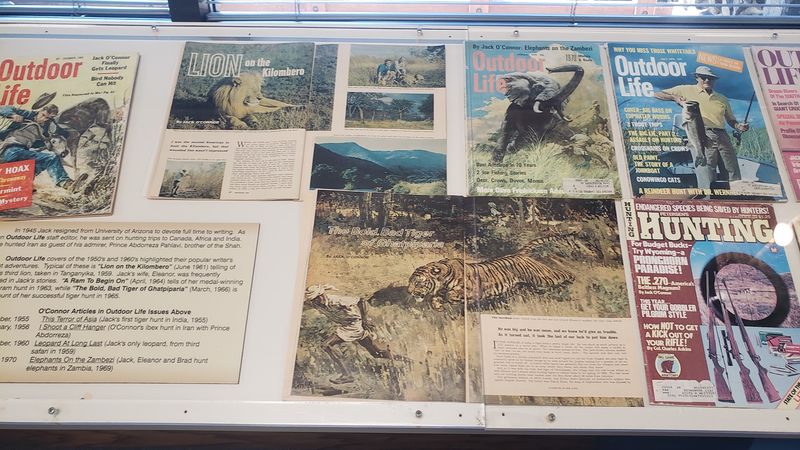
Jack O’Connor was not the kind of writer who stayed behind a desk and guessed at what hunting felt like. He lived it, season after season, on multiple continents, chasing bighorn sheep in the Rockies, pursuing lion in Africa, and writing about all of it with a clarity and confidence that made readers feel like they were right beside him.
For nearly four decades, he served as the firearms editor for Outdoor Life magazine, becoming the most trusted voice on guns, ammunition, and hunting technique for a readership that numbered in the millions. His opinions carried genuine weight, and his recommendations could shift the market for an entire cartridge almost overnight.
O’Connor was also a family man, a university-educated thinker, and a conservationist who understood that the wild places he loved needed protecting. He was born in 1902 and spent his final decades in Lewiston, Idaho, where the surrounding landscape gave him everything he needed to keep writing until nearly the very end.
Inside the Exhibits: A World Tour Mounted on the Walls
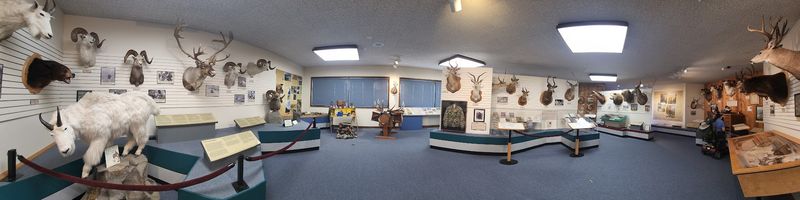
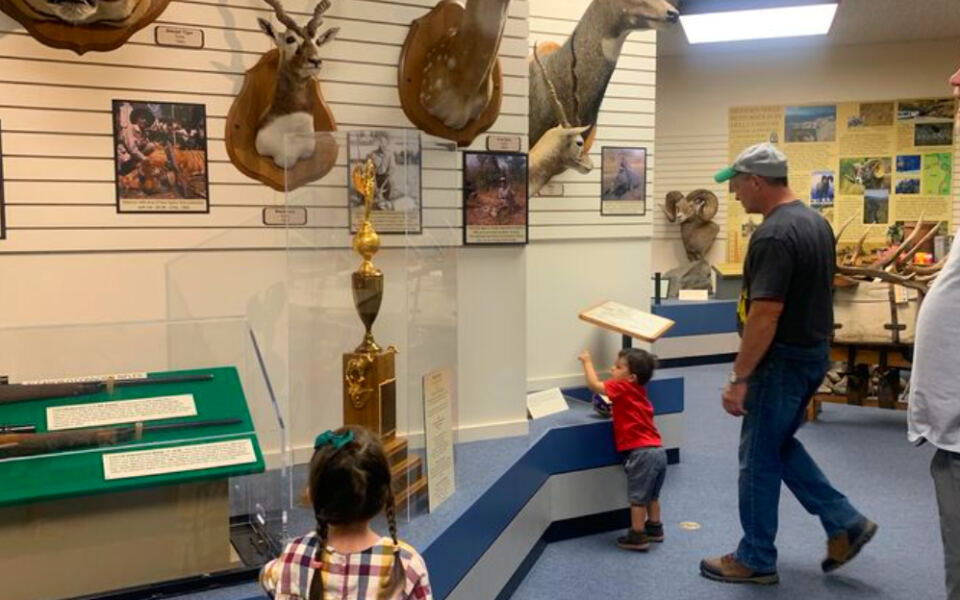
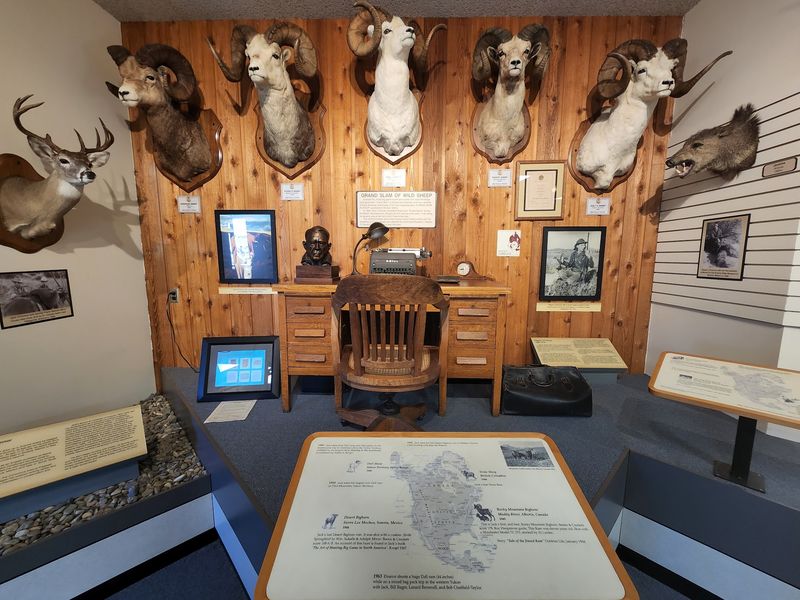
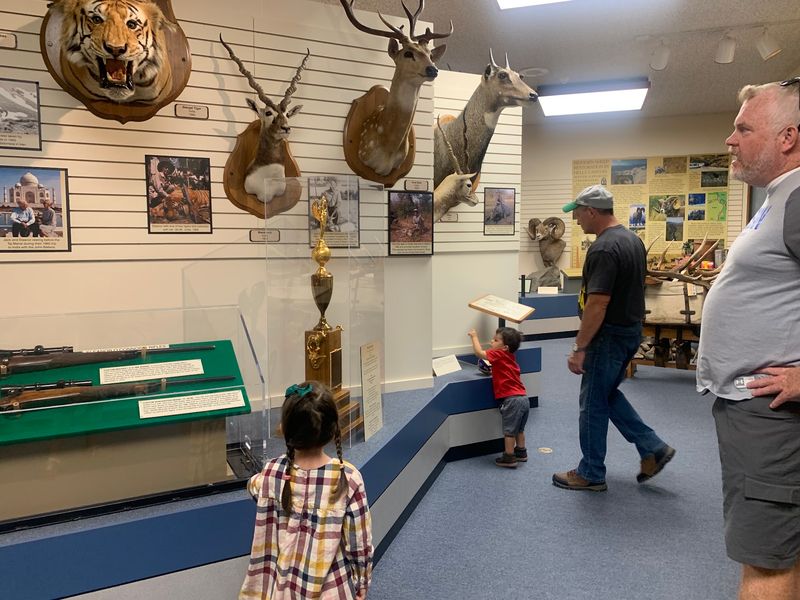
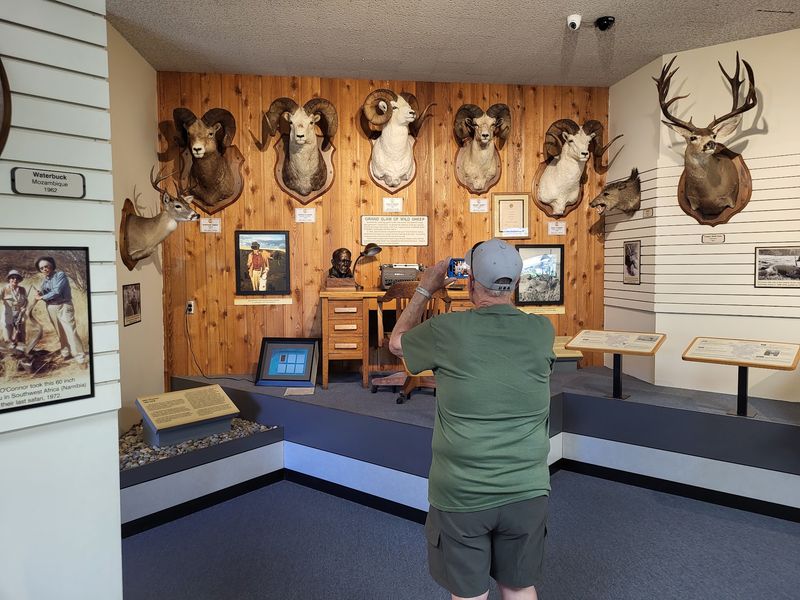
The moment you walk through the main exhibit area, the scale of O’Connor’s hunting career becomes undeniable. Sixty-five mounted heads of big game animals from around the globe line the walls and fill the display spaces, representing decades of expeditions to some of the most remote and challenging terrain on earth.
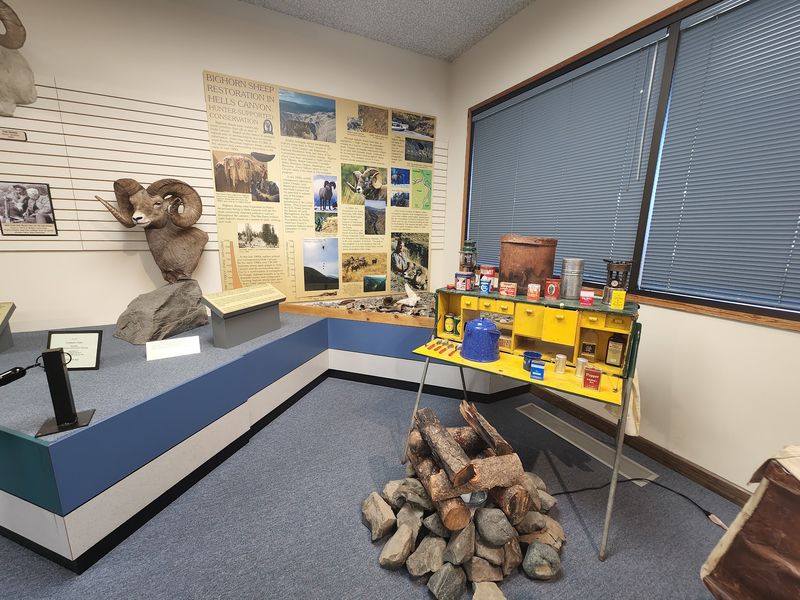
Bighorn sheep hold a place of particular honor here, reflecting O’Connor’s deep and well-documented obsession with high-country pursuits. But the collection also includes animals from Africa, Asia, and beyond, species that most visitors have never encountered outside of a nature documentary.
What keeps this from feeling overwhelming is the context provided alongside each mount. Photographs, captions, and personal notes connect each animal to a specific hunt, a specific place, and a specific moment in O’Connor’s life.
The exhibits transform what could have been a static display into something closer to a memoir written in taxidermy and text. Every corner of the room has something new demanding your attention.
The Famous Rifles: Firearms That Made History
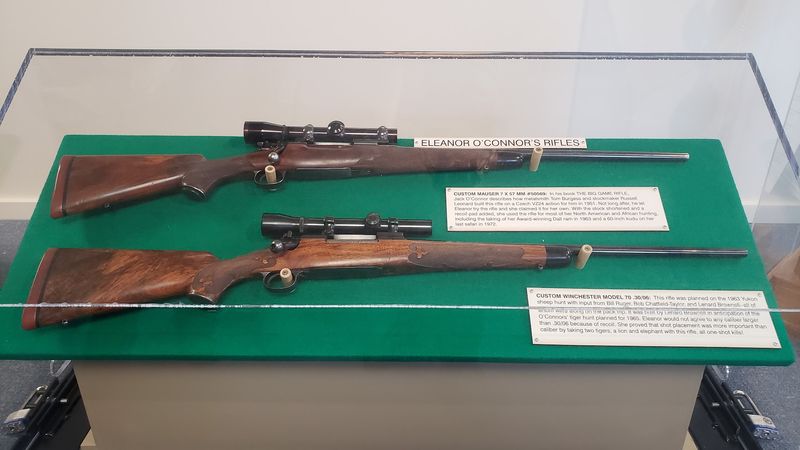
Gun enthusiasts who visit this center tend to linger longest in front of the firearms display, and it is not hard to understand why. Jack O’Connor’s Biesen-stocked Model 70 chambered in .270 Winchester is arguably the most famous hunting rifle in American literary history, referenced in so many articles and books that it achieved a kind of legendary status all on its own.
Right beside it rests Eleanor O’Connor’s 7×57 Mauser, a rifle that appeared in its own share of celebrated stories and became nearly as iconic as Jack’s preferred piece. Seeing both firearms together in the same case is a genuinely moving experience for anyone familiar with the writing that made them famous.
Additional firearms from O’Connor’s personal collection round out the display, offering a broader look at the tools he trusted across different hunts and conditions. These are not props or replicas; they are the actual rifles that accompanied one of history’s most celebrated hunters across decades of real expeditions on multiple continents.
The .270 Winchester and O’Connor’s Lasting Influence on Hunters
Few writers have ever shaped the practical habits of their readers the way Jack O’Connor shaped American hunters. His decades-long championship of the .270 Winchester cartridge transformed it from a capable but overlooked option into one of the most popular hunting rounds on the continent, a status it still holds today.
O’Connor wrote about the .270 with a combination of technical precision and genuine enthusiasm that was nearly impossible to resist. He explained ballistics in plain language, shared real field results, and backed every recommendation with personal experience gathered across a lifetime of actual hunting.
The influence extended well beyond cartridge selection. O’Connor taught generations of readers how to care for their firearms, how to practice marksmanship responsibly, and how to approach hunting with both skill and ethical awareness.
The center captures this legacy beautifully, presenting him not just as a celebrity writer but as a genuinely knowledgeable teacher whose lessons remain relevant long after his time. His words still echo in hunting camps across North America.
Conservation at the Core: More Than Just a Hunter
There is a version of Jack O’Connor’s story that focuses only on the trophies and the rifles, but that version misses the most important part. O’Connor was a committed conservationist who understood, sometimes decades before it became fashionable to say so, that hunters had a responsibility to protect the wild places and animal populations they depended on.
His opposition to dam construction on rivers that supported elk winter ranges and wild salmon runs was not a casual position; it was a principled stand that put him at odds with powerful interests. He used his platform at Outdoor Life to advocate for science-based wildlife management and responsible stewardship of natural resources.
The center honors this dimension of his character fully, weaving conservation themes throughout its exhibits and educational programming. Visitors who arrive expecting only a celebration of hunting trophies often leave with a much more nuanced understanding of O’Connor’s values.
His belief that hunters must also be protectors remains one of the most enduring and relevant ideas this museum puts forward.
The Trail of Discovery: Learning Continues Outdoors
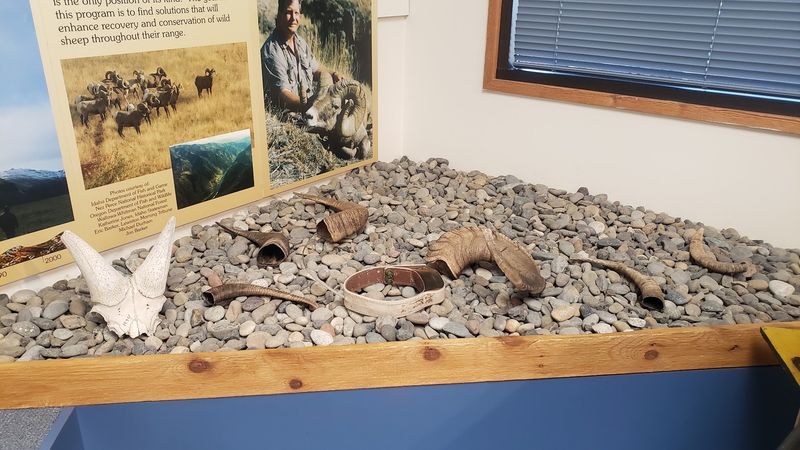
One of the most delightful surprises at this destination is that the experience does not stop at the front door. A quarter-mile interpretive Trail of Discovery connects the O’Connor Center directly to the Hells Gate State Park Discovery Center, creating an outdoor classroom that extends the learning into the surrounding landscape.
The trail winds through diverse animal habitats and past interesting geological features, offering visitors a hands-on way to connect with the natural world that O’Connor wrote about so passionately throughout his career. It is an easy walk that feels genuinely rewarding rather than obligatory.
Children especially respond well to this transition from indoor exhibits to outdoor exploration, discovering that the stories of wildlife and wilderness are not confined to display cases. The trail reinforces the center’s broader educational mission in a way that no indoor exhibit can fully replicate.
Fresh air, open views, and the sounds of the Snake River valley make this short walk one of the most memorable parts of the entire visit.
O’Connor’s Lewiston Years: Why Idaho Became Home
Jack O’Connor arrived in Lewiston, Idaho in 1948 and never really left. The city offered him a combination of qualities that felt almost perfectly tailored to his lifestyle: small-town warmth, immediate access to outstanding big-game hunting and upland bird shooting, and a commercial airport that made international expeditions logistically manageable.
He became genuinely embedded in the community, not just as a famous name passing through but as a neighbor and civic participant. His role as secretary of the Lewis-Clark Wildlife Club demonstrated a hands-on commitment to local conservation issues that went well beyond what his magazine column required of him.
Lewiston shaped O’Connor’s later writing in subtle but meaningful ways, grounding his global adventures in a specific place with specific loyalties. The center honors this local connection thoughtfully, presenting him as a man of the Lewis-Clark Valley as much as a citizen of the wider hunting world.
He remained in Lewiston until his passing in 1978, and the landscape he loved still surrounds the museum that carries his name.
The Bronze Mule Deer: A Striking Welcome at the Entrance
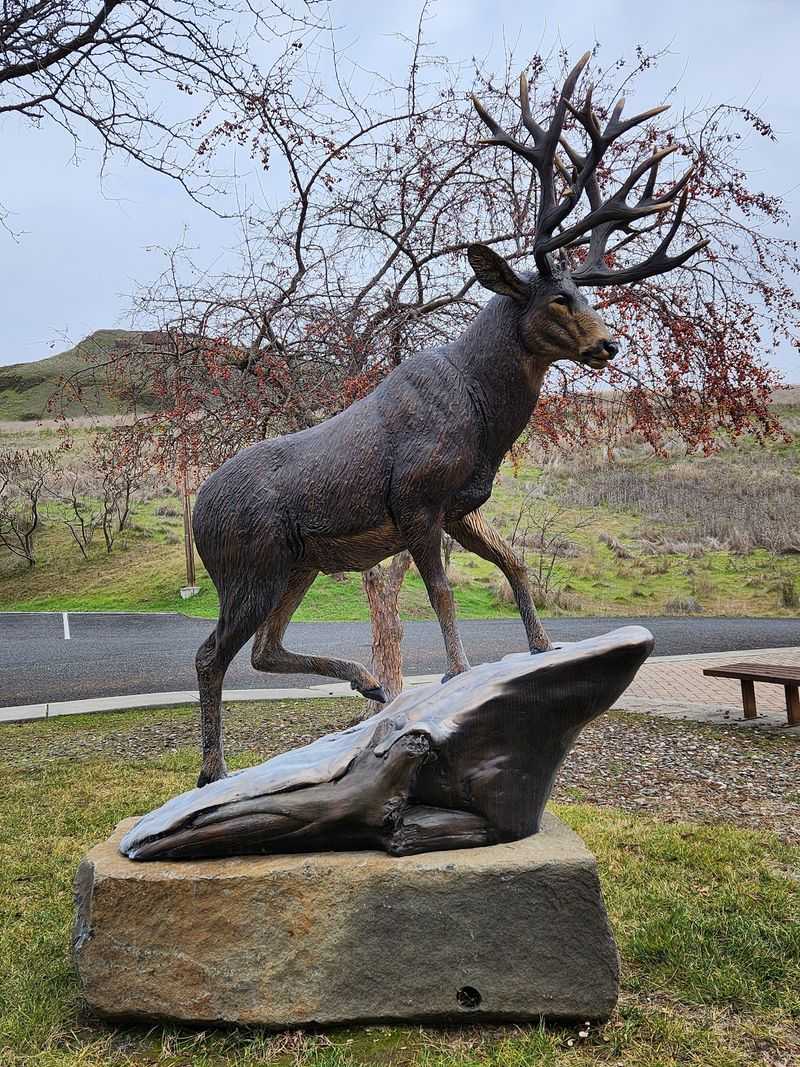
Before a single exhibit greets you inside, the entrance to the center offers something genuinely spectacular. A 1.25 life-size bronze mule deer sculpture by world-renowned wildlife artist Rick Taylor was unveiled in June 2022, and it now stands as the first thing visitors encounter on arrival.
Taylor grew up reading O’Connor’s articles and books, and that personal connection to the subject gives the sculpture an emotional resonance that goes beyond technical craftsmanship. The deer is rendered with impressive anatomical detail, its posture alert and lifelike against the backdrop of the Idaho sky.
Taylor’s work is held in museums and private collections around the world, making this piece a significant artistic addition to the center rather than simply a decorative touch. Standing beside the sculpture before heading inside, you get a clear sense of the reverence that surrounds O’Connor’s legacy.
The mule deer is a fitting symbol, representing the wildlife that O’Connor championed both as a hunter and as a conservationist throughout his remarkable career.
Practical Tips for Planning Your Visit
Getting the most out of a visit here starts with knowing a few practical details before you go. The center is open Wednesday through Friday from 10:00 AM to 4:00 PM, and on Tuesday, Saturday, and Sunday from 1:00 PM to 4:00 PM.
Monday is a closed day, so arriving on the wrong morning means a missed opportunity.
Admission to the center itself is free, though entering Hells Gate State Park requires a park pass, which runs roughly twelve to fifteen dollars depending on current rates. That park fee buys you access to the broader state park as well, making it a reasonable investment for a full afternoon of exploration.
The staff, many of whom are knowledgeable volunteers, are genuinely enthusiastic and happy to share stories about O’Connor and the collection. Calling ahead to arrange a guided tour adds real depth to the experience.
A camera is worth bringing, especially for the outdoor views and the bronze sculpture at the entrance. The center can be reached at 1-833-433-0927 or through its website at jack-oconnor.org for the latest event and program information.
Share this story