There is a place in southwestern New Hampshire where a family’s century-old devotion to the land quietly shaped one of the region’s most beloved natural retreats. The trails here wind through forests that were once sheep pastures, past cabin foundations, a writer’s personal hideaway, and a road that was first mapped out in 1763.
What makes this spot truly remarkable is that it feels like a secret, even though it sits just minutes from a small city’s center. Hikers who know about it rave about the panoramic views of Keene below, the well-marked paths that feel almost impossible to get lost on, and the strange, satisfying quiet of walking through land that has been intentionally protected for decades.
Ghost pipe flowers grow in the shade of the trees, pileated woodpeckers hammer away at the bark overhead, and mushroom foragers find rare specimens tucked beneath the leaf litter. Keep reading, and you will discover everything you need to plan your own visit to this remarkable New Hampshire preserve.
Finding the Preserve: Address, Location, and First Impressions
The moment you turn onto Daniels Hill Road in Keene, New Hampshire, something shifts. The noise of the city fades, and a canopy of trees closes in around you in the best possible way.
Horatio Colony Nature Preserve sits at 199 Main Street and Daniels Hill Road, Keene, NH 03431, spanning both Keene and the neighboring town of Swanzey across 645 acres of protected upland forest and wetland.
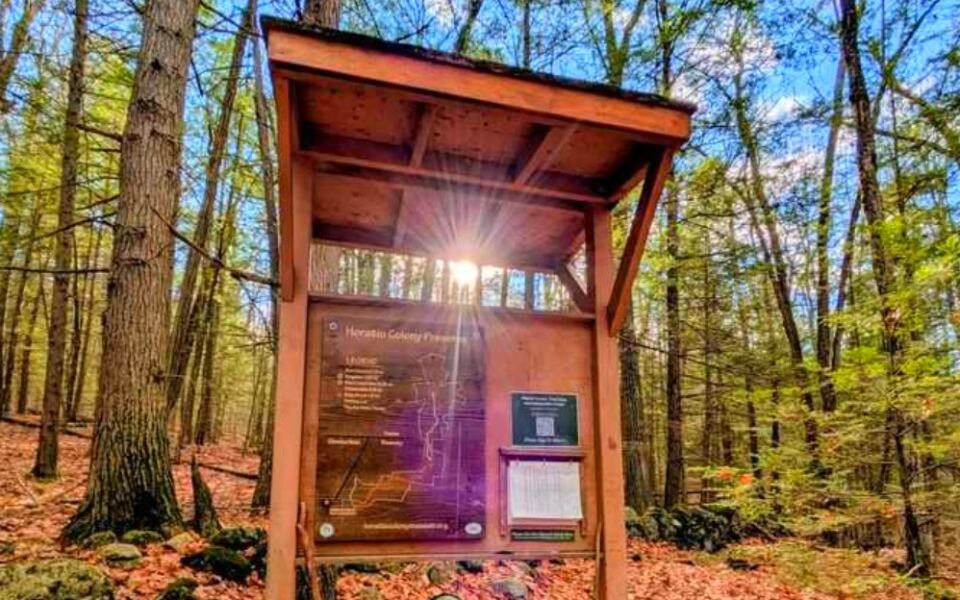
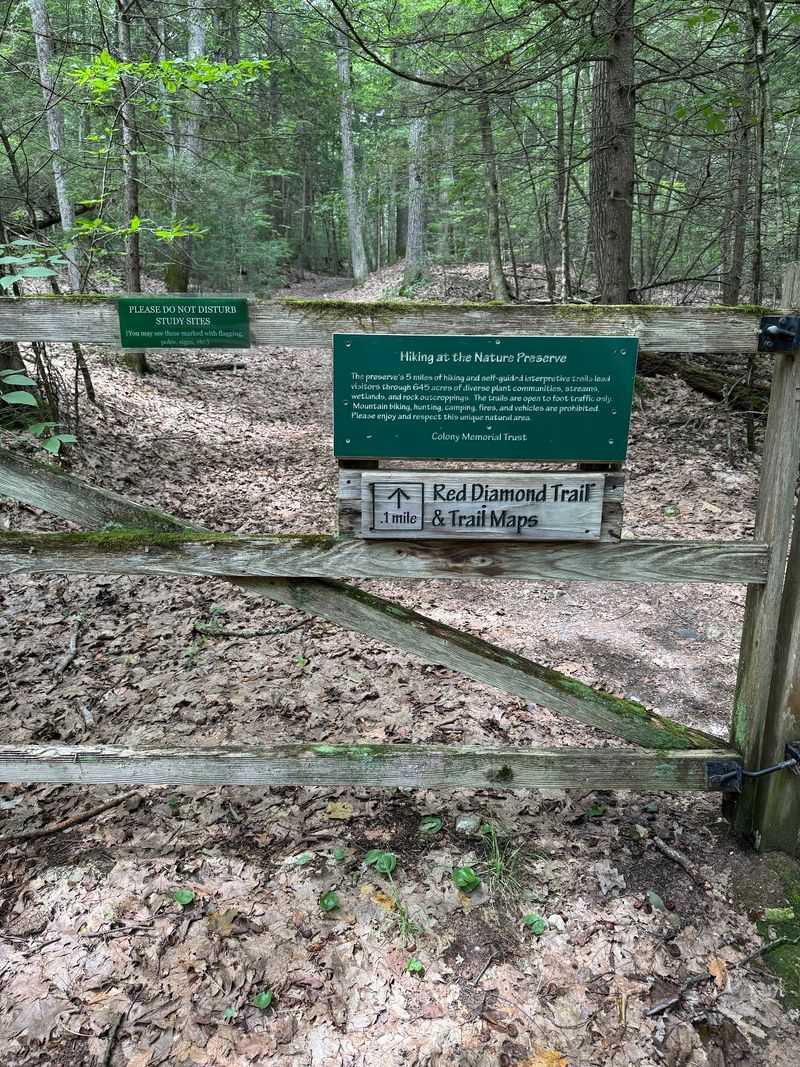
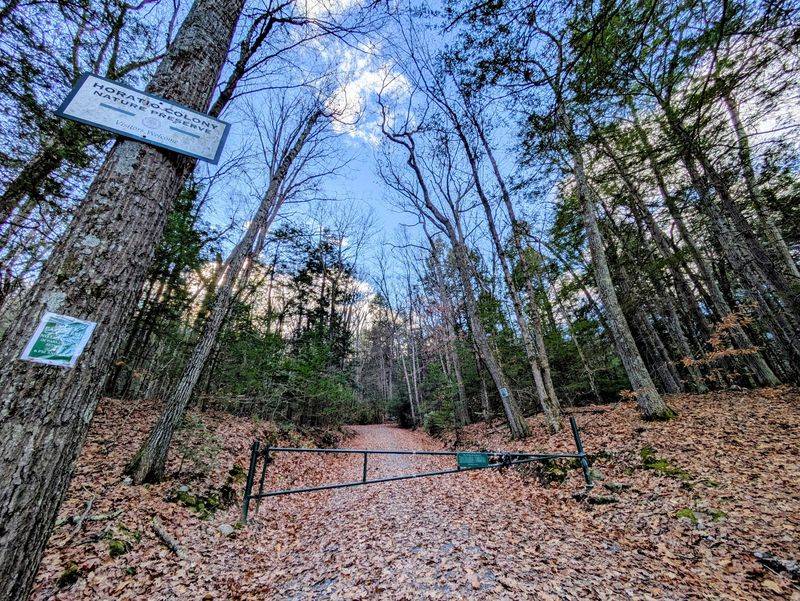
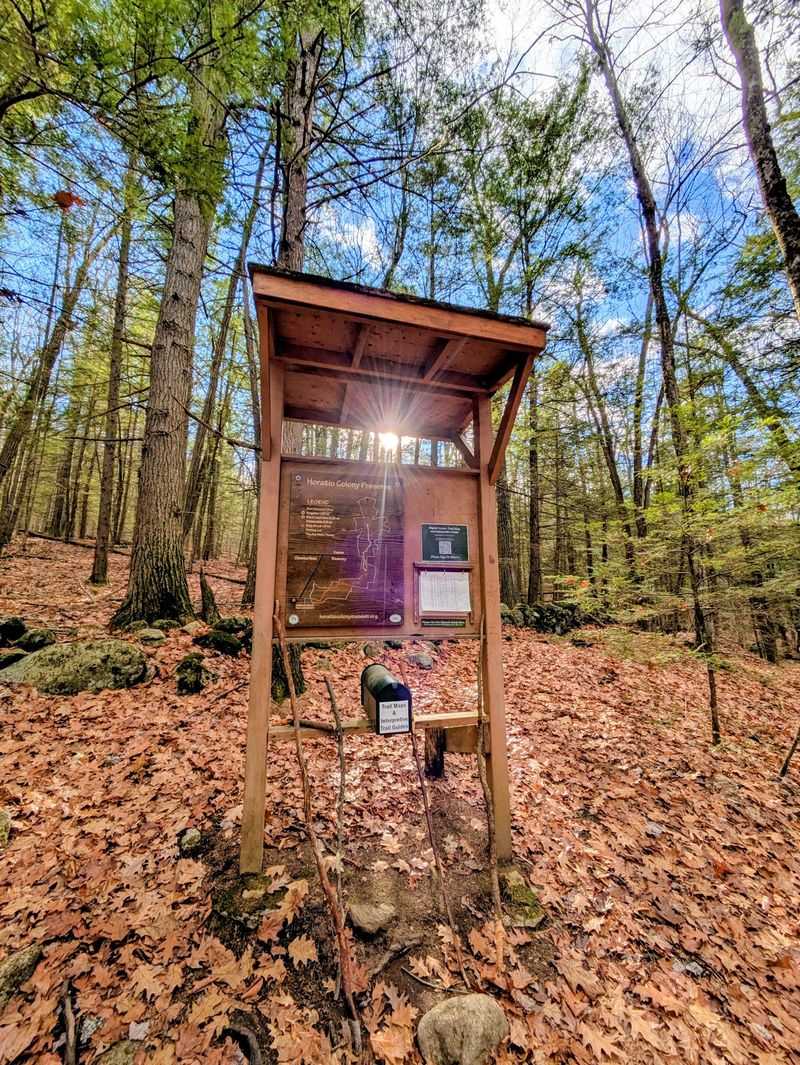
Parking is free but limited to roughly four to six cars near the main entrance, so arriving early is genuinely good advice rather than just a polite suggestion. A kiosk near the Red Diamond Trailhead usually holds trail maps and interpretive guides, which are worth grabbing before you set off.
The preserve is open daily from dawn to dusk, and admission costs nothing at all. That combination of accessibility and natural richness makes this one of the most rewarding free outdoor experiences in the Monadnock Region.
The Colony Family’s Lasting Mark on This Land
In 1892, Horatio Colony I, a prominent Keene mill owner, purchased the 132-acre Japhet Parker farm atop West Hill. What had once been an open sheep pasture slowly became something far more intentional, as Colony I added parcel after parcel between 1892 and 1925, assembling the core of what visitors explore today.
His grandson, Horatio Colony II, inherited the property and carried the family’s ecological philosophy even further. He allowed the forest to regenerate on its own terms, a quiet act of restraint that speaks volumes about his understanding of how nature works.
He formally designated the land as a wildlife sanctuary and a space for nature study and research.
In 1977, his will permanently set aside the acreage as a wildlife refuge, ensuring no future owner could undo the family’s conservation legacy. The Colony name is woven into every trail, every interpretive marker, and every view of Keene visible from the ridge above.
Five Miles of Trails That Reward Every Type of Hiker
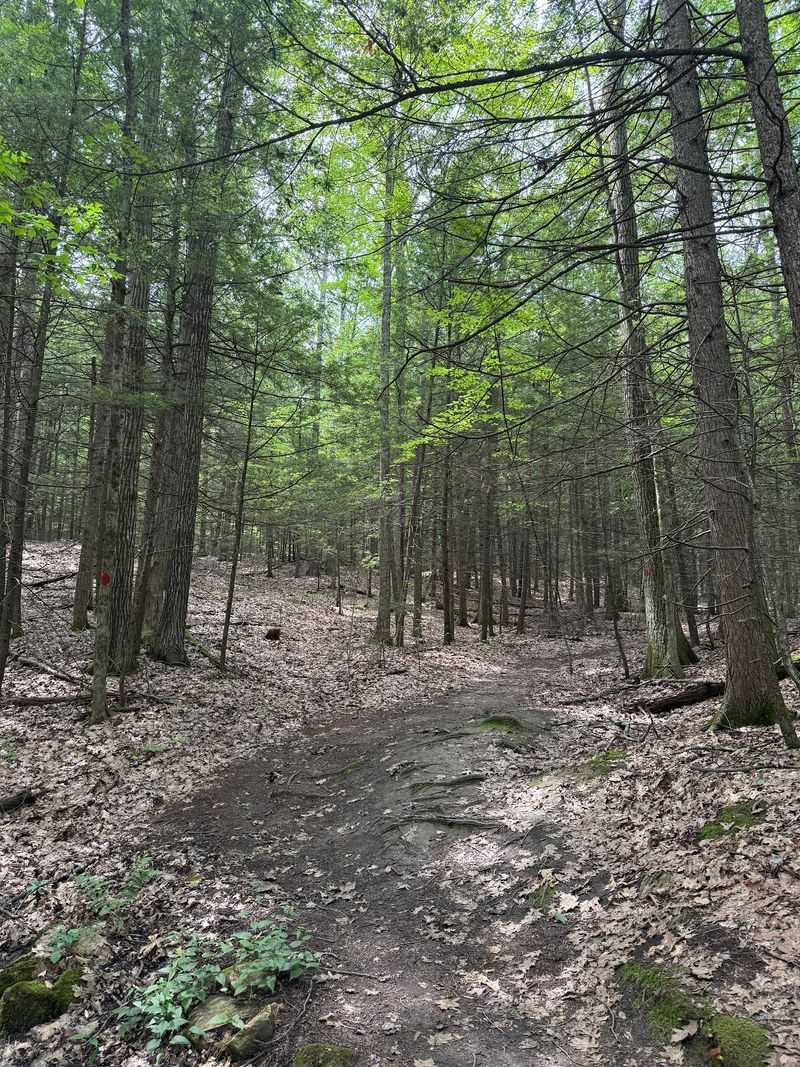
Over five miles of well-maintained trails wind through the preserve, and the range of options is genuinely satisfying whether you have an hour or an entire afternoon. The Red Diamond Trail is the most popular choice, a 1.7-mile moderate loop that climbs steadily before opening up to a panoramic lookout point with sweeping views of Keene and the surrounding hills.
For hikers who want something more substantial, the Ridgeline Trail connects to the Bailey Brook Trail and the Black Lead Mine Trail, forming a 7.5-mile out-and-back route that moves through dramatically varied terrain. The trails are blazed with red diamond-shaped markers on trees, and numbered wooden posts correspond to a printed guidebook available at the trailhead kiosk.
Even on a busy weekend, the paths feel uncrowded and quiet. The trail system also connects to Pisgah State Park, which means ambitious hikers can extend their journey all the way toward the Connecticut River near Brattleboro, Vermont.
The Writer’s Cabin and the Ruins That Tell Old Stories
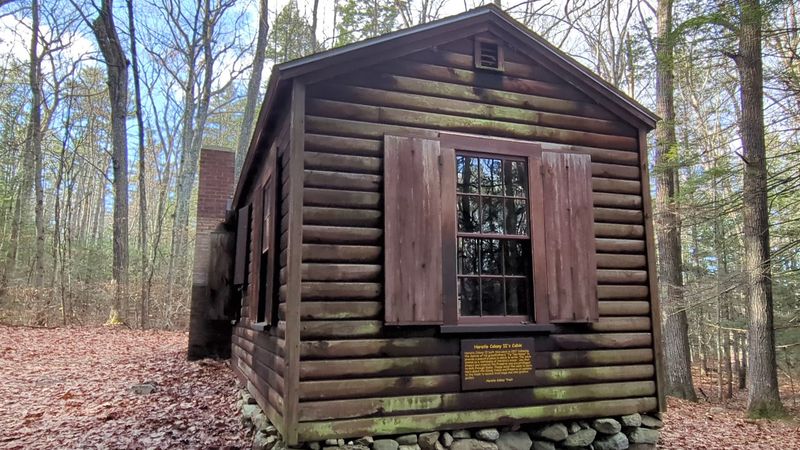
Tucked into the woods along one of the preserve’s quieter sections is a cabin built in 1937 by Horatio Colony II himself. He used it as a private writing retreat, a place to think, create, and simply be alone with the forest.
The structure still stands in a weathered, rustic state, and passing by it feels oddly personal, like stumbling across someone’s diary left open on a table.
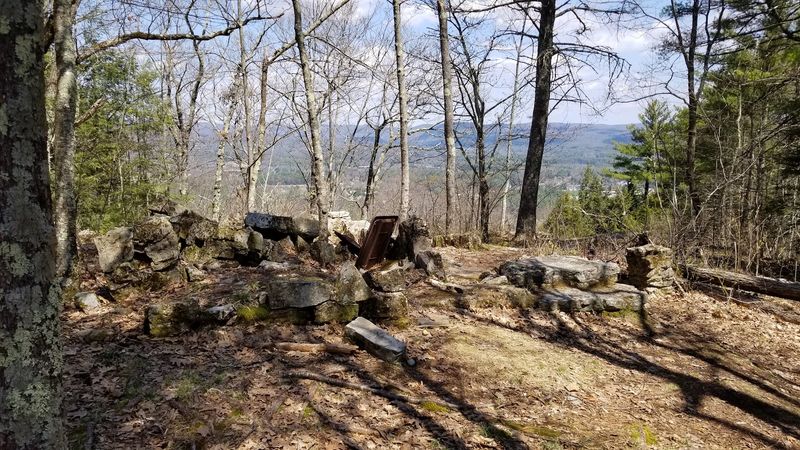
Elsewhere on the preserve, stone foundations mark the site of the “Tip-Top House,” the Colony family’s summer cabin on the north slope. Only the outline of the structure remains, along with a few cast-iron relics, but the location offers one of the best vantage points for looking out over Keene below.
These ruins are not roped off or explained with flashy signage. Instead, they sit quietly in the landscape, letting hikers form their own conclusions about the lives once lived here.
The interpretive guidebook fills in the historical details beautifully if you have it in hand.
The 1763 Road Hidden Inside a Modern Forest
One of the most quietly fascinating features of the preserve is a road that predates the American Revolution. Originally laid out in 1763, the old Daniels Hill Road once served as a genuine transportation corridor through this part of New Hampshire, carrying early settlers and their wagons across the hill.
Today, that same road has shrunk to a narrow, sometimes steep footpath that gradually disappears into the forest canopy. The transition from colonial thoroughfare to hiking trail is a slow-motion story of nature reclaiming what was once human infrastructure, and walking it gives you a distinct sense of time layered beneath your feet.
Certain sections of this old road climb sharply enough to get your heart rate up in a hurry. The contrast between its humble present state and its once-functional past makes it one of the more thought-provoking stretches of trail on the entire preserve.
It is a small detail that rewards curious hikers who pay attention to the landscape around them.
Wildlife and Native Plants Around Every Bend
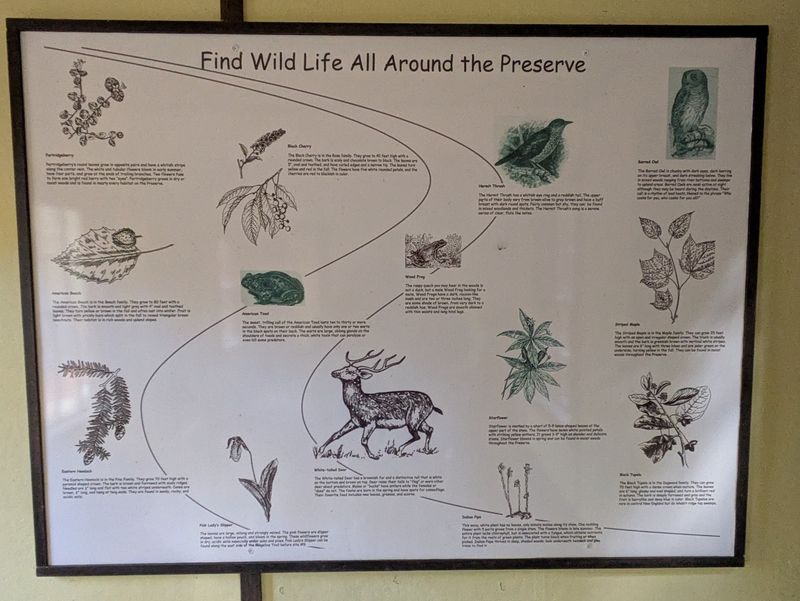
The preserve’s mix of upland forest and wetland habitat creates ideal conditions for an impressive range of wildlife and native plant species. Spring is the season that rewards the most patient observers, with bloodroot, trout lilies, Dutchman’s breeches, squirrel corn, and trillium carpeting the forest floor before the canopy fills in overhead.
Birdwatchers consistently find the preserve rewarding across multiple seasons. The characteristic rectangular excavations left behind by pileated woodpeckers appear on many of the larger trees, and migratory songbirds pass through in notable numbers during spring and fall.
Deer, rabbits, and various smaller mammals inhabit the quieter corners of the property.
For foragers and fungus enthusiasts, the fallen logs and shaded understory produce oyster mushrooms, wolf’s milk slime mold, and other fascinating specimens throughout the warmer months. Ghost pipe flowers, those pale and almost otherworldly plants that contain no chlorophyll, also grow in the shadiest sections of the woods, surprising hikers who spot them for the first time.
When to Visit and What Each Season Offers
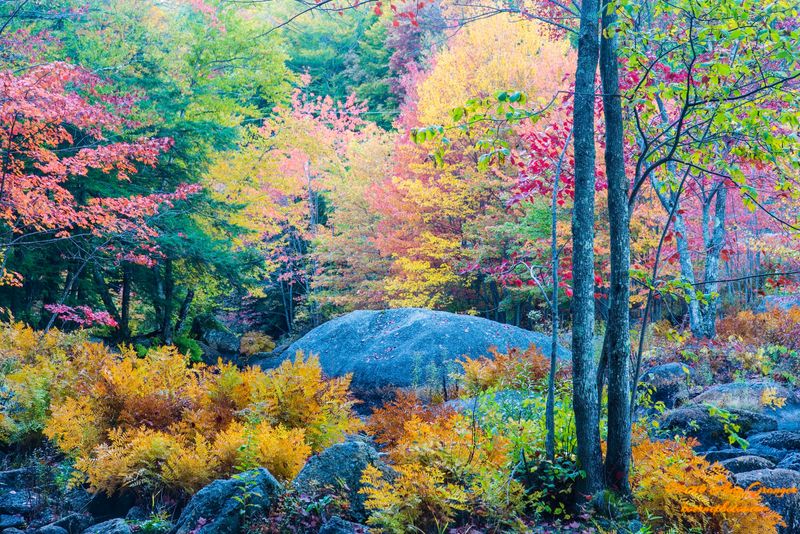
Every season at the preserve has a distinct personality, and choosing the right time to visit depends entirely on what kind of experience you are after. Spring, roughly late March through early May, brings the best wildflower displays and excellent birdwatching, along with fewer insects than you will encounter later in the year.
Summer is lush and green, but bug spray becomes a genuine necessity rather than an optional accessory. The trails are shadier and cooler under a full canopy, which makes midday hikes more comfortable than they might otherwise be.
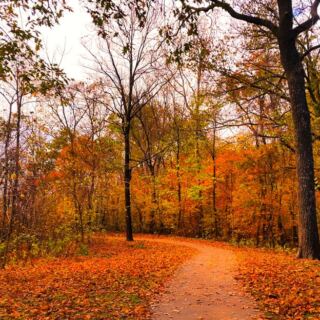
Autumn is the season that draws the most visitors, and understandably so, because the hardwood foliage turns the hillsides into something that looks almost painted.
One practical note for fall hikers: fallen leaves can hide roots, rocks, and uneven ground, particularly on the descent from the summit area. Trekking poles help considerably on the steeper sections.
Winter visits are possible for those with proper footwear and traction devices, since the icy trails can be slippery but also strikingly beautiful in the right light.
The Views From the Summit That Make the Climb Worth It
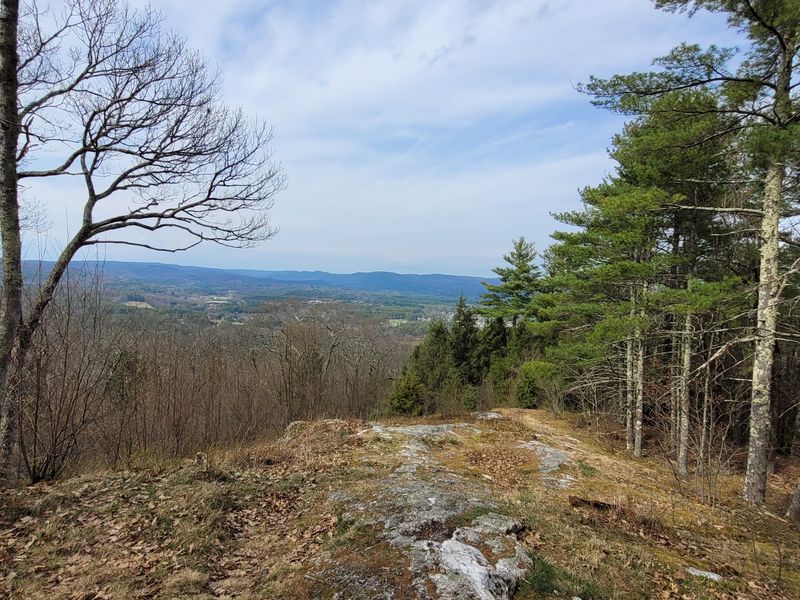
The climb to the lookout point along the Red Diamond Trail earns its reputation for a reason. Once you reach the observation area at the top, the view opens up across Keene below, with the city’s rooftops and church steeples visible through a wide clearing, and the rolling hills of the Monadnock Region stretching out beyond them.
On clear days, Mount Monadnock rises unmistakably to the east, its bare rocky summit recognizable even from a distance. The summit area of the preserve is also the site of the old Tip-Top House foundations, which adds a historical dimension to what might otherwise be a straightforward scenic overlook.
Catching a sunrise from this vantage point is a genuinely special experience, with the early light catching the treetops and the city below just beginning to stir. A few hikers make a habit of arriving before dawn specifically for this reason.
The view is quiet, wide, and entirely free of any admission charge or reservation requirement.
Antioch University and the Educational Mission Behind the Preserve
Since 1987, Antioch University New England has partnered with the Colony Memorial Trust to maintain the preserve and guide its educational mission. Graduate students and faculty conduct ongoing research into the property’s biodiversity, studying birds, fungi, amphibians, herpetology, and plant communities in a setting that functions as a genuine outdoor classroom.
Public programs run throughout the year and include guided hikes, vernal pool explorations, and mushroom identification walks. These events are designed for a broad audience, from elementary school children experiencing the forest for the first time to adults with a serious interest in natural science.
The numbered interpretive signposts along the trails correspond to a printed guidebook that transforms a solo hike into a self-guided educational experience.
This combination of academic rigor and public accessibility is rare and worth appreciating. The preserve is not simply a pretty place to walk; it is an active research site where real scientific work happens regularly.
That dual identity gives every visit an extra layer of meaning that most nature areas simply cannot offer.
Practical Tips for a Safe and Respectful Visit
A few practical details can make the difference between a smooth outing and an avoidable headache. There are no restrooms anywhere on the preserve, and there are no trash receptacles either, so carrying a small bag for your waste and planning a bathroom stop before you arrive are both sensible moves.
The trails close at dusk, and camping, fires, hunting, and mountain biking are all prohibited.
Footwear matters more here than it might at a paved park. The terrain includes roots, rocks, muddy patches, and potentially icy sections in colder months, so sturdy hiking boots are a practical necessity rather than an optional upgrade.
Dogs are welcome but must remain on a leash at all times, and their waste must be carried out.
Parking is free but tight, with space for roughly four to six vehicles near the main trailhead. Groups should call ahead at 603-352-0460 to confirm access to the upper parking area, since the gate is sometimes locked.
Arriving early on weekends almost always secures a spot without any stress.
Share this story