Market squares have been the heart of towns and cities for centuries, serving as places to shop, gather, and celebrate local traditions. Many still host bustling markets today, surrounded by historic architecture, charming cafés, and streets that have welcomed generations of visitors.
These 14 market squares continue to thrive, offering a mix of history, culture, and everyday life. Whether you’re interested in local food, historic landmarks, or simply soaking up the atmosphere, each is a destination well worth exploring.
1. Grand Place, Brussels, Belgium
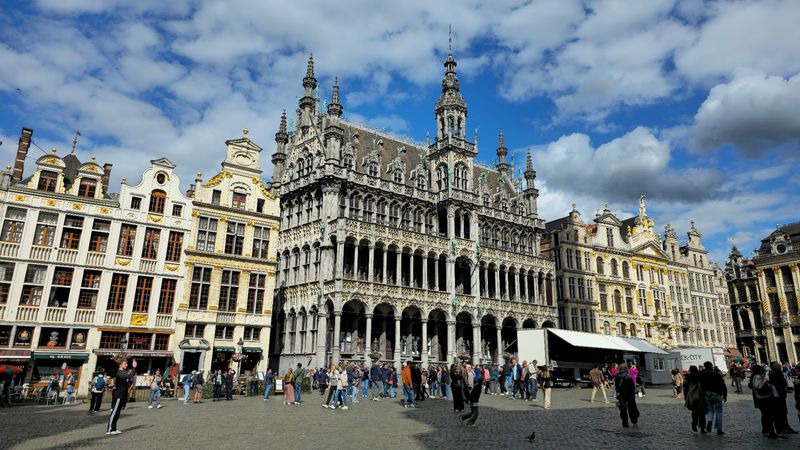
Few squares in Europe can match the sheer theatrical grandeur of Brussels’ Grand Place, a UNESCO World Heritage Site that has been the city’s beating commercial heart since the 11th century.
French troops bombarded much of it in 1695, but the city’s guilds rebuilt everything bigger and more ornate than before, producing the Baroque masterpiece visitors find today. The Gothic Town Hall, completed between 1401 and 1455, anchors one side with a 96-meter tower topped by a figure of Saint Michael.
Every two years in August, the entire square is carpeted with nearly a million begonias arranged into elaborate patterns, a tradition running since 1971. Weekly markets, seasonal festivals, and the beloved winter Christmas market keep Grand Place in a near-constant state of activity that would have felt familiar to its medieval merchants.
2. Rynek Główny, Kraków, Poland
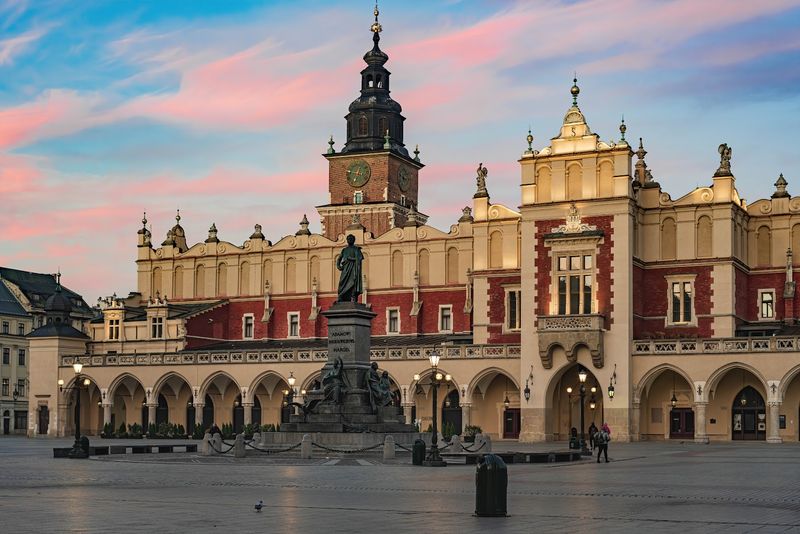
Covering more than 40,000 square meters, Kraków’s Rynek Główny is one of the largest medieval town squares ever laid out in Europe, and it has been drawing traders and visitors since 1257.
The Cloth Hall, known locally as Sukiennice, started as two rows of stone stalls in the 13th century and was rebuilt in Renaissance style after a fire in 1555. Today its arcaded interior still sells local crafts, amber jewelry, and regional souvenirs, continuing a commercial tradition that has outlasted empires.
St. Mary’s Basilica stands watch over the square with its mismatched towers, and the surviving Town Hall Tower leans slightly but proudly. Horse-drawn carriages, flower vendors, street performers, and open-air cafés fill the plaza daily, making it one of Central Europe’s most reliably lively public spaces year-round.
3. Piazza del Campo, Siena, Tuscany, Italy
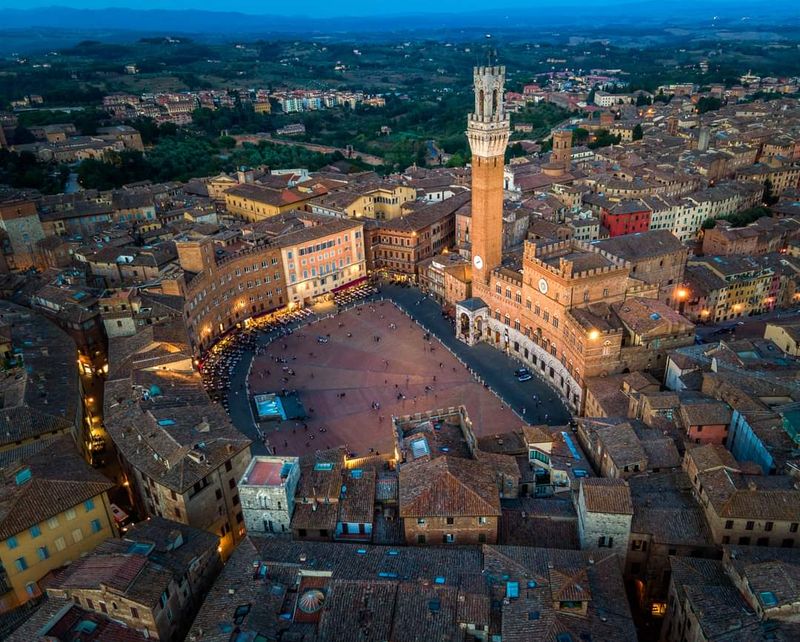
The shell shape of Siena’s Piazza del Campo was not an accident. The square’s nine distinctive travertine sections were deliberately designed to honor the Government of the Nine, the city’s ruling council from 1287 to 1355, turning the entire plaza into a monument to civic power.
Markets and public celebrations filled this space long before the Palazzo Pubblico was completed, and the tradition has never really stopped. The Torre del Mangia, finished in 1348 and rising 102 meters, remains one of Italy’s tallest civic towers and still draws climbers eager for panoramic views.
The Palio horse race, run twice a year on July 2 and August 16, brings the square to its most dramatic intensity, but even on quieter days, the cafés lining the perimeter are packed with people who clearly understand why this UNESCO-listed plaza has been a gathering place for over seven centuries.
4. Plaza Mayor, Salamanca, Castile and León, Spain
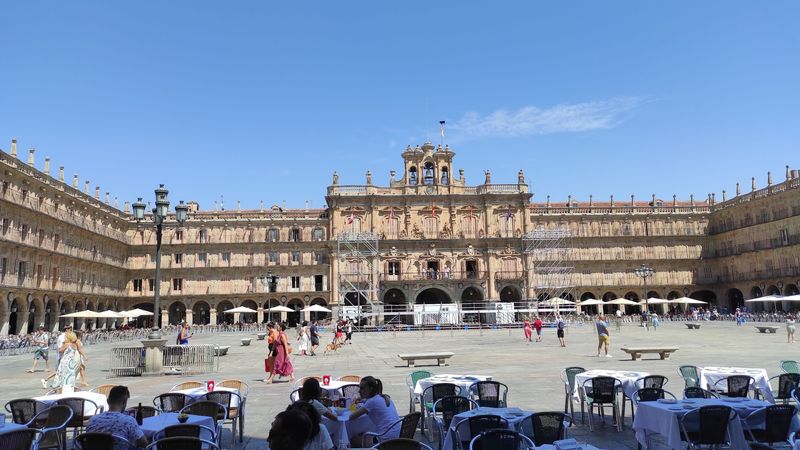
Built from Villamayor sandstone that glows warm gold in afternoon light, Salamanca’s Plaza Mayor is widely regarded as one of Spain’s most beautiful public squares, a title it has held since its completion in 1755.
Construction began in 1729 under architect Alberto de Churriguera, and the resulting quadrilateral, enclosed by 88 semicircular arches and three stories of 247 private balconies, has an irregular shape that adds unexpected charm to its grandeur. Medallion portraits of Spanish monarchs and literary figures including Cervantes and Lope de Vega are carved into the spandrels above the arches, turning the arcade into an open-air gallery of national history.
The square served as a bullfighting arena until the mid-19th century and has been a UNESCO World Heritage Site and National Monument since 1935. Today its cafés, shops, and cultural events keep it functioning as Salamanca’s social center, just as it was always intended.
5. Hauptmarkt, Nuremberg, Bavaria, Germany
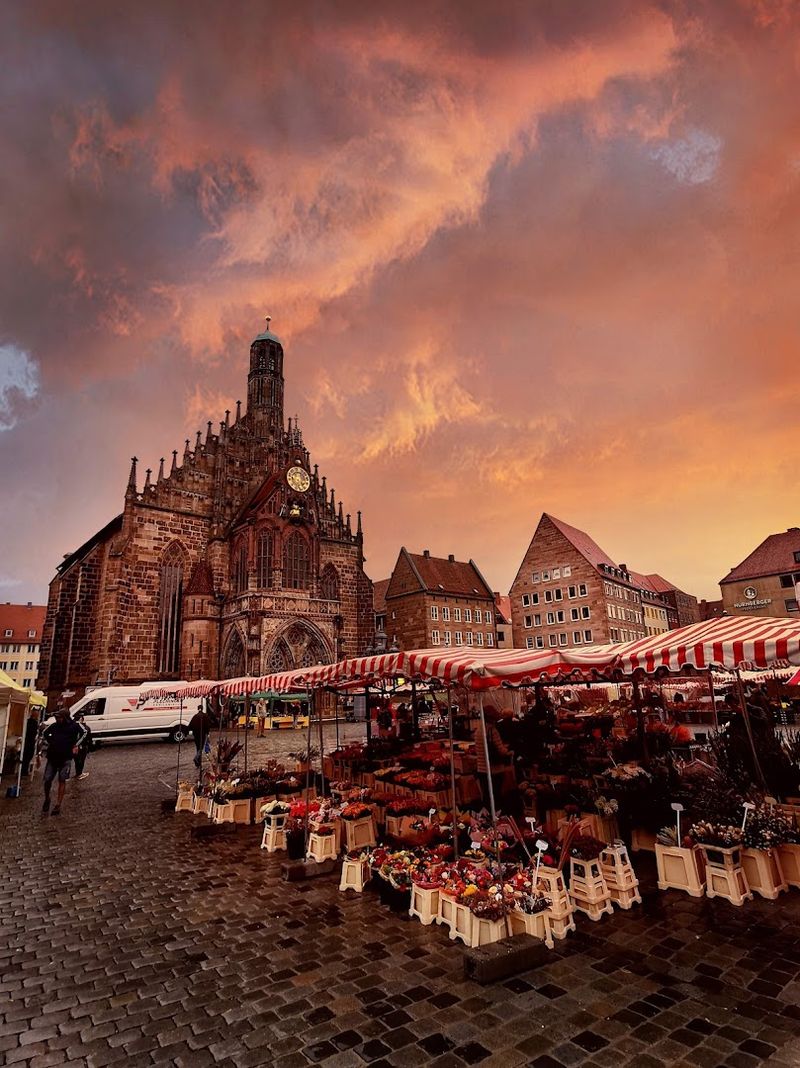
Nuremberg’s Hauptmarkt has been a commercial hub since Emperor Charles IV established it in the 14th century, and it shows no signs of slowing down seven hundred years later.
The Schöner Brunnen, or Beautiful Fountain, completed in 1396, rises 19 meters above the square and features 40 carved figures representing philosophers, prophets, and imperial figures. Visitors still spin the two brass rings on its enclosure fence for good luck, a ritual that has worn the metal smooth over generations.
The Frauenkirche, a Gothic church built in the same century, overlooks the square with a facade clock that re-enacts a local legend at scheduled hours. Fresh produce, flowers, and Franconian baked goods are sold here from Monday through Saturday, while the Christkindlesmarkt each winter transforms the entire square into one of Germany’s oldest and most celebrated Christmas markets, drawing visitors from across the world.
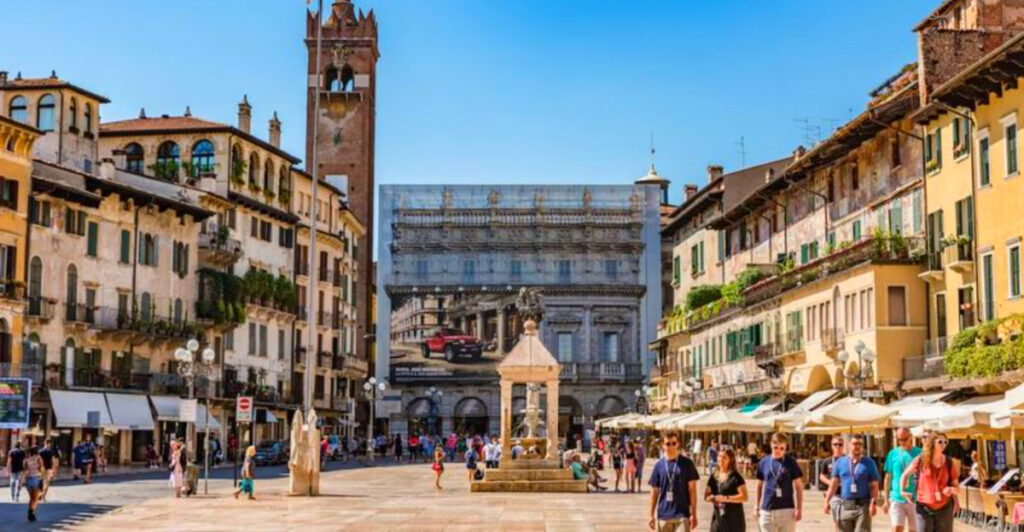
6. Piazza delle Erbe, Verona, Italy
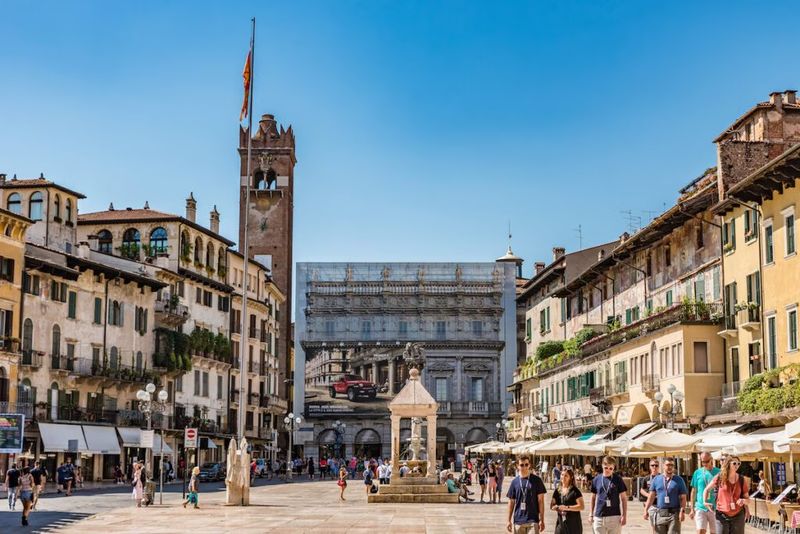
Nearly two thousand years of continuous market activity make Verona’s Piazza delle Erbe one of the oldest trading spots in Europe, built directly on top of the city’s original Roman forum.
The name translates to Herbs Square, a nod to the spices and vegetables sold here throughout the Middle Ages, and market stalls still appear regularly beneath a backdrop of frescoed Renaissance facades. The Madonna Verona Fountain at the center combines a 14th-century commission with an ancient Roman sculpture from 380 AD, quietly demonstrating just how many layers of history this plaza contains.
The Torre dei Lamberti, rising 84 meters above the square, and the Baroque Palazzo Maffei add further architectural drama. Cafés ring the perimeter, and locals treat the square as an outdoor living room, much as Romans did centuries before them.
7. Grote Markt, Bruges, Belgium
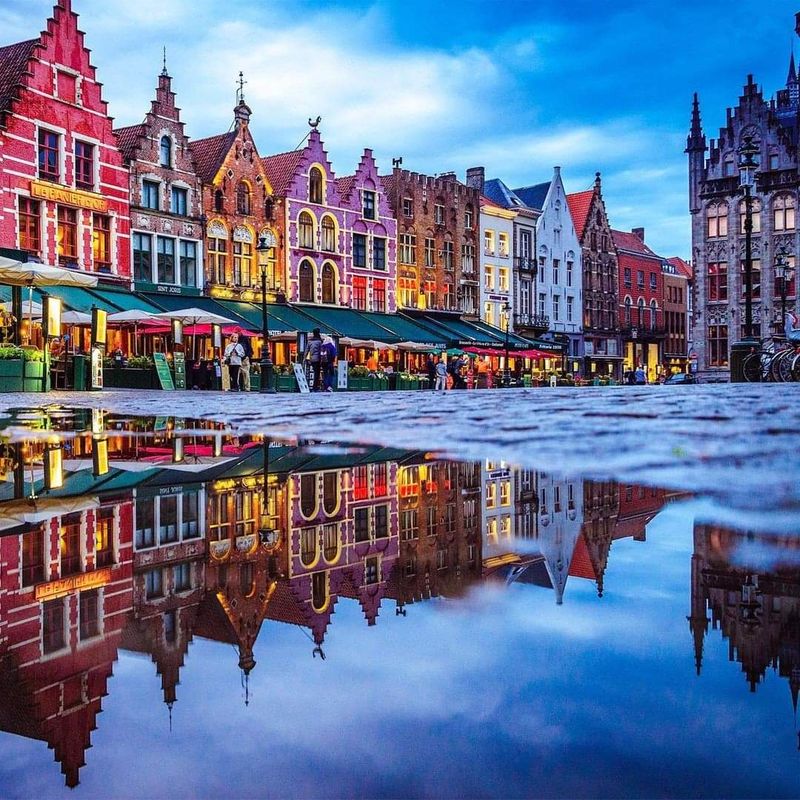
Records place a market at Bruges’ Grote Markt as far back as 958, making it one of the oldest continuously active market sites in northern Europe and a square that has genuinely earned its central status.
The Belfry, which began construction in the 13th century and eventually reached 83 meters, contains a 47-bell carillon and offers panoramic views to anyone willing to climb its 366 steps. Guild houses with stepped gables and colorful facades line the perimeter, housing cafés and restaurants that keep the square busy long after the market stalls close.
A monument to Flemish resistance heroes Jan Breydel and Pieter de Coninck stands at the center, and horse-drawn carriages still cross the cobblestones daily. A traditional Wednesday morning market continues the square’s ancient trading role, while its UNESCO-listed status ensures that the historic character drawing visitors today will be carefully preserved for future generations.
8. Place de la Liberté & Place du Marché aux Oies, Sarlat-la-Canéda, France
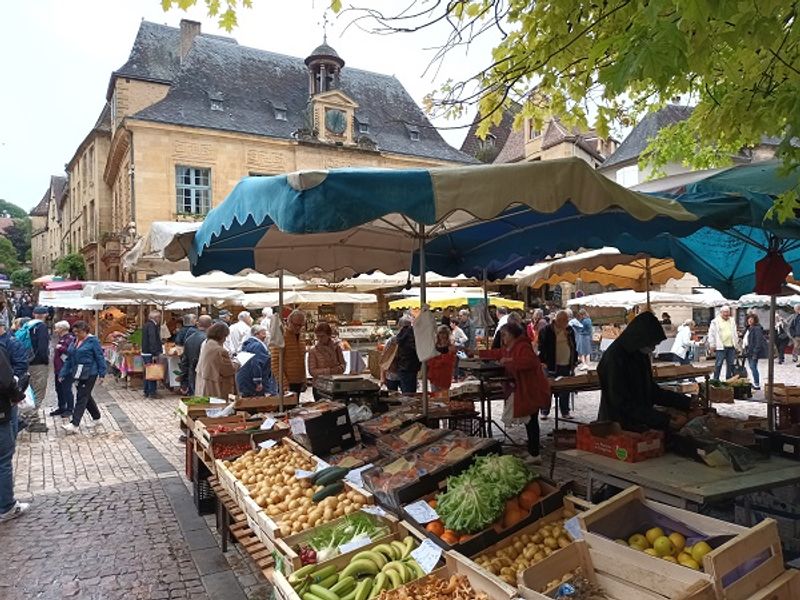
Sarlat-la-Canéda is renowned for its exceptional concentration of protected medieval, Renaissance, and 17th-century architecture, much of it clustered around the heart of the old town.
Place de la Liberté and the surrounding streets host a food market on Wednesday mornings and a larger market on Saturdays. Vendors sell regional specialties such as foie gras, truffles, duck and goose products, cheeses, walnuts, and cèpe mushrooms.
Nearby, Place du Marché aux Oies features a bronze sculpture of three geese, a playful tribute to the culinary traditions of the Périgord. The former Sainte-Marie church overlooking Place de la Liberté has also been converted into a covered market, adding another distinctive setting for local food and commerce.
Together, these neighboring spaces help keep Sarlat’s centuries-old commercial traditions alive throughout the year.
9. Marktplatz, Rothenburg ob der Tauber, Bavaria, Germany
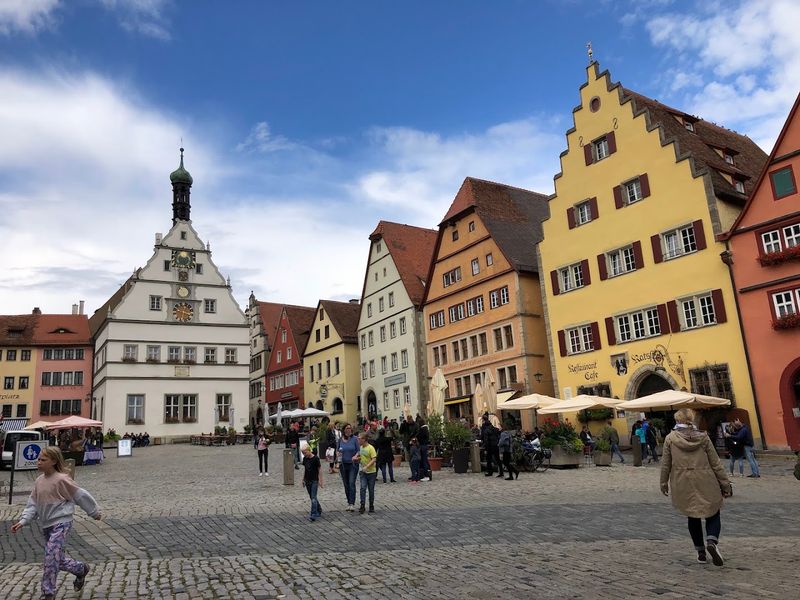
Rothenburg ob der Tauber is Germany’s most completely preserved medieval walled town, and its Marktplatz has been the focal point of town life since the 13th century when Rothenburg gained status as an Imperial City and a thriving trade center.
The Town Hall dominates one side of the square, combining a Gothic eastern facade from 1250 with a Renaissance western front added in 1578, topped by a 60-meter tower with sweeping views across the rooftops. St. George’s Fountain, built in 1608, once supplied the town’s drinking water and still anchors the center of the plaza.
Each day, automated figures on the Ratstrinkstube clock re-enact the legendary Master Draught story from the Thirty Years’ War. The square’s shops sell traditional Schneeballen pastries, handmade ornaments, and wooden crafts year-round, while the winter Reiterlesmarkt Christmas market transforms the cobblestones into one of Bavaria’s most charming seasonal events.
10. Praça do Giraldo, Évora, Portugal
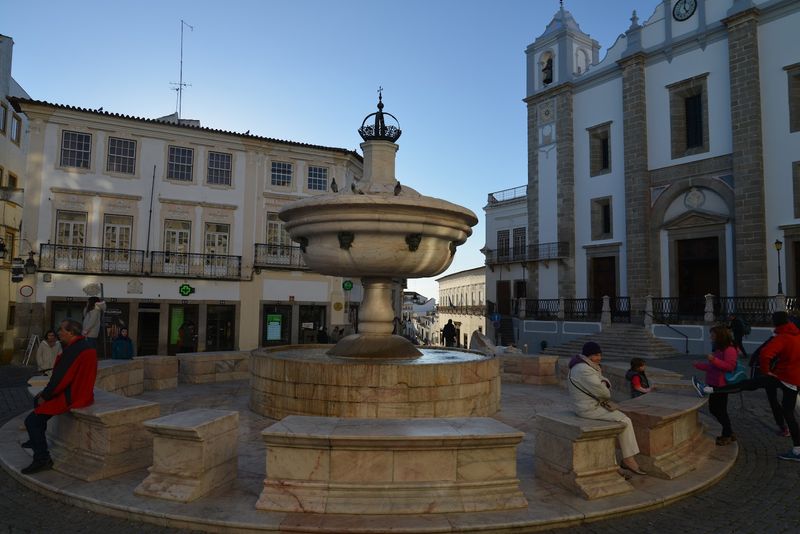
Named after Geraldo Sem Pavor, the medieval knight who conquered Évora from the Moors in 1167, Praça do Giraldo has carried that legacy forward for centuries as the city’s principal public square and gathering place.
The ornate Henriquina fountain at its center was completed in 1571 by architect Afonso Álvares and features eight spouts traditionally said to represent the eight streets that converge on the plaza. Arcaded buildings with Gothic roots line the perimeter, sheltering cafés, restaurants, and shops that invite people to settle in and stay awhile.
The square has witnessed a complex range of historical events over the centuries, including proceedings connected to the Spanish Inquisition, a reminder that not all of its history is light. Today it functions as a peaceful and popular social hub where cultural events and local celebrations regularly bring Évora’s residents together, maintaining the square’s centuries-old role as the heart of the city.
11. Rynek, Wrocław, Poland
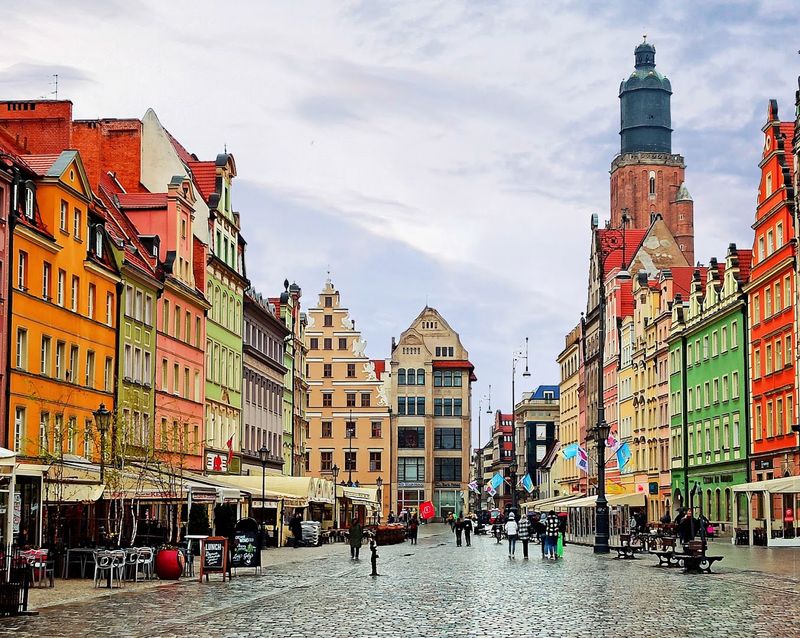
Wrocław’s Rynek covers nearly 3.8 hectares, making it one of the largest market squares in Europe, a fact that becomes immediately clear when you stand at one end and try to make out the details of the buildings at the other.
Established in the 13th century under Magdeburg law, the square was originally used to trade bread, fats, linen, and metals. Around 60 beautifully restored merchant houses now surround it, each carrying a distinctive name such as Under the Blue Sun, Under the Gryphons, and Golden Cup, many with elaborate 14th-century stucco facades.
The Town Hall at the center blends Gothic and Renaissance styles and houses one of Europe’s oldest restaurants in its basement, operating since medieval times. Festivals, Christmas markets, and the adjacent Plac Solny flower market keep the square in near-constant activity, reinforcing Wrocław’s reputation as one of Poland’s most vibrant historic cities.
12. Plaça Major, Vic, Catalonia, Spain
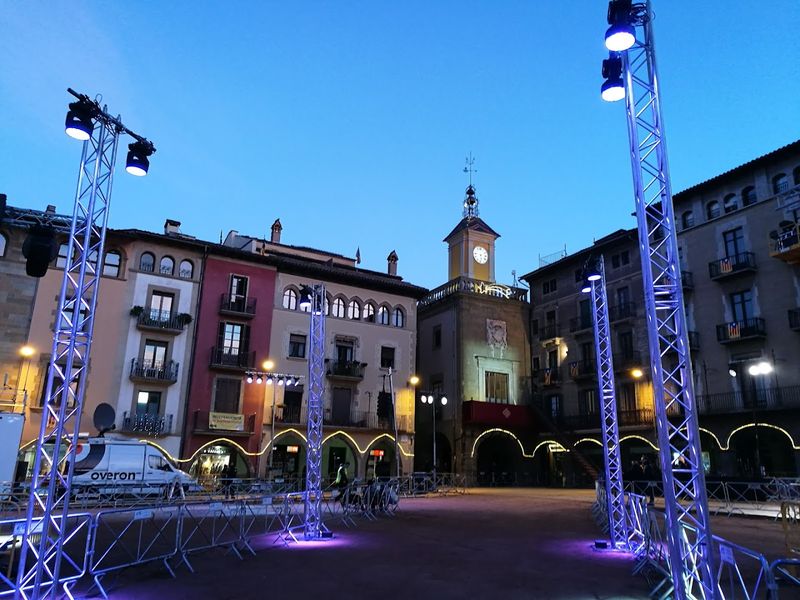
Market day in Vic has been happening since the 9th century, which means this Catalan square was already a busy trading hub long before most of the buildings surrounding it were even built.
Every Tuesday and Saturday from 8 am to 2 pm, the Plaça Major fills with vendors selling seasonal fruits and vegetables, local cheeses, meats, fish, freshly baked goods, flowers, and crafts. Shoppers arrive from across the county of Osona, drawn by the quality of regional products and the authenticity of an open-air market that has not needed to reinvent itself because it has always worked.
The arcaded buildings framing the square reflect centuries of architectural evolution and create a sheltered walkway around the market perimeter. Monthly themed markets, including antique and artisan events, add variety to the regular schedule, making Plaça Major one of the most consistently active and genuinely traditional market squares in all of Spain.
13. Plaza Mayor, Chinchón, Community of Madrid, Spain
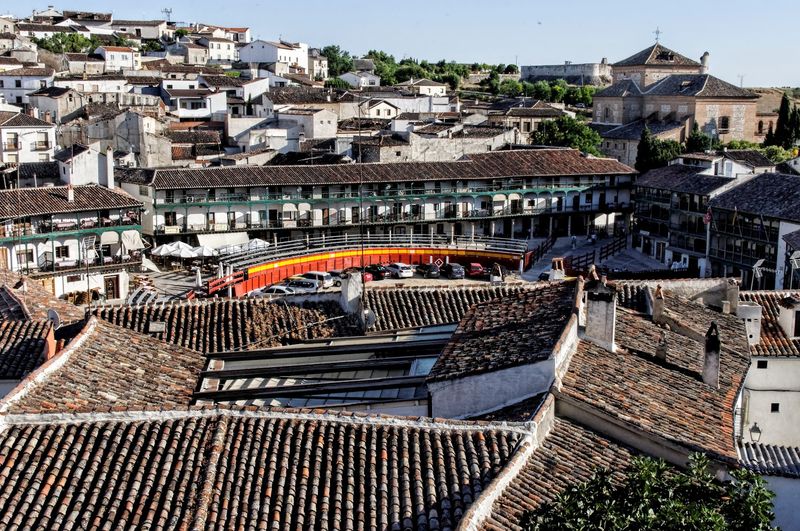
Chinchón’s Plaza Mayor is the kind of square that stops people mid-step. Its oval shape, enclosed by three-story buildings with 234 wooden balconies painted in a distinctive ox-blood red, creates an arena-like appearance found almost nowhere else in Spain.
The first arcaded houses appeared in the 15th century, and by the 17th century the square was fully enclosed in its current form. Those same balconies that now frame outdoor dining and festival viewing once served as prime spectator seats for bullfights, theater performances, cattle fairs, and religious celebrations, making them some of the most versatile architectural features in the country.
Weekly markets continue bringing local specialties to the plaza, and August bullfights still draw crowds to the same wooden balconies that have overlooked the action for centuries. Declared a Historic-Artistic Site in 1974 and named the fourth wonder of the Community of Madrid in 2008, this village square punches well above its weight.
14. Market Square, Český Krumlov, South Bohemia, Czechia
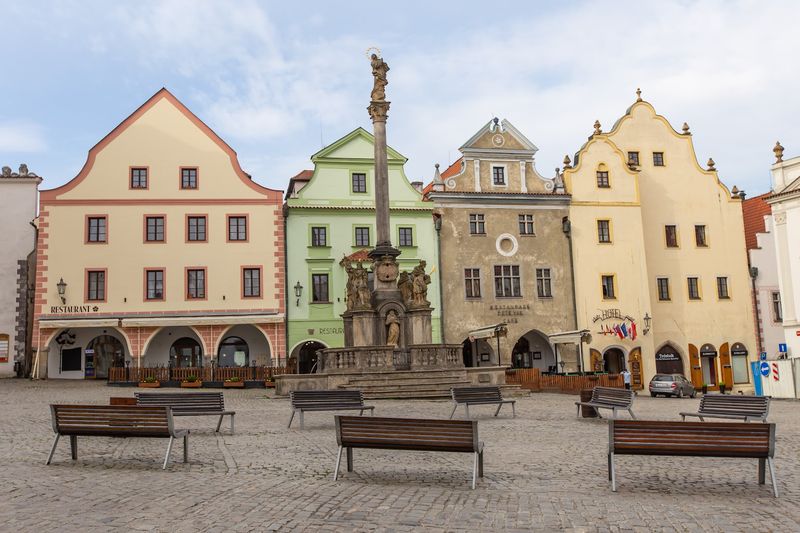
Český Krumlov’s Market Square, officially called Náměstí Svornosti, sits beneath one of Central Europe’s most dramatic castle complexes, giving it a backdrop that most historic squares can only dream about.
Founded on 12th-century Gothic foundations, the square is lined with Renaissance and Baroque burgher houses decorated with stucco work and painted facades that have been carefully maintained over generations. House No. 1, now the Town Hall, was formed by merging two older Gothic buildings in the early 17th century, and fragments of 15th-century murals depicting the Three Wise Men were uncovered inside as recently as 2000.
The Marian Plague Column, erected in 1716 and surrounded by a six-sided fountain, anchors the center of the plaza. A pharmacy has operated continuously on the square since 1620, which may be the most quietly impressive fact about a space full of impressive facts. Holiday markets and the Five-Petalled Rose Festival keep the square lively throughout the year.
Share this story