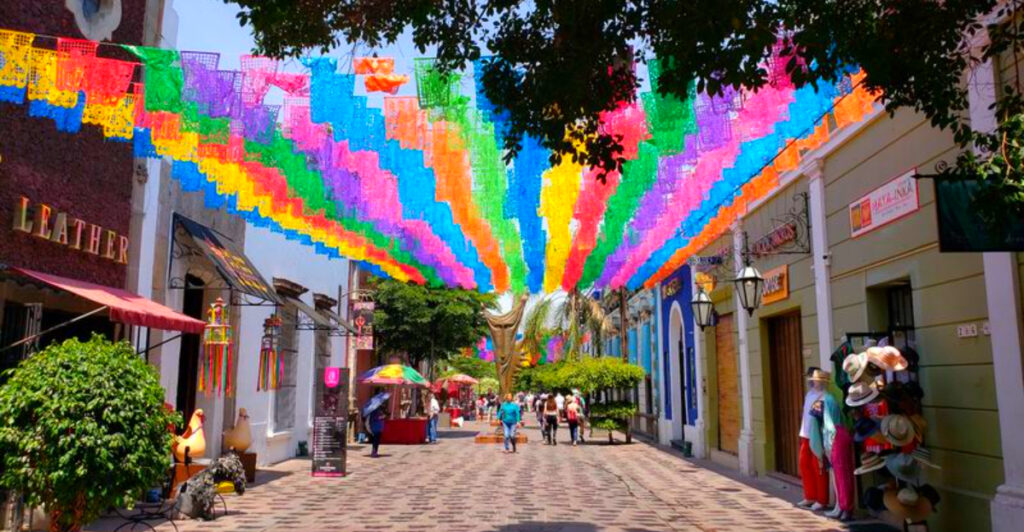
Mexico has a way of making color feel like a necessity rather than a decoration. Across the country, entire towns have been painted, tiled, and adorned with such intention that wandering their streets feels less like sightseeing and more like walking through a living work of art.
Some of these places have been earning UNESCO recognition for centuries, while others quietly built their reputation one painted wall at a time. A few of them are famous, a couple are wonderfully under the radar, and all of them will make you reach for your camera before you even realize what you are doing.
This list covers 13 Mexican towns where color is not just a backdrop but a defining feature, from mountain cities with rainbow hillsides to coastal villages where murals compete with the ocean for your attention. Get ready to start planning, because these places are genuinely hard to forget.
1. Guanajuato, Guanajuato, Mexico
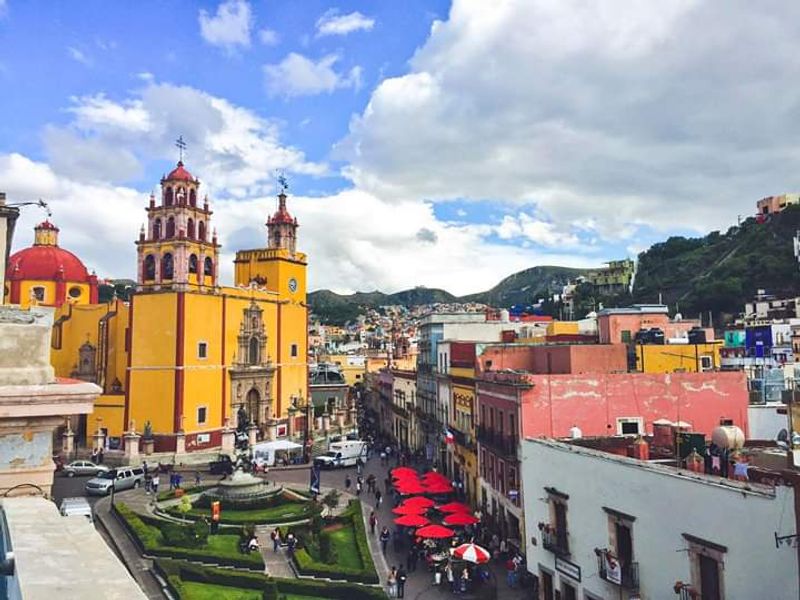
Imagine a mountain valley where every house seems to be competing for the title of most eye-catching neighbor. That is essentially Guanajuato, a UNESCO World Heritage city where coral, yellow, blue, pink, and green homes are stacked so tightly on the hillsides that the whole place looks like a mosaic from above.
The historic center is a genuinely unusual urban layout. Underground tunnels handle traffic while the surface streets above twist into narrow callejones, steep stairways, and open plazas that seem to appear out of nowhere.
The University of Guanajuato building stands out in brilliant white against all that color, and prominent yellow and red church domes punctuate the skyline. The colonial architecture features pastel stucco and pale pink stone with enough regional flair to make every block feel distinct.
Guanajuato rewards slow walkers who are happy to get a little lost.
2. San Miguel de Allende, Guanajuato, Mexico
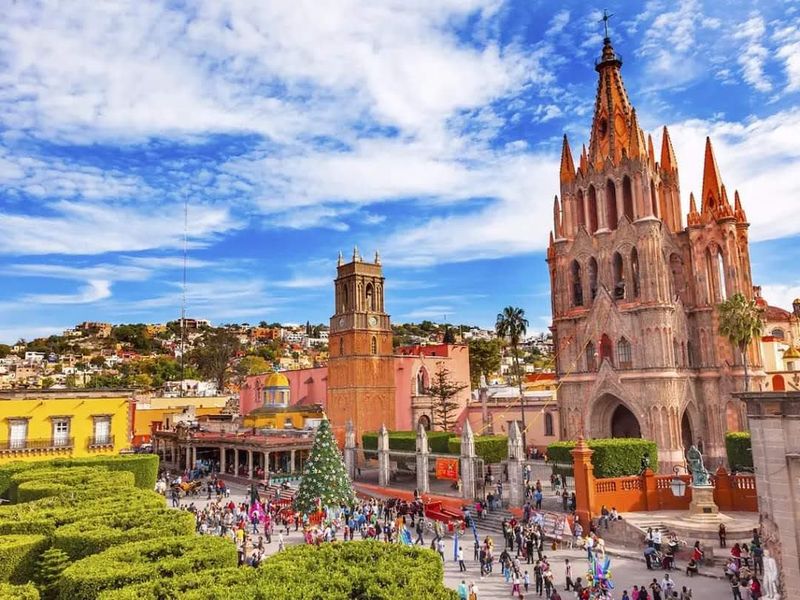
The pink neo-Gothic towers of the Parroquia de San Miguel Arcangel were designed in the late 19th century by a self-taught architect named Zeferino Gutierrez, who reportedly sketched his plans from postcards of European cathedrals. The result is one of the most photographed church facades in all of Mexico, and it anchors a town that takes its visual identity very seriously.
San Miguel de Allende is a UNESCO World Heritage Site, and preservation laws here are strict. Facades within the central zone must follow a historical color palette that INAH has documented as red, pink, yellow, orange, white, and terracotta, all of which reflect the colonial architecture and the natural landscape of the Bajio region.
The pink stone of the Parroquia itself comes from a local quarry, and its color shifts at different times of day. Flowering courtyards hide behind many of those ochre walls, rewarding visitors who peek through open doorways.
3. San Francisco de Campeche, Campeche, Mexico
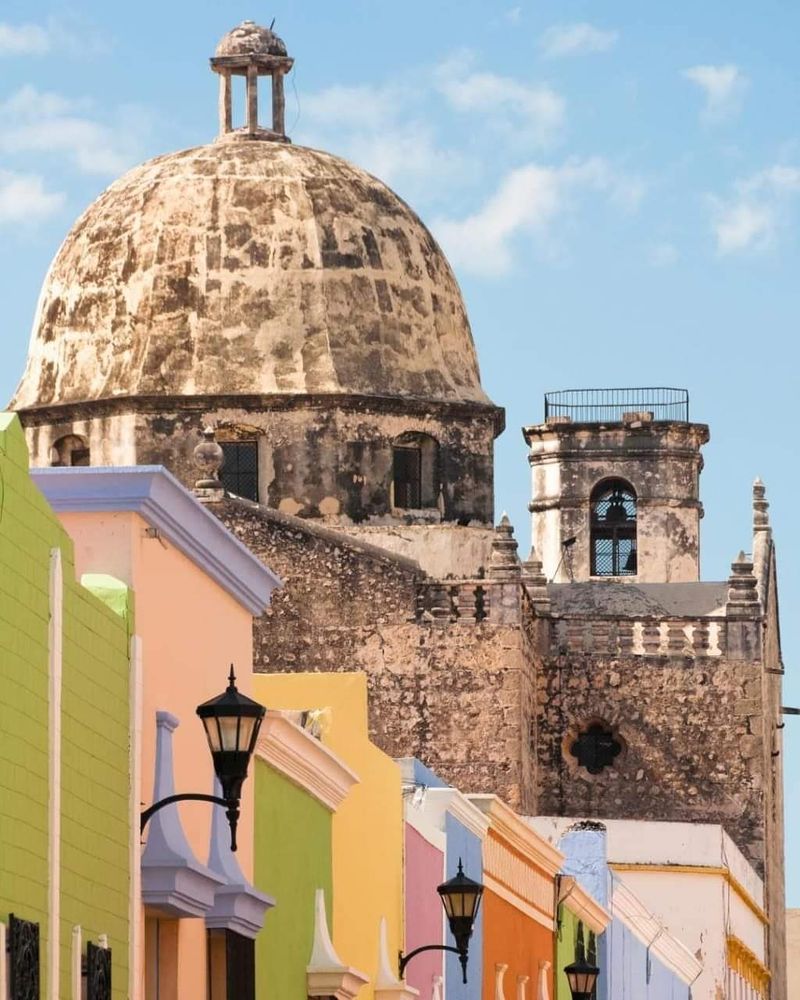
Central Campeche looks like someone assigned a different pastel to each block and told the residents to commit fully. Mint, peach, pink, yellow, and blue facades line the streets of this UNESCO World Heritage Site, where the cheerful color scheme has a surprisingly serious backstory.
Campeche was a major Gulf of Mexico port, and the defensive walls, bulwarks, and bastions built in the late 17th century to protect it from pirate attacks still stand today. The historic center contains roughly 1,000 buildings, many dating to the 18th century, all painted in a regulated chromatic range that includes ochres, indigos, and terracottas.
Yellow and gold historically signaled civic and religious power here, while cobalt blue marked the homes of prosperous residents. Any changes to facade colors require approval from INAH, which is why the town still looks so remarkably cohesive.
Walking these streets is a genuinely pleasant history lesson.
4. Izamal, Izamal, Yucatan, Mexico
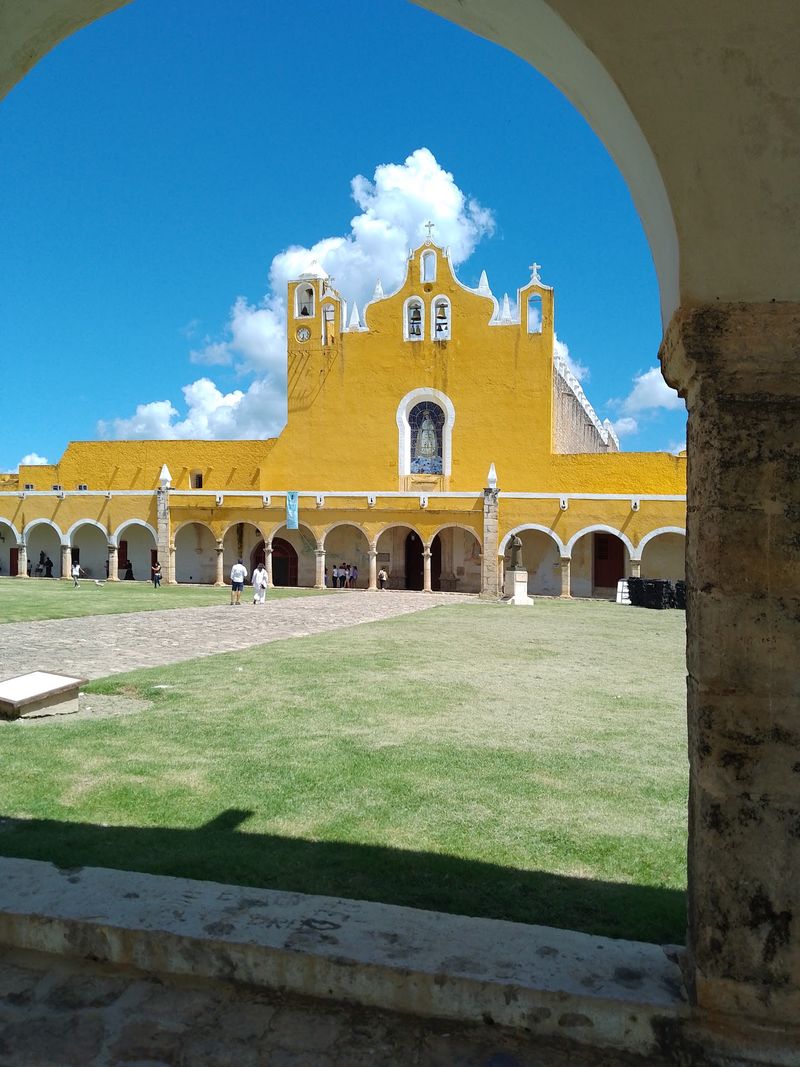
Izamal earns its nickname “Ciudad Amarillo” honestly. Almost every building in the historic center is painted the same warm yellow and white, creating a visual consistency so complete that the whole town reads as a single coordinated statement rather than a collection of individual properties.
The yellow tradition is linked by some to the Maya sun god Kinich Kakmo, and by others to the colors of the Vatican flag, in connection with a 1993 visit by Pope John Paul II. Either way, the result is striking.
The Convent of San Antonio de Padua, built on the leveled base of a Maya pyramid called Ppap Hol Chac, has the second largest enclosed church courtyard in the Americas after the Vatican.
The “hills” visible around Izamal are actually the remains of ancient Maya temple pyramids, which gives the town an extra layer of history that most visitors find genuinely surprising. Izamal holds Pueblo Magico status for good reason.
5. Valladolid, Valladolid, Yucatan, Mexico
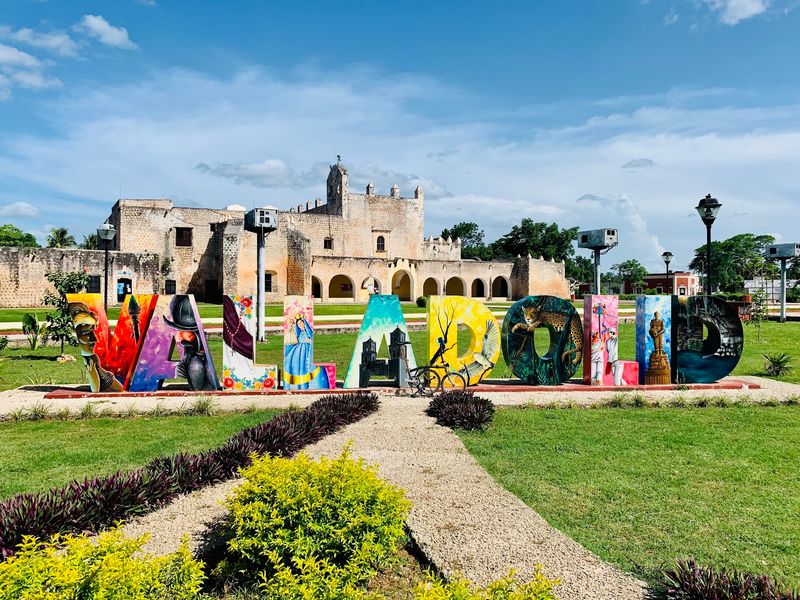
Valladolid is the kind of colonial town that does not announce itself loudly but quietly wins you over block by block. Painted facades in warm tones, old wooden doorways, and leafy squares accumulate into a streetscape that rewards anyone patient enough to explore it without a strict agenda.
The city was originally built by the Spanish using materials taken from the conquered Maya city of Zaci, which gives its foundations a layered history that goes well beyond what the cheerful exterior suggests. Its Pueblo Magico designation reflects a commitment to preserving both the architecture and the cultural character of the place.
The Convent of San Bernardino de Siena, constructed between 1552 and 1560, is the second largest Franciscan construction in the Yucatan. It served as both a religious center and a defensive fortification, and it is connected to the town center by the Calzada de los Frailes, a walkway that remains one of the most pleasant routes in the city.
6. Taxco, Taxco de Alarcon, Guerrero, Mexico
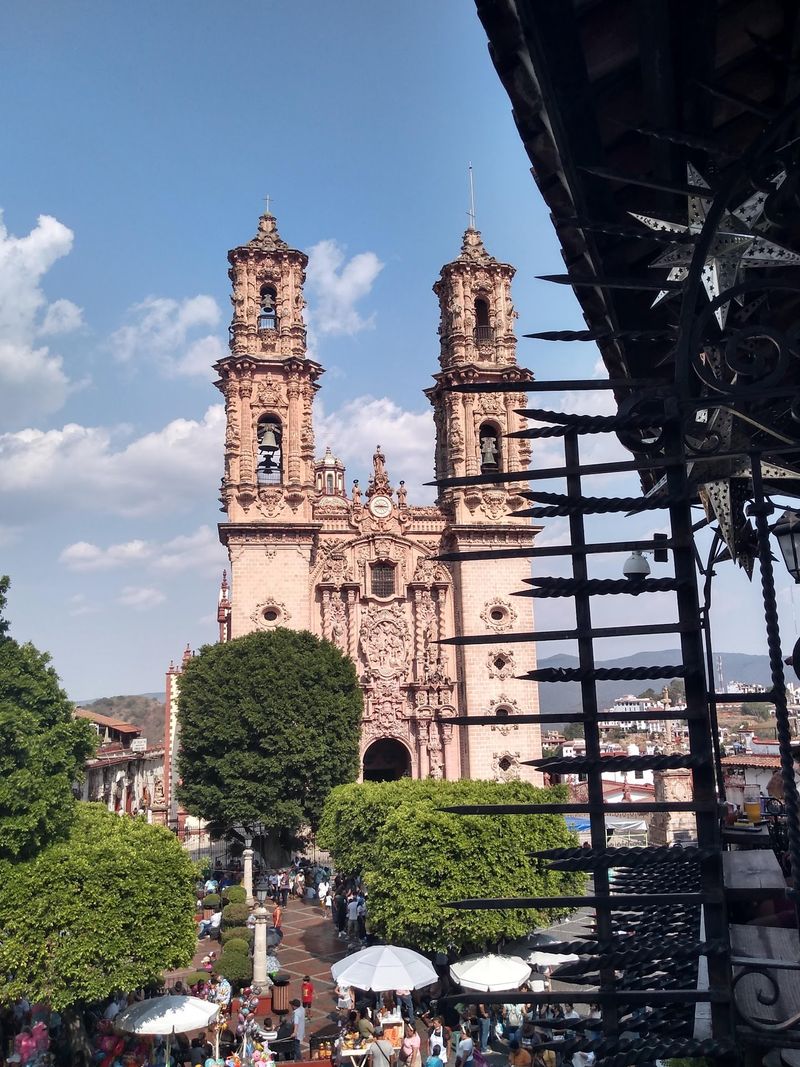
Not every colorful Mexican town goes full rainbow. Taxco makes its visual case with a tighter palette: whitewashed walls, red clay tile roofs, dark stone streets, and well-placed bursts of color from flower arrangements, painted signs, and shopfront displays that specialize heavily in silver.
The town is built across rugged hills in Guerrero, and its lanes are sometimes dramatically steep, curving around the historic center in ways that make navigation an adventure. The Church of Santa Prisca and San Sebastian is the undisputed centerpiece, an 18th-century Baroque masterpiece with twin towers of pink sandstone and a carved facade that is extraordinarily detailed up close.
Inside, gilded altars and frescoes add to the impression that no surface was left unconsidered. Taxco is recognized as a Pueblo Magico and is historically famous as a silver mining town, which explains why so many of the colorful shopfronts are filled with handcrafted silver jewelry and decorative pieces.
7. San Cristobal de las Casas, San Cristobal de las Casas, Chiapas, Mexico
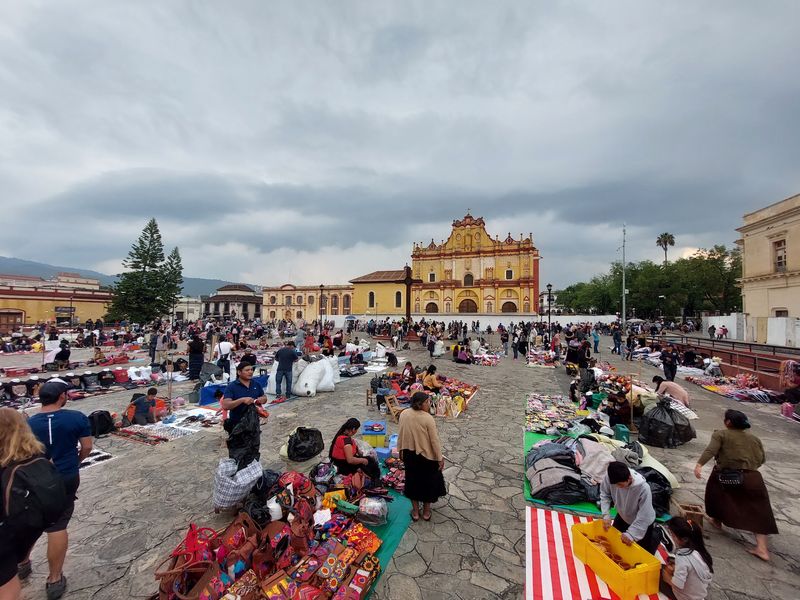
Tucked into the highlands of Chiapas with green mountains on every horizon, San Cristobal de las Casas layers color in a way that feels organic rather than curated. Painted colonial facades, red clay tile roofs, and wrought iron balconies adorned with plants line the cobblestone streets of the Spanish colonial center.
The Cathedral of San Cristobal de las Casas, a 16th-century landmark, features a yellow and white Baroque facade that incorporates Moorish and indigenous influences. A short walk away, the Church of Santo Domingo draws attention with its elaborate pink facade, where intricate stucco work blends European and indigenous decorative motifs.
Around the Church of Santo Domingo, an artisan market fills the surrounding area with traditional textiles sold by indigenous vendors, adding another layer of color and cultural depth to the neighborhood. The city manages to feel both genuinely historic and very much in active daily use, which is part of what makes it so appealing to visitors.
8. Oaxaca de Juarez, Oaxaca de Juarez, Oaxaca, Mexico
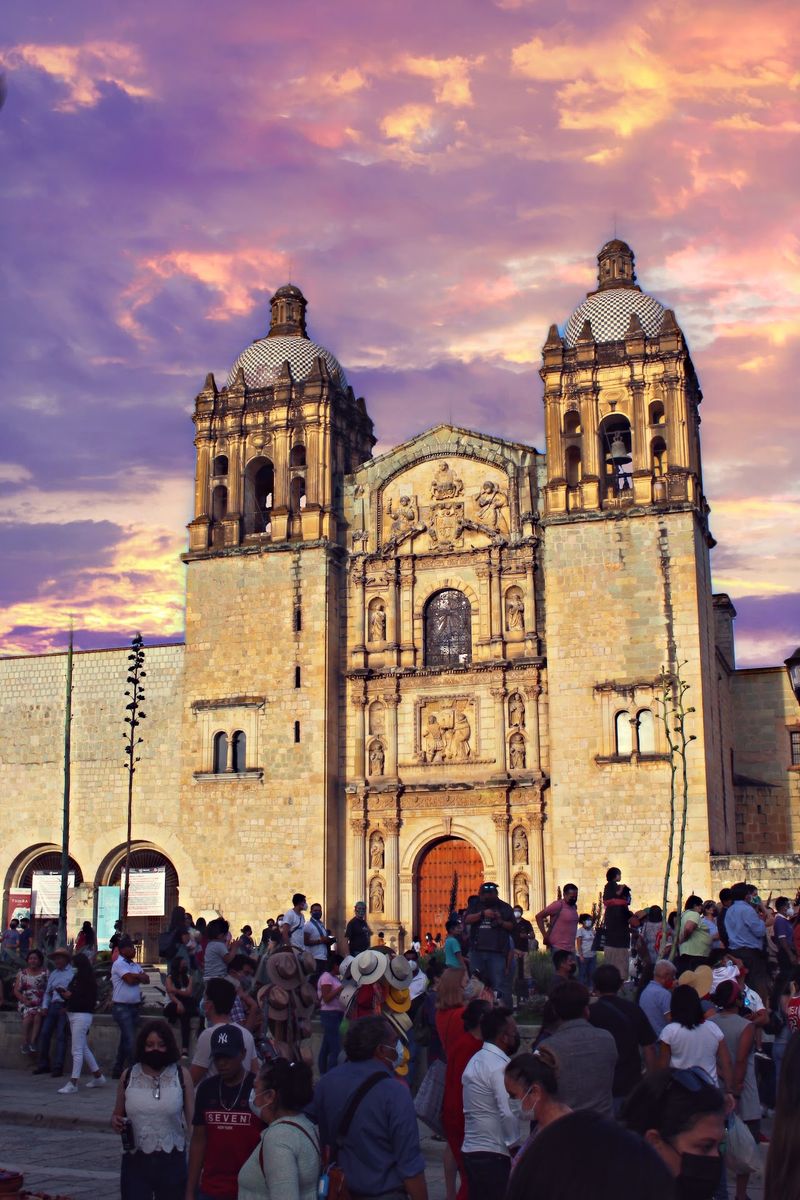
Color in Oaxaca is not limited to painted walls. It accumulates across richly decorated facades, carved green quarry stone buildings, open-air markets full of textiles, murals on side streets, and flowering courtyards that appear behind iron gates as you pass.
The historic center is a UNESCO World Heritage Site built on a Spanish grid pattern, and it contains a remarkable density of heritage architecture. The Templo de Santo Domingo de Guzman is one of the finest examples of New Spanish Baroque design in Mexico, featuring an opulent gilded interior, azulejo-covered domes, and thick walls that have endured multiple earthquakes.
The Cathedral of Our Lady of the Assumption adds further architectural variety, constructed with distinctive green quarry stone that sets it apart from the surrounding buildings. Oaxaca’s low-rise streets make the whole center navigable on foot, which is genuinely the best way to catch the murals, market stalls, and painted doorways that fill in the gaps between the major landmarks.
9. Sayulita, Sayulita, Nayarit, Mexico
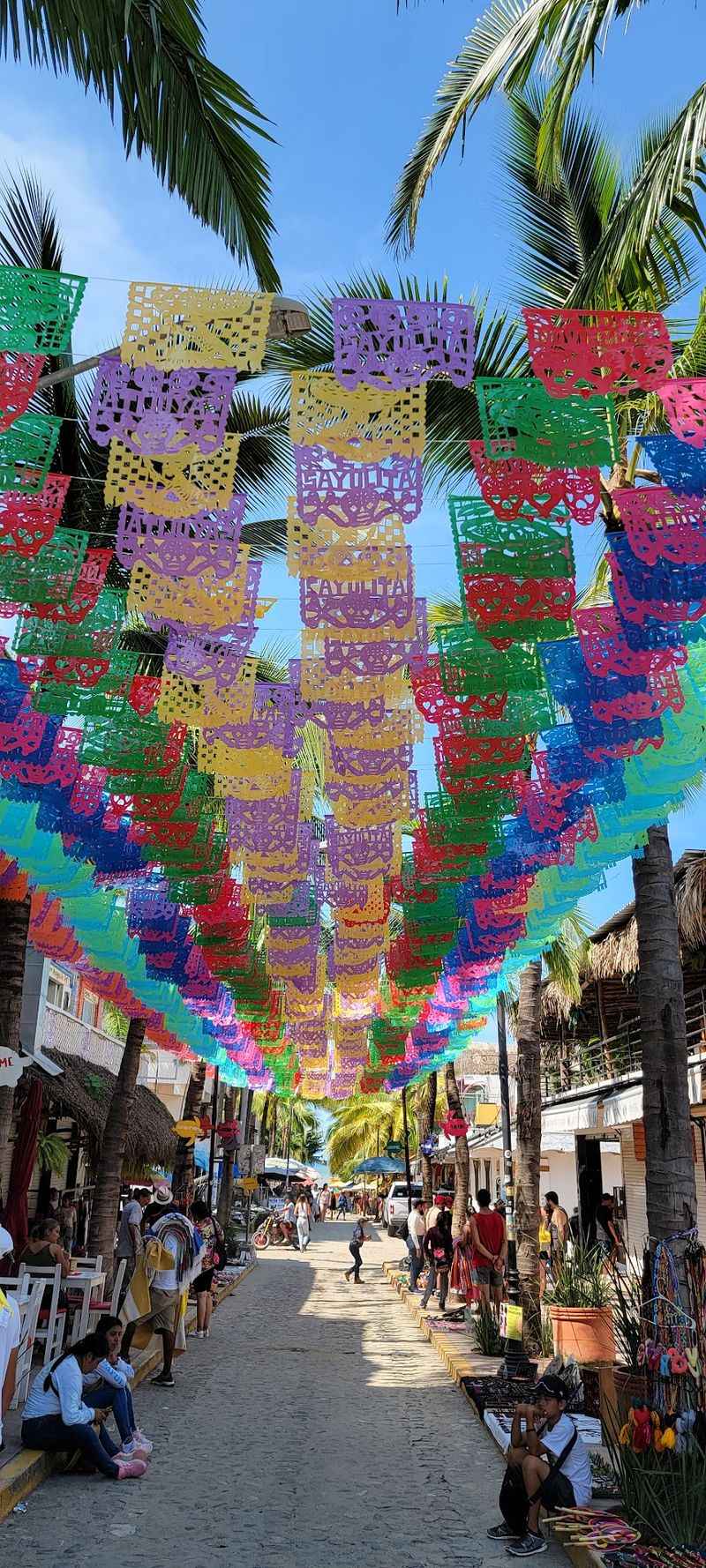
Sayulita is what happens when surf culture, indigenous heritage, and a serious enthusiasm for color all decide to share the same compact set of cobblestone streets. Bright storefronts, papel picado banners, colorful pompons, and tropical greenery crowd the lanes leading toward the Pacific, and the overall effect is more playful than polished.
The town holds Pueblo Magico status, recognized for its bohemian culture, artistic community, and the influence of Wixarika (Huichol) heritage on local art and design. Murals cover many of the walls, depicting marine life, indigenous traditions, and spiritual imagery in a style that makes the whole town function as an open-air gallery.
A walk from one end of the center to the beach can easily turn into a long detour once the painted walls and hanging decorations start competing for attention. Sayulita is small enough to cover in an afternoon but visually busy enough that most visitors end up spending far longer than they planned.
10. Tlaquepaque, San Pedro Tlaquepaque, Jalisco, Mexico
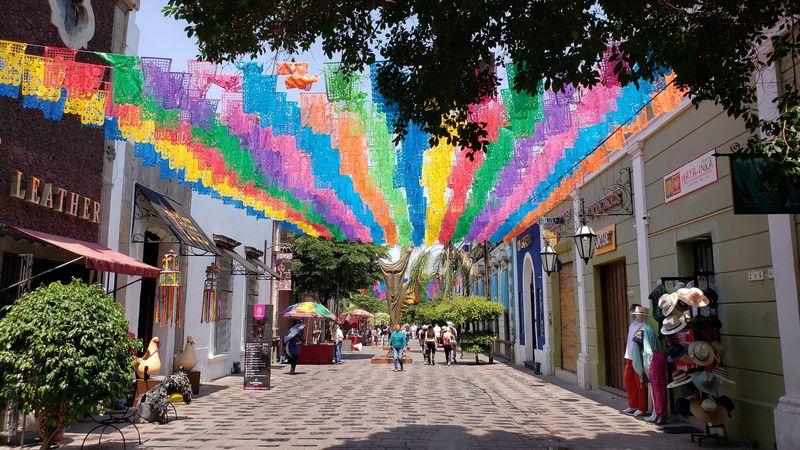
Tlaquepaque has been an artisan hub since pre-Hispanic times, and that heritage is visible in practically every storefront, courtyard, and painted wall in the historic core. Ceramics, blown glass, bronze work, and folk art fill the galleries and shops that line the pedestrian streets, with displays spilling out onto the pavement in the most inviting way.
The main pedestrian street, Calle Independencia, is particularly lively, often decorated overhead with colorful paper banners or festive arrangements that shift with the season or occasion. Traditional adobe houses and stone quarry buildings give the architecture a texture that painted facades alone could not achieve.
Pedestrian-friendly streets make it genuinely easy to linger over details, from elaborate painted doors to intricate tilework set into exterior walls. The result is a neighborhood that functions more like a curated cultural district than a single tourist attraction, and an unhurried afternoon here tends to stretch comfortably into the early evening without anyone noticing.
11. Bernal, Ezequiel Montes, Queretaro, Mexico
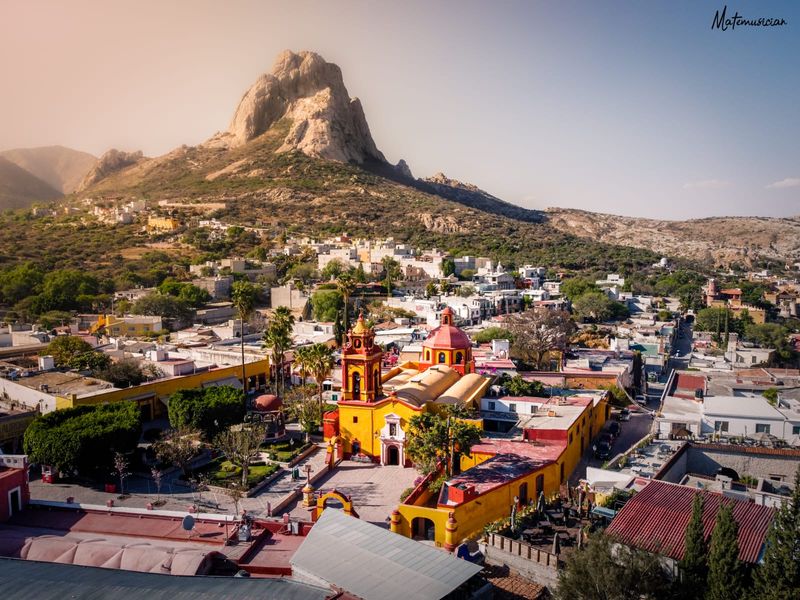
Bernal plays it cooler than many of Mexico’s most colorful towns, working with a palette of ocher, soft yellow, sienna, dusty rose, and terracotta rather than going full rainbow. The effect is warmer and more understated, but the painted facades, stone detailing, and flowering doorways still make for a very photogenic historic center.
What really sets Bernal apart from the competition is the view above the rooftops. Pena de Bernal, a 433-meter volcanic rock formation, is considered one of the largest monoliths in the world, and it provides a backdrop that is genuinely difficult to put into context until you are standing in front of it.
The early 18th-century Temple of San Sebastian, located beside the main plaza, features indigenous craftsmanship in its bell tower and later-added stained-glass windows that add a quiet elegance to the square. Bernal is a Pueblo Magico recognized for its historic character and the kind of peaceful atmosphere that makes a half-day visit feel surprisingly restorative.
12. Puebla, Puebla, Mexico
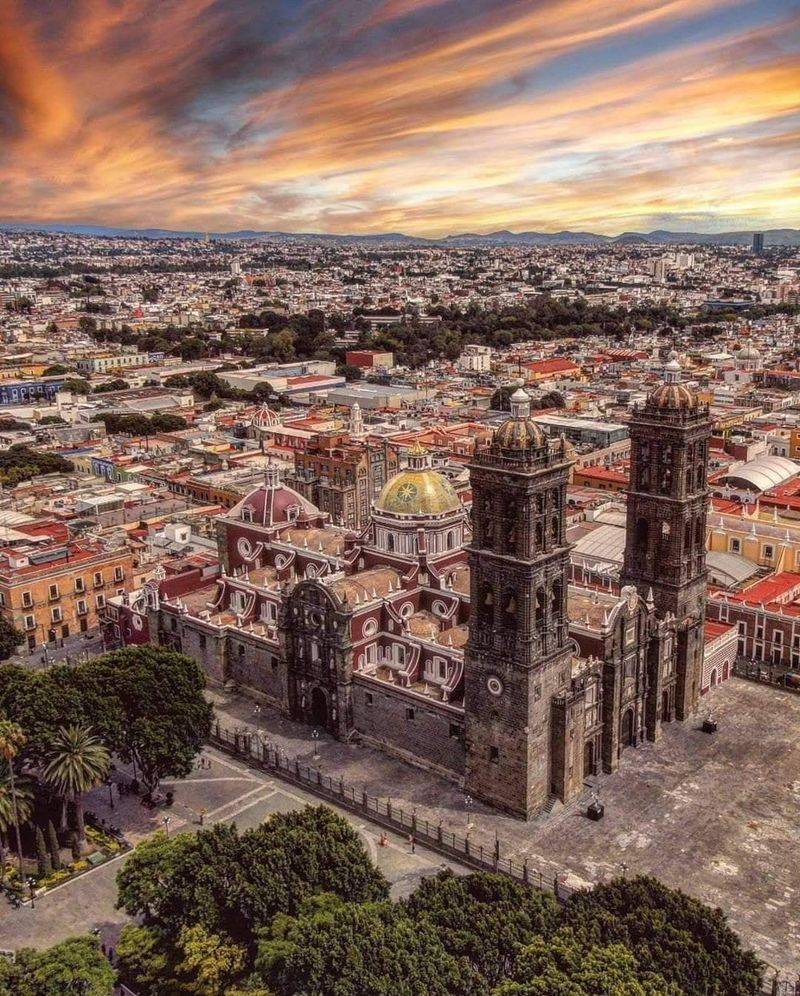
Puebla takes a different approach to color: instead of paint, it uses tiles. The historic center, a UNESCO World Heritage Site, is packed with buildings decorated in multicolored Talavera azulejos, the hand-painted ceramic tiles that have made the city internationally recognized as the cradle of Mexican Baroque in both architecture and decorative arts.
UNESCO documentation specifically calls out Puebla’s tradition of covering building facades with colorful azulejos, and the results range from subtle geometric borders to entire exterior walls turned into elaborate tile compositions. Alongside the tilework, brick, carved stone, and ornate church facades add further visual variety to streets that reward close inspection.
The Cathedral is a landmark known for its massive bell towers and use of tezontle, a reddish volcanic stone, combined with gray limestone. The Chapel of Our Lady of the Rosary in the Church of Santo Domingo takes interior decoration even further, with an opulent gold leaf interior that has been drawing visitors for centuries.
13. Bacalar, Bacalar, Quintana Roo, Mexico
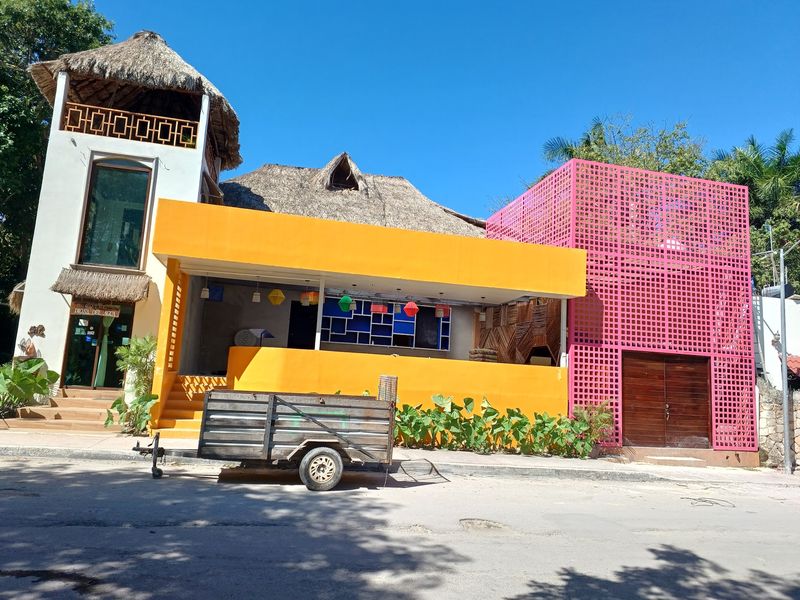
Bacalar has an unusual advantage over most colorful towns: it can point across the street and say the lagoon is doing most of the heavy lifting. The Lagoon of Seven Colors displays a gradient of blues and turquoises produced by mineral content and varying water depths, giving every waterfront view a quality that is genuinely hard to capture in a photograph.
The town itself contributes painted facades, tropical plants, murals, and an easygoing pace that makes it feel distinct from Mexico’s larger Caribbean destinations. Bacalar holds Pueblo Magico status and has developed what is reportedly the largest street art collection in the Yucatan, which adds considerable visual interest to streets that might otherwise feel too quiet.
The Fort of San Felipe, built in 1729 to defend against pirate attacks, offers one of the best elevated views of the lagoon from within the town. Bacalar’s combination of natural color and painted streets makes it a genuinely two-for-one destination for anyone chasing visual variety.
Share this story