Two historic homes, a 19th-century print shop, period furnishings, traditional gardens, and old grapevines help tell the story of the German immigrants who transformed Hermann, Missouri.
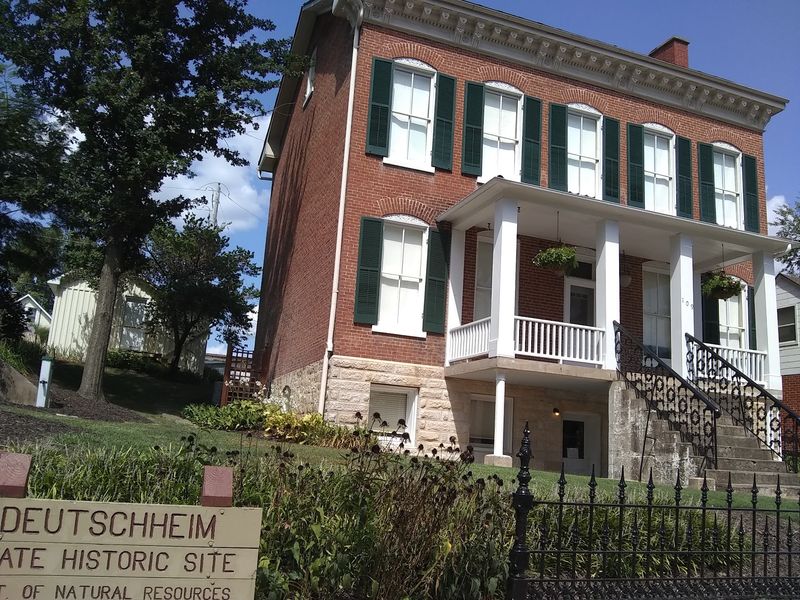
Deutschheim State Historic Site focuses on the German-American community that took shape here beginning in the 1830s. Visitors can explore the 1840 Pommer-Gentner House and the Strehly House, where a German-language newspaper was once printed and a winery later operated.
The details go well beyond architecture. Historic furnishings, pianos, printing equipment, gardens, and household objects show how immigrant families worked, built businesses, maintained traditions, and established a new community along the Missouri River.
Stepping Back in Time on West Second Street
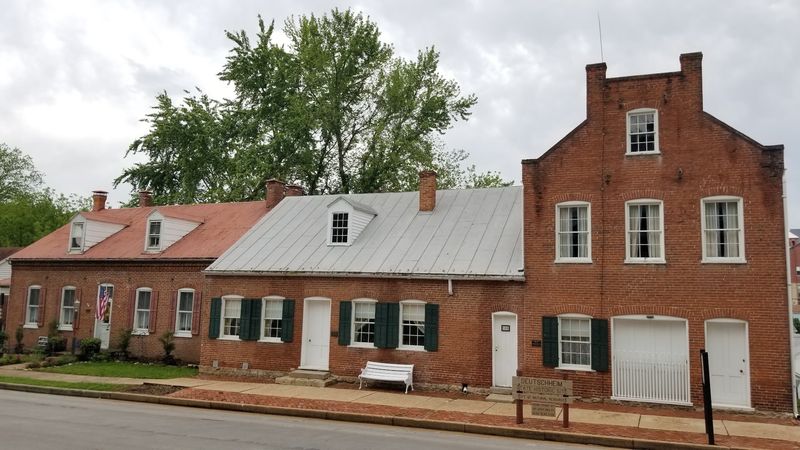
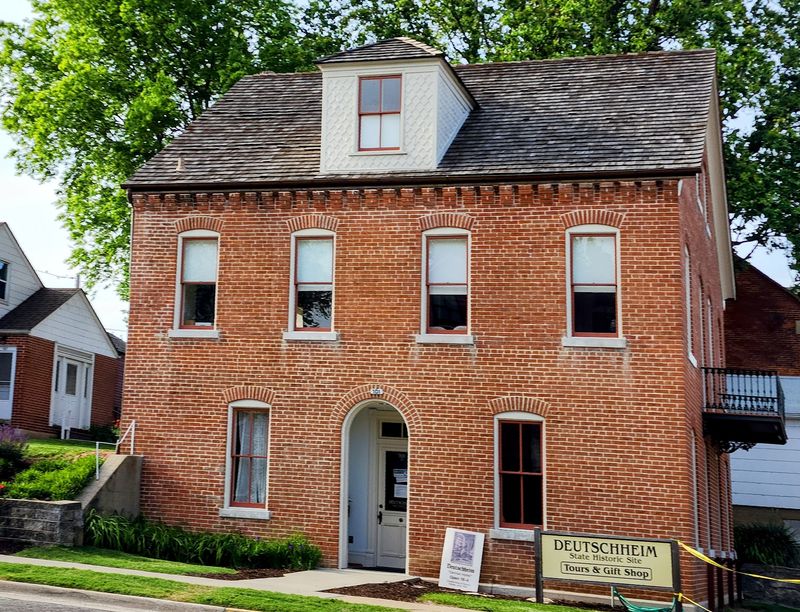
My adventure began right on West Second Street, where a fascinating collection of structures instantly transported me to a bygone era. Deutschheim State Historic Site, located at 101 W. 2nd St., Hermann, MO 65041, sits in the heart of a town positioned along the Missouri River, roughly halfway between Jefferson City and St. Louis.
The very name “Deutschheim” means “German home,” a term coined by early German writers to describe Missouri between the 1820s and 1850s. The site was thoughtfully established in 1979 with a clear mission: safeguarding the rich tapestry of Missouri’s German and German American culture, from heritage crafts to unique foodways and traditional lifestyles.
It opened its doors to the public in 1984 and has been growing ever since. Visiting here feels less like touring a museum and more like walking into a living history book, with each corner revealing another layer of an intricate story that continues to surprise and delight curious travelers.
The Vision Behind Hermann’s German Heartland
Hermann was not just another town that popped up on a map. It was a meticulously planned vision, a deliberate attempt to transplant a piece of Germany onto American soil, and the backstory is genuinely remarkable.
The story began in the 1830s when a group known as the Deutsche Ansiedlungs-Gesellschaft zu Philadelphia, the German Settlement Society of Philadelphia, purchased a substantial tract of land in Gasconade County. Their grand ambition was to forge a culturally integrated, self-supporting colony where cherished customs, the German language, and deep-seated traditions could flourish freely.
Thousands of immigrants, inspired partly by Gottfried Duden’s influential “Report of a Journey to the Western States of North America,” embarked on the arduous journey to Missouri. This diverse group included farmers, artisans, craftsmen, winemakers, intellectuals, and political activists, all seeking a new beginning.
Their collective determination transformed what many considered undesirable wilderness into thriving farms and vibrant villages, creating a legacy that still resonates powerfully today.
Old World Architecture Tells a New World Story
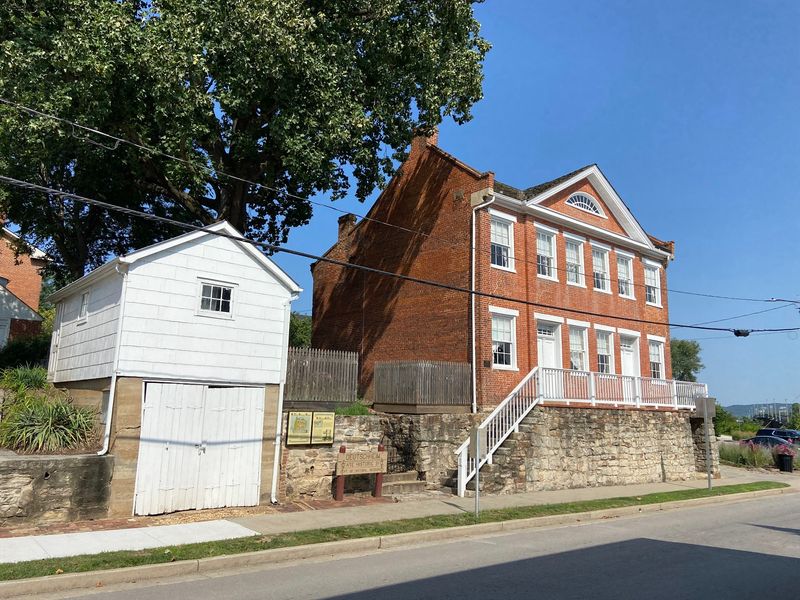
Wandering through the grounds, the very structures tell a tale of transition and adaptation that is hard to find anywhere else in the Midwest. The architecture at Deutschheim is a captivating blend of contemporary German styles thoughtfully interpreted within the American context, creating a unique visual narrative of the immigrant experience.
The Pommer-Gentner House, constructed in 1840, immediately stands out as one of Hermann’s oldest surviving buildings. It is a substantial brick Neoclassical home, built for Caroline Pommer, whose late husband Carl Pommer was a piano maker and a key supporter of the German Settlement Society of Philadelphia.
Inside, furnishings meticulously reflect the 1830s and 1840s, offering a genuine glimpse into the domestic life of a prominent German-American family, complete with elegant Biedermeier pieces. This house actually faced demolition in the mid-20th century before being rescued and rehabilitated in 1951 by a local preservation group, then donated to the state.
That close call makes every room feel even more precious.
The Print Shop That Changed the West
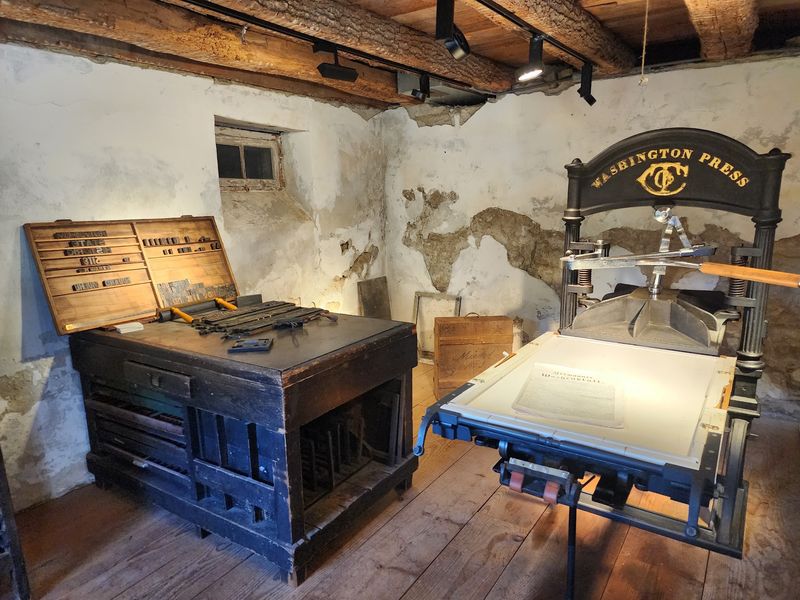
A short stroll from the Pommer-Gentner House leads to the Strehly House, a structure with an equally rich and industrious history that genuinely stopped me in my tracks. This fine example of German vernacular architecture began its life in 1842 and was expanded over the next 27 years, evolving much like the families it sheltered.
What truly captured my imagination was its past as the hub of a thriving printing business. Until 1854, the Strehly House was home to the printing operations of Carl Strehly and Eduard Muehl, who produced the very first German newspaper west of the Mississippi River right here in 1843.
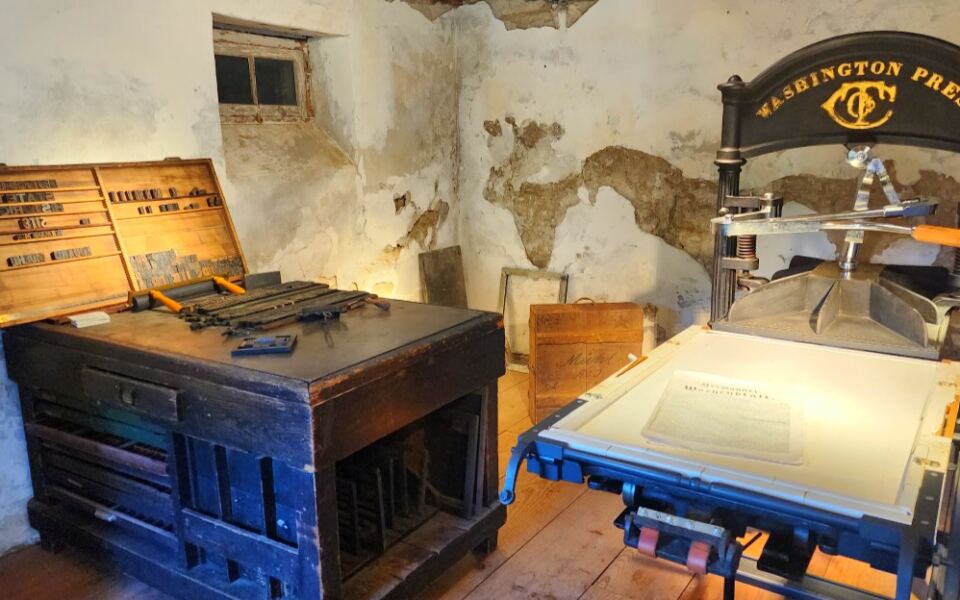
Standing in the ground-floor print shop, seeing a working Washington Press from that era, I could almost hear the rhythmic clanking and envision pages being carefully pulled, sharing news with the burgeoning German-speaking population. This was more than a business; it was a vital artery connecting the community to their heritage in a new land.
The Strehly House also housed a winery around 1857, featuring a vaulted brick cellar.
Living Gardens Rooted in Tradition
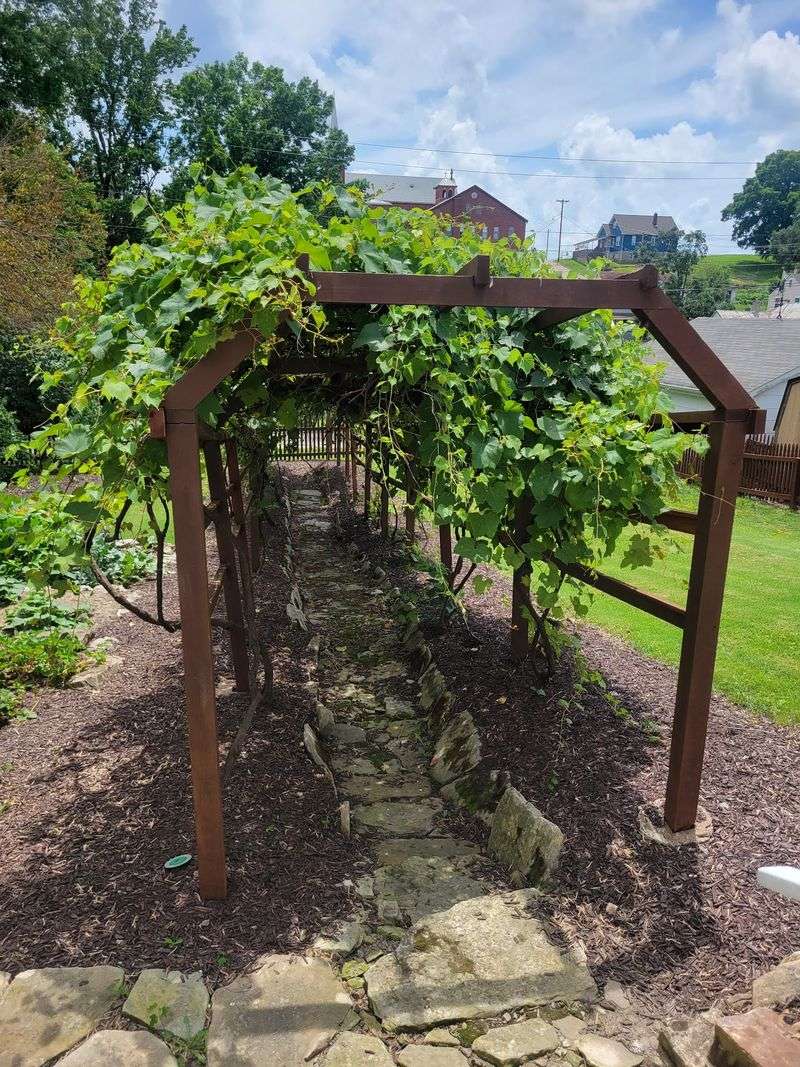
Walking out from the historic houses, the warmth of the Missouri sun greeted me, and I was immediately drawn to the meticulously recreated gardens at Deutschheim. These are not just decorative spaces; they are living exhibits, offering a tangible connection to the agricultural practices and daily sustenance of 19th-century German immigrants.
Behind the Pommer-Gentner House, a vibrant German four-square gemüsegarten, or kitchen garden, is nothing short of a horticultural masterpiece. It brims with heritage flowers, rare vegetables, and traditional plantings, all thoughtfully arranged within period woven fencing and crowned with charming straw beehives.
Over at the Strehly House, grapevines more than a century old still thrive on an arbor, serving as a powerful, living link to the very beginnings of Missouri’s renowned wine industry. These vines are direct descendants of those planted by Carl Strehly himself in the 1850s.
The combination of kitchen garden and ancient grapevines creates a quiet, green corner that speaks volumes about the enduring agricultural heritage cultivated here across generations.
The Festivals That Keep Tradition Alive
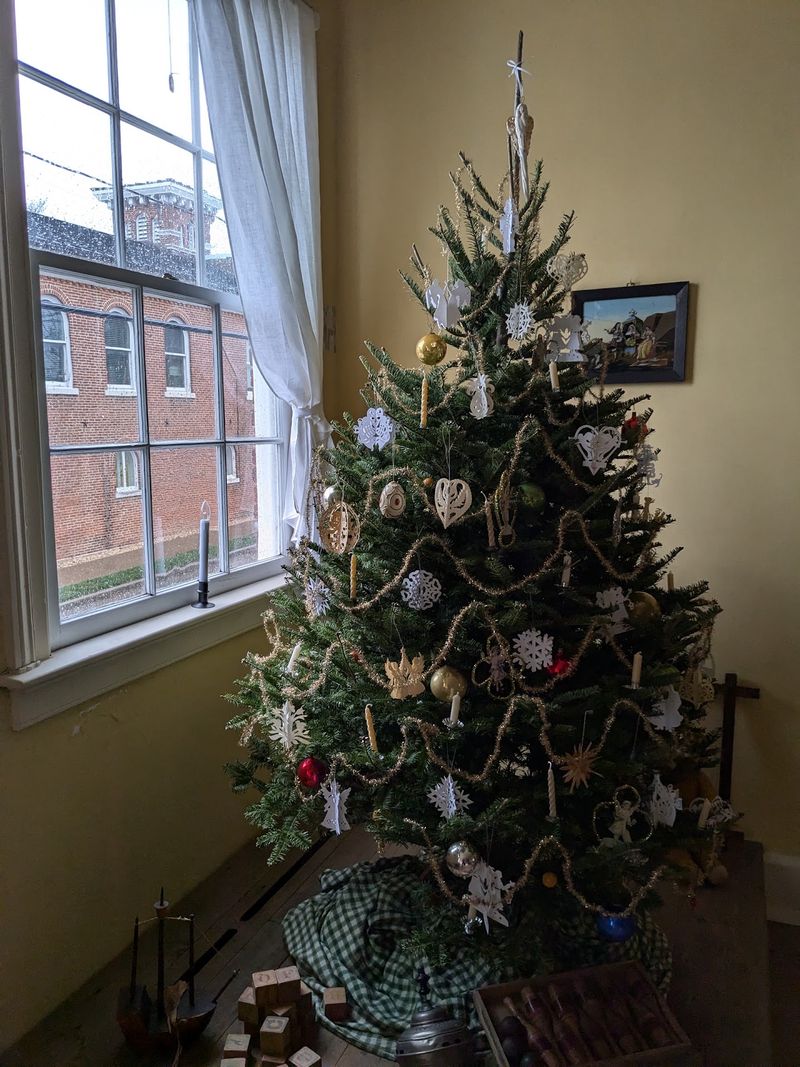
One of the most engaging aspects of Deutschheim is its vibrant participation in Hermann’s rich calendar of traditional German festivals, transforming the historic site into a lively hub of cultural celebration. These events are not mere reenactments; they are ongoing expressions of the heritage that Deutschheim was established to preserve.
During Maifest, typically on the third weekend in May, the site buzzes with craft demonstrations and activities echoing spring celebrations in Germany. Then comes Oktoberfest, spanning three weekends in October, when Deutschheim features various German crafts, often coinciding with an Arts and Crafts Show on the second weekend.
As the year draws to a close, the magic of Weihnachtsfest descends upon the site during the first weekend in December. This special event brings traditional baked goodies, enchanting music, authentic table trees adorned with period decorations, and displays of antique toys, running concurrently with Hermann’s Kriskindlmarkt.
The Deutschheim Verein sponsors engaging children’s activities during all these festivals, ensuring that traditions are joyfully passed down to every new generation.
The Friends Group Powering Preservation
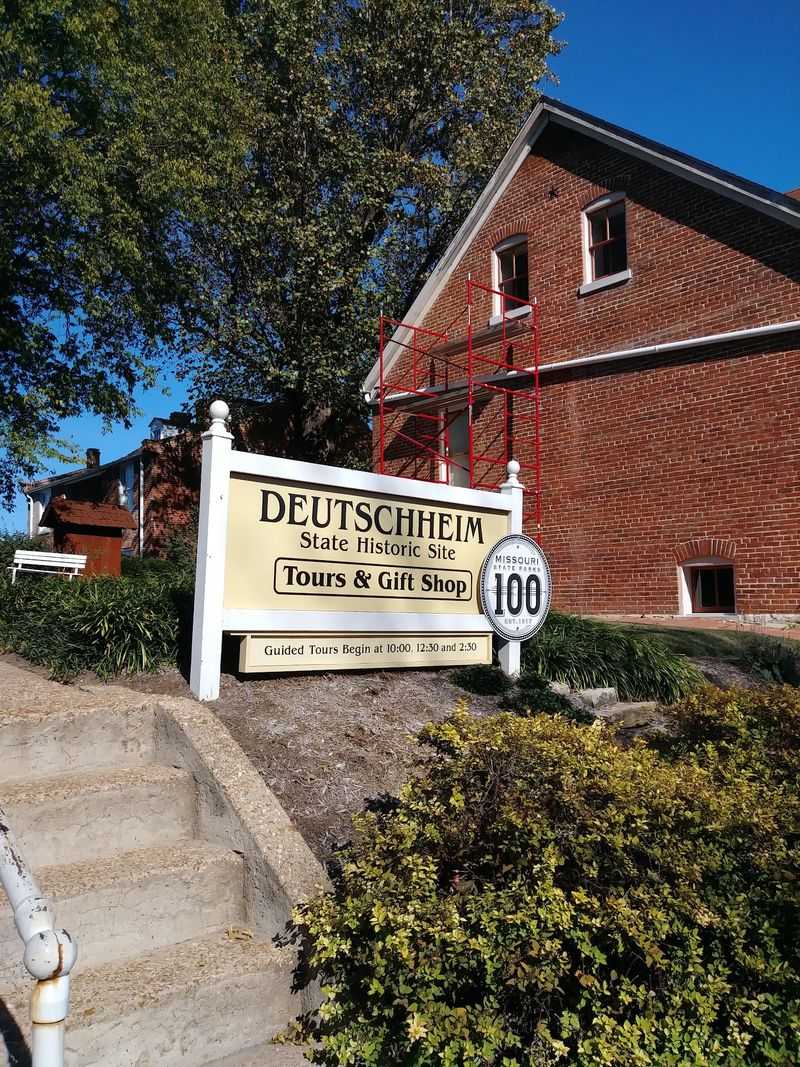
Behind the scenes at Deutschheim, a passionate organization known as the Deutschheim Verein serves as the museum’s dedicated Friends Group, and their contribution to keeping this place alive is genuinely impressive. These volunteers play a crucial role in bringing the site’s rich history to life, particularly for younger generations.
Their work goes well beyond organizing events. The Verein actively champions a greater understanding of 19th-century German-American culture and its profound impact on Missouri, reinforcing the idea that cultural preservation is a true community effort rather than a government obligation alone.
Their continuous involvement provides a steady pulse to the site, ensuring that the legacy of these early settlers is not only preserved but actively celebrated and thoughtfully interpreted for every visitor who walks through these historic doors. It is truly inspiring to see local residents so invested in maintaining the authenticity and educational value of Deutschheim year after year.
Their quiet, powerful commitment is what keeps the spirit of this remarkable place genuinely thriving.
Pianos, Pottery, and the Details of Daily Life
Beyond charming architecture and flourishing gardens, the true heart of Deutschheim lies in its ability to immerse visitors in the everyday lives and traditions of those who built this community. The guided tours are not just walks through old buildings; they are journeys back in time, allowing you to genuinely experience the world of German immigrants in mid-19th century Missouri.
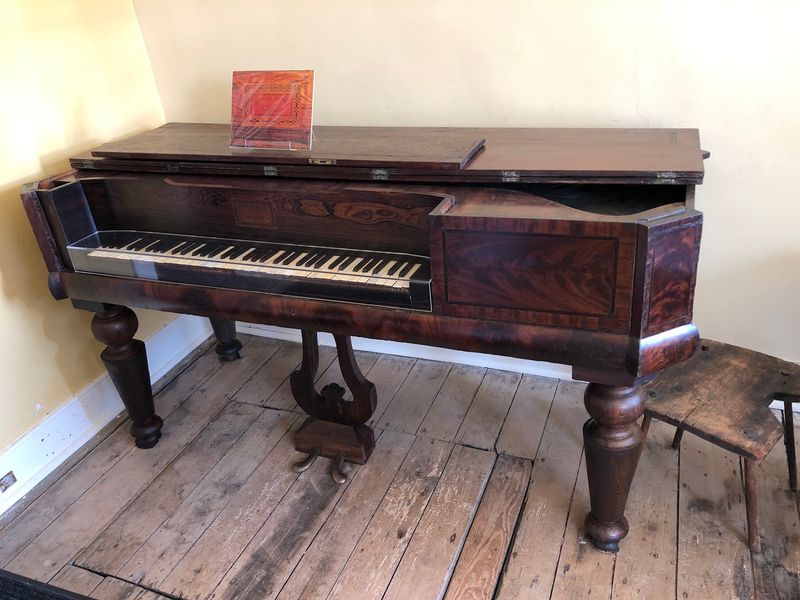
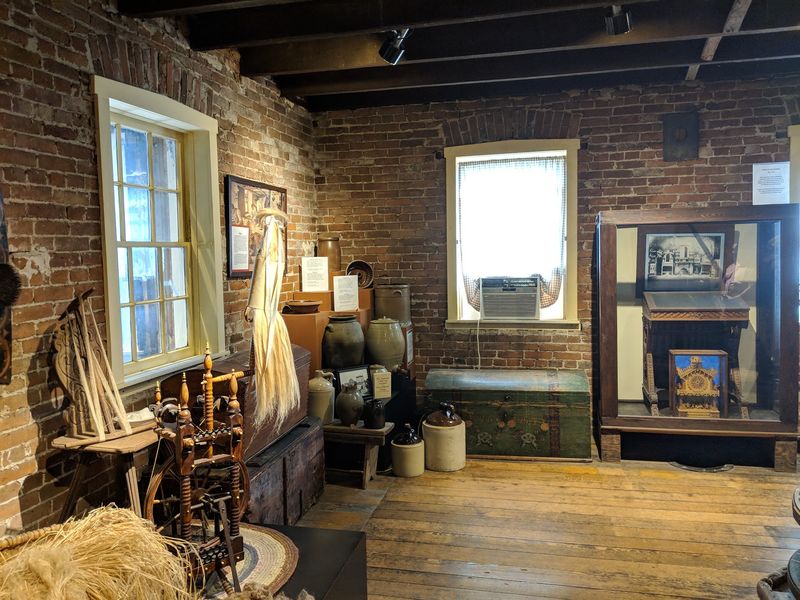
The houses are filled with authentic furnishings, personal possessions, delicate porcelains, and gleaming silver, all meticulously arranged to evoke the period. In the Pommer-Gentner House, the workshop displays original pianos crafted by Carl Pommer and his sons, offering a musical glimpse into the family’s artistic and entrepreneurial spirit.
The ground-floor Print Shop goes beyond the press itself to explore a wide range of everyday German-American life, covering wedding customs, traditional pottery, kitchen tools, and other small yet significant details. These personal touches are precisely what make the experience so rich, connecting you directly to the industrious people who shaped this remarkable region.
The depth of detail here is genuinely unlike anything I expected.
Abolitionist Ideals Woven Into the Fabric of Hermann
As I explored the narratives preserved at Deutschheim, a particularly compelling aspect of the German immigrant community emerged: their strong and unwavering stance on abolitionism. This detail adds profound depth to their story, showcasing a moral compass that guided many of these settlers well beyond their cultural contributions.
German immigrants who had sought freedom from political oppression in their homeland understood the importance of liberty deeply and carried those principles with them to the New World. Their support for the Union during the American Civil War, and their firm opposition to slavery, became a defining part of their identity and a significant contribution to the state of Missouri.
Deutschheim sheds light on this less commonly known yet critically important facet of their history through its exhibits and interpretations. This underlying spirit of conviction and resilience truly underpins the entire narrative of the site, making it a place of both cultural richness and profound historical significance that reaches far beyond the borders of a charming Missouri river town.
The moral courage of these settlers deserves far more recognition.
Planning Your Own Visit to Deutschheim
If the idea of stepping back in time to experience a slice of German-American heritage has piqued your curiosity, planning a visit to Deutschheim is refreshingly straightforward. Guided tours run daily from April 1 to October 31 at 10:00 AM, 12:30 PM, and 2:30 PM, except on Independence Day, with a Thursday through Sunday schedule from November 1 to March 31.
Admission is quite reasonable: adults pay $5.00, children aged 6 to 17 pay $3.00, and kids five and under enter free. Group rates are available, making this an excellent destination for educational outings.
German-speaking guides can be arranged with prior notice, a lovely touch for heritage travelers.
The visitor center at 101 West Second Street is open from 10:00 AM to 4:00 PM and is free to enter, featuring informative displays on German immigration along with a gift shop stocked with imports, German Americana, and Springerle cookie molds perfect for bringing a piece of Deutschheim home. The outdoor grounds and gardens are accessible from sunrise to sunset, year-round, so a peaceful stroll is always an option regardless of tour schedules.
Share this story