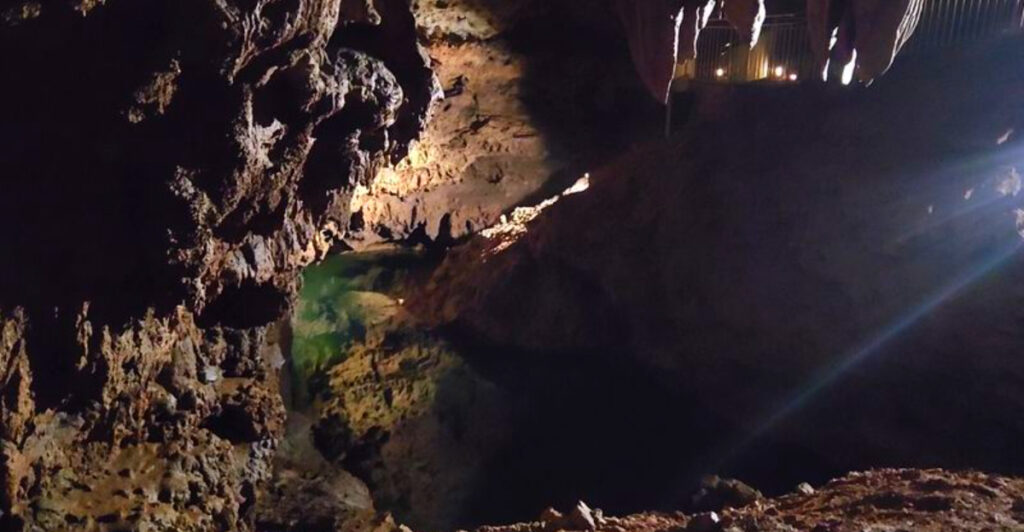
Hidden beneath the rolling hills of the Missouri Ozarks lies one of the state’s most breathtaking natural wonders, where towering underground chambers, sparkling mineral formations, and millions of years of geological history create an unforgettable adventure. Visitors come to explore beautifully decorated caverns, walk through enormous underground rooms, paddle the scenic Meramec River, hike wooded trails, and discover a landscape unlike anywhere else in the Midwest. It’s the kind of place where every turn reveals another natural masterpiece shaped one drop of water at a time.
The experience extends far beyond the cave tours. Scenic river access, peaceful campgrounds, hiking trails, fascinating wildlife, family-friendly guided tours, and one of Missouri’s most impressive collections of cave formations have made this one of the state’s premier outdoor destinations. Whether you’re visiting for your first cave adventure or returning to explore the Ozarks again, it’s easy to understand why travelers consider this one of Missouri’s greatest natural treasures.
Here’s why Onondaga Cave State Park has become one of Missouri’s most remarkable state parks and one of the best places in America to experience the beauty of an underground world.
Finding the Place: Address, Location, and First Impressions
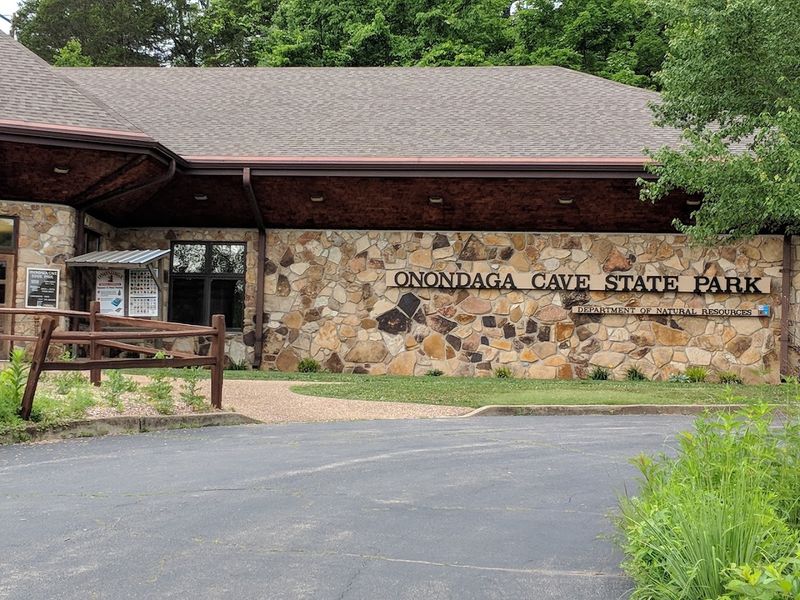
The address is 7556 Missouri H, Leasburg, MO 65535, tucked into the rolling hills of the Ozarks in central Missouri, about an hour southwest of St. Louis. The drive itself sets the mood perfectly, with winding two-lane roads cutting through dense forest and limestone bluffs that hint at the geological drama waiting below.
When I pulled into the parking area, the visitor center greeted me with friendly staff, clean restrooms, and a calm, organized energy that felt reassuring before heading underground. The park sits alongside the Meramec River, and you can catch glimpses of the water through the trees as you walk toward the cave entrance.
First-time visitors often underestimate how much is packed into this single destination. There are two caves, multiple hiking trails, river access, and a full campground, all within one beautifully maintained state park. The phone number to reach the park directly is plus one 573-245-6576, and the official website is mostateparks.com/park/onondaga-cave-state-park.
How a Spring and a Johnboat Changed Everything
The year was 1886, and a man named Charles Christopher was doing something most people would consider unremarkable: investigating a spring near the Davis Mill on the Meramec River. What he found on the other side of that spring was anything but ordinary.
Christopher, along with friends John Eaton and Mitis Horine, borrowed a johnboat and paddled into the darkness, spending an entire day exploring a cave system of breathtaking scale and beauty. That single afternoon of curiosity launched what would eventually become one of Missouri’s most celebrated natural attractions.
Christopher and Eaton quickly acquired the land above the cave, envisioning a public attraction they called the “Mammoth Cave of Missouri.” The name Onondaga came later, chosen by a woman named Myrtle Land, drawn from an Iroquois word meaning “people of the mountain.” That origin story, equal parts adventure and ambition, gives the cave a human warmth that makes the geology feel even more personal when you walk through it today.
Millions of Years in the Making: The Geology Story
Long before there were people in Missouri, there was a shallow sea. Hundreds of millions of years ago, that ancient ocean deposited layer upon layer of sediment across this region, which eventually hardened into the limestone and dolomite bedrock that now forms the cave.
When the Ozarks uplifted and the seas retreated, slightly acidic groundwater began seeping into cracks in the rock, dissolving it slowly from the inside out. Over enormous stretches of time, this process carved out the vast chambers and winding passages that make up Onondaga Cave today.
As the Meramec River cut deeper into the valley, it drained the water-filled tunnels, leaving behind air-filled rooms ready to be decorated by the next phase of geological artistry. Mineral-rich water, still seeping through the rock above, began depositing calcium carbonate in spectacular formations known as speleothems. The result is a cave so richly ornamented that scientists gave it National Natural Landmark status, a recognition reserved for places of truly exceptional geological significance.
The Formations That Stop You in Your Tracks
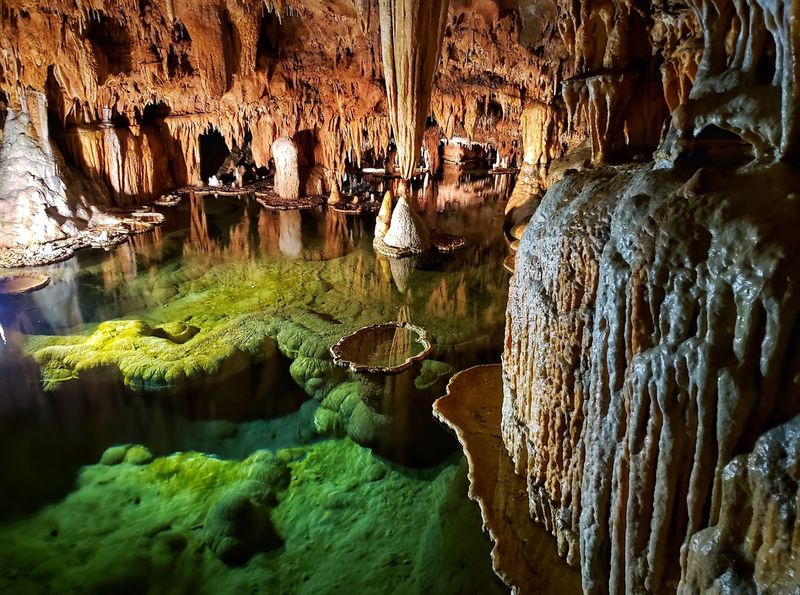
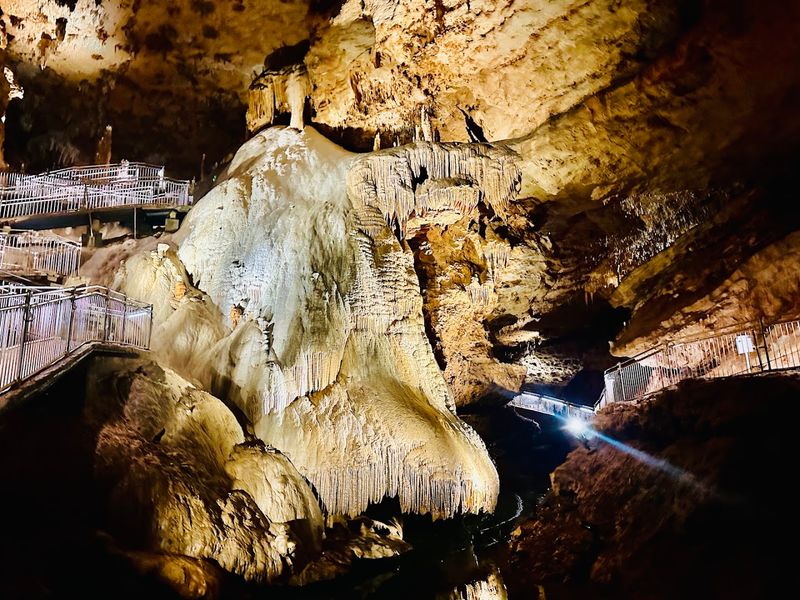
Nothing quite prepares you for the King’s Canopy. This enormous flowstone formation drapes across the cave like a frozen curtain of stone, so large and so detailed that your brain takes a moment to accept that it is entirely natural.
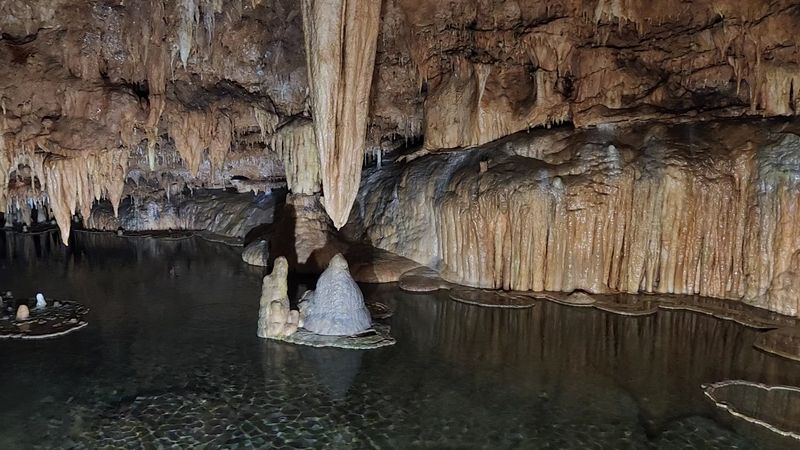
Throughout the tour, the cave reveals formation after formation, each one more unexpected than the last. The Twins are two impressive stalagmites that rise side by side from the cave floor, reaching upward with a quiet grandeur. Rimstone dams create shallow, crystalline pools that mirror the ceiling above them, while delicate soda straws, hollow and pencil-thin, hang like glass needles from the rock overhead.
The Wall of Jericho is another standout, a sweeping curtain of flowstone that seems almost architectural in its scale. What struck me most was learning that many of these formations are still actively growing, adding microscopic layers of mineral every year. The cave is not a relic. It is a living, breathing, dripping work in progress, and that fact makes every formation feel electric.
What the Guided Tour Actually Feels Like
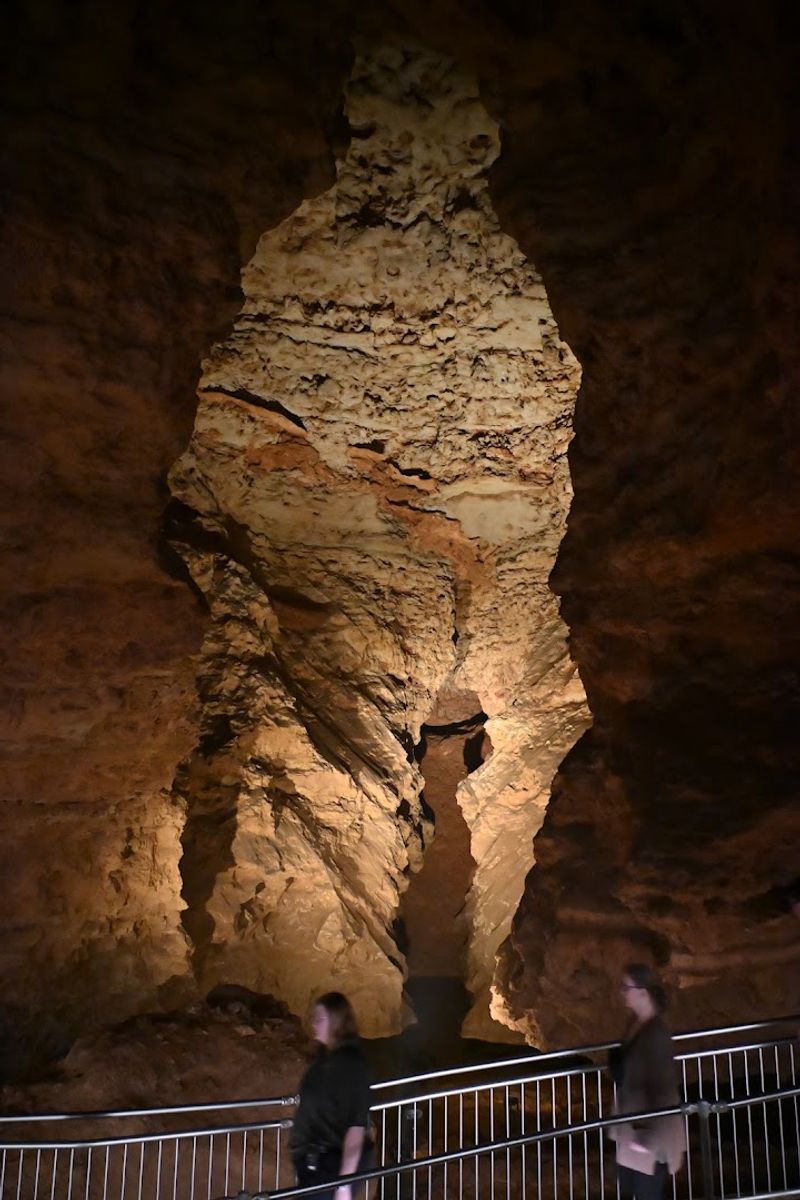
The tour begins at the visitor center, where guides hand out tickets and answer questions with the kind of relaxed confidence that comes from knowing a place deeply. Once inside, the cave opens up almost immediately into rooms that feel impossibly large, their ceilings disappearing into shadow above the electric lights.
The paved walkway runs for roughly one mile, and the tour takes about an hour and fifteen minutes at a comfortable pace. Guides stop at key formations to explain how they formed, what they are called, and why they matter, delivering information in a way that is genuinely engaging rather than scripted. The cave temperature holds steady at 57 degrees Fahrenheit year-round, so a light jacket is not optional, it is essential.
A few sections of the path climb steeply, and the grooved concrete underfoot helps with traction on wet surfaces. Wearing proper closed-toe shoes is strongly recommended, not just for comfort but for safety. The tour is well-suited for families with children, though it is worth noting the path is not wheelchair accessible due to those inclines.
Cathedral Cave: Where Things Get Gloriously Muddy
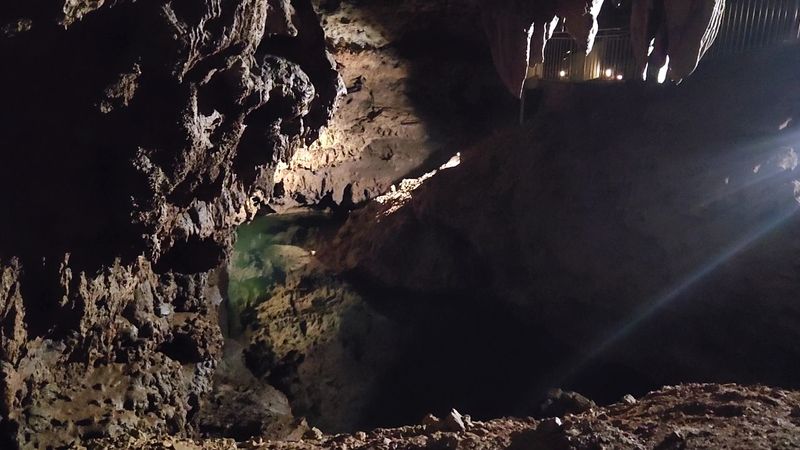
If the main cave tour is a polished gallery, Cathedral Cave is the artist’s raw studio, unlit, unpaved, and absolutely thrilling. This second cave within the park offers a completely different kind of experience, one where your flashlight is your only guide and the path occasionally requires you to crouch, climb, or accept that mud is now part of your outfit.
The tour runs about two-thirds of a mile and lasts considerably longer than the Onondaga tour, sometimes up to five hours for the full exploration. Cathedral Cave takes its name from a towering interior formation, a natural structure that stands 25 feet high and 15 feet wide, commanding the space around it.
Groups are kept small, usually with an age minimum of around ten years old, and advance booking is required. The experience is genuinely different from any standard show cave, with cave crickets, multiple species of salamanders, and a stream winding through the floor adding to the sense of raw discovery. Visitors consistently describe Cathedral Cave as their favorite of the two, and after my visit, I completely understand why.
The Secret Life of Cave Creatures
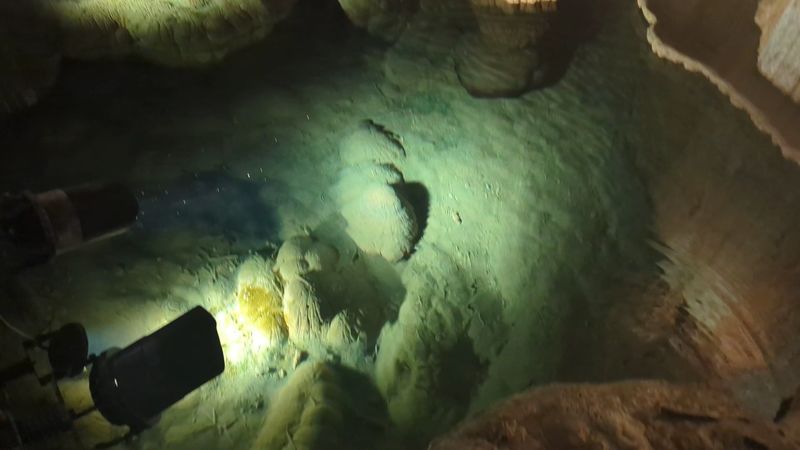
Most people visit Onondaga Cave for the rocks, and that is completely fair. But the biology happening in the shadows is just as remarkable, and the guides are quick to point it out if you show any curiosity.
The cave is divided into ecological zones based on light and temperature. Near the entrance, owls and salamanders take advantage of the shelter. Deeper in, the twilight zone hosts trogloxenes, animals that visit the cave regularly but also live above ground, including cave centipedes, spiders, crickets, and reportedly even beavers that overwinter in the cave’s interior.
The dark zone, where no natural light ever reaches, belongs to troglobites, organisms that spend their entire lives underground and cannot survive on the surface. Cave crayfish and grotto salamanders found here have lost their pigment entirely, appearing pale and almost translucent, a visible record of countless generations of adaptation to complete darkness. Spotting one of these creatures on the Cathedral Cave tour, moving through a cold underground stream, is one of those moments that makes the whole trip unforgettable.
The Meramec River: More Than Just a Pretty Backdrop
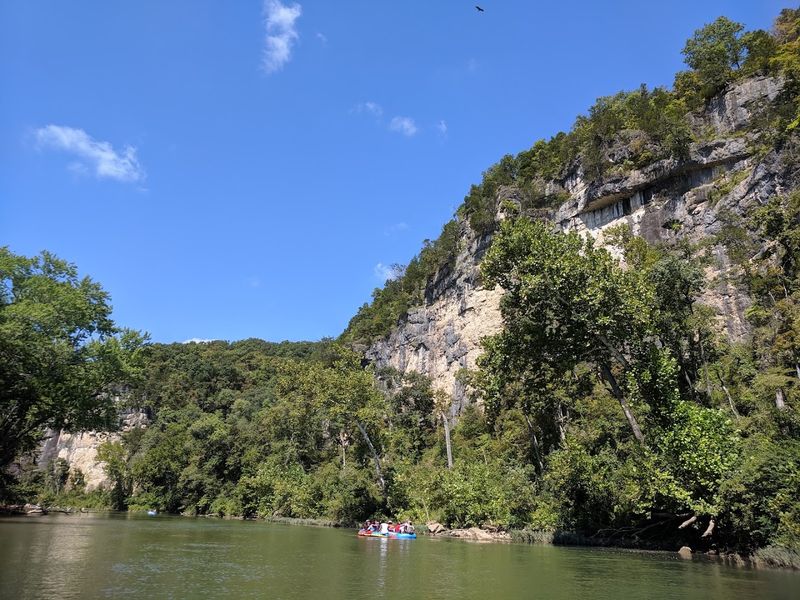
The Meramec River is not just scenery. It is the reason the cave exists in its current form. As the river cut deeper into the valley over millions of years, it drained the water-filled tunnels beneath the ground, leaving behind the air-filled chambers that visitors now walk through.
Inside the cave itself, a stream still flows through an entrenched canyon, quietly continuing the geological work that began eons ago. Above ground, the river becomes a place for canoes, kayaks, and fishing lines. The water runs clear and relatively calm near the park, making it an excellent spot for beginners on the water as well as experienced paddlers looking for a peaceful float.
Fishing is popular year-round, with the Meramec known for rewarding patient anglers willing to work its banks. The park provides easy river access, and the combination of cool water, shaded banks, and surrounding bluffs makes an afternoon on the Meramec feel like a complete reset from everyday life. The river and the cave together form a partnership that is hard to find anywhere else.
Trails, Bluffs, and Fresh Air Above Ground
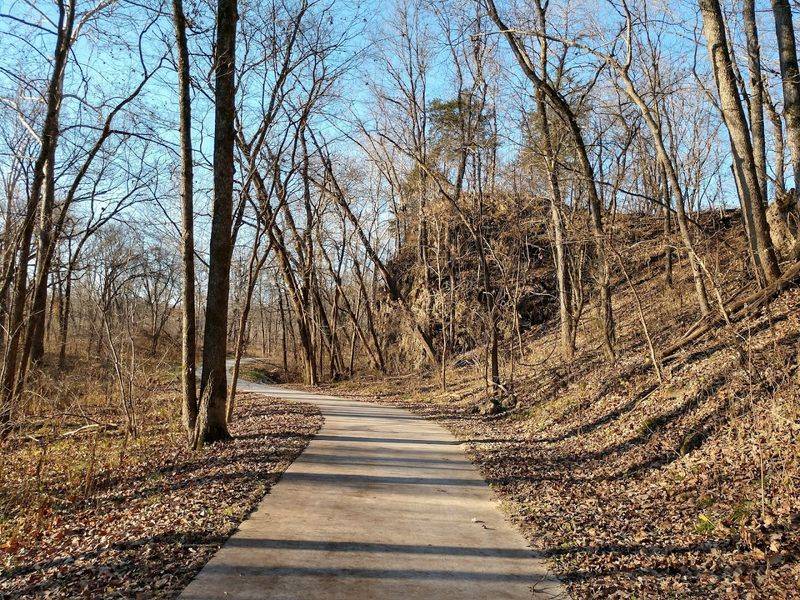
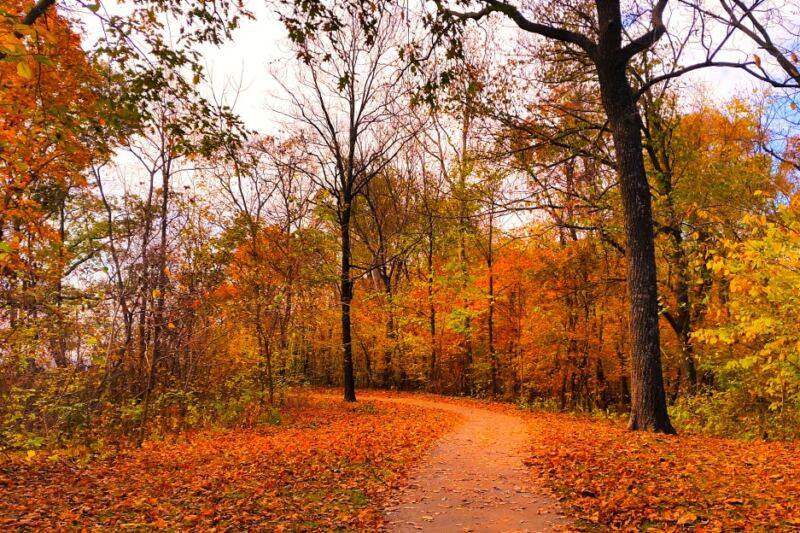
Not every great moment at this park happens underground. The hiking trails above ground offer their own rewards, winding through shaded woodland, along river banks, and up to viewpoints that put the entire Ozark landscape in perspective.
Trail options range from a short half-mile loop to routes stretching nearly four miles, giving casual walkers and more committed hikers alike a reason to lace up their boots. Spring is particularly spectacular, when wildflowers push up through the leaf litter and the trees are just beginning to fill in with fresh green.
The Vilander Bluff Natural Area, located a short distance downstream from the main park, rewards the effort with panoramic views from towering limestone cliffs above the Meramec River. Standing on those bluffs, looking out over the river valley, it is easy to understand why this landscape has drawn people here for generations. The trails are well-maintained and clearly marked, making navigation straightforward even for first-time visitors. Bring water and give yourself more time than you think you need.
Camping Under the Ozark Stars
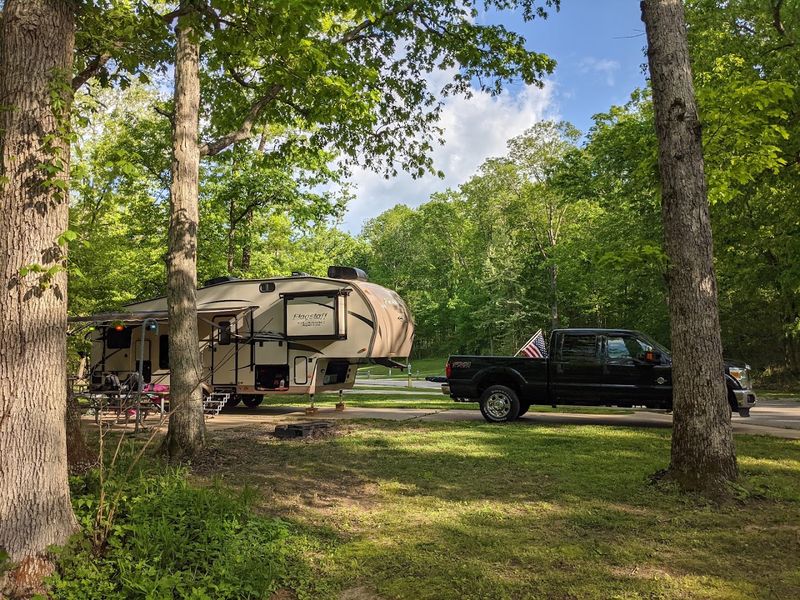
Spending a night at the campground here adds an entirely different dimension to the park experience. The sites are spread out generously, giving each camper a genuine sense of privacy without feeling isolated. Many sites sit close enough to the Meramec River that you can hear the water from your tent.
The campground facilities are well-maintained, with clean restrooms, shower houses offering hot water and privacy curtains, and enough space to feel comfortable even during busy summer weekends. Cell reception is limited throughout most of the park, which turns out to be more of a gift than an inconvenience. The quiet is remarkable.
For cyclists, the flat terrain around the campground is ideal for an easy ride, and several visitors have noted covering a few miles with no trouble at all on a simple cruiser. If you plan to camp during peak season, reserving a site in advance is wise. The combination of starry skies, river sounds, and the knowledge that an extraordinary cave sits just a short walk away makes for a very satisfying night outdoors.
Practical Tips to Make Your Visit Count
A few straightforward preparations make a significant difference here. That 57-degree cave temperature feels refreshing for the first few minutes and genuinely chilly by the thirty-minute mark, so packing a light jacket is non-negotiable regardless of how hot it is outside.
Footwear matters more than people expect. The paved paths inside Onondaga Cave are wet in places and include steep inclines, and guides have watched plenty of visitors in sandals discover this the hard way. Closed-toe shoes with solid grip are the right call every time. For Cathedral Cave, add flexibility and a willingness to get dirty to that list.
Booking cave tour tickets online in advance is strongly recommended, especially for summer visits and holiday weekends. The park’s rating of 4.8 stars across over 1,500 reviews reflects a consistently excellent experience, but that popularity means spots fill up. The park is open year-round, though cave tour schedules vary by season. One final note: if you are bringing a pet, know that animals are not permitted on cave tours, though the park does offer a limited number of crates for rent near the visitor center.
Share this story