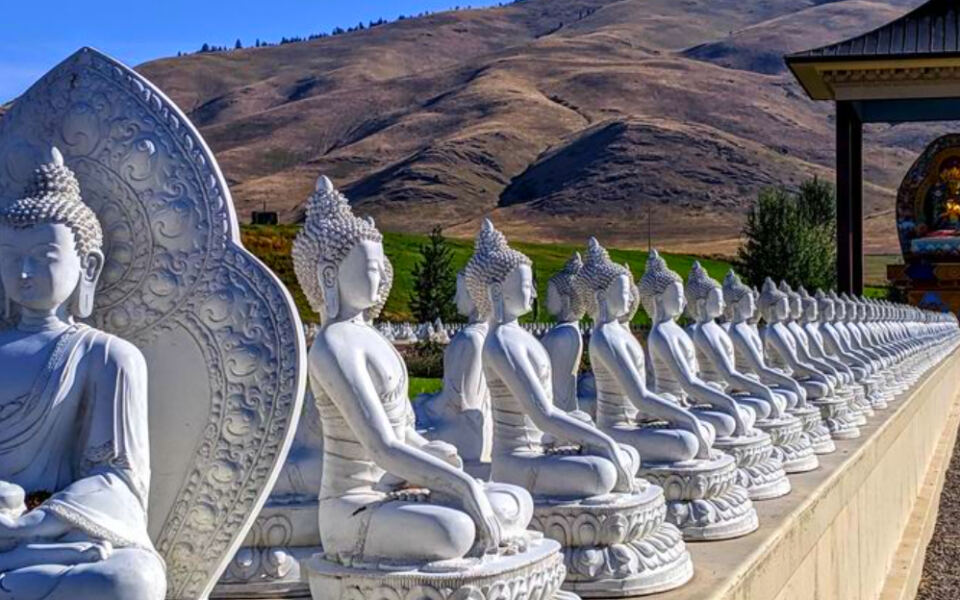
Somewhere in the wide, breathtaking valleys of western Montana, there is a place that stops you cold the moment you see it. Rows upon rows of white Buddha statues stretch across the earth in a perfectly arranged circle, framed by the jagged peaks of the Rocky Mountains, and for a second, your brain genuinely wonders if you took a wrong turn somewhere between Missoula and another continent.
This is not a roadside curiosity or a quirky art installation. It is a fully realized sacred garden built around a colossal Dharma wheel, housing exactly one thousand hand-cast Buddha statues, and it welcomes every single visitor free of charge.
The story behind how this place came to exist in rural Montana is as remarkable as the garden itself, rooted in a childhood dream, a spiritual prophecy, and decades of devoted work. Keep reading, because every section of this article reveals something more surprising than the last.
A Sacred Circle Unfolds in Big Sky Country
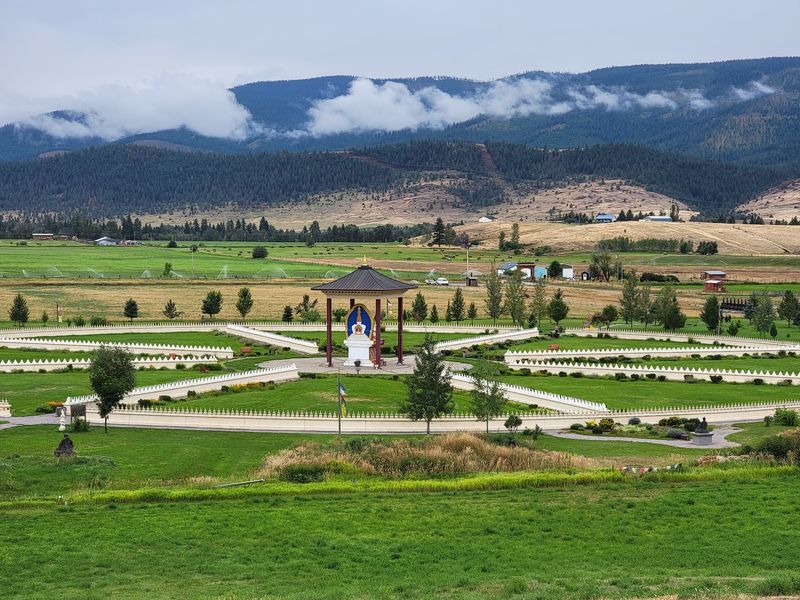
The address alone tells you something unusual is waiting: 34574 White Coyote Road, Arlee, MT 59821, tucked inside the Jocko Valley of western Montana, north of the small town of Arlee on the Flathead Reservation.
The Garden of One Thousand Buddhas sits on land belonging to the Confederated Salish and Kootenai Tribes, a fact that adds quiet weight to every step you take here. The garden was developed under the spiritual leadership of Gochen Tulku Sang-ngag Rinpoche and is part of the Ewam International organization, rooted in the Nyingma School of Tibetan Buddhism.
The Rocky Mountains rise in every direction, creating a backdrop so dramatic it almost feels staged. Construction began after the land was acquired in 2000, and the final Buddha statue was placed in 2016, completing a vision that took years to realize.
You can reach the garden by phone at 406-726-0555 or through ewam.org for more details before your visit.
The Childhood Dream That Sparked It All
Not many sacred sites can trace their origins to a single dream experienced by a child, but this one can, and the story is genuinely moving.
Gochen Tulku Sang-ngag Rinpoche, a revered master of the Nyingma school of Tibetan Buddhism, carried a vision from his boyhood of a peace garden nestled among mountains. Years later, while teaching in Montana, he looked out at the Jocko Valley and recognized the exact landscape from that childhood dream, confirming it as the destined location for the garden.
Rinpoche’s personal history deepens the meaning considerably. He endured nine years of imprisonment during the Chinese Cultural Revolution for practicing Buddhism, yet his commitment to spreading wisdom and compassion never wavered.
That resilience became the foundation for everything built here. His guiding intention was to create a place capable of bringing positive transformation to visitors, responding to the negativity that exists in the modern world with something lasting and genuinely beautiful.
How a Dharma Wheel Became a Garden
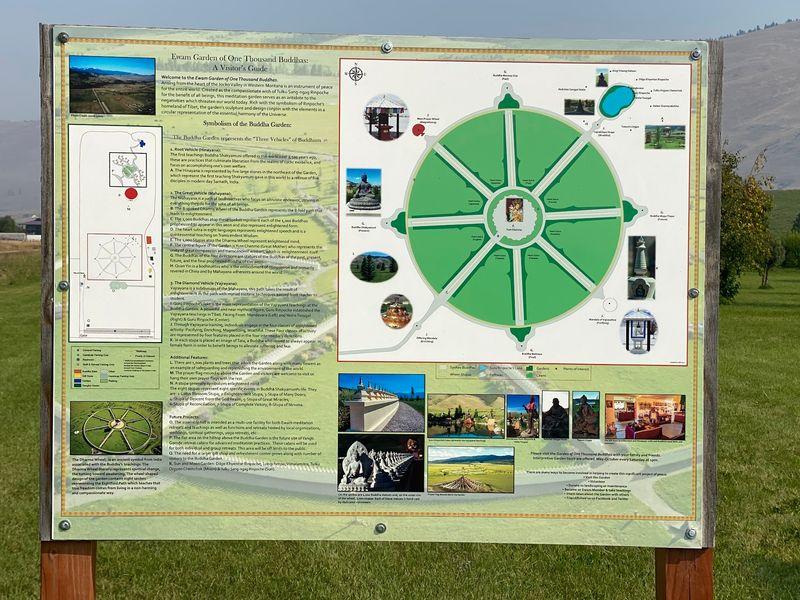
The entire garden is not simply arranged in a pleasing shape. It is laid out in the precise form of an eight-spoked Dharma wheel, one of Buddhism’s most ancient and recognized symbols, spanning approximately 500 feet in diameter across the 10-acre site.
Each spoke of that wheel corresponds to one element of the Noble Eightfold Path, the practical guide the Buddha taught for moving toward liberation from suffering. The circular outer rim represents meditative concentration, the spokes represent wisdom, and the central hub stands for ethical discipline.
Together, these components transform a walk through the garden into a living lesson in Buddhist philosophy.
The scale of the design is something you feel rather than just see. As you follow a pathway that is also a spoke of the wheel, the statues line up on either side with quiet precision, and the mountains fill the horizon ahead of you.
The garden does not just represent the Dharma wheel. It actually is one, stretched out across Montana’s earth.
The Towering Figure at the Center of Everything
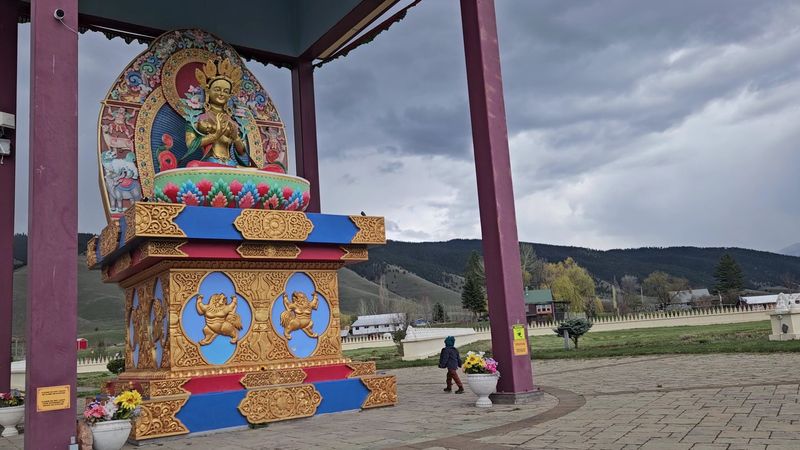
Right at the heart of the great wheel stands a figure that commands your full attention the moment you catch sight of her. Yum Chenmo, also called Prajnaparamita or the Great Mother of Transcendent Wisdom, rises 24 feet into the Montana sky in vibrant color, serving as the serene focal point from which the entire garden radiates outward.
Her presence is not purely visual. Beneath her statue lies a six-foot-deep vault containing sacred Buddhist relics and prayers, an unseen layer of spiritual significance resting quietly below the surface.
That detail alone reframes the entire garden, reminding you that what you can observe is only part of what is actually here.
The name Prajnaparamita translates roughly to the perfection of wisdom, and her placement at the center of the wheel is entirely intentional. Wisdom, in Buddhist teaching, is the quality that makes all other virtues possible.
Standing in front of her, even briefly, tends to produce a stillness that is difficult to explain and surprisingly easy to feel.
One Thousand Buddhas, Each One Counting
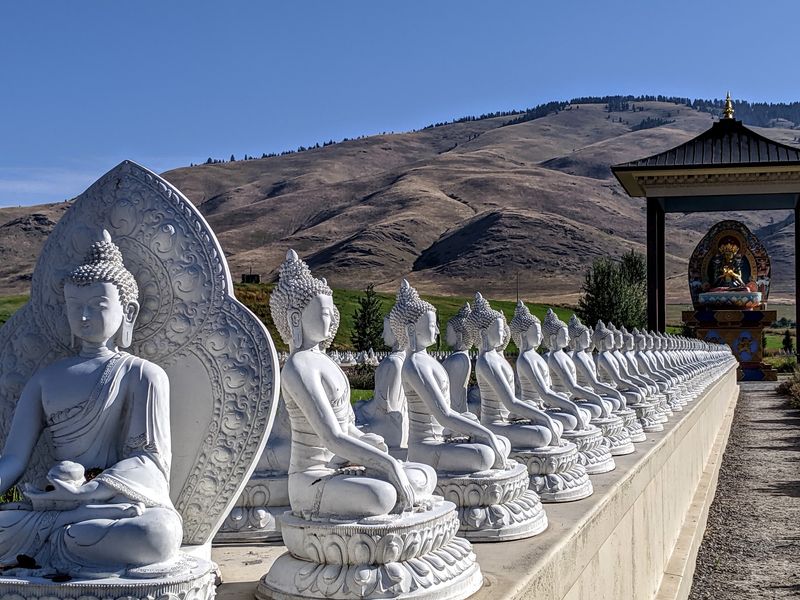
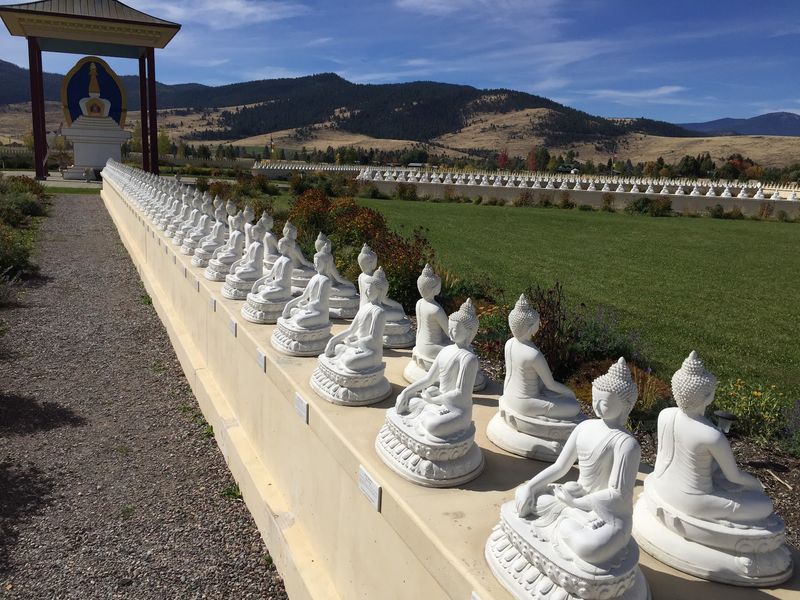
There is something quietly hypnotic about standing at one end of a spoke and looking down a perfectly aligned row of white Buddha figures that seems to continue all the way to the horizon.
Each of the eight spokes holds 125 hand-cast concrete Buddha statues, bringing the total to exactly one thousand. Every figure sits in the same traditional meditative posture, legs crossed, right hand resting gently over the knee, presenting a uniform presence that somehow feels individual when you slow down and look closely.
They were cast right here in Montana, which gives them a grounded, local quality despite their deeply Tibetan character.
The number one thousand is not arbitrary. In Buddhist texts, it refers to the prophecy that one thousand Buddhas will appear in the current religious age to achieve enlightenment and share the path to liberation with others.
So each statue is not just decorative. It is a representation of a future enlightened being, making the garden a kind of forward-looking monument to human spiritual potential.
The Ring of Stupas That Completes the Wheel
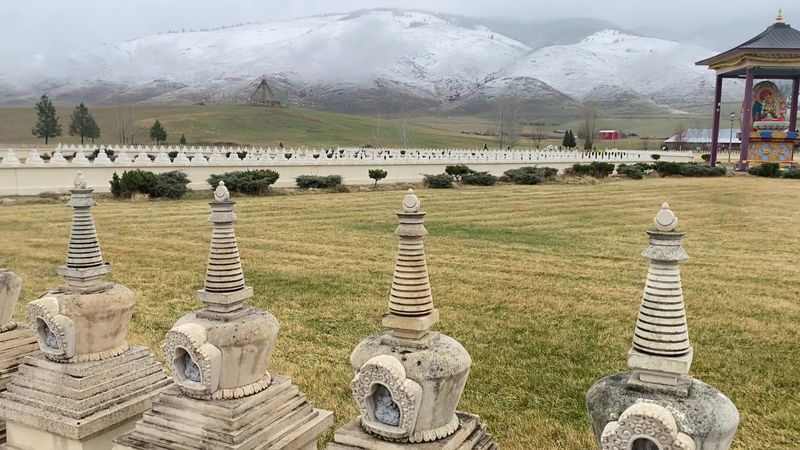
Beyond the inner rows of Buddha statues, the outer rim of the Dharma wheel is defined by a second set of sacred structures that many visitors almost overlook at first glance.
Encircling the garden are one thousand stupas, each built in the traditional stupa of enlightenment style. These tall, elegant stone structures represent the enlightened mind itself, with every architectural element from base to spire carrying symbolic meaning related to the path toward awakening.
Inside each stupa rests an image of Tara, a compassionate female deity whose presence amplifies the garden’s overarching message of liberation and wisdom.
The combination of the inner Buddha statues and the outer ring of stupas creates a layered, interlocking symbolism that rewards patient exploration. The more time you spend reading the informational signs placed throughout the grounds, the more the design reveals itself as a carefully constructed spiritual map rather than a simple decorative arrangement.
That discovery is one of the quiet pleasures this garden offers to curious visitors willing to take their time.
Nature, Koi Ponds, and the Art of Walking Slowly
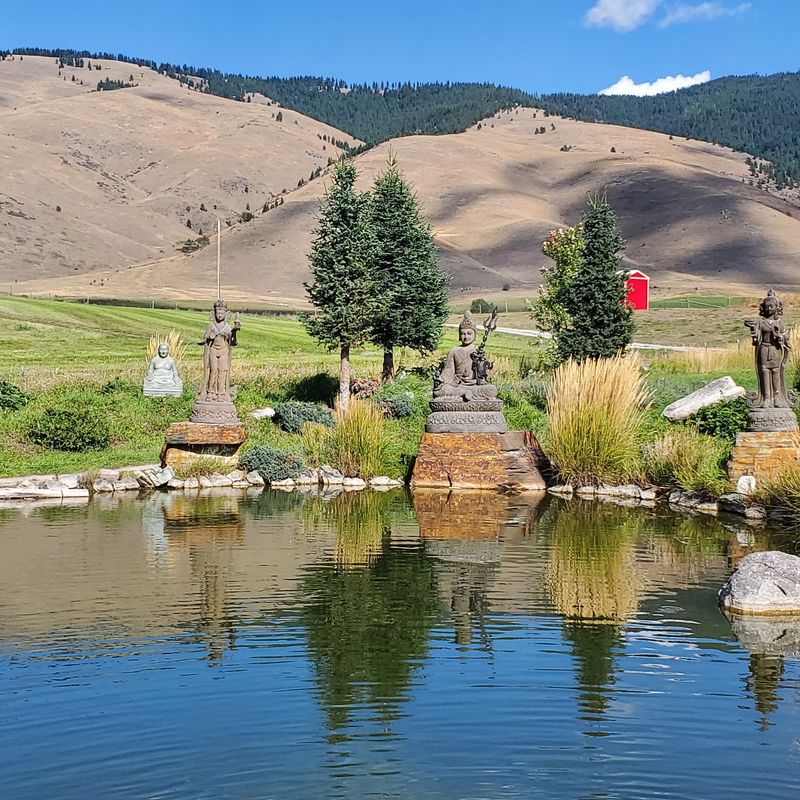
The statues get most of the attention, but the natural elements woven throughout the garden deserve their own moment of appreciation.
Native trees and seasonal flowers dot the landscape, shifting in color and character depending on when you visit. A small koi pond sits tucked within the grounds, its surface catching reflections of the sky and surrounding statues in a way that turns a simple water feature into something genuinely contemplative.
The Rocky Mountains frame every sightline, adding a sense of scale that makes the garden feel both intimate and vast at the same time.
A contemplative walkway meanders for over a mile around the entire garden, and visitors are gently encouraged to walk it in a clockwise direction, following the ancient Buddhist practice of circumambulation, believed to generate merit and clear mental obscurations. That clockwise stroll transforms a pleasant outdoor walk into something with intention and rhythm.
Plan to spend at least an hour here, and bring comfortable shoes, because the grounds are spread out and every corner offers something new to notice.
Open to Everyone, Free of Charge
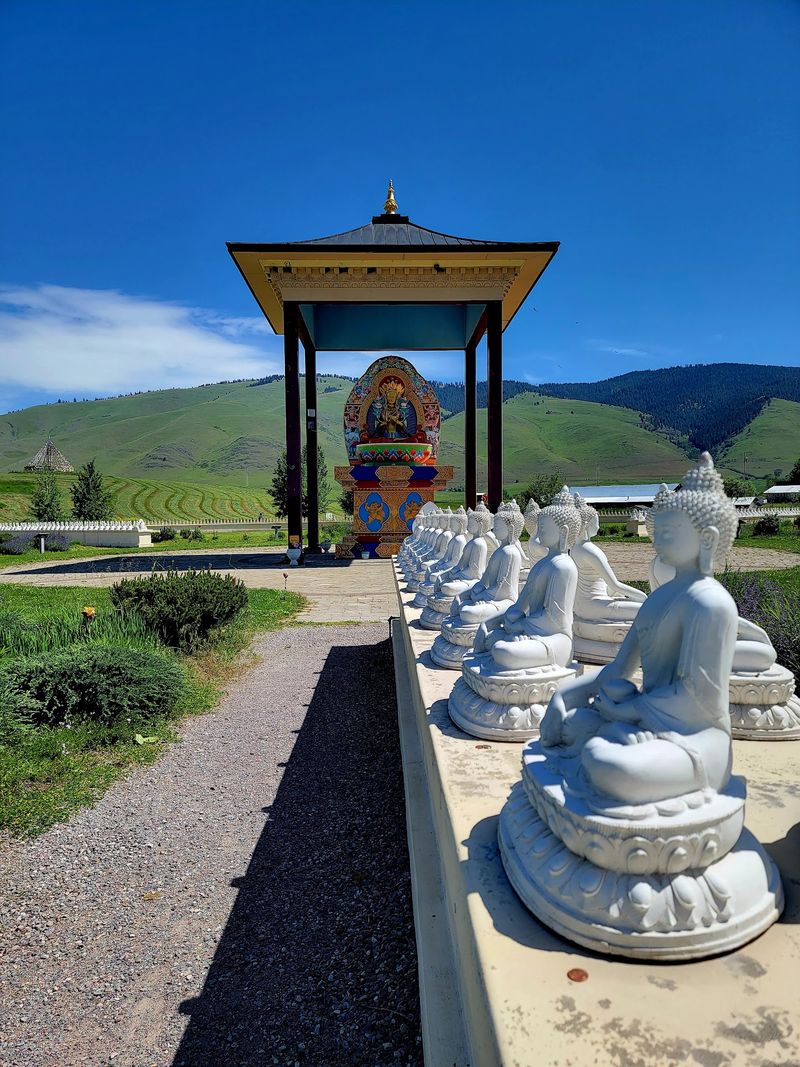
One of the first things that surprises most visitors is the sign confirming that entry is completely free. A suggested donation of five to ten dollars is welcomed and helps with upkeep, but the garden asks nothing more from you than respectful presence.
This open-door philosophy is central to the garden’s founding mission. Though it is rooted in Tibetan Buddhism, it was designed from the beginning as an international peace center for the Western hemisphere, welcoming people of all backgrounds, beliefs, and traditions.
The founders believe that peaceful sanctuaries are needed now more than ever, and that conviction shapes every aspect of the visitor experience.
You do not need any background in Buddhism to feel the calm that settles over you here. Informational signs placed throughout the grounds explain the symbolism of the statues, stupas, and pathways in clear, accessible language, so even first-time visitors leave with a genuine sense of understanding.
The garden rates 4.7 stars across more than 1,200 reviews, which suggests that the feeling of welcome is not just intended but consistently delivered.
Two Cultures, One Shared Vision of Peace
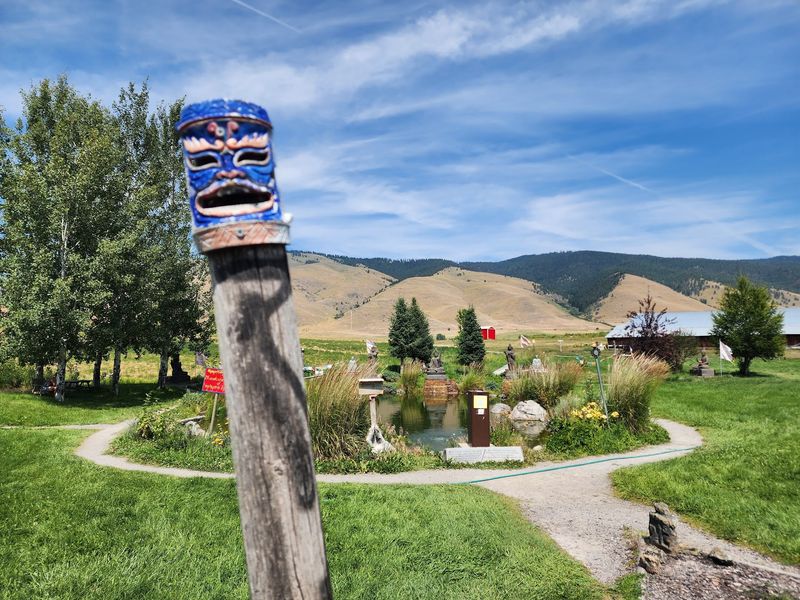
The land the garden occupies belongs to the Confederated Salish and Kootenai Tribes of the Flathead Reservation, and the relationship between the garden’s founders and the tribal community is one of the most meaningful aspects of this entire project.
From the very beginning, Tulku Sang-ngag Rinpoche engaged respectfully with tribal leaders, ensuring the garden was developed with genuine awareness of the existing cultural and spiritual heritage of the land. That early respect evolved into an ongoing collaboration, with shared community events honoring both Tibetan Buddhist and Native American traditions.
Tribal officials have recognized commonalities between their own traditions and the Buddhist ideals of peace, unity, and reverence for the natural world. There is also a deeply symbolic act embedded within the garden itself: destroyed weapons and symbols of conflict are buried beneath some of the statues, representing the deliberate choice of compassion over aggression.
That buried layer of intention makes the ground beneath your feet feel like more than just soil. It feels like a statement.
Visiting in Every Season: What to Expect
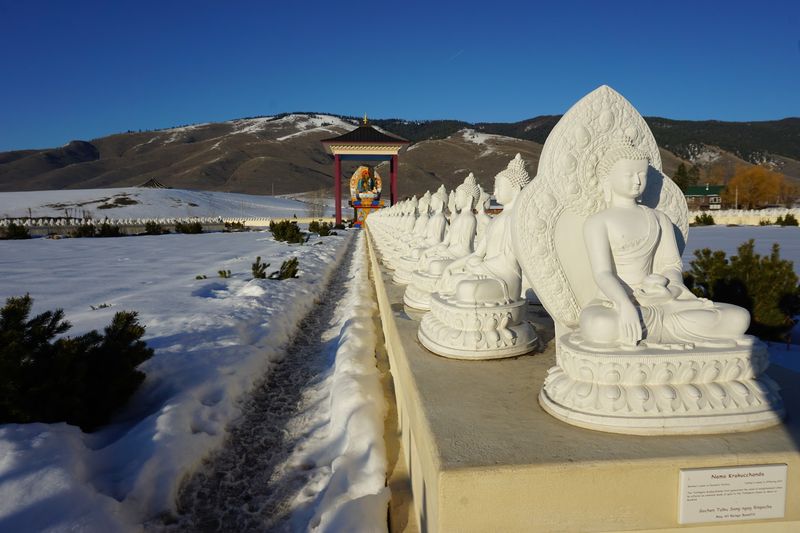
The garden is open every day of the year, which is a detail worth pausing on. Whether you arrive in July with wildflowers blooming around the statues or in December with snow resting on a thousand stone shoulders, the experience is genuinely worth making the trip.
Summer hours run from 9 AM to 9 PM, giving you long evening light to explore at a relaxed pace. Spring and autumn hours close at 7 PM, while winter months from November through February close at 5 PM.
Handicap parking is available closer to the garden for those who need it, and vault toilets are located near the main parking area.
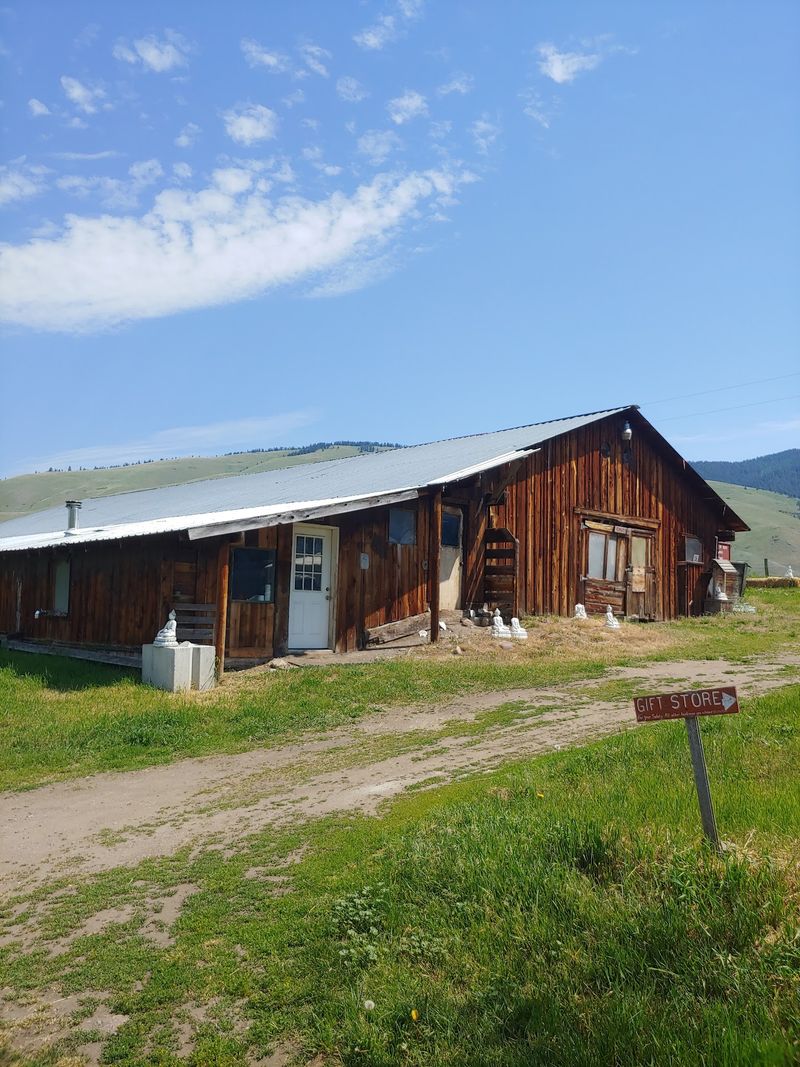
Pets are not permitted on the grounds, so leave your four-legged companions at home for this one. A gift shop on-site carries a thoughtful mix of handmade items, prayer flags, candles, and books, and the prices are reasonable.
Guided tours are available from April through October by contacting [email protected], which is a worthwhile option if you want deeper context for what you are seeing.
The Ewam Institute: Where Study Meets Stillness
The garden is only one layer of what exists here. Beneath the surface of the public park experience is the Ewam Buddhist Institute, an active center for Buddhist education and practice that has been operating since 1999.
Founded under the guidance of Gochen Tulku Sang-ngag Rinpoche, Ewam’s core mission is to cultivate spiritual awareness in the West and preserve the teachings of the Nyingma School of Tibetan Buddhism. The institute offers meditation classes, empowerment ceremonies, and traditional study programs throughout the year, welcoming students at all levels of experience.
The crown jewel of their educational calendar is the summer shedra, an intensive program of Buddhist philosophy study that draws participants from across the globe, with both in-person and online options available. This transforms the garden from a destination you visit once into a place people return to repeatedly, seeking something deeper with each trip.
The combination of a world-class natural setting and serious academic study creates an atmosphere that is both grounded and genuinely inspiring, rare in any context.
Share this story