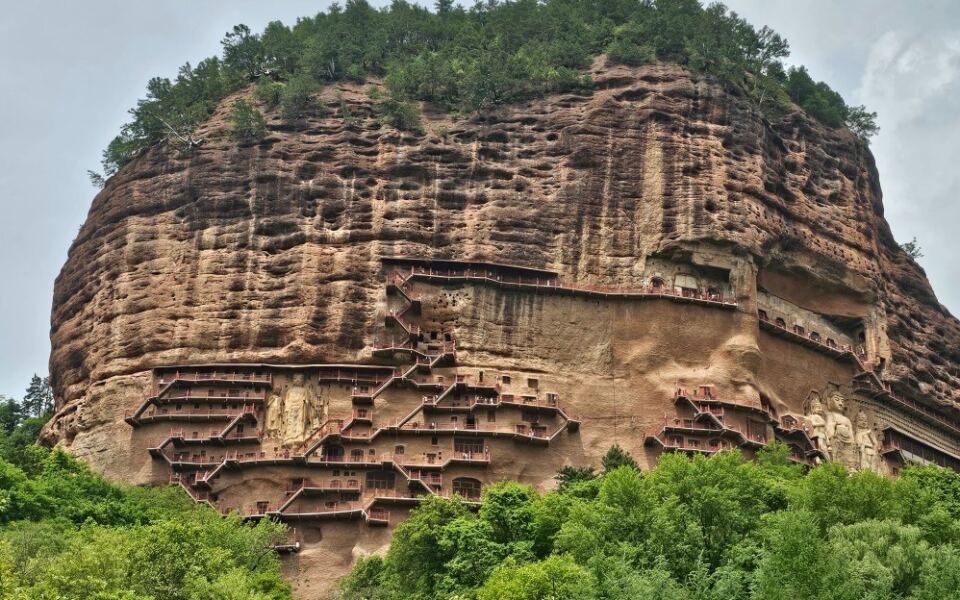
Picture a giant haystack of rock in northwest China, stuffed with caves and clay Buddhas. That is Maijishan, a cliff in Tianshui where monks and artists worked for more than 1,500 years.
Walkways cling to the stone and lead you past thousands of statues and painted walls. Here are ten things to know before you go.
A Mountain Shaped Like a Wheat Stack
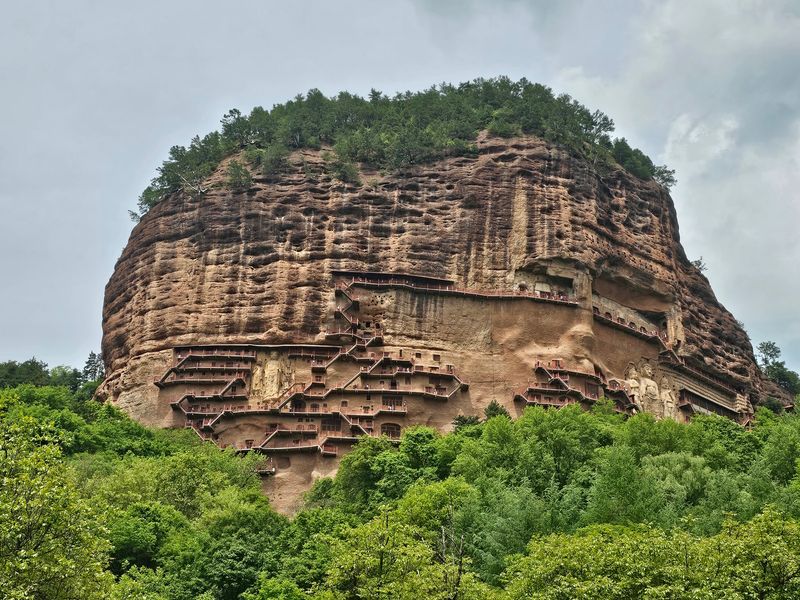
Squint a little and the mountain turns into a giant pile of harvested wheat. That is how Maijishan got its name, which means Wheat Stack Mountain.
The peak rises about 142 meters above the green Xiaolongshan forest.
The rock is soft, purplish-red sandstone. It looks warm in the afternoon sun, and the dark green trees around it make the color pop.
Photographers love this angle.
The shape matters for more than looks. The steep, smooth sides gave ancient builders a tall wall to work with, though it was a scary one.
Imagine hauling wood, clay, and paint up that slope with no elevator in sight.
From the hiking trail opposite the main entrance, you can see the whole cliff at once. One visitor said the view from there was worth the effort.
Bring a camera with a good zoom, because the caves look like tiny windows from far away.
Visit early if you can. One traveler arrived at opening time in winter and had the whole scenic area to themselves for an hour and a half.
Silence suits a mountain this old.
194 Caves and Counting
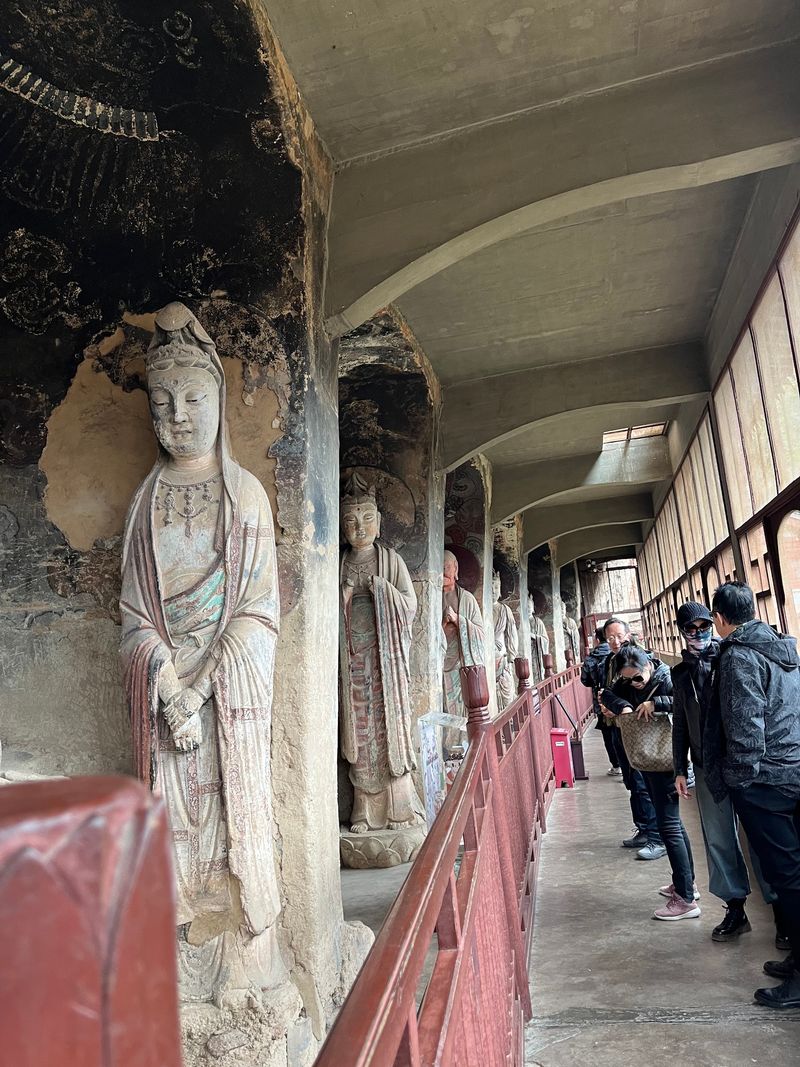
Count the caves and you land on 194. Some reviewers mention more than 400 if you include every small niche and room.
Either way, the cliff is packed.
The caves are split into two groups. Caves 1 to 50 sit on the western face, and caves 51 to 191 sit on the eastern side.
Each one holds its own surprise, from a calm seated Buddha to a small crowd of worshippers carved in clay.
Some caves are big halls, while others are little more than a shelf in the rock. Visitors often say the site feels bigger than they expected.
That is a common reaction as the stairs keep going up.
Not every cave is open for a close look. Many are guarded by dense metal mesh, so you peek through the gaps.
It takes a bit of patience, but the figures behind the net are still easy to enjoy.
Tip: pick a few caves to study well instead of rushing through all of them. Your legs and your memory will both thank you.
Clay Buddhas, Not Stone
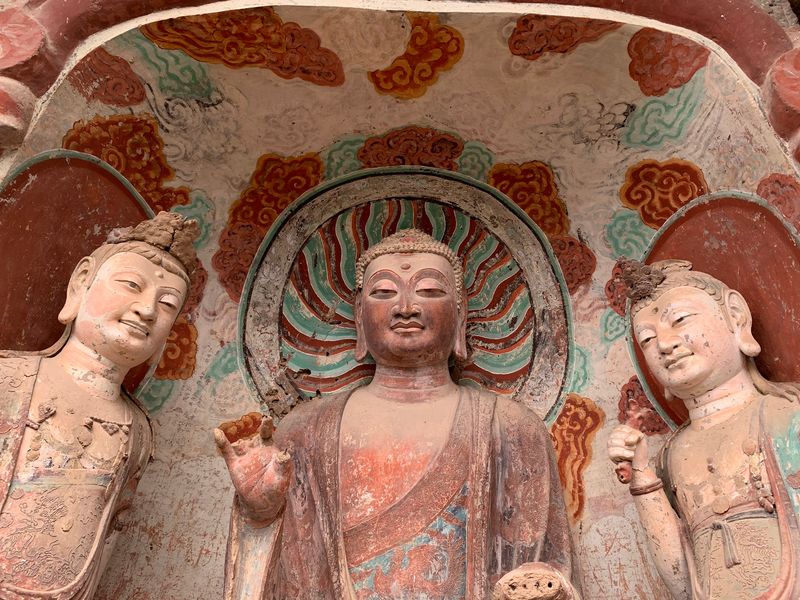
Here is a twist: most of the statues are not carved from rock at all. The sandstone was too crumbly for fine work.
So artists built figures from clay mixed with binding materials and painted them.
That choice gave the sculptors freedom. Clay lets you shape soft smiles, flowing robes, and gentle hands.
Some statues still show bits of their original color after centuries.
Visitors spot traces of red, green, and gold if the light cooperates. One reviewer was amazed at how bright some pigments remain.
Others complained that the lighting is dim behind the mesh, so photos can be tricky.
The most common figure is Amitabha Buddha, linked with the Pure Land school of Mahayana Buddhism. You will see him again and again, sometimes tiny, sometimes life size.
Clay is fragile, and time has taken a toll on some pieces. That is why the protective grilles exist.
They keep curious fingers away, and they are the reason so many figures survive today.
Over 7,000 Statues and a Sea of Murals
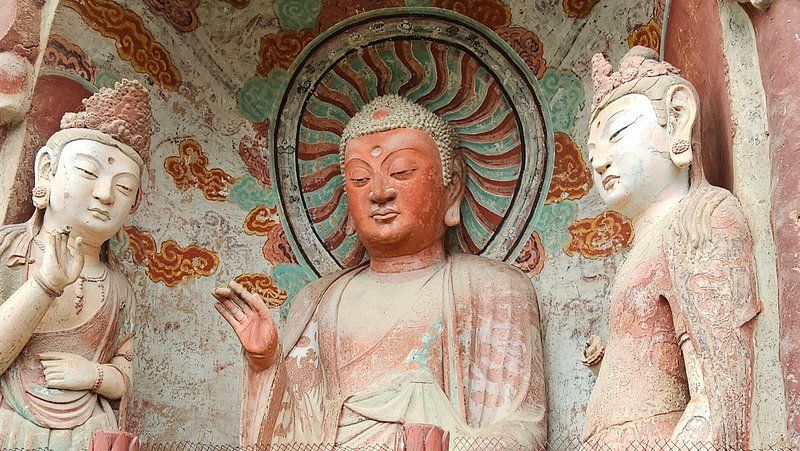
Seven thousand two hundred. That is the number of sculptures many reviewers and guides quote for the site.
Add more than 1,000 square meters of wall paintings, and you have a very full art gallery.
The article title says more than 10,000, and that bigger figure counts the many smaller pieces and fragments. No matter which count you trust, the collection is huge.
One climber said they went up about 34 flights of catwalks and stairs to see it all.
The works show how Buddhist art changed over time. Early figures look more like those from India and Central Asia.
Later ones, from the Song and Ming eras, look more Chinese.
Look at faces as you walk. Some are slim and serious, while others are round and friendly.
It is like flipping through the yearbook of a thousand years.
Many murals are faded, so go slowly and let your eyes adjust. Details appear if you give them a minute.
Built Over Many Dynasties
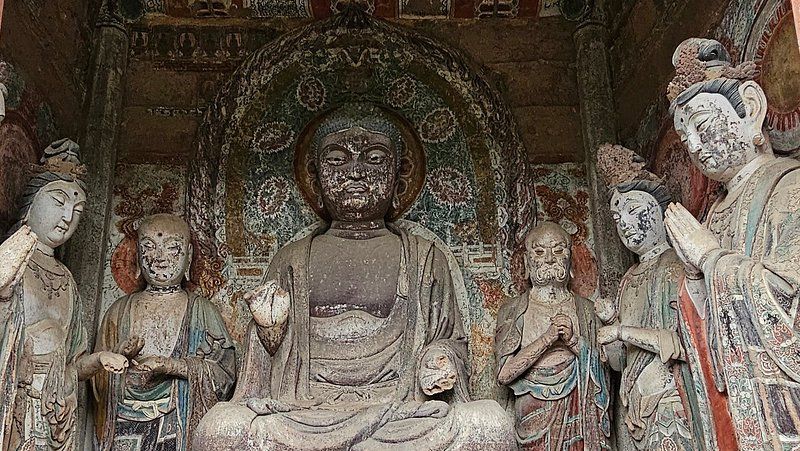
Nobody finished Maijishan in a single season. Work began in the Later Qin era, around 384 to 417 CE, and kept going for centuries.
That is a very long construction project.
The Northern Wei, Western Wei, and Northern Zhou periods were especially busy. Later, the Tang, Song, and Qing dynasties added repairs and new touches.
Each group left its own style.
Legend names two monks, Tanhung and Xuangao, as early leaders. They are said to have started a monastic community here in the early fifth century.
Hard proof is limited, which only makes the story more mysterious.
Reviewers describe the site as more than 1,500 years old, and some say 1,600. The exact number depends on where you start counting.
What matters is that artists kept coming back.
Think about the skill required. Workers had to deal with heights, weather, and tricky materials, all without modern gear.
A visitor called it a place that carries over a thousand years of artwork.
A Stop on the Silk Road
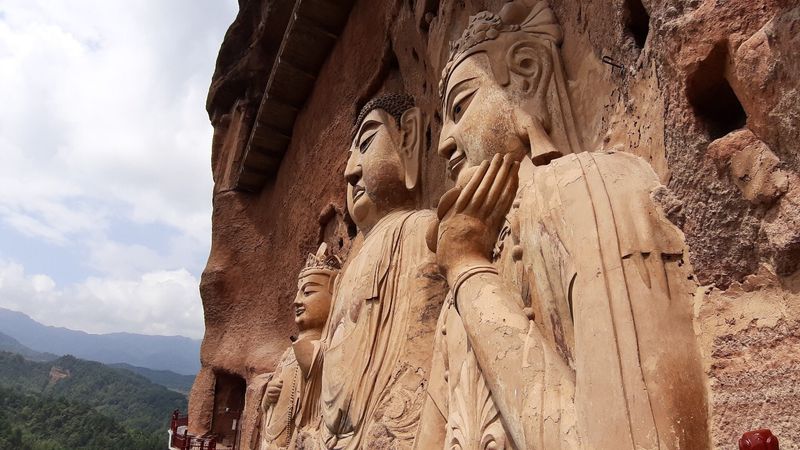
Merchants carried silk and spices along the Silk Road. Monks carried ideas.
Maijishan sat along that busy path, so it soaked up influences from far away.
That is why early statues show Indian and Central Asian features. Travelers and artisans brought styles with them and left their mark in clay.
Over time, local Chinese styles took over.
The grottoes are now part of the UNESCO World Heritage listing called Silk Roads: The Routes Network of Chang’an-Tianshan Corridor. It is a proud title for a cliff in Gansu.
One reviewer called the place a path that spread Buddhism along the Silk Road.
Geography helps modern visitors too. Tianshui sits between Lanzhou, Xi’an, and Chengdu, so it fits neatly into a China itinerary.
Many people plan it as a day trip.
Pair Maijishan with other Silk Road sites for a bigger story. You will start to see how art, faith, and trade all traveled together.
Walkways That Hug the Cliff
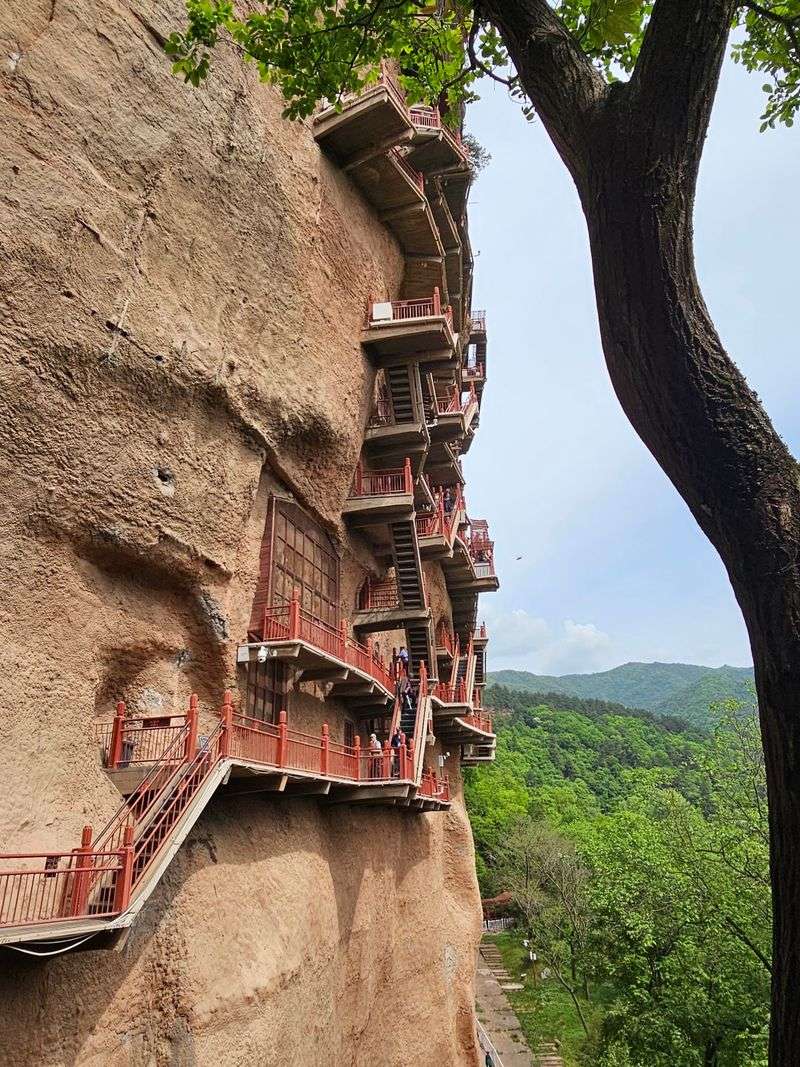
Hold the handrail and look down. The walkways at Maijishan stick right to the cliff, climbing in steep zigzags.
If heights make you nervous, this is your warning.
Long ago, wooden hanging bridges reached the caves, and they were risky. A reviewer noted that these old routes were rotten and unsafe in time.
Later builders replaced them with sturdier structures, and the work was praised with a preservation award.
Today you climb metal stairs and platforms. Each level opens a new group of statues.
Higher levels tend to hold the more impressive pieces.
The climb is a workout. One visitor called it a tough climb but worth it.
Another said it is basically all stairs, so do not fool yourself if you are out of shape.
Wear shoes with good grip, carry water, and take breaks on the landings. The views over the green hills make every rest stop feel like a reward.
Getting There from Tianshui
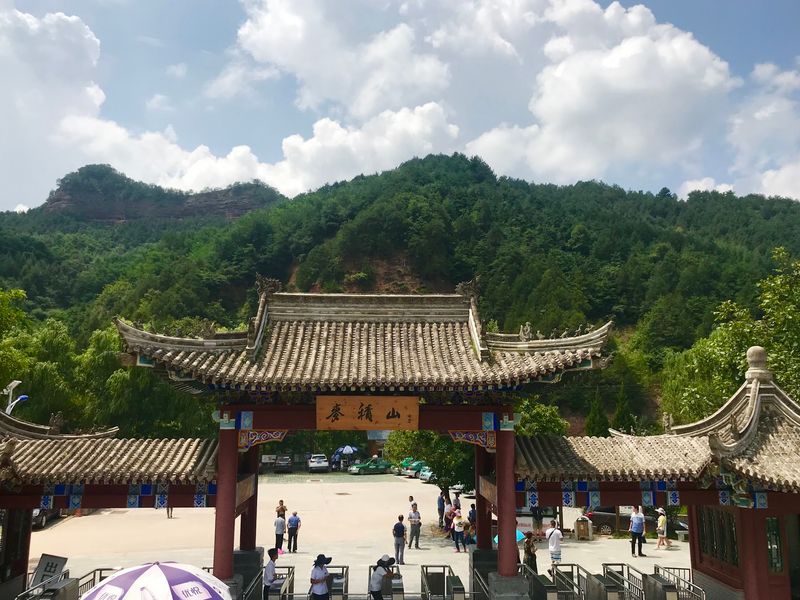
Start at Tianshui railway station. Trains run here from Lanzhou in under 90 minutes, and from Xi’an and Chengdu too.
Look for the picture of the grottoes with an arrow pointing to the bus.
A public bus, such as number 60, takes about an hour to reach the area. One traveler simply showed a photo of Maijishan to locals at the stop, and it worked.
That is a handy trick.
At the tourist center you buy a ticket that includes a shuttle. Reviews mention about 110 yuan for foreigners, though prices can shift.
Another bus goes a few kilometers on, then electric cars carry you to the base.
Skip the long road walk if you can. A reviewer said walking it left no energy for the climb.
The battery cars cost only a few yuan.
Budget one to two hours for the visit itself. A full day trip from a nearby city is realistic if you leave early.
Beating the Crowds
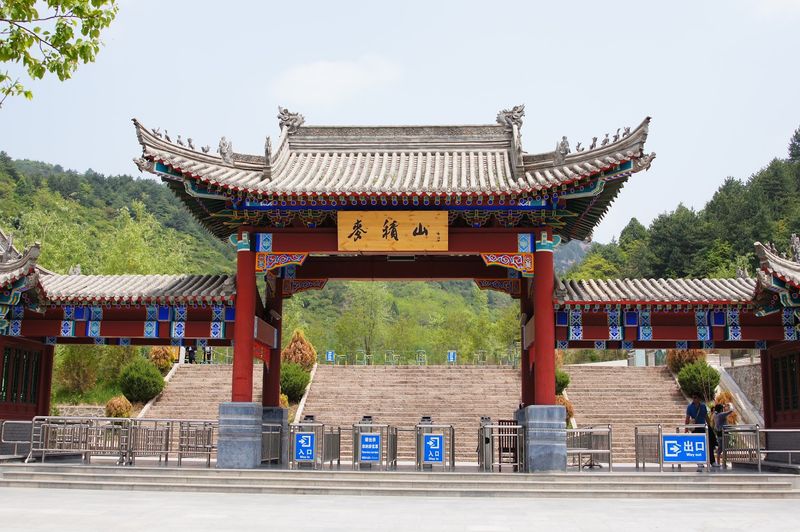
Two and a half hours in line. That is what one unlucky visitor reported at a busy time.
The route is one way, so everyone moves at a shuffle.
You can dodge this with smart timing. Go on a weekday, and avoid national holidays.
In winter the gates open at 9:00 instead of 8:30, so check the hours first.
An early arrival pays off. A reviewer who got there first said the first tourists showed up an hour and a half later.
That gave them peace and clear photos.
Another tip is to hire a guide, or at least read up in advance. The audio guide is offered only in Mandarin, so English speakers should prepare.
Local guides can explain the history in ways signs cannot.
Finally, pack patience. The platforms are narrow, and space is limited.
A relaxed attitude makes the whole day better.
Ticket, Snacks, and Stay
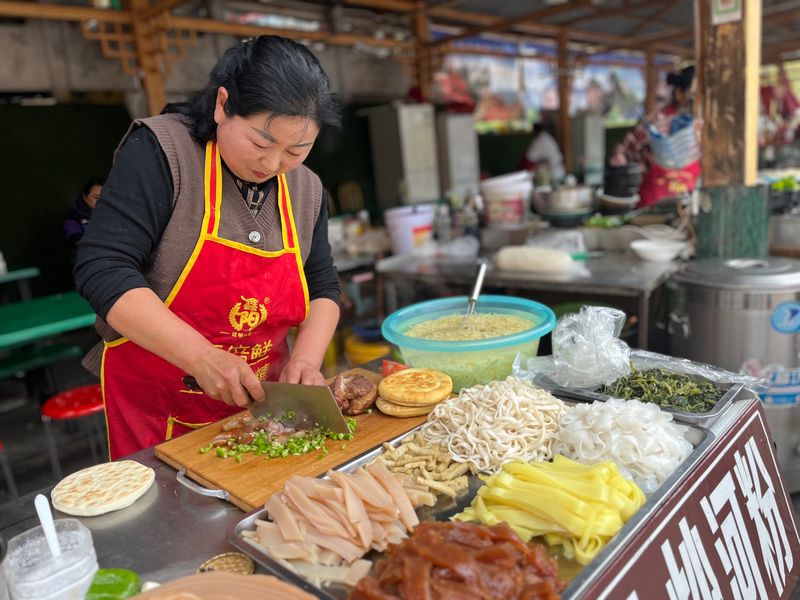
Money talk time. Reviewers say the entrance ticket with shuttle runs under 100 to 110 yuan, which is fair for a world heritage site.
One noted it is pricier than some other famous grottoes in China.
The road to the caves is lined with souvenir stalls. You will pass plenty before reaching the cliff.
Bargain with a smile and keep the bags light, since you have stairs ahead.
Food is cheap. One traveler paid about 20 yuan for a bowl of noodles during a holiday.
That is a good deal and a tasty fuel stop before the climb.
Want a head start? Some visitors sleep in lodging inside the scenic area, about a 20 minute walk from the grottoes.
You wake up close to the cliff and beat the day trippers.
Rating wise, the site sits at 4.7 stars from visitors. The few complaints are about lines and upkeep, while the praise is about the art and the scenery.
Most people leave very happy.
Share this story