Mountains have a way of making people feel small, and not just because of their size. Long before scientists explained volcanic eruptions or glacial formations, people looked up at these towering peaks and started making up explanations.
Some of those explanations involved gods, giants, enchanted boars, hidden civilizations, and at least one set of tiny mysterious coffins. Every culture that has lived near a great mountain has left behind a story about it, and many of those stories are genuinely fascinating.
Some describe sacred beings connected to the land in ways that still matter to communities today. Others are the kind of wonderfully strange tales that make you wonder what inspired them in the first place.
This list covers 13 mountains from around the world, each carrying folklore that is as remarkable as the landscape itself. A few of these stories will surprise you, and one might even leave you with an unsolved mystery.
1. Devils Tower, Devils Tower, Wyoming
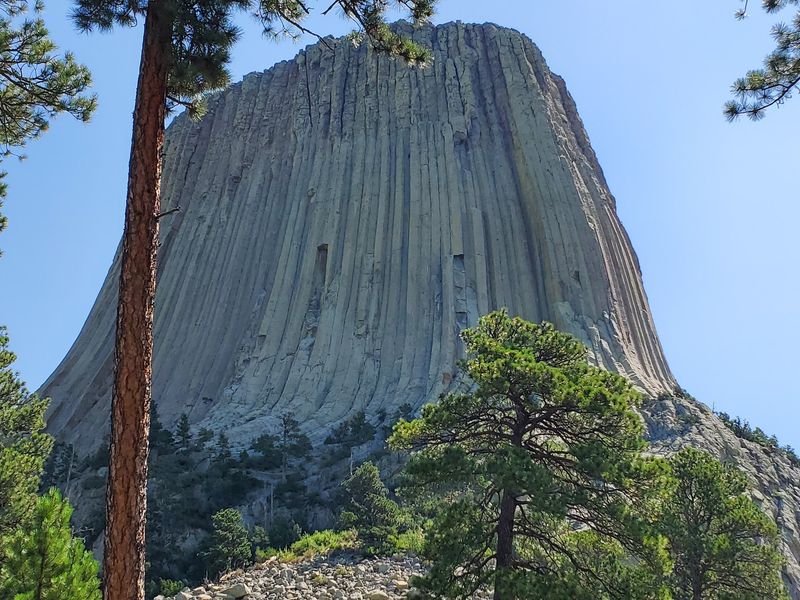
Technically a geological formation rather than a traditional mountain, Devils Tower earns its place here because its folklore is completely inseparable from its extraordinary shape. The vertical grooves running down the sides of the rock have inspired one of the most consistent themes in the surrounding Indigenous traditions: bears.
Multiple nations including the Kiowa, Lakota, Cheyenne, Crow, Arapaho, and Shoshone preserve distinct sacred narratives involving bears, with the grooves typically explained as claw marks left behind by a massive bear clawing at the rock. Traditional names for the site include Bear Lodge, Bear’s Tipi, and Bear’s House.
These are not simply colorful old stories. The site remains actively sacred to numerous Native American communities today, and the accounts surrounding it represent living cultural traditions rather than historical curiosities.
The formation’s sheer visual strangeness makes every story about it feel completely believable.
2. Kilauea, Hawaii Volcanoes National Park, Hawaii
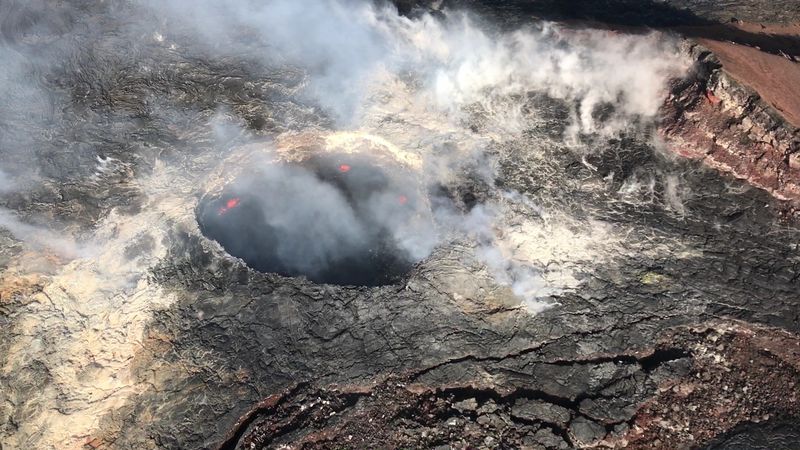
Hawaii’s most active volcano has been telling its own story for millions of years, and the Hawaiian people gave that story a name: Pelehonuamea, the goddess of volcanoes. Halemaʻumaʻu, the large crater at Kilauea’s summit, is traditionally regarded as Pele’s home, a place of creation and destruction where the land itself is constantly being remade.
The stories involving Pele and her sister Hiʻiaka are among the most elaborate in Hawaiian tradition, covering themes of love, conflict, jealousy, and loyalty across a landscape that changes with every new eruption. Researchers studying these oral traditions have found evidence suggesting they may preserve memories of actual volcanic events, making the mythology a kind of geological record.
That connection between story and landscape is what makes Kilauea’s folklore so compelling. The volcano is not a backdrop for the legend.
The volcano is the legend, and it keeps writing new chapters.
3. Yr Wyddfa, Llanberis, Wales
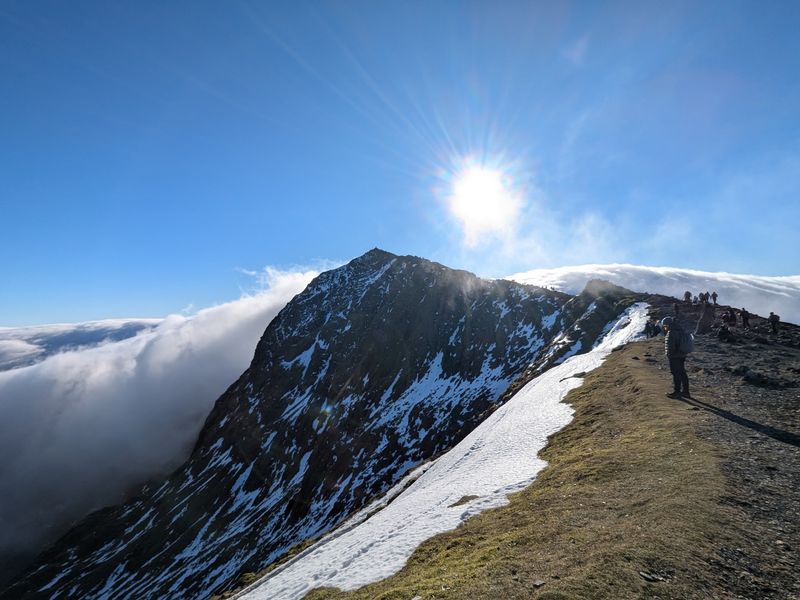
Wales’ highest mountain carries a name that translates roughly as “the tomb” or “burial ground,” which is either ominous or perfectly descriptive depending on how you look at it. According to a prominent Welsh tradition, the summit cairn marks the burial place of Rhita Gawr, a fearsome giant who wore a cloak made from the beards of kings he had defeated in battle.
Rhita Gawr made the mistake of challenging King Arthur, who defeated him and buried him beneath stones on the summit, giving the mountain its name. The surrounding region, known as Eryri, adds further Arthurian associations, with nearby passes and glacial lakes connected to various episodes from the legends.
In 2022, the Eryri National Park Authority moved to officially use the Welsh names Yr Wyddfa and Eryri in all communications, a decision that brought the mountain’s rich cultural identity back to the forefront for a new generation of visitors.
4. Slievenamon, County Tipperary, Ireland
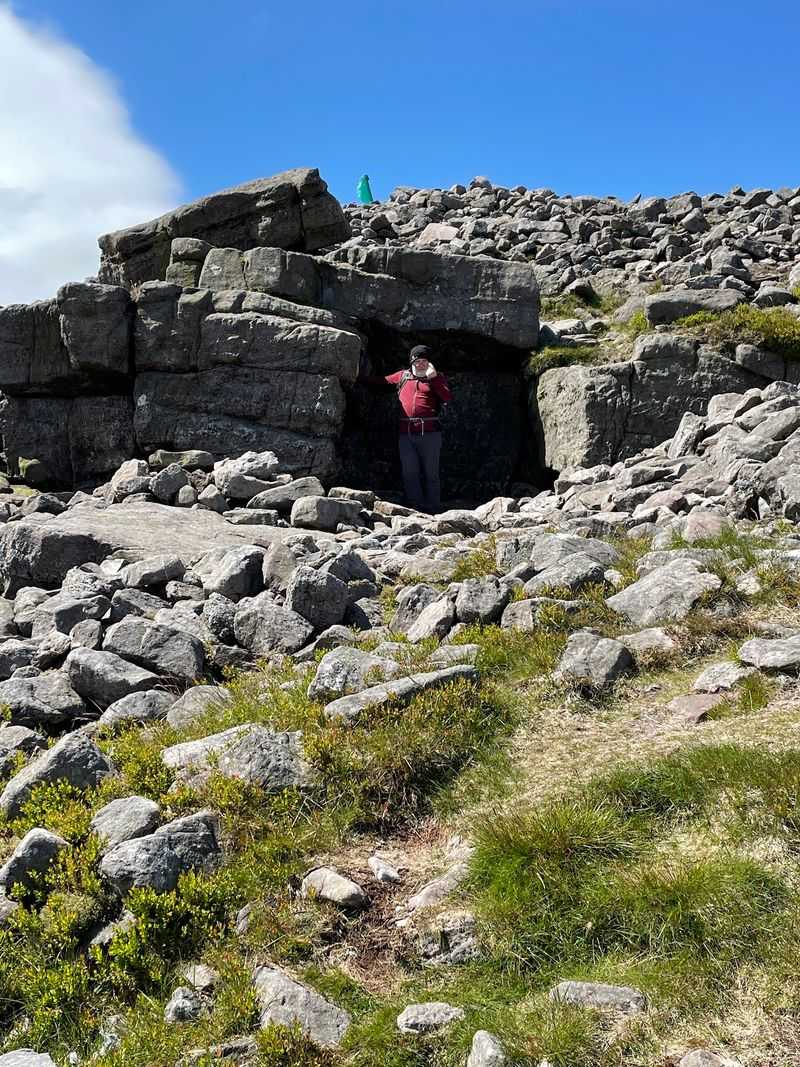
A mountain named “Mountain of the Women” was always going to come with an interesting backstory. Irish tradition tells that the great hero Fionn mac Cumhaill, pursued by many admirers, declared he would marry whichever woman reached the summit first in a footrace.
Gráinne, secretly favored by Fionn, won with a little hidden guidance from the hero himself.
The summit of Slievenamon holds ancient burial cairns known in tradition as Síd ar Femin, fairy mounds believed to be entrances to the Otherworld, the hidden magical realm of Irish mythology. The surrounding plain was called Mag Femin, and local stories describe fair-haired supernatural women living in a fairy stronghold within the mountain itself.
Slievenamon’s broad, solitary profile rising above the Tipperary countryside gives it a presence that suits all of this mythology perfectly. It looks exactly like the kind of mountain that might have a door to another world somewhere near the top.
5. Benbulben, County Sligo, Ireland
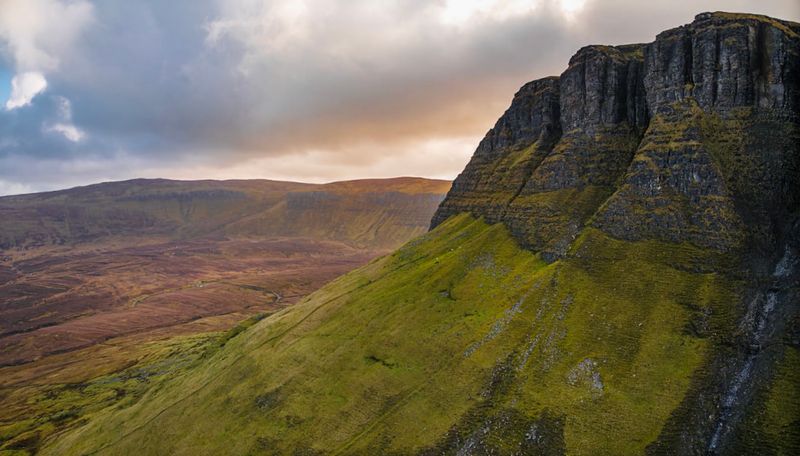
Benbulben’s flat-topped silhouette is unusual enough to catch attention before a single story about it is mentioned. The mountain’s steep cliffs and remarkably level upper ridge give it a profile unlike almost anything else in Ireland, and Irish legend put that distinctive landscape to memorable use.
The Fianna, a band of mythical warriors from early Irish literature, are closely associated with this part of Sligo, and Benbulben is at the center of the tragic tale of Diarmuid and Gráinne. One tradition holds that Diarmuid met his end fighting an enchanted boar near the mountain, while another identifies Benbulben as the place where both Diarmuid and Gráinne were laid to rest.
The Nobel laureate W. B.
Yeats, who spent much of his life in County Sligo, asked to be buried within sight of the mountain. His grave at Drumcliffe churchyard sits directly below Benbulben’s cliffs, giving the peak a literary legacy to accompany its mythological one.
6. Mount Shasta, Mount Shasta, California
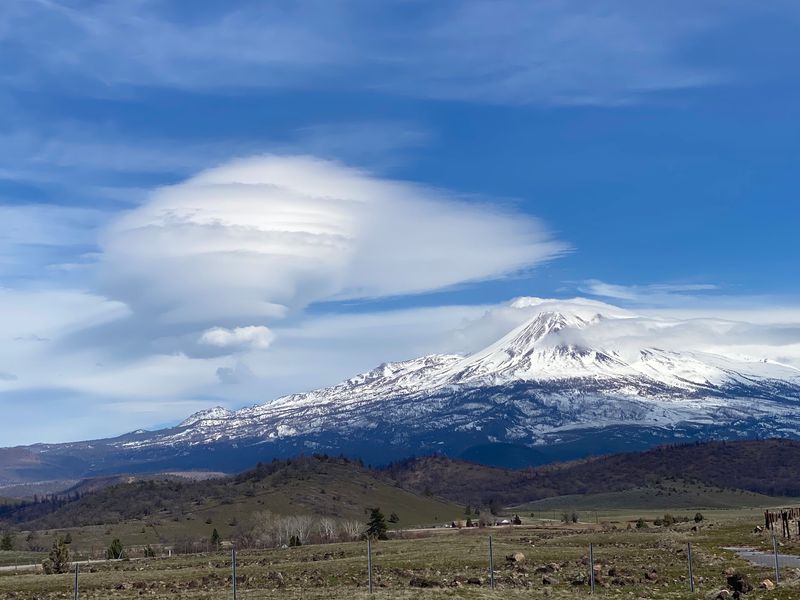
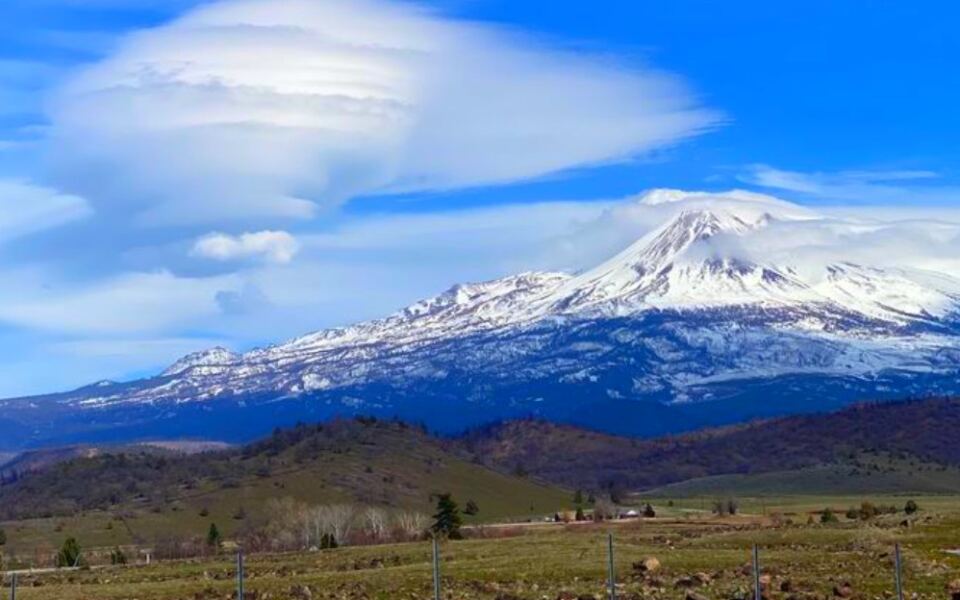
No other American mountain has quite the same reputation for attracting unusual believers as this Northern California volcano. Indigenous peoples including the Shasta, Winnemem Wintu, and Klamath tribes have long regarded the mountain as sacred, with the Klamath tradition describing a spirit chief named Skell who descended from the heavens to the summit and engaged in a fierce battle with the spirit of the Below-World at nearby Mount Mazama.
Then came the 20th century, when an entirely different set of stories arrived. Frederick Spencer Oliver’s 1905 book claimed that survivors of the lost continent of Lemuria had built an underground city called Telos beneath the mountain, populated by seven-foot-tall beings in white robes.
The story caught on in a big way. Some modern believers even suggest that unusual lenticular clouds over the peak are actually alien spacecraft hovering above Telos.
Mount Shasta has earned every layer of its reputation.
7. Mount Fuji, Fujinomiya, Shizuoka Prefecture, Japan
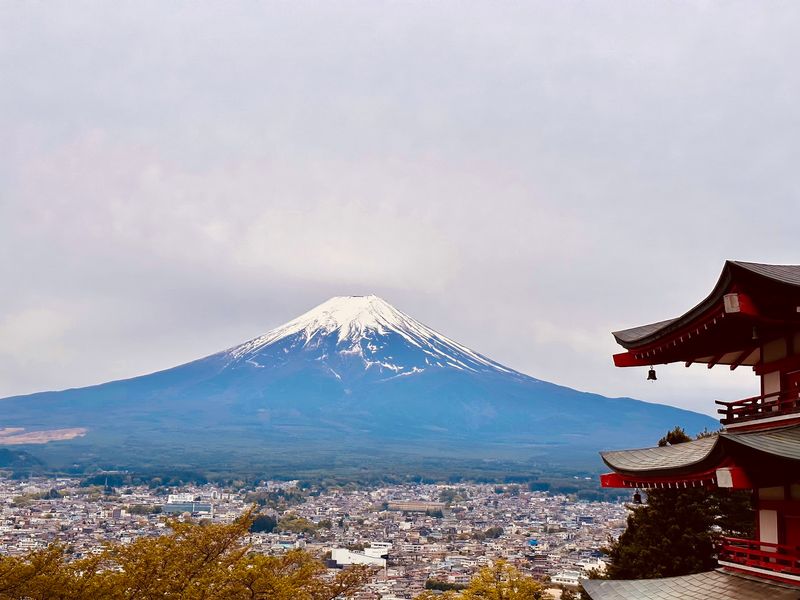
Japan’s most recognizable peak has been sacred for so long that the religious traditions surrounding it predate written records. In Shinto belief, Mount Fuji is the domain of Konohanasakuya-hime, also known as Sengen-sama, a kami associated with volcanoes and flowering blossoms whose shrine sits at the mountain’s summit.
Climbing Fuji was historically understood as an act of pilgrimage rather than a recreational activity. Buddhist tradition also viewed the ascent as a purification ritual, a way of communicating with gods and kami and seeking enlightenment through the effort of the climb.
Ancient legends added elements of immortality to the mountain’s reputation, with various supernatural events described as occurring on its slopes.
Fuji’s almost perfectly symmetrical cone has been reproduced in Japanese art for centuries, most famously by the woodblock artist Katsushika Hokusai. The mountain’s precise geometry inspired reverence long before anyone explained it geologically, and it continues to draw millions of visitors every year.
8. Mount Etna, Sicily, Italy
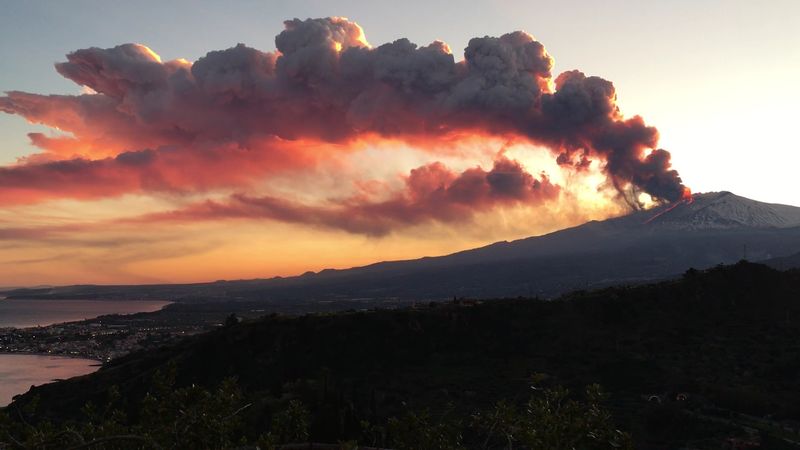
Ancient Greeks looked at a smoking, erupting mountain in Sicily and came up with two excellent explanations. The first placed the forge of Hephaestus, god of fire and blacksmithing, directly beneath the volcano, where he crafted thunderbolts for Zeus with the help of the Cyclops.
The second said Zeus had imprisoned the monstrous giant Typhon, a creature with a hundred dragon heads, under the mountain after defeating him in battle.
According to that second tradition, Etna’s periodic eruptions and tremors are Typhon raging against his confinement. Some versions substitute the giant Enceladus as the prisoner, while Roman mythology renamed Hephaestus as Vulcan and kept the underground forge.
Medieval Christian tradition later added its own layer, describing Etna as a literal entrance to the underworld.
What makes these stories particularly interesting is that Etna is genuinely one of the most active volcanoes on Earth. The ancient storytellers were not working from imagination alone.
They were responding to something very real.
9. Mount Taranaki, Taranaki, New Zealand
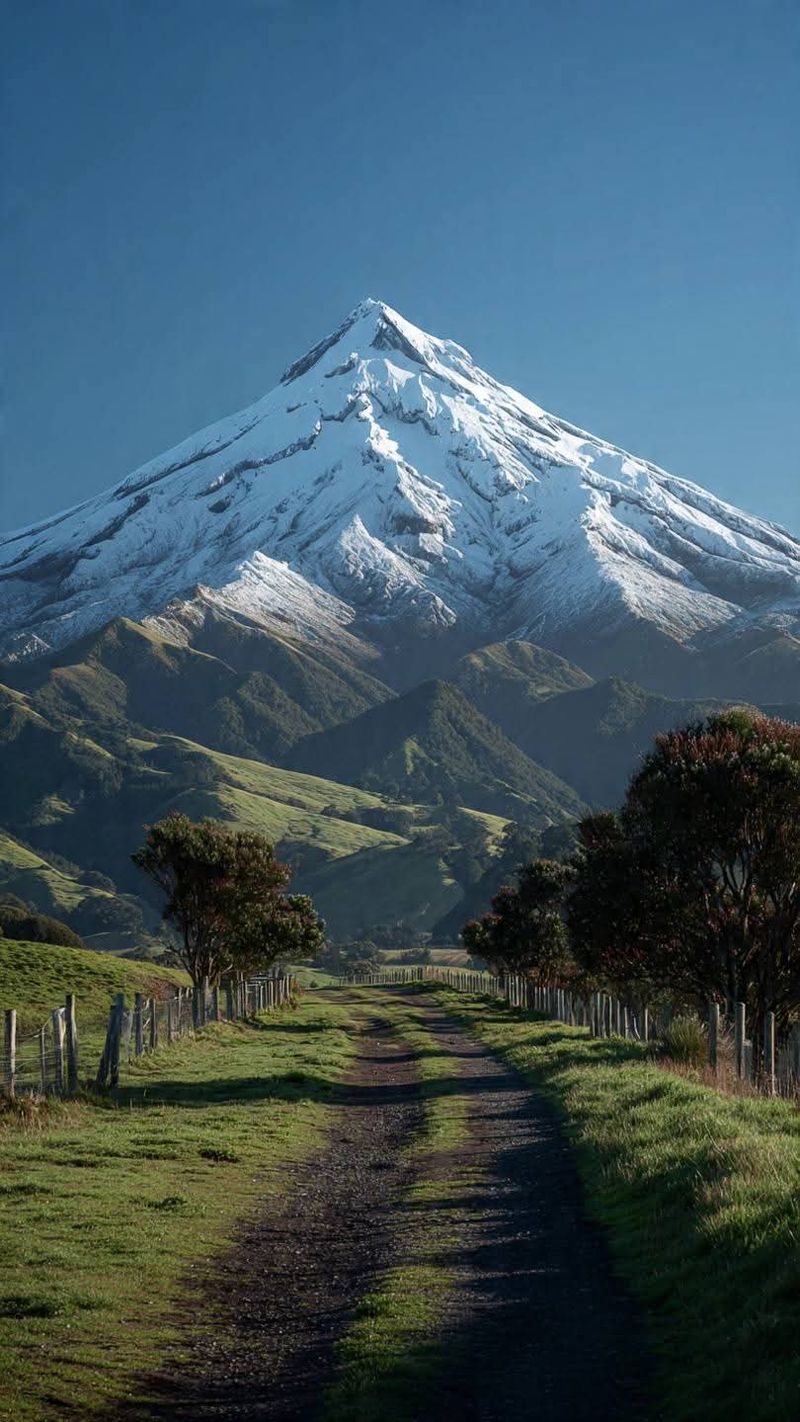
Maori tradition gave Mount Taranaki one of the most dramatic origin stories of any mountain in the Pacific. According to a well-known account, Taranaki once lived among the central North Island mountains alongside Ruapehu, Tongariro, and Ngauruhoe.
A fierce battle broke out between Taranaki and Tongariro over the affections of Pihanga, a beautifully forested mountain nearby.
Taranaki lost the battle and was forced to leave. His journey westward toward the coast is said to have carved the Whanganui River, his tears filling the channel as he traveled.
He eventually settled at his current location on the west coast, where a spur of the Pouakai Range grew up during his rest and prevented him from continuing.
The mountain’s isolated, nearly perfect conical shape adds genuine weight to the story. Taranaki stands apart from every other major peak in New Zealand, and Maori tradition explains exactly why that is.
The geography and the legend fit together with unusual precision.
10. Mount Kilimanjaro, Kilimanjaro Region, Tanzania
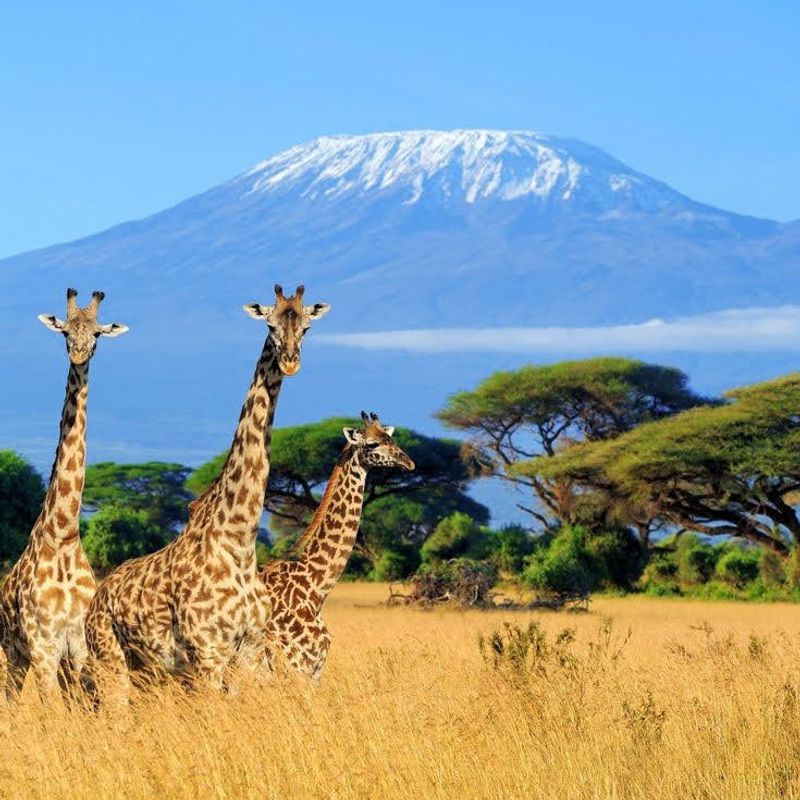
Africa’s highest mountain inspired rich traditions among the Chagga people, who have lived on its lower slopes for generations. One captivating account tells of a man named Tone who pursued miraculous cattle across the landscape.
As the cattle moved, they created the hills and formations of the Kilimanjaro massif beneath them, including the prominent peaks of Kibo and Mawenzi.
Other Chagga traditions connect the mountain’s snow-covered heights with Ruwa, a significant deity in their spiritual beliefs. The contrast between the warm lowlands and the historically ice-capped summit created a natural setting for stories about the divine and the extraordinary.
Kilimanjaro’s scale makes these stories feel proportionate. The volcanic massif rises nearly 5,900 meters above sea level, creating a transition from tropical lowlands to an arctic summit environment within a single mountain.
Before modern science explained how that was possible, a supernatural explanation must have seemed entirely reasonable to anyone looking up from the plains below.
11. Mount Everest, Khumbu, Nepal
The world’s highest mountain has a name most people know, but it also has names that matter far more to the people who have lived near it for centuries. Tibetan Buddhist tradition calls the mountain Chomolungma, meaning “Goddess Mother of the World,” and associates it with Miyolangsangma, one of the Five Sisters of Long Life, a deity connected with inexhaustible giving.
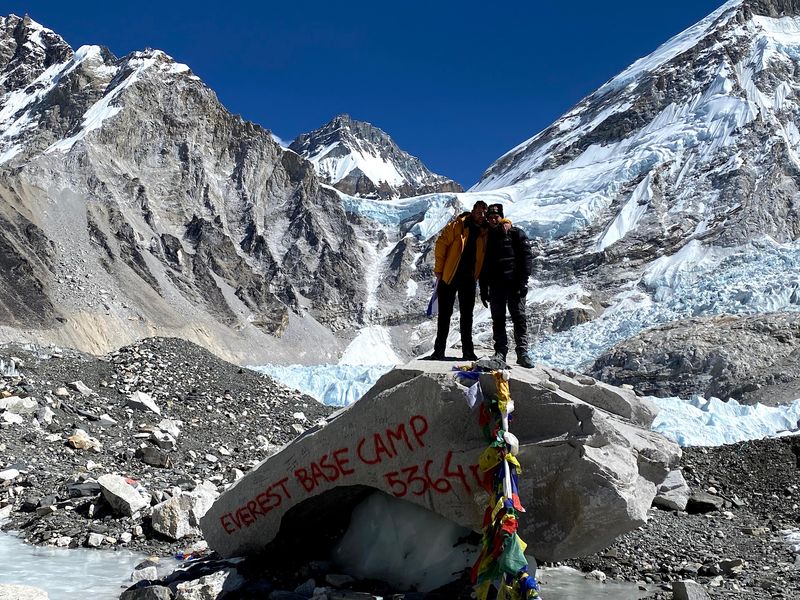
Sherpa spiritual traditions shape every aspect of how the mountain is approached. Before any serious climb, Sherpa guides conduct a puja ceremony at Base Camp, led by a Buddhist lama, asking the mountain deity for permission to ascend and seeking forgiveness for intruding on sacred ground.
Prayer flags, stupas, and prayer wheels mark the trails throughout the Khumbu region.
Sagarmatha National Park, where Everest stands, is considered sacred territory inhabited by supernatural beings in Sherpa belief. Treating the peak as simply a physical challenge misses everything that makes it meaningful to the communities who have called its slopes home for generations.
12. Ceahlau Massif, Neamt County, Romania
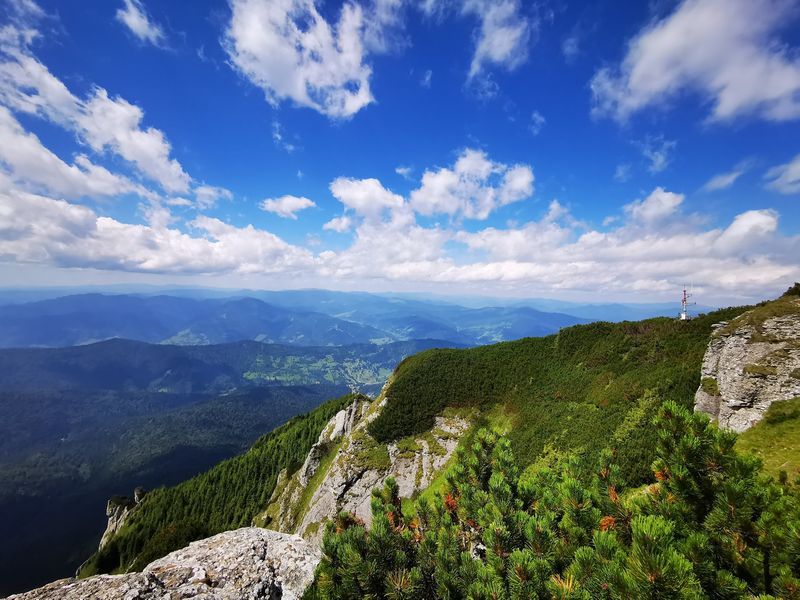
Romania’s mountains have their own distinct folklore tradition, and Ceahlau sits at the center of it. The massif is most closely associated with the legend of Baba Dochia, an old woman who fled toward the mountain and was ultimately transformed into stone along with her flock of sheep.
A distinctive rock formation on the mountain still carries her name and is pointed out to visitors today.
The massif’s collection of strange stone towers and weathered pinnacles has generated a whole catalog of individual legends. Each unusual formation has its own name and story, giving the landscape a character that goes well beyond scenery.
When clouds descend over Ceahlau’s cliffs, the mountain looks genuinely like an illustration from an old Eastern European folktale.
Ceahlau was also historically considered a sacred mountain in Romanian tradition, sometimes called the Holy Mountain of the Dacians. That long history of reverence has kept the stories alive and actively told, rather than simply preserved in academic collections.
13. Arthur’s Seat, Edinburgh, Scotland
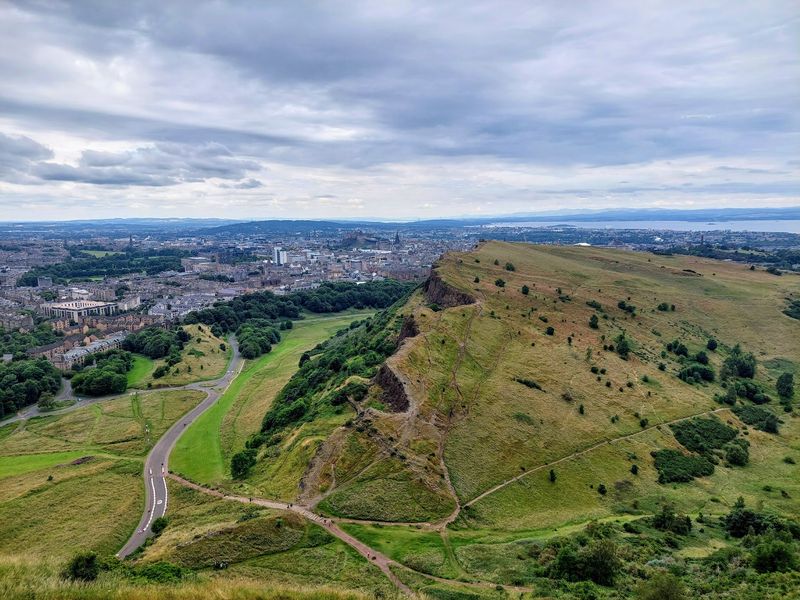
In June 1836, a group of boys hunting rabbits on the slopes of Edinburgh’s ancient volcanic hill made one of the strangest small discoveries in Scottish history. Concealed in a small cave, they found 17 miniature wooden coffins, each containing a tiny clothed wooden figure arranged in careful rows.
Nobody has ever conclusively explained why they were placed there.
Contemporary theories ranged from witchcraft rituals to unusual burial customs. A later and widely discussed theory connects the coffins to the 17 victims of the West Port murders, committed by William Burke and William Hare between 1827 and 1829.
Since those victims were sold to a medical school and never given proper burial, the miniature coffins may have been a symbolic gesture of interment made by someone who knew the truth.
Eight of the original coffins survive today at the National Museum of Scotland. Arthur’s Seat also carries suggestions of a connection to King Arthur’s legendary Camelot, giving this compact Edinburgh hill more unsolved mysteries per square meter than almost anywhere else in Britain.
Share this story