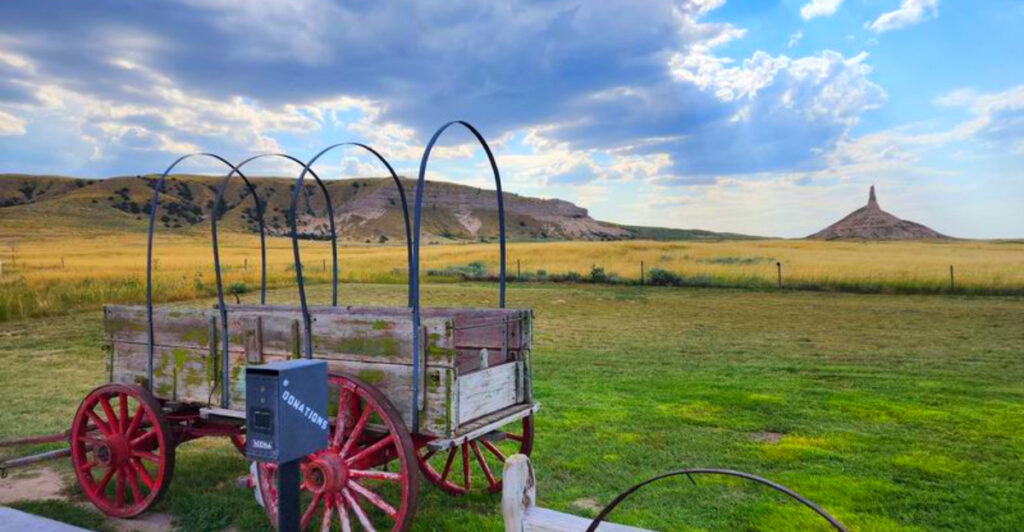
A slender stone spire rising dramatically above the Nebraska prairie became one of the most important sights on the journey west for hundreds of thousands of 19th-century pioneers. Chimney Rock appeared in emigrant journals more frequently than any other landmark along the Oregon, California, and Mormon Trails, giving exhausted travelers a powerful sign that they were making real progress toward the mountains and whatever new life waited beyond them.
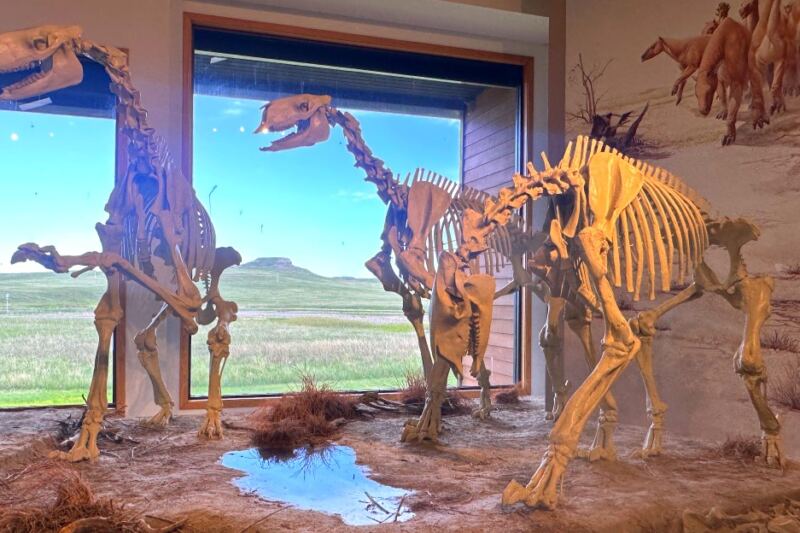
Today, a museum at its base brings those journeys back to life with original pioneer artifacts, historic accounts, trail maps, interactive wagon-loading challenges, and exhibits exploring both westward migration and the Native peoples who already occupied this landscape. Visitors can also venture outside for closer views of the formation, which still towers hundreds of feet above the North Platte River Valley after millions of years of erosion.
Here’s why Chimney Rock National Historic Site remains one of western Nebraska’s most compelling historical stops – and why this famous silhouette meant so much to the pioneers who saw it on the horizon.
Where the Story Begins: Address, Location, and First Impressions
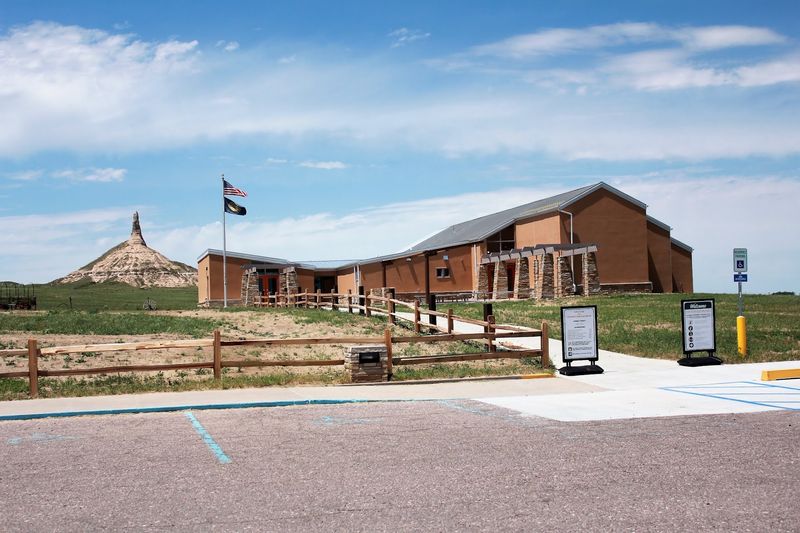
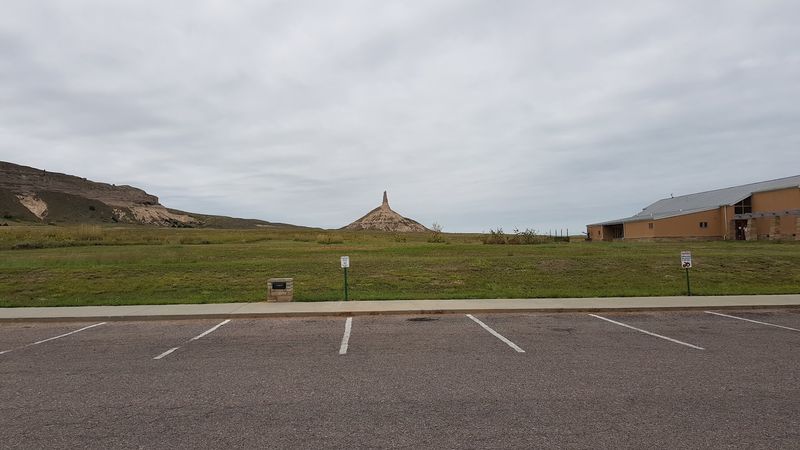
The first thing that hits you as you pull into the parking area at 9822 County Rd 75, Bayard, NE 69334, is the sheer scale of the surrounding landscape. The North Platte River Valley stretches out in every direction, flat and enormous, making Chimney Rock’s spire look almost theatrical against the open sky.
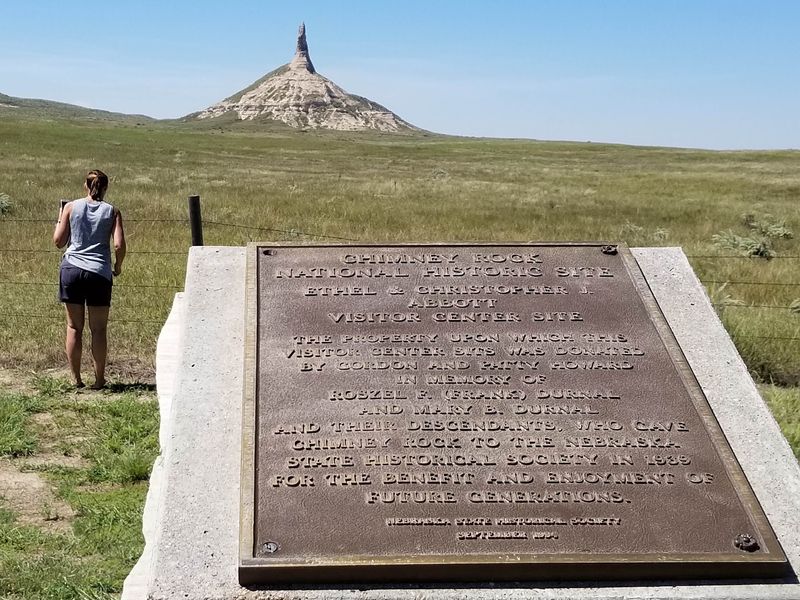
The Ethel S. and Christopher J. Abbott Visitor Center sits right there at the base of it all, clean and welcoming, managed by History Nebraska with support from the National Park Service. The building itself is modest in size, but the moment you walk through the front door, you understand that this is a serious, thoughtfully curated space.
Staff are genuinely friendly, and the entry process is smooth. You get oriented quickly, which matters because there is more to absorb here than the compact footprint suggests. The address is easy to find, and the drive through Morrill County’s wide-open terrain is part of the experience itself.
A Spire Built by Time: The Geology Behind the Icon
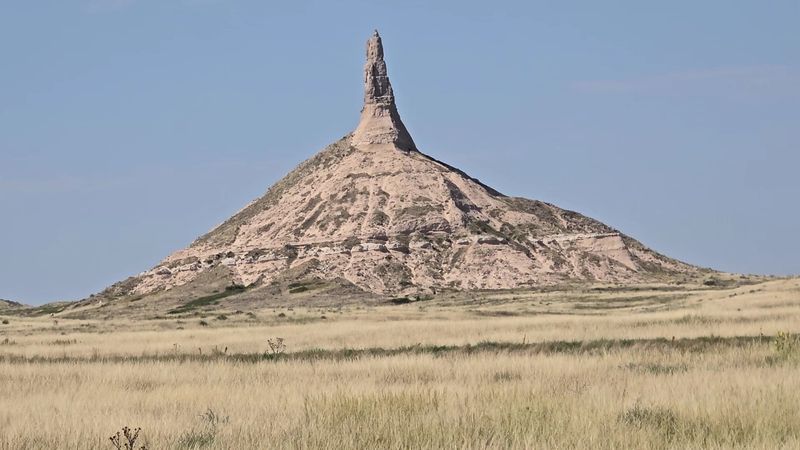
Most people arrive expecting a history lesson and leave equally fascinated by geology. Chimney Rock rises approximately 300 to 480 feet above the North Platte River Valley, with its famous spire reaching around 325 feet from its conical base, a number that becomes genuinely staggering once you are standing at ground level looking up.
The formation is primarily composed of Brule clay layered with volcanic ash and Arickaree sandstone. A harder cap of 25-million-year-old sandstone protected the softer material beneath it from eroding at the same rate as the surrounding plains, a process geologists call differential erosion.
What makes this even more remarkable is that the rock is essentially compressed debris from ancient volcanic eruptions and the early Rocky Mountains. The spire continues to change very slowly even now, shaped by wind and weather in the same way it has been for millions of years. Knowing that makes every glance at it feel a little more electric.
The Most Mentioned Landmark on the Overland Trails
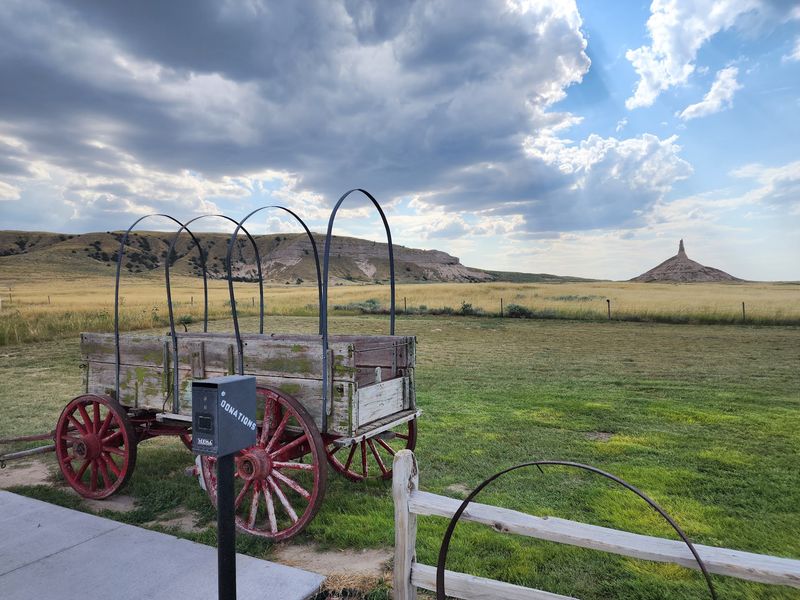
No other landmark along the Oregon, California, and Mormon Trails appears more frequently in pioneer journals than Chimney Rock. That fact alone tells you something powerful about the emotional weight this formation carried for westward travelers in the 1840s through the 1860s.
Hundreds of thousands of emigrants passed this way, and many described the rock with a kind of reverence that feels almost surprising for a geological feature. Some wrote of swimming the Platte River just to get closer and carve their names into the tower, though no inscriptions survive today.
The museum does an exceptional job of presenting these firsthand accounts in context, helping visitors understand why a rock mattered so much to people already exhausted by weeks of difficult travel. For many, spotting Chimney Rock on the horizon meant they were making real progress toward the mountains and, eventually, toward a new life. That emotional resonance still comes through clearly inside the exhibits.
Inside the Exhibits: What the Museum Actually Shows You
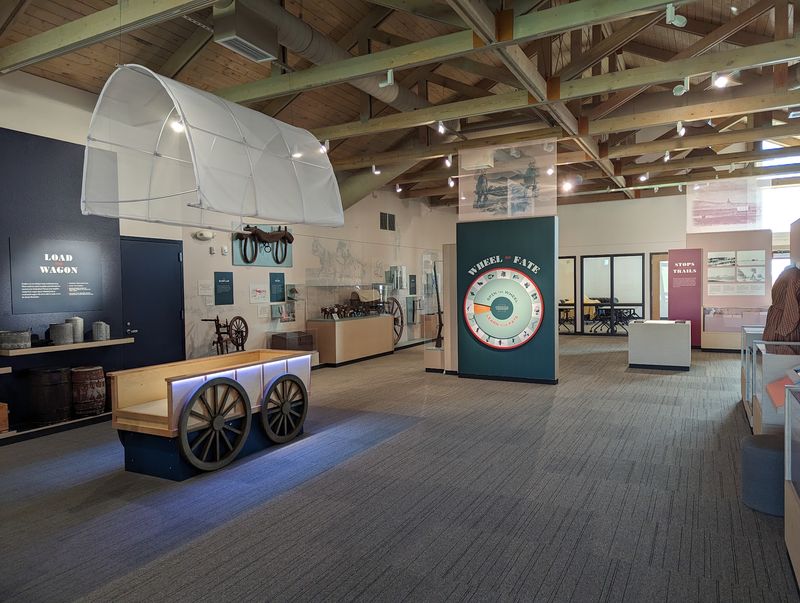
The exhibits inside the visitor center cover a lot of ground without ever feeling cluttered or overwhelming. Large maps trace the routes of the California-Oregon, Mormon, and Pony Express Trails, giving visitors a clear sense of how Chimney Rock fits into the broader geography of westward expansion.
Original artifacts from Oregon Trail travelers and homesteading pioneers are displayed throughout, including items like a tar bucket that emigrants used to grease wagon wheels and axles. Seeing the actual objects people carried across the plains gives the history a tactile, immediate quality that photographs simply cannot replicate.
Historical images and written accounts fill the walls, and the overall design encourages you to slow down and read rather than just glance and move on. The museum also addresses the experiences of the Native peoples who already lived on this land, presenting a fuller, more honest picture of what westward expansion meant for everyone involved. That balance is genuinely appreciated.
Hands-On History: The Interactive Side of the Visit
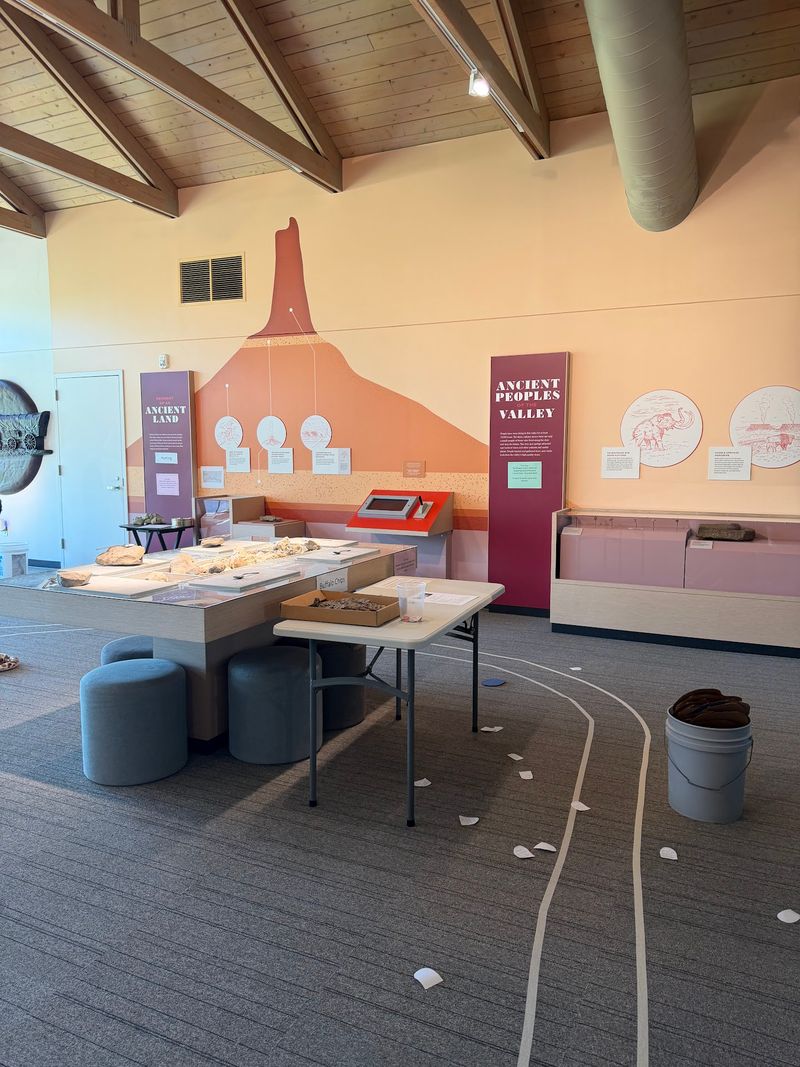
One of the more unexpected pleasures of this museum is how much it invites participation rather than passive observation. The wagon loading exhibit lets visitors physically engage with the challenge of deciding what supplies to bring on an overland journey, a deceptively simple activity that quickly reveals how brutal those decisions must have been for real families.
There is also a Wheel of Fate feature that introduces the unpredictable nature of trail life in a way that younger visitors especially tend to find gripping. Three children were deeply absorbed in the wagon exhibit during my visit, completely unaware that they were absorbing genuine history while having fun.
A telescope near the visitor center allows you to study the rock formation in detail from a comfortable distance, which is particularly useful on days when the outdoor trails feel less accessible. The interactive design makes this a genuinely family-friendly stop, one where kids leave knowing something real rather than just having survived a museum visit.
The Bathroom That Became a Talking Point
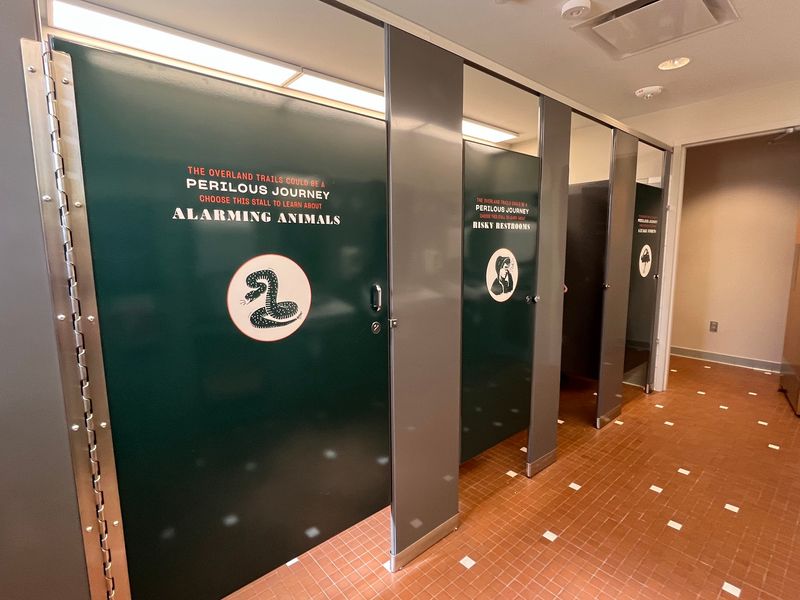
You do not expect the restrooms to be a highlight of a history museum, and yet here we are. The bathrooms at the Chimney Rock visitor center feature their own mini-exhibits on the stall doors, covering the perils of the trail with a mix of genuine information and dry humor that catches every visitor off guard.
The stalls are categorized around themes like risky restrooms and alarming animals, which sounds absurd until you are standing there reading and realizing you have actually learned something. It is one of those small, clever design choices that makes the whole experience feel more human and less institutional.
Multiple visitors mention the bathrooms specifically in their reviews, which is either a testament to how good they are or how unexpected the experience turns out to be. Either way, the facility is spotlessly clean and clearly well maintained, which matters more than the humor once you have been driving across western Nebraska for a few hours.
Rattlesnakes, Trails, and the Walk Toward the Rock

Getting physically close to Chimney Rock requires a bit of commitment, and the site makes sure you know what you are getting into before you start walking. Signs posted prominently at the trailhead warn visitors about rattlesnakes, which are very much a living part of this prairie environment and not just a decorative caution.
There are two parking areas near the rock itself, and the distinction between them matters. The lot on the right offers a well-maintained path with excellent views, though the trail does not lead all the way to the stone monument at the base. The less-marked, rougher trail from the left lot does reach the monument, but it is more suited to confident hikers who do not mind uneven terrain.
The hike is roughly two miles round trip, not technically demanding but exposed to sun and wind in the way that all open prairie walks tend to be. Sturdy shoes, water, and a healthy respect for the wildlife make the experience significantly more enjoyable than sandals and optimism alone ever would.
Chimney Rock After Dark: The Nightly Lighting Tradition
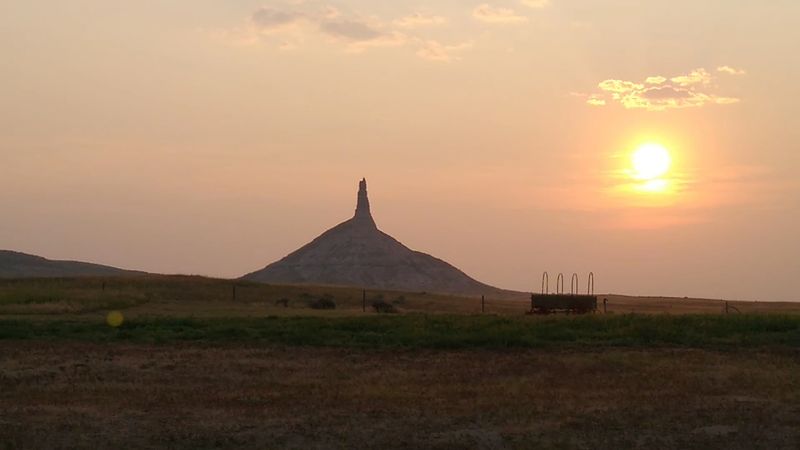
Long after the visitor center closes and the last car leaves the parking lot, Chimney Rock keeps performing. A community-supported lighting tradition that began in the early 1980s transforms the spire into a glowing beacon after dark, visible from a considerable distance across the flat surrounding plains.
The lighting system was updated to LED technology in 2017, giving the rock a cleaner, warmer glow that holds up beautifully against the vast Nebraska night sky. Seeing it illuminated feels like a quiet act of civic pride, a way for the local community to say that this landmark matters not just during business hours but around the clock.
The connection between the modern light show and the rock’s original role as a navigational marker for exhausted pioneers is hard to miss. Both versions serve the same basic purpose: telling travelers that something significant is here, that this place is worth pausing for. That continuity across nearly two centuries is one of the more quietly moving things about the whole site.
Admission, Hours, and Everything You Need Before You Go
The visitor center at 9822 County Rd 75, Bayard, NE 69334 is open daily from 9 AM to 4 PM MT between May 1st and September 30th. During the off-season, from October 1st through April 30th, hours shift to Tuesday through Saturday, 9 AM to 4 PM MT. Always worth confirming current hours at history.nebraska.gov/rock before making the drive.
Admission runs approximately $5 to $8 plus tax for adults aged 19 and over, and $3 to $4 plus tax for children aged 5 to 18. Kids aged 4 and under get in free, and History Nebraska members enjoy complimentary entry. The Museums for All program offers reduced admission at $2 per adult and $1 per child for visitors presenting a SNAP EBT card.
Outdoor viewing areas and the parking lots near the rock remain free of charge regardless of whether you pay museum admission. The phone number is (308) 586-2581 for anyone who wants to call ahead, especially during shoulder season when hours can shift.
The Nebraska Quarter, Nearby Monuments, and the Bigger Picture
In 2006, Nebraska’s entry into the 50 State Quarters program featured Chimney Rock as its central image, which tells you everything about how deeply this formation is woven into the state’s identity. Being chosen as the face of a coin is not a small thing, and the selection felt entirely natural to anyone who has spent time in this part of the country.
Scotts Bluff National Monument sits roughly 20 to 23 miles to the west and makes for a logical companion stop on the same road trip. That site is managed by the National Park Service and offers free museum admission, along with its own dramatic views of the Great Platte River Road corridor that guided so many overland travelers.
Combining both stops paints a much fuller picture of what westward migration actually looked like on the ground. Chimney Rock provides the emotional anchor and the detailed pioneer story, while Scotts Bluff offers the sweeping geological drama. Together, they make western Nebraska one of the more rewarding stretches of historical road travel in the entire country.
Share this story