Tucked away in Hanover, one peaceful public garden offers winding woodland paths, colorful native wildflowers, quiet seating areas, and a sense of calm that feels worlds away from everyday life. Visitors come for beautiful seasonal blooms, shaded walking trails, a charming gazebo, birdsong, thoughtful landscaping, and an inspiring story that gives every corner of the garden added meaning. It’s the kind of place where a short stroll easily becomes a quiet moment of reflection.
The experience extends far beyond the gardens. Native plants, wildlife, educational displays, community traditions, peaceful gathering spaces, changing seasonal scenery, and a heartfelt mission have made this one of New Hampshire’s most treasured hidden green spaces. Whether you’re exploring Hanover for the first time or looking for a peaceful escape close to town, it’s easy to understand why so many visitors leave feeling refreshed.
Here’s why Nathan’s Garden has become one of New Hampshire’s most beloved hidden gardens and one of the state’s best places to slow down and reconnect with nature.
A Tribute in Bloom on Maple Street
Most meaningful places do not announce themselves loudly, and Nathan’s Garden at 33 Maple St in Hanover, New Hampshire 03755, is a perfect example of that truth.
Established in 1991 by Barbara, David, and Jenny-Lynn Hall, the garden was created to honor their son and brother, Nathan, whose memory is woven into every corner of this quietly remarkable acre.
What began as a deeply personal tribute has grown into a beloved public space that the entire Hanover community now considers its own.
The garden sits less than half a mile from downtown Hanover and the Dartmouth College campus, making it remarkably easy to reach yet surprisingly removed from all that surrounding activity.
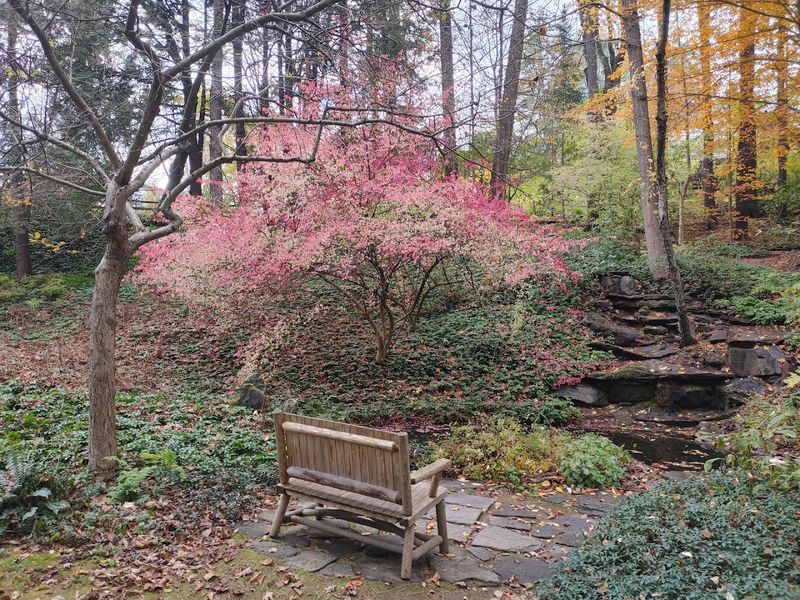
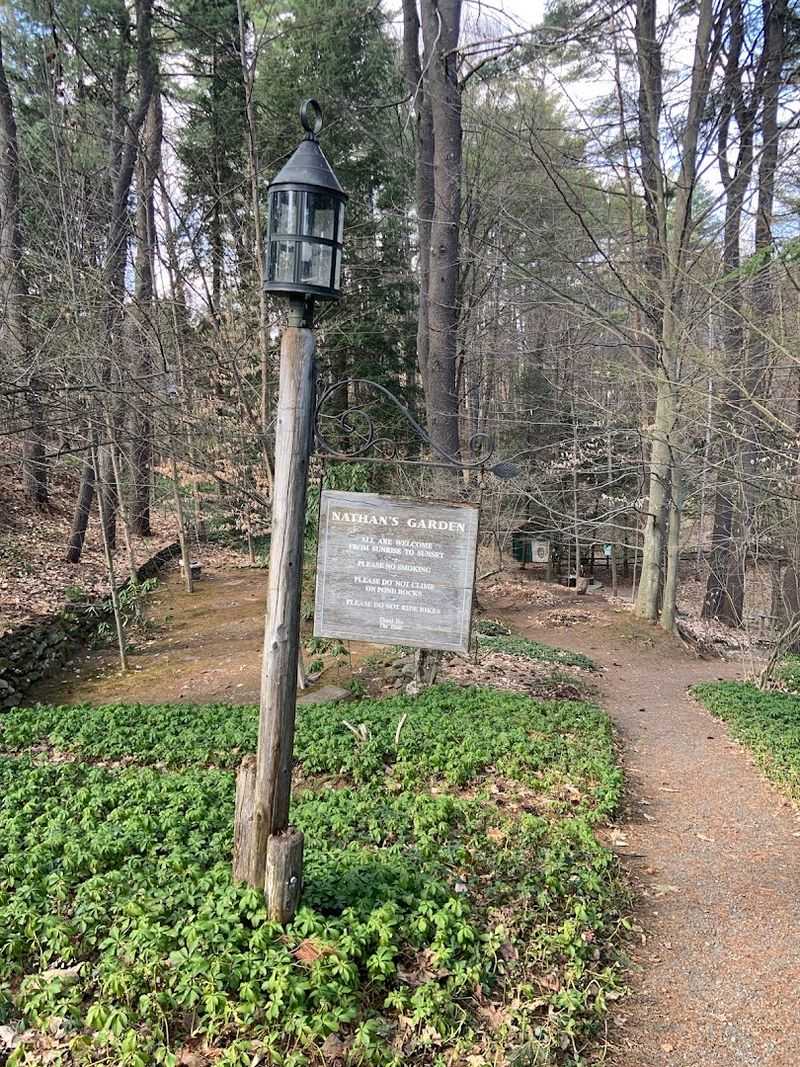
A small sign and a wooden bench mark the entrance on what looks, at first glance, like an ordinary residential street, so you genuinely might walk past it without noticing.
That easy-to-miss quality is part of its charm, and finding it feels like a small, satisfying reward.
The Heartfelt History Behind the Hedgerows
Grief, when channeled with purpose, can produce something extraordinary, and the Hall family’s decision to transform their loss into a living, growing space for the public is exactly that kind of extraordinary act.
From the very beginning, the family envisioned Nathan’s Garden not as a private retreat but as a shared sanctuary where anyone could arrive, breathe deeply, and feel a little less rushed by the world.
In 2014, Hanover residents voted to accept a future bequest of the property to the Town, a community-wide gesture that formalized what visitors had already understood for years: this place belongs to everyone.
Then, on November 1, 2024, the Hanover Conservancy accepted a conservation easement on the land, locking in its protection for future generations.
That legal layer of permanence gives the garden a reassuring solidity that many beloved public spaces never achieve.
Knowing the land is protected forever makes every visit feel just a little more meaningful, like time well spent in a place that will always be here waiting.
Paths That Invite You to Wander Slowly
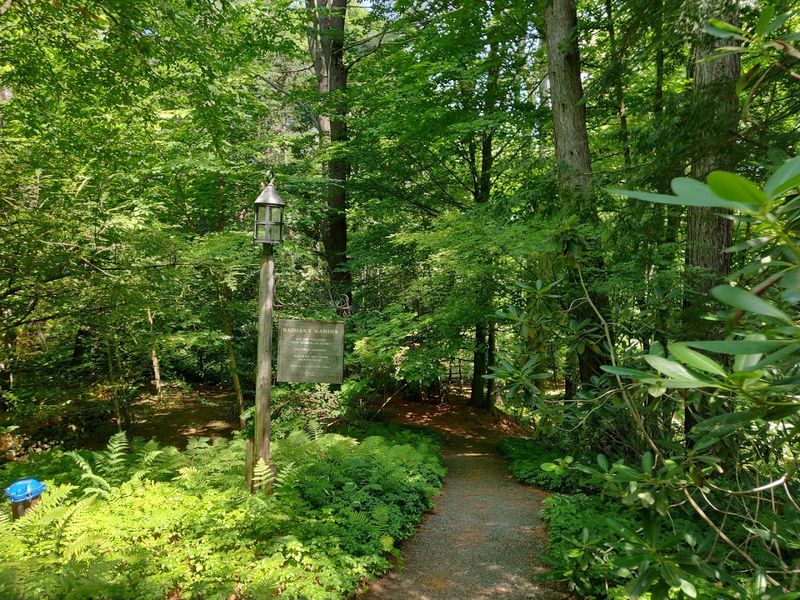
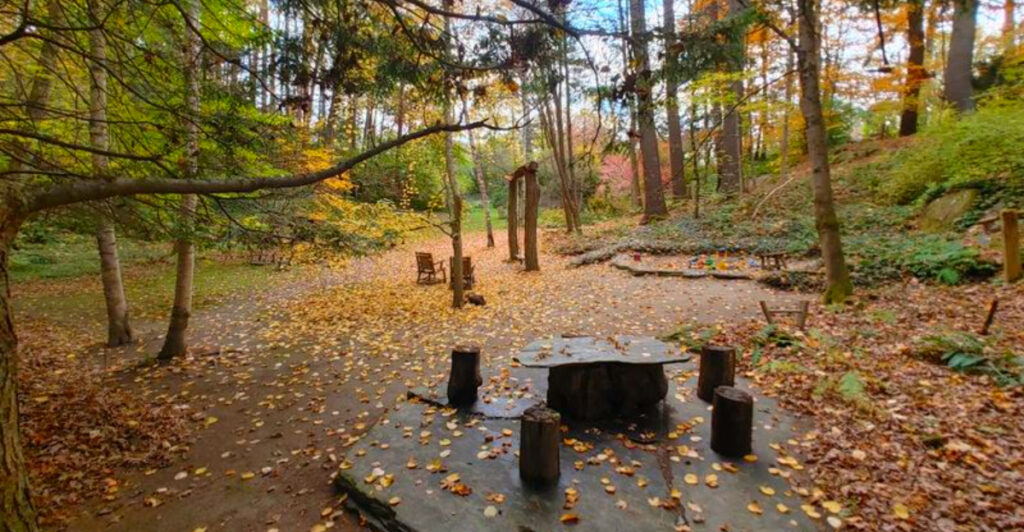
The moment you pass through the entrance and start moving downhill, the outside world genuinely begins to fall away, and the network of paths inside Nathan’s Garden deserves a lot of the credit for that effect.
There is no single grand walkway demanding that you march in a straight line; instead, the garden offers a gravel main entry, flagstone stairs, and soft dirt footpaths that branch and curve through the landscape in ways that feel organic rather than engineered.
Each path gives you a slightly different angle on the surrounding flora, shifting the light, revealing a new cluster of wildflowers, or suddenly opening onto a wider clearing with a bench positioned just right.
I caught myself slowing down almost immediately, not because the terrain forced it, but because hurrying felt genuinely wrong in a place this calm.
The incline heading back out is worth noting for anyone with mobility considerations, as some stretches are noticeably steep.
But the descent in is gentle enough that you barely register it until you look back up and realize how far you have come.
The Octagonal Gazebo and Its Community Journal
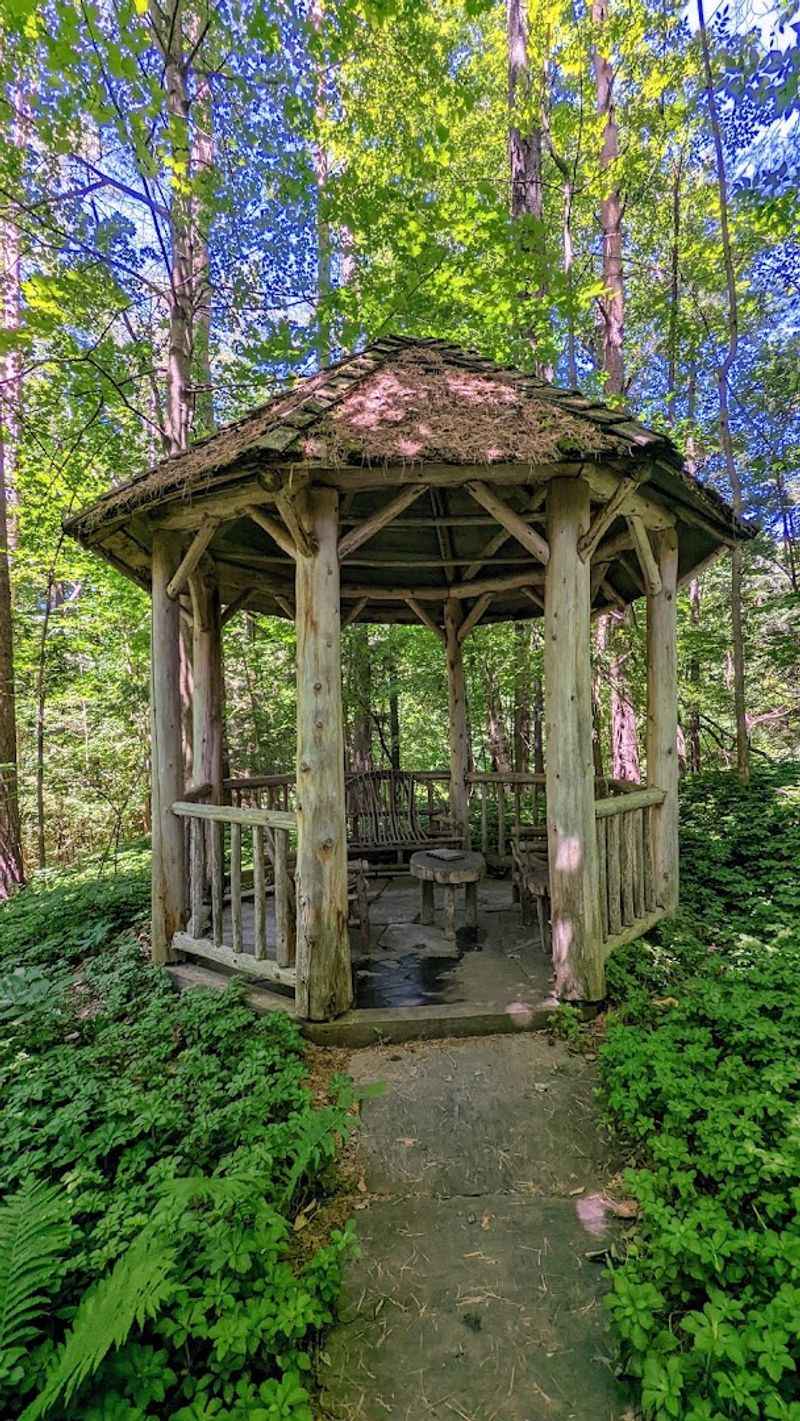
Somewhere along one of those winding paths, a rustic octagonal gazebo appears between the trees, and it has a quality that is hard to describe without sounding overly poetic.
The structure feels like it belongs there completely, as though the trees simply grew up around it rather than someone placing it among them deliberately.
Inside, the garden’s serene energy seems to concentrate, and the framed views through each opening look almost deliberately composed, like small paintings of the surrounding greenery.
What elevates the gazebo beyond its architecture, though, is the community journal the Hall family has maintained inside it for years, inviting visitors to write thoughts, sketches, reflections, and small stories from their visits.
Flipping through those handwritten pages is a quietly moving experience, because you encounter the voices of people from all different seasons and circumstances, all finding the same peace in the same spot.
It is one of those small, human details that turns a pretty garden into something genuinely memorable and worth returning to.
Forty Wildflower Species and a National Honor

Forty species of wildflowers sounds like an impressive number until you actually see them growing together in Nathan’s Garden, at which point the number feels almost like an understatement.
The plantings have a naturalistic quality that avoids the stiff, overly manicured look of many formal gardens, instead favoring a lush, slightly wild aesthetic that makes each visit feel like a small discovery.
That approach earned the garden a significant accolade in 1999, when the New England Wildflower Society, now operating as the Native Plant Trust and recognized as the oldest plant conservation organization in the United States, named it the Wildflower Garden of the Year.
That honor is not just a nice detail for a brochure; it reflects a genuine commitment to ecological integrity that you can actually feel when you walk through the space.
The palette shifts across the growing season, so a visit in May looks nothing like a visit in August, and both are worth making.
Botanical variety on this scale, packed into one quiet acre, is genuinely rare.
Water, Birds, and the Sounds That Settle You
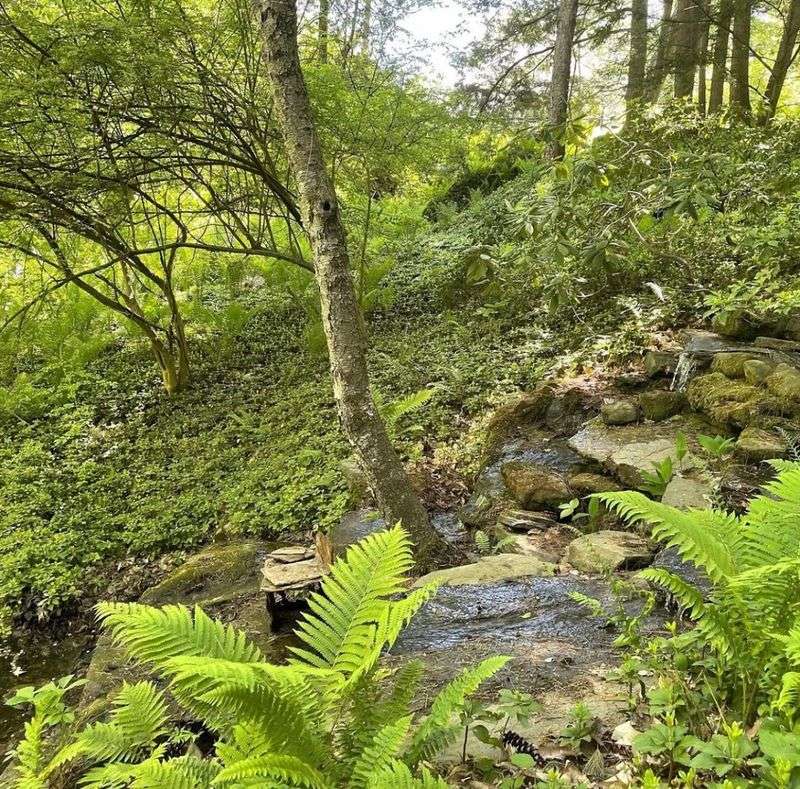
There is a moment in Nathan’s Garden, usually somewhere near the bottom of the main path, where you suddenly become aware of water, a gentle, unassuming sound that you might initially mistake for wind moving through leaves.
The small water feature and brook running through the lower section of the garden adds an aural dimension to the experience that photographs simply cannot capture, and it does more for the atmosphere than any planted bed or decorative element could.
During dry spells, the brook runs low, but even a trickle carries enough sound to anchor the senses and slow the internal chatter that most of us carry around all day.
The garden’s proximity to the Connecticut River also makes it a natural stopover for migrating birds, and even a casual visit rewards patient observers with unexpected sightings.
Chipmunks, too, appear with cheerful regularity, darting between the roots of mature trees with a confidence that suggests they consider themselves the rightful residents.
The wildlife here is not a bonus feature; it is part of the whole experience.
A Play Space Tucked Among the Trees
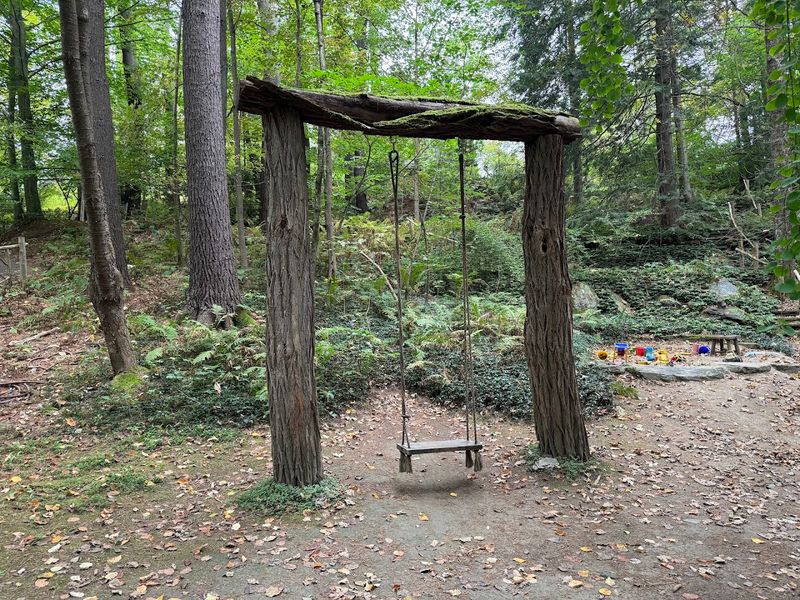
Not every garden designed for quiet reflection also makes room for the joyful noise of children, but Nathan’s Garden manages both with a thoughtfulness that feels entirely intentional.
Tucked into one corner of the grounds is a small play area that includes a massive wooden swing hung from a sturdy branch and a sandbox stocked with toys, the kind of setup that makes kids immediately forget they were ever bored on the walk over.
Watching a child launch themselves on that swing, with pine trees swaying gently overhead and wildflowers dotting the edges of the clearing, is the sort of uncomplicated happiness that is genuinely hard to manufacture.
The play area also includes a tiny table and chairs scaled for small visitors, adding a storybook quality to the scene that even adults tend to find charming.
Families with young children will find that the garden holds attention surprisingly well, because the combination of natural exploration and dedicated play space covers a lot of ground.
It is a reminder that peace and play are not opposites.
Informative Plaques and the Joy of Learning While Wandering
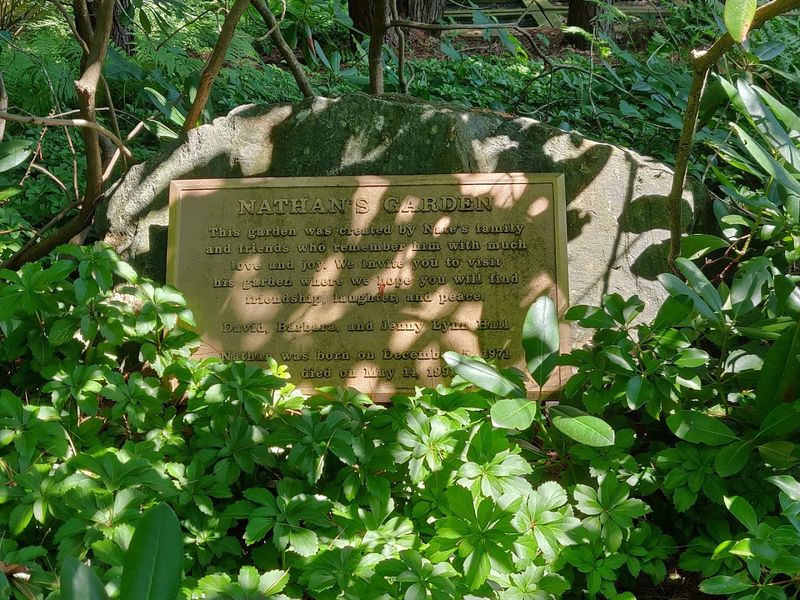
There is a specific pleasure in walking through a garden and actually understanding what you are looking at, and Nathan’s Garden supports that kind of engaged curiosity through informative plaques placed throughout the grounds.
Rather than forcing you to carry a guidebook or squint at your phone, the labels appear right beside the plants they describe, offering names, characteristics, and occasionally a bit of context about why a particular species was chosen for the space.
For visitors with no botanical background, this detail transforms a pleasant stroll into something closer to a low-key education, the kind where you absorb information without feeling like you are being taught at.
Children tend to respond well to this format too, because there is something satisfying about matching a label to a living plant and walking away knowing something new.
The plaques also reinforce the garden’s broader commitment to native plants and ecological awareness, connecting the aesthetic beauty of the space to something with genuine environmental purpose.
Knowledge and beauty, it turns out, make excellent walking companions.
Part of Hanover’s Larger Green Network
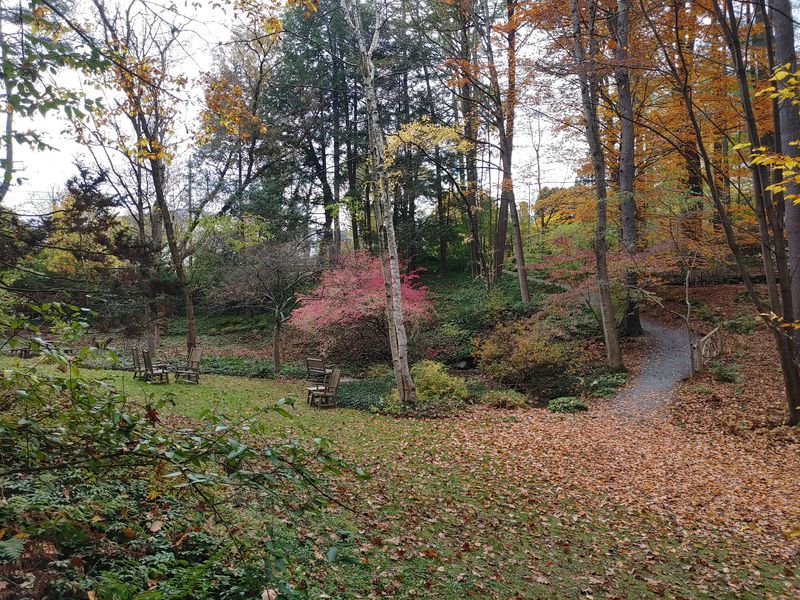
Nathan’s Garden does not exist as an isolated patch of green; it functions as a living link in a larger chain of natural spaces that runs through the southwestern corner of Hanover.
The garden connects ecologically to the Hanover Conservancy’s Mink Brook Nature Preserve, as well as the Town of Hanover’s Mink Brook Natural Area, South Esker, Pine Knoll Cemetery, Tanzi Tract, and the River Trail along the Connecticut River.
That network of connected habitats creates a continuous wildlife corridor that benefits migrating birds, local fauna, and the broader ecosystem in ways that extend well beyond the garden’s one-acre footprint.
For visitors, the practical benefit is that a trip to Nathan’s Garden can easily expand into a longer outing along the River Trail, which begins nearby and follows the Connecticut River through some genuinely beautiful riverside scenery.
The Hanover Conservancy’s founders long envisioned this area as a green necklace around the town, and Nathan’s Garden is one of its most cherished links.
That larger context makes the small space feel connected to something much bigger.
Practical Tips for a Smooth Visit
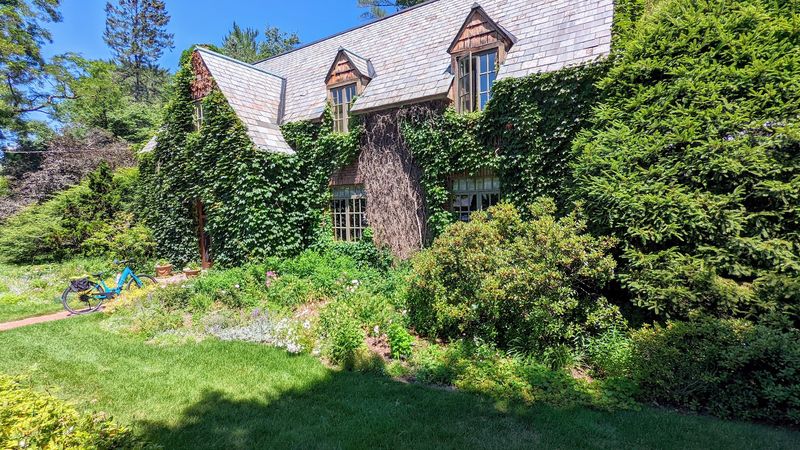
A visit to Nathan’s Garden is free, open dawn to dusk, seven days a week, which makes spontaneous trips entirely reasonable and planning largely optional.
Parking, however, deserves a word of honest advance warning: there is no parking directly on Maple Street in front of the garden, and the nearby municipal lot on Maple Street tends to fill early with commuters and office workers.
A small number of spaces are available near 3 Downing Road, just a short walk from the entrance, and that is generally the most reliable option if you are arriving by car.
Arriving on foot or by bicycle from downtown Hanover is genuinely easy, given the garden’s location less than half a mile from the town center, and the walk itself is pleasant through quiet streets.
Bug spray is worth tucking into a bag during warmer months, as mosquitoes can be active, particularly near the water feature in the lower section.
Conveniently, the gazebo sometimes stocks complimentary spray, but bringing your own guarantees a comfortable visit regardless.
Why This Small Garden Leaves a Lasting Mark
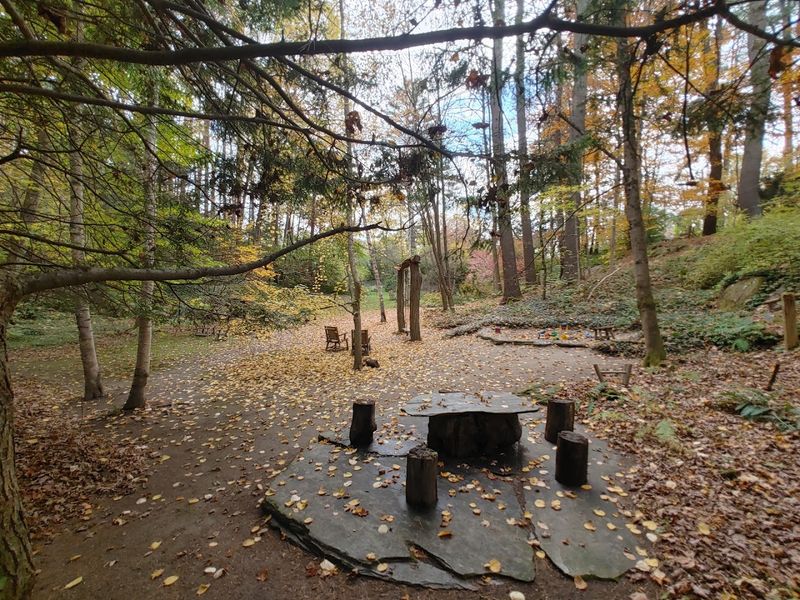
Some places earn their reputation through scale or spectacle, and then there are places like Nathan’s Garden, which earn theirs through something quieter and harder to quantify.
The combination of genuine history, ecological care, community ownership, and thoughtful design creates an atmosphere that is difficult to replicate and nearly impossible to rush through once you are inside it.
Visitors who arrive expecting a tidy little park often leave describing something closer to a personal reset, a shift in pace and perspective that they did not necessarily anticipate needing.
The community journal in the gazebo captures this effect repeatedly, page after page, in handwriting ranging from careful cursive to quick, grateful scrawls from people who wandered in on a lunch break and stayed far longer than planned.
If you find yourself near Hanover, New Hampshire, and you have even thirty minutes to spare, this garden is the kind of detour that quietly becomes the highlight of the day.
Small places, it turns out, can hold an extraordinary amount of beauty when they are made with enough care.
Share this story