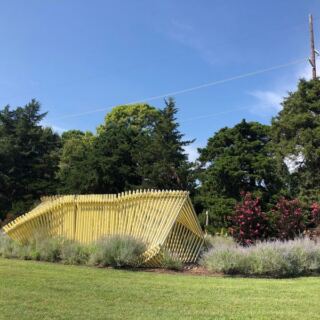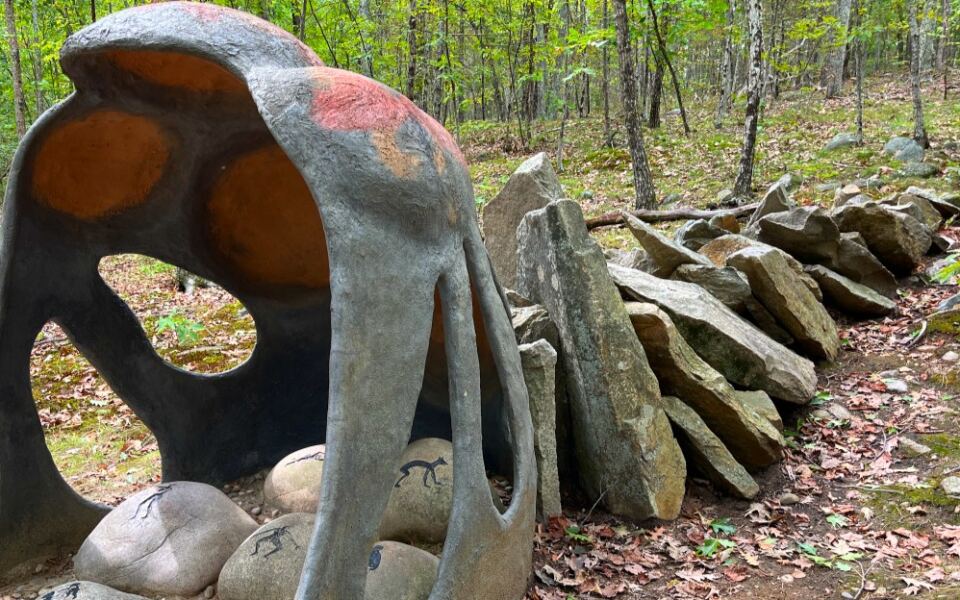
More than 100 sculptures are scattered across the trails of a 140-acre hillside in Brookline, New Hampshire, and exploring them costs nothing. Andres Institute of Art turns a hike through the woods into an outdoor art hunt, with large works of stone, metal, and other materials appearing throughout the property.
The sculpture park occupies Potanipo Hill, a former ski area with an even earlier connection to granite quarrying. Today, miles of trails lead visitors past permanent works created by artists from around the world.
The collection also continues to change. New works are created through the institute’s international sculpture symposium and become part of the park, giving returning visitors something new to find.
Where Art Meets the Mountain: Address, Location, and Getting There
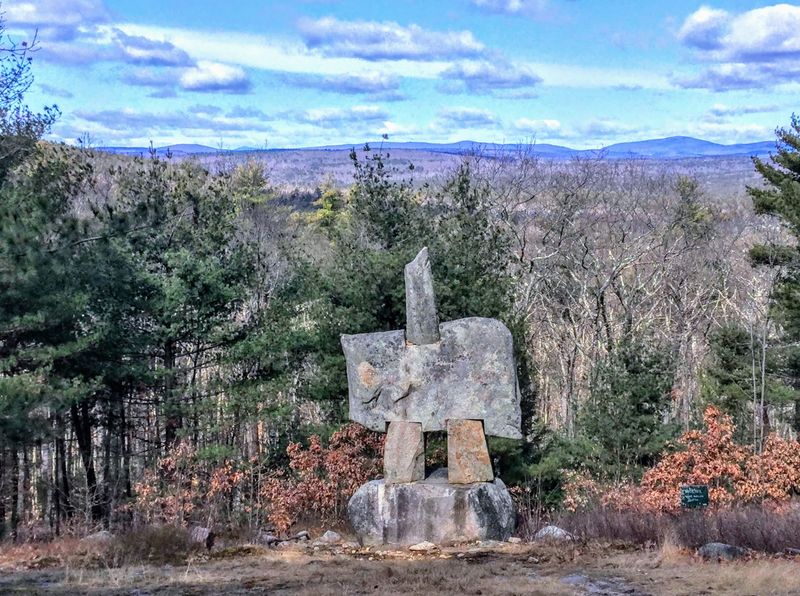
The Andres Institute Sculpture Park sits at 106 Route 13 in Brookline, New Hampshire 03033, right in the heart of Southern New Hampshire. The park is built across Potanipo Hill, a 613-foot rise that once served as a ski area known at various points as Brookline Ski Tow, Musket Mountain, and Big Bear Mountain.
Getting there is straightforward from most parts of the region. A generous parking area sits at the Andres Visitor Center, so you never have to worry about hunting for a spot on a busy weekend morning.
The park is open daily from 6:30 am to 5:30 pm, and admission is completely free, though donations are warmly appreciated. A visitor kiosk at the trailhead hands out maps, and the Trailforks app offers a GPS-enabled interactive version if you prefer to navigate from your phone.
Phone ahead at (603) 732-0216 if you have accessibility questions.
From Ski Slopes to Stone and Steel: The Origin Story Behind the Park
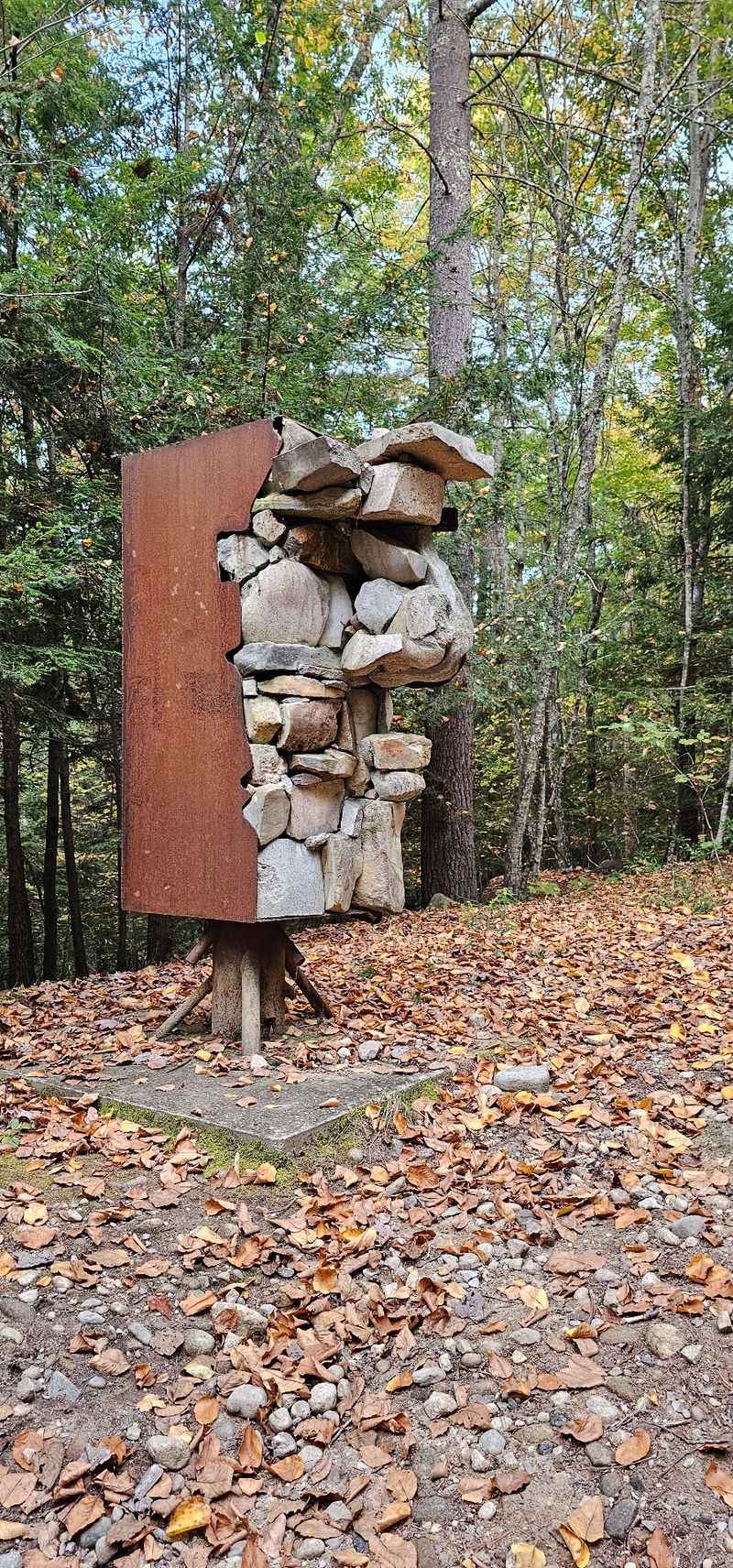
Paul Andres purchased Big Bear Mountain in 1996 and moved into the house at its peak, drawn by a lifelong love of both nature and art. He began placing sculptures around his home almost immediately, turning a personal passion into something much larger than himself.
In 1998, Andres partnered with master sculptor and long-time Brookline resident John M. Weidman to formally establish the Andres Institute of Art, a nonprofit organization with a clear mission: to educate artists, promote the blending of art and technology, and give the public free access to both art and nature in one place.
Before any of that, the hill had an even older life as a granite quarry, and the remnants of that era are still visible along certain trails today. Those weathered stone cuts serve as an unexpected reminder that the land itself has always had a creative relationship with raw materials, long before any sculptor arrived.
New England’s Largest Outdoor Sculpture Park: The Scale Will Surprise You
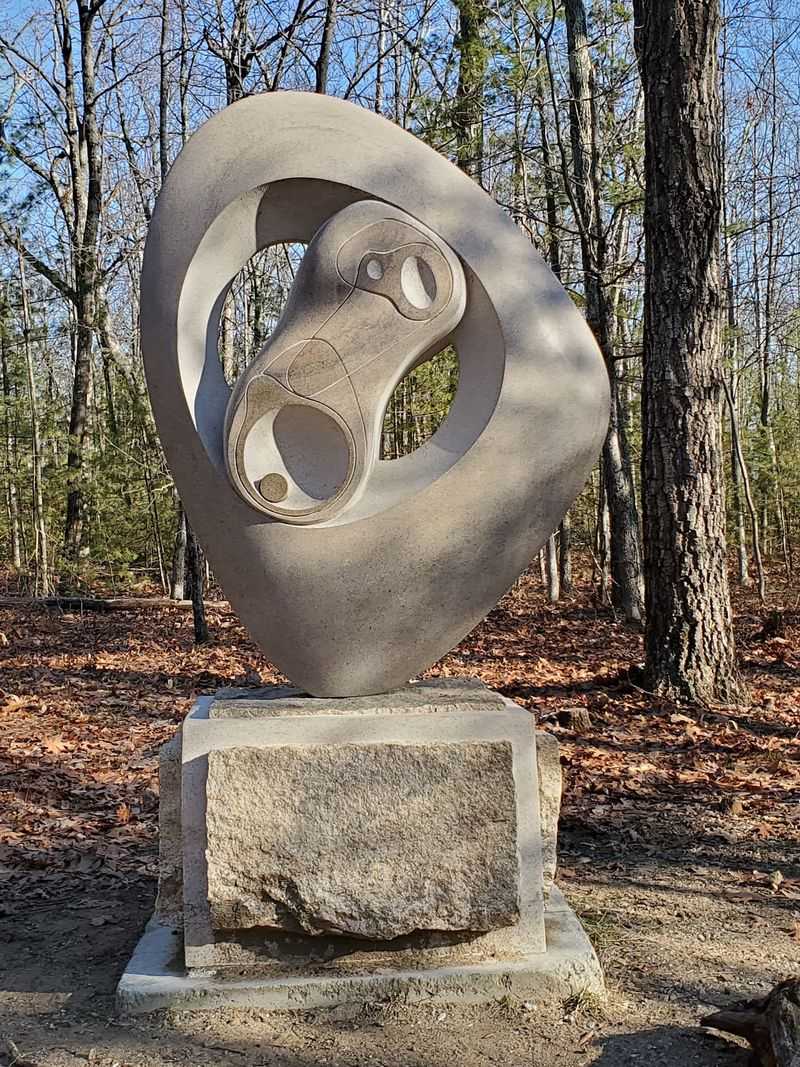
Most people do not realize how large this place actually is until they are already halfway up the hill, slightly out of breath, and still spotting new sculptures around every corner. The Andres Institute Sculpture Park spans 140 acres of forested hillside, making it the largest outdoor sculpture park by area in all of New England.
The trail network stretches between 10 and 12 miles in total, weaving through dense forest, open meadows, and rocky terrain left behind from the old quarry days. Over 100 permanent sculptures are spread across those miles, with 107 pieces documented from symposia as of 2026.
Plan your time accordingly. Visitors who arrive thinking they will spend an hour routinely find themselves still exploring three or four hours later, having covered only half the collection.
The sheer scale of the park is one of its greatest and most delightful tricks.
Art You Can Actually Touch: The Philosophy Behind the Collection
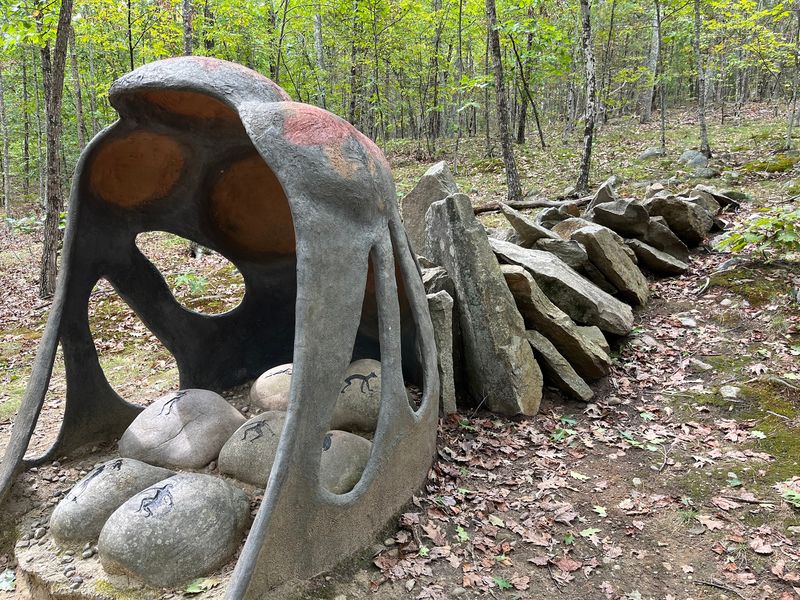
One of the first things a staff member or volunteer will tell you is that this is not “do not touch” art. That single fact changes the entire experience in ways that are hard to fully appreciate until you are standing in front of a granite couch called “Contempo Rustic” and actually sitting down on it.
Most pieces in the collection are abstract or deliberately open to interpretation, which means two people can stand in front of the same sculpture and walk away with completely different impressions. That ambiguity is intentional and refreshing.
Each sculpture comes with a small post that lists its name, the artist who created it, their home country, and the year it was made. Those details add a layer of context without overwhelming the experience.
The collection features granite, steel, and wood, and watching how each material weathers and changes with the seasons adds an evolving quality that no indoor gallery can replicate.
Trails for Every Level: How to Navigate Potanipo Hill
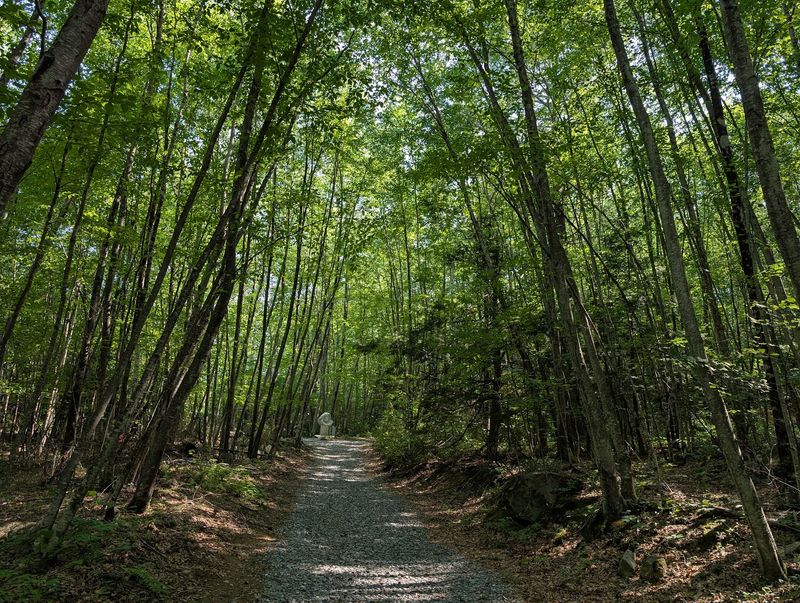
The trail system at Andres Institute uses a simple shape-based coding system that makes route planning easy. Circles mark the easier paths, squares indicate intermediate terrain, and triangles point toward the more demanding routes with steeper climbs and rougher footing.
Terrain varies quite a bit across the 10 to 12 miles of trails. Some stretches are wide, packed dirt paths that families with young kids handle without trouble.
Others wind through rocky sections near the old quarry, where roots and loose stones require a bit more attention and a pair of sturdy shoes.
One paved route called the Parkway Trail offers more accessible footing and reaches several sculptures without requiring a full mountain climb. For groups with specific accessibility needs, the institute can make arrangements in advance for driving access to the studio area.
Mud appears seasonally, especially near the quarry section, so checking conditions before you go is a smart move.
The International Sculpture Symposium: Watch Art Being Born in Real Time
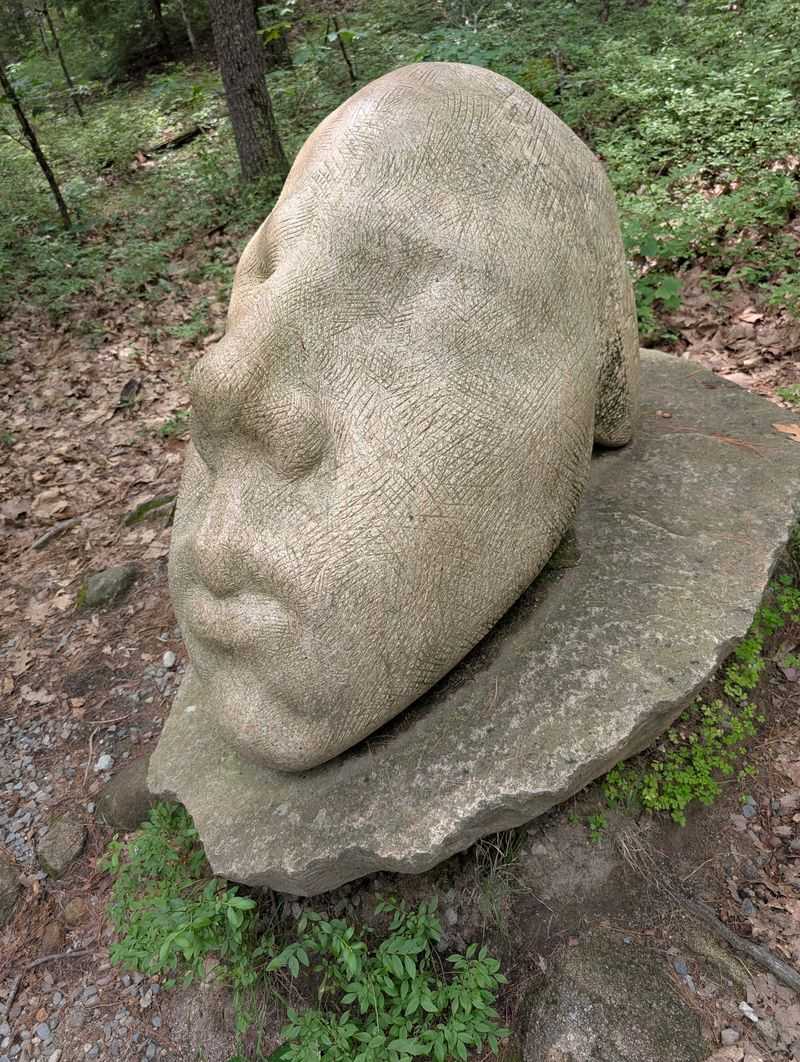
Every fall, the Andres Institute hosts its International Bridges and Connections Sculpture Symposium, and the event is something genuinely worth planning a trip around. Three invited artists from different countries, including places like Lithuania, Latvia, England, Greece, and various U.S. states, arrive on-site and spend three weeks creating brand-new sculptures from scratch.
The public is welcome to watch the entire process and even talk with the artists as they work. Seeing a raw block of granite or a pile of steel rods transform into a finished piece over the course of a few weeks gives you a completely different appreciation for every other sculpture already standing on the trails.
Each piece created during the symposium becomes a permanent addition to the park’s collection, which means the park genuinely grows a little richer every year. That ongoing evolution is part of what keeps regular visitors coming back, curious to see what new work has taken root on the hillside since their last visit.
The Iron Melt Event: A Hands-On Experience Unlike Anything Else
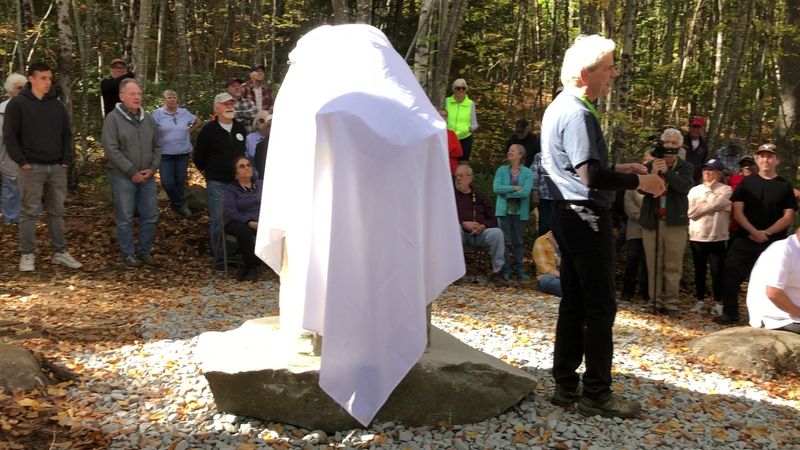
Beyond the annual symposium, the Andres Institute hosts a biannual Iron Melt event that draws visitors who want to do more than just look at finished art. Attendees purchase sand molds and then watch as workers pour glowing hot liquid iron directly into those molds to create individual iron tiles they can take home.
There is something almost primal about watching molten metal flow and cool into a permanent shape right in front of you. The event bridges the gap between observer and participant in a way that most cultural venues never attempt.
The Iron Melt also serves as a fundraiser for the institute, which means your participation directly supports the park’s ability to remain free and well-maintained for future visitors. It is a rare opportunity to walk away from an art event with something you helped create, a small iron tile carrying the memory of a very unusual afternoon on a New Hampshire hillside.
The Welcome Center and What Hides Inside the Old Ski Lodge
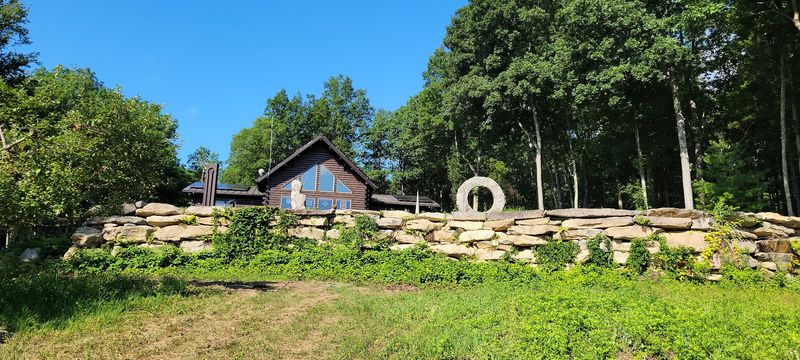
The former ski lodge at the base of Potanipo Hill now serves as the Andres Visitor Center, and it holds more than most people expect from a trailhead building. Inside, a gallery space displays rotating art exhibitions with information about the Andres Institute of Art and its ongoing programs.
The Big Bear Lodge performance center occupies part of the building and hosts regular concerts and musical performances throughout the year. These events double as fundraisers for the park, so attending one means you are supporting the free trail access that everyone else enjoys.
When the Welcome Center is open, real restrooms and Wi-Fi are available, which are small comforts that feel surprisingly welcome after a few hours on the trails. Because the center is staffed entirely by volunteers, its hours vary.
Checking the institute’s Facebook page or website before your visit will save you the disappointment of arriving to a locked door on an otherwise perfect hiking day.
Sculptures That Stop You in Your Tracks: Standout Pieces on the Trails
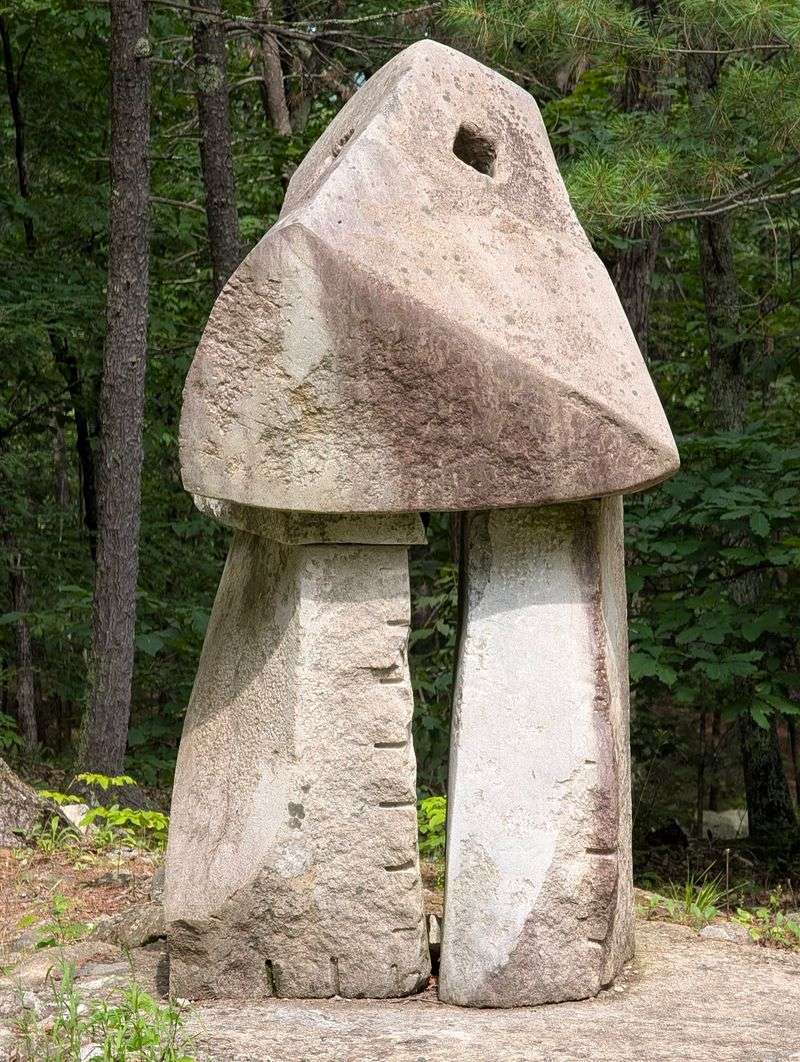
With over 100 pieces scattered across 140 acres, a few sculptures tend to become favorites that visitors mention by name long after leaving the park. “Contempo Rustic” is a couch built from rock and metal, the kind of piece that makes you laugh before it makes you think.
“Mbari House” takes the shape of a house-like granite-and-metal totem, carrying symbolism around peace and friendship that feels especially meaningful given that it was created by an artist traveling far from home. Near the summit, a tall steel structure that looks convincingly like a cell phone tower turns out to be a carefully crafted sculpture, a detail that catches many hikers completely off guard.
The old quarry remnants scattered across the grounds function almost like natural sculptures themselves, rough-cut granite walls left behind by workers who had no artistic intention at all. That accidental artistry sits comfortably alongside the intentional pieces, and somehow the two feel like they belong together.
How the Seasons Transform the Same Trail Into Four Different Experiences
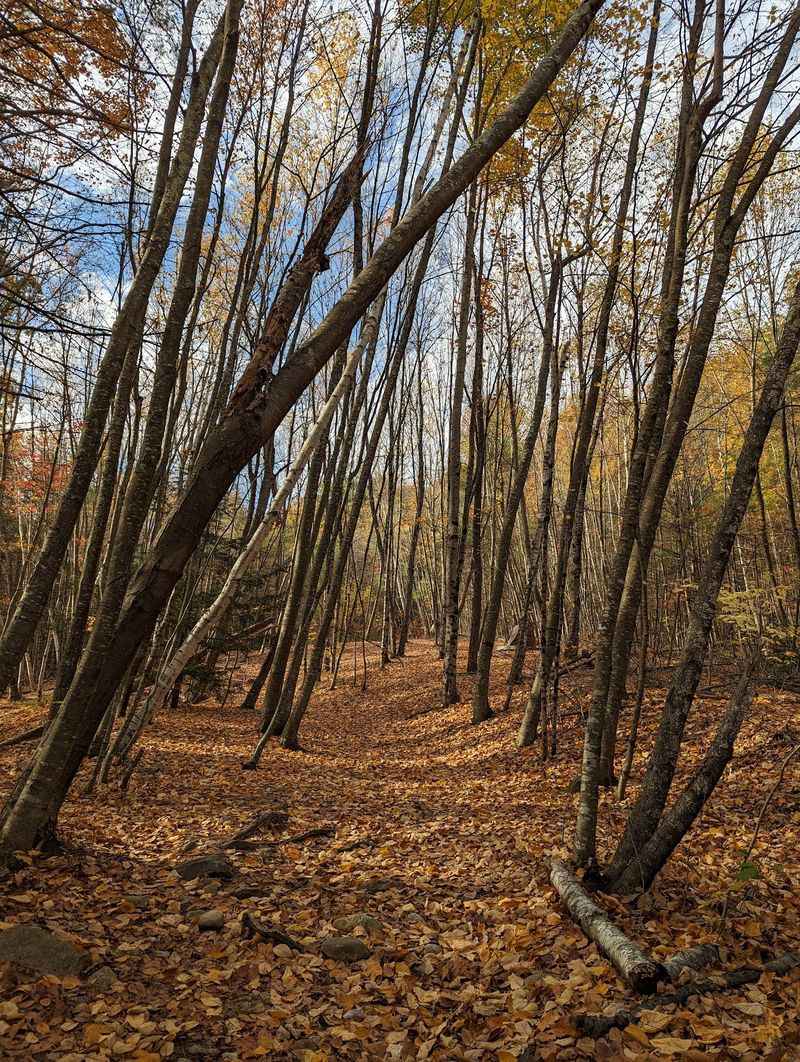
One of the quieter pleasures of the Andres Institute is how dramatically the experience shifts depending on when you show up. Summer brings dense green canopy overhead, dappled light on stone surfaces, and the soundtrack of insects filling the air, along with a genuine need for bug spray.
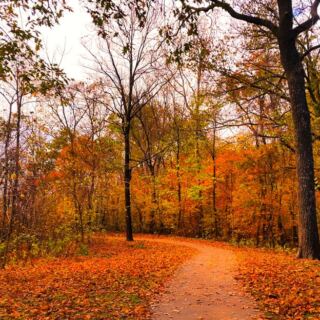
Fall is arguably the showstopper season. The hillside turns every shade of orange and red, and the contrast between vivid autumn color and cool metal sculpture creates compositions that photographers genuinely come back for year after year.
The annual symposium also runs in the fall, so you might catch artists at work between your sculpture stops.
Winter strips the leaves away and reveals sculptural silhouettes that are completely hidden in warmer months. Snow settles into the crevices of stone pieces and highlights textures that summer visitors never notice.
Spring brings mud, particularly near the quarry, but also a freshness to the forest that makes the whole hillside feel newly discovered, even for returning visitors.
Dog-Friendly, Family-Friendly, and Genuinely Free: Who This Park Is For
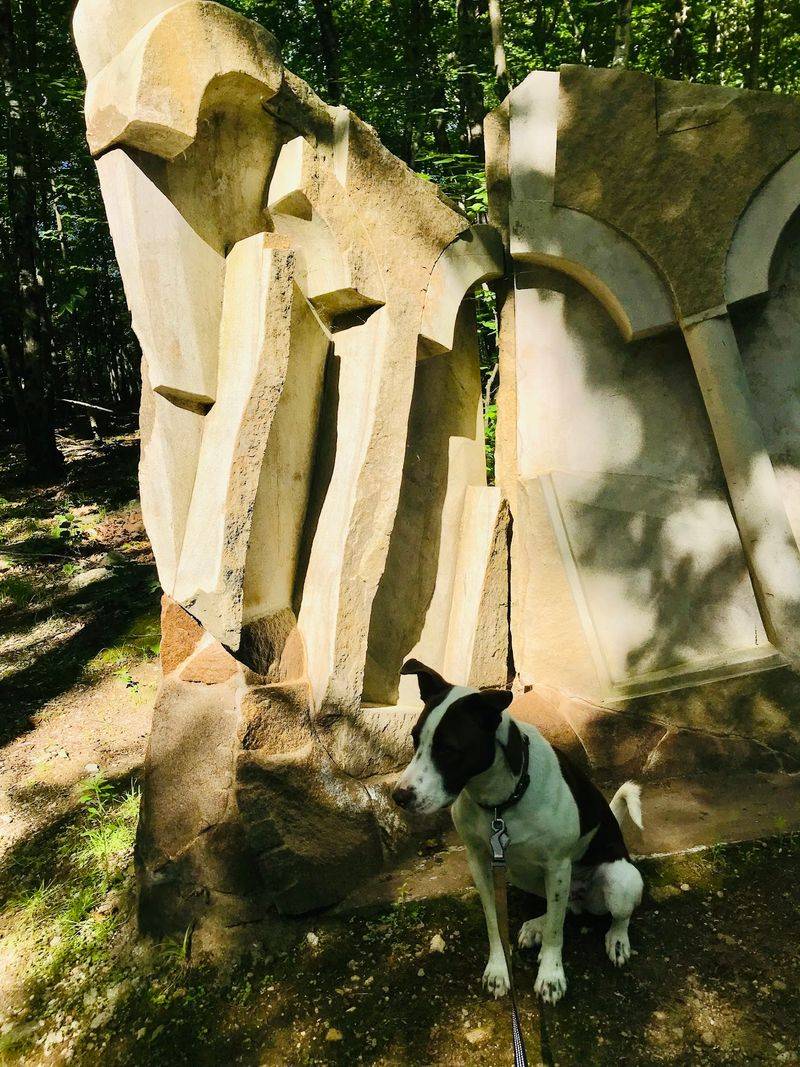
Leashed dogs are welcome on all the trails, which makes the Andres Institute one of those rare art destinations where your four-legged hiking companion gets to enjoy the experience right alongside you. Families with young children find the easier Circle-marked trails manageable, while the sculptures provide natural conversation starters that keep kids engaged far longer than a typical nature walk would.
Admission is completely free every single day of the year. The park operates on a carry-in, carry-out policy, meaning there are no trash receptacles on the trails, so pack accordingly and plan to take everything back out with you.
Water fountains are not available on the trails either, so bringing your own water is essential, especially in warmer months. Picnic tables are scattered across certain sections of the park, making a packed lunch a perfectly reasonable part of the plan.
The combination of free access, dog-friendly rules, and family-appropriate terrain makes this one of the most genuinely inclusive outdoor destinations in Southern New Hampshire.
Practical Tips to Make the Most of Your Visit
A few small preparations make a real difference at the Andres Institute. Wear shoes with solid grip, because the trails mix dirt, gravel, exposed roots, and uneven stone in ways that flat sneakers handle poorly.
Bug spray is genuinely necessary from late spring through early fall, and the woods can be surprisingly buggy even on cooler days.
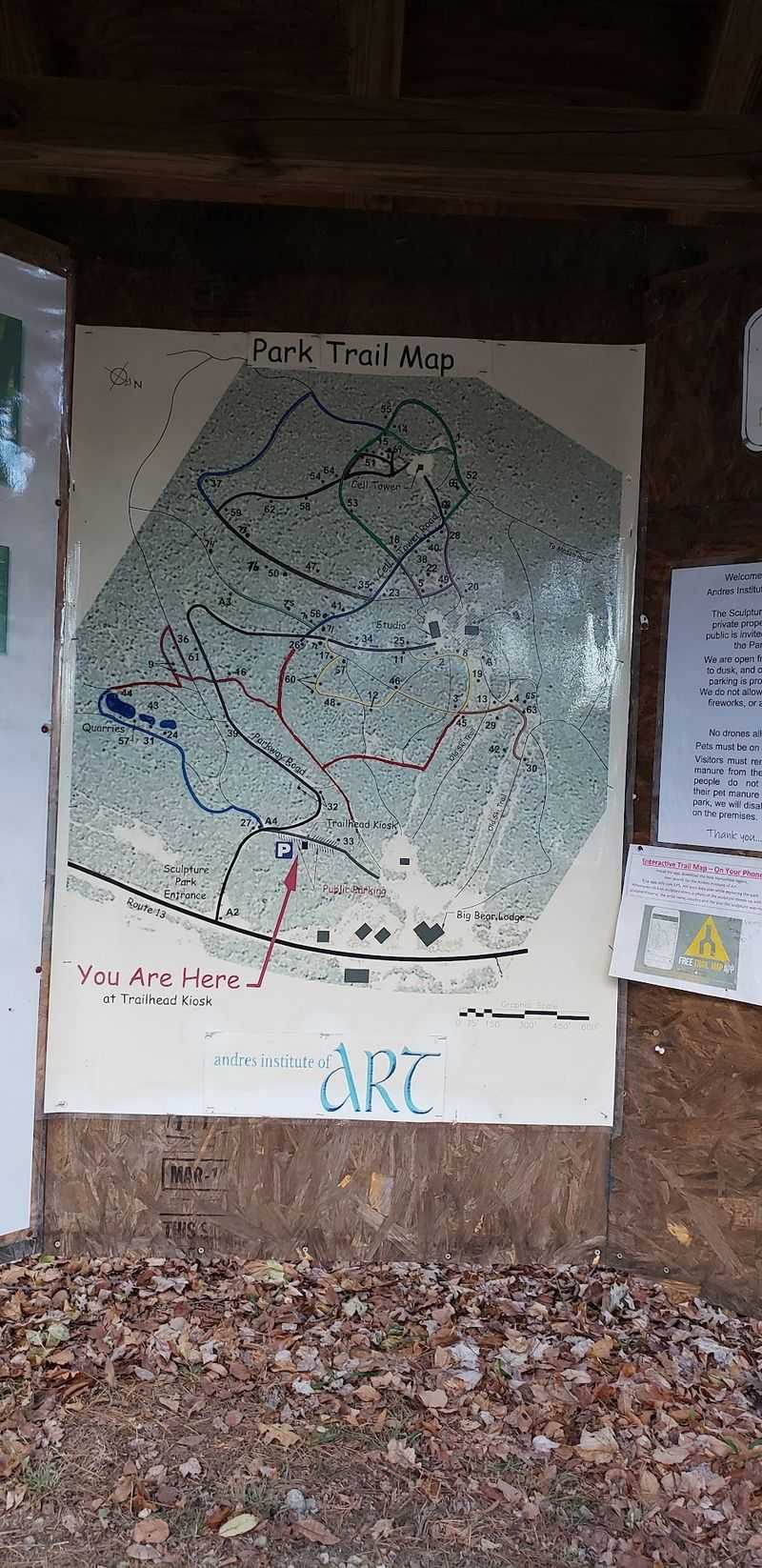
Grab a paper map at the trailhead kiosk, or download the Trailforks app before you leave home. The app uses GPS to track your position and pulls up details on individual sculptures as you approach them, which adds a treasure-hunt quality to the whole outing.
Trail signage can be inconsistent in places, so having a map in hand prevents the kind of confused wandering that eats up your remaining daylight.
Budget more time than you think you need. Three to four hours covers a solid portion of the collection without feeling rushed, and the park’s free admission means there is every reason to come back another day and explore the trails you missed the first time around.
Share this story