Most people drive through eastern Oklahoma without realizing they are passing land where one of the most important Civil War battles west of the Mississippi River took place. Honey Springs Battlefield, tucked outside the small town of Checotah, holds the story of a fight that helped shape the entire region.
On July 17, 1863, more than 6,000 soldiers clashed on this ground in a contest that involved Union troops, Confederate forces, Black soldiers, and Native American fighters all in one place. The battlefield is quiet now, but the history here runs deep and rewards anyone willing to slow down and pay attention.
The Ground Beneath Your Feet: Finding Honey Springs Battlefield
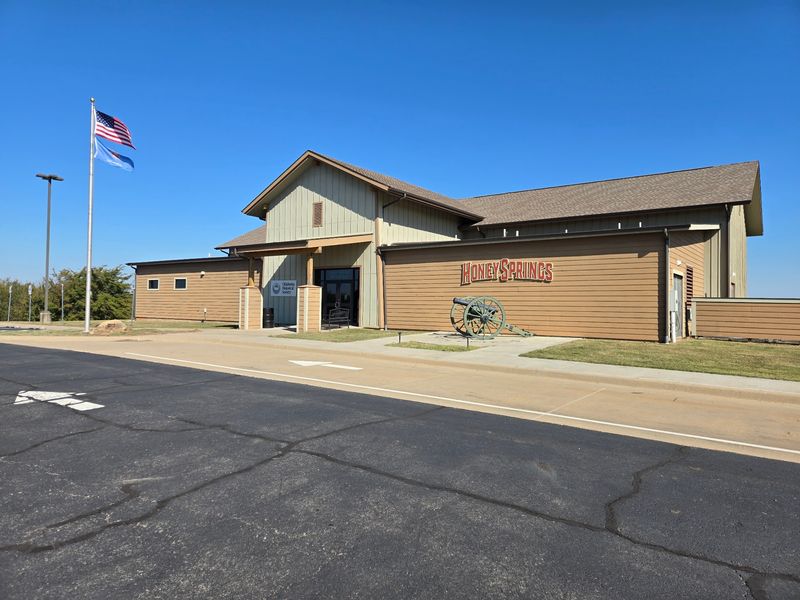
About seven miles south of Checotah, Oklahoma, a gravel road leads to one of the most historically significant pieces of land in the entire state. Honey Springs Battlefield sits at 423159 E 1030 Rd, Checotah, OK 74426, managed by the Oklahoma Historical Society and open to the public Tuesday through Saturday.
Getting there requires a little planning. Visitors who rely on GPS sometimes end up on unpaved roads, so following Highway 69 and then watching for directional signs is the smarter approach.
The paved route keeps things manageable, especially after rain when the surrounding dirt roads can turn slick and muddy.
Once you arrive, the setting makes an immediate impression. The land feels open and unhurried, with tall grass stretching toward a tree line and a sky that seems wider than it has any right to be.
There are no big neon signs announcing the site, and honestly, that restraint suits the place well.
Honey Springs Battlefield earns a 4.7-star rating from 190 reviews on Google Maps, which speaks to how consistently the site delivers a meaningful experience. For history enthusiasts and curious travelers alike, this quiet corner of McIntosh County punches well above its weight.
Why the Battle of Honey Springs Changed Everything
On July 17, 1863, Union Major General James G. Blunt led his forces south from Fort Gibson to strike a Confederate force commanded by General Douglas H.
Cooper. The clash that followed became the largest Civil War battle ever fought in what is now Oklahoma, and its outcome tilted the balance of power across the entire Indian Territory.
Before Honey Springs, Confederate forces held a strong position in the region. A Union victory here effectively ended any realistic Confederate hope of controlling Kansas and the territory that would eventually become Oklahoma.
The strategic consequences rippled outward for months.
What makes this battle especially remarkable is its composition. Union forces included the 1st Kansas Colored Infantry, one of the earliest large deployments of Black soldiers in the Civil War, fighting in greater numbers than in earlier engagements in South Carolina.
Confederate ranks included Cherokee, Creek, and Choctaw soldiers fighting under their own tribal flags.
The battle lasted only a few hours, but the ground absorbed something lasting that day. Standing in that field now, knowing what happened there in the summer heat of 1863, carries a weight that no exhibit can fully replicate on its own.
The Visitor Center: A Thoughtfully Built Gateway Into the Story
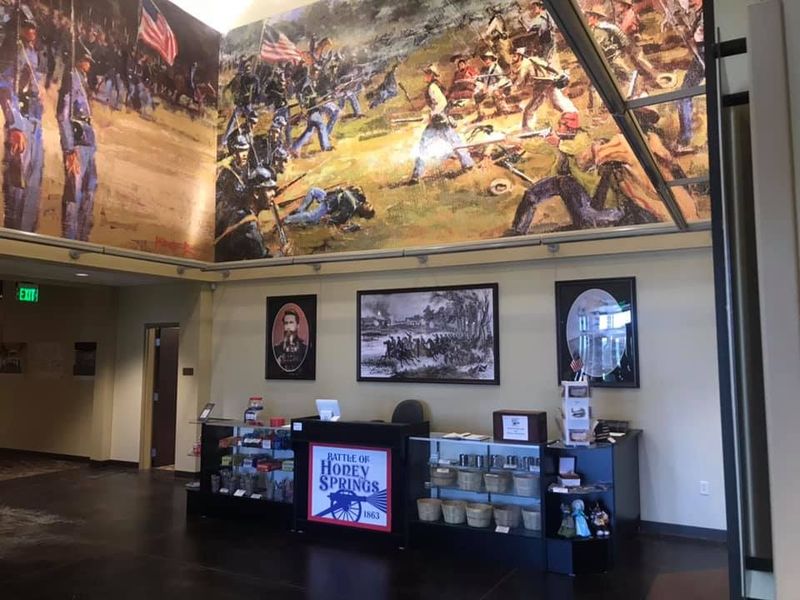
Walking into the visitor center, the first thing that registers is how well the space is organized for a site of this size. Life-sized mannequins dressed in Union and Confederate uniforms stand alongside actual artillery pieces, giving the displays a physical presence that photographs alone cannot match.
The exhibits move through the battle in a logical sequence, covering troop movements, the terrain, and the broader political context of the Indian Territory during the war. Display cases hold period artifacts, and a research library on site gives serious history enthusiasts a place to dig deeper into primary sources and regional records.
Staff members are genuinely knowledgeable and clearly enjoy talking about the site. Questions are welcomed rather than deflected, and the historians on duty have a habit of adding context that enriches whatever you just read on a placard.
That personal touch makes a real difference.
The visitor center is run by the Oklahoma Historical Society, which lends the operation a sense of institutional commitment to accuracy and preservation. Admission for a regular adult visit runs $7, which feels like a fair exchange for everything the center offers.
The whole setup is clean, well-maintained, and surprisingly comprehensive for a rural battlefield museum.
The Film That Tells Three Stories at Once
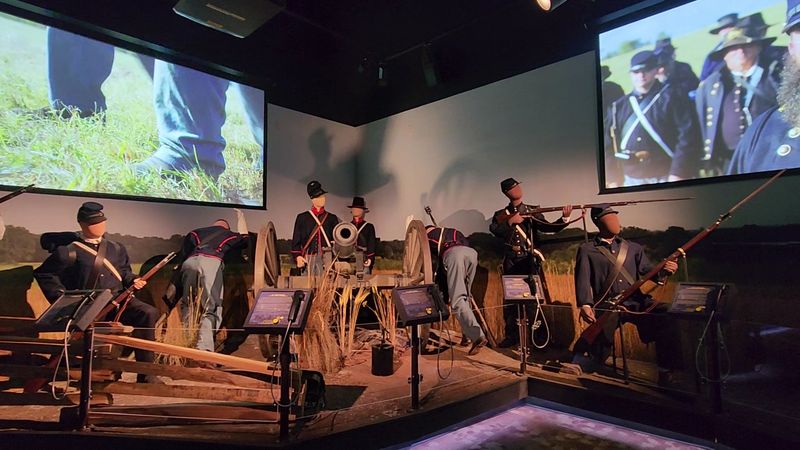
A twelve-minute film shown in the visitor center theater might be the single most effective thing at Honey Springs Battlefield. Short films at historic sites often feel like obligatory check-boxes, but this one earns its place by doing something genuinely interesting with its structure.
The narrative unfolds from three distinct perspectives: the Union command, the Confederate command, and the soldiers who were neither white nor traditionally represented in Civil War storytelling. Black soldiers from the 1st Kansas Colored Infantry get real screen time, and so do the Native American fighters on both sides of the conflict.
The result is a story that feels more complete than the standard textbook version.
Hearing the battle described through the eyes of a Cherokee soldier or a Black infantryman reframes the whole event. It stops feeling like a distant military footnote and starts feeling like something that happened to real people with real stakes.
That shift in perspective is exactly what good historical interpretation should accomplish.
The film is coordinated with the surrounding exhibits, so what you see on screen connects directly to what you find on the museum walls. Watching it before exploring the rest of the center makes the displays land with noticeably more impact.
Twelve minutes well spent.
Black Soldiers at Honey Springs: A Story That Deserves More Recognition
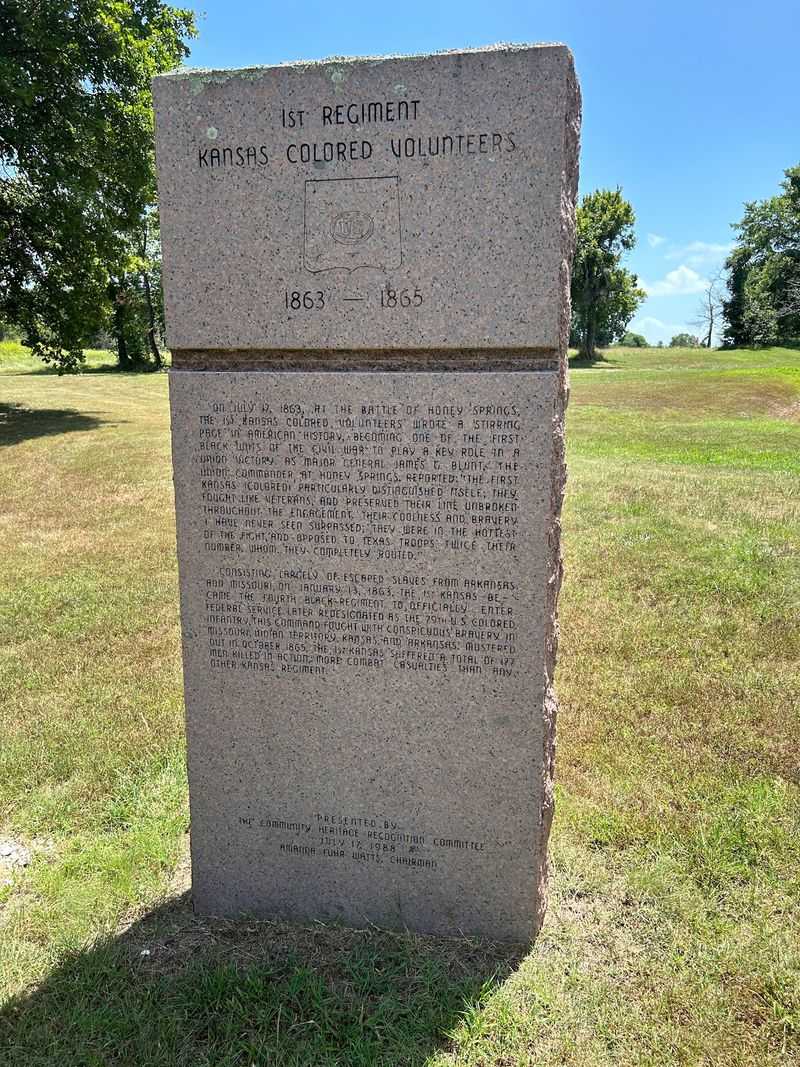
Few chapters of Civil War history carry as much significance and receive as little mainstream attention as the role of Black soldiers at Honey Springs. The 1st Kansas Colored Infantry fought here in numbers that exceeded earlier deployments, making this engagement a milestone in the history of African American military service.
These men volunteered to fight in a war where their own freedom and the freedom of millions of others hung in the balance. They performed with distinction under fire, helping to secure the Union victory that day.
Their contribution was documented, acknowledged by commanders, and then largely forgotten by popular history for generations.
Honey Springs Battlefield works to correct that. The exhibits address the 1st Kansas Colored Infantry directly, and the visitor center film gives their perspective genuine weight rather than a token mention.
For anyone who cares about the fuller picture of American history, that commitment to inclusion matters.
Visiting the battlefield with this knowledge changes how you read the landscape. The creek, the open ground, the tree lines where troops assembled before advancing: all of it connects to men whose names rarely appear in the history books but whose actions shaped the outcome of a pivotal battle.
That recognition alone makes the trip worthwhile.
Native American Soldiers and the Divided Indian Territory
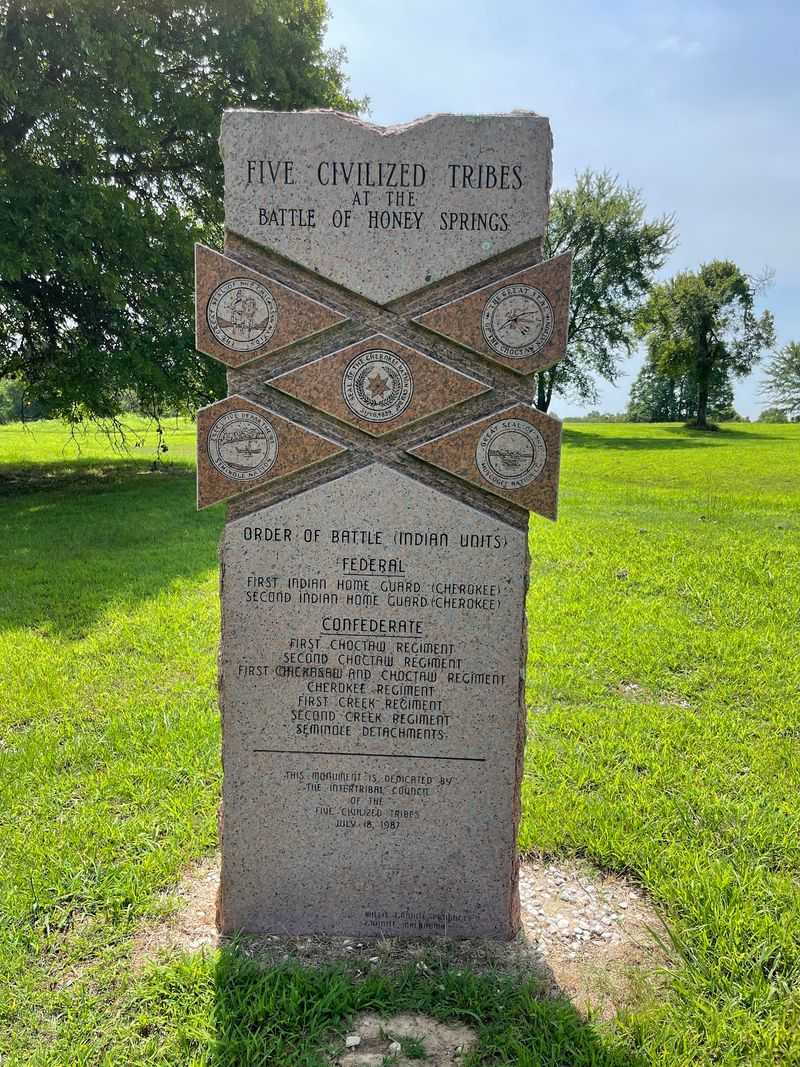
One of the most layered and heartbreaking dimensions of the Battle of Honey Springs is the fact that Native American soldiers fought on both sides of the conflict. The Five Civilized Tribes, forcibly relocated to Indian Territory decades earlier, found themselves caught in a war that was not of their making, with different tribal factions aligning with the Union or the Confederacy for complex political and economic reasons.
Cherokee, Creek, Choctaw, and other tribal soldiers appear in the historical record of Honey Springs. Some fought under Confederate General Cooper, while others served with Union forces.
The divisions created by the Civil War tore through tribal communities and left wounds that lasted for generations after the guns fell silent.
The visitor center addresses this dimension of the battle with care. Rather than flattening Native American participation into a side note, the exhibits and film acknowledge the political pressures, treaty obligations, and internal debates that shaped which side different tribal groups supported.
That nuance is rare and valuable.
Standing on ground where Cherokee and Creek soldiers once faced each other across a battlefield adds a dimension to the experience that goes beyond standard Civil War history. Honey Springs is, among other things, a story about what happens when outside conflicts are forced onto people who never chose them.
Elk Creek and the Natural Setting of the Battlefield
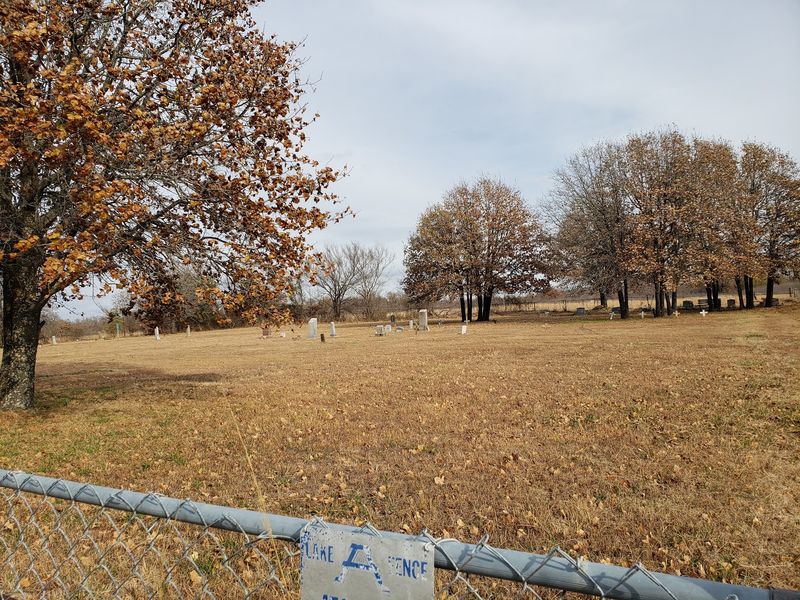
Beyond the exhibits and the film, the land itself is part of what Honey Springs Battlefield offers. Elk Creek runs through the property, and it played a direct role in the battle, serving as a natural boundary that shaped troop movements and gave the Union forces a tactical advantage when Confederate ammunition was compromised by moisture.
The creek today is calm and pretty in the way that rural Oklahoma waterways tend to be. Tree-lined banks, the sound of moving water, and the occasional bird breaking the silence give the area a peacefulness that stands in sharp contrast to what happened here in the summer of 1863.
That contrast is part of what makes visiting a battlefield such a singular experience.
The surrounding terrain has been partially cleared in recent years, with staff actively removing underbrush to the north of the visitor center. The goal is to restore something closer to the open landscape that existed when thousands of soldiers and horses camped and maneuvered across this ground.
The progress is visible and meaningful.
Spending time near Elk Creek, away from the visitor center and the parking lot, is where the battlefield starts to feel genuinely immersive. The quiet is not empty.
It carries something older and more substantial, and most visitors seem to sense that without needing it explained.
Walking the Trails: Getting Out Into the Battlefield Itself
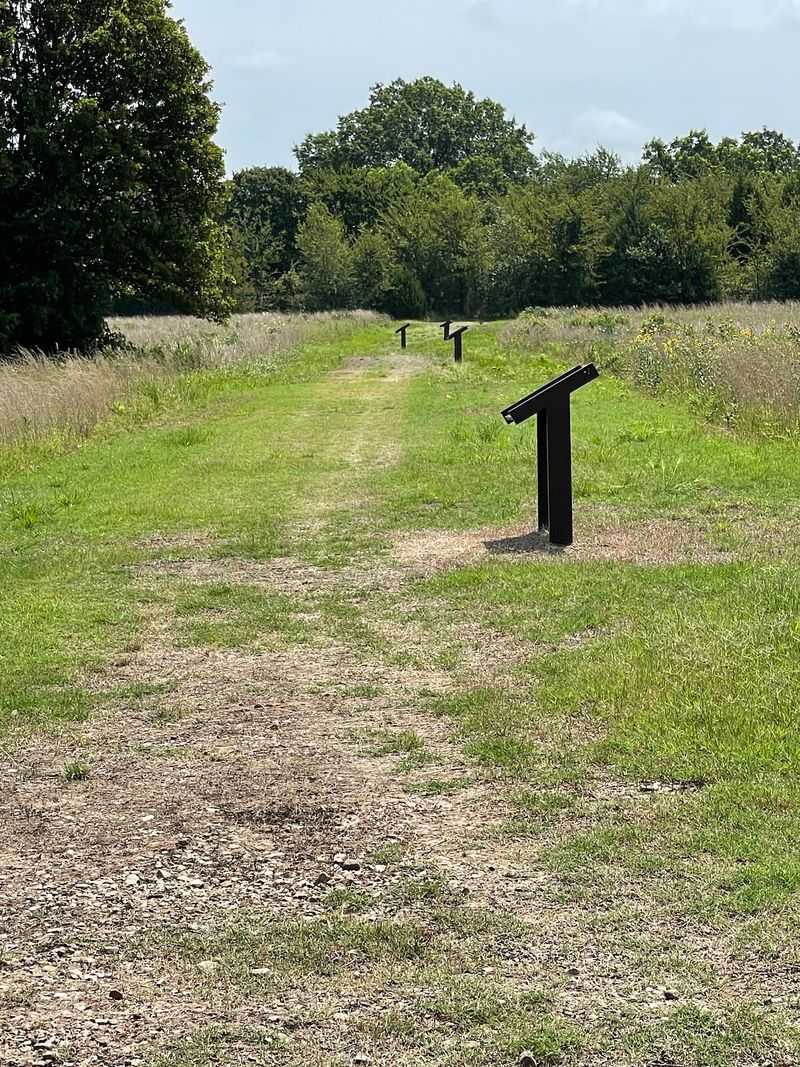
After the visitor center, the natural next step is getting outside and onto the battlefield trails. The walking paths cover the key areas where Confederate forces were positioned and where the Union assault came from, giving visitors a chance to read the land the way soldiers once had to.
Granite memorials mark significant points along the trails, and they hold up well against the elements. The surrounding signage has been a different story.
Several trail signs have faded badly from sun exposure, making them difficult or impossible to read. The Oklahoma Historical Society has acknowledged the problem and is actively working to replace and update the signs, so the situation is improving incrementally.
Despite the signage challenges, the trails are worth walking. The open ground communicates something that no indoor exhibit can: scale.
Understanding how far troops had to advance across exposed terrain, or where artillery was positioned relative to the Confederate line, becomes much clearer when you are actually standing in the field.
Bug spray is a practical necessity, especially in warmer months. Ticks have been reported on the trails, so long pants and a good repellent make the walk considerably more comfortable.
Comfortable footwear also helps, since the paths are unpaved and can get uneven in spots after rain.
The Reenactment Event: When the Battlefield Comes Alive
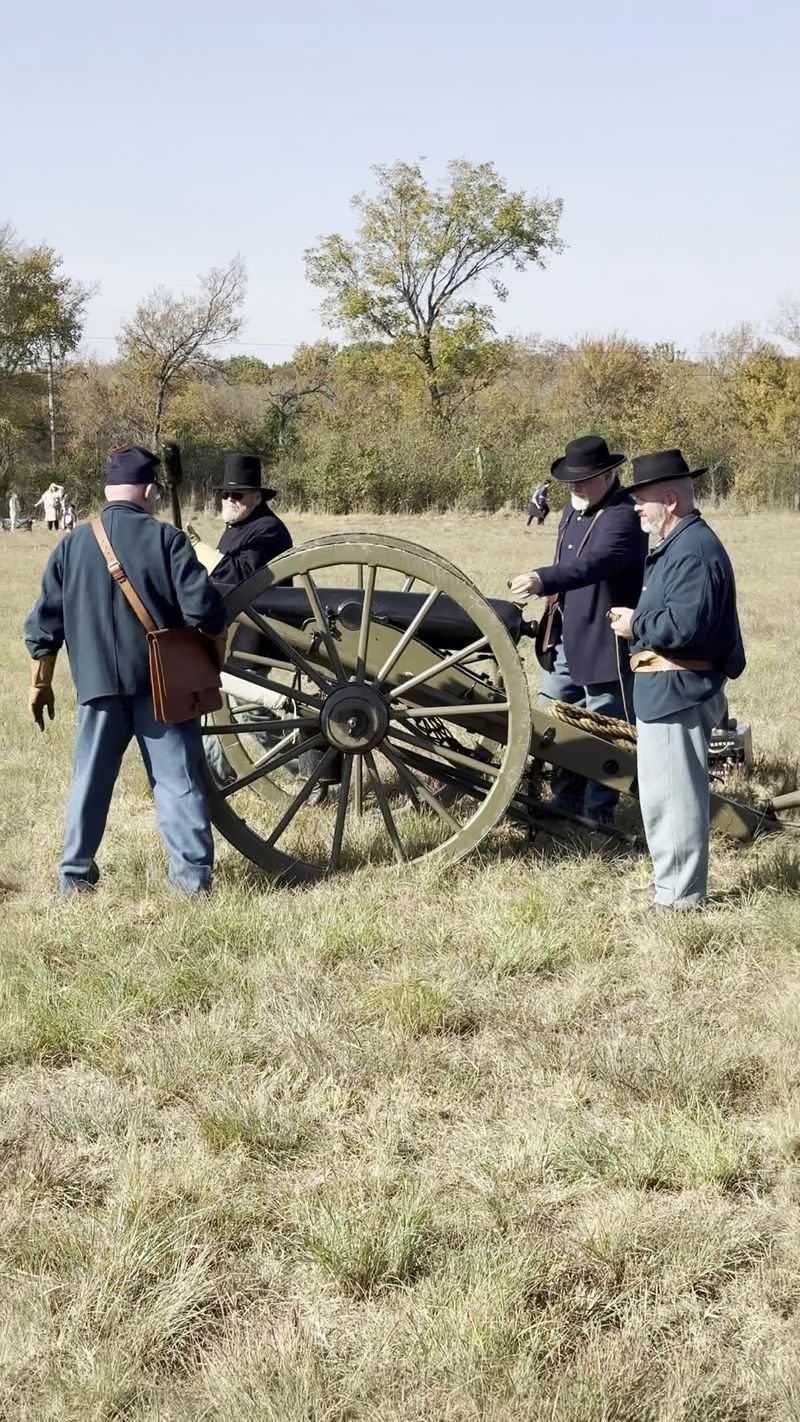
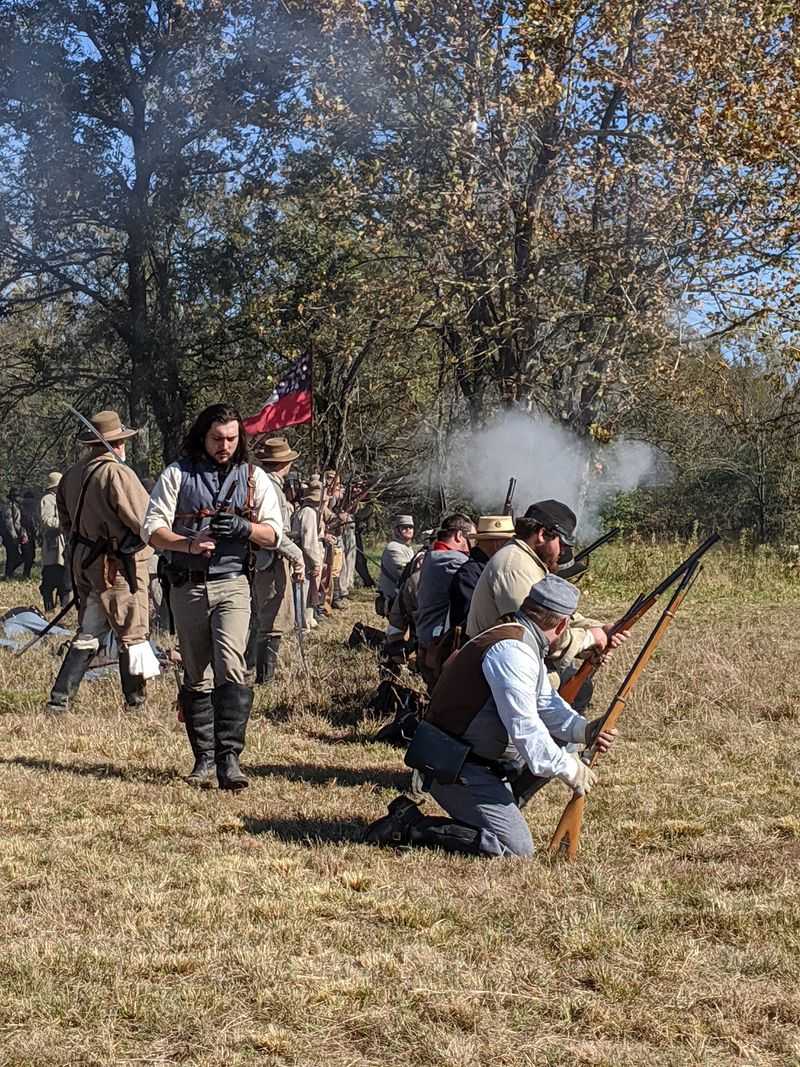
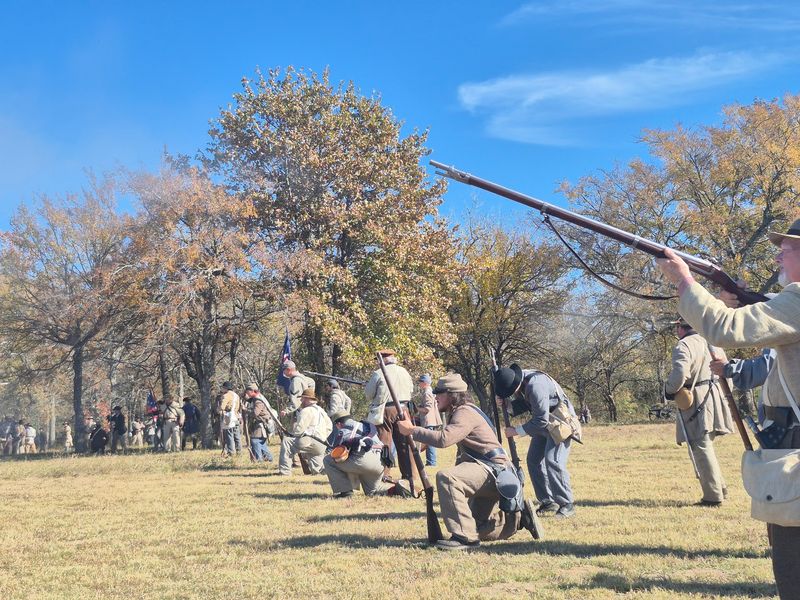
Every odd-numbered year, Honey Springs Battlefield hosts a full Civil War reenactment, and the event transforms the quiet field into something dramatically different. Reenactors from across the region gather to recreate the movements and engagements of July 17, 1863, with period-accurate uniforms, weapons, and artillery that make the whole thing feel startlingly real.
The cannon fire is genuinely loud. Anyone sensitive to sudden sharp sounds, children in particular, will appreciate having hearing protection on hand.
The sound carries across the open field with a force that puts the abstract idea of artillery into immediate physical context.
Spectators watch from one side of the main area while the battle unfolds across the field. Arriving at least thirty minutes early and bringing a folding chair or blanket is strongly recommended, since the event runs long enough that standing the whole time becomes tiring.
Vendors set up on site with food and period goods, though the lines can stretch considerably during school group visits and peak attendance days.
After the battle, the reenactors open their campsite to visitors, and mingling with the actors while they answer questions in character or out of it is one of the more memorable parts of the day. The level of historical knowledge among the participants is consistently impressive.
The Research Library: For Visitors Who Want to Go Deeper
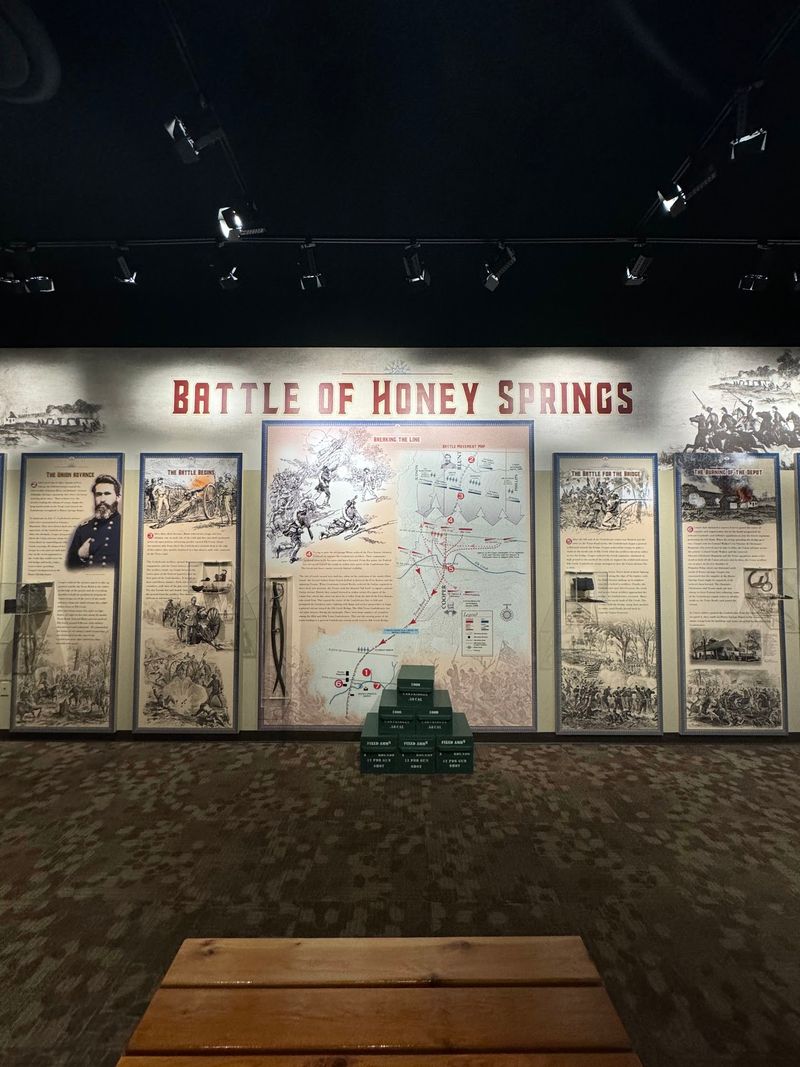
Not every battlefield museum has a research library, which makes the one at Honey Springs Battlefield a genuine asset worth highlighting. The collection is modest in size but curated with purpose, focused on the battle itself, the broader Civil War in Indian Territory, and the history of the Five Civilized Tribes during that era.
For genealogists tracing ancestors who served in the 1st Kansas Colored Infantry, the Cherokee regiments, or the Confederate Indian forces, the library offers a starting point that would otherwise require significant digging through dispersed archives. Having relevant materials in one place, with staff available to help navigate them, shortens the research process considerably.
Authors and educators have also used the library as a resource. A copy of the book “Road to Honey Springs” was donated to the collection by its author during a reenactment visit, which gives a sense of how the site functions as a hub for serious regional scholarship as well as casual tourism.
The library is not a grand reading room with vaulted ceilings, but it does not need to be. What it offers is access and focus, two things that matter more than square footage when you are trying to understand a specific piece of history with real depth and accuracy.
Practical Details: Hours, Admission, and Getting There Smoothly
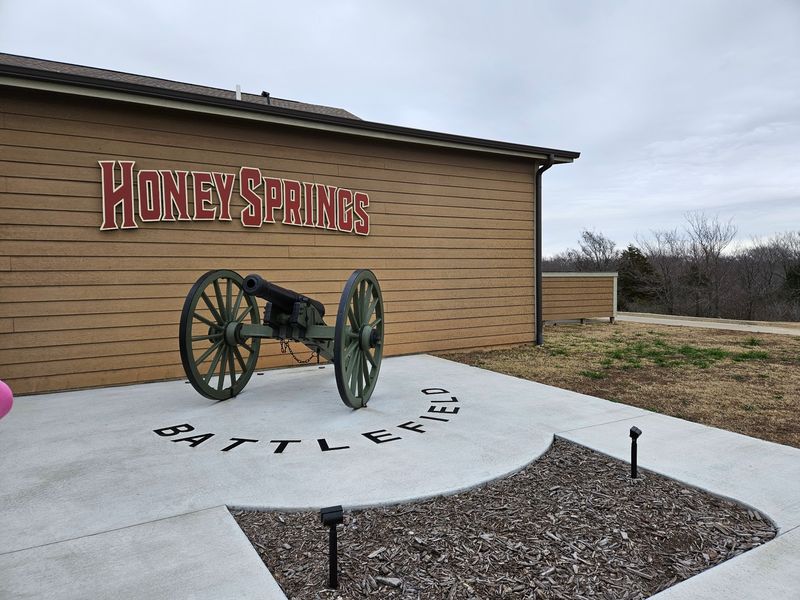
Honey Springs Battlefield is open Tuesday through Saturday, from 9 AM to 4:30 PM. The site is closed on Sundays and Mondays, so planning around those days is essential to avoid a wasted trip.
Arriving with enough time to tour the visitor center and walk at least part of the trail network means getting there no later than 3 PM.
Adult admission is $7, which covers access to the visitor center, the theater film, and the museum exhibits. The trails outside are part of the same visit, so there is no additional charge for walking the battlefield grounds.
For the depth of history on offer, the price point is genuinely reasonable.
Navigation deserves a word of caution. Some GPS routes take visitors down several miles of unpaved dirt road, which is manageable in dry weather but less appealing after rain.
Following Highway 69 south from Checotah and then using local directional signs is the smoother approach. The site phone number is 918-617-7125, and the Oklahoma Historical Society website at okhistory.org/honeysprings carries updated information.
Food options on site are limited outside of reenactment events, so bringing snacks or a packed lunch is a smart move. The nearest town services are back in Checotah, a short drive away on paved road.
Why Honey Springs Battlefield Earns a Place on Your Oklahoma Itinerary
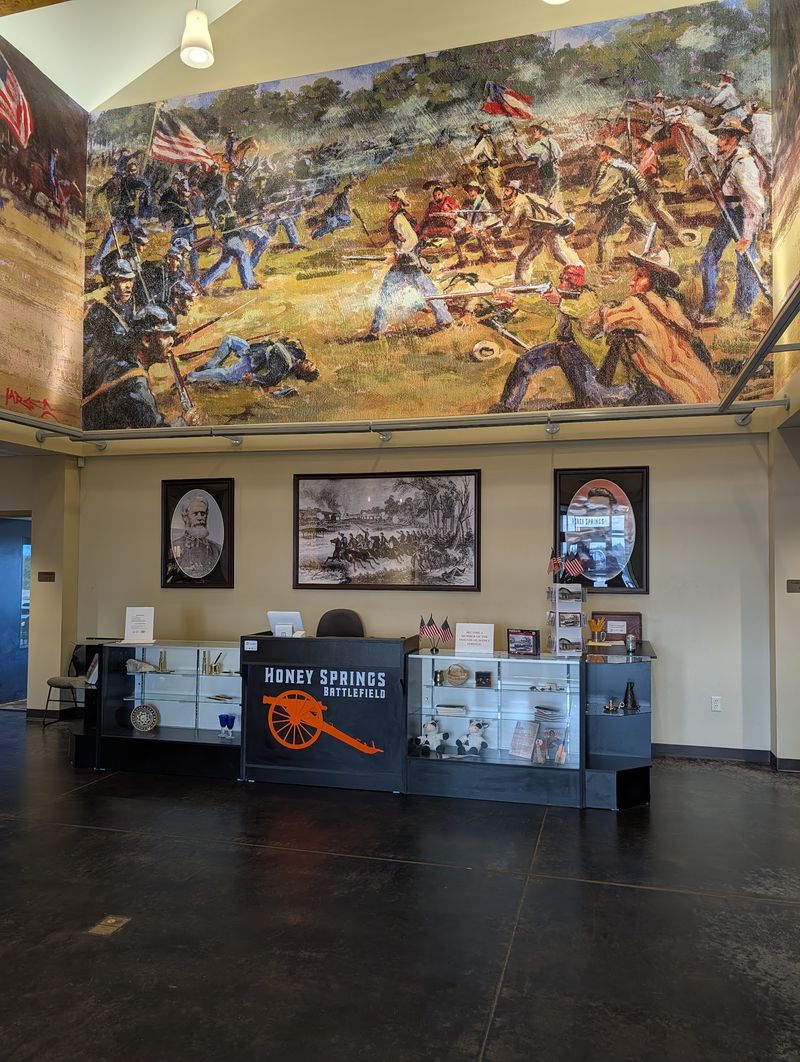
A 4.7-star rating from nearly 200 visitors is not something a small rural battlefield earns by accident. Honey Springs Battlefield has built that reputation through a combination of genuine historical significance, a well-run visitor center, and a staff that clearly cares about the stories this place holds.
The site is not perfect. Trail signage has been a persistent issue, and the outdoor markers need the kind of attention the visitor center already receives.
The Oklahoma Historical Society is actively working on improvements, and the trajectory is clearly upward. A restoration project and signage update are underway, which means return visits will likely reveal meaningful progress.
What Honey Springs does exceptionally well is tell a story that most Americans have never heard. The battle here involved Black soldiers, Native American fighters, and a strategic outcome that determined the fate of an entire territory.
That combination of factors makes this one of the more layered Civil War sites anywhere in the country, not just in Oklahoma.
For history travelers, road trippers cutting through eastern Oklahoma, or anyone who wants to stand on ground where something genuinely consequential happened, Honey Springs Battlefield delivers. Quiet fields have a way of holding onto the past, and this one holds on tight.
Share this story