One Missouri state park packs an unusual amount of adventure into a single Ozark escape. A towering dolomite bluff rises above clear Sinking Creek, where visitors can swim and fish, while trails connect to a backcountry network stretching for more than 30 miles.
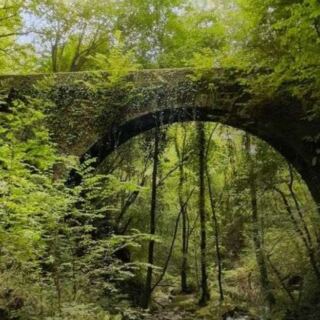
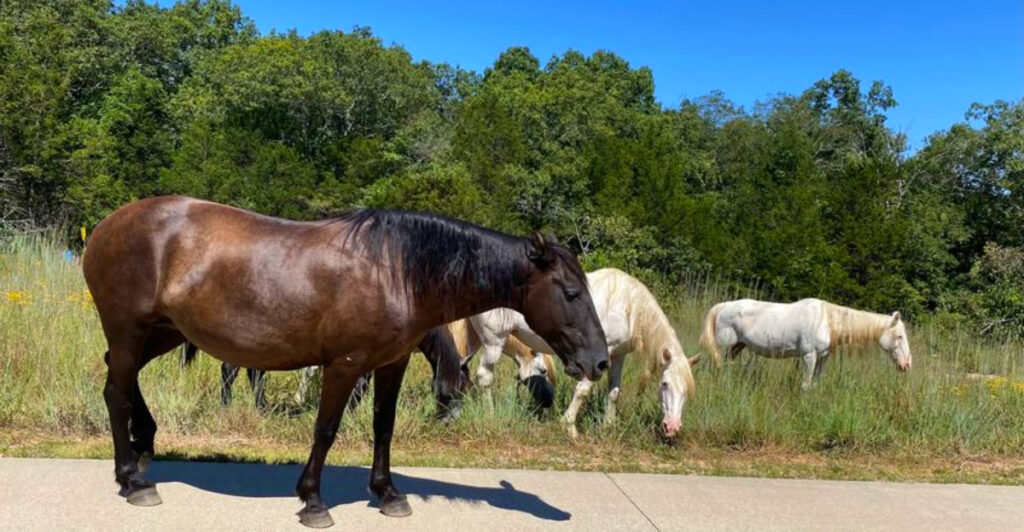
Then there are the wild horses. Descended from animals released during the Great Depression, feral herds still roam the surrounding Ozarks and have even been spotted crossing the bridge inside the park.
The land has an equally unexpected human history. Before becoming a state park, it was home to a mining town, a summer youth camp, and later large music festivals. Today, those stories survive alongside cabins, campsites, a modern lodge, and one massive rock face with a natural trick visitors cannot resist testing for themselves.
Finding Your Ozark Sanctuary: Location and First Impressions
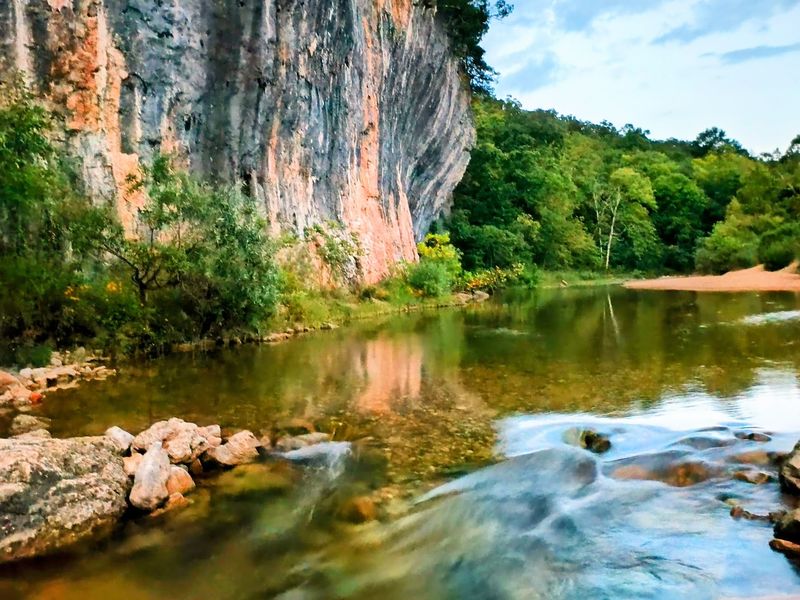
The address alone tells you that you are heading somewhere special. Echo Bluff State Park sits at 35244 Echo Bluff Drive, Eminence, Missouri 65466, tucked deep into the rolling hills of the Ozarks, where the landscape shifts from flat farmland to dramatic valleys and ridgelines covered in oak, hickory, and shortleaf pine.
The drive in feels like a gradual exhale. Each mile brings you further from the noise of daily life and closer to a world shaped by ancient geology and flowing water. By the time you reach the park entrance, your shoulders have already dropped an inch or two.
The park is bordered on three sides by the Roger Pryor Pioneer Backcountry, a working forest leased to Missouri State Parks, which effectively extends your access to over 62,000 acres of exploration. That sense of vast, open wilderness surrounding you sets the tone for everything that follows. You will not feel hemmed in here, and that freedom is its own reward.
The Mighty Echo Bluff: A Dolomite Giant with a Voice of Its Own
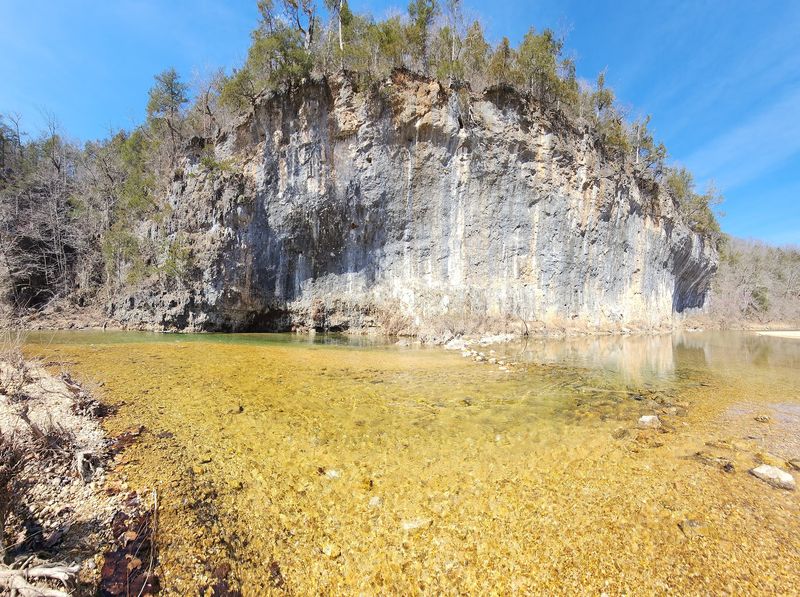
Some natural formations earn their names honestly, and this one absolutely does. The park’s namesake bluff is the largest sheer rock face on the property, a towering wall of Eminence dolomite sculpted over millions of years into a striking concave shape by the patient work of water and time.
Standing at its base, the scale is genuinely humbling. The rock face rises dramatically above Sinking Creek, casting long shadows in the afternoon and catching warm golden light in the morning hours. Every texture and crevice in the stone tells a story of ancient seas and geological forces that operated on a timeline far beyond human comprehension.
The acoustic trick that gives the bluff its name is a genuine crowd-pleaser. Shout toward the rock face and your voice returns to you with surprising clarity, a natural echo chamber carved by geology rather than human hands. Kids absolutely love testing it out, and honestly, so do most adults who try it for the first time.
Sinking Creek’s Clear Waters: A Swimmer’s and Angler’s Delight
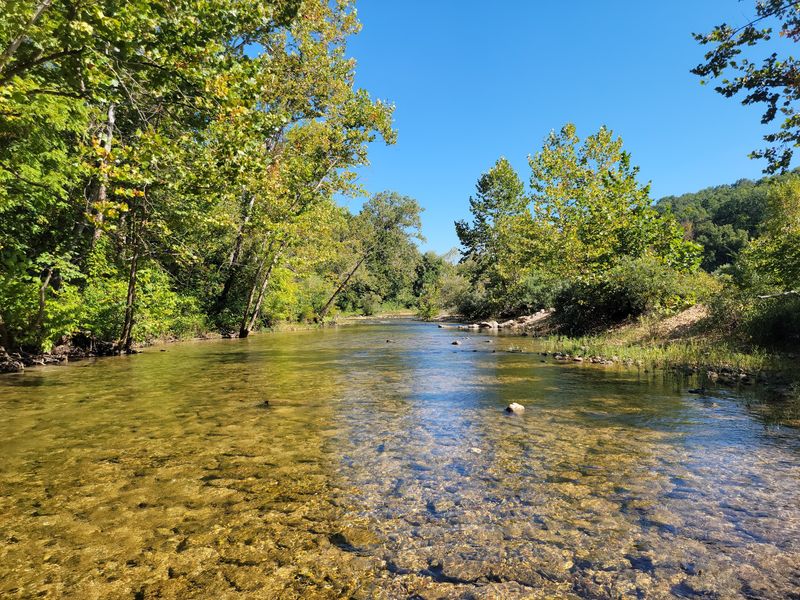
Not all Ozark streams are created equal, and Sinking Creek has a distinct advantage that swimmers quickly appreciate. Because it receives fewer natural springs feeding directly into it compared to many neighboring waterways, the water temperature runs slightly warmer, making it far more inviting for a leisurely wade or a full afternoon of splashing around.
The clarity of the water is remarkable. You can see straight to the smooth, polished creek bed beneath your feet, watching the gentle current shift the light into dancing patterns across the gravel. Families with young children gravitate toward the shallow gravel bars, where little ones can build pebble collections and paddle safely without worry.
Anglers will find plenty to keep them busy here as well. Smallmouth bass and goggle-eye inhabit the deeper holes, and the transparency of the water occasionally lets you spot fish moving beneath the surface before you even cast a line. Sinking Creek is also the second-largest tributary to the Current River, which means the fishing opportunities extend far beyond the park’s immediate boundaries.
From Mining Town to Summer Camp: The Layered History Beneath Your Feet
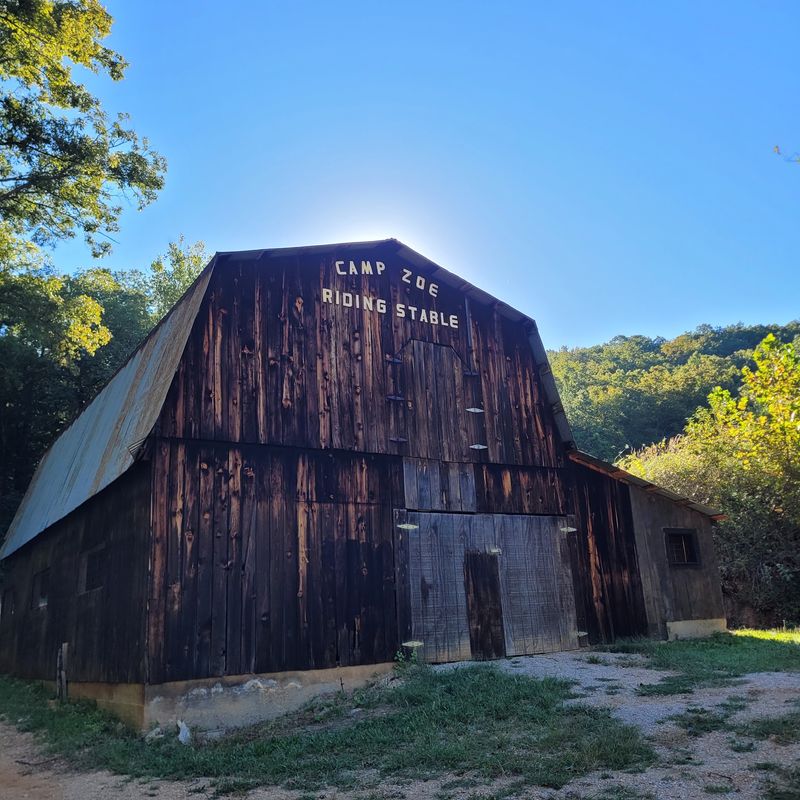
The ground at Echo Bluff State Park has lived several very different lives. Long before it became a beloved outdoor destination, this valley was home to Loceyville, later renamed Marquette, a bustling mining town founded in 1877. At its peak, the population swelled to around 2,000 people, with company-run stores, a school, and various establishments serving the workers who extracted resources from the surrounding hills.
After the mines failed and the town faded, the land reinvented itself as Camp Zoe in 1929, operating as a beloved summer youth camp for over five decades. Thousands of young people grew up spending summers here, and the park has thoughtfully preserved several original structures from that era, including the historic Camp Zoe Lodge and the horse barn. Signposts with photographs and stories of past campers give the grounds a warm, nostalgic energy.
Trails That Go the Distance: Hiking and Mountain Biking Options
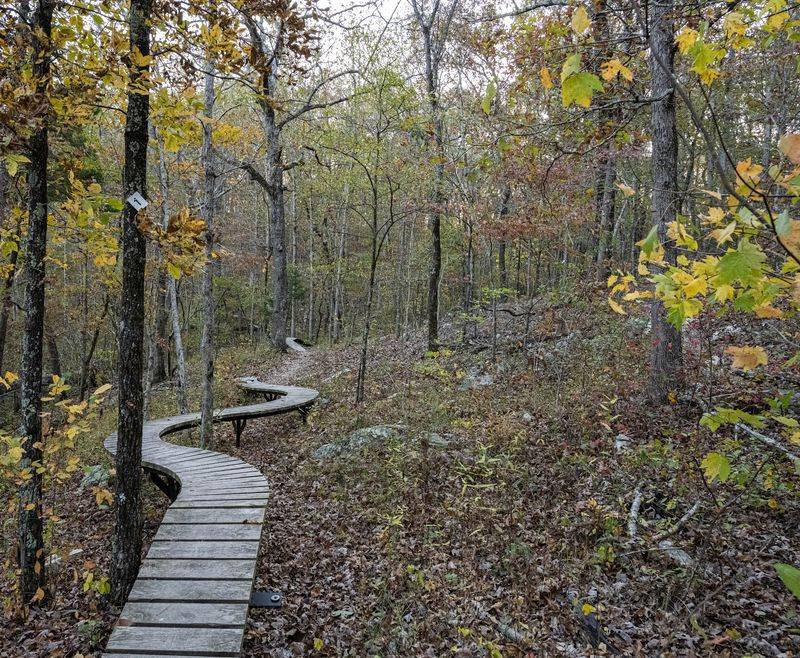
More than four miles of dedicated hiking and mountain biking trails wind through the park itself, offering a satisfying variety of terrain for visitors at every fitness level. The paths are well-maintained and thoughtfully designed, with benches placed at scenic overlooks where you can pause to absorb panoramic views of the surrounding valley without feeling like you have to earn every rest stop.
Several trail sections include interpretive markers identifying local tree species and natural habitats, turning a casual walk into something genuinely educational. I found myself stopping more often than expected, not from exhaustion, but from genuine curiosity about the forest around me.
For those with bigger ambitions, the park serves as a gateway to the Current River Trail, which extends over eight miles and connects seamlessly to the Roger Pryor Pioneer Backcountry. That backcountry network opens up more than 30 miles of wilderness trails for serious backpackers. Whether you are after a gentle creek-side stroll or a multi-day backcountry adventure, the trail system here scales impressively to match your energy and your appetite for exploration.
Floating Through the Ozarks: Water Adventures on Creek and River
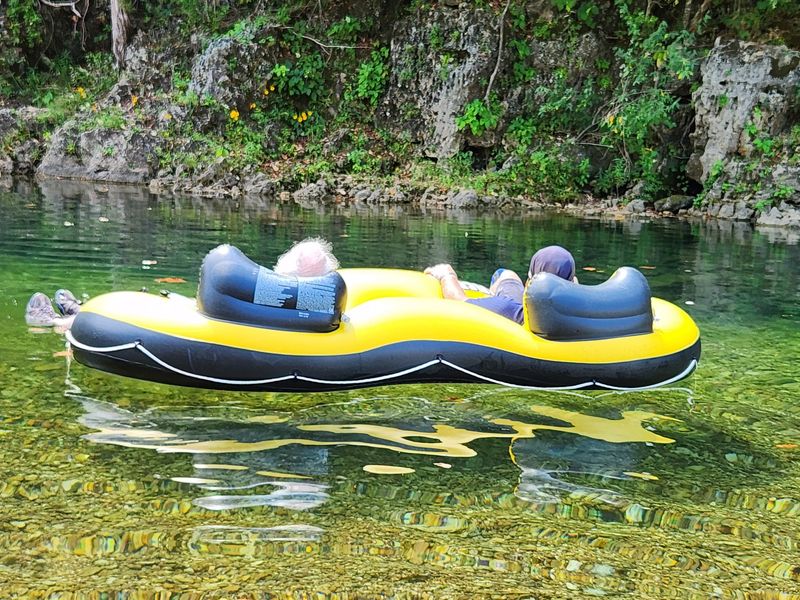
The water access at Echo Bluff State Park is one of its strongest selling points, and it goes well beyond a simple swim spot. Sinking Creek flows directly through the park, and the Current River, widely considered one of the finest float streams in the entire Midwest, is only a quarter-mile away where Sinking Creek joins it.
Visitors can take to the water in tubes, kayaks, canoes, or stand-up paddleboards, choosing their own pace and adventure level. The warmer temperatures of Sinking Creek make it a natural starting point for beginners or families, while the Current River offers longer, more scenic floats through the dramatic landscape of the Ozark National Scenic Riverways.
No outfitters operate directly within the park, but several partner outfitters are a short drive away and offer float trip packages ranging from four-hour excursions to full-day adventures of seven or eight hours. Gliding over water so clear you can see every pebble on the riverbed, surrounded by towering bluffs and overhanging trees, is the kind of experience that tends to rearrange your priorities in the best possible way.
The Betty Lea Lodge: Rustic Comfort with a Dramatic View
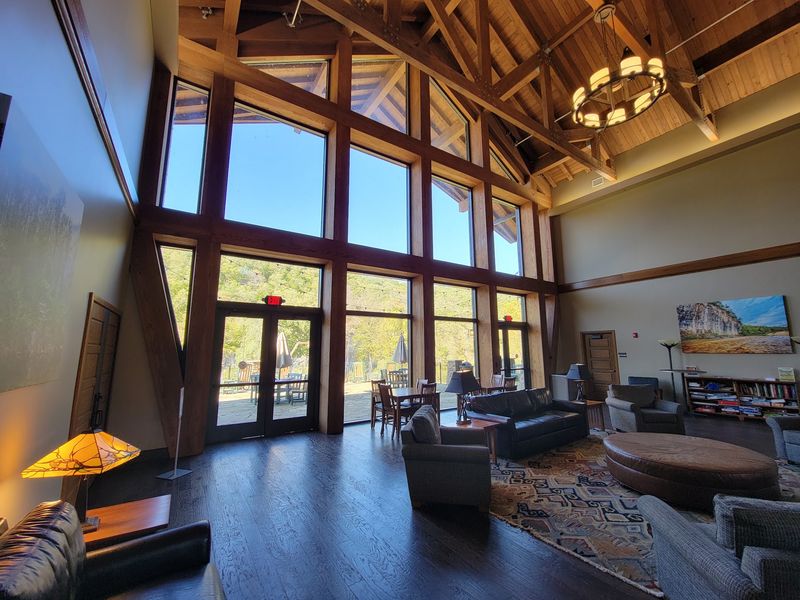
A park this beautiful deserves a lodge that matches the scenery, and the Betty Lea Lodge delivers on that expectation with real style. The building serves as the park’s centerpiece, and its towering windows frame the Echo Bluff and Sinking Creek so perfectly that the view becomes part of the interior design. Rocking chairs on the spacious deck invite you to sit down, slow down, and simply look.
The lodge offers twenty guest rooms, each featuring king-size beds and gas fireplaces for evenings when the Ozark air carries a chill. Two-room suites provide extra space for families or groups who need room to spread out after a full day on the trails. A well-stocked lobby library filled with books and board games makes the hearth room an ideal spot for a quiet afternoon when you want to rest without feeling restless.
The Creekside Grill serves casual American cuisine with views that compete with the food for your attention, and the Sinkin Creek Mercantile covers everything from forgotten camping supplies to souvenirs. Complimentary Wi-Fi is included throughout the lodge, though the signal stays mostly within the building, which many guests consider a feature rather than a limitation.
Cabins, Campgrounds, and a Place for Every Kind of Traveler
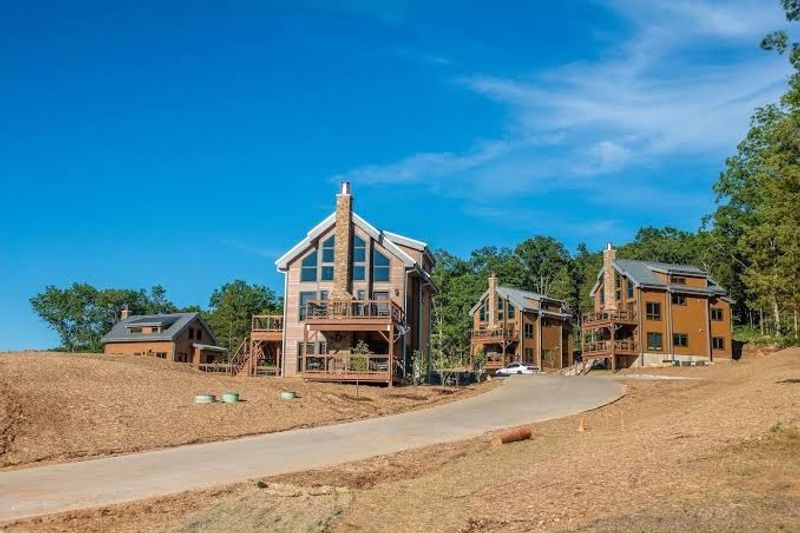
One of the things I appreciate most about Echo Bluff State Park is that it genuinely caters to a wide range of travelers without feeling like it is trying too hard to please everyone. The lodging options are diverse enough to accommodate solo adventurers, couples, families, and large groups, each with their own character and price point.
The park’s nine full-service cabins include one four-bedroom cabin, four two-bedroom options, and four stacked duplexes with three bedrooms on each floor. Every cabin comes with queen-size beds, a fully equipped kitchen, seasonal fireplace, and complimentary Wi-Fi. A limited number of pet-friendly cabins are available for an additional nightly fee, so four-legged companions are not entirely left out of the adventure.
Timbuktu Campground serves the tent and RV crowd with electric, water, and full sewer hookups available. The walk-in primitive tent sites are tucked into the trees and offer the kind of shade and seclusion that the more open RV sites lack. Modern bathrooms and showerhouses remain open year-round, and wheelbarrows are provided to help haul gear to the more remote sites, a small but thoughtful touch that regulars genuinely appreciate.
Wild Horses of the Ozarks: An Unexpected Encounter
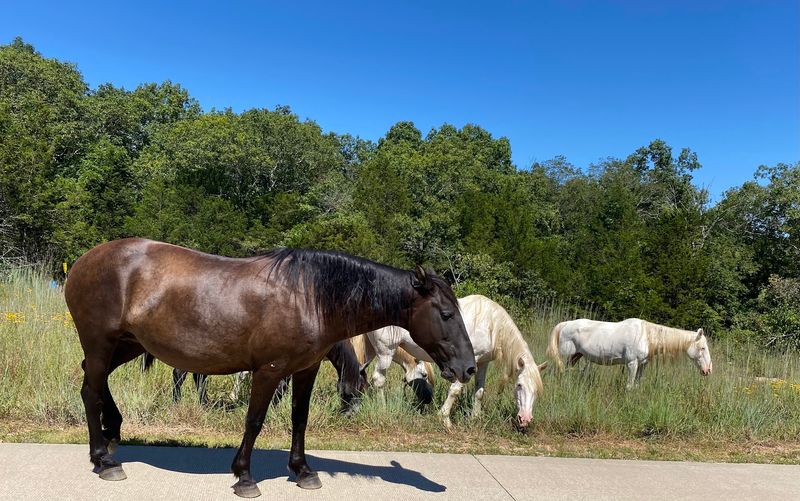
Few things stop a park visitor in their tracks quite like rounding a bend and finding a herd of wild horses standing in the road. These feral horses roam the broader Ozark National Scenic Riverways area, including the land around Echo Bluff, and their presence adds a layer of untamed magic that no brochure can fully prepare you for.
Their story is rooted in hardship. These horses are descendants of animals released by farmers during the Great Depression who could no longer afford to feed them. Over generations, they adapted to the Ozark landscape and developed a rare color pattern: foals are born with very dark, nearly black coats that gradually lighten to grey and eventually white as they mature into adults.
Early morning and dusk offer the best chances of a sighting, with Shawnee Creek and Round Spring among the most frequently mentioned locations. The horses have been spotted on the bridge over Sinking Creek within the park itself, occasionally bringing traffic to a polite standstill. Maintaining a distance of at least 100 feet is essential, and feeding them is strongly discouraged, because keeping these animals genuinely wild is the whole point of their remarkable story.
Seasonal Highlights: When to Visit and What to Expect
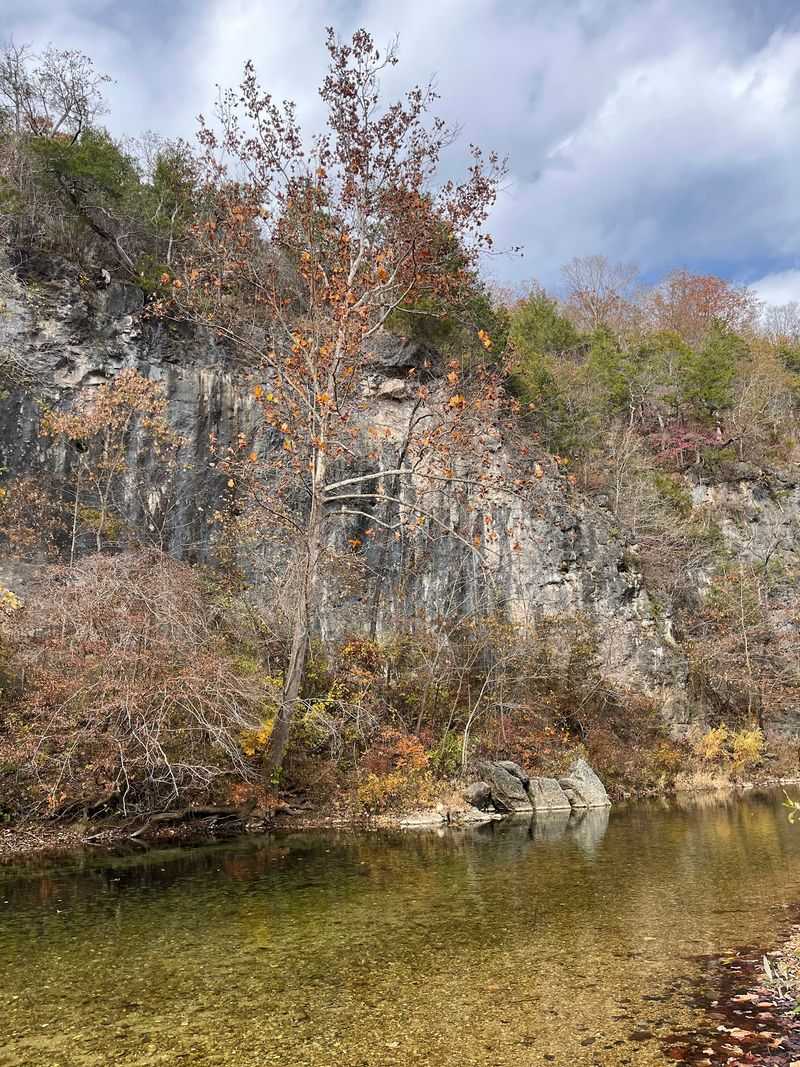
Echo Bluff State Park operates year-round, and each season brings its own distinct character to the landscape. Summer is predictably busy, with families crowding the creek and the campground filling quickly on weekends. The water is warm enough to enjoy, the trails are lush and green, and the long daylight hours give you plenty of time to fit in both a hike and a float.
Mid to late September is frequently cited as the sweet spot for a visit. Temperatures typically range from the upper 50s to the mid-80s, crowds thin out noticeably, precipitation is less frequent, and lodging rates often drop compared to peak summer pricing. The creek is quieter, the trails feel more personal, and the early hints of fall color begin to appear in the canopy above.
Winter visits offer their own appeal, particularly in February when temperatures are more manageable and the stark, leafless bluffs take on a dramatic sculptural quality. The lodge remains a warm and welcoming refuge regardless of the season, and the campground’s year-round showerhouse and frost-free water spigots ensure that even cold-weather campers are reasonably comfortable throughout their stay.
Nearby Wonders: Extending Your Ozark Exploration
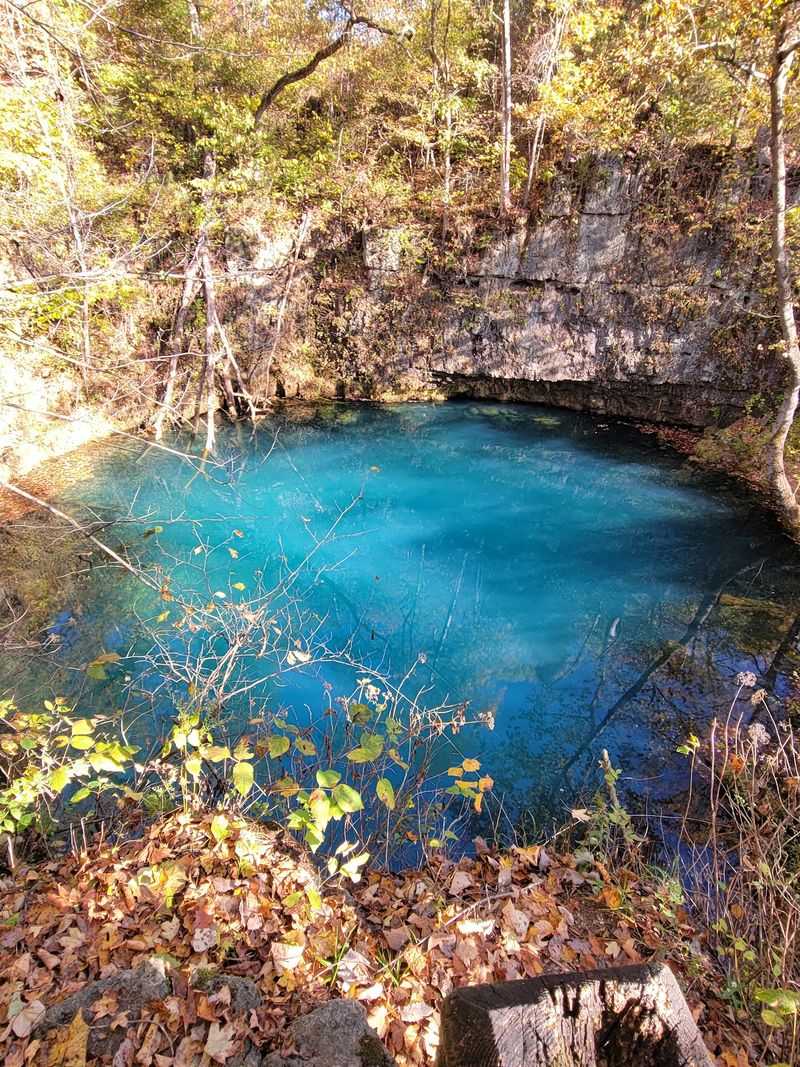
Echo Bluff State Park works beautifully as a basecamp for exploring a much wider stretch of Missouri’s most dramatic natural landscape. The surrounding area is dense with worthwhile destinations, and a few extra days of exploration will reveal just how rich this corner of the Ozarks truly is.
Current River State Park sits just across Highway 19 and preserves a historic corporate retreat alongside additional hiking trails and fishing access. Round Spring, only a couple of miles away, features a fascinating cave open for guided tours and a scenic river beach that draws swimmers and picnickers throughout the warmer months. Montauk State Park, a short drive north, is a celebrated trout fishing destination with cold, spring-fed waters that attract serious anglers from across the region.
The entire area is embraced by the Ozark National Scenic Riverways and borders the vast Mark Twain National Forest, both of which provide essentially limitless additional recreation.
Share this story