Once a year, a retired lighthouse beam flickers back to life over Lake Superior. It shines for one evening only, as a tribute to the 29 crew members of the Edmund Fitzgerald.
I love that a light no longer needed by ships still has a job. Its job now is remembering.
The lens is said to float in a bath of liquid mercury, which sounds like science fiction and is actually old-school engineering.
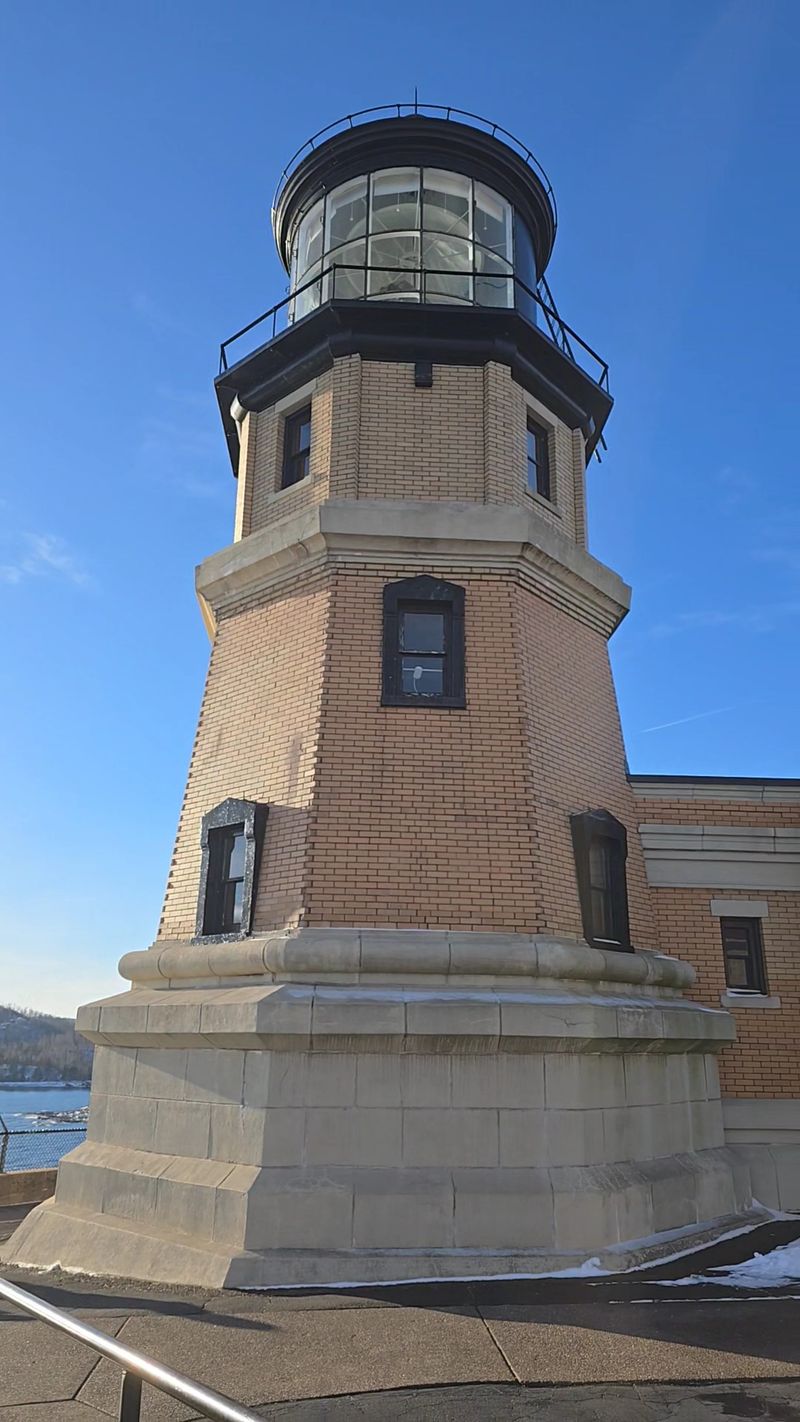
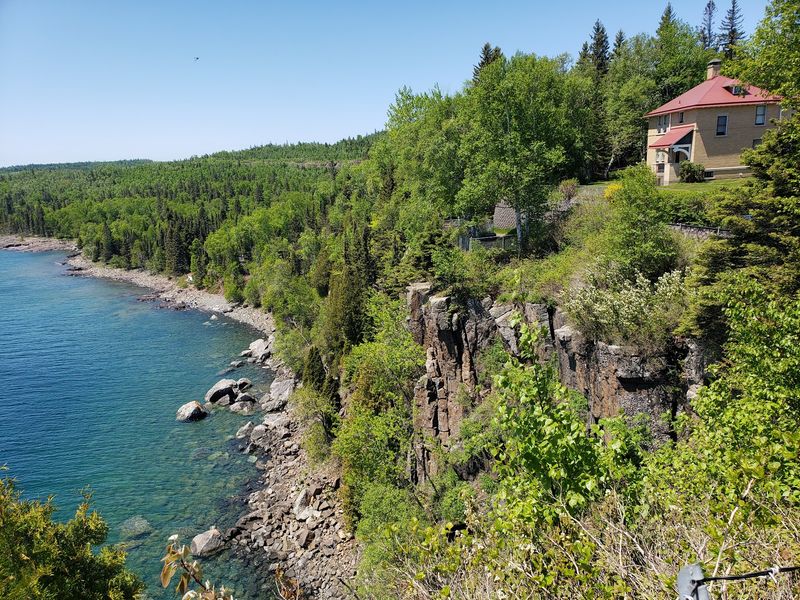
The tower sits on a rocky cliff high above the water on Minnesota’s North Shore. Guides in 1920s clothing still explain how keepers and their families lived out there.
I can’t think of a better reason for a road trip up the shore. So why does one quiet beam on one November night matter so much to so many Minnesotans?
A Yellow Brick Tower Standing Guard Over The North Shore
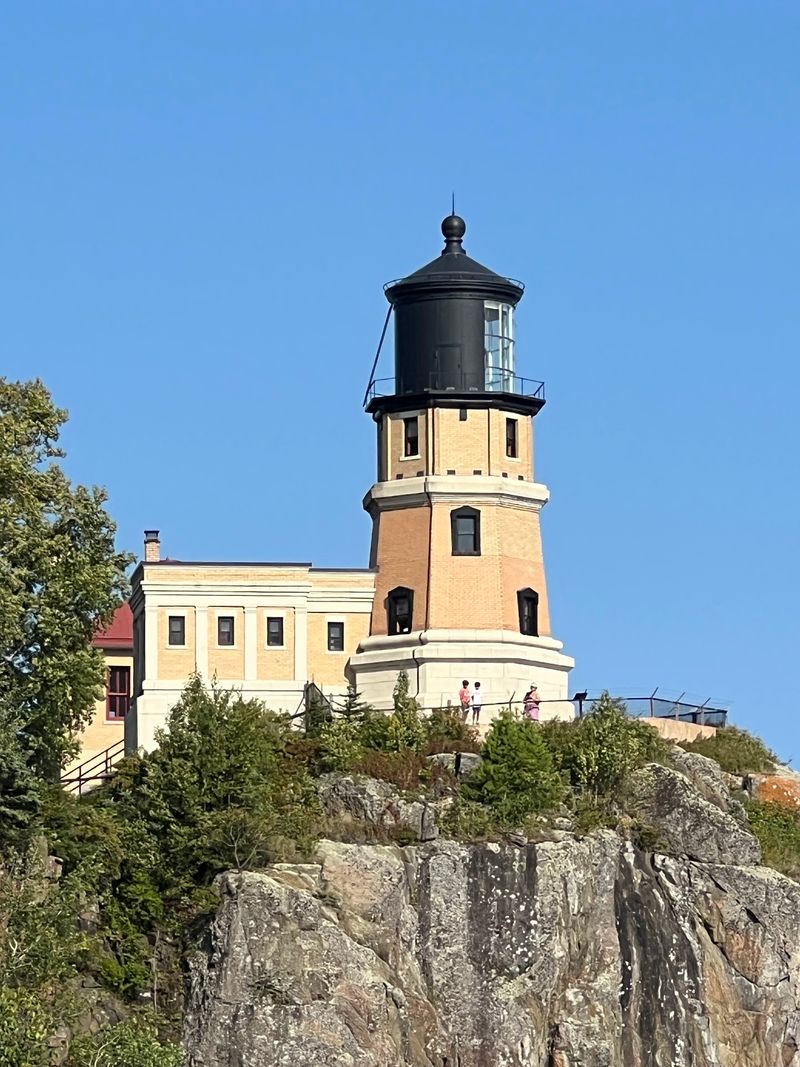
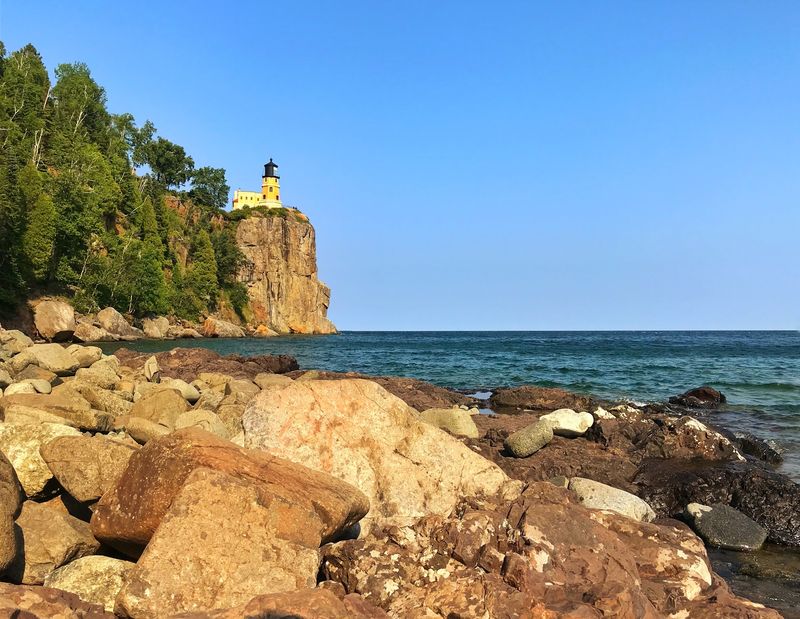
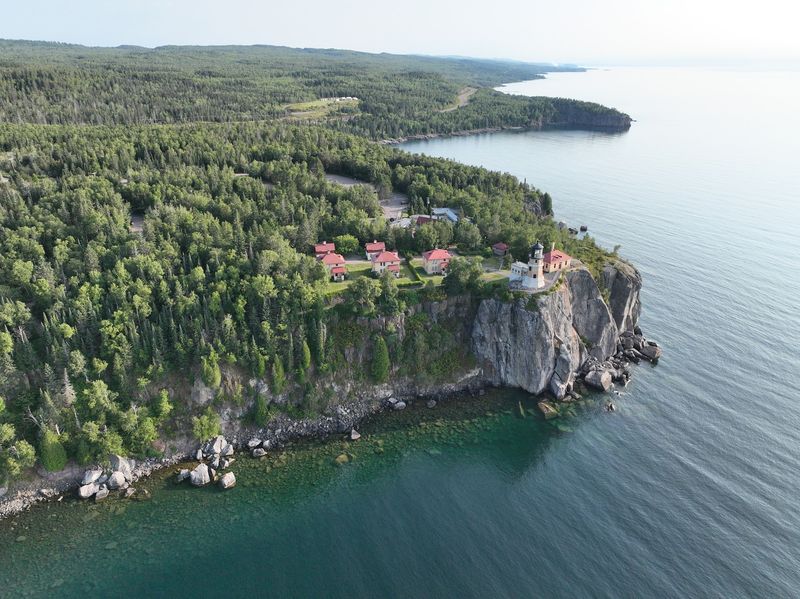
Split Rock Lighthouse sits on a dramatic rock cliff along Lake Superior’s North Shore in Minnesota. It’s one of the most photographed lighthouses in the state, and one look explains why.
The site is run today as a history museum by the Minnesota Historical Society. That means you’re not just snapping a photo from the road and leaving.
You can explore a full light station, not only a tower. The grounds include the lighthouse, the keepers’ homes, and a fog signal building, all gathered near the cliff edge.
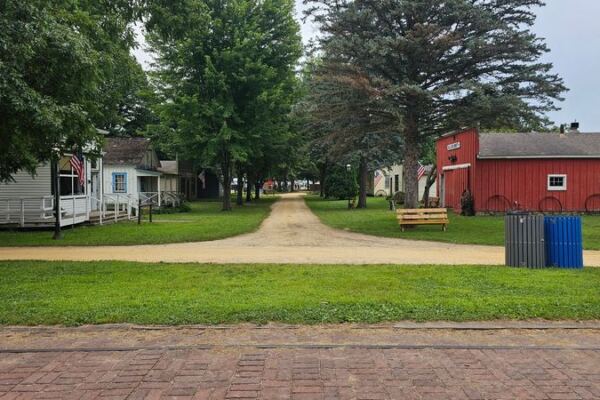
Guides in period clothing help bring the 1920s back to life. They share how keepers and their families handled daily routines in a place this remote.
The setting does a lot of heavy lifting too. Big lake, big sky, and rugged shoreline frame the yellow brick tower from almost every angle.
Minnesota doesn’t need an ocean coast to compete with famous seaside lighthouses. Lake Superior handles that job just fine, thank you very much.
Start here, and the rest of the story starts making sense quickly.
The Storm That Convinced Everyone A Light Was Needed
Lake Superior has a reputation, and it earned it the hard way. A fierce November storm in 1905 battered shipping along this stretch of shore and damaged many vessels.
Shipping companies and captains pushed for a light on this rugged coast. The federal government answered, and Split Rock Lighthouse was completed in 1910.
Building it was no easy task. Crews had to haul materials up from the lake because no road reached the site at the time.
The museum’s video presentation walks through how and why the station came together. It also explains the real hardships of shipping across such a huge body of water.
Iron ore and other cargo moved along this shore in big numbers back then. A dependable light helped captains know exactly where the dangerous rocks waited.
The station stayed active for decades before modern navigation tools took over. It was retired from service in 1969, and the state later preserved it for visitors.
Knowing that backstory makes the cliff feel a little more serious. Also a lot more impressive.
One November Night When The Beacon Comes Back
November 10 is the date that gives this lighthouse its most moving tradition. On that evening, the beacon is lit again to honor the Edmund Fitzgerald.
The famous freighter went down in a Lake Superior storm on November 10, 1975. All 29 crew members aboard were remembered, and the lighthouse became part of that remembrance.
The annual beacon lighting typically includes a quiet ceremony. The names of the crew are often read, along with a moment of reflection.
Then the light turns on and sweeps across the dark lake. For a retired lighthouse, that’s a powerful way to keep serving the shipping community.
Minnesotans tend to show up for traditions like this. It’s respectful, simple, and deeply tied to life along the Great Lakes.
Event details can change from year to year, so it’s smart to check ahead before driving up. Weather on the North Shore in November can also be unpredictable.
Dress warmly and plan for darkness falling early. The glow over the water is worth every chilly minute.
A Lens That Floats On Liquid Mercury
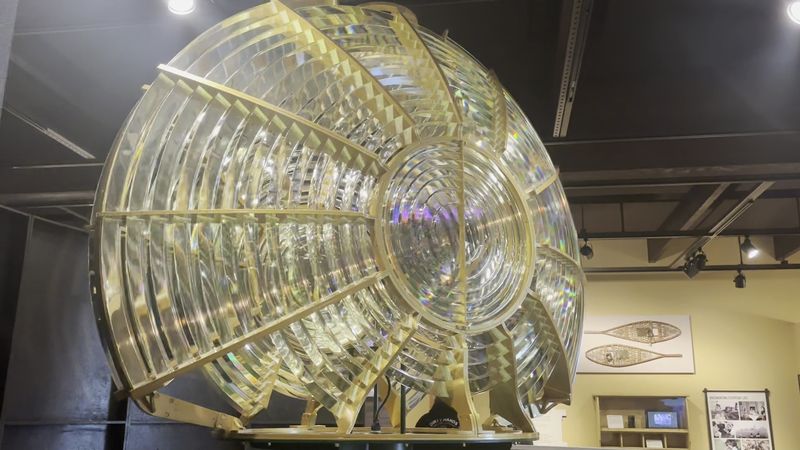
Here’s a fact that sounds made up but isn’t. The big glass lens at the top of the tower rotates while floating on a pool of liquid mercury.
That clever setup let a heavy lens turn smoothly with very little effort. Staff at the site share that it’s believed to be the only lighthouse still using mercury this way.
The lens itself is a classic Fresnel design. Rings of carefully shaped glass prisms gather light and focus it into a strong beam.
Back in the day, keepers had to wind the clockwork that kept everything turning. It was precise, repetitive work, and ships depended on it every night.
Seeing this kind of engineering up close gives you new respect for the keepers. They weren’t just lighting a lamp and calling it a night.
When the tower is open, visitors can sometimes reach the top and see the lens area. Access depends on conditions and any ongoing restoration work.
Science class never looked this good. Or had this kind of lake view.
Climbing The Tight Spiral To The Top
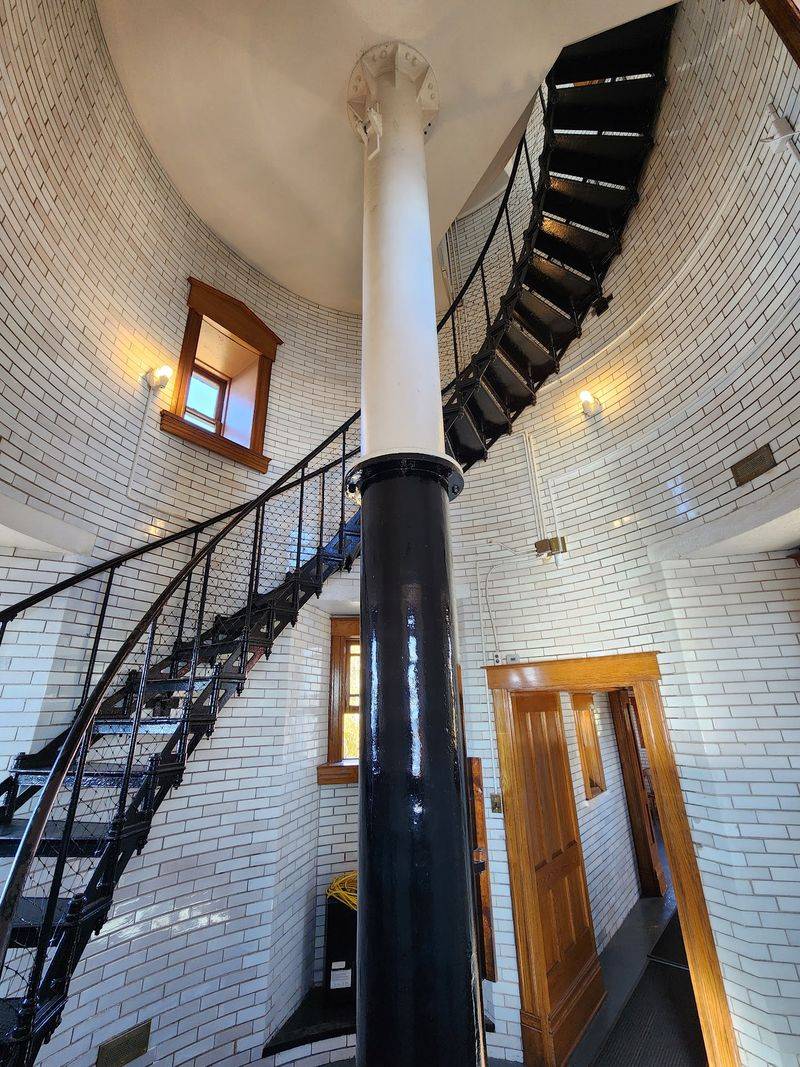
Good news for anyone who likes a little adventure. When the tower is open, you can climb the stairwell to the very top.
Fair warning, though, it’s a snug fit. The stairwell is narrow, so the top can feel cozy when several people arrive together.
The reward is a beautiful view of Lake Superior from high above the cliff. On clear days, the shoreline stretches out in both directions.
Staff are sometimes stationed at the top with short talks. They can explain what you’re seeing and how the light once worked.
Busy days may mean waiting your turn to climb. Plan a bit of extra time if you’re visiting during the warmer months.
Tower access also depends on the season and ongoing preservation projects. Winter visits and restoration periods have meant the lighthouse interior was closed at times.
It’s worth checking the current status before heading north. Then you’ll know whether to bring climbing energy or just camera energy.
Either way, the view from the cliff itself never disappoints.
Life Inside The Keepers’ Homes, 1920s Style
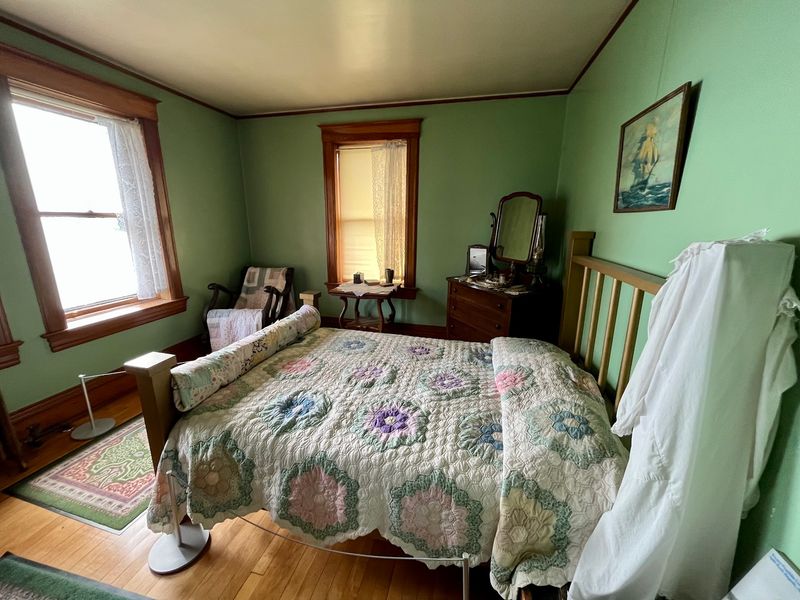
Ever wonder what a lighthouse keeper ate for supper? The keepers’ house answers that kind of question in delightful detail.
The home is restored to look the way it did in the 1920s. Guides dressed in period clothing share stories of daily routines for keepers and their families.
Life up here was remote, especially in the early years. Families had to be resourceful, practical, and pretty good at entertaining themselves.
Some visits include cooking demonstrations. One example is how keepers’ families made potato patties, a simple dish that shows what everyday meals looked like.
I love details like that. Big history is great, but small kitchen moments make the past feel real.
You can also see the housing used by the crew, carefully maintained over the years. Walking through those rooms gives a sense of how close quarters felt.
This part of the visit feels very Minnesota in spirit. Hardworking people, homemade food, and a whole lot of making do with what you had.
The Fog Signal Building And Its Big Voice
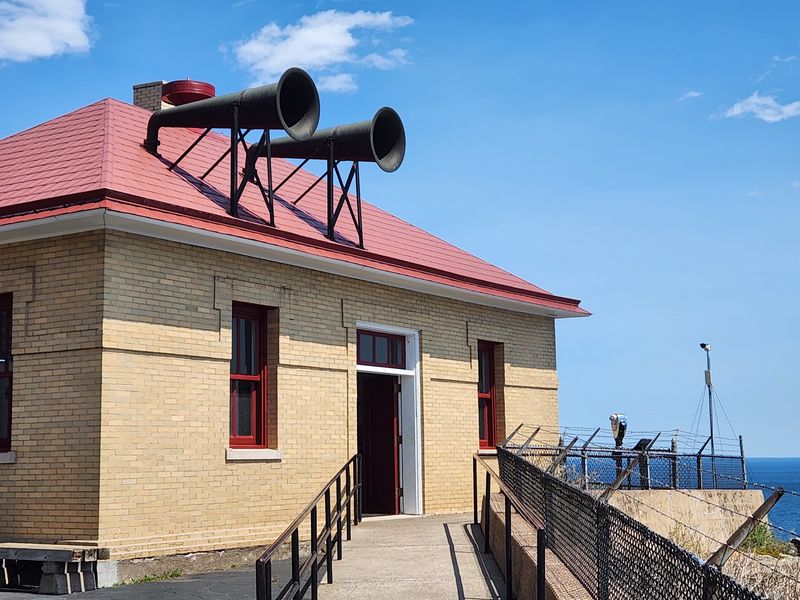
Light only helps when sailors can see it. On foggy days, the station needed something louder.
That’s where the fog signal building comes in. It housed equipment that sent out powerful blasts of sound across the water when visibility dropped.
Fog is common along Lake Superior’s North Shore. Ships approaching the rocky coast relied on that sound to judge where danger waited.
The building is part of the self-guided grounds today. It’s a reminder that keeping ships safe took more than one tool.
Keepers had to maintain this machinery along with the light itself. Their workdays were full, and fog could keep them busy for long stretches.
Plenty of visitors breeze past this building on the way to the tower. Slow down here, because it tells half the story of how the station worked.
It also makes a nice photo stop with the lake behind it. Not every structure on the grounds gets the spotlight, but this one deserves a moment.
Those Shoreline Stairs Are Worth Every Step
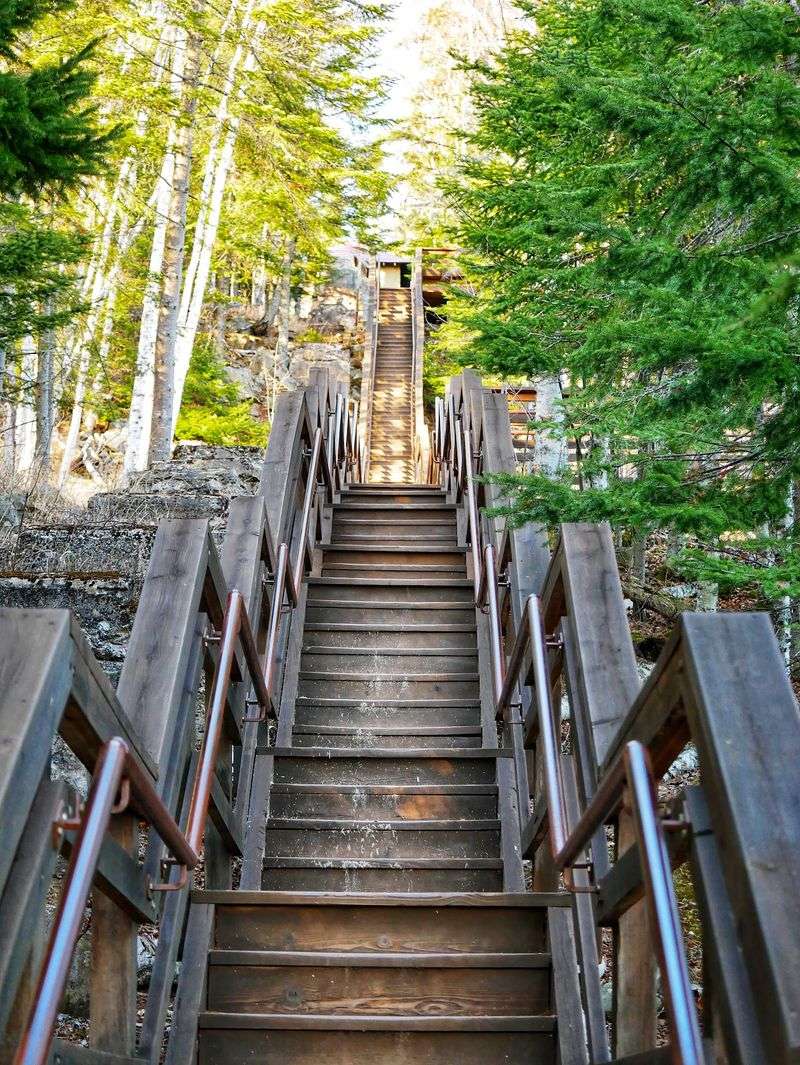
The classic postcard view isn’t found at the top of the cliff. It’s found down below, near the water.
A long flight of stairs leads down toward the Lake Superior shoreline. From the lower area, you can look up and see the lighthouse perched on its rock.
Going down is the easy part. Coming back up will remind your legs that Minnesota has real terrain.
The stairs are well built, and the lower area gives you room to explore. You can reach the water’s edge and enjoy the rocky beach.
Photographers tend to love this angle. The tower, the cliff, and the lake line up in a way that feels almost staged.
Take your time on the climb back. Stopping to catch your breath doubles as another chance to admire the view.
Icy conditions in colder months can make walking tricky. Good shoes are smart here no matter the season.
Honestly, skipping these stairs would be like ordering pie and leaving the crust.
Trails, Shoreline, And A State Park Next Door
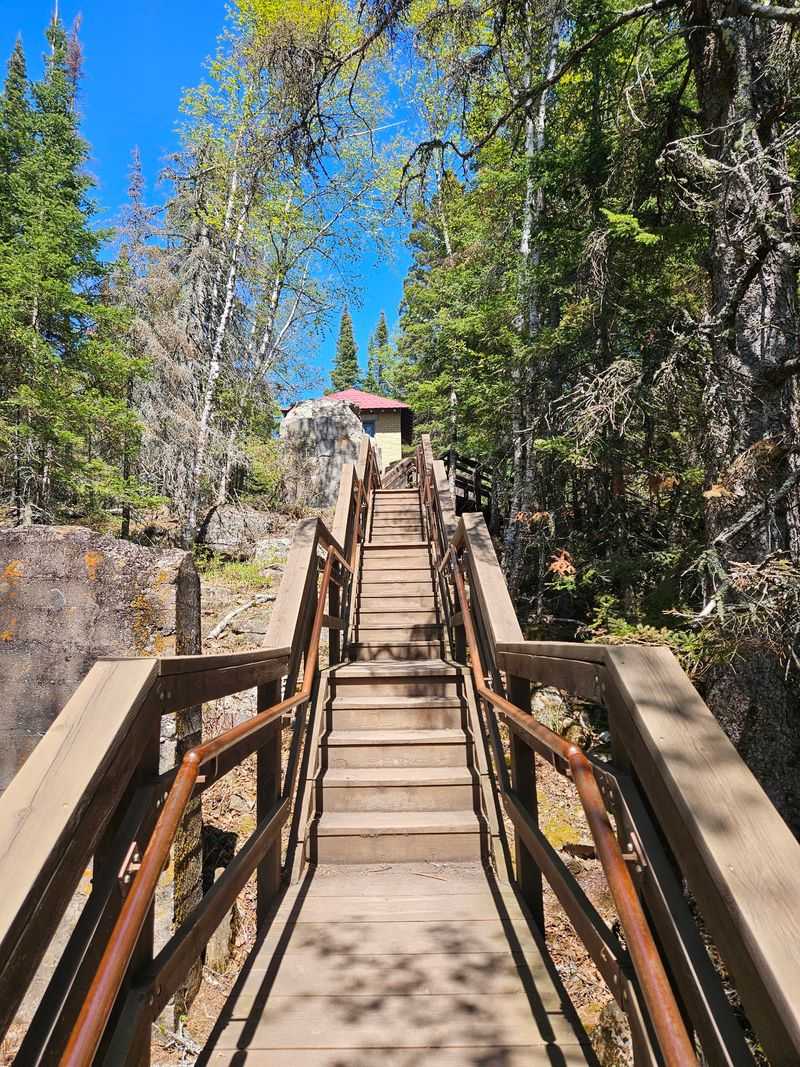
Lighthouse fans aren’t the only ones who leave happy. Hikers get plenty to enjoy around the grounds too.
Walking paths wind along the shore and offer different views of the lighthouse. Even short strolls deliver big scenery without requiring an all-day hike.
The surrounding Split Rock Lighthouse State Park adds even more room to roam. Its trails follow the shoreline and pass through North Shore forest.
Trails can hold snow well into spring. That doesn’t stop people from walking them, but sturdy footwear helps a lot.
Fall can be a lovely time for a walk here, with color on the hills. Summer brings longer days and easier footing.
Families with active kids will appreciate having space to explore. Burning off a little energy before the museum visit is never a bad plan.
I like that the nature and history work together here. You learn about the lake indoors, then feel its size outdoors.
Big-city parks are nice. This is a different league.
Exhibits, A Short Film, And A Gift Shop Stop
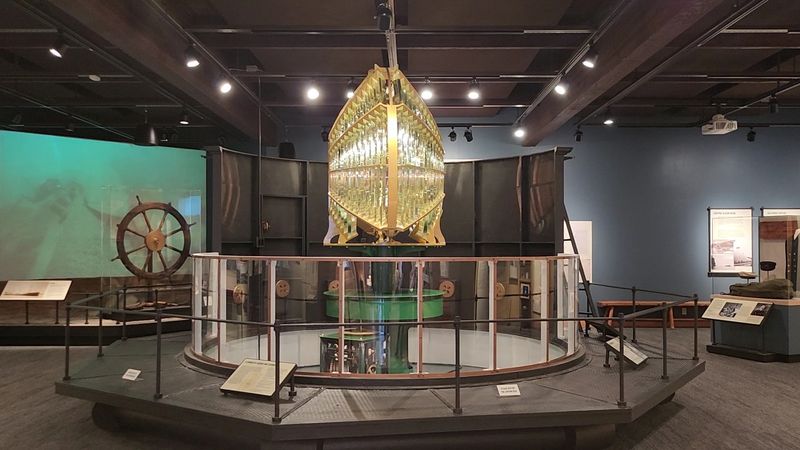
Start indoors, and the whole visit clicks into place. The visitor center gives helpful context before you head out to the cliff.
A video presentation explains how the lighthouse was built and why it mattered. It’s a great primer for kids and adults alike.
Exhibits cover shipping on the Great Lakes and the challenges sailors faced. You’ll come away understanding just how serious Lake Superior storms could be.
Staff and volunteers are known for being friendly and knowledgeable. They’re happy to answer questions about the lighthouse and the local shoreline.
Accessibility gets thoughtful attention too. Wheelchairs are available for complimentary use, which makes the grounds easier for more visitors.
The gift shop sits near the entrance. It’s a fun place to grab a souvenir, a book, or a lighthouse keepsake for someone back home.
The facilities are well kept and clean. Small things like that make a long drive up the shore feel well spent.
Hours, Admission, And Getting Up The Shore
Planning ahead pays off on the North Shore. Schedules here can shift with the seasons, so check before you go.
The site has recently listed hours of 10 AM to 4 PM, Thursday through Monday. It’s typically closed Tuesdays and Wednesdays.
Admission is charged for entry to the historic site. Discounts are often available for seniors, military members, and college students.
Many visitors call it easy on the wallet for what you get. Restoration periods have sometimes brought reduced admission when parts of the tower were off-limits.
You’ll find the lighthouse at 3713 Split Rock Lighthouse Rd, Two Harbors, MN 55616. It sits just off scenic Highway 61 northeast of Two Harbors.
The drive from Duluth is a beautiful one along the lake. From the Twin Cities, it makes an easy weekend getaway up north.
Restoration work has meant scaffolding around the tower at times. Knowing that ahead of your trip keeps expectations right where they should be.
Why This Cliff Belongs On Every Minnesota Road Trip
Some landmarks look good in photos and fade in person. Split Rock Lighthouse does the opposite.
The history is rich, the setting is jaw-dropping, and the stories feel personal. Few places in Minnesota pack this much into one stop.
Families get trails, stairs, and hands-on history. History lovers get a restored station, a mercury-floated lens, and 1920s home life.
Photographers get a view that rivals famous coastal lighthouses anywhere. Minnesota wins this one without even trying very hard.
Then there’s November 10. A quiet tribute and a glowing beam over dark water make the visit feel meaningful.
It’s the kind of trip you’ll want to plan with friends. Tag the person who always says they want to see the North Shore.
Bring layers, comfy shoes, and some patience for the stairs. Check current hours and tower access before leaving home.
The lighthouse kept ships safe for nearly six decades. Now it gives Minnesotans a reason to drive north, look up, and feel a little proud.
Share this story