Some words are so powerful that the places where they were spoken become just as important as the words themselves. Across the United States, certain buildings, steps, stadiums, and chapels carry the weight of history because a single person stood there and changed the national conversation forever. A 272-word speech that lasted under two minutes. A 17-minute address that drew 250,000 people.
A commencement speech that reshaped American domestic policy. These are not just moments in textbooks. They are real places you can visit, stand in, and feel the full force of what happened there. This list takes you to 13 locations where words met history and the result was unforgettable.
Whether you are a history lover, a road tripper, or just someone who appreciates a good story, these places are worth knowing about.
1. Gettysburg National Military Park, Gettysburg, Pennsylvania
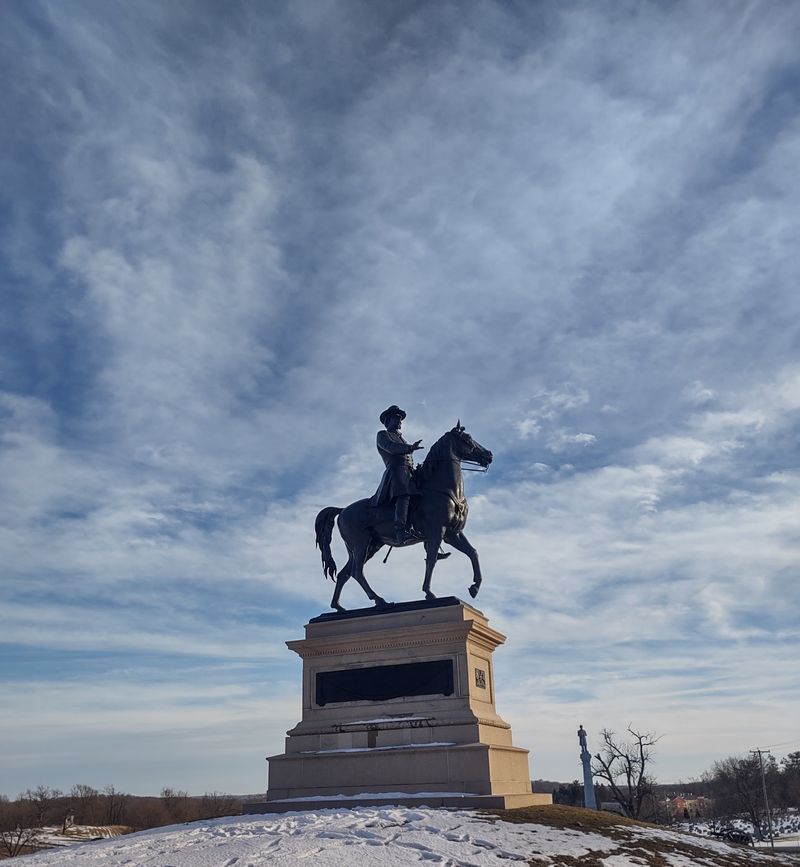
Only 272 words long and delivered in under two minutes, the Gettysburg Address is proof that brevity and brilliance can coexist in the same breath.
Abraham Lincoln spoke here on November 19, 1863, during the dedication of the Soldiers’ National Cemetery, honoring those who fought in the Battle of Gettysburg. The battle itself stretched over three brutal days in July 1863 and remains the bloodiest engagement of the Civil War.
Lincoln’s speech did not just honor the fallen. It reframed the entire war as a fight for equality, drawing directly from the Declaration of Independence and its promise of liberty for all.
Today, the park features over 1,300 monuments, nearly 400 cannons, and close to 150 historic buildings spread across the preserved battlefield landscape. Visitors can walk the same ground Lincoln once addressed, making this one of the most historically layered destinations in the entire country.
2. United States Capitol, Washington, District of Columbia
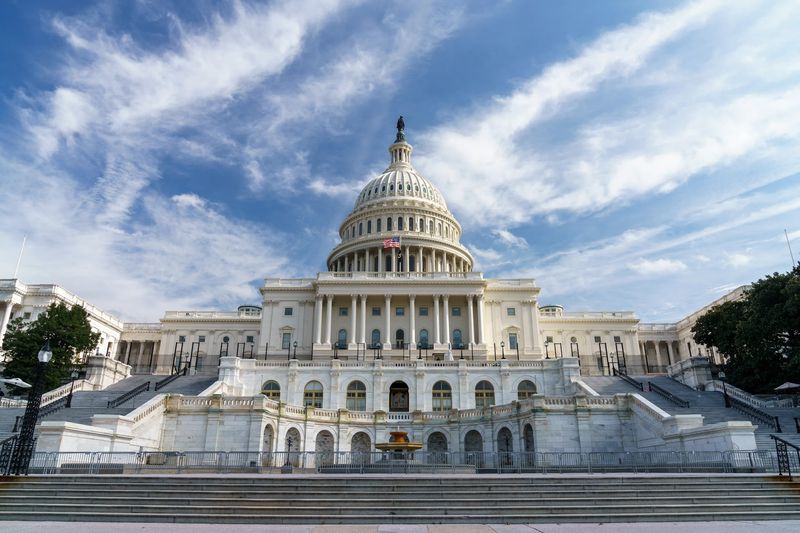
Few buildings in the world have hosted as many defining moments as the United States Capitol, where the words spoken from its steps have repeatedly shaped the direction of the country.
Abraham Lincoln delivered his Second Inaugural Address from the East Portico on March 4, 1865, just 41 days before his passing. He called for reconciliation, urging Americans to bind the nation’s wounds rather than seek revenge after years of civil war.
Then came January 20, 1961, when John F. Kennedy stood at the same East Portico and challenged an entire generation with one of the most quoted lines in American political history: “Ask not what your country can do for you, ask what you can do for your country.”
The Capitol continues to host presidential inaugurations every four years, making it the country’s most consistent stage for speeches that mark new chapters in American leadership and democratic tradition.
3. Old State Capitol State Historic Site, Springfield, Illinois
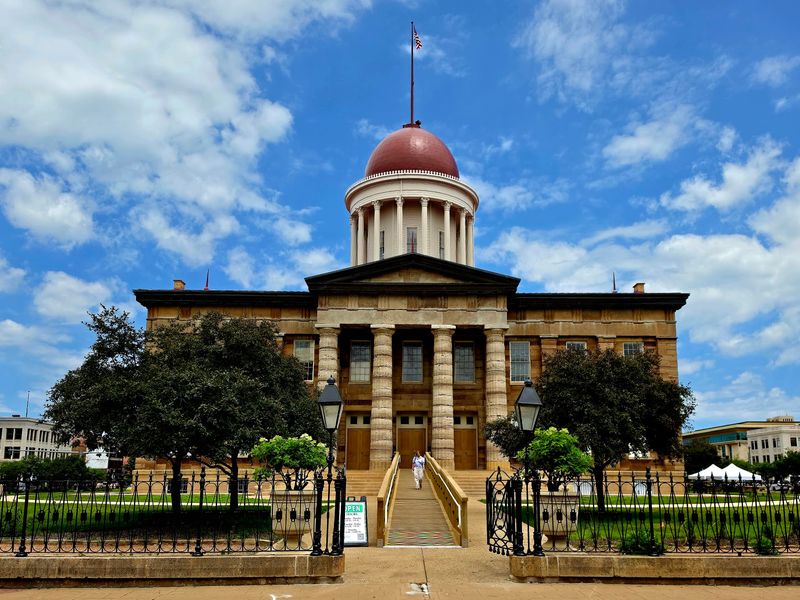
Abraham Lincoln stood before his Republican colleagues in the Hall of Representatives on June 16, 1858, and delivered a warning so clear and so direct that it still echoes through American political thought today.
“A house divided against itself cannot stand,” he told them, arguing that the United States could not survive as a nation permanently split over the question of slavery. The speech became one of the defining political addresses in the years leading up to the Civil War.
The building itself is a beautifully restored Greek Revival structure that served as Illinois’s state house from 1840 to 1876. Every architectural detail has been carefully preserved, and the legislative chamber where Lincoln spoke remains accessible to visitors.
Beyond its connection to Lincoln, the building has hosted ceremonial functions for generations, making it one of the most historically layered stops on any Illinois road trip. History lovers should not skip this one.
4. Faneuil Hall, Boston, Massachusetts
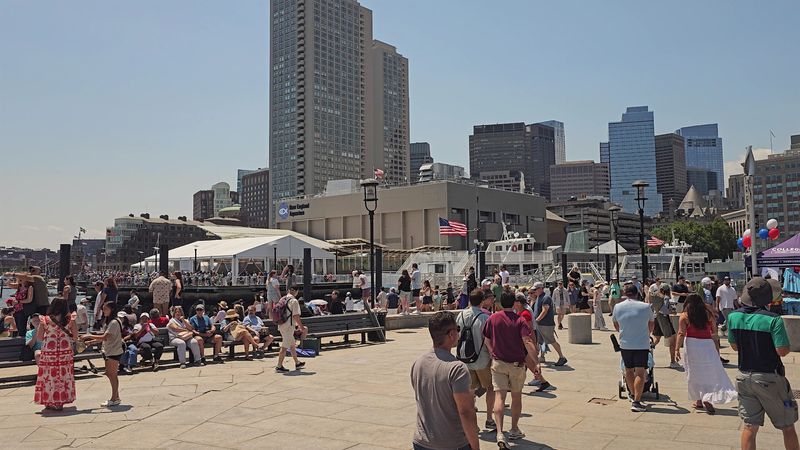
Before the United States even existed as a country, Faneuil Hall was already hosting arguments about freedom, taxation, and the rights of ordinary people.
The building opened in 1742 and quickly became a hub for colonial debate. Patriots like James Otis and Samuel Adams used its platform to push back against British policies that eventually sparked the American Revolution. That earned it the nickname “Cradle of Liberty,” a title it has carried ever since.
By the 19th century, the hall became a rallying point for abolitionists. Frederick Douglass, William Lloyd Garrison, and Wendell Phillips all delivered major speeches within its walls advocating for the end of slavery. Susan B. Anthony also spoke here in support of women’s suffrage.
Today, Faneuil Hall remains an active public meeting place, open to visitors and still occasionally used for civic discussions. Its ground floor hosts a marketplace, while the upper hall preserves its historic meeting room exactly as generations of reformers knew it.
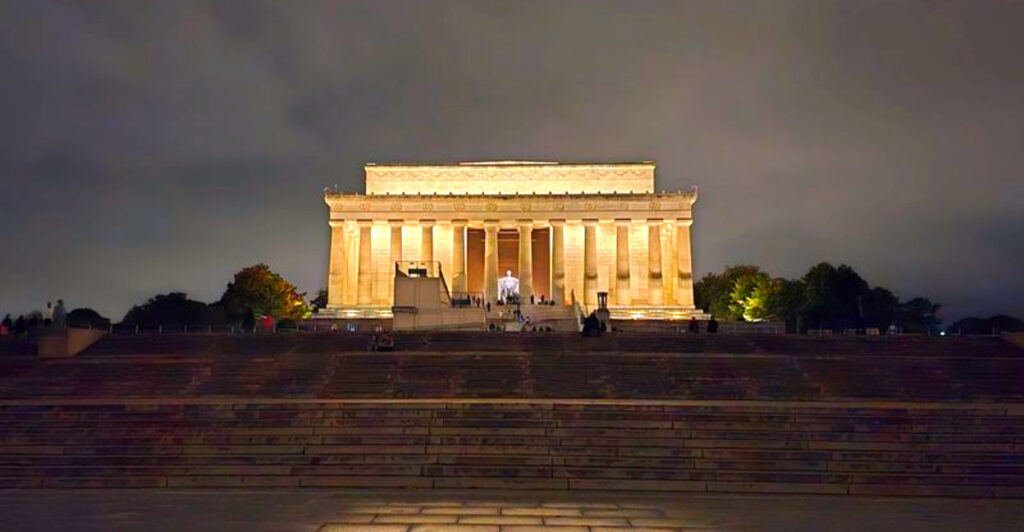
5. Lincoln Memorial, Washington, District of Columbia
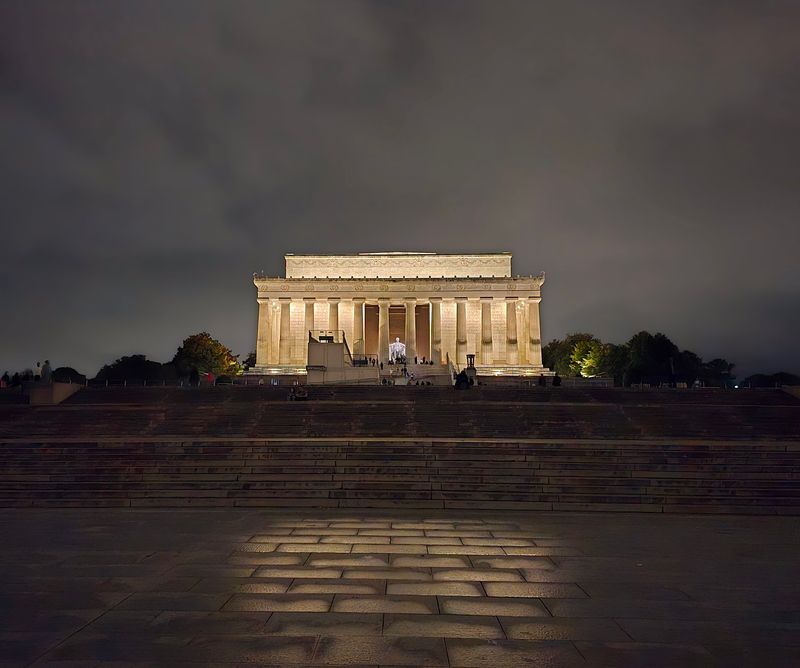
An engraved marble plaque sits approximately eighteen steps up from the plaza, and if you find it, you are standing exactly where Martin Luther King Jr. stood on August 28, 1963, when he delivered his “I Have a Dream” speech.
More than 250,000 people filled the National Mall that day for the March on Washington for Jobs and Freedom. King’s address lasted just 17 minutes, yet it became one of the most quoted and studied speeches in American history.
The National Park Service installed the commemorative plaque in 2003, ensuring that future visitors could pinpoint the exact spot. March organizers chose this location deliberately for its symbolic connection to Abraham Lincoln and the emancipation of enslaved Americans.
The memorial remains free to visit year-round and draws millions of visitors annually, many of whom make a point to find that plaque and stand in the same place where history was made.
6. Rice University, Houston, Texas
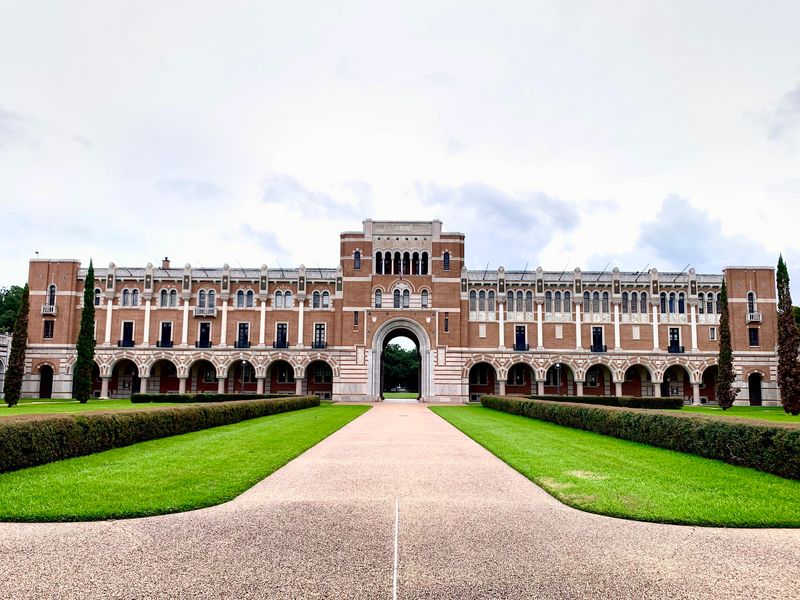
On September 12, 1962, President John F. Kennedy stood before an estimated crowd of 35,000 to 40,000 people at Rice Stadium and declared that America would go to the Moon before the decade was out, not because it was easy, but because it was hard.
That line alone turned a policy announcement into a rallying cry. Kennedy’s address, formally titled “Address at Rice University on the Nation’s Space Effort,” framed space exploration as a new frontier and positioned the United States as a nation willing to take on challenges that seemed almost impossible.
The speech did exactly what it was designed to do. It rallied public support for the Apollo program at a time when the Soviet Union held a clear lead in the Space Race. Seven years later, astronauts landed on the Moon.
Rice University celebrates its connection to this pivotal moment in history, and Rice Stadium still stands as a reminder of the afternoon Kennedy pointed America toward the stars.
7. Dexter Avenue King Memorial Baptist Church, Montgomery, Alabama
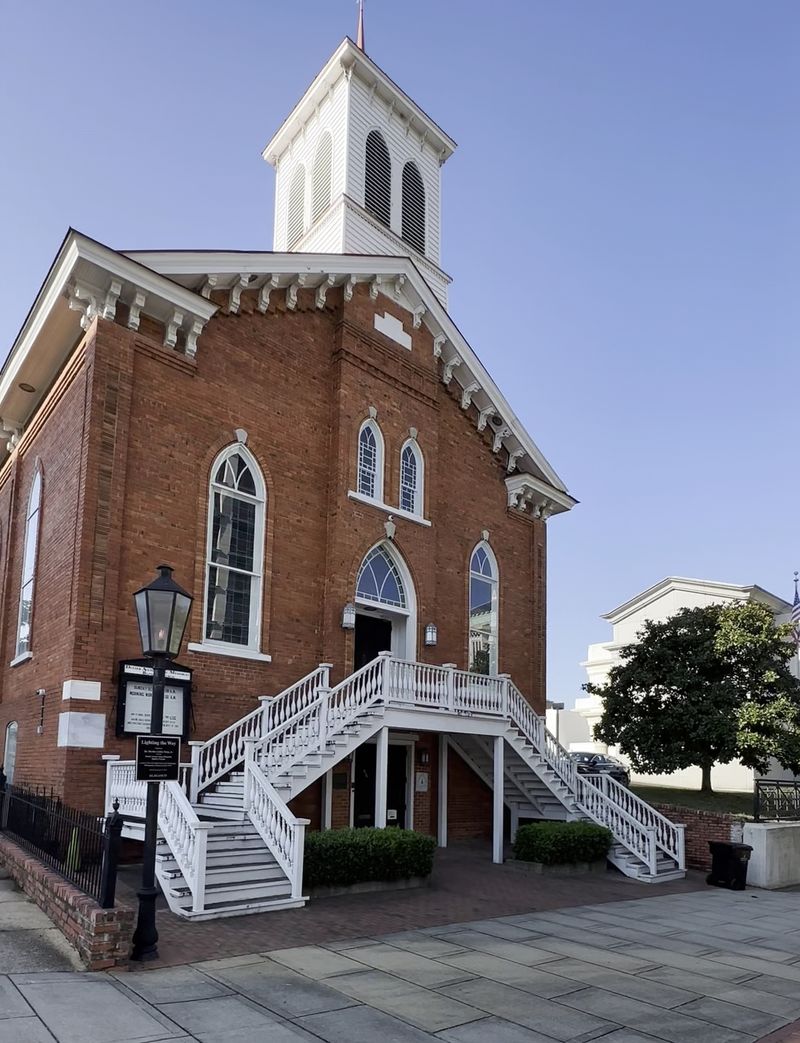
Martin Luther King Jr. was 25 years old when he became pastor of this church in 1954, and what happened in the years that followed would change the course of American history.
When Rosa Parks was arrested in December 1955 for refusing to give up her seat on a Montgomery city bus, King was elected president of the newly formed Montgomery Improvement Association and began leading the Montgomery Bus Boycott from this very church. His sermons here shaped the philosophy of nonviolent resistance that became the foundation of the modern Civil Rights Movement.
Key congregation members, including Jo Ann Robinson and Rufus Lewis, played critical organizing roles in the boycott, which lasted 381 days and ended with the desegregation of Montgomery’s public buses.
Designated a National Historic Landmark, the church continues to function as an active congregation while welcoming visitors who want to understand how a small community church became one of the most important institutions in American civil rights history.
8. Soldier Field, Chicago, Illinois
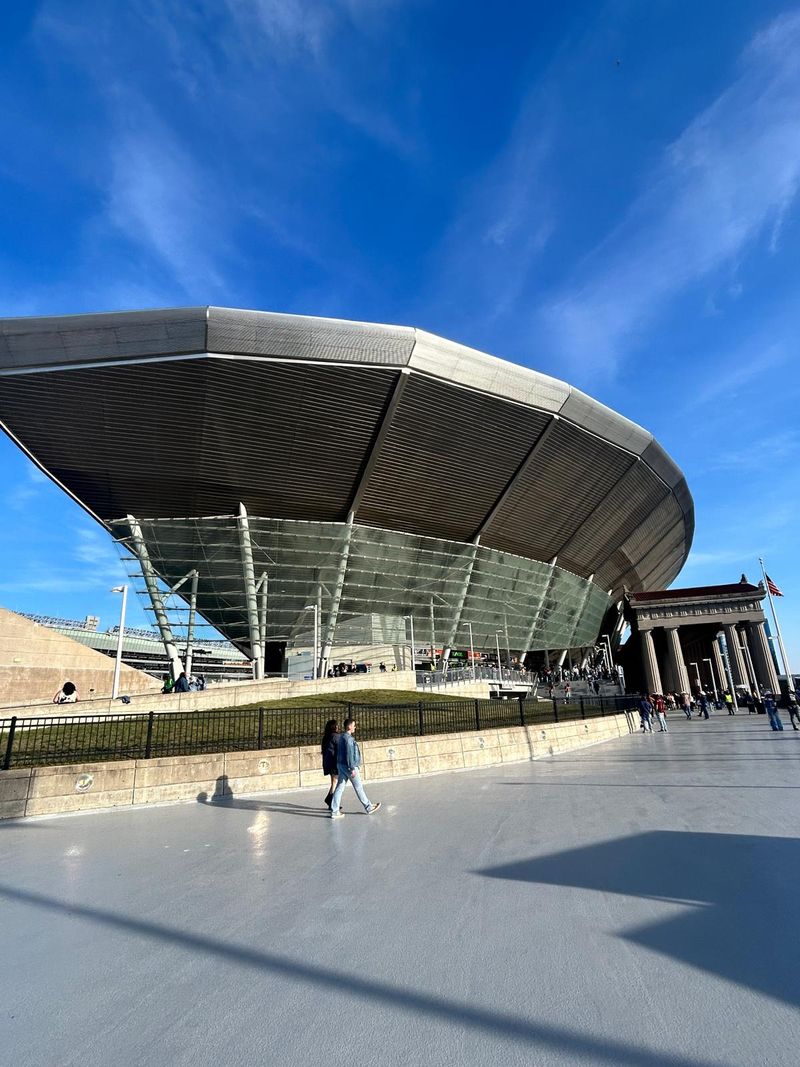
Grant Park in Chicago became the center of the world on the night of November 4, 2008, when Barack Obama walked onto a stage before an estimated 240,000 people and delivered his election night victory speech as the first African American elected president of the United States.
Millions more watched on television and online as Obama addressed the enormous crowd, drawing references from the inaugural addresses of Abraham Lincoln and John F. Kennedy, as well as speeches by Martin Luther King Jr. His words carried the weight of the moment without ever losing composure.
Security for the event was extraordinary. Obama spoke behind bulletproof glass, a no-fly zone covered the area, and thousands of police, Army, and Secret Service personnel were deployed throughout the park and surrounding streets.
The speech marked one of the defining political moments of the 21st century, and Grant Park has since become a landmark destination for visitors who want to stand where that historic night unfolded.
9. University of Michigan Diag, Ann Arbor, Michigan
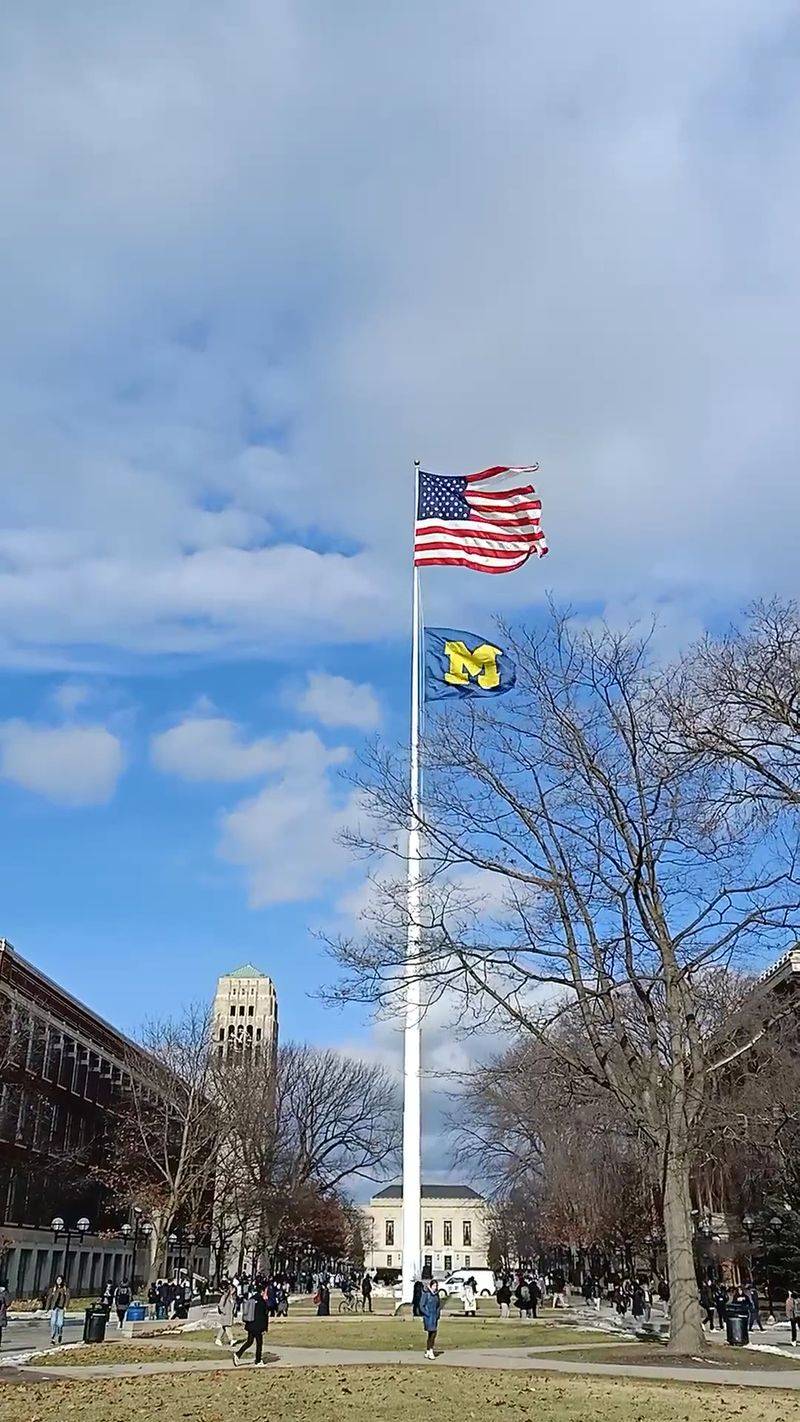
President Lyndon B. Johnson chose a college graduation ceremony to announce one of the most ambitious domestic policy agendas in American history, and it worked brilliantly.
On May 22, 1964, Johnson delivered the keynote address at the University of Michigan’s Spring Commencement to more than 70,000 people gathered in Michigan Stadium. He outlined his vision for the Great Society, a sweeping plan to eradicate poverty and racial injustice, improve education, and protect natural resources across the country.
The visit made history on two fronts. It was the first time a sitting president had visited the U-M campus, and the commencement speech was also the first in university history to be televised nationally. Johnson called for a “creative federalism” that would use the country’s wealth and knowledge to raise the quality of American life.
The Diag, the central lawn of the campus, remains the heart of university life and a gathering point for students, visitors, and anyone who appreciates a campus with serious historical credentials.
10. Brown Chapel A.M.E. Church, Selma, Alabama
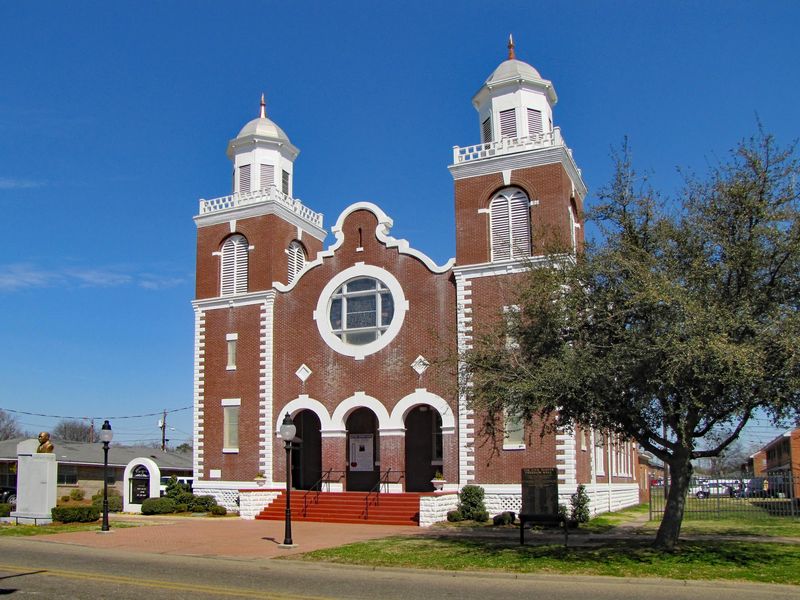
Before the marchers set out and before the cameras captured what the world would come to know as Bloody Sunday, Brown Chapel was where the movement gathered its resolve.
Built in 1908 with Romanesque Revival styling and distinctive twin towers, the church became the headquarters for the Selma voting rights movement in 1965. Martin Luther King Jr. and other civil rights leaders delivered speeches and sermons here that organized and unified the community around the goal of equal voting rights.
The church was the physical and emotional starting point for all three Selma to Montgomery marches, including the harrowing events of March 7, 1965, and the successful five-day march that began on March 21, 1965. Those marches directly contributed to the passage of the landmark Voting Rights Act of 1965.
Designated a National Historic Landmark, Brown Chapel continues to serve as an active congregation and welcomes visitors who come to understand the courage it took to begin that long walk toward justice.
11. Alabama State Capitol, Montgomery, Alabama
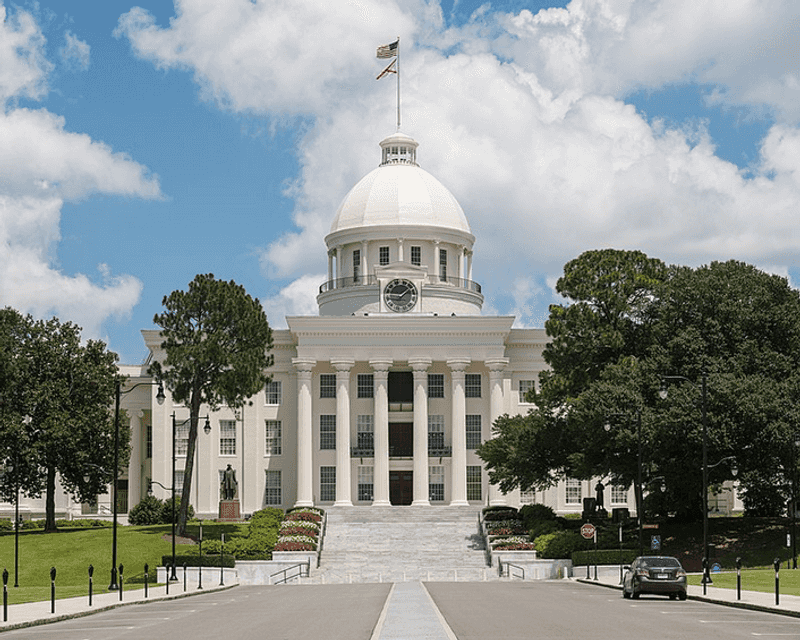
After 54 miles on foot and days of marching through Alabama, thousands of civil rights demonstrators arrived at the steps of the Alabama State Capitol on March 25, 1965, and Martin Luther King Jr. was waiting with words that matched the magnitude of what they had just accomplished.
His speech that day, known as “How Long? Not Long,” was a declaration of confidence that justice would prevail. King told the crowd that the arc of the moral universe is long, but it bends toward justice, a line that has since been repeated by leaders and activists around the world.
The location added a powerful layer of meaning to the moment. The Alabama State Capitol is also where Jefferson Davis was inaugurated as president of the Confederacy in 1861, making King’s presence on those same steps over a century later a statement in itself.
Today, the building is recognized as one of the most significant civil rights sites in the United States and remains a place where history feels very close to the surface.
12. National Cathedral, Washington, District of Columbia
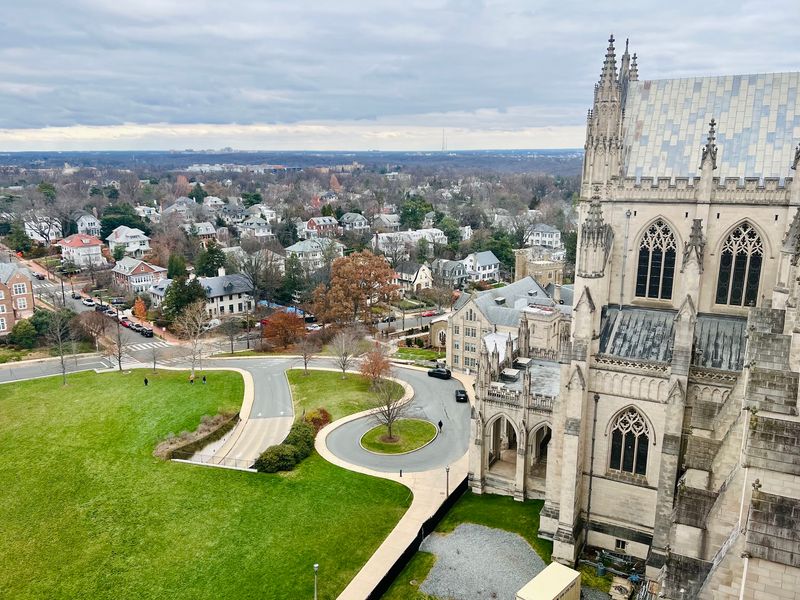
Washington National Cathedral has a particular role in American public life that no other building quite fills: it is where the nation gathers when words of comfort, remembrance, or reckoning are needed most.
Presidents, civil rights leaders, and national figures have all delivered addresses within its Gothic stone walls during moments of mourning and national reflection. The cathedral hosted services following major national tragedies and has served as a setting for eulogies that became important speeches in their own right.
One of the most notable recent examples came on September 1, 2018, when President Barack Obama delivered a moving eulogy for Senator John McCain. Obama praised McCain’s unwavering commitment to principles that he believed transcended politics and his dedication to preserving the dignity of the country he served for decades.
The cathedral’s Gothic architecture, completed in 2004 after 83 years of construction, provides a setting that gives weight and gravity to every address delivered there. It remains open to visitors of all backgrounds throughout the year.
13. National Constitution Center, Philadelphia, Pennsylvania
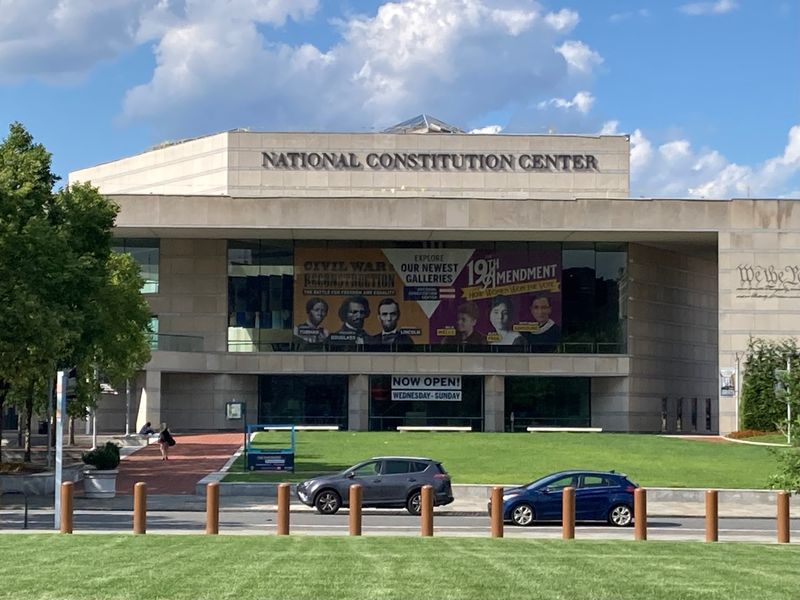
Not every place on this list earned its reputation over centuries. The National Constitution Center opened its doors on July 4, 2003, and has spent just over two decades building a track record as one of the country’s most important venues for civic and constitutional debate.
Positioned on Independence Mall, directly beside Independence Hall and within walking distance of the Liberty Bell, the center occupies ground that practically demands serious conversation about American democracy. Supreme Court justices, heads of state, scholars, journalists, and historians have all taken the stage here to address foundational questions about how the Constitution shapes American life.
Notable speakers have included Supreme Court Justice Ruth Bader Ginsburg and historian Doris Kearns Goodwin, among many others. The center functions as a national town hall, hosting ongoing public programming that keeps the conversation about constitutional principles alive and accessible.
For anyone who wants to connect a modern institution to centuries of American history, its location alone makes it a natural and rewarding stop on any Philadelphia visit.
Share this story