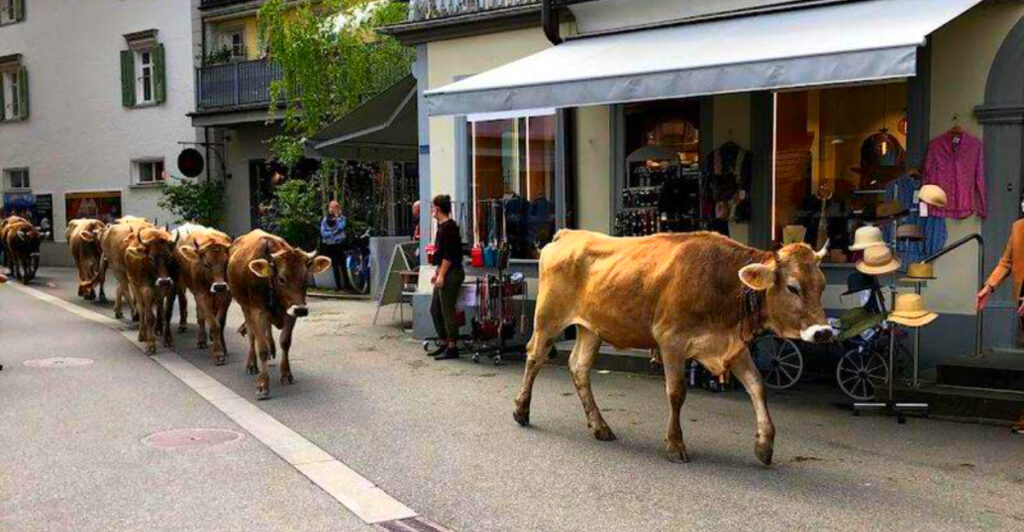
Most people think of traffic jams as a car problem, but in some parts of the world, the holdup is caused by a herd of decorated cows wearing flower crowns and giant bells. From a desert mining town in Arizona where burros own the sidewalk to alpine villages in the Alps where cattle return from summer pastures in full festive regalia, there are places on Earth where livestock and main streets still share the same real estate. These traditions are not museum pieces or tourist gimmicks. They are living, breathing customs tied to farming calendars, community pride, and centuries of agricultural life.
Whether it is a bull run through medieval Spanish streets or a gaucho parade in Argentina, each of these destinations proves that some of the most extraordinary spectacles in the world require no stage, no ticket, and no special effects. Just open roads and a lot of hooves.
1. Oatman, Arizona, USA
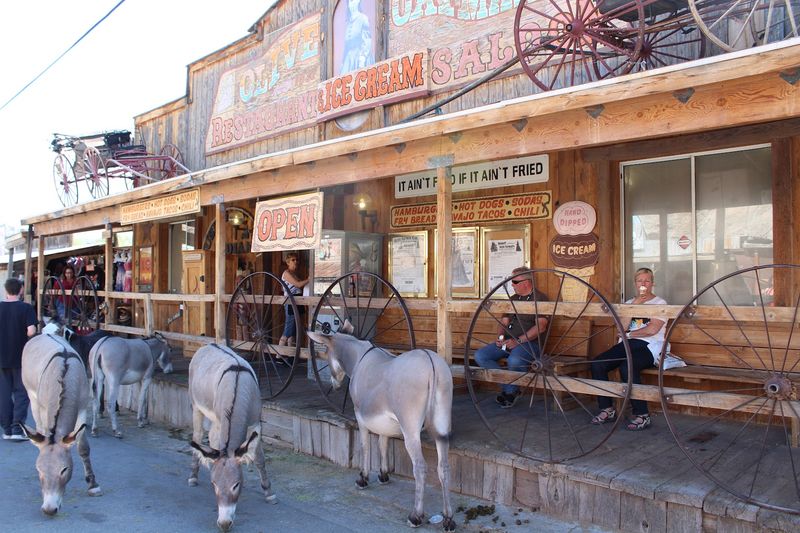
Long before social media made animals famous, a group of feral burros beat everyone to it by simply taking over a town. Oatman’s Main Street belongs as much to its burros as it does to its visitors, and the animals have no intention of giving it back.
Descended from pack burros left behind by miners in the late 1800s, these hardy creatures wander freely between shops and historic buildings every single day. Each morning, small groups amble down from the surrounding Black Mountains and spend their day mingling with tourists.
Visitors can purchase alfalfa pellets from local stores to feed them, which the burros accept with practiced confidence. As evening arrives, they head back to the hills, only to return again at sunrise. Oatman offers a rare daily encounter with working-animal history that no other town on Route 66 can match.
2. Bandera, Texas, USA
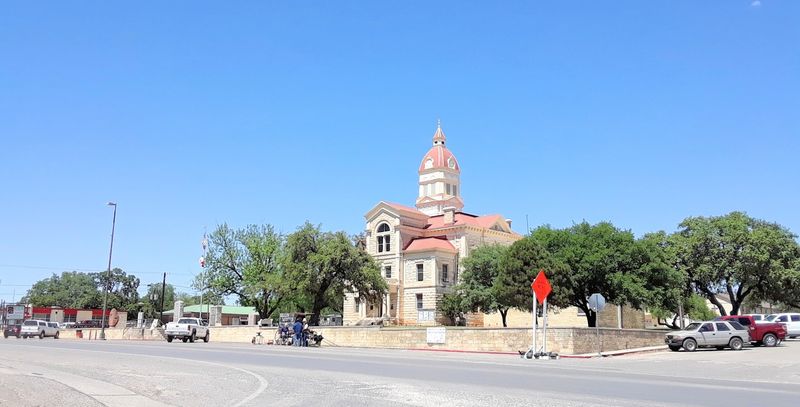
Not every town earns a nickname, but Bandera did not just earn one. It trademarked a whole identity. Known as the Cowboy Capital of the World, this Texas Hill Country town regularly hosts longhorn cattle drives and horseback parades along Main Street during major western celebrations.
The annual Bandera Round-Up Longhorn Cattle Drive, held over Labor Day weekend, brings these iconic animals with their impressive horn spans right through the center of town. Ranching is not a hobby here. It is a way of life that shapes everything from local politics to weekend plans.
Beyond the cattle drive, events on the Courthouse Lawn include arts and crafts markets, gunfighter shows, and live performances that round out the experience. Visitors leave understanding quickly why Bandera wears its cowboy heritage not as a costume, but as a genuine identity.
3. San Antonio de Areco, Buenos Aires Province, Argentina
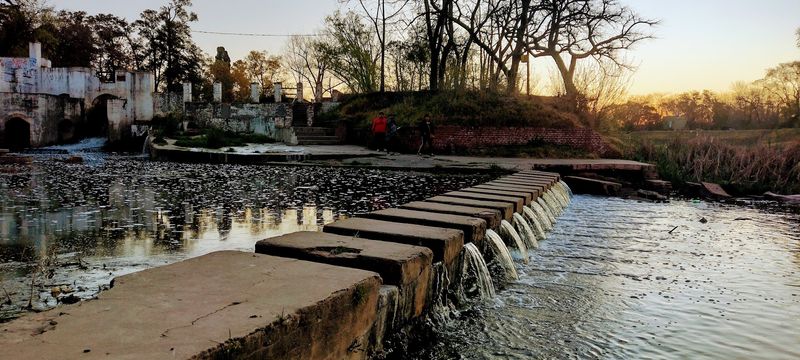
Argentina has a national poet, a national drink, and a national cowboy, and San Antonio de Areco celebrates all three with serious enthusiasm. The Fiesta de la Tradicion, held each November near the birthday of poet Jose Hernandez, transforms this cobblestone town into a showcase of gaucho culture at its finest.
Hundreds of skilled horsemen arrive from across the country dressed in traditional attire, complete with wide-brimmed hats, colorful ponchos, and ornate silver belts. Their horses are adorned with elaborate leather and silver bridles that reflect generations of craftsmanship.
The parade known as the desfile gauchesco weaves through the historic town center, drawing spectators who come to watch gaucho games like jineteada and corrida de sortija. Even outside festival season, the town’s estancias, leather workshops, and silversmith studios keep its agricultural soul very much alive year-round.
4. Pamplona, Navarre, Spain
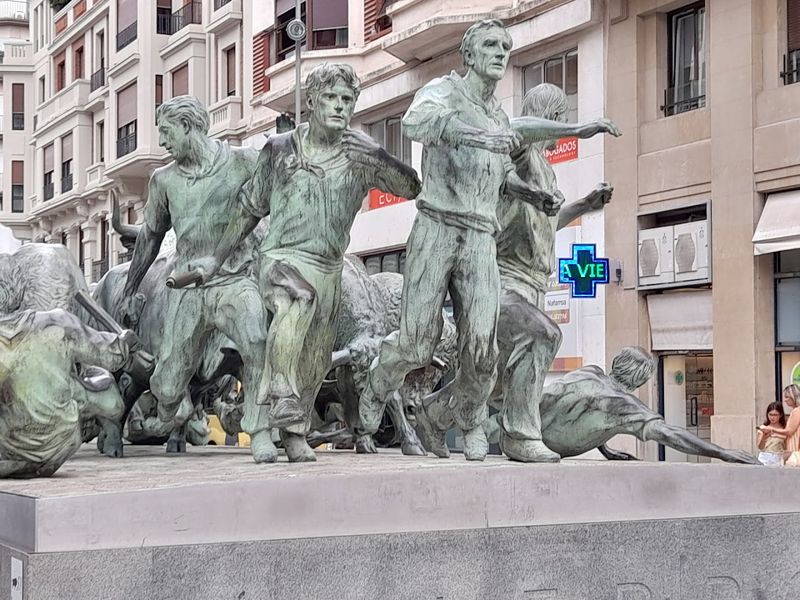
Eight days, eight bull runs, and a route that has not changed in centuries. Pamplona’s encierro, held each July during the San Fermin festival, sends six fighting bulls and six steers charging through 875 meters of narrow Old Town streets every morning at precisely 8:00 AM.
The course passes through distinct sections including the steep Santo Domingo slope, the wide Town Hall Square, and the long straight stretch of Calle Estafeta where bulls reach full speed. The run typically lasts between two and four minutes, though those two to four minutes feel considerably longer to the participants.
The tradition began as a practical way to move bulls from corrals to the bullring, with locals eventually daring to sprint ahead of them. Today, thousands of runners and spectators gather daily, with many watching from balconies and wooden barriers along the route through Pamplona’s medieval quarter.
5. Saintes-Maries-de-la-Mer, Provence, France
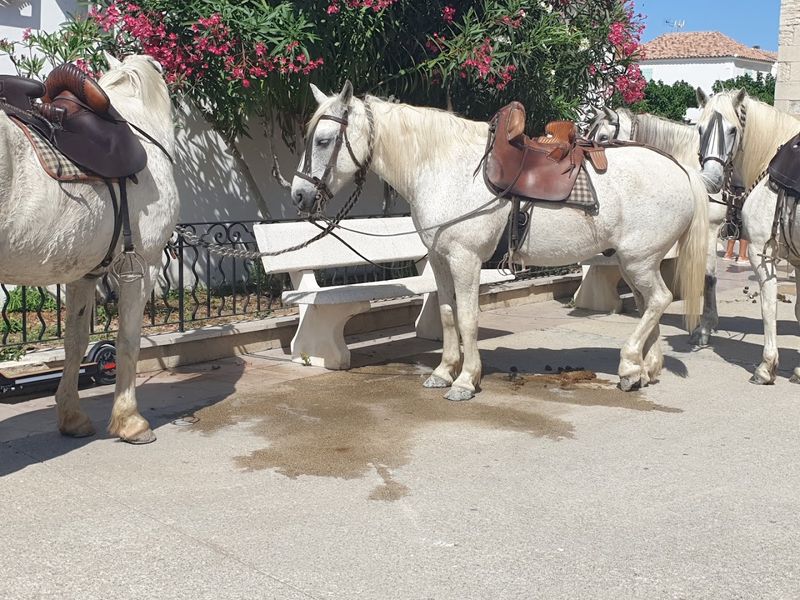
The Camargue is one of Europe’s most distinct natural regions, and Saintes-Maries-de-la-Mer is the town where its ranching traditions meet its coastal character. White Camargue horses and black Camargue bulls are both central to the cultural identity of this community, and traditional festivals bring both through its streets on a regular basis.
Local gardians, the cowboys of the Camargue, guide the herds on horseback during events like the Abrivado and Bandido. These are not staged performances designed for tourists. They are deeply ingrained practices that reflect centuries of regional livestock management and community pride.
The sight of white horses galloping through town or black bulls being herded by riders in traditional dress offers a window into a way of life found nowhere else in France. The town’s location between the Mediterranean and the wetlands makes it one of Provence’s most genuinely unique destinations.
6. Reith im Alpbachtal, Tyrol, Austria
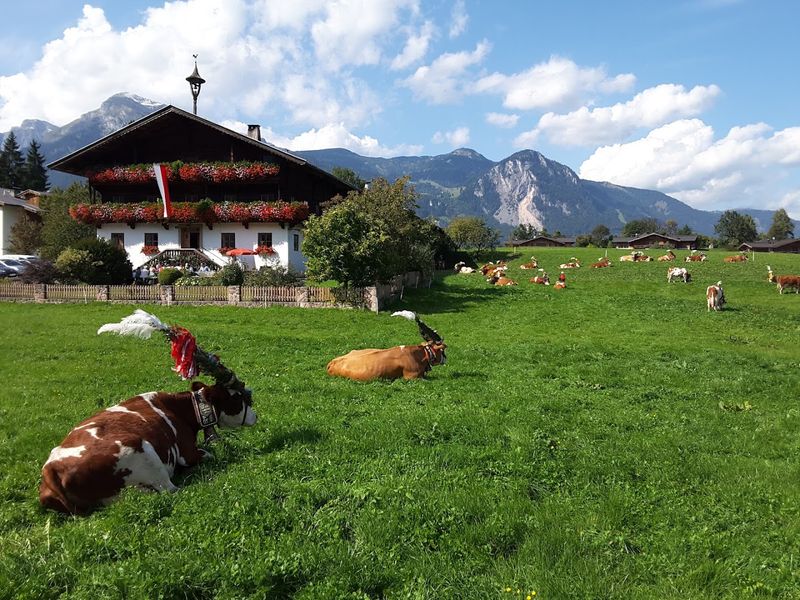
Every September, the village of Reith im Alpbachtal hosts one of Tyrol’s largest Almabtrieb celebrations, and the cows arrive looking like they dressed for a wedding. Elaborate headdresses made from pine branches, fresh flowers, and colorful ribbons crown the lead animals, while oversized polished cowbells announce the herd’s arrival long before it comes into view.
The procession passes directly through the village center before the animals return to their home farms for winter. A bustling parish festival runs alongside the cattle drive, featuring a farmers’ and craft market with Tyrolean specialties and handmade goods.
The flower decorations carry meaning beyond aesthetics. A fully adorned cow signals that the summer grazing season passed without any serious incident on the mountain. Reith’s Almabtrieb draws visitors from across Austria and beyond, yet it remains firmly rooted in the agricultural rhythms of the Alpbach Valley community.
7. Appenzell, Appenzell Innerrhoden, Switzerland
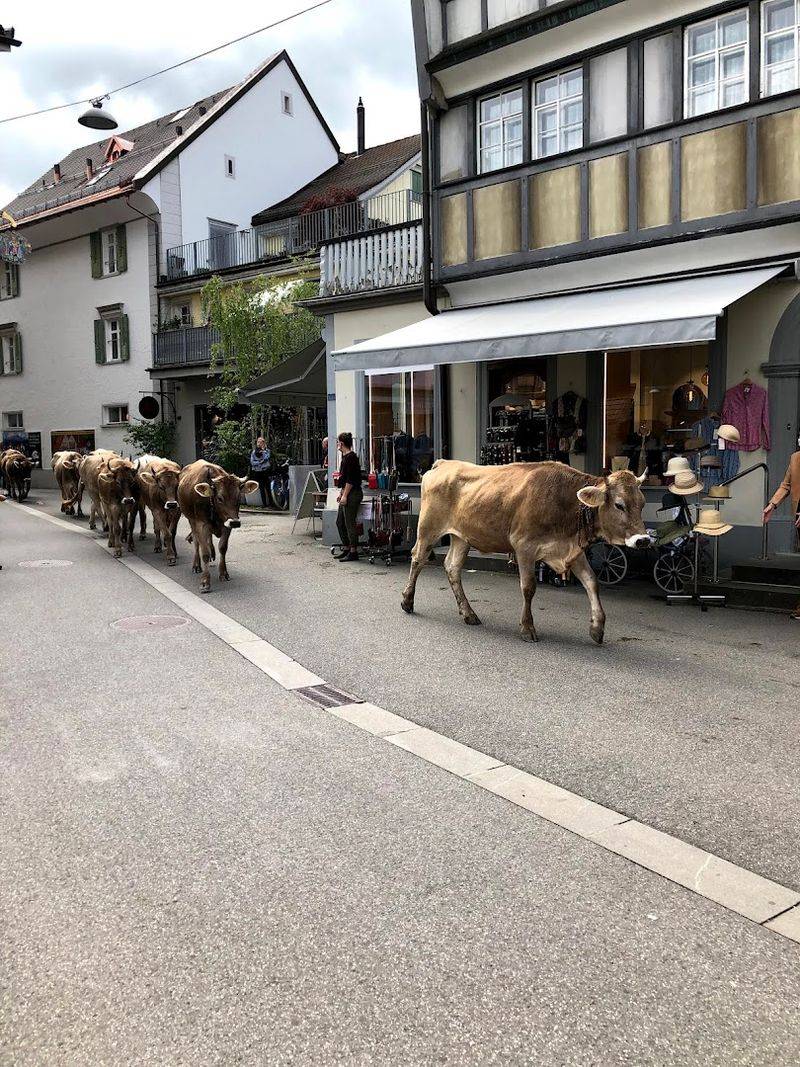
Switzerland takes its cheese seriously, and Appenzell takes its cattle traditions even more so. The annual Alpabzug in this traditional canton is a precisely organized procession that has been refined over generations into something between a farming event and a living history exhibition.
Herdsmen dressed in lemon-yellow deerskin trousers, crimson vests, and flower-adorned black hats lead the dairy cows through town, while the most productive milk producers of the summer wear the largest and most elaborate floral headdresses. A young goat boy traditionally opens the procession, followed by goat girls and then the main cattle herd.
Spectators line the streets of Appenzell to welcome the animals home, and the herdsmen’s yodeling accompanies the harmonic ringing of the cowbells in a tradition locals call Zauren. Appenzeller mountain dogs known as Blass often accompany the herd, keeping the procession orderly while adding to the visual charm of the whole event.
8. Kastelruth, South Tyrol, Italy
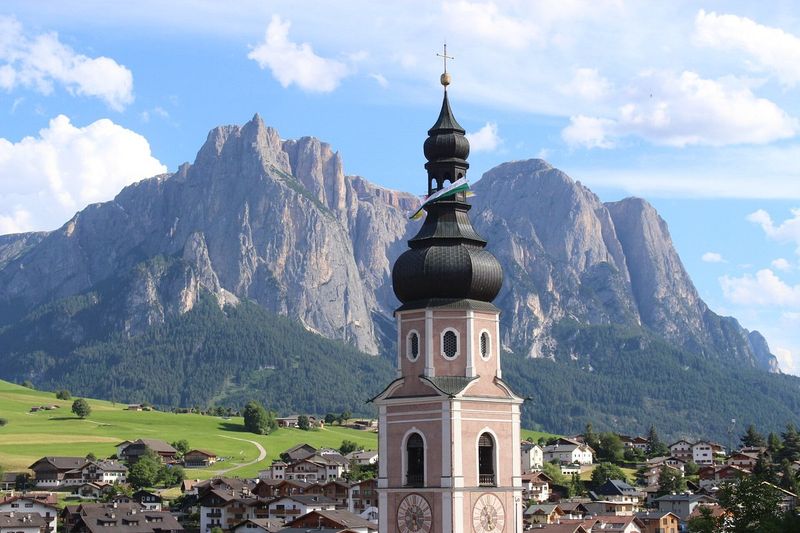
Kastelruth sits at the foot of the Seiser Alm, Europe’s largest high-altitude meadow, which means it has a front-row seat to one of South Tyrol’s most celebrated autumn events. Each year on Rosary Saturday, around 250 animals including cattle, horses, sheep, and goats descend from the plateau in a procession that fills the village with the sound of hundreds of bells.
The lead cows are decorated with flower wreaths, mirrors believed to ward off evil, and massive polished bells that signal a safe summer on the mountain. The morning begins with festivities in Compatsch, a small settlement on the plateau, featuring alphorn players, whip crackers, craft demonstrations, and a farmers’ market.
By midday, the procession reaches Kastelruth’s center, where a full afternoon festival continues with traditional food, folk music, and open-fire cooking of the regional dish known as South Tyrolean Muas. The Dolomite backdrop makes every photograph from this event look almost too dramatic to be real.
9. Mittenwald, Bavaria, Germany
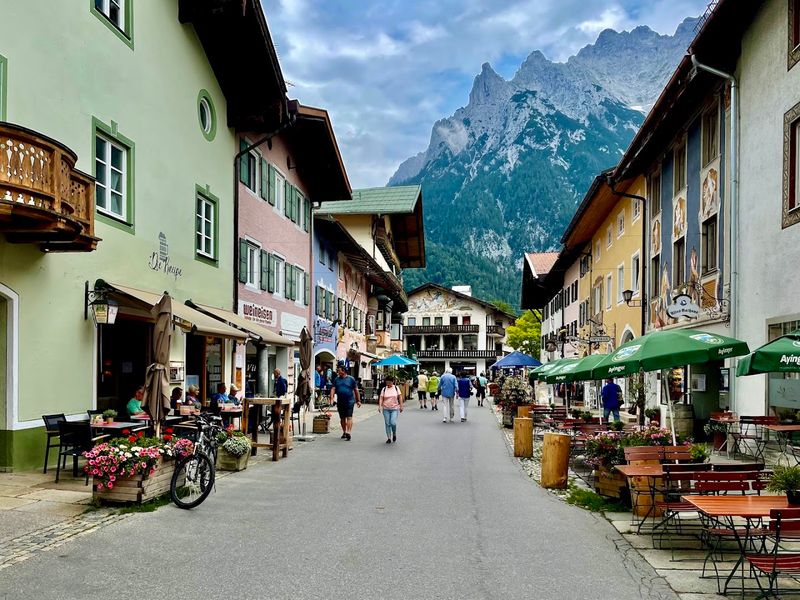
Mittenwald is already one of Bavaria’s most visually striking villages, famous for its violin-making tradition and houses covered in elaborate painted frescoes. Add a procession of flower-crowned cattle marching past those painted facades in September, and the scene becomes almost impossible to believe.
The annual Almabtrieb marks the end of summer grazing as decorated cattle descend from alpine pastures back into the valley. If the season passed without any livestock incidents on the mountain, the cows are lavished with fir wreaths, ribbons, and flower crowns. The lead animal, known as the Kranzkuh, carries the most elaborate decorations of all.
The procession winds through the historic old town before concluding at the festival meadow on Riedboden, where an Almfest continues with brass bands, regional food, and festive stalls. Mittenwald also includes goat and sheep drives in its seasonal festivities, making it one of Upper Bavaria’s most complete Almabtrieb experiences.
10. Immenstadt im Allgäu, Bavaria, Germany
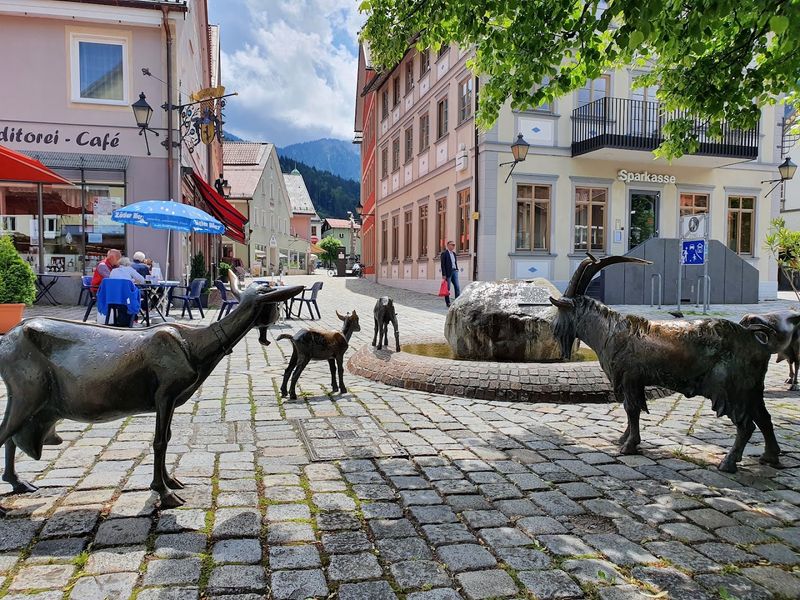
Around 800 cattle descending from ten alpine pastures into a single town center is not a traffic problem. In Immenstadt im Allgau, it is called the Viehscheid, and it is one of the largest celebrations of its kind in the entire Allgau region.
Each herd is led by a Kranzkuh, a magnificently decorated lead cow whose flower wreath and ribbons confirm that the summer grazing season passed without serious incident. The procession moves through a specially cordoned route in town, drawing thousands of spectators who come to watch the bells, colors, and cattle fill the streets.
The event extends well beyond the cattle drive itself. A festival tent the evening before hosts a warm-up celebration, and on the main day the Scheidplatz becomes the site of the ceremonial distribution of animals back to their owners. Regional food stalls offering Allgauer cheese, Kasknopfle, and sausages complete a day that feels genuinely communal rather than performative.
11. Krün, Bavaria, Germany
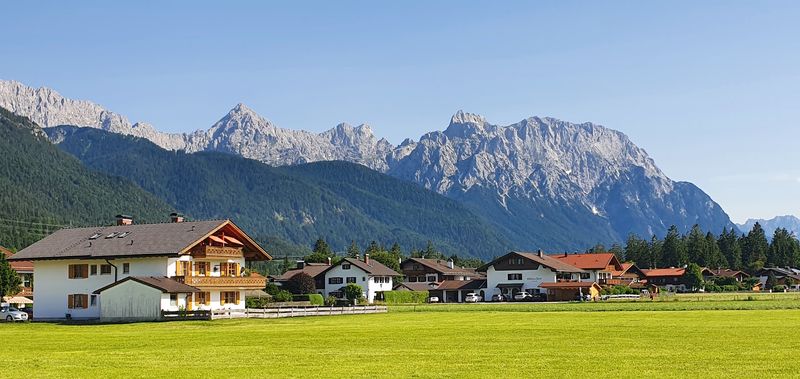
Tucked beneath the dramatic peaks of the Bavarian Alps, Krun celebrates its Almabtrieb every September with a procession that uses the mountains themselves as a backdrop. Cattle adorned with vibrant flower crowns and polished bells are guided by farmers in traditional costumes from the southern entrance of the village along Karwendelstrasse toward the festival grounds.
Local clubs and restaurants set up stalls along the route, offering regional specialties, coffee, and cake to the spectators who line the streets. A children’s program and musical entertainment run throughout the day, making the event accessible and enjoyable for families as well as dedicated alpine tradition enthusiasts.
Krun’s Almabtrieb has a reputation for feeling genuinely festive rather than rehearsed. The combination of mountain scenery, decorated livestock, traditional dress, and community participation creates an atmosphere that reflects Upper Bavaria’s deep agricultural roots. Rain or shine, the village shows up for its cattle every year without fail.
12. Sesto, South Tyrol, Italy
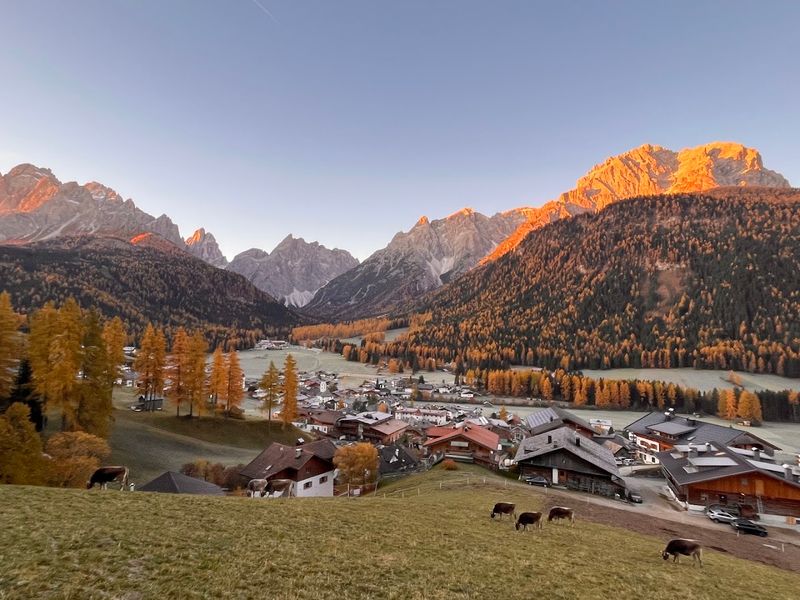
In the Dolomites, autumn does not just bring changing colors on the hillsides. It brings cattle, bells, and flower crowns back into the village of Sesto. The Almabtrieb here, scheduled each September, is a meticulously prepared event where farmers decorate their animals before leading them down from high alpine pastures into the valley.
The lead cows wear elaborate wreaths that can include embroidered details, sayings, and small images of saints, reflecting the personal craftsmanship of each farming family. The procession typically begins in Moos and winds through the area before concluding in a lively festival setting with regional bands and local food stalls.
The dramatic Dolomite peaks surrounding Sesto make every moment of the procession visually striking. The event draws visitors who come specifically for the combination of alpine scenery and working agricultural tradition, and the Puster Valley community that organizes it has kept the celebration genuinely rooted in farming life rather than tourism.
13. Terento, South Tyrol, Italy
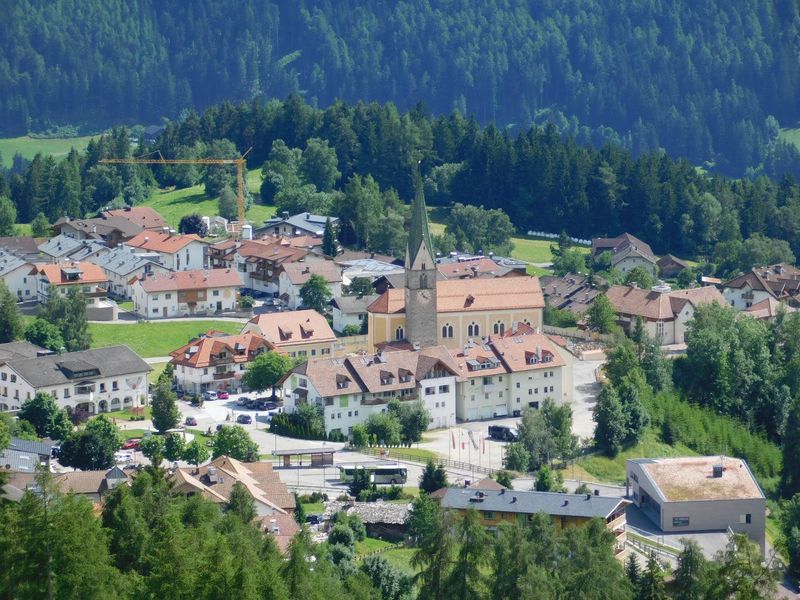
Most cattle drives involve the usual suspects, but Terento adds a surprise to its annual Almabtrieb lineup. Alongside cows and calves, the procession in this Puster Valley village has been known to include llamas, which arrive adorned with bells and flowers just like their bovine companions.
The event, part of the Terner Schmelzpfandl series held each October, features traditional floats carrying household goods and small animals, whip crackers known as Goaslkrocha, and Schuhplattler dancers who perform along the route. The cattle procession typically passes through the village center in the early afternoon.
A farmers’ market and continuous musical entertainment fill the rest of the day, with local clubs offering regional specialties including Tirschtlan pastries, barley soup, Pressknodel, honey, cured ham, and local cheeses. Terento’s Almabtrieb remains one of the most genuinely community-driven events in South Tyrol, reflecting everyday agricultural life in the valley rather than a polished tourist production.
14. Riva di Tures, South Tyrol, Italy
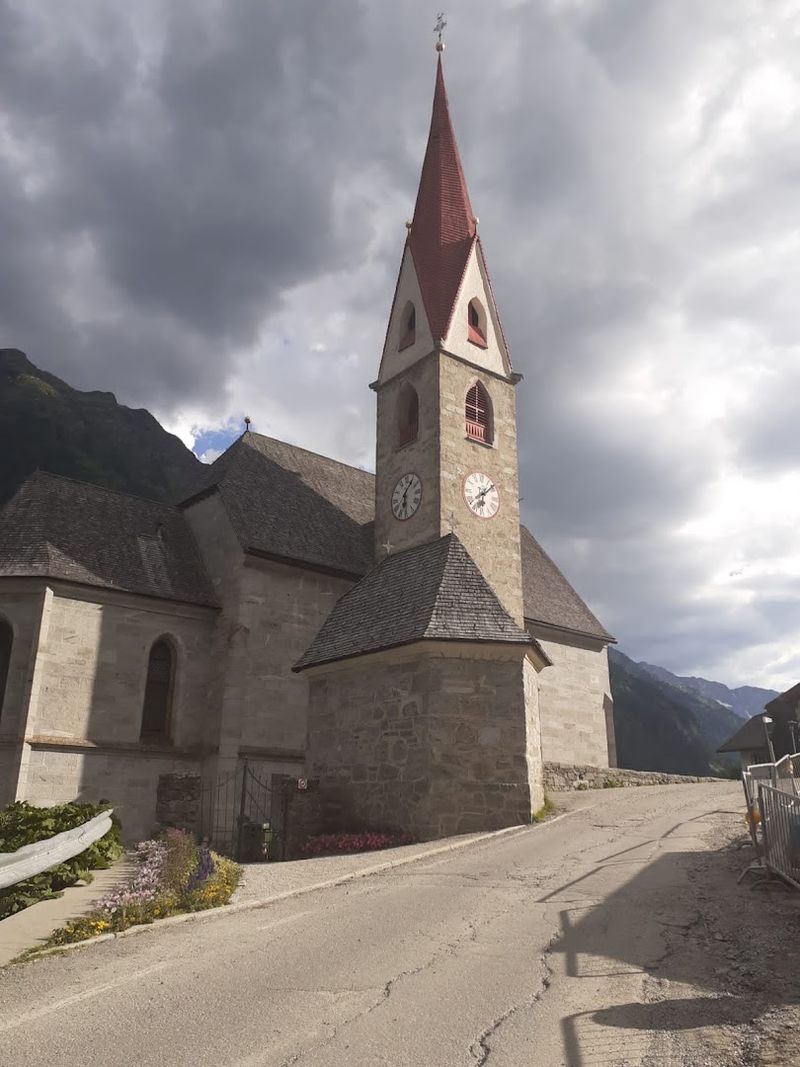
The village of Riva di Tures takes livestock decoration to a level that borders on folk art. During the annual Kiekemma festival, the animals returning from summer mountain pastures arrive adorned with alpine roses, thistles, mugo twigs, small mirrors to ward off evil spirits, and crucifixes for protection on the journey home.
The procession includes cows, calves, oxen, bulls, goats, sheep, and even farm dogs and cats, making it one of the most inclusive livestock parades in the entire South Tyrol region. The festival that accompanies the drive fills the village with folk music, traditional dances, and regional food.
Riva di Tures sits within the Vedrette di Ries-Aurina Nature Park, giving the event a setting of considerable alpine beauty. The Kiekemma remains closely tied to local farming families, and the celebration carries genuine meaning as an expression of gratitude for a successful grazing season rather than a performance aimed at outside audiences.
15. Seis am Schlern, South Tyrol, Italy
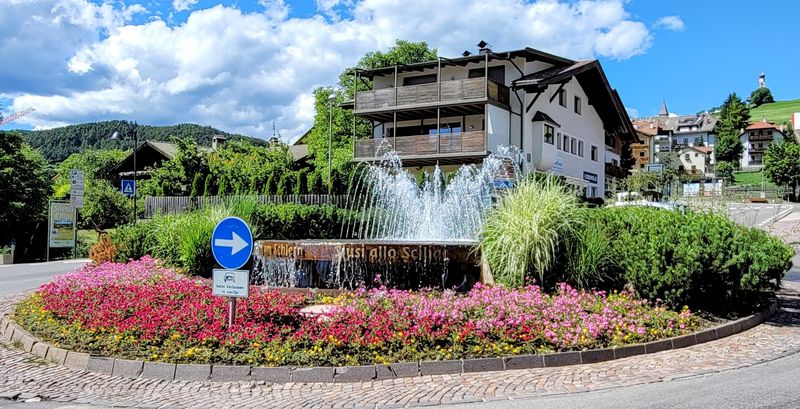
As a gateway to Europe’s largest high-altitude meadow, Seis am Schlern has a natural role in one of South Tyrol’s most anticipated autumn events. Each year on Rosary Saturday, approximately 250 animals including cattle, horses, sheep, and goats descend from the Seiser Alm plateau in a procession organized with the kind of precision that only generations of tradition can produce.
The morning begins in Compatsch with alphorn players, whip crackers, craft demonstrations, and a local market before the decorated herd begins its journey toward the valley. Shepherds in traditional costumes guide the animals as their bells create a layered chorus that carries across the mountain terrain.
The celebration continues as the procession reaches Kastelruth, where afternoon festivities include folk music, dancing, and the open-fire preparation of South Tyrolean Muas. Seis am Schlern combines working agriculture, alpine scenery, and living tradition into one of the most complete seasonal spectacles available anywhere in northern Italy.
Share this story