Daphne du Maurier had a talent for finding the sinister underbelly of the beautiful, and Britain’s coastline gave her plenty to work with. Narrow lanes that lead nowhere obvious, harbors where boats bob under grey skies, and old stone cottages that have clearly been keeping secrets for centuries – these are the ingredients of her best work. The good news is that you do not need to travel to a fictional Manderley to find places that feel lifted straight from her pages. The 13 towns and villages on this list each carry that distinctive combination of rugged scenery, layered history, and a faint sense that something interesting happened here once and nobody is quite ready to talk about it.
Some are tucked into Cornish coves, some perch on Yorkshire cliffs, and one is a deliberate architectural fantasy on the Welsh coast. All of them would make a very convincing backdrop for a story you would not want to read alone at night.
1. Polperro, Cornwall, England
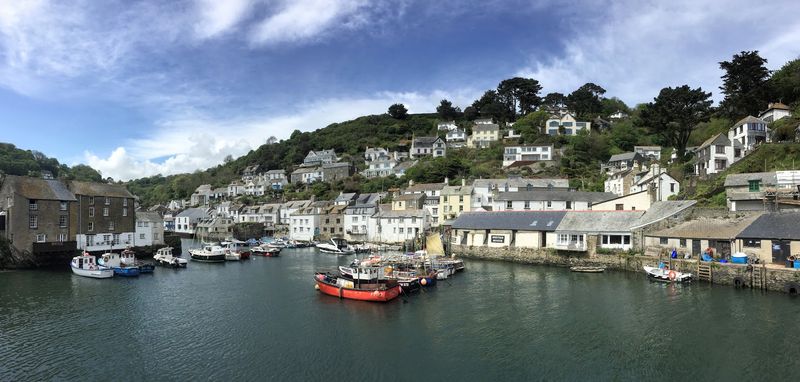
Tucked into a steep Cornish valley like a secret that geography is doing its best to protect, Polperro is the kind of village that makes you check over your shoulder before turning a corner.
The harbor is compact and tightly enclosed, ringed by whitewashed cottages that seem to lean in toward the water as if listening to something. The lanes are narrow enough that two people passing each other require a degree of negotiation.
Polperro’s fishing heritage is not merely decorative. The village has operated as a working harbor for centuries, and the layout of the buildings reflects the priorities of communities that depended entirely on the sea.
Visit outside the peak summer months and the atmosphere shifts considerably. The footfall drops, the harbor quiets, and the surrounding coastal paths offer views across rocky headlands that feel genuinely wild. A pathway called The Warren winds through the oldest part of the village, which tells you everything you need to know about the local sense of direction.
2. Port Isaac, Cornwall, England
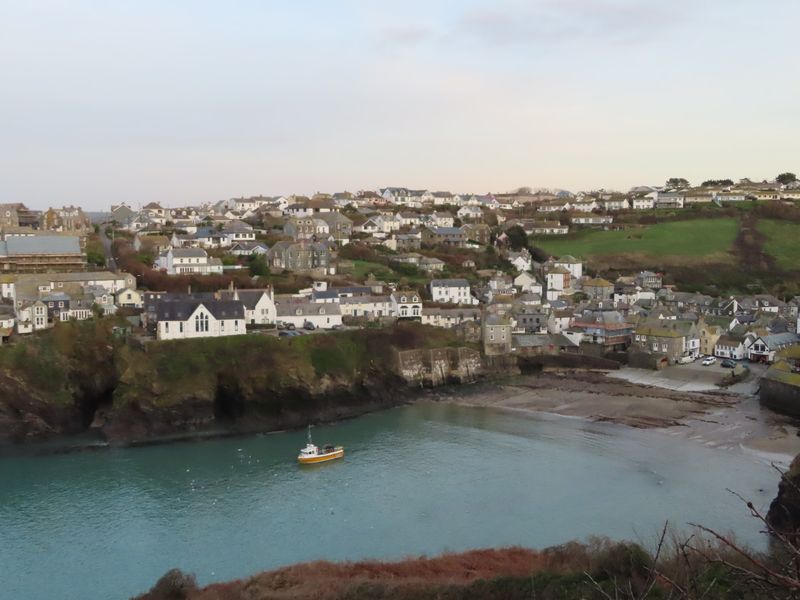
Before television crews discovered Port Isaac and turned it into a filming location, the village was already doing a perfectly good job of looking cinematic entirely on its own terms.
Steep lanes paved with uneven stone descend sharply toward a small but fully operational harbor, passing slate-fronted cottages that have clearly weathered several centuries of Atlantic weather without much complaint. The buildings cluster so tightly around the inlet that the village appears to be holding itself together by mutual agreement.
What keeps Port Isaac from feeling like a stage set is the persistence of real working life. Fishing vessels still use the harbor, and the winding streets serve actual residents rather than existing purely for visitor photography.
The best views come from the surrounding cliffs, where the village below looks miniature and improbably pretty against the wider coastline. The steep topography means that almost every property commands an interesting sightline, which is either charming or exhausting depending on how much you enjoy hills.
3. Clovelly, Devon, England
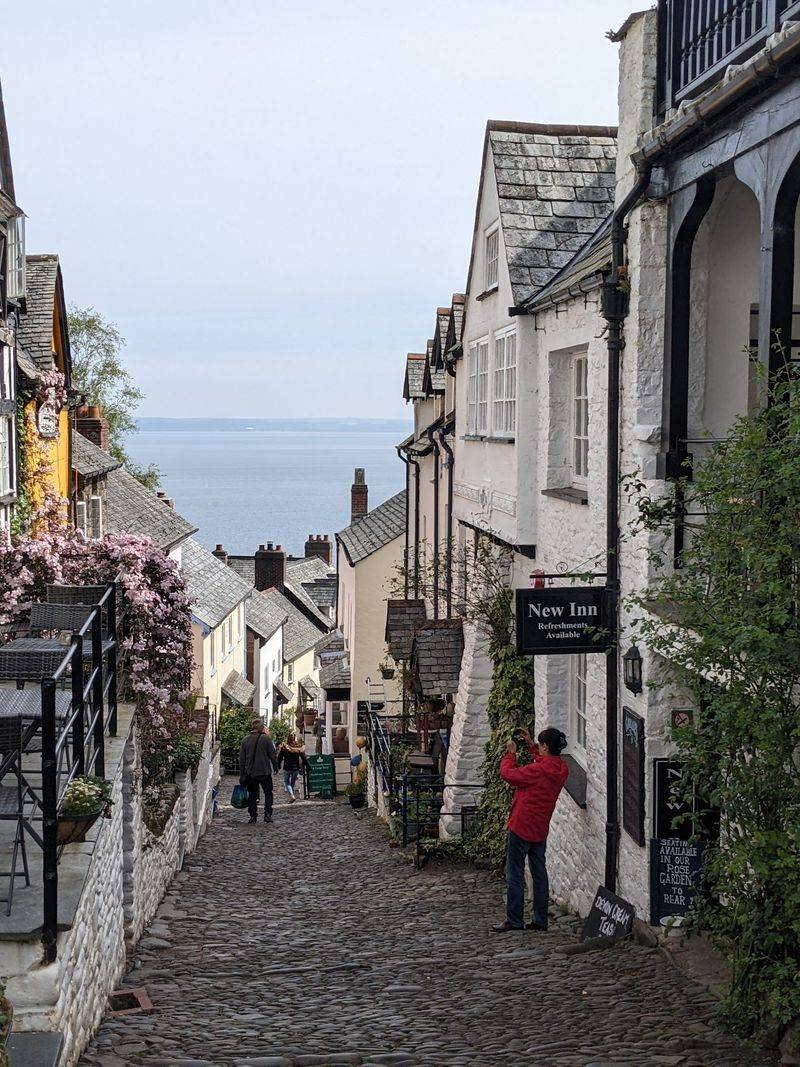
Clovelly operates on a gradient that would give most town planners a headache, with its entire historic core arranged along a single steep cobbled street that drops dramatically toward the Bristol Channel.
No conventional vehicles are permitted through the old village, which means the descent is made entirely on foot, at a pace dictated by the cobbles rather than by any personal preference for speed. The effect is genuinely disorienting in the best possible way – modern life recedes with each downward step.
The harbor at the bottom rewards the effort. Enclosed and calm, it sits beneath the hillside like a full stop at the end of a very long sentence. Grey skies make the coastline look considerably more dramatic than the tourist brochures suggest.
Donkeys remain a practical feature of village logistics, used historically to carry goods up the hill. The architecture throughout is consistently traditional, with whitewashed cottages and slate roofs that have been maintained to preserve the village’s distinctive appearance rather than updated for convenience.
4. Robin Hood’s Bay, North Yorkshire, England
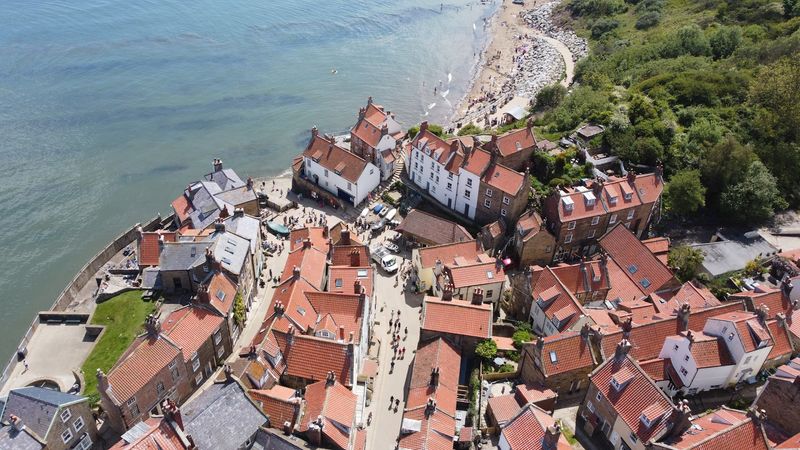
The name alone sounds like something a novelist invented on a productive afternoon, but Robin Hood’s Bay is entirely real and considerably more atmospheric than its whimsical title suggests.
From the upper village, the streets drop steeply toward the sea through a dense network of cottages, passageways, and unexpected corners that reward slow exploration. The buildings are packed tightly together, reflecting a history in which fishing families built wherever the difficult terrain permitted.
Tall cliffs frame the village on either side, creating an enclosed quality that intensifies on misty mornings when the upper village disappears into low cloud while the harbor remains visible below. At low tide, a broad shoreline extends outward, revealing rock formations that attract fossil hunters and geological enthusiasts in considerable numbers.
The village carries a well-documented history as a smuggling hub, with stories of hidden tunnels and concealed storage spaces running through local folklore. Whether any of these tunnels actually exist is a matter of ongoing local debate, which is exactly the kind of ambiguity a du Maurier plot requires.
5. Fowey, Cornwall, England
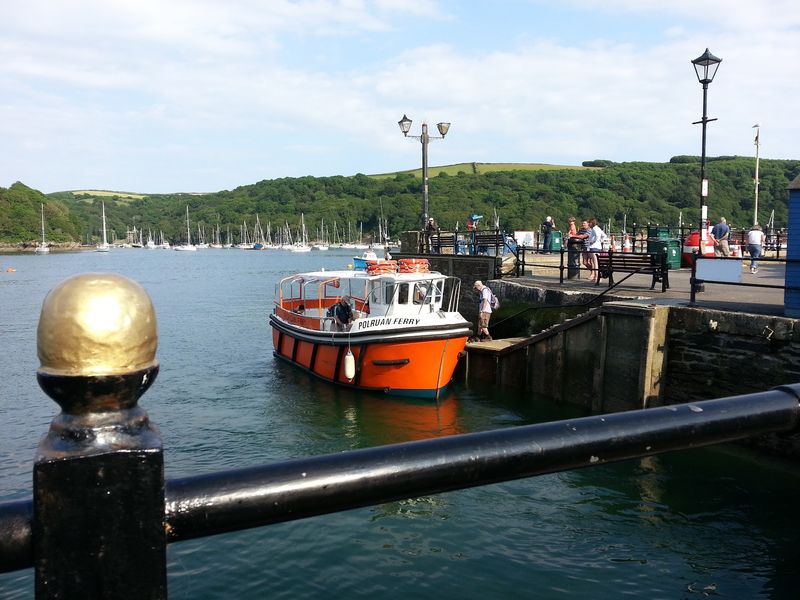
No location on this list has a stronger claim to inclusion than Fowey, given that Daphne du Maurier actually lived here, worked here, and used the surrounding landscape as direct inspiration for some of her most celebrated writing.
The town descends in layers toward the Fowey Estuary, where boats move between thickly wooded banks and the open sea waits just beyond the harbor entrance. Elegant houses occupy the upper streets, many with views that would make a reasonable person seriously reconsider their current living arrangements.
The estuary itself is a constant presence, changing character depending on the tide, the weather, and the time of day. Wooded slopes on the opposite bank give the waterway a contained, almost theatrical quality.
Fowey’s literary connections extend beyond du Maurier. The town has attracted writers and artists for well over a century, drawn by the quality of the light, the accessible coastline, and presumably also by the fact that the setting practically writes the atmosphere for you.
6. Staithes, North Yorkshire, England
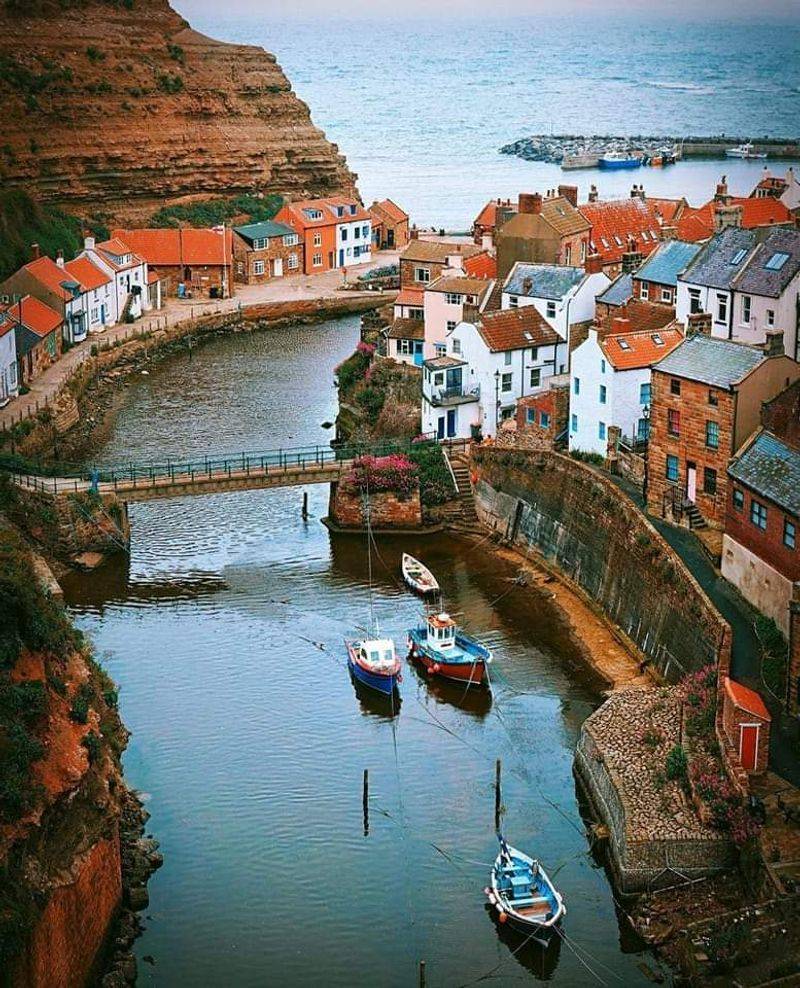
Geography has done something genuinely unusual at Staithes, carving a narrow inlet between towering coastal cliffs and allowing a village to establish itself in the resulting gap with remarkable determination.
The cottages are packed tightly along the inlet, connected by lanes that twist and double back on themselves in ways that suggest the village grew according to available space rather than any coherent plan. The small harbor at the center remains a working base for fishing boats, maintaining a practical function that grounds the village in reality rather than nostalgia.
Paths climbing above the rooftops reveal the full scale of the surrounding cliffs, which are geologically significant and regularly attract fossil enthusiasts. The Yorkshire coast stretches away in both directions, looking considerably less tamed than the southern coastline.
Staithes also carries an artistic reputation. The Staithes Group, a community of painters active in the late nineteenth and early twentieth centuries, was drawn here by the dramatic landscape. The combination of working harbor, cliff scenery, and art history gives the village an unusually layered character for its modest size.
7. Whitby, North Yorkshire, England
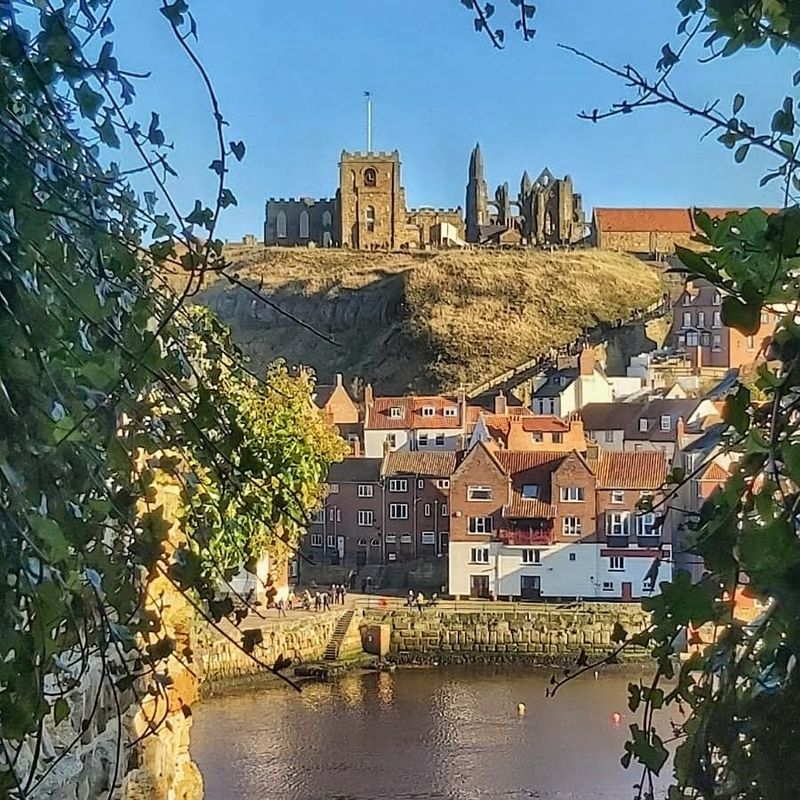
Whitby does not do subtlety. The ruins of a seventh-century abbey sit on the clifftop above the town in a position so dramatically chosen that it looks like a deliberate piece of staging rather than a historical accident.
Red-roofed houses cluster around the mouth of the River Esk below, connected to the abbey and its surrounding graveyard by 199 stone steps that visitors count obsessively on the way up and try to forget about on the way down. The harbor is old and functional, with a history rooted in whaling, fishing, and a jet-mining industry that produced the distinctive black gemstone still sold in local shops.
Sea mist is a regular visitor to Whitby, softening the clifftop ruins and reducing visibility across the harbor in ways that are either atmospheric or inconvenient depending on your schedule. The town’s association with Gothic literature is well established, and it leans into that reputation with considerable enthusiasm.
St. Mary’s Church, perched beside the abbey ruins, contains an interior that has been modified so many times over the centuries that it looks like several different eras of church design decided to coexist without discussing it first.
8. Rye, East Sussex, England
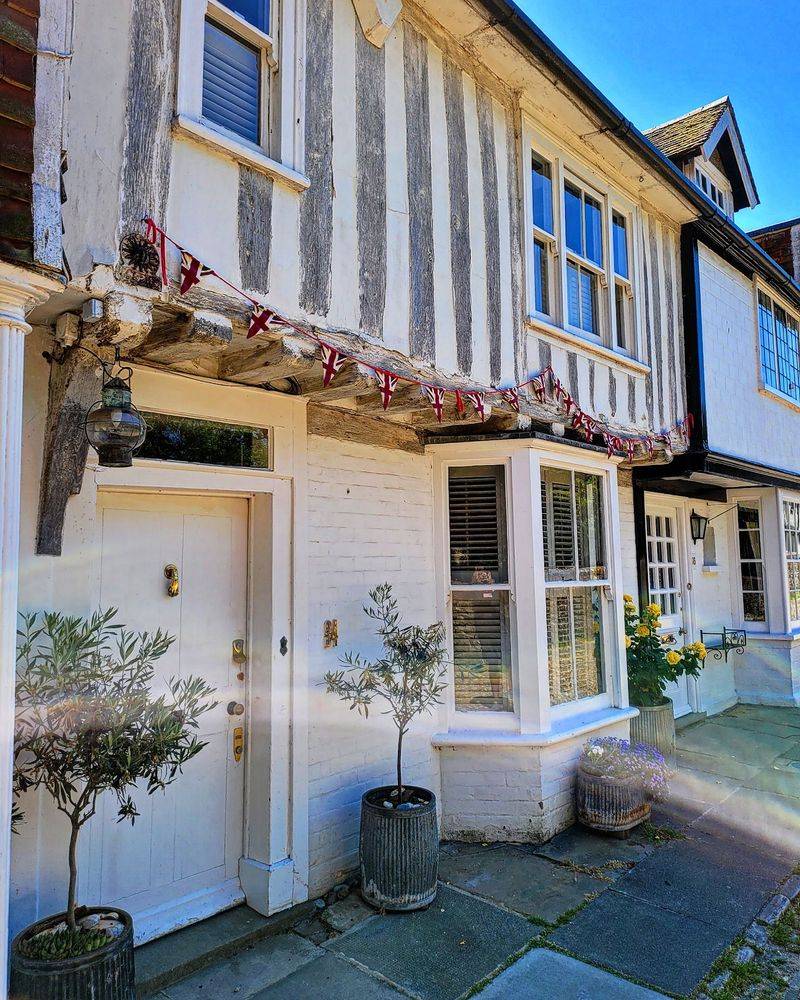
Rye sits on a hill above the surrounding marshland like a town that decided centuries ago to stop expanding and simply concentrate on perfecting what it already had.
The sea retreated from Rye’s immediate shoreline long ago due to gradual land changes, but the maritime history remains embedded in the town’s fabric. Cobbled streets pass medieval and Georgian buildings in close succession, creating a historic center that feels genuinely layered rather than preserved for display purposes.
Mermaid Street is the most photographed thoroughfare, lined with timber-framed buildings that date back to the fifteenth century and tilt at angles that suggest a relaxed attitude toward structural precision. The Ypres Tower, part of the old town defenses, offers views across the Romney Marsh that extend to the coast on clear days.
The marshland surrounding Rye contributes substantially to its atmosphere. Big coastal skies and flat, open landscape on one side contrast with the dense historic town on the other, creating a setting where the sense of isolation feels plausible even when visitors are present. Smuggling history here is not merely folklore – it is extensively documented.
9. Mousehole, Cornwall, England
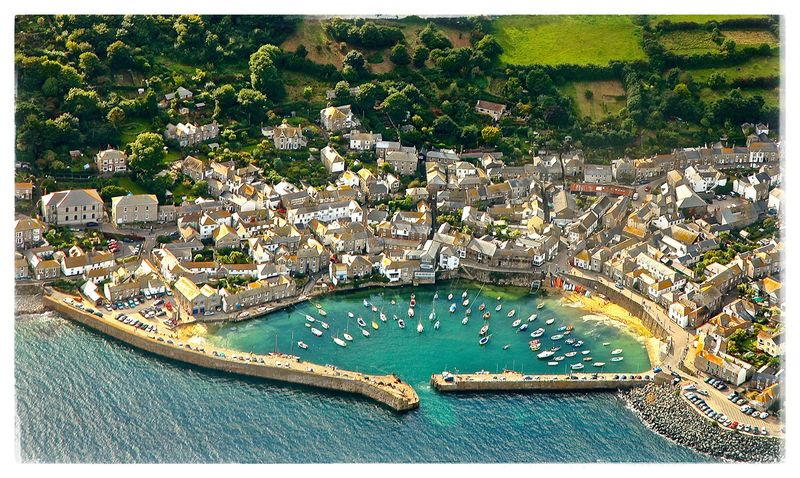
The name Mousehole is pronounced “Mow-zul” by locals, which is the first indication that this village operates on its own terms and is not especially concerned with outside expectations.
Granite cottages line the narrow streets behind the waterfront, built from the same dark stone as the harbor walls, giving the whole village a unified, solid quality that suggests it was constructed to last rather than to impress. The protected harbor is compact and practical, designed to shelter boats from the Atlantic weather that regularly tests the western Cornish coast.
In summer, Mousehole can be genuinely cheerful, with boats in the harbor and visitors filling the limited street space. Introduce a November afternoon with low cloud and rain moving in from the sea, and the village becomes a different proposition entirely – quieter, more self-contained, and considerably easier to imagine as a setting for something complicated.
A beloved local tradition involves an elaborate Christmas lights display that draws visitors throughout December, demonstrating that even the most atmospheric fishing village occasionally wants to be festive rather than brooding.
10. St Ives, Cornwall, England
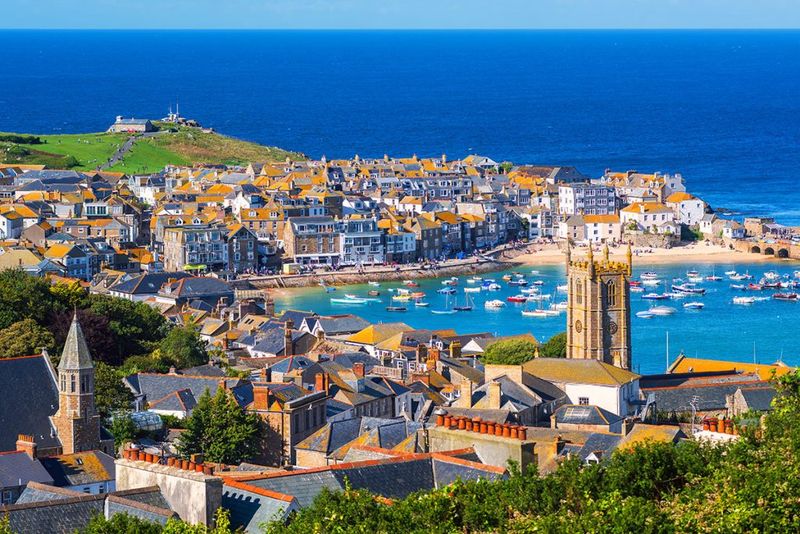
St Ives is the most popular entry on this list by a considerable margin, which might seem to disqualify it from du Maurier territory, but the harbor quarter and its maze of narrow lanes called borrows retain an older character that survives the summer crowds remarkably well.
The town’s reputation as an artists’ colony is not a marketing invention. Painters began arriving here in the late nineteenth century specifically because the Atlantic light behaves differently on this peninsula than almost anywhere else in Britain. The Tate St Ives and the Barbara Hepworth Museum and Sculpture Garden now anchor a cultural scene that takes the artistic heritage seriously.
Four distinct beaches ring the town, each with its own orientation and character, meaning that the best option shifts depending on wind direction and tide. The fishing boats still use the harbor alongside pleasure craft, maintaining a practical element within what could easily become a purely tourist environment.
Early morning visits before the daytime influx reveal quieter lanes, empty harbor walls, and a more contemplative version of the town that feels closer to its working origins and considerably more suited to literary imagination.
11. Lynmouth, Devon, England
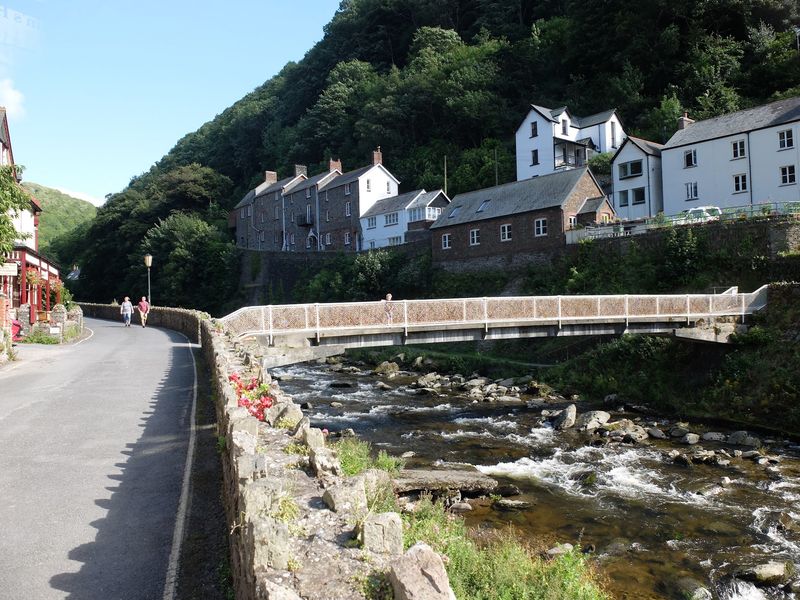
Two rivers, two steep wooded valleys, and the Bristol Channel all converge at Lynmouth simultaneously, which gives the village a geographical intensity that most coastal settlements simply do not have to contend with.
The East and West Lyn rivers reach the sea beside the village after descending rapidly through Exmoor, and the hills behind the waterfront rise so steeply that the entire settlement feels enclosed on three sides. The effect is more dramatic than picturesque, particularly when water levels are high and the rivers are moving quickly.
The Lynmouth Cliff Railway connects the village to Lynton above, a water-powered funicular that has operated since 1890 and remains one of the most practical and unusual transport solutions on the Devon coast. The upper village provides a completely different perspective on the valley below.
Exmoor National Park begins effectively at the village boundary, providing access to open moorland, wooded combes, and coastal paths that extend along one of the more rugged sections of the South West Coast Path. The transition from enclosed harbor village to open moorland happens within a very short walk, which is not something most places can offer.
12. Tenby, Pembrokeshire, Wales
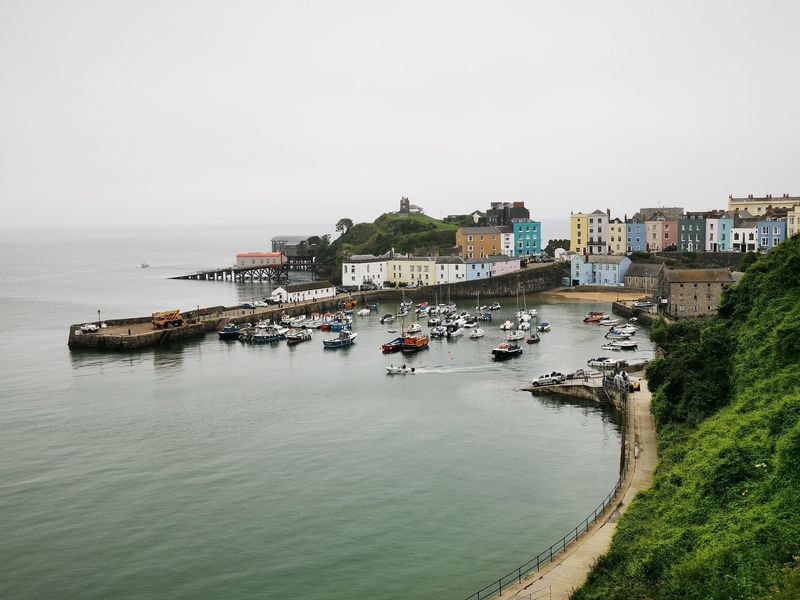
Tenby presents itself initially as the cheerful one on this list, with pastel-colored buildings arranged above the harbor in shades that suggest the town has never heard of anything remotely Gothic and would prefer to keep it that way.
The medieval town walls tell a different story. Still largely intact, they encircle the oldest part of the settlement with towers and gateways that date back to the thirteenth century, a reminder that Tenby has spent considerable portions of its history being somewhere that other people wanted to take by force.
St. Catherine’s Island sits just offshore, connected to the beach at low tide and topped by a Victorian fort that adds another layer of historical complexity to the view from the harbor. The beaches are consistently rated among the best in Wales, combining reliable sand with the kind of expansive coastal scenery that makes the surrounding headlands look genuinely dramatic.
The summer version of Tenby and the off-season version are almost different towns. Once the peak visitor period ends, the narrow streets inside the walls quiet considerably, the harbor becomes less crowded, and the medieval architecture begins to assert itself over the ice cream shops.
13. Portmeirion, Gwynedd, Wales
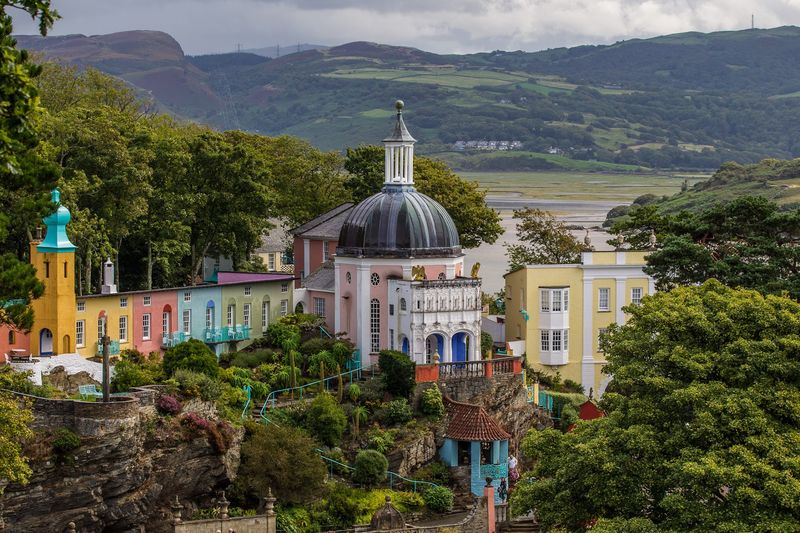
Every other entry on this list arrived at its atmosphere through centuries of organic development, fishing economies, and coastal weather. Portmeirion took a different approach and simply invented itself from scratch, which is either cheating or inspired depending on your perspective.
Architect Sir Clough Williams-Ellis built the village between 1925 and 1975 on a private peninsula above the Dwyryd Estuary, assembling a collection of colorful buildings, towers, terraces, and ornamental details in a style broadly described as Italianate but more accurately described as whatever Williams-Ellis thought would look interesting in that particular spot.
The result is a place that feels simultaneously theatrical and convincing, which is a difficult combination to achieve deliberately. Current visitors consistently describe the estuary setting as the element that elevates the village beyond mere architectural curiosity into something genuinely striking.
The 1960s television series “The Prisoner” was filmed here, using the village’s inherent strangeness to suggest a sophisticated trap from which escape is impossible. That association has never quite left Portmeirion, and the village leans into it with an annual festival dedicated to the series, confirming that some places are perfectly comfortable being known primarily for their mystery.
Share this story