Perched at the highest point of Segovia, a golden stone cathedral has watched over the city since 1525. It was built when most of Europe had moved on to newer styles, which makes it one of the last great Gothic cathedrals ever raised.
Locals call it the Lady of Cathedrals, and visitors quickly see why. Here are ten things that make this landmark worth your time.
A Gothic Latecomer
Picture showing up to a party fifty years late and still stealing the spotlight. That is the story of this cathedral.
Construction began in 1525, when Renaissance ideas were already sweeping across Europe.
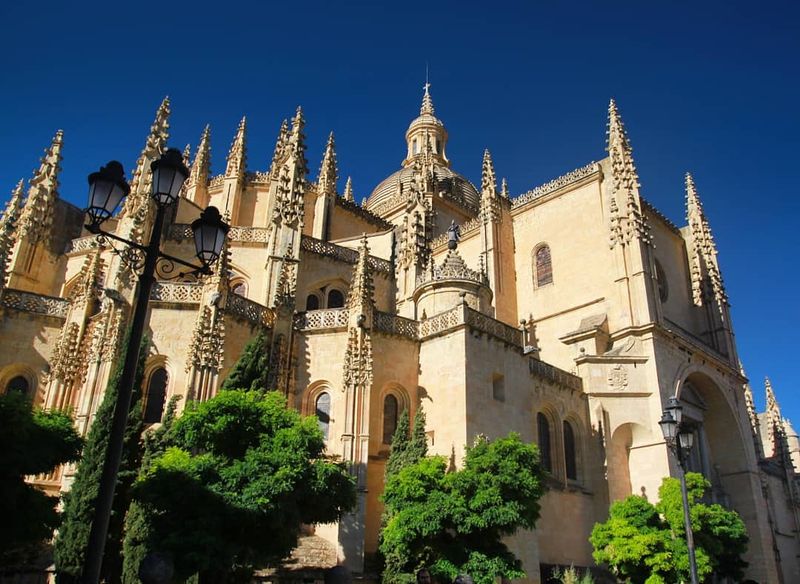
Builders ignored the trend and stayed loyal to the Gothic style. Pointed arches, ribbed vaults, and soaring spires all appear here, even though architects elsewhere were choosing round domes and classical columns.
That stubborn choice is exactly why historians treat it as one of the last great Gothic cathedrals in Europe. It feels like a final bow from a style that had ruled for centuries.
Visitors often say the building looks fresh, almost newly made. Part of that comes from careful upkeep, and part comes from the bright stone that glows warm in the sun.
Take a slow walk around the outside before you enter. Notice the pinnacles, the carved details, and the way the whole structure seems to climb toward the sky.
A few minutes of looking up will help you appreciate how rare this late Gothic design really is.
Born From a War
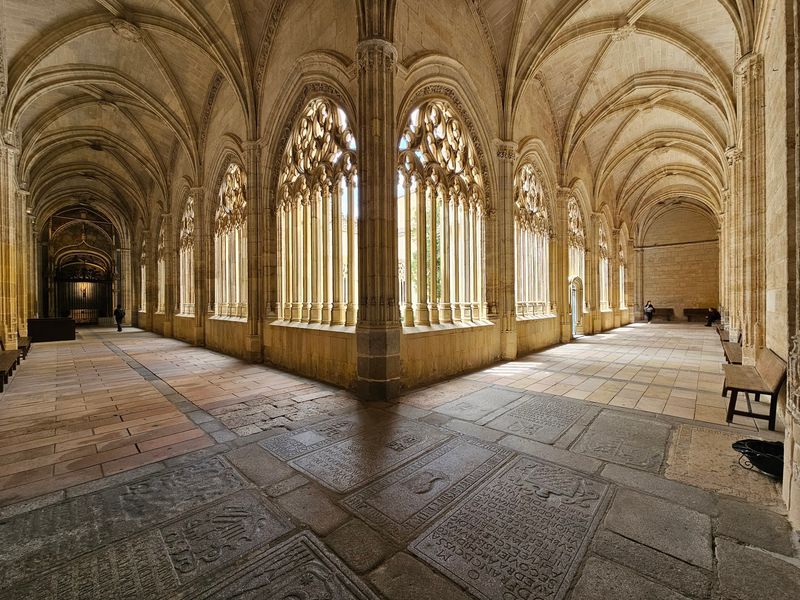
Here is a twist: this grand church exists because an older one was wrecked. During the War of the Comuneros, the earlier cathedral near the Alcázar was badly damaged in the fighting.
Segovia could have patched it up. Instead, the city decided to start over in a safer spot, in what is now the Plaza Mayor.
Charles V was ruling Spain when work began in 1525. The main construction ran until 1577, and later centuries added final touches, including the top of the tower.
Money was not a problem back then. Segovia was rich from its wool trade, and that wealth helped pay for a building meant to show off the city’s success.
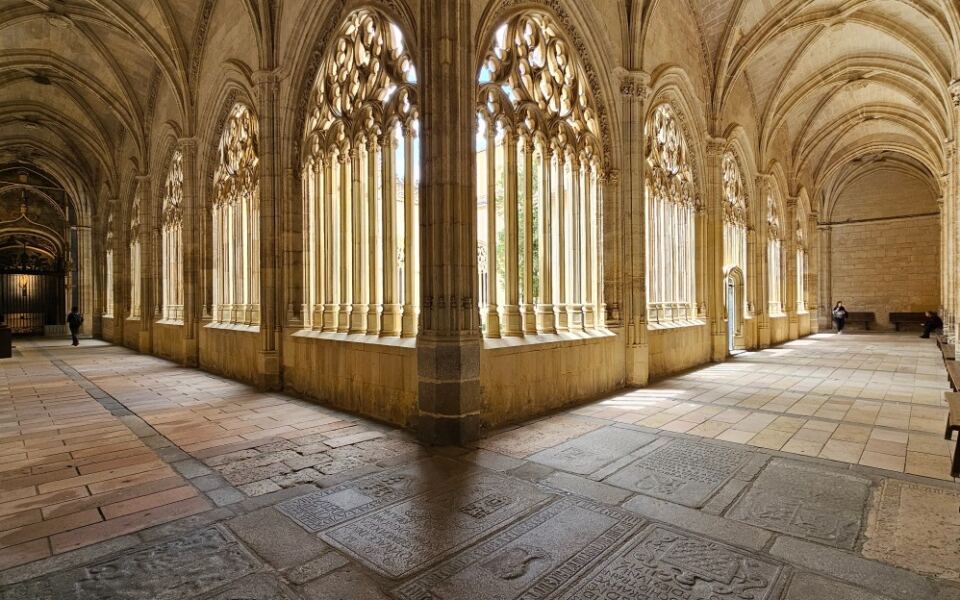
One nice detail connects the two churches. The beautiful cloister was carefully moved from the old cathedral and rebuilt beside the new one, so a piece of the original still stands today.
Keep this backstory in mind as you walk through. It turns a pretty building into a story of loss, ambition, and a fresh start.
The Lady of Cathedrals
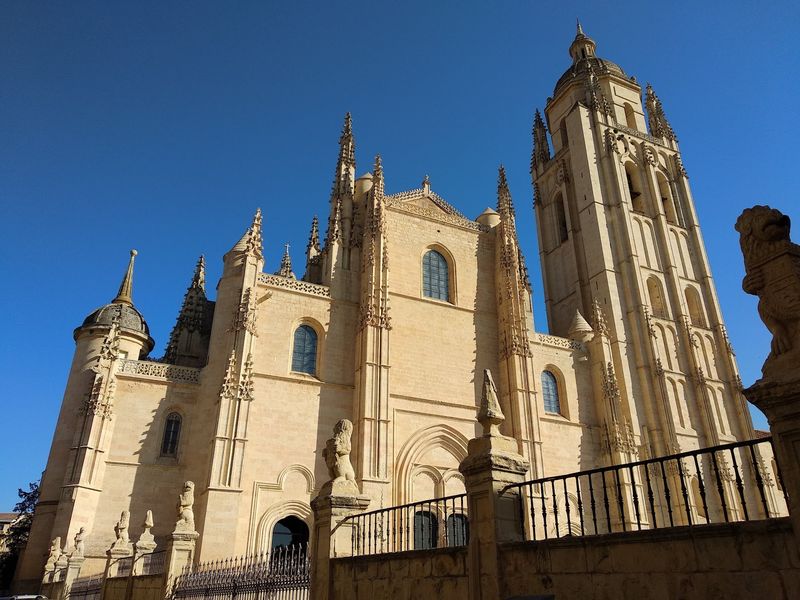
Nicknames rarely stick unless they fit, and this one fits perfectly. La Dama de las Catedrales, or the Lady of Cathedrals, describes the building’s graceful look.
Despite its huge stone mass, the outline feels light. Slender spires and delicate carved details give it an airy, almost lace-like quality.
The pale golden sandstone adds to the charm. At sunset the walls turn warm and honey-colored, and photographers line up in the plaza to catch the glow.
One reviewer called it a building of delicate elegance that hides its heavy weight. That sums up the effect well.
Walk slowly around the plaza and watch how the look changes with the light. Morning gives crisp shadows, while evening gives a soft, rosy shine.
Bring a camera, but do not forget to look with your own eyes too. Photos struggle to capture the scale, and many visitors admit the real thing beats any picture they took.
Look Up Inside
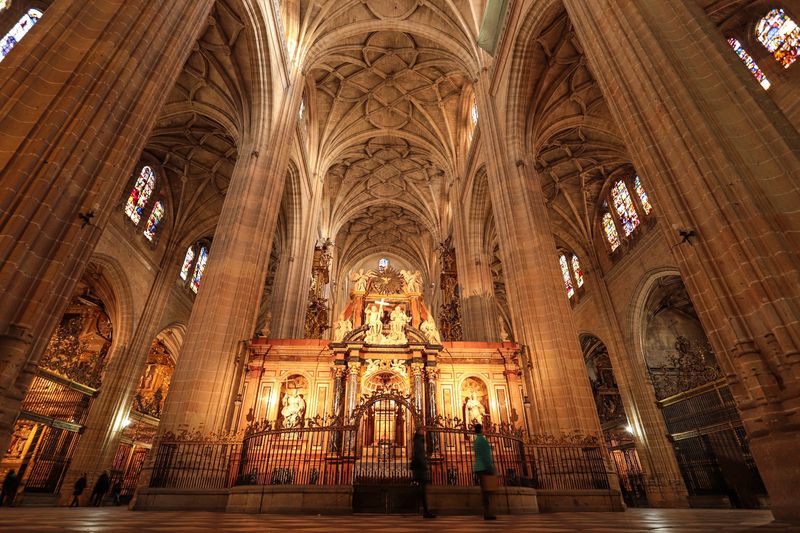
Stop right inside the door and tilt your head back. The ceiling is the first big surprise, and visitors mention it again and again.
Tall vaults stretch overhead, held up by slim columns that draw your eyes upward. The space feels huge, yet calm and peaceful.
Many old churches feel dark and heavy. This one feels bright, thanks to large windows and pale stone that bounces light around the nave.
Even people who are not religious say they enjoyed the quiet mood. It is a place where voices drop naturally and steps slow down.
The floors are polished, the walls are clean, and everything looks carefully looked after. That tidy condition lets the architecture speak for itself.
Give yourself a moment here before rushing to the chapels. Stand in the center, turn in a slow circle, and enjoy the sense of space that medieval-style builders worked so hard to create.
Stained Glass Magic
Sunbeams here come with a color upgrade. Stained glass windows filter daylight into warm gold, deep red, and cool blue patches across the floor.
Some of the glass dates back to the 1300s, which means it is older than the cathedral itself. It was saved from the earlier building and given a new home.
Visitors love how each window tells its own little story through tiny painted figures and scenes. Spend a few minutes at one and you will keep spotting new details.
The best time to look is on a sunny day, when the colors glow brightest. Cloudy hours are still lovely, but the show is quieter.
Try standing near a window and watching the light move over time. It crawls slowly across the stone, changing the mood of the nave.
If you have kids with you, turn it into a game. Challenge them to find the brightest red, the deepest blue, and a window with an animal in it.
Twenty-Two Chapels to Explore
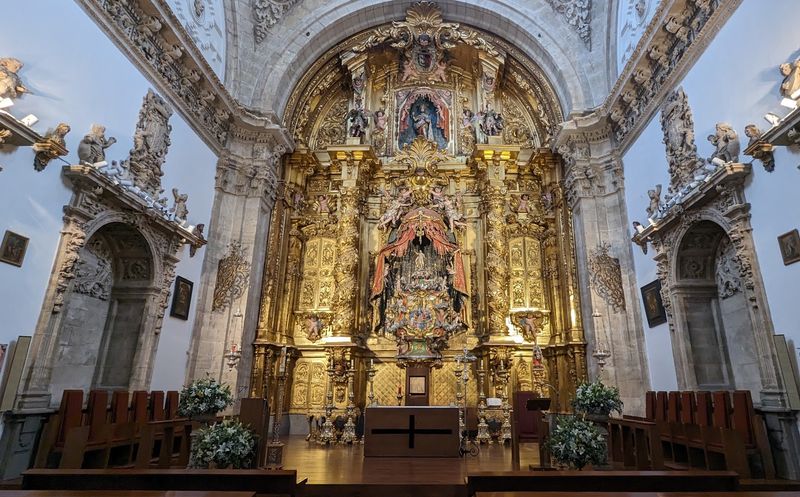
Count the chapels and you will reach about twenty-two. Each one is like a small private gallery tucked along the sides of the main space.
Step inside and the lights come on, which makes the details easy to see. Reviewers love this touch because it turns every doorway into a little reveal.
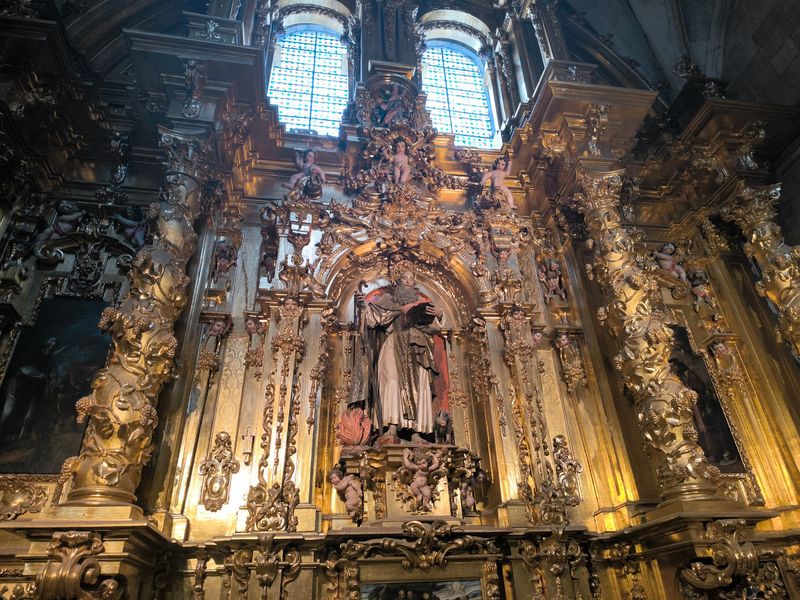
Altarpieces glitter with gold, carved figures, and busy painted scenes. Every chapel has its own theme and its own style of decoration.
Look for carved wooden choir stalls, which show off real skill with every curl and face. Flemish tapestries and old statues add even more to admire.
Do not rush. A quick look at all twenty-two can feel like a blur, so pick a handful and spend real time on them.
Visitors suggest planning about forty-five minutes for the cathedral, though art lovers could easily stay longer. There is simply a lot to take in.
The Cloister and Painting Gallery
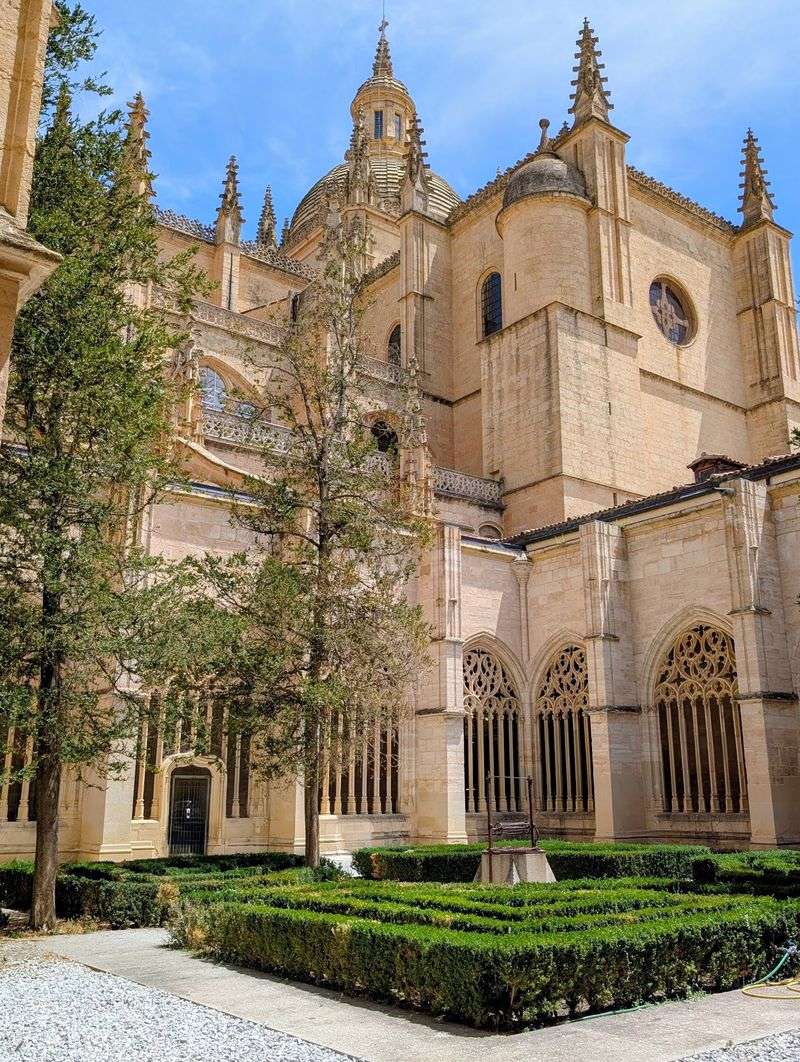
One reviewer said the paintings here would not look out of place in the Louvre. That is high praise, and it explains why the museum rooms are a must.
The cloister is the calm heart of the visit. Its arched walkways were moved stone by stone from the old cathedral, so you are walking through history that has already traveled once.
Inside the museum spaces you will find mostly Renaissance paintings, along with sculpture and church treasures. Smart lighting makes each piece stand out clearly.
Many visitors skip these rooms and later wish they had not. They are included with the regular ticket, so there is no extra cost to peek in.
Treat this part as a quiet break from the bigger nave. The air feels still, the crowds thin out, and you can look at art at your own pace.
Bring patience and curiosity. A single painting here can hold your attention for several minutes.
Climbing the Bell Tower
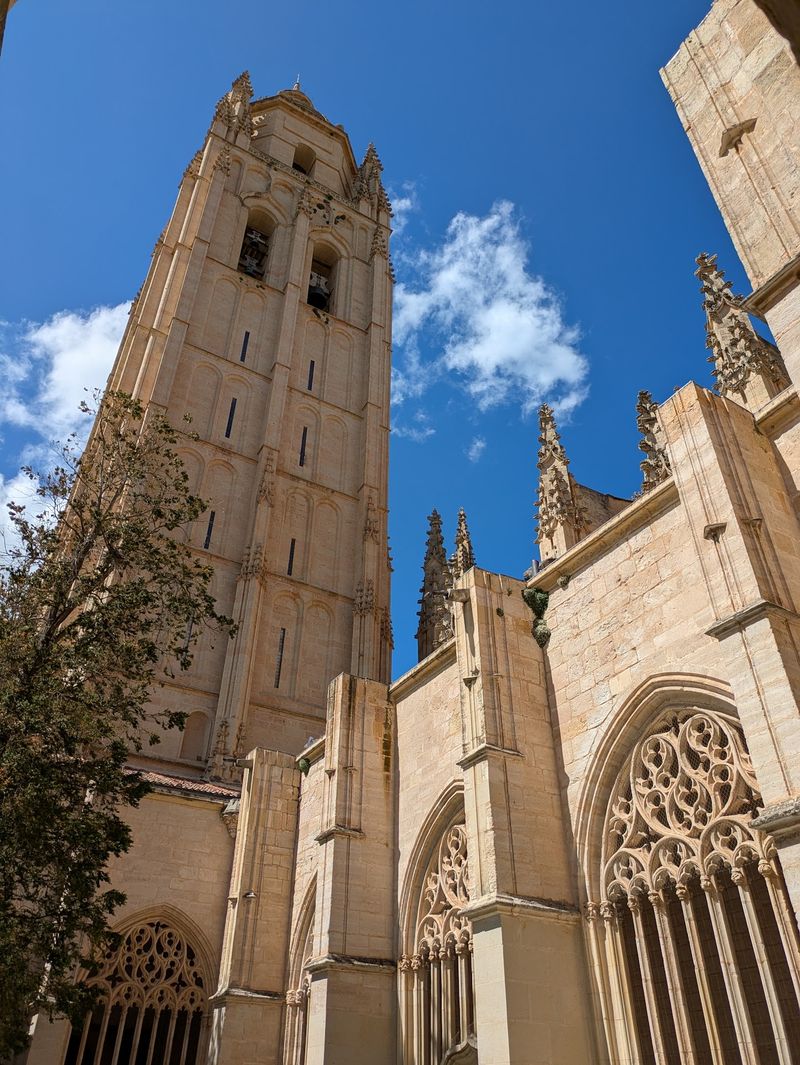
Ready for some stairs? The tower tour is a separate ticket, but many visitors call it the best choice they made all day.
The climb is done in three parts, with rests in between. One reviewer said her seventy-year-old friend managed it just fine.
After the first seventy steps, a short video is projected around the walls of a room. It adds fun facts about how the cathedral was built.
Up top you stand among the bells and look out over red roofs, the Alcázar, and the hills beyond. The tower rises about 88 meters, and until 1614 it was the tallest in Spain.
Guides often speak Spanish, but you can listen to commentary in other languages on your phone or an audioguide.
Evening tours, even as late as nine thirty, let you watch the sunset from above. Book ahead if you can, since spots are limited.
Best Views of the Cathedral
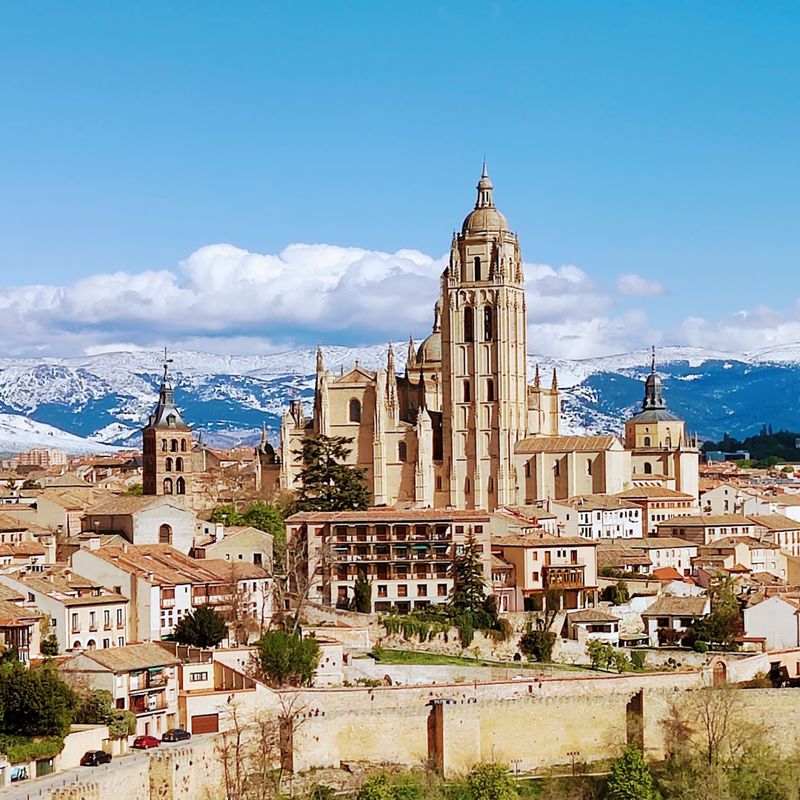
Sometimes the best way to enjoy a landmark is to leave it. A walk from the old center toward the Alcázar gives you one of the finest views in the city.
On the way you pass the Romanesque church of San Millán. The route feels like a stroll through an open-air museum.
From the heights of the Alcázar, the cathedral rises above the rooftops like a stone ship. Photographers rate it as the top viewpoint in Segovia.
The Plaza Mayor is another great spot, since the cathedral fills the sky right above the cafes. Grab a seat, order a drink, and just stare for a while.
You can spot the tower from many corners of town, which makes it a handy landmark if you lose your way.
Visit at different times of day if you can. Early light is crisp, and sunset paints the stone in warm, glowing tones.
Planning Your Visit
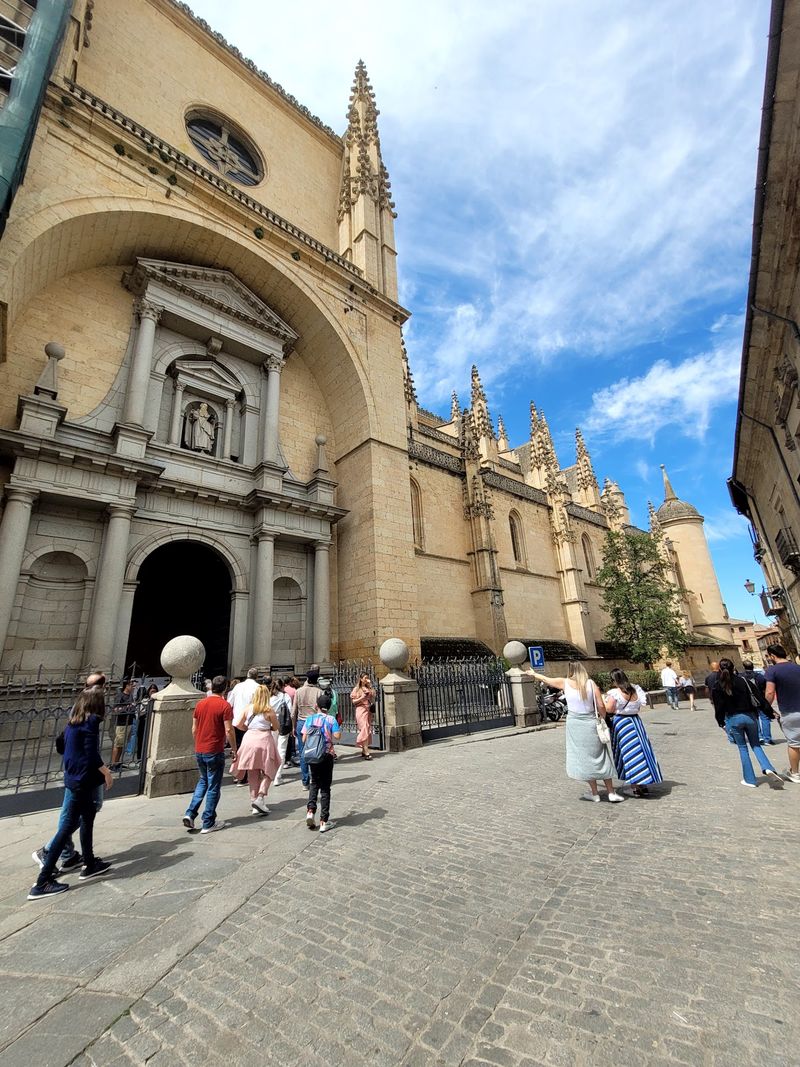
A little planning goes a long way here. The cathedral sits at Calle Marqués del Arco 1, right in the old town, and is easy to reach on foot.
Opening hours run from 9:30 AM to 6:30 PM most days. On Sundays it opens later, at 1:30 PM, so check times before you go.
A regular ticket costs only a few euros and includes a self-guided visit. The tower tour costs extra and is worth it for the views.
Many travelers pair it with the Roman Aqueduct and the Alcázar for a full day in Segovia. A hearty lunch of traditional Segovian food fits nicely between sights.
Set aside at least forty-five minutes, or more if you want the museum and tower. Comfortable shoes are a smart idea for the stairs.
One honest reviewer said it may not justify a special trip on its own. Still, if you are already in town, skipping it would be a mistake.
Share this story