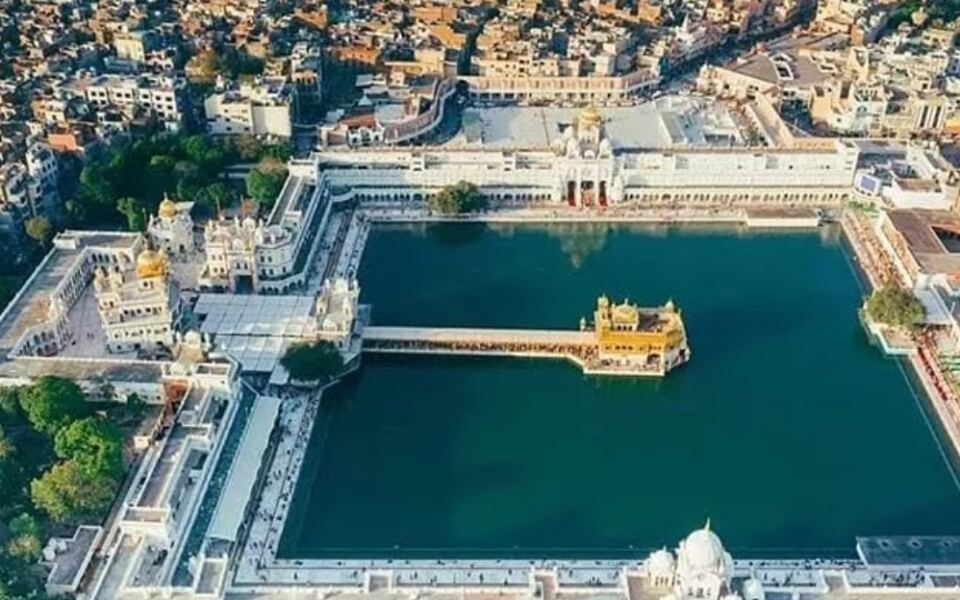
Most temples have one grand front door. Sri Harmandir Sahib in Amritsar has four, and that choice was made on purpose.
Every doorway tells visitors that all people are welcome, no matter who they are or where they come from. Here are ten ideas that show how those open doors shape the whole experience.
Doors Facing North, South, East and West
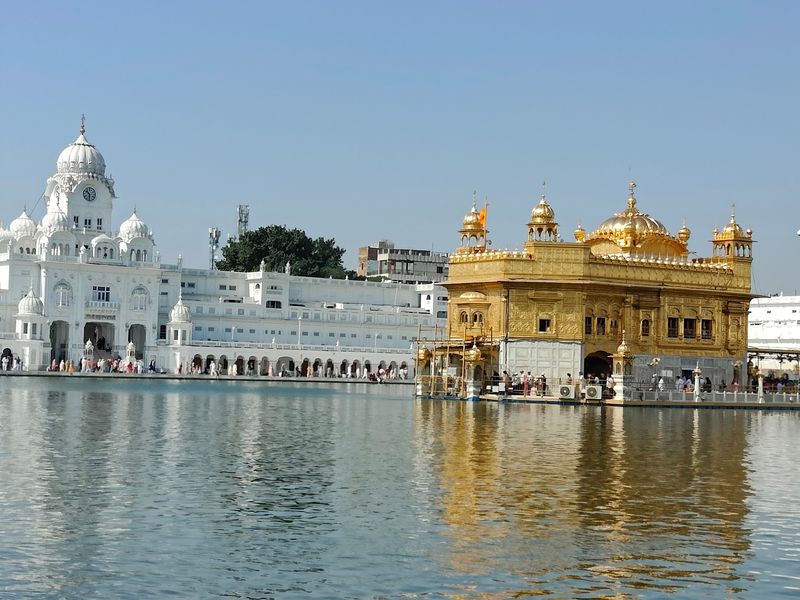
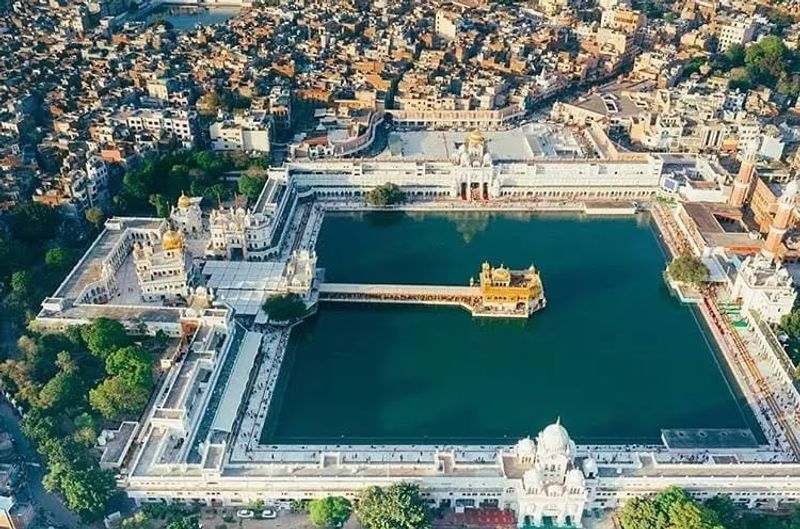
Stand on the marble walkway and look around. You will notice the shrine has an opening on every side, facing north, south, east and west.
Nobody planned it as a design trick, because the message is built right into the architecture.
Guru Arjan Dev Ji, the fifth Sikh Guru, wanted the building to be open from every direction. Travelers coming from any road could walk in without feeling that one door mattered more than another.
The shrine sits lower than the ground around it, so visitors step down to enter, which also teaches humility.
Many visitors say the first thing they feel is welcome. Reviewers talk about a calm that arrives the moment they step into the complex.
The layout supports that feeling, since no side feels like the back of the building.
Try walking the full circle around the sarovar before going inside. You will see the shrine from all four sides and understand why the open plan feels so friendly.
Each angle gives a fresh view of the gold reflecting in the water, and every one of them is a front view.
A Welcome for Every Background

Picture a line of people at the gate: farmers, students, tourists, grandmothers and business owners. All of them walk through the same doorways.
One reviewer noted that the four entrances welcome people from all walks of life, regardless of religion or background.
This idea sits at the heart of Sikh teaching. The Guru’s house is open to everyone, and nobody is asked about caste, faith or wealth at the threshold.
A visitor needs only a covered head and clean feet.
Here is a small thing that surprises first timers. Nobody checks your beliefs, and nobody looks you over.
You simply join the flow of people and move forward together.
That is why so many visitors describe the place as warm instead of intimidating. Strangers smile, volunteers point the way, and kids stare up at the gold with wide eyes.
The doors do not just open, they invite.
Built Lower Than the Ground Around It
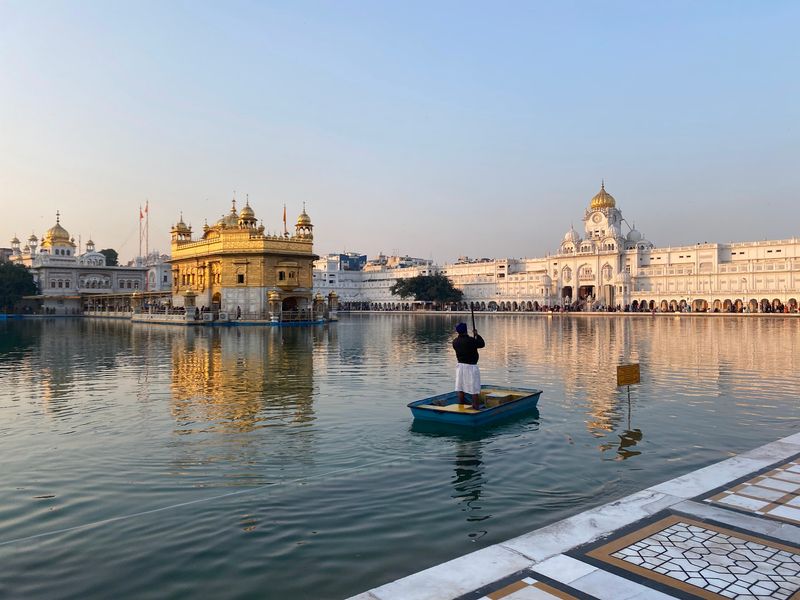
Here is a quirky fact that many people miss. The shrine sits below street level, so you actually walk down to reach it.
Most sacred buildings sit high on hills or platforms, and this one does the opposite.
Guru Arjan Dev Ji chose this design to remind everyone that humility comes before devotion. Rich or poor, you descend the same steps.
The four doorways make that lesson even stronger, since nobody climbs above anybody else.
When the weather is warm, the marble feels cool and smooth under bare feet. Visitors wash their feet in a shallow channel before stepping inside.
It is a simple ritual, and it puts everyone on equal footing, quite literally.
If you visit, take your time on those steps. Watch how people pause at the bottom and look up at the golden dome.
That pause is a quiet moment of respect, shared by thousands of strangers every day.
Washing Feet and Covering Heads
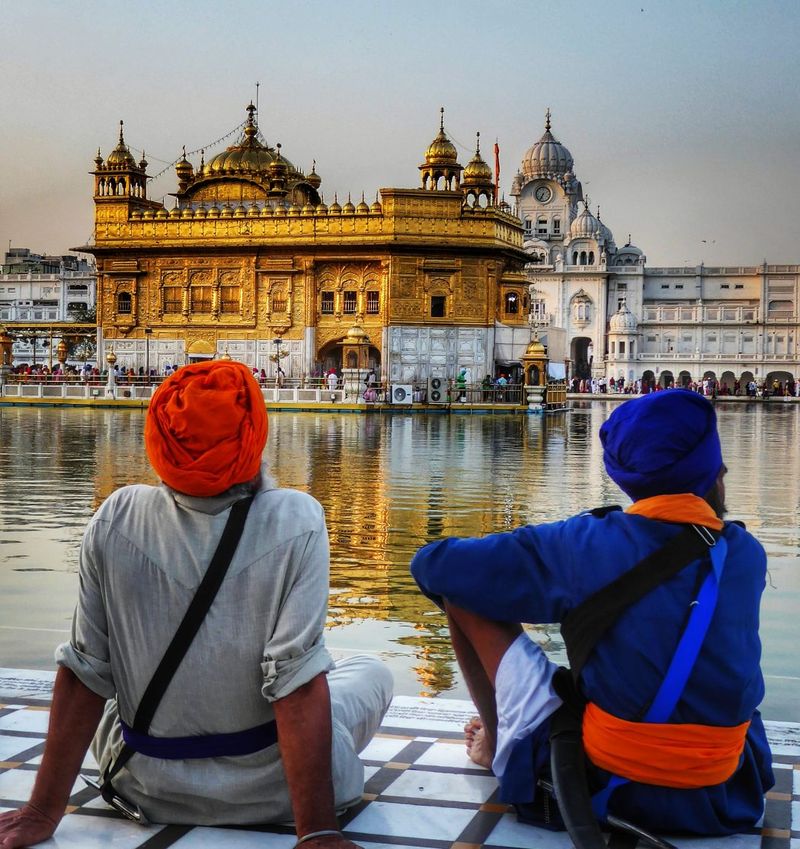
Before you enter, you get a small task. Shoes go to the Joda Ghar, the free shoe storage, and your feet get a quick rinse.
One visitor said every step felt meaningful and respectful.
Everyone covers their head too. Scarves are available at the gates for anyone who forgot one, and no one pays for them.
The rule is the same for every visitor, whether a king or a student, which is exactly the point.
Walking barefoot over the marble brings a new feeling. You notice textures, temperatures and the sound of soft footsteps.
The ground feels shared, as if the whole crowd is part of one slow, quiet dance.
A little tip: bring socks only if you must, since the water channel is part of the custom. Dry your feet on the way in, and you will be ready for the glowing sight ahead.
These small habits turn a big crowd into a respectful community.
Langar, the Free Kitchen for All

Hot dal, soft rotis and a seat on the floor next to a total stranger. That is langar, the community kitchen that feeds thousands of people every day.
One reviewer called it the world’s largest kitchen, running 24 hours a day, 365 days a year.
Everyone sits in rows on the floor, shoulder to shoulder. A banker might share a mat with a backpacker and a local shopkeeper.
The meal is free, and nobody is treated differently.
Reviewers describe the langar as fast, clean and humbling. Volunteers work together to cook, serve and wash up, and the whole thing hums like a well-run orchestra of hungry people and kind hands.
Eat what you take, and leave nothing on your plate. If you have energy afterward, try giving a little seva, which means selfless service.
Even washing a few dishes lets you feel the meaning behind the four open doors.
The Sarovar That Reflects Everyone
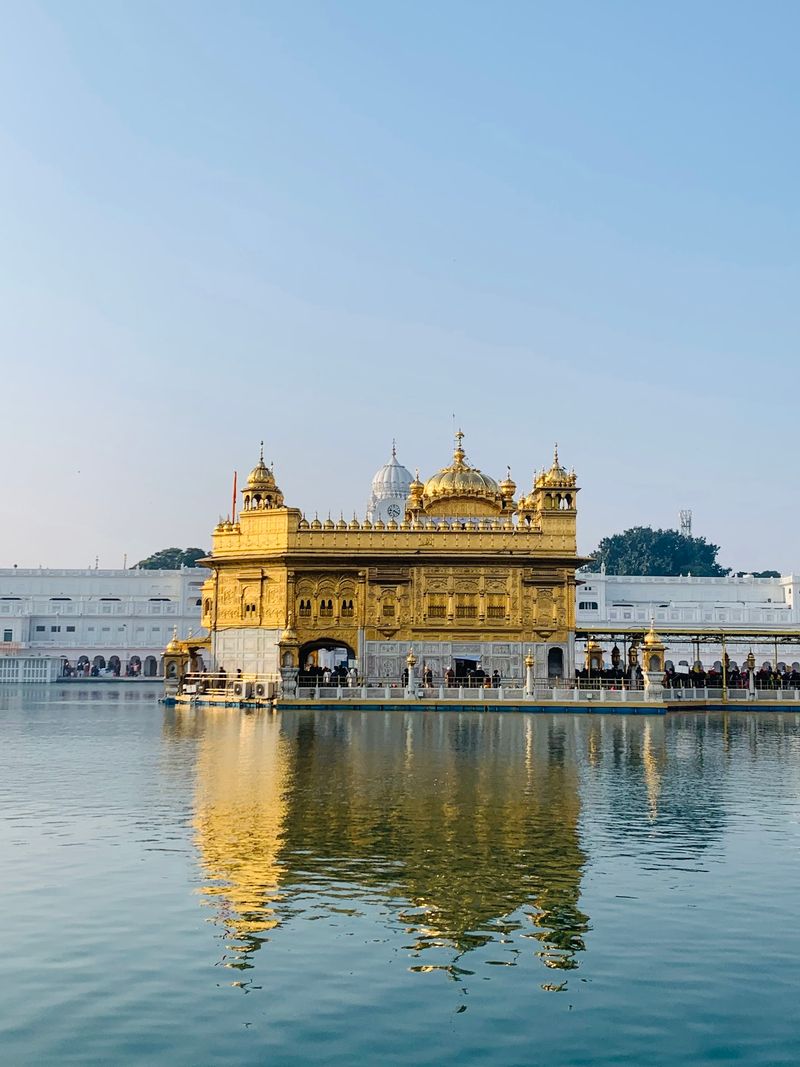
The water around the shrine does something magical at sunrise. It turns into a golden mirror, and the temple appears twice.
Reviewers keep mentioning the sarovar, the sacred pool, as one of the most beautiful sights they have ever seen.
The pool is called Amrit Sarovar, meaning the pool of nectar. Pilgrims can take a holy dip at the designated areas, and families often sit along the edge to rest.
The water is clean and calm, and it reflects every person who stands beside it.
That reflection is a nice match for the four entrances. Whichever way you arrive, you see the same shimmering view.
No side gets a better picture, and no visitor gets a better seat.
Photographers love early morning, when the crowds are thinner and the light is soft. Take a minute to just look before reaching for your phone.
The scene tends to quiet people in a way few places can.
The Causeway to the Shrine
Expect a wait. One visitor said to prepare for about an hour before entering the main shrine, and another called the long queue worth every minute.
The line moves in an orderly way, and the walk itself is part of the experience.
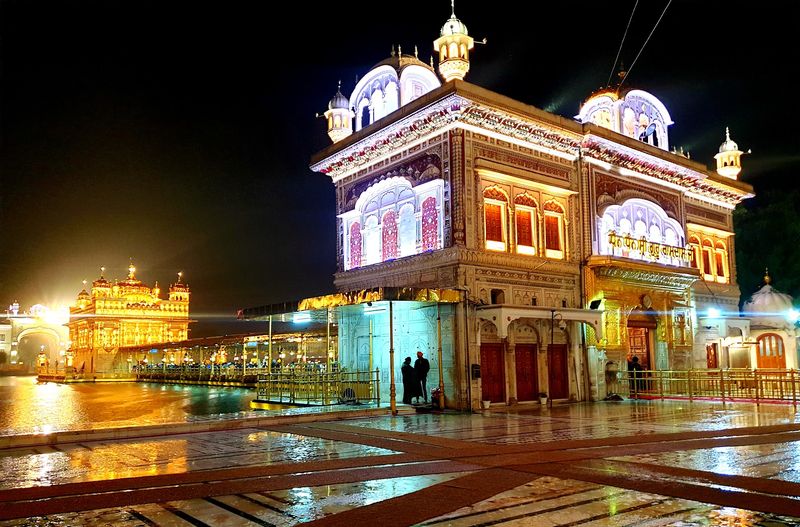
A narrow causeway links the outer walkway to the golden building. Everyone crosses it at the same pace, side by side.
There are no fast lanes or special passes for the important, and the queue has a gentle rhythm.
Along the way, you hear Gurbani kirtan, the sacred hymns sung from the shrine. The music drifts across the water and settles over the crowd.
Many people say they stop checking the time somewhere in the middle.
Bring patience, a bottle of water and an open mind. Volunteers keep the line smooth and offer help when needed.
When you finally step inside, the glimmering walls and soft singing make the wait feel small.
Gurbani Kirtan Floating Over the Water

Close your eyes for a moment, and the temple still feels alive. Gurbani kirtan, sung from the shrine, travels across the sarovar day and night.
Reviewers often mention the soothing sound as a favorite part of their visit.
Inside, the Guru Granth Sahib, the holy scripture of Sikhs, rests at the center. Its verses include writings from Sikh Gurus and from saints of different backgrounds and faiths.
That mix matches the message of the four entrances nicely.
You do not need to know the language to feel the mood. The rhythm is slow and calm, and the harmonium and tabla keep a soft beat.
Many people sit on the marble and simply listen.
Visit the complex in the evening if you want a gentler crowd. One traveler suggested arriving around 11 PM for a peaceful atmosphere.
Just sit, breathe, and let the music do the talking.
Open Around the Clock
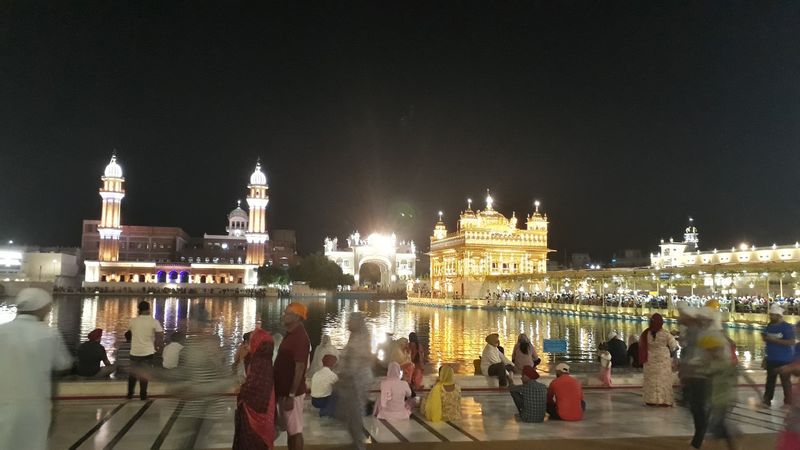
Midnight is no reason to miss it. The complex is open 24 hours, every day of the week.
Even when the main hall closes for the night, the grounds stay open to devotees.
Reviewers rave about the night view. The glowing temple mirrored in dark water feels like a painting that someone left out for everyone.
Many say they sat for hours and lost track of time.
The always open schedule fits the spirit of the four entrances. A farmer arriving after a long journey, a night worker finishing a shift, or an early riser can all find a place.
Nobody is turned away because of the hour.
Plan around the crowds if you can. Sunrise and late night are the quietest, while weekends and festivals get busy.
Wear comfortable clothes, carry little, and let the calm settle in.
Seva, Where Everyone Pitches In
Look around and you will spot volunteers everywhere. They sweep floors, hand out water, polish metal and chop vegetables by the sackful.
Visitors often mention the cleanliness and the warmth of the people serving.
This work is called seva, or selfless service. Nobody is paid, and no job is too small.
A visiting executive might scrub plates beside a local teenager, and both look equally happy.
Seva shows the lesson of the four entrances in action. Equality is not just a nice idea carved into the building, it is something people practice daily.
Even a short stint of service can leave you feeling lighter.
Ask a volunteer where help is needed, and you will be pointed in the right direction. You might also visit the museums on site to learn about the history and resilience of the Sikh community.
Leave with a full heart and, quite possibly, a plate of warm karah prasad.
Share this story