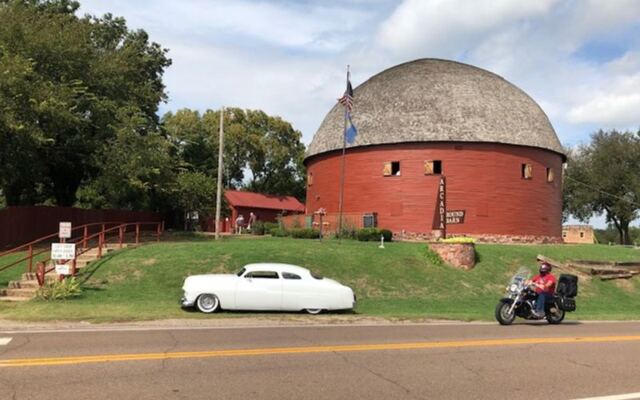
Somewhere along the old Mother Road in Oklahoma, a perfectly round red barn has been stopping travelers cold since before cars even ruled the highway. Most people spot it from a distance and figure it must be some kind of optical illusion, but the closer you get, the more real and remarkable it becomes.
Built in 1898, this roadside wonder has outlasted floods, neglect, and decades of changing tastes, and it still draws curious visitors from all over the world. Pull off the road and step inside, because this place has a story worth hearing.
Where the Round Barn Stands on Route 66
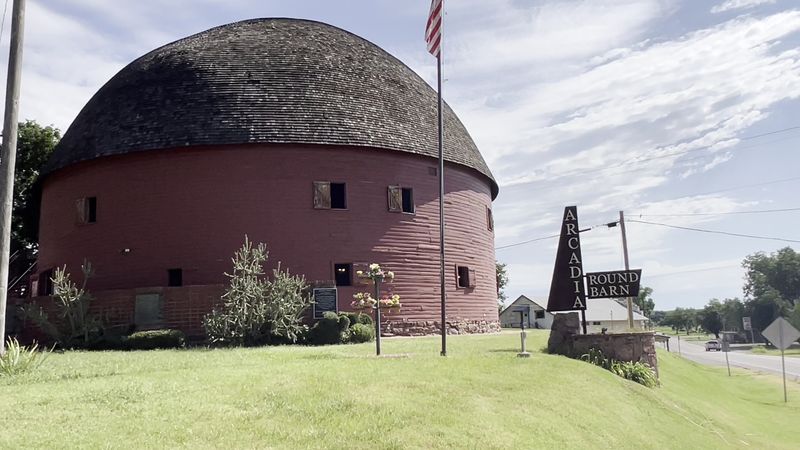
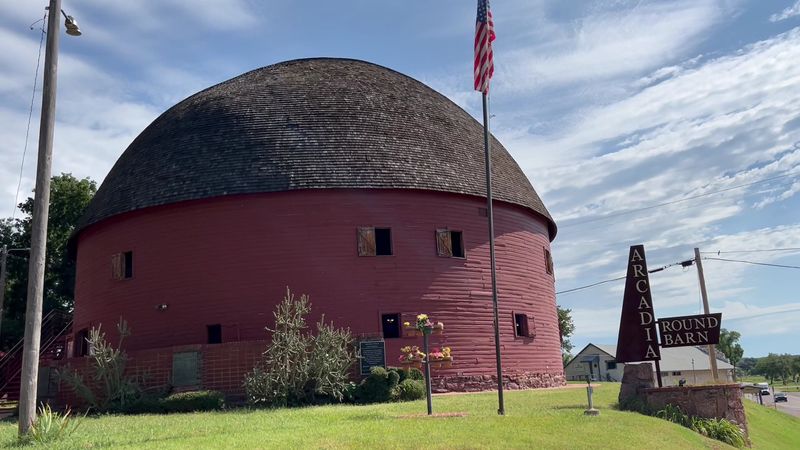
Sitting right alongside Oklahoma State Highway 66 in the small town of Arcadia, the Round Barn is one of those landmarks that earns a double-take from every passing driver. Arcadia itself is a modest community east of Oklahoma City, tucked between the rolling plains and the nostalgia of the old Mother Road corridor.
The barn sits at 107 OK-66, easily visible from the road and surrounded by open land that gives it a proud, unobstructed presence.
Route 66 travelers heading west from Oklahoma City will pass through Arcadia before reaching other well-known stops along the highway. The barn is positioned so that you almost can’t miss it, its circular silhouette breaking the flat horizon like nothing else for miles.
Parking is available behind the building, accessible by turning on the street just before or after the barn itself.
The location feels deliberate, as if the barn has always known its job was to anchor this stretch of road. For over a century, it has served as a geographic and emotional waypoint for everyone from cross-country road-trippers to local cyclists making their weekend rounds.
Arcadia may be small, but this barn gives it an outsized identity on the American road map.
The 1898 Origins of a Structural Curiosity
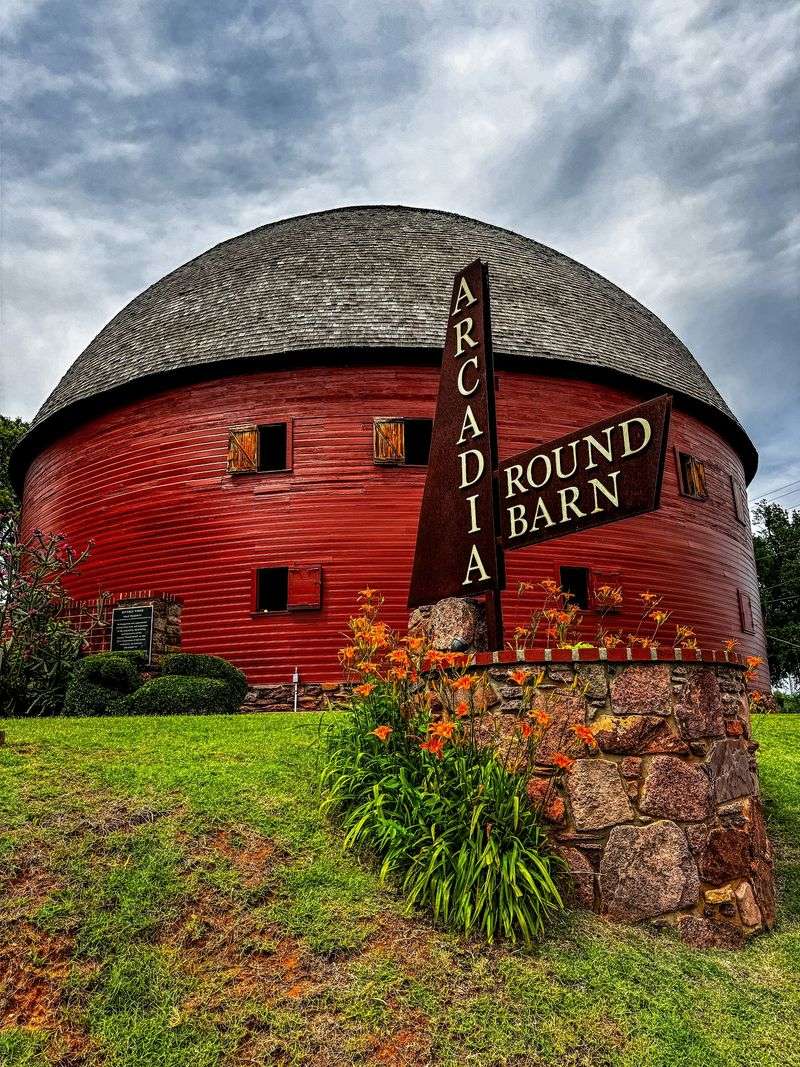
William Odor built the barn in 1898, and the engineering choice he made was anything but conventional. Rather than raise a standard rectangular structure, Odor opted for a circular design that required bending lumber into curved shapes, a process that involved soaking the wood until it became pliable enough to arc without splitting.
The result was a self-reinforcing structure that distributed weight evenly around its circular frame.
Round barns were not entirely unheard of in late 19th-century America, but they were rare enough to attract attention even then. Farmers sometimes preferred the design because it allowed animals to be fed more efficiently from a central point, and the shape was thought to offer better resistance against strong prairie winds.
Odor’s version became one of the most recognized examples of the style in the entire country.
The barn originally served as a working agricultural structure, housing livestock and storing grain for the Odor family’s farm operations. Over the following decades, it passed through different hands and gradually fell into disrepair as farming practices changed and the property lost its original purpose.
What began as a practical farm building had quietly become something far more historically significant than anyone at the time could have predicted.
Decades of Neglect and a Community-Driven Rescue
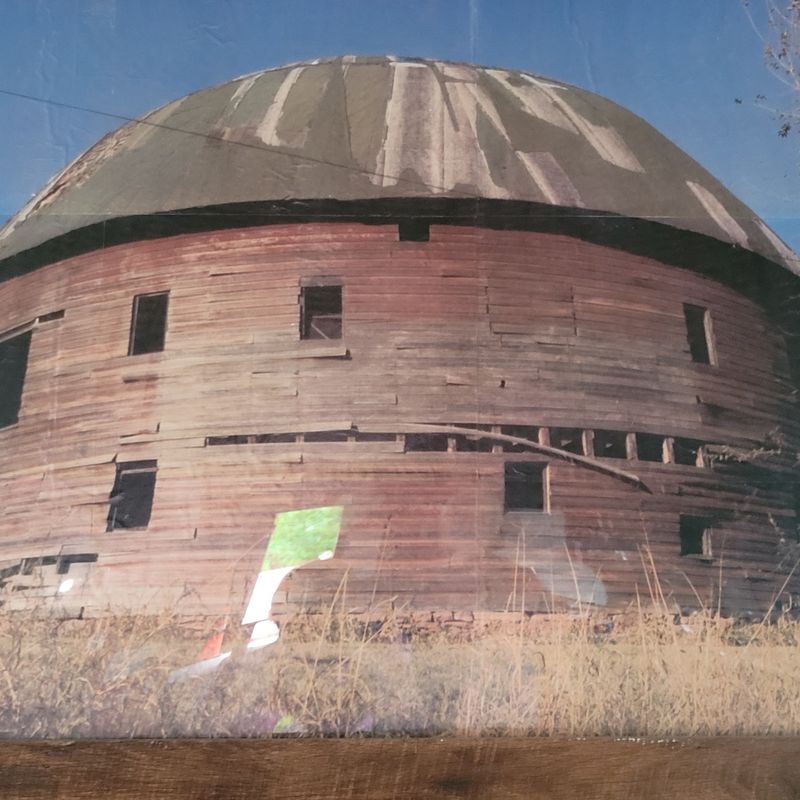
By the mid-20th century, the barn had fallen into serious disrepair. The roof eventually collapsed under its own weight, leaving the circular walls exposed to the elements and the structure at serious risk of being lost entirely.
For years, the building sat in a state of ruin, a shadow of its original form, while Route 66 traffic rolled past without stopping.
The turnaround came in 1992, when a dedicated group of local volunteers took on the enormous task of rebuilding the barn from the ground up. The reconstruction effort focused on restoring the iconic domed roof using traditional methods that honored the original construction techniques.
Local craftsmen and community members contributed time, labor, and resources to bring the structure back to life.
Visitors who learn this backstory often find it adds a layer of meaning to the place that goes beyond architecture. One visitor noted that their partner had seen the barn as a child when it was still in ruins, and returning decades later to find it beautifully restored was deeply moving.
The 1992 restoration did not just save a building; it gave an entire community something to take pride in, and it gave Route 66 one of its most enduring landmarks back.
The Engineering Marvel Hidden Inside the Roof
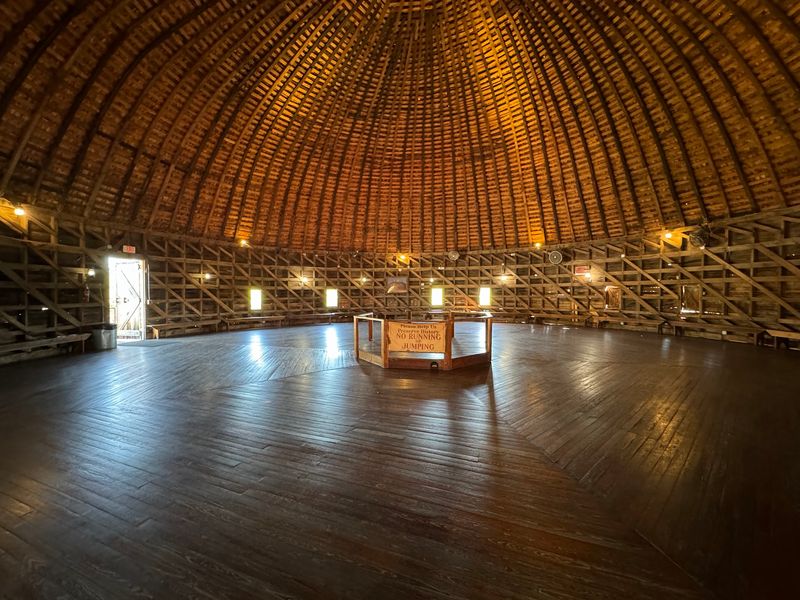
Walking through the barn door and looking straight up is the moment most visitors remember longest. The ceiling rises into a massive timber dome built from curved wooden beams that sweep upward and meet at a central point overhead.
The effect is surprisingly dramatic for a farm building, more cathedral than cattle shelter, and it stops people mid-sentence when they first see it.
The wood-bending technique used to create those curved beams required soaking the lumber until it was soft enough to shape without cracking. Craftsmen then formed the pieces into the arcs needed to build the circular structure, and once dried in place, the wood held its shape permanently.
The self-reinforcing nature of the round design means the roof essentially supports itself through geometry rather than relying on interior posts or bracing.
Getting the full impact of the dome requires a trip upstairs to the loft level, where the view of the timber framework becomes even more impressive up close. From that vantage point, the scale of the construction and the precision of the curved joinery become clear in a way that photographs rarely capture.
Visitors consistently mention the roof as the single most jaw-dropping detail inside the barn, and it is hard to argue with that reaction once you have seen it yourself.
The Loft That Doubles as a Dance Floor and Event Space
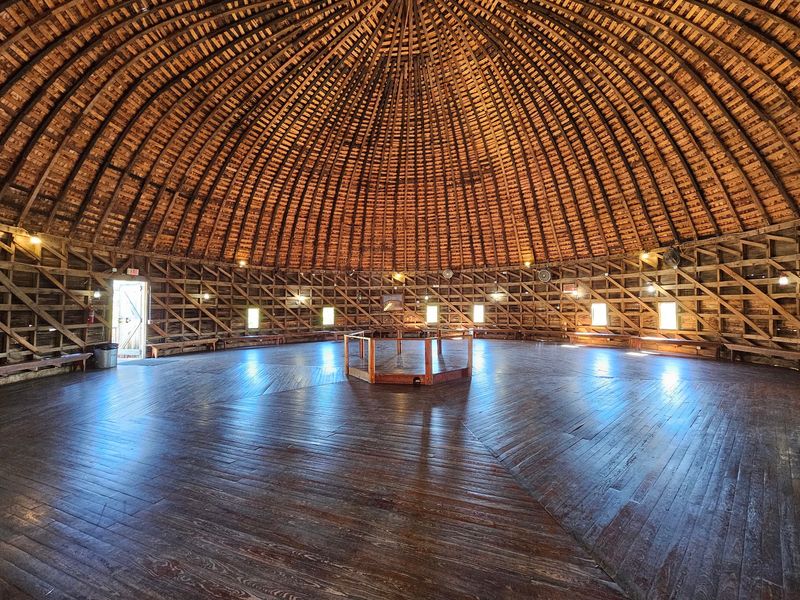
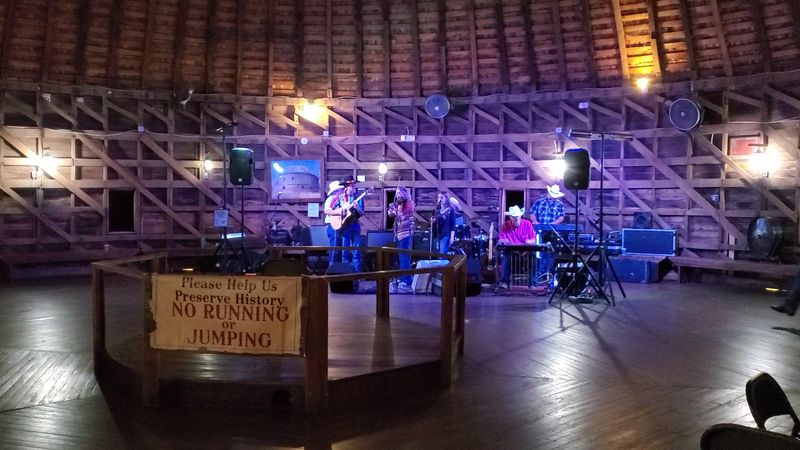
Climbing the stairs to the upper level reveals a space that feels entirely different from the museum floor below. The loft is a wide, open circular room with a smooth wooden floor that has hosted dancing, live music events, and private gatherings for years.
The curved walls and domed ceiling overhead give the space an acoustic warmth that flat-walled rooms simply cannot replicate.
Visitors frequently mention taking a spin around the loft dance floor before heading back out to the road, even on ordinary weekday visits. There is something irresistible about the space that seems to invite movement, and the round shape means there are no corners to get stuck in.
The loft is also available for rental, making it a genuinely unusual option for weddings and special occasions.
Large lookout windows at the loft level offer views of the surrounding countryside and the Route 66 corridor below, adding another reason to make the climb. The upper level is not wheelchair accessible due to the staircase, but the ground floor of the barn is fully accessible for visitors with mobility needs.
Anyone physically able to manage the stairs is strongly encouraged to make the trip up, because the loft is widely considered the highlight of the entire visit.
A Ground Floor Museum Worth Slowing Down For
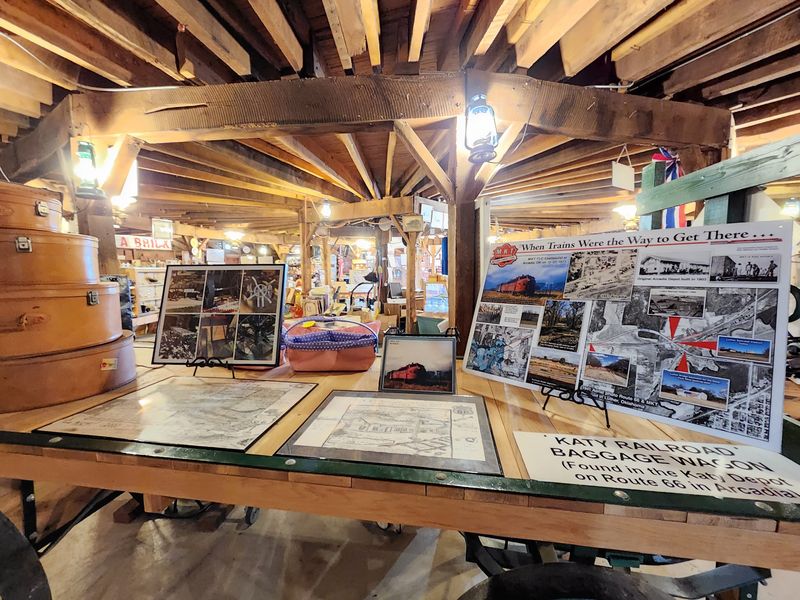
The main floor of the barn functions as a small but genuinely engaging museum dedicated to the history of the Round Barn itself, the early days of Arcadia, and the broader story of Route 66. Displays include old maps, informational binders, photographs, and period artifacts that paint a picture of what life looked like in this part of Oklahoma during the late 19th and early 20th centuries.
The layout takes advantage of the circular floor plan, guiding visitors naturally around the perimeter.
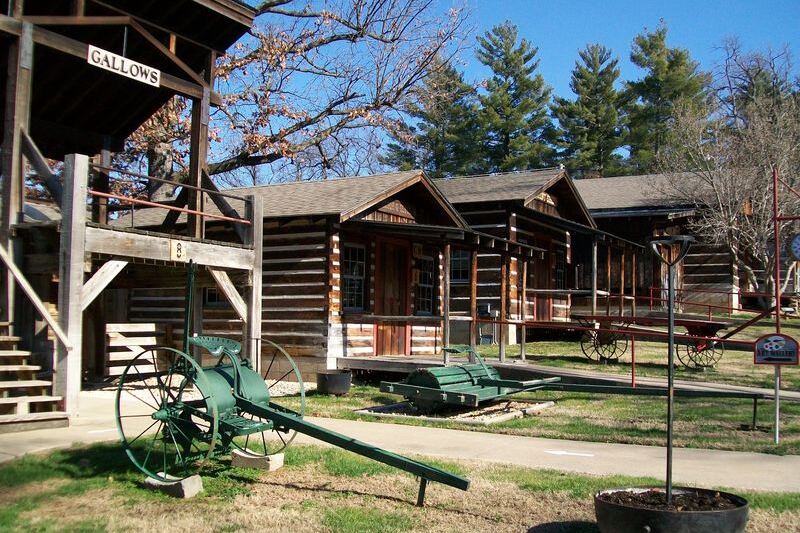
Farm equipment from earlier eras fills out the exhibits, giving the space a tactile, hands-on quality that keeps younger visitors interested alongside the adults. Outside the barn, additional pieces of antique agricultural machinery are displayed on the grounds, including old plows and a road grader.
An original outhouse also stands on the property, adding an authentic period detail that draws more than a few laughs.
Visitors who enjoy reading every placard and studying each artifact report that the museum can easily fill an hour or more. Those on a tighter schedule can absorb the highlights in about twenty minutes without feeling rushed.
Either way, the ground floor offers more genuine historical substance than most roadside stops can claim, and the circular setting makes even a casual browse feel like a discovery rather than a lecture.
The Gift Shop and Antiques Corner
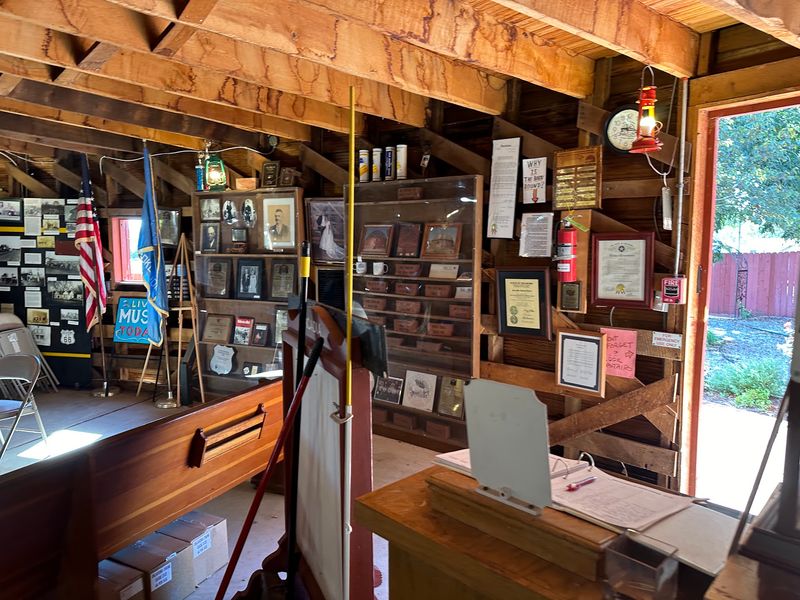
Tucked into the ground floor alongside the museum displays, the gift shop is a compact but well-curated space that manages to feel personal rather than generic. Shelves hold Route 66 memorabilia, antiques, replicas, and locally sourced items that reflect the character of the region.
One visitor spotted rose rocks for sale, a uniquely Oklahoma mineral that makes for a memorable and genuinely local keepsake.
The selection leans toward items that feel connected to the place rather than mass-produced highway trinkets. Antiques share space with handcrafted goods, and the overall effect is more like browsing a carefully assembled collection than shopping at a roadside souvenir stand.
Visitors who enjoy hunting for unusual finds tend to spend a fair amount of time working through the shelves.
The shop is staffed by the same volunteers who run the rest of the barn, so questions about any item usually come with a story attached. Purchases help support the ongoing operation and maintenance of the landmark, which runs on donations and goodwill rather than ticket sales.
Picking up something from the shop is one of the most direct ways visitors can contribute to keeping the barn open and accessible for the next generation of Route 66 travelers passing through Arcadia.
Volunteer Hosts Who Make the Visit Personal
Ask almost any recent visitor what stood out most about the Round Barn beyond the architecture, and the answer is usually the same: the people. The barn is operated largely by volunteers who bring a genuine enthusiasm to the role that no amount of professional training can manufacture.
They know the history of the place in granular detail and share it freely with anyone who shows the slightest curiosity.
Multiple visitors have described leaving conversations with the barn’s hosts feeling like they had just spent time with a knowledgeable friend rather than a tour guide. One visitor received a complimentary Oklahoma Route 66 Passport from a staff member during their stop, an unexpected gesture that turned a quick detour into a lasting memory.
That kind of personal touch is what separates this landmark from a simple photo opportunity.
The volunteers clearly love what they do, and that energy is contagious inside the circular walls of the barn. Visitors who arrive in a hurry often find themselves lingering longer than planned, drawn into conversations about the barn’s history, the restoration effort, and the broader story of Route 66 in Oklahoma.
Friendly staff is one of the most frequently mentioned highlights across visitor feedback, which says a great deal about the culture the barn has built around itself.
Free Admission and the Donation Model That Keeps It Running
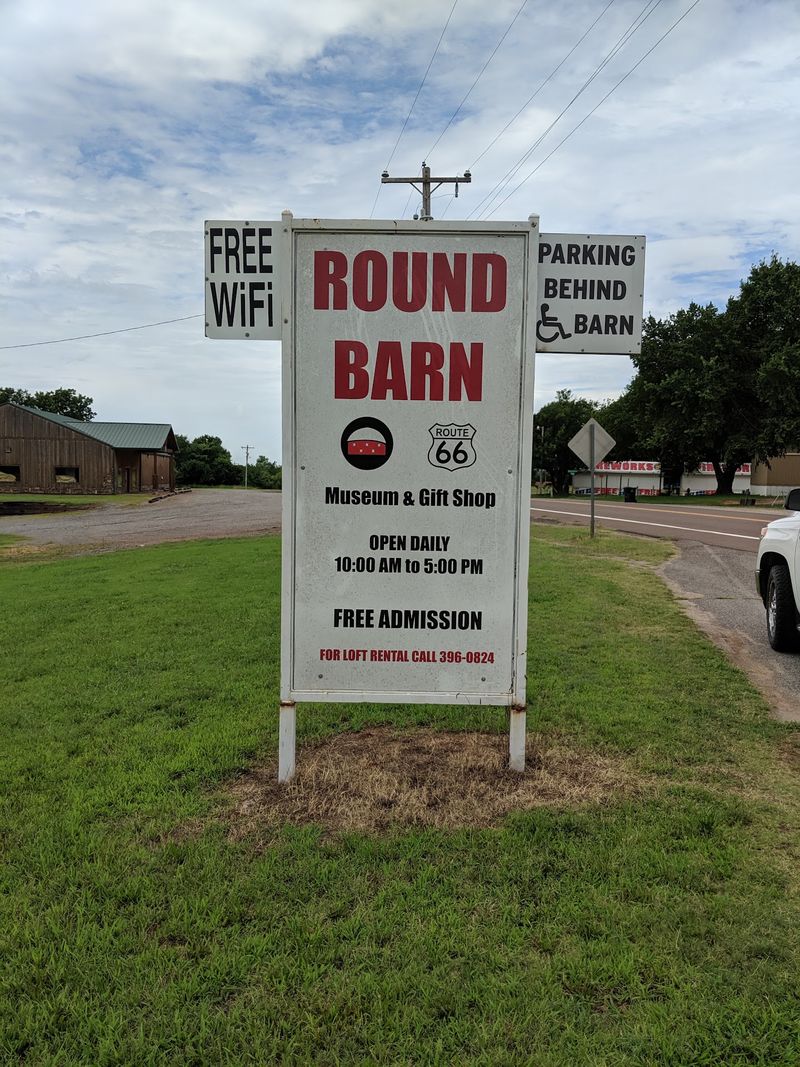
Walking through the door of the Round Barn costs nothing. Admission is completely free, which makes it one of the most accessible stops on the entire Route 66 corridor regardless of a traveler’s budget.
Visitors are invited to sign the guest book upon entering, a small tradition that connects each new arrival to the long chain of people who have passed through before them.
The barn operates on a donation model, relying on the goodwill of visitors to cover operating costs and ongoing maintenance. Donation boxes are available inside, and the volunteer staff never applies pressure, but the appeal is clear once visitors understand how much effort goes into keeping the place running.
Several reviewers specifically mentioned bringing cash for a donation after learning the barn is entirely community-supported.
For a landmark that attracts visitors from across the country and around the world, the free-entry policy feels almost radical by modern standards. No tickets, no timed entry windows, no membership tiers.
Just show up between 10 AM and 5 PM any day of the week, walk in, and experience one of Oklahoma’s most enduring historic structures at your own pace. The donation jar near the exit tends to fill up with contributions from visitors who feel the place earned every dollar.
Practical Details for Planning Your Stop
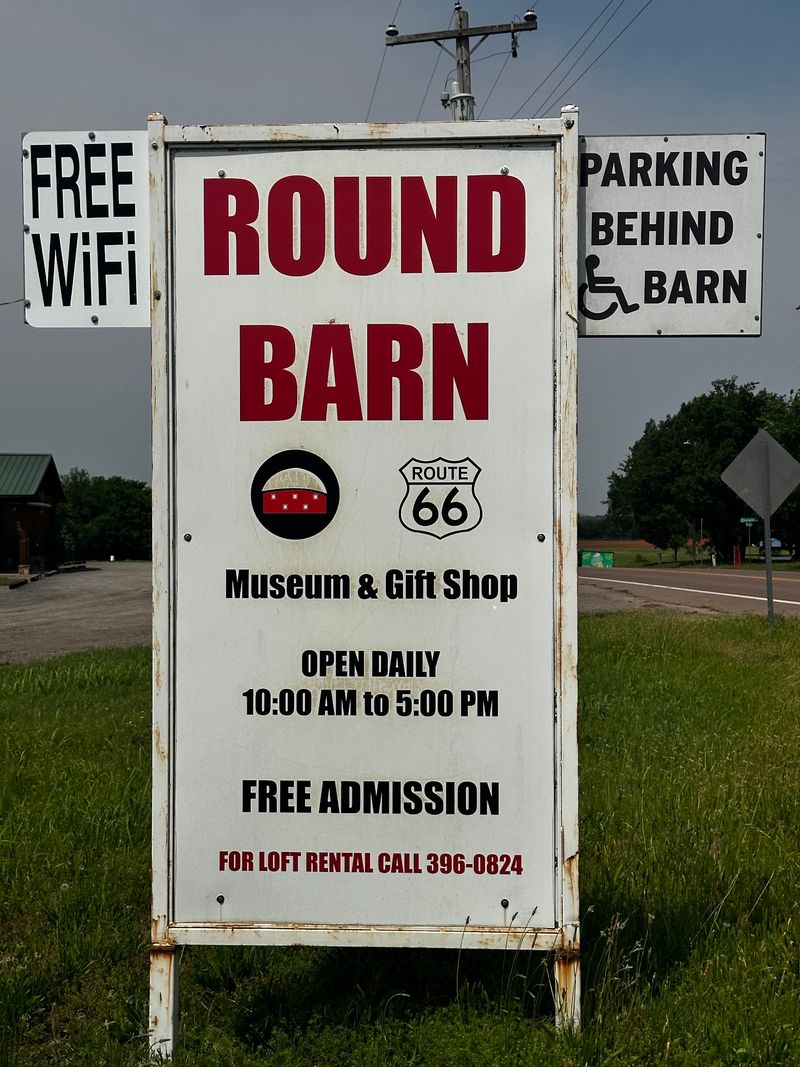
The barn is open seven days a week from 10 AM to 5 PM, which makes it one of the more reliably accessible stops along the Oklahoma stretch of Route 66. There are no days off and no seasonal closures listed, so whether a traveler is passing through on a Tuesday afternoon or a Sunday morning, the doors should be open during those hours.
Calling ahead at 405-396-0824 or checking the website at arcadiaroundbarn.com can confirm current conditions before making the trip.
Parking is located behind the building and is easy to reach by turning onto the street just before or just after the barn. The lot is shaded in spots and includes a picnic area, which makes it a comfortable place to pause for a few minutes before or after going inside.
Clean, air-conditioned restrooms are available in a separate building next to the barn, a detail that long-distance road-trippers genuinely appreciate.
The main floor is wheelchair accessible, though the loft level requires climbing a staircase of approximately fifteen steps. Visitors with mobility limitations can still experience the museum, the gift shop, and the remarkable ground-level view of the barn’s interior.
The overall visit runs anywhere from twenty minutes to over an hour depending on how deeply a visitor wants to explore the exhibits and conversations available inside.
The Route 66 Passport Stamp and Scavenger Hunt Connection
For travelers working through the Oklahoma Route 66 Passport program, the Round Barn is one of the must-visit stamp locations along the Mother Road. The passport is a physical booklet that encourages road-trippers to collect stamps from participating landmarks and attractions across the historic highway’s Oklahoma corridor.
Collecting each stamp turns a road trip into a structured adventure with a satisfying record at the end.
Several visitors have mentioned that the barn’s volunteers actively support the passport experience, sometimes gifting the passport booklet itself to travelers who weren’t yet aware of the program. That kind of enthusiastic participation makes the Round Barn feel like a hub of Route 66 culture rather than just another stop on a checklist.
The barn also appears in at least a few organized scavenger hunt activities, adding yet another layer of structured fun for visitors who enjoy that format.
The passport stamp concept taps into something deeply satisfying about road travel, the desire to mark progress, collect proof of experience, and carry a tangible record of the journey. For cyclists, motorcyclists, and car travelers alike, the Round Barn stamp represents a genuine milestone on the Mother Road.
Picking up a stamp here while chatting with a knowledgeable volunteer feels like exactly the kind of moment Route 66 was built to produce.
Why the Round Barn Earns a Spot on Any Route 66 Itinerary
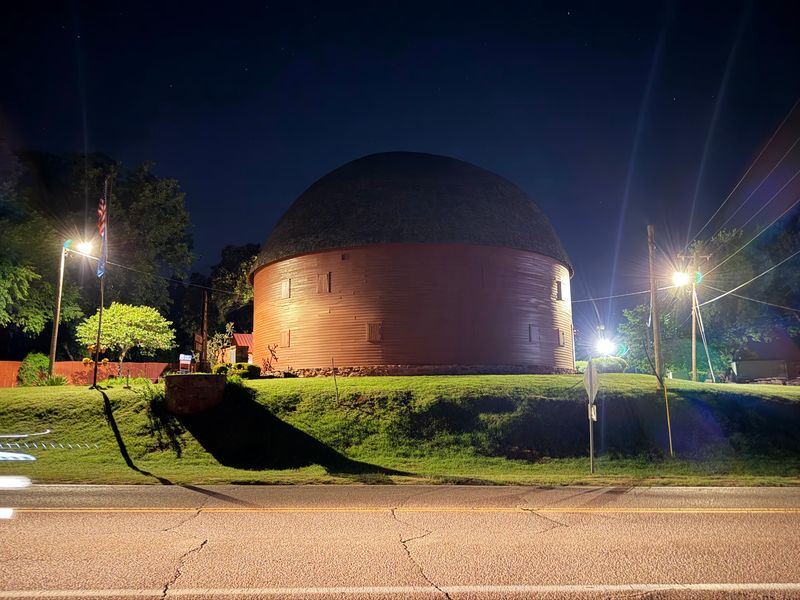
Some roadside attractions coast on novelty alone, offering a quick photo and nothing more. The Round Barn in Arcadia operates on a different level entirely.
The combination of genuine historical depth, extraordinary architecture, warm volunteer hospitality, and completely free admission creates a stop that delivers far more than its modest exterior suggests. Visitors consistently describe it as one of the highlights of their entire Route 66 journey.
A twenty-minute visit is enough to appreciate the basics, but the barn rewards those who linger. The museum floor, the loft, the gift shop, the grounds, and the conversations with staff all layer together into an experience that feels complete rather than thin.
Even travelers who have passed by dozens of times without stopping report being glad they finally pulled over.
The barn is a reminder that the best things along Route 66 are often the ones that don’t announce themselves too loudly. No massive billboard or elaborate entrance is needed when the structure itself is this compelling and the people inside this welcoming.
Whether someone is chasing passport stamps, hunting for a perfect road trip photo, or simply stretching their legs between Oklahoma City and points east, the Round Barn in Arcadia makes a strong case for being the stop that sticks in memory long after the rest of the drive fades.
Share this story