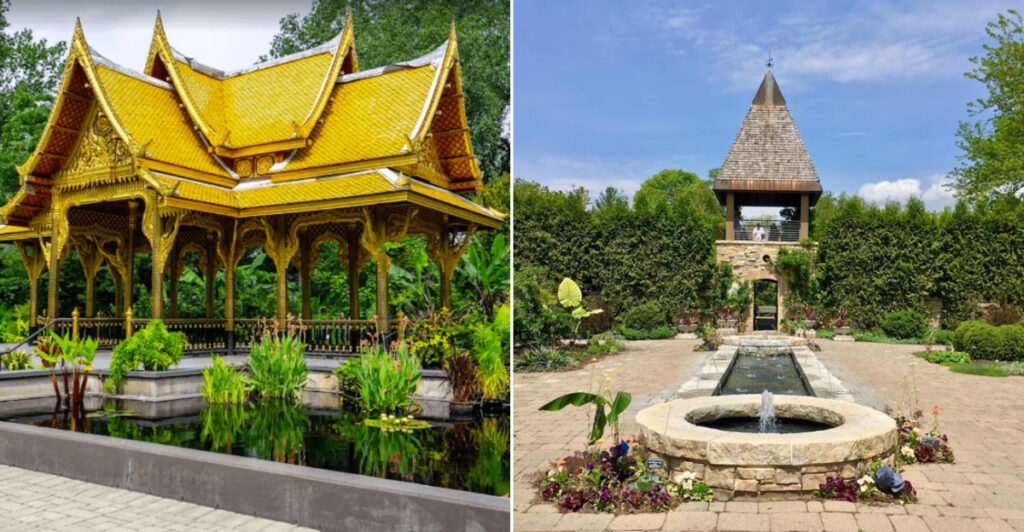
There is a gilded Thai pavilion sitting in the middle of Madison, Wisconsin, and most people drive right past it without ever knowing it exists. This structure did not start its life in the American Midwest.
It was crafted in Thailand, shipped across an ocean, and reassembled on the shores of Lake Monona as a royal gift. This is the kind of place that keeps surprising you the longer you stay, from its tropical conservatory packed with orchids and birds to its winding outdoor paths that change with every season.
This article walks through everything that makes this 16-acre garden worth a visit, including the remarkable story of how a piece of Thailand ended up in Wisconsin.
The Royal Gift That Traveled Across an Ocean
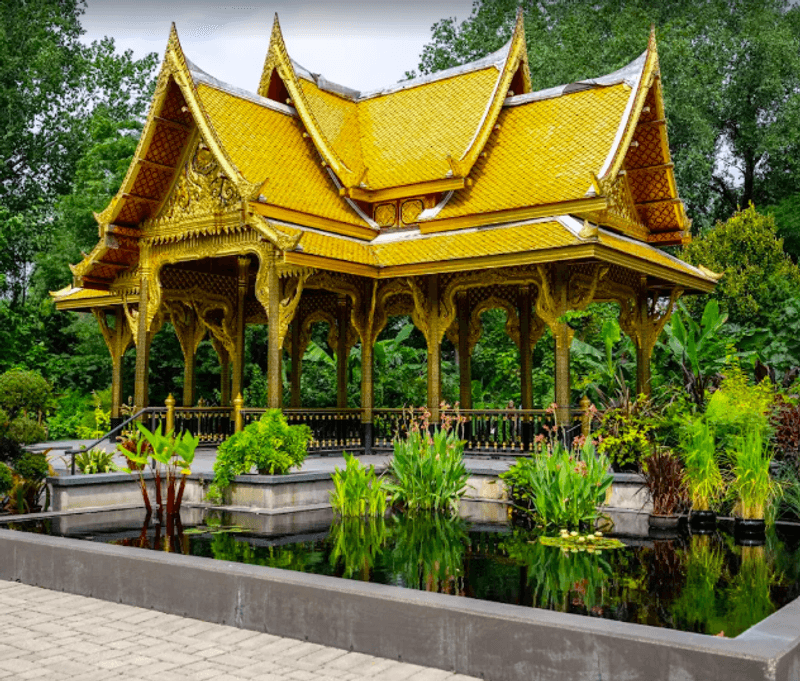
The Thai Pavilion at Olbrich is not a replica or a decorative nod to another culture. It is the real thing, built in Thailand by Thai craftsmen, and donated to the University of Wisconsin-Madison as a royal gift from the Thai royal family.
The connection between Thailand and the University of Wisconsin goes back decades, rooted in an academic partnership that eventually grew into this extraordinary gesture. The pavilion was constructed using traditional techniques and then carefully disassembled, shipped across the Pacific Ocean, and rebuilt on the grounds of Olbrich.
The structure is gilded and detailed in a way that reflects genuine craftsmanship, not mass production. It remains free to view at all times as part of its status as a royal gift.
Knowing the backstory changes how you look at it. This is not a garden decoration.
It is a diplomatic artifact that crossed an entire ocean to land in Wisconsin.
How the Thailand Connection Actually Began
The University of Wisconsin-Madison built one of the most sustained academic relationships with Thailand of any American university, beginning in the mid-20th century. Faculty exchanges, research collaborations, and student programs created a bond that lasted long after the formal agreements ended.
That relationship eventually led to a conversation about a lasting physical tribute. The Thai royal family, through the Thai Studies program and ongoing university ties, decided that a traditional Thai sala, or open pavilion, would be the most fitting expression of gratitude and friendship.
The garden at Olbrich was chosen as the site because it offered the right setting, open land with a natural backdrop near water, which echoes the way such structures are traditionally placed in Thailand. The decision to make it permanently free to the public was also part of the original arrangement, honoring the spirit of the royal gift.
That detail alone sets it apart from almost every other pavilion of its kind in the United States.
Free Outdoor Gardens That Change With Every Season
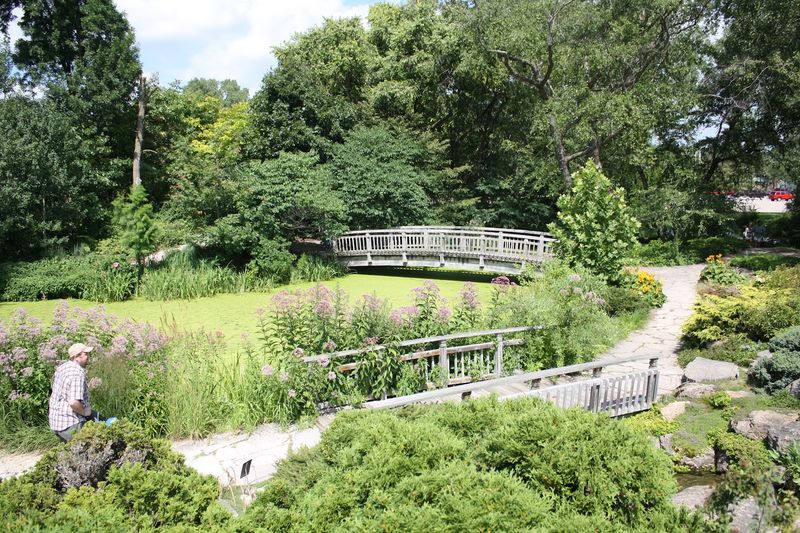
Not everything at Olbrich costs money. The outdoor gardens are completely free to enter, which makes them one of the most accessible natural attractions in Madison.
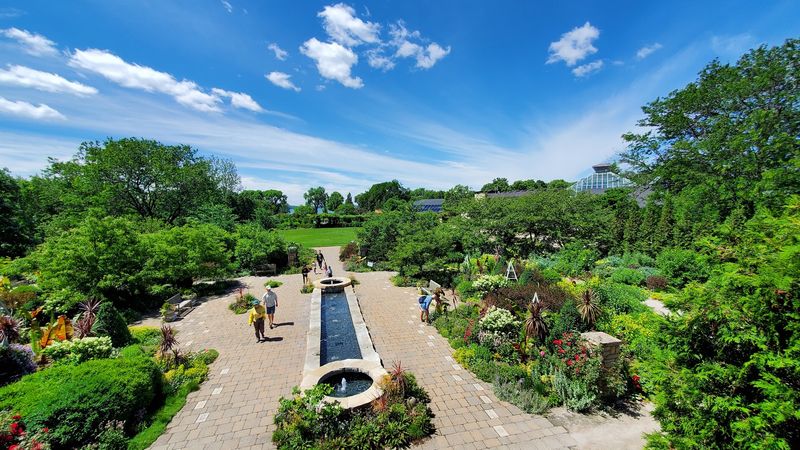
The grounds include a rose garden, a children’s garden, a rock garden, and several other themed planting areas connected by winding paths.
Spring brings the most dramatic color, with bulbs and flowering trees transforming the grounds in a short window of time. Summer keeps the rose garden and perennial beds in full form.
Fall shifts the palette toward warmer tones, and even winter has its own appeal, particularly around the Thai pavilion area where the structure stands out against bare trees.
The paths are not all obvious from the main walkways, which means a little wandering tends to reveal corners of the garden that feel genuinely private. That sense of discovery is one of the qualities that keeps people coming back to Olbrich at different points in the year rather than just once.
Olbrich Gleam: When the Garden Goes Dark
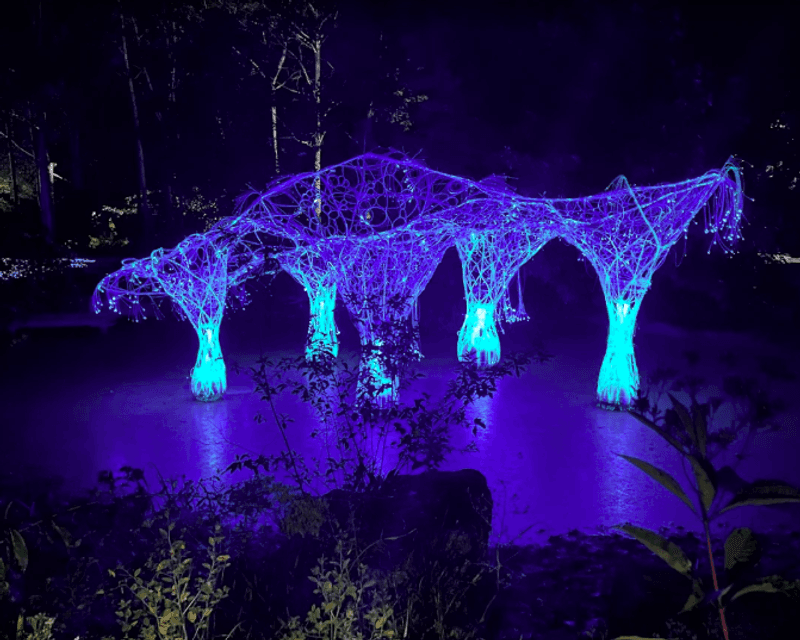
Once a year, Olbrich transforms after dark into something completely different. The Olbrich Gleam is a ticketed nighttime event that turns the garden paths into a light and sound art installation spread across the entire grounds.
It runs for a limited period and sells out quickly, so advance tickets are strongly recommended.
The installations use the existing landscape as their canvas, wrapping trees, pathways, and garden structures in light in a way that creates a completely different experience from a daytime visit. The Thai pavilion takes on a different character entirely when lit at night.
For people who have visited Olbrich during the day, the Gleam offers a reason to come back and see the same space through a completely different lens. It has built a strong following among Madison residents and draws visitors from outside the city as well.
The combination of art, nature, and the garden’s natural layout makes it one of the more creative seasonal events in Wisconsin.
The Rose Garden and Its Place in the Layout
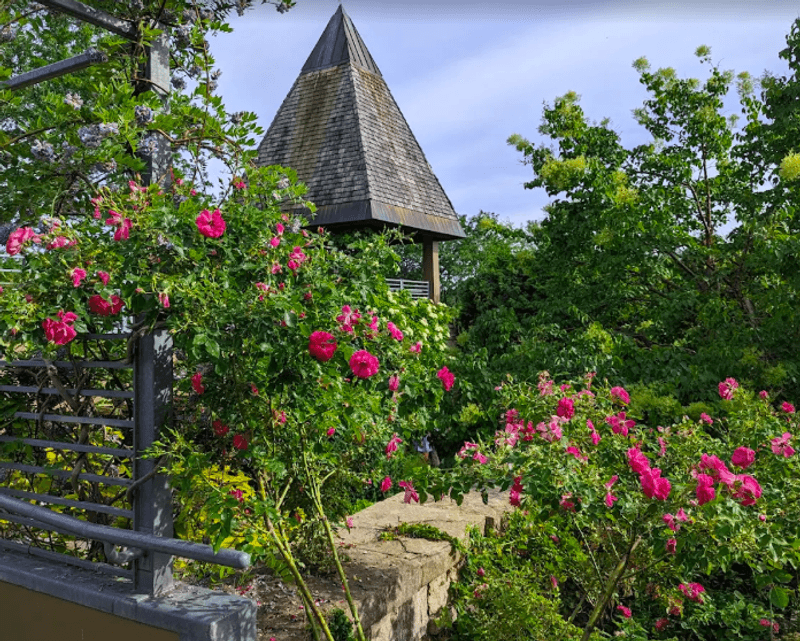
The rose garden at Olbrich is one of the more traditional sections of the property, set out in a formal layout with clearly labeled varieties. Peak bloom typically falls in June, when the beds are at their most colorful and the garden draws a noticeably larger number of photographers and casual visitors alike.
The garden is maintained to a high standard, and the plant health across the beds reflects consistent and skilled horticultural care. Each variety is labeled, which makes the rose garden genuinely useful for home gardeners who want to identify plants they might want to grow themselves.
The rose garden also serves as a popular backdrop for portrait photography, particularly during prom and graduation season in late spring. On busy weekends, the paths around the rose garden can get crowded, which is worth keeping in mind when planning a visit.
Early morning or a weekday typically offers a quieter experience. The space rewards patience.
What the Thai Pavilion Actually Looks Like Up Close
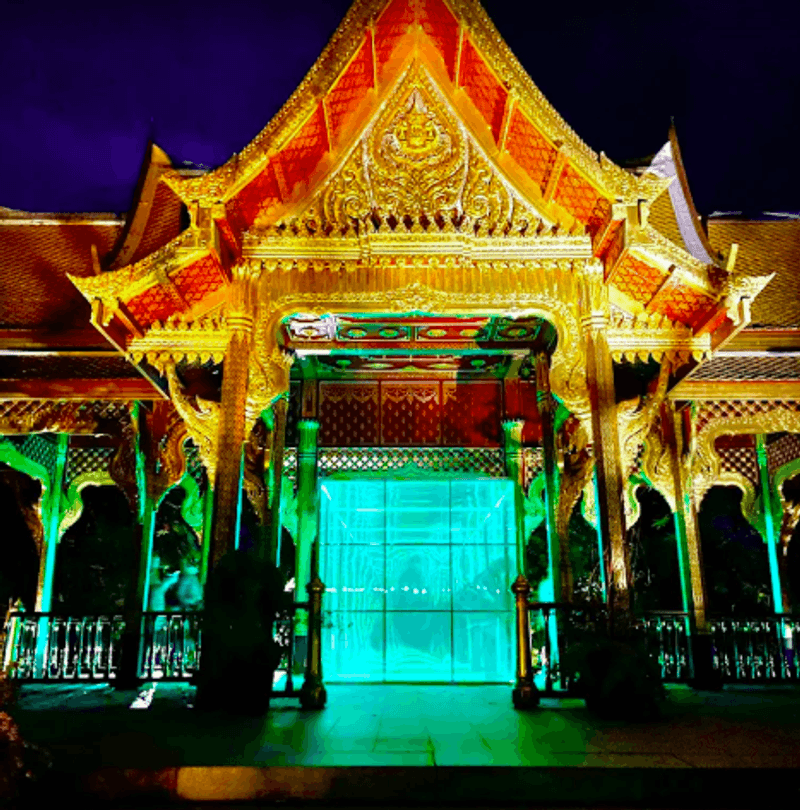
From a distance, the Thai Pavilion reads as a golden roof rising above the surrounding greenery. Up close, the level of detail becomes much more apparent.
The structure features multiple tiered rooflines with gilded finials, carved woodwork, and decorative elements that reflect the traditional Thai sala style used in royal and temple architecture.
The craftsmanship is not decorative in the Western sense of the word. Every element of the pavilion follows conventions established over centuries of Thai architectural tradition.
The artisans who built it in Thailand were working within a system of design rules that gives the structure its recognizable silhouette.
The pavilion is open-sided, which means it can be walked through and observed from the inside as well as the outside. The surrounding garden was also designed to complement the pavilion rather than compete with it, using plantings that echo Thai garden aesthetics.
Standing inside it, the surrounding Madison neighborhood temporarily disappears from view. That effect is entirely intentional.
Visiting in Winter Versus Summer: Two Different Gardens
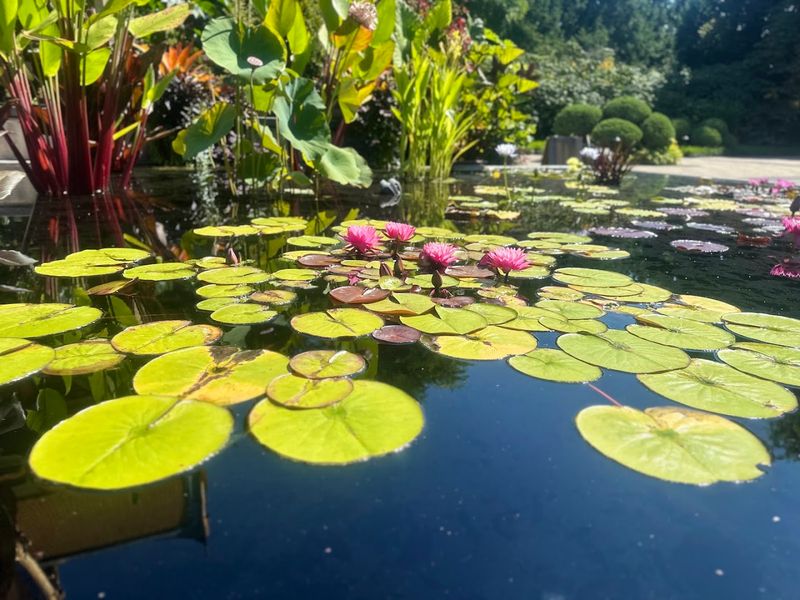
Olbrich operates year-round, but the experience shifts considerably depending on when you show up. In summer, the outdoor gardens are the main attraction, with full beds, mature foliage, and the rose garden at its best.
The grounds are busy, the paths are full, and the garden feels like a community gathering point.
Winter visits pivot almost entirely to the conservatory, which stays warm and green regardless of what is happening outside. The six-dollar entry fee covers a tropical environment that operates completely independently of the Wisconsin climate.
Some regular visitors actually prefer the garden in winter specifically because the crowds thin out and the conservatory becomes easier to enjoy at a slower pace.
Spring and fall occupy their own middle ground, with the outdoor gardens either building toward or winding down from peak season. Each window offers something the others do not.
The garden does not have an off-season in any meaningful sense. It simply changes what it is showing you.
The Lake Monona Setting and Why It Matters
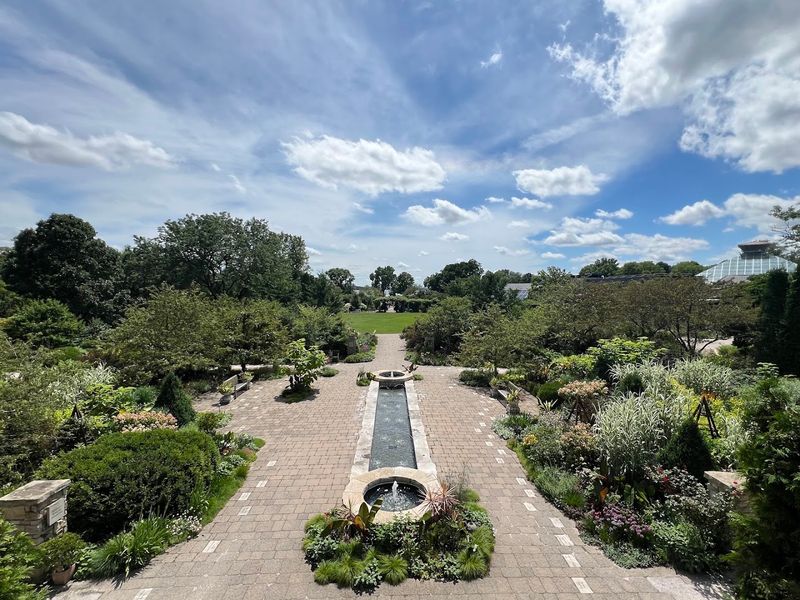
The location of Olbrich along the shore of Lake Monona is not incidental. The proximity to the lake adds a natural frame to the eastern edge of the property and contributes to the open, unhurried quality of the setting.
The lake is visible from parts of the garden, and the surrounding landscape reinforces the idea that this is a garden built into the natural environment rather than imposed on top of it.
Lake Monona is one of the two large lakes that bracket Madison, and the Atwood Avenue corridor where Olbrich sits has developed into one of the city’s more interesting neighborhood stretches. The garden anchors the eastern end of that stretch in a way that benefits both the neighborhood and the visitors who come specifically for the garden.
For anyone building a Madison itinerary around the lakes, Olbrich fits naturally into a route that takes in the waterfront areas on the east side of the city. The setting does a lot of work that the garden itself does not need to explain.
Admission, Hours, and the Cost of Getting In
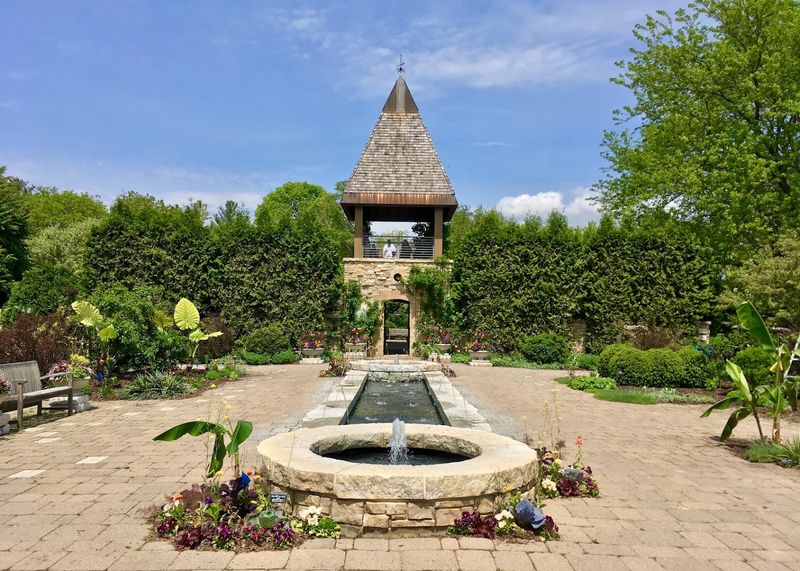
The outdoor gardens at Olbrich are free every day of the week, no reservation required. The conservatory carries a small admission fee of six dollars per person, with the indoor space free on weekends before noon.
Those two facts together make Olbrich one of the more visitor-friendly botanical gardens in the Midwest in terms of pure accessibility.
The garden is open daily from 10 AM to 6 PM, which provides a comfortable window for both quick visits and longer explorations. Parking is available on-site, which removes one of the common friction points for urban attractions.
The combination of free outdoor access, reasonable indoor pricing, and available parking makes logistics easier than at many comparable gardens.
Donations are welcomed and encouraged, particularly for the outdoor gardens, which are maintained entirely through a combination of public funding and private support. The quality of the grounds reflects that investment clearly.
For a free attraction, the level of upkeep at Olbrich consistently exceeds what most people expect before their first visit.
The Horticultural Expertise Behind the Grounds
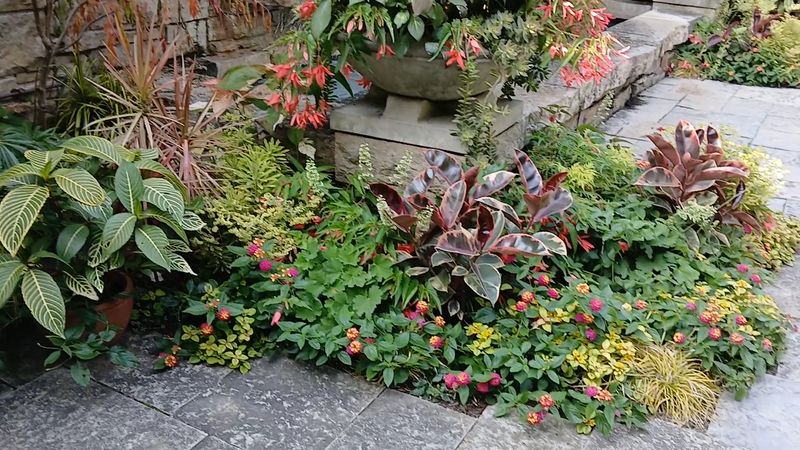
The plant health at Olbrich is one of the first things that stands out to anyone with a background in horticulture. The beds are not just planted and left to manage themselves.
The grounds reflect consistent, skilled maintenance that keeps even late-season plantings looking well-tended rather than ragged.
The garden employs professional horticulturalists alongside a team of trained volunteers who contribute to the upkeep of specific garden sections. The combination of professional oversight and community involvement has produced a standard of care that punches well above the garden’s relatively modest public profile.
The selection of plants across the outdoor garden also reflects curatorial intelligence rather than just aesthetic preference. Varieties are chosen for their performance in Wisconsin’s climate, their compatibility with neighboring plants, and their ability to extend the season of interest in each section of the garden.
That kind of thinking is visible in the results. Every corner of Olbrich looks like someone made a deliberate decision about what went there.
Why Olbrich Keeps Drawing People Back
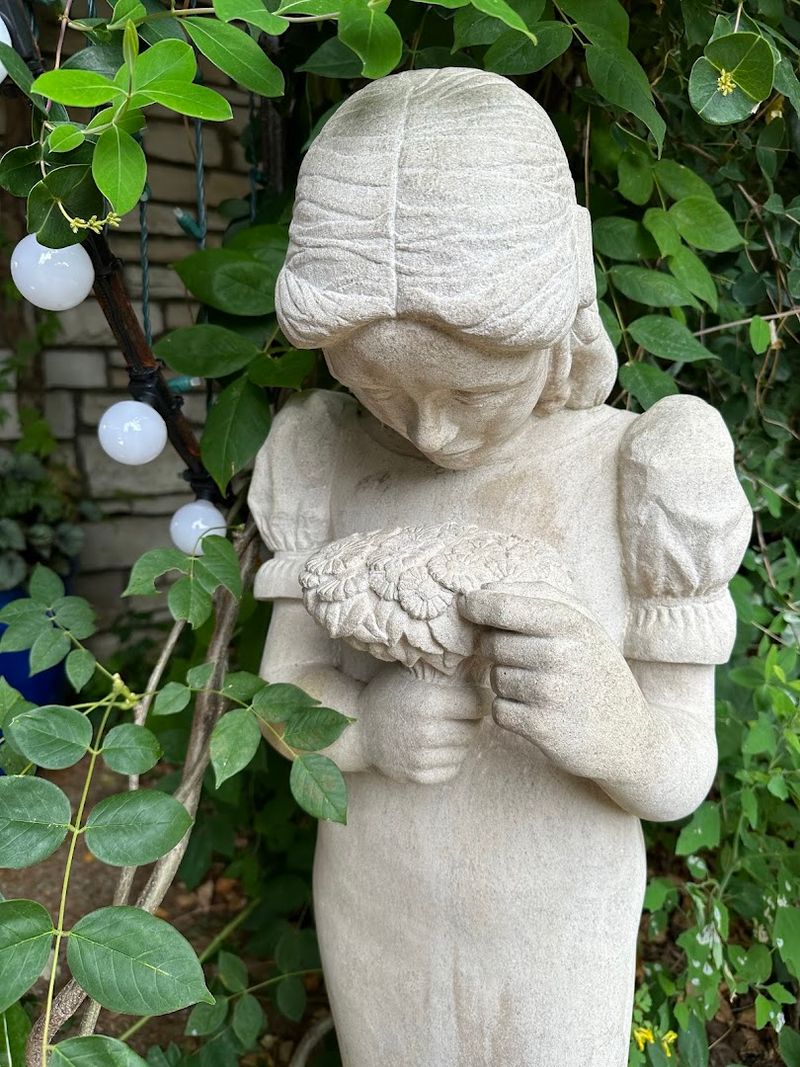
A botanical garden that people visit once and forget is common enough. A botanical garden that people drive hours to revisit across different seasons is something else entirely.
Olbrich falls into the second category, and the reasons are not hard to identify once you have spent time there.
The seasonal change is the most obvious driver. The rose garden in June looks nothing like the conservatory in January, and neither of those experiences resembles the Gleam event at night in autumn.
Each visit offers a genuinely different version of the same place, which is a quality that takes decades of thoughtful planting and programming to build.
The Thai pavilion anchors the garden with something that does not change with the seasons, a permanent landmark with a remarkable origin story that gives the whole property a sense of weight and meaning beyond just being a nice place to walk. That combination of the changing and the permanent is ultimately what makes Olbrich the kind of place people return to.
It holds more than one visit can fully cover.
Where the Garden Stands and What It Holds
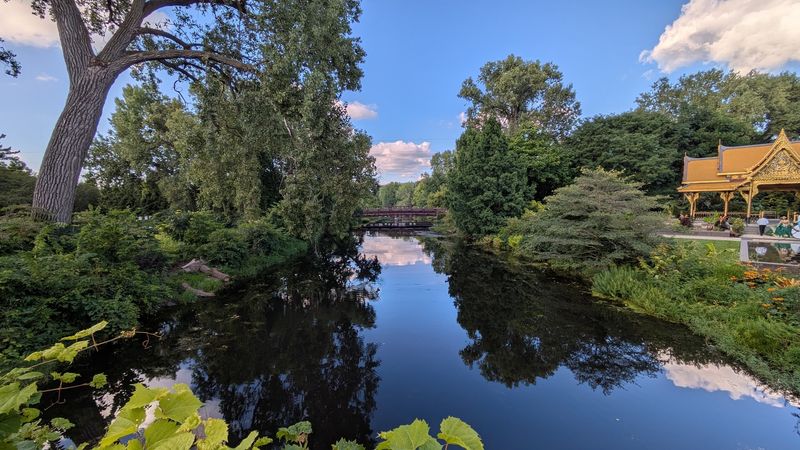
A botanical garden sitting at 3330 Atwood Ave, Madison, WI 53704, right along the edge of Lake Monona, is not something most people expect to find tucked into a residential stretch of the city. Olbrich Botanical Gardens covers 16 acres of both indoor and outdoor growing space, and the variety packed into that footprint is genuinely striking.
The outdoor gardens are free to enter every single day of the week, which makes the place accessible to almost anyone passing through Madison. The gardens are open daily from 10 AM to 6 PM, giving visitors a solid window to explore without feeling rushed.
From a rose garden to a Thai pavilion to a children’s garden, each section of the property has its own distinct character. The grounds sit close enough to the lake that the natural setting adds another layer of open space to the experience.
It is a lot of garden for a city park.
Share this story