There is a place in southeastern Wisconsin where water pushes up from the earth at a rate of 30,000 gallons every single hour, and it has been doing so for thousands of years. Tucked into a quiet corner of Kettle Moraine State Forest near the small town of Eagle, this short paved loop trail packs more history, natural beauty, and geological wonder into half a mile than most parks manage in ten.
The ruins of a 1930s resort still stand along the path, trout glide through crystal-clear spring-fed water, and the whole place feels like it belongs in a different era. This is one of Wisconsin’s most underrated outdoor stops.
The Remarkable Science Behind 30,000 Gallons Per Hour
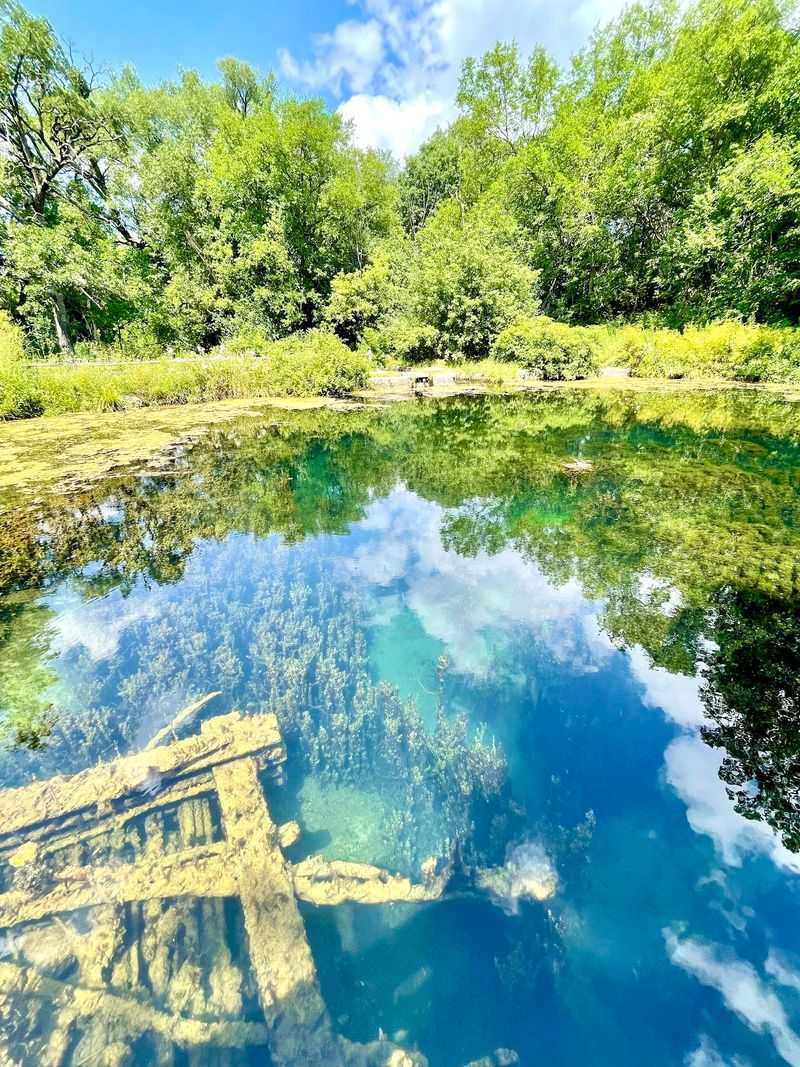
The headline number is not an exaggeration. The spring at the heart of this trail genuinely discharges around 30,000 gallons of water per hour, which works out to roughly 720,000 gallons every single day.
This kind of output is the result of a large underground aquifer pushing water upward through a natural opening in the earth. The water maintains a consistently cool temperature year-round because it originates deep below the frost line, where ground temperatures stay relatively stable regardless of the season above.
That constant temperature is part of what makes the water so remarkably clear. There is very little sediment or surface runoff mixing into the flow, which gives the spring a glass-like quality that surprises most first-time visitors.
The geology of the Kettle Moraine region, shaped by glacial activity thousands of years ago, is directly responsible for creating the underground conditions that make this extraordinary water output possible.
A Resort That Time Forgot: The History of the Site
Long before the DNR managed this land, Paradise Springs had a very different identity. European settlers first took notice of the springs in the early 1800s, drawn by the unusually clear and abundant water.
By the mid-1800s, the site had been developed into a health resort, where guests came specifically to benefit from what were believed to be the therapeutic properties of the mineral-rich spring water.
The resort eventually grew to include a hotel, bathhouses, and other amenities, attracting travelers from across the region. At its peak in the 1930s and 1940s, the property functioned as a full destination retreat, complete with a boathouse and pond activities.
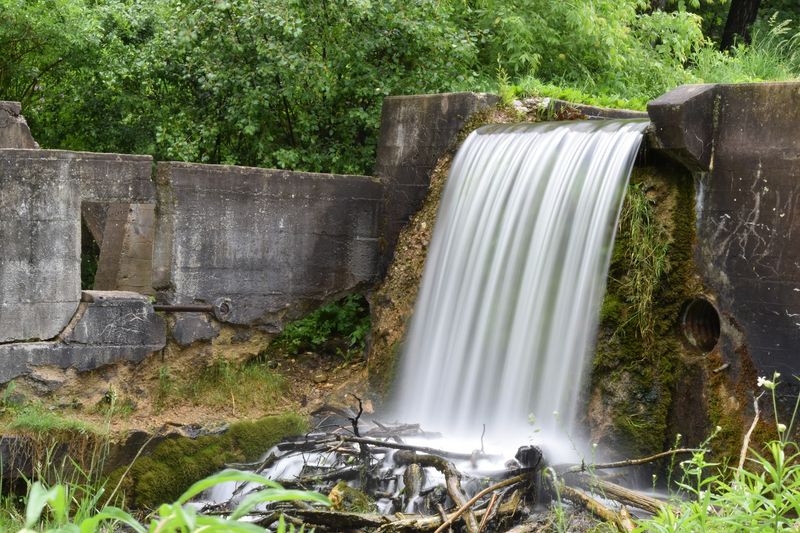
Popularity faded over the following decades, and the resort gradually fell into disuse. The dam that maintained the pond broke in 2015.
In the 1970s, the Wisconsin DNR stepped in to preserve the site, establishing it as a protected area and opening it to the public as a nature trail.
The Half-Mile Paved Loop That Surprises Everyone
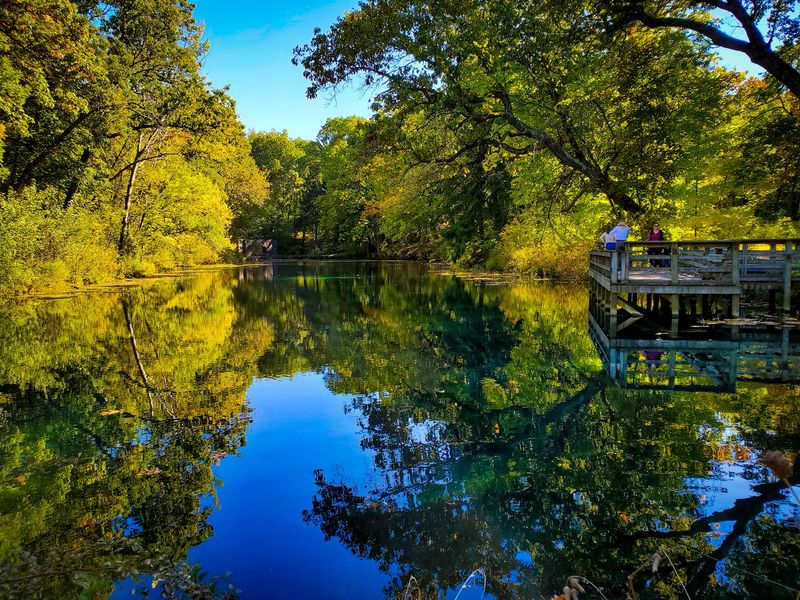
At just half a mile long, the main trail loop at Paradise Springs does not take long to complete. Most people finish the full circuit in 20 to 30 minutes at a relaxed pace, though stopping to read the interpretive signs and look at the water can stretch that time considerably.
The entire path is paved, which makes it one of the more accessible nature trails in the Kettle Moraine system. People using strollers, wheelchairs, or walking with older family members can navigate the loop without difficulty.
That accessibility is a genuine strength of this trail, not a compromise.
Despite its short length, the loop manages to cover a surprising amount of ground. The path passes the spring house ruins, the pond, the fishing pier, the boathouse, and several interpretive signs explaining the property’s history.
Every turn reveals something worth pausing for, which is exactly why so many people end up walking the loop more than once during the same visit.
The Spring House: A Roofless Ruin With Real Presence
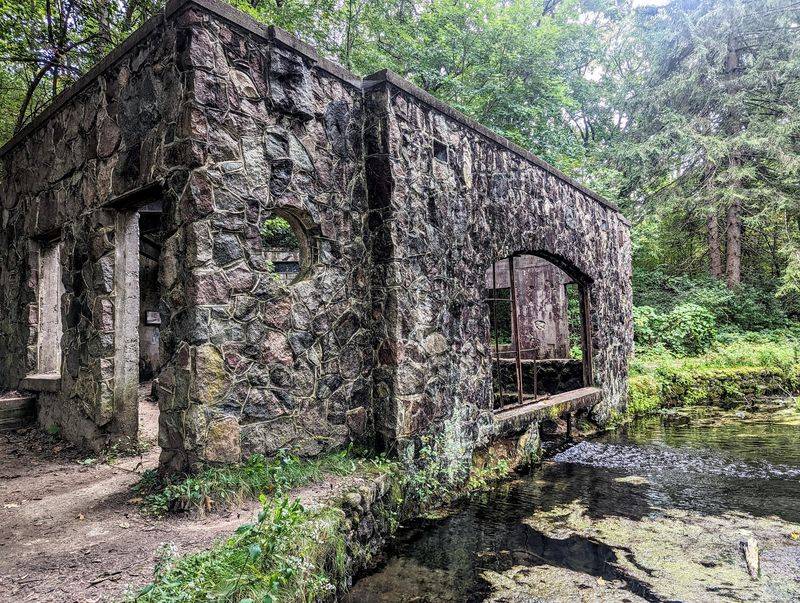
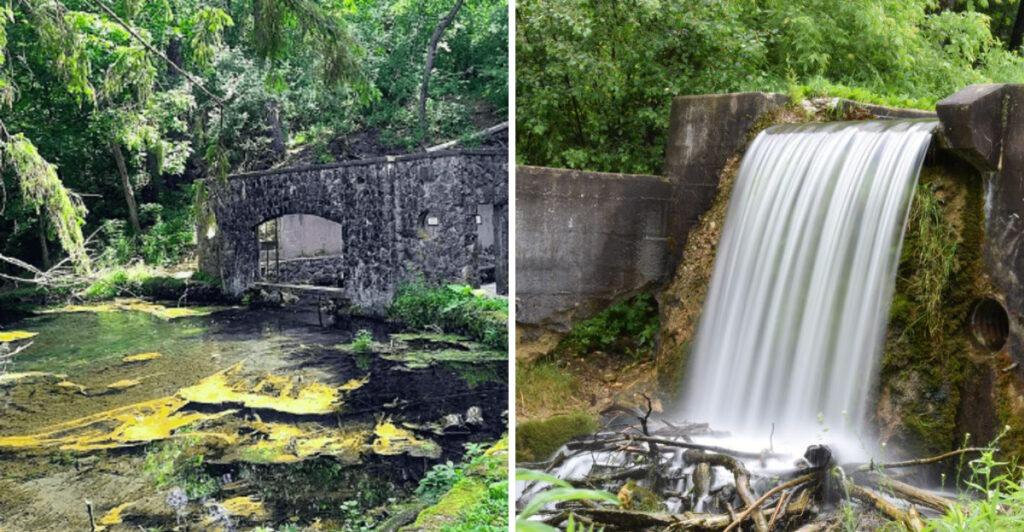
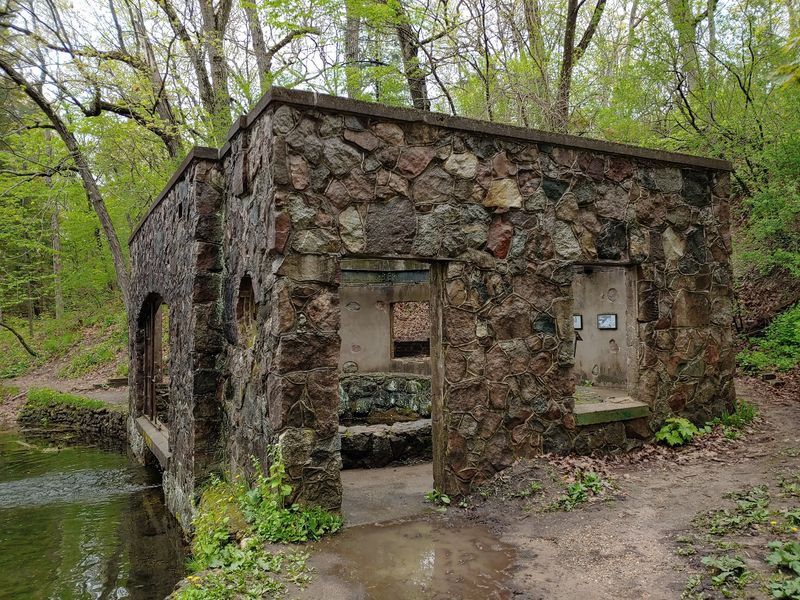
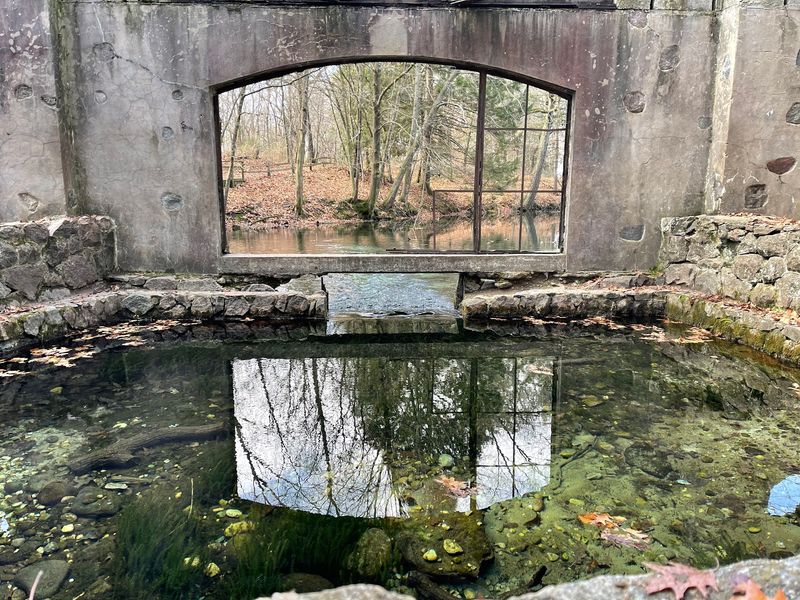
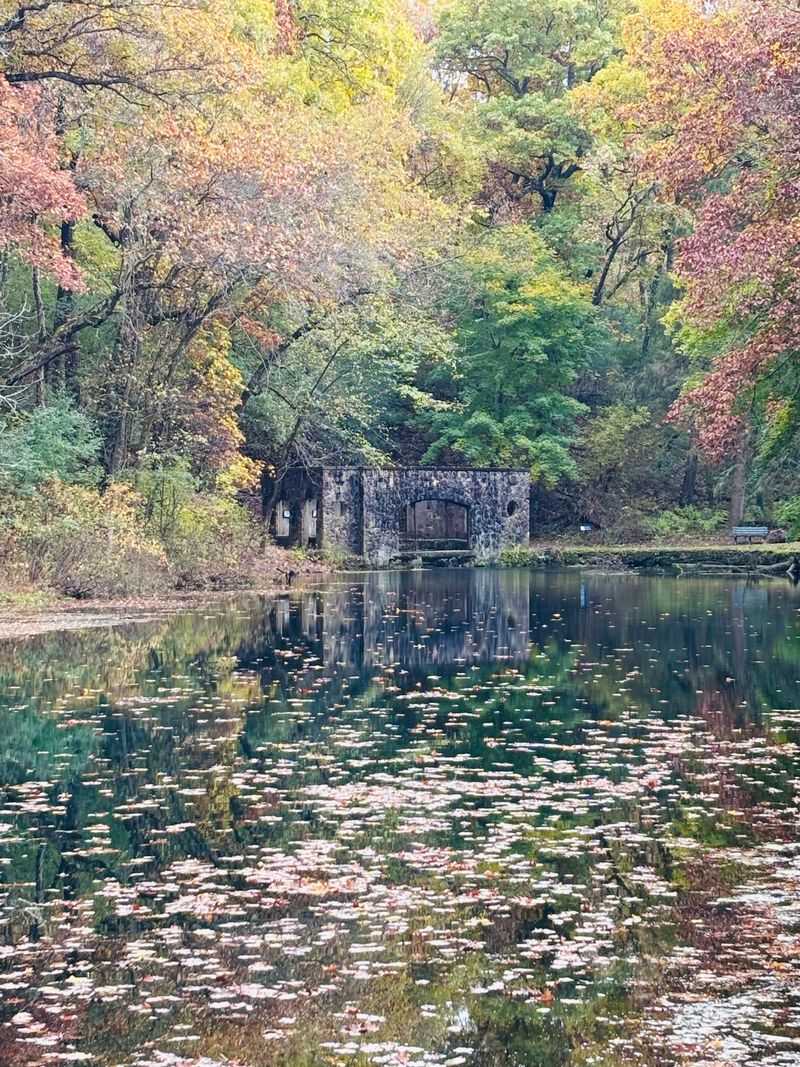
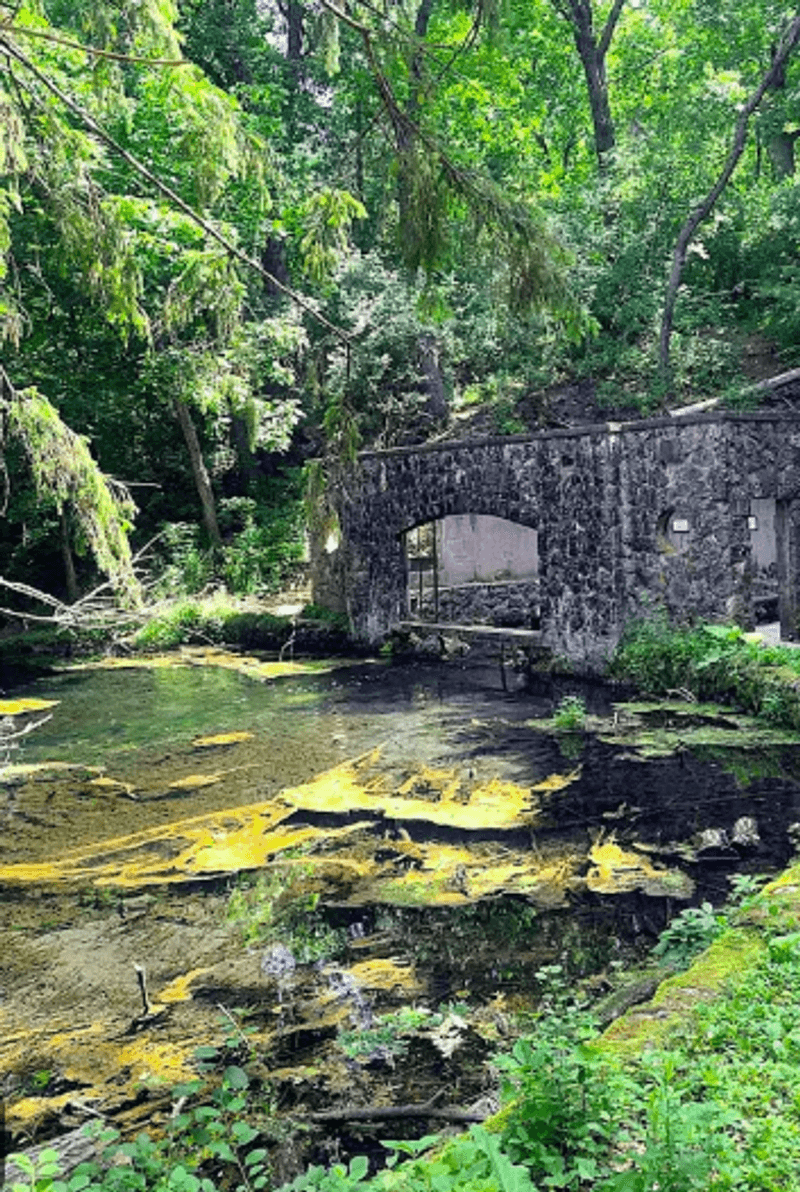
One of the most photographed features along the trail is the old spring house, a stone structure built directly over the main spring outlet. The roof and windows are long gone, but the stone walls remain standing, and the effect is striking in a way that a fully intact building might not be.
Water still flows through and around the structure, and the clarity of that water makes it easy to see straight to the bottom. The spring house was originally built to control and channel the flow of water for the resort’s use, and the craftsmanship of the stonework is still visible despite decades of exposure.
Interpretive signs near the structure explain its original purpose and give context to the broader resort history. The combination of flowing water, old stonework, and surrounding trees creates a setting that feels genuinely historic rather than staged.
Fall is a particularly popular time to visit, when the foliage frames the ruins in warm color.
Trout in the Water and Why You Can Actually Fish Here
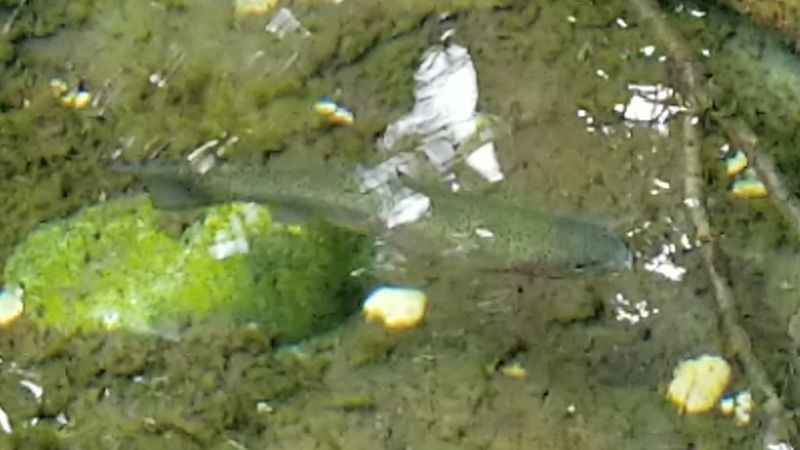
The spring-fed pond and channels at Paradise Springs are home to trout, and watching them move through the clear water is one of the more quietly compelling parts of the visit. The water is transparent enough that the fish are easy to spot from the trail without any special effort.
Fishing is permitted at the site, and there is a dedicated fishing pier that makes access straightforward. However, the rules are strictly catch-and-release only, so bringing the right gear and understanding the regulations before arriving is essential.
No keeping fish is allowed under any circumstances.
The trout thrive here because the spring water maintains a cool, stable temperature that suits them year-round. This is not a stocked tourist pond with listless fish.
These are active, healthy trout in a genuinely natural environment, and the combination of clear water and visible wildlife makes the fishing pier worth visiting even for people who have no intention of casting a line.
Wildlife Beyond the Trout: What Else Lives Here
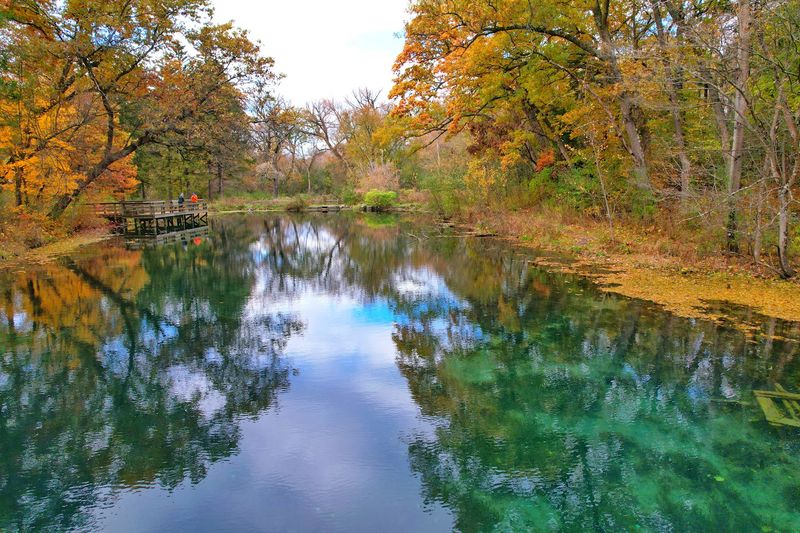
Trout get most of the attention at Paradise Springs, but the wildlife story here goes well beyond fish. The ponds and pools along the trail support a healthy turtle population, and the wooden bridges installed over some of the pools were specifically placed to give turtles a way to exit the water rather than remain trapped.
That small detail says a lot about how the site is managed. Conservation thinking is built into the physical infrastructure of the trail, not just posted on signs.
Turtles can frequently be spotted basking on those wooden structures during warmer months.
Birds are also a consistent presence throughout the trail corridor, particularly in the wooded sections where the canopy closes over the path. The mixture of open water, wetland edges, and mature trees creates habitat diversity that supports a wide range of species.
Bringing binoculars along is not a bad idea, even if the trail itself is short enough that most people visit without any specialized gear.
The Boathouse and What the Old Photos Reveal
The old boathouse is one of the more tangible connections to the resort era at Paradise Springs. The structure still stands along the trail route, and inside, old photographs document what the property looked like during its active years as a destination resort in the 1930s and 1940s.
Seeing those images next to the current landscape is a genuinely interesting exercise. The bones of the place are recognizable, but nature has reclaimed much of what was once manicured and developed.
Pools that were once managed for guests now exist as natural features, and structures that once housed amenities are now historical markers.
The boathouse photographs draw a lot of attention from trail walkers, particularly those with an interest in local history or architectural heritage. Spending a few minutes inside the structure adds meaningful context to the rest of the walk.
Without that historical reference point, the ruins along the trail are interesting. With it, they become genuinely compelling pieces of a larger story.
The Prairie Cabin and Its Sunset Setting
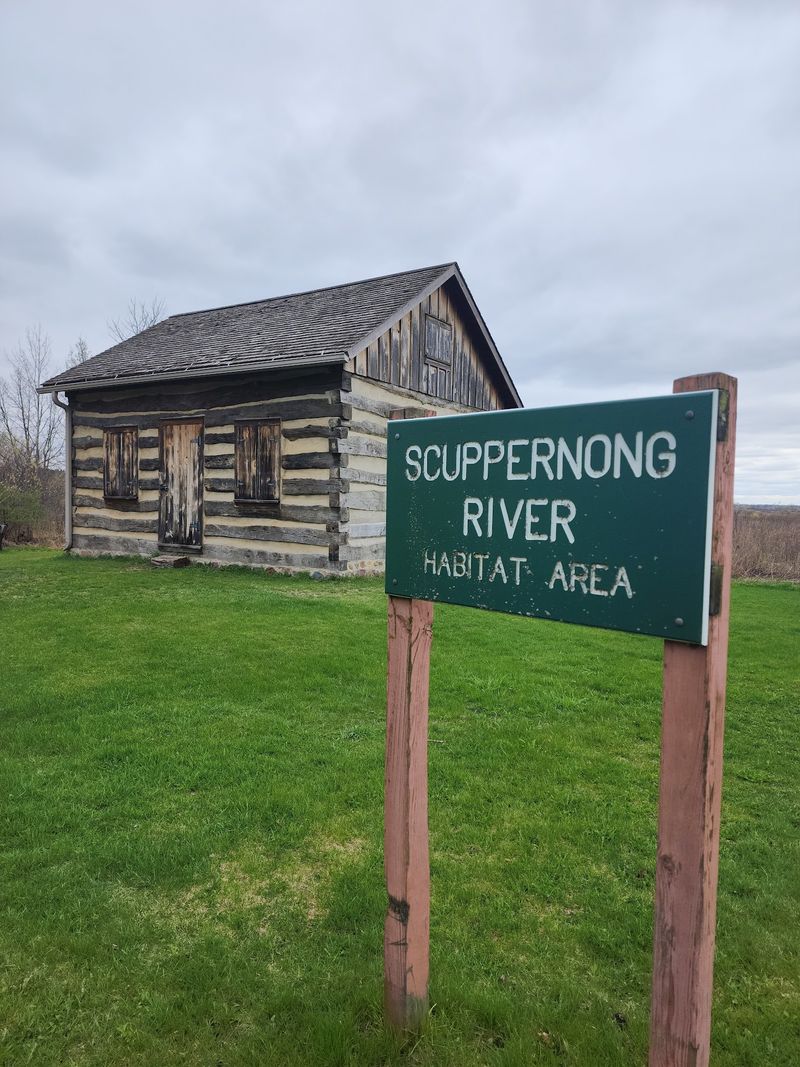
Away from the spring and pond area, the trail passes through a section of open prairie where the remains of an old cabin stand as a quiet landmark. The structure is a historic remnant of the property’s earlier settlement history, and its placement in the open meadow gives it a different character than the stone ruins near the water.
The prairie setting means the cabin area catches full light during the late afternoon and early evening hours. People who have visited at sunset describe the combination of the weathered cabin, the open field, and the low light as one of the more visually striking moments the trail offers.
The contrast between the wooded spring area and the open prairie section gives the half-mile loop more variety than its length might suggest. Moving from dense tree cover to an open meadow with historic structures creates a natural rhythm to the walk that keeps the experience from feeling repetitive, even on a return visit.
Interpretive Signs and the Trail Guide Worth Picking Up
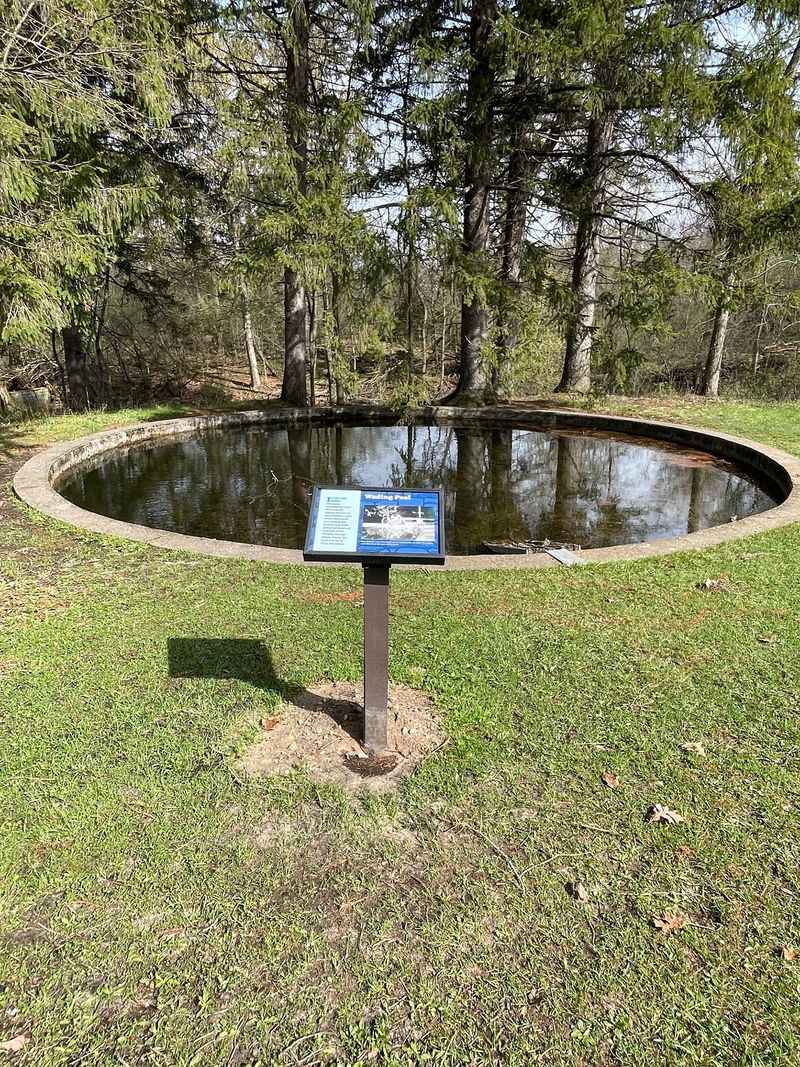
The interpretive signage along the Paradise Springs trail is genuinely well done. Signs are placed at key points throughout the loop, explaining the geological background of the spring, the history of the resort, and the ecological significance of the current landscape.
Reading them adds real depth to what might otherwise feel like a simple short walk.
A printed trail guide is also available, typically distributed at the nearby Ottawa Lake trailhead when supplies are on hand. The guide provides additional historical context and helps connect the various physical features along the route into a coherent narrative.
Picking one up before starting the loop is worth the effort.
The combination of on-trail signs and a printed guide makes Paradise Springs one of the more educational short trails in the Kettle Moraine system. Families with curious kids tend to get a lot out of the interpretive elements, and adults with an interest in Wisconsin’s natural and cultural history will find plenty of detail to engage with throughout the walk.
Accessibility for All Ages and Abilities
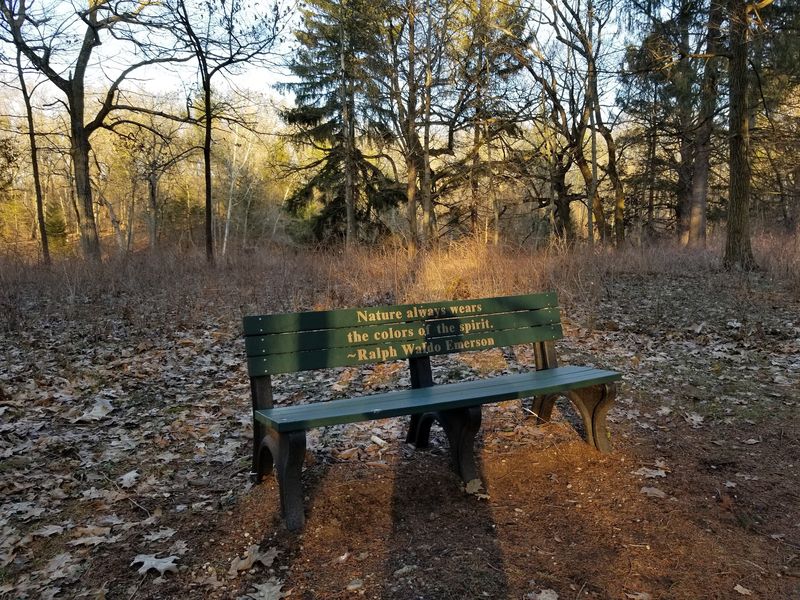
Not every trail earns a reputation for being genuinely usable by people of all ages and physical abilities, but Paradise Springs does. The fully paved loop, the multiple benches placed at regular intervals, and the relatively flat terrain combine to make this one of the most inclusive short hikes in southeastern Wisconsin.
Grandparents who might struggle on unpaved or uneven terrain can complete the full loop comfortably. Parents with infants in strollers have no obstacles to navigate.
The benches are particularly appreciated by those who need to rest between sections, and they are positioned thoughtfully rather than just dropped at random points along the path.
That combination of physical accessibility and natural beauty is rarer than it should be. Many accessible trails sacrifice scenery for convenience, but Paradise Springs does not make that trade-off.
The spring, the ruins, the trout, and the pond are all fully reachable without any special equipment or physical challenge, which is a genuinely meaningful feature of this trail.
Picnicking and the Pavilion With a Practical Bonus
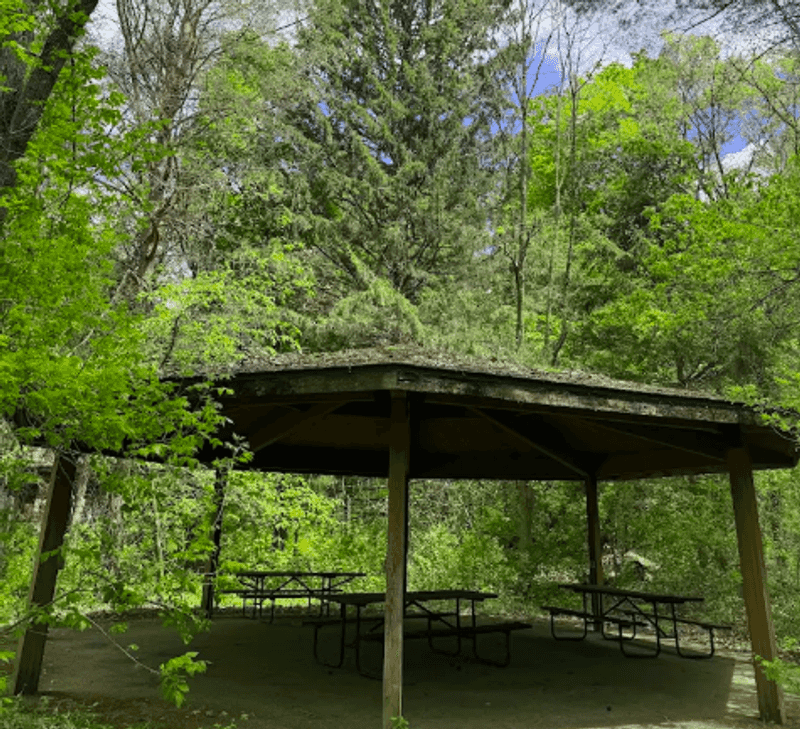
Paradise Springs includes a pavilion that works well as a base for a longer outdoor visit. The structure is a decent size and comes equipped with electrical outlets, which is a surprisingly practical feature for a park pavilion.
Families who want to recharge a device or set up a small electric appliance for a picnic have that option available.
The picnic area fits naturally into the overall layout of the trail, positioned close enough to the main attractions that visitors can eat and then walk the loop without covering unnecessary ground. Bringing a packed meal and spending a couple of hours at the site is a common and entirely reasonable way to spend a morning or afternoon here.
The pavilion area also provides shade during warmer months, which matters when the trail itself is partly exposed to open sky. Planning a visit around a picnic adds time to the outing without requiring any additional driving or destination-hopping, making the whole experience feel more complete and relaxed.
Best Times to Visit and How to Beat the Crowds
The parking lot at Paradise Springs holds roughly 15 to 20 cars, and on busy weekends it fills up quickly, sometimes with people waiting in line for a spot. That capacity constraint is the single biggest practical challenge the trail presents, and the solution is straightforward: arrive early.
Weekday mornings offer the most peaceful experience. The trail is open from 6 AM daily, and getting there close to opening time means having the loop largely to oneself.
Early visits also tend to offer better conditions for spotting wildlife, since the animals are more active before foot traffic picks up.
Fall is widely considered the most visually rewarding season at Paradise Springs. The foliage frames the stone ruins and water features in a way that summer greenery cannot quite match.
Spring and early summer bring wildflowers to the trail corridor, adding another layer of natural interest. Winter visits are possible during operating hours but require checking conditions, as the paved surface can become slippery in cold weather.
No Dogs Allowed: What to Know Before You Go
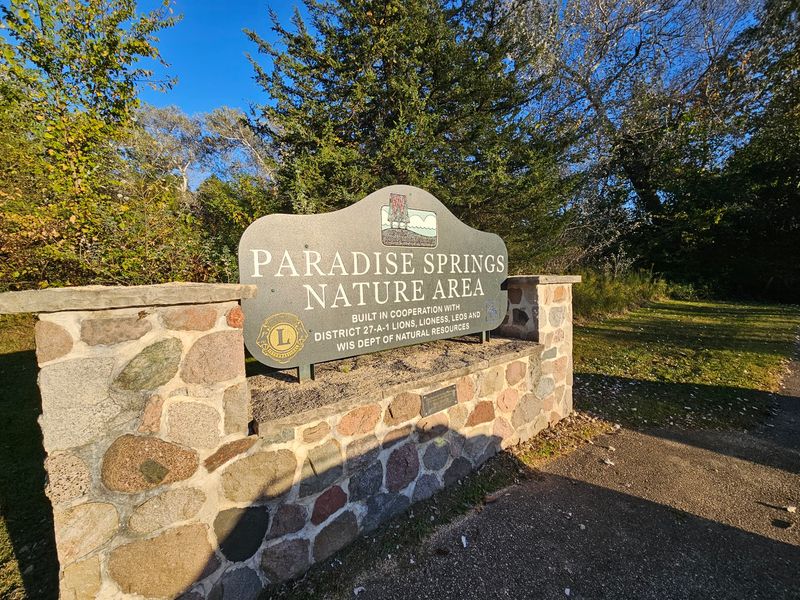
One detail that catches some visitors off guard is the no-dogs policy at Paradise Springs. Unlike many Wisconsin state parks and trails that welcome leashed pets, this particular site does not permit dogs on the property.
Arriving with a dog means turning around, which is a frustrating outcome that a quick check of the rules beforehand can easily prevent.
The restriction likely exists to protect the wildlife and the ecological integrity of the spring and pond areas. Trout, turtles, and nesting birds are all present along the trail, and keeping the environment free of domestic animals helps maintain the natural balance that makes the site worth visiting in the first place.
For those traveling with pets, nearby areas within the Kettle Moraine State Forest do permit dogs on a leash, so planning a combined outing is possible with a little advance research. Checking the DNR website before any visit is the most reliable way to confirm current rules and any seasonal changes to trail access or facilities.
Why Paradise Springs Keeps Pulling People Back
A half-mile trail with a small parking lot and no restroom facilities might not sound like a destination worth returning to multiple times, but Paradise Springs has a way of defying that expectation. People who visit once frequently come back, and the reasons are layered rather than simple.
Part of the appeal is how much the place changes with the seasons. The same loop looks and feels genuinely different in spring, summer, fall, and winter.
The light changes, the vegetation changes, and the wildlife activity shifts throughout the year, giving repeat visitors new things to notice each time.
There is also something quietly compelling about a place where the earth itself is doing something extraordinary at a constant, measurable rate. Thirty thousand gallons per hour is not an abstraction once you are standing next to the spring and watching the water move.
That combination of geological wonder, layered history, and genuine accessibility is exactly what makes Paradise Springs one of southeastern Wisconsin’s most consistently rewarding short trails.
Where Exactly Paradise Springs Is and How to Get There
Right off County Road N in the village of Eagle, Wisconsin, Paradise Springs Nature Trail sits within the southern unit of Kettle Moraine State Forest. The official address is W374 S8640, County Rd N, Eagle, WI 53119, and the trail is managed by the Wisconsin Department of Natural Resources.
The parking area is small, fitting roughly 15 to 20 vehicles at most, so arriving early on weekends is a smart move. The lot fills up faster than most people expect, especially on warm summer mornings.
A daily vehicle pass costs $8 for Wisconsin residents, and an annual sticker runs $28, covering entry to all state parks statewide. The trail is open every day from 6 AM to 11 PM, giving early risers and evening walkers plenty of flexibility.
Paying attention to the self-pay station at the trailhead is important, as parking enforcement is active at this location.
Share this story