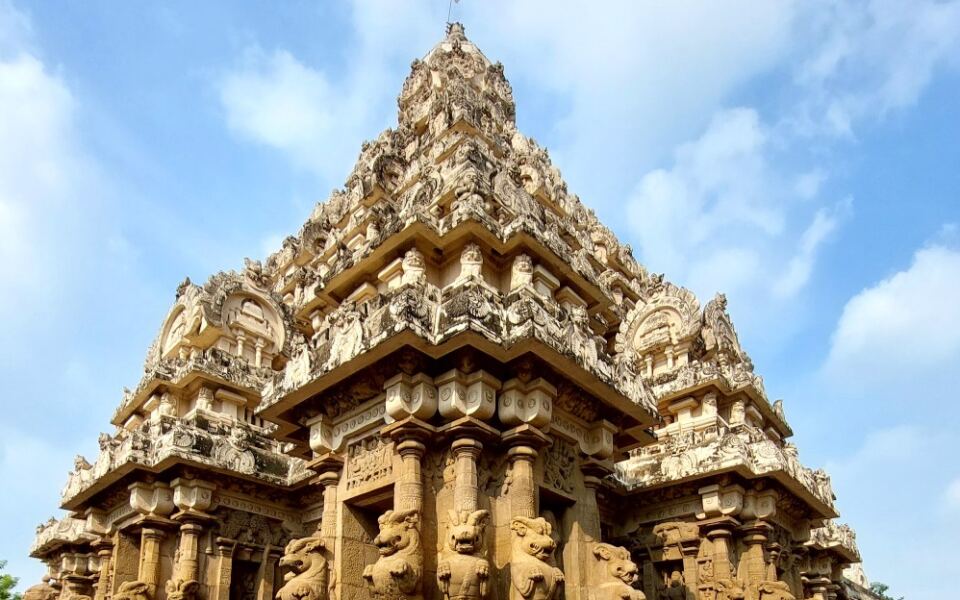
Tucked into a quiet street in Kanchipuram, a stone temple has been standing since around 700 CE. It was built by Pallava kings and helped shape how later temples in South India looked.
Its walls are packed with carvings, and its tiny passage even asks you to crawl. Ready to see why visitors give it 4.8 stars?
A Royal Build Around 700 CE
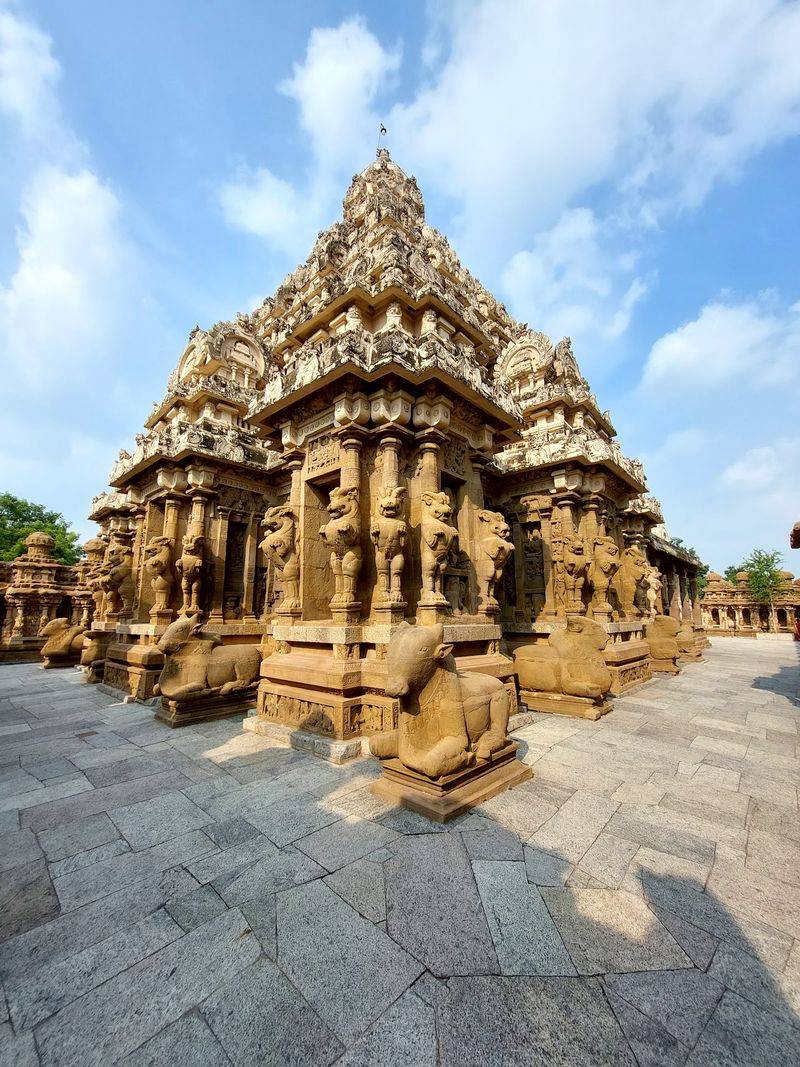
Picture a king with a big dream and a lot of sandstone. Around 700 CE, the Pallava ruler Narasimhavarman II set out to build a home for Lord Shiva, and the result still stands in Kanchipuram.
His son Mahendravarman III later finished and expanded the work. Together, father and son gave the city its oldest surviving temple, which is a pretty good family project.
Many visitors describe the feeling of walking in as stepping back about 1,300 years. The temple is cared for by the Archaeological Survey of India, so you can enjoy it without the heavy crowds of busier temple towns.
Some people mix up the builders in their memories, and a few even credit the Cholas. The records and most reviewers point to the Pallavas, and that is the story the stones themselves tell.
Here is a handy tip: read a little about the Pallava dynasty before you go. Once you know who built it and why, every wall and doorway starts to feel like a page in a history book that you can touch.
The Sandstone Story
Sandstone is soft, golden, and a dream for sculptors. It lets artists carve tiny details, but it also wears down when wind and rain visit for centuries.
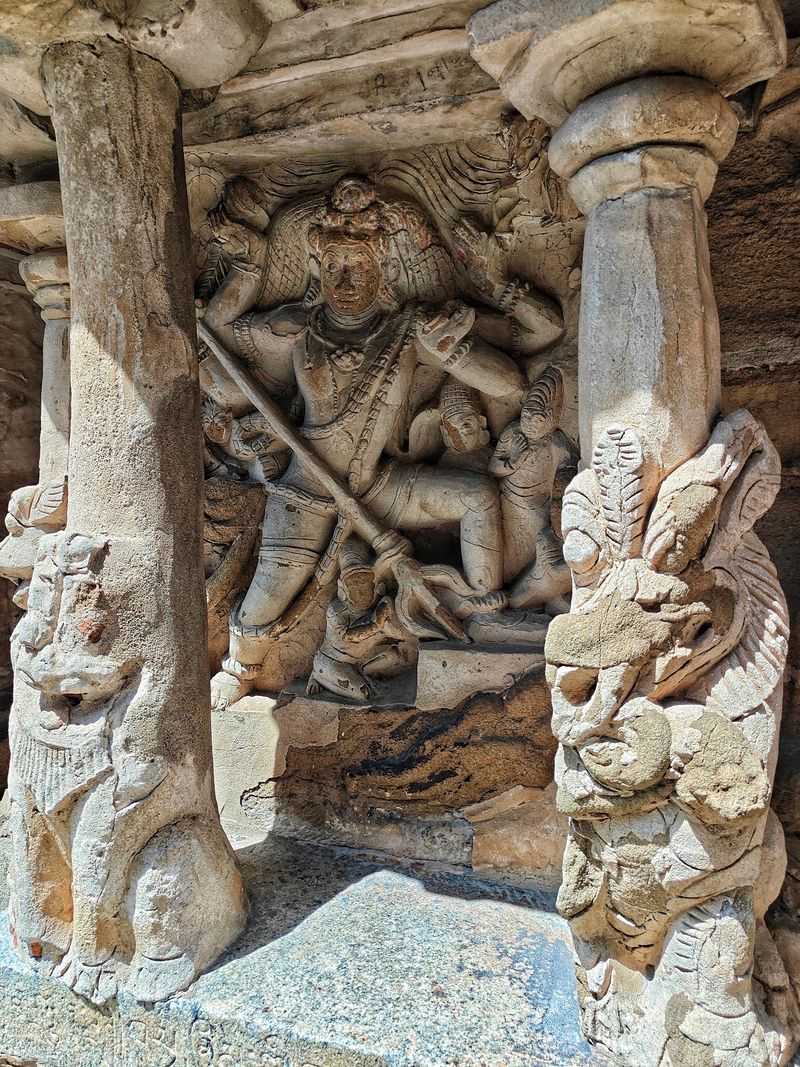
You can see both sides here. Some figures still look crisp, while others have softened or lost pieces over time.
That is why the temple counts as a turning point. Earlier South Indian shrines were often cut from rock or built in other ways, and this one was assembled from carved stone blocks.
Builders afterward, including the Cholas, borrowed the idea again and again.
Visitors often notice the erosion and feel a little sad about it. Restoration work led by the ASI is going on now, and reviewers hope it will help the walls last many more centuries.
Please keep your hands off the carvings. A few visitors have been seen touching and scratching the walls, and oils and scrapes only speed up the damage.
Look closely, take your photos, and let the stone rest.
The Tower That Set a Trend
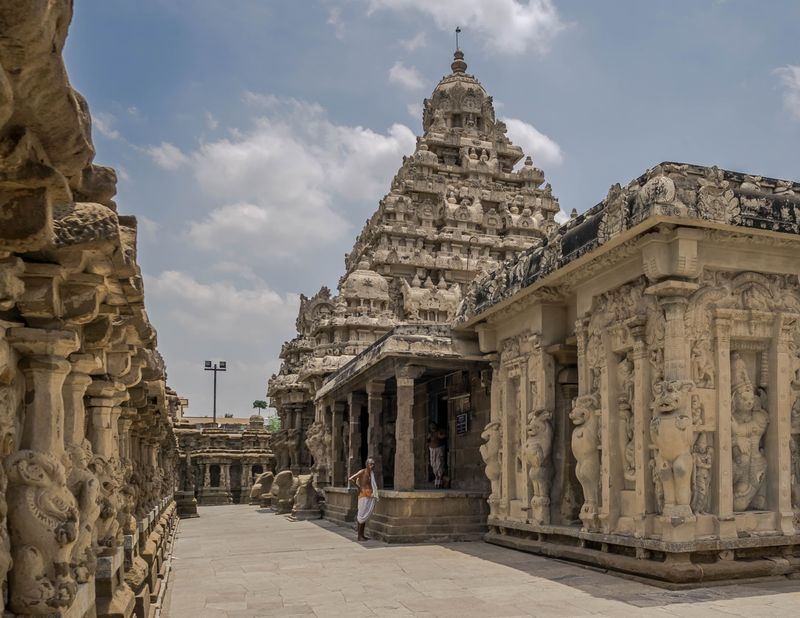
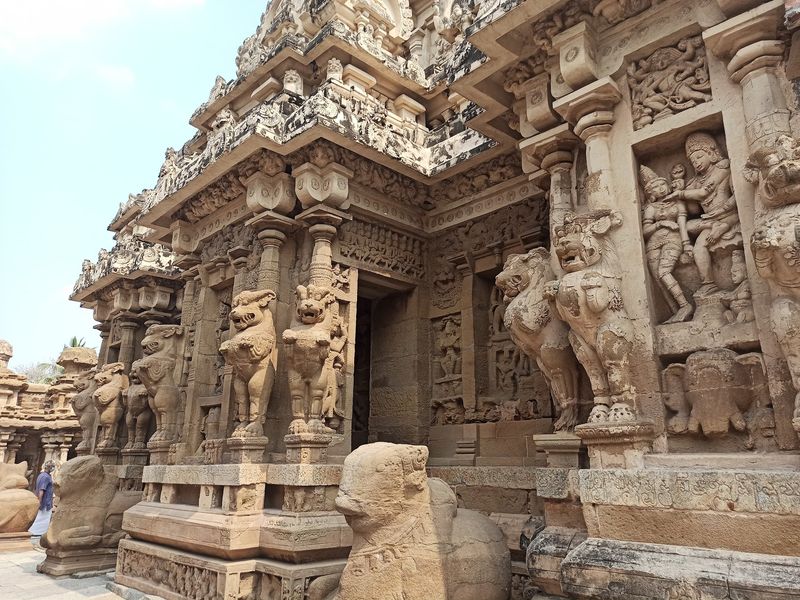
Look up and you will spot the vimana, the stepped tower rising above the sanctum. It looks like a stone pyramid built in neat layers.
This design became a model for many Dravidian temples built later. If you have seen towering Tamil temples elsewhere, you are looking at a distant cousin of this early original.
Historians often call the temple a trendsetter because of its facades, towers, and style of sculpture. It is one of the earliest examples of Dravidian architecture.
The scale is friendly, too. You can walk all the way around and study the tower from several angles without a crowd in your shot.
For the best photos, aim for soft morning or evening light. The warm glow brings out the layers of the tower, and the shadows make the carvings pop like a pencil sketch.
Dancing Shiva in Stone
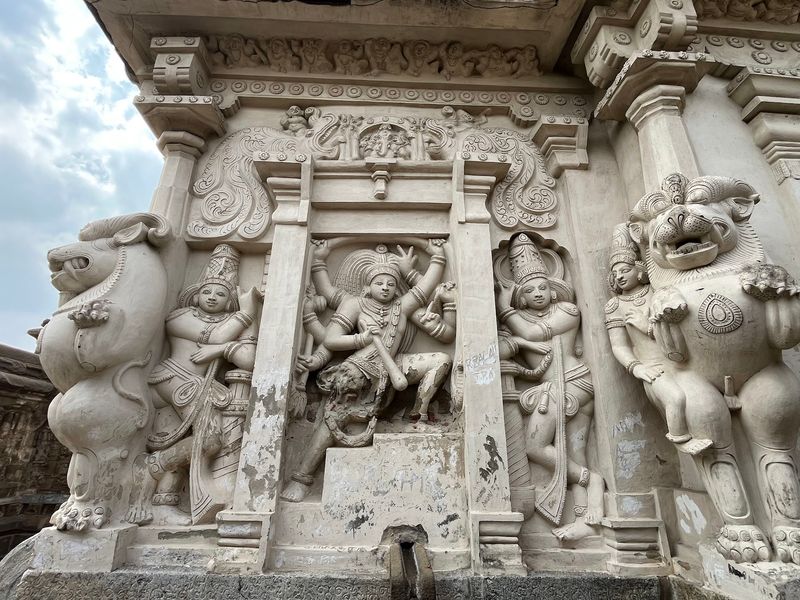
One visitor asked how any sculptor could imagine something so grand. Stand in front of the Shiva panels and you will ask the same thing.
Lord Shiva appears in many dance postures, and the carving is famous for how well it has survived. One reviewer loved a figure standing proudly with curled hair, and said the 3D effect on stone left them amazed.
Many panels show scenes from the Shiva Purana. Look for the small details, like the bend of an arm or the tilt of a head, because they give each figure real energy.
Some inscriptions are in ancient Tamil script, so you may spot writing among the pictures.
Take your time here. A slow walk along the outer wall rewards you with new details on every lap, and nobody will rush you along.
Fifty-Eight Little Shrines
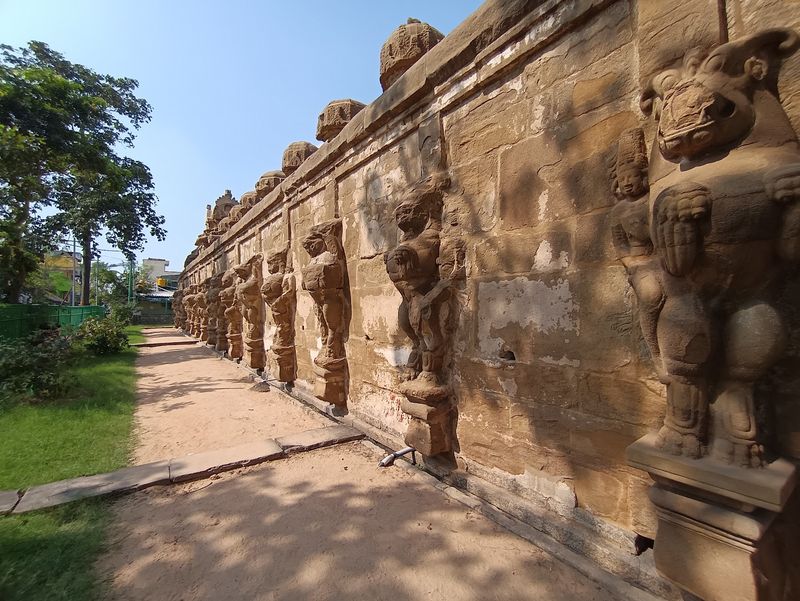
Count them if you like: 58 small shrines line the inner compound. Each one is dedicated to a different form of Lord Shiva.
Together they wrap the main temple like a stone neighborhood. Every little cell has its own carvings, so the walk becomes a treasure hunt.
Look for lion pillars as you stroll. The lions give the shrines a bold, protective look that fits the royal style of the Pallavas.
One review mentions that the temple has a small shrine where worshippers may queue for darshan. The outer areas are free to roam, while the inner shrine draws regular devotees.
Wear comfortable shoes and bring a bottle of water. Kanchipuram can be much hotter than Chennai, and the stone courtyard holds the heat in the afternoon.
Paintings That Refused to Fade
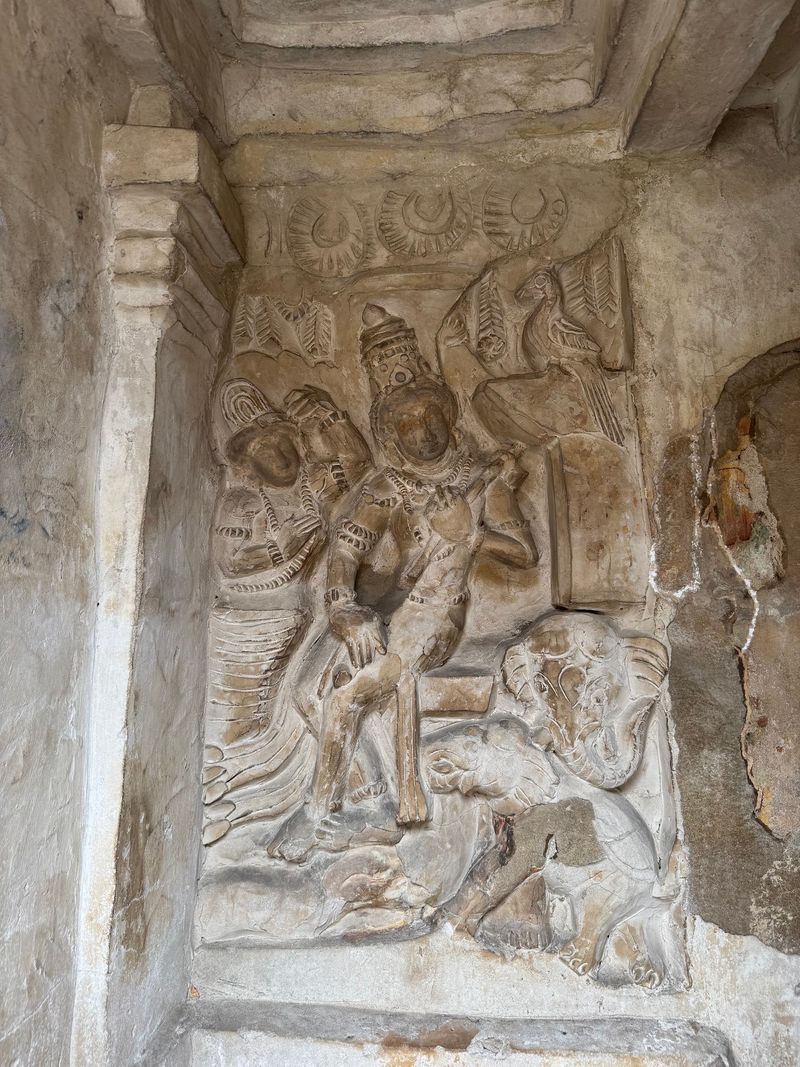
Hidden inside some small shrines are faint streaks of color that are over a thousand years old. They are traces of original 8th-century fresco paintings.
The temple preserves some of the earliest Hindu mural paintings found in Tamil Nadu. Seeing pigment survive this long feels like catching a whisper from the past.
You will need patient eyes. The colors are soft and scattered, so move slowly and let your eyes adjust to the dim light.
Alongside the paintings, you will find valuable Pallava inscriptions. Together they show that the temple was not only built but also decorated and documented with care.
Visitors who love art often say this is the hidden highlight. If you only glance at the big tower, you might walk right past it, so peek into the little shrines.
The Big Shivalingam
Inside the sanctum, a huge Shivalingam waits in dim, quiet light. One visitor from Patna measured it at about 10 feet high and 16-sided.
The temple is dedicated to Shiva as Kailasanatha, the Lord of Mount Kailash. Devotees believe that worshipping here brings peace and spiritual progress.
Many reviewers describe the dark, silent inner chamber as deeply calming. One person visited just before closing and enjoyed an unhurried darshan with almost no crowd.
Timing matters. Reviews mention that the main sanctum darshan opens in the evening, and one visitor saw the evening Abhisheka, though the priest did not allow a long stay.
Be gentle with expectations and respectful in manner. Keep your voice low, follow the priest’s guidance, and you will likely leave feeling lighter.
The Crawl Through Rebirth
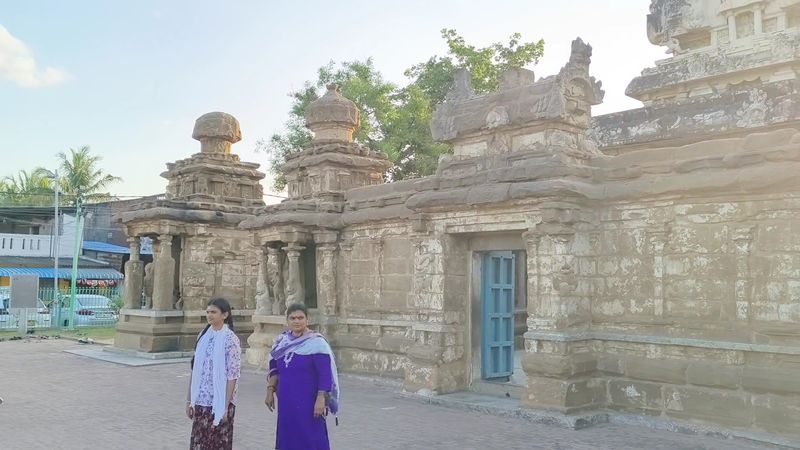
Ready to crawl? A very narrow passage circles the sanctum, and the entrance is small enough that you must get low.
Tradition says the trip stands for the soul’s journey through birth, life, death, and rebirth. Coming out the other side is meant to feel like liberation.
The exit is the tricky part. One visitor describes an L-shaped turn where you nearly have to lie down, and there is an easier alternative exit for anyone who prefers it.
Many visitors call the crawl the most fascinating moment of their trip. It turns a quiet temple tour into a tiny adventure.
Wear clothes you can move in and keep your phone in a secure pocket. Go slowly, check with the staff if you are unsure, and skip it if it feels uncomfortable, since it is optional.
A Calm Escape From Busy Kanchi
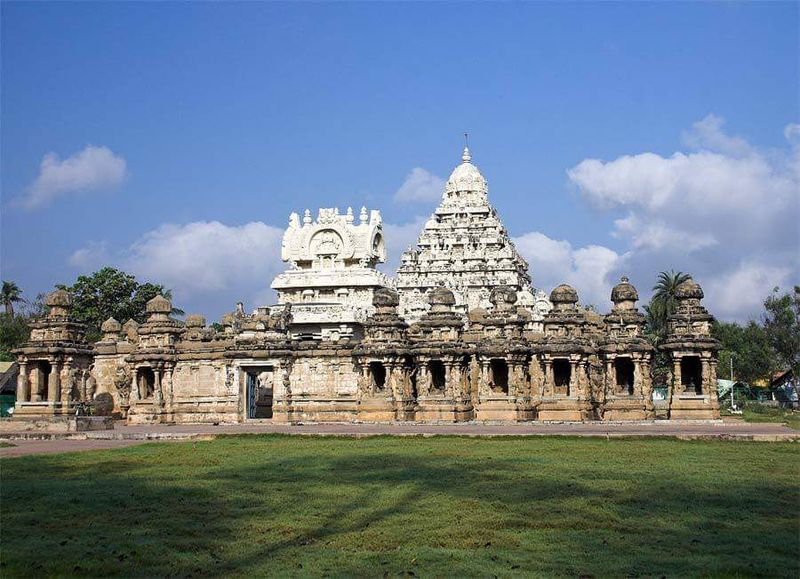
Kanchipuram is known for bustling temples, but this one hums at a lower volume. Reviewer after reviewer uses words like peaceful, serene, and meditative.
Early mornings are especially quiet. One visitor found no crowd at all, which made the place feel like a journey back to the 8th century.
The grounds are clean, calm, and well kept, with ongoing landscaping and renovation. It is a good spot to sit for a few minutes and simply breathe.
Opening hours on the map listing are 9 AM to 12:30 PM and 4 PM to 6:30 PM daily. Some visitors report slightly different timings, so plan a little buffer.
There is no proper parking lot, but you can park outside. Restrooms are limited, though a nearby shop outside the gate offers one for a small fee.
Planning Your Kanchi Temple Day
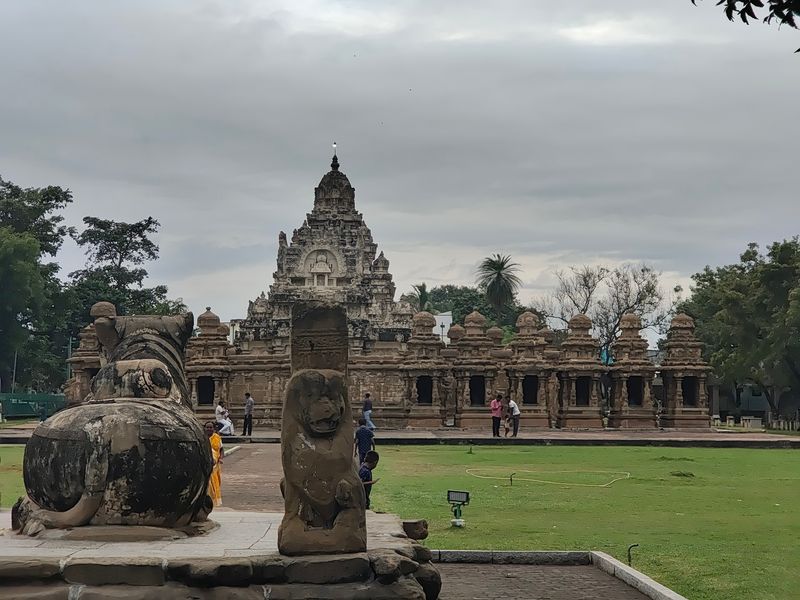
Good news for planners: the temple sits right by the road, and there is usually no wait at the entrance. The approach is lined with souvenir shops where you can pick up local handicrafts.
The address is Kailasanathar Temple Road, Pillaiyarpalayam, Kanchipuram. Darshan is free, though entering the inner sanctum passage may cost a small amount, as one visitor paid about 10 rupees.
Roadworks have sometimes made the street crowded, and parking space is tight. Arrive by auto or cab if you can.
Pair this stop with other Kanchipuram favorites. Reviewers suggest the Ekambareswarar Temple, Varadharaja Perumal Temple, and Kamakshi Amman Temple.
Aim for early morning or late afternoon for cooler weather and better light. Allow about an hour, as one visitor did, and you will leave calm and happy.
Share this story