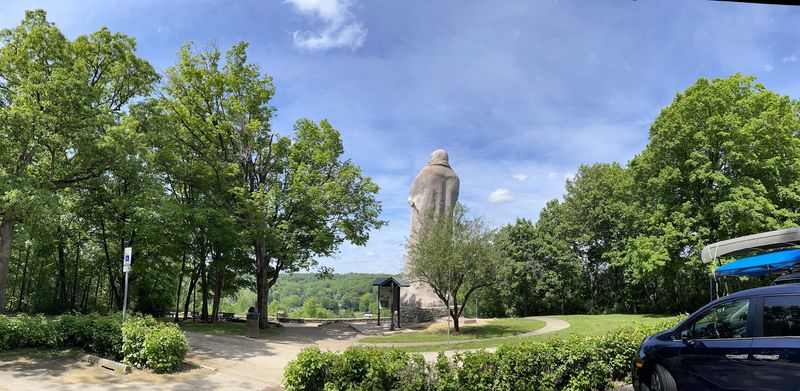
I pulled off a quiet country road in northern Illinois expecting a quick stretch and a glance at a statue. Instead, I found myself standing on a high bluff, staring up at a giant concrete figure gazing out over a wide, winding river.
The view made me forget about the snacks waiting in the car, and the trails below made me want to stay all afternoon. It costs nothing to visit, and it might be one of the most memorable free stops in the whole state.
A Concrete Giant on a Rock River Bluff
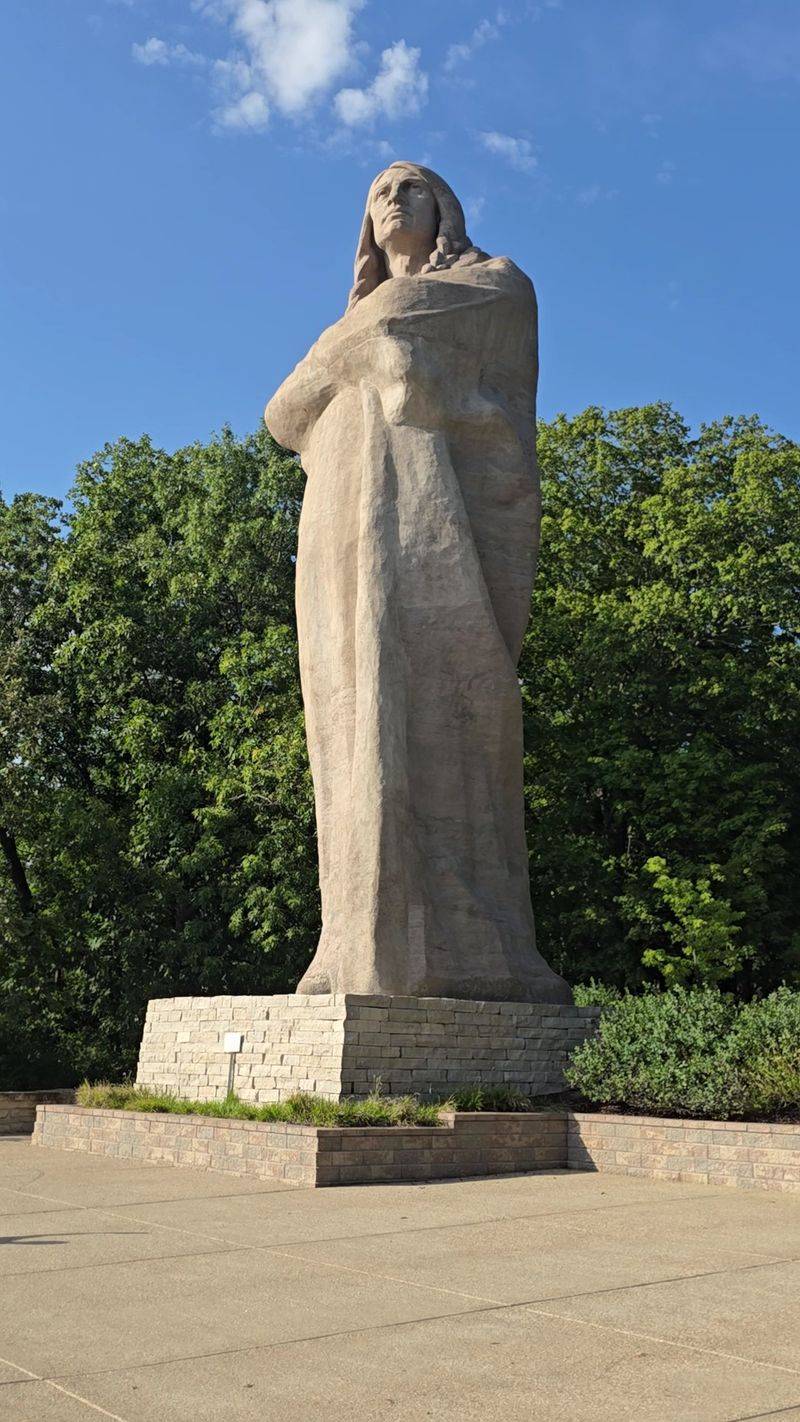
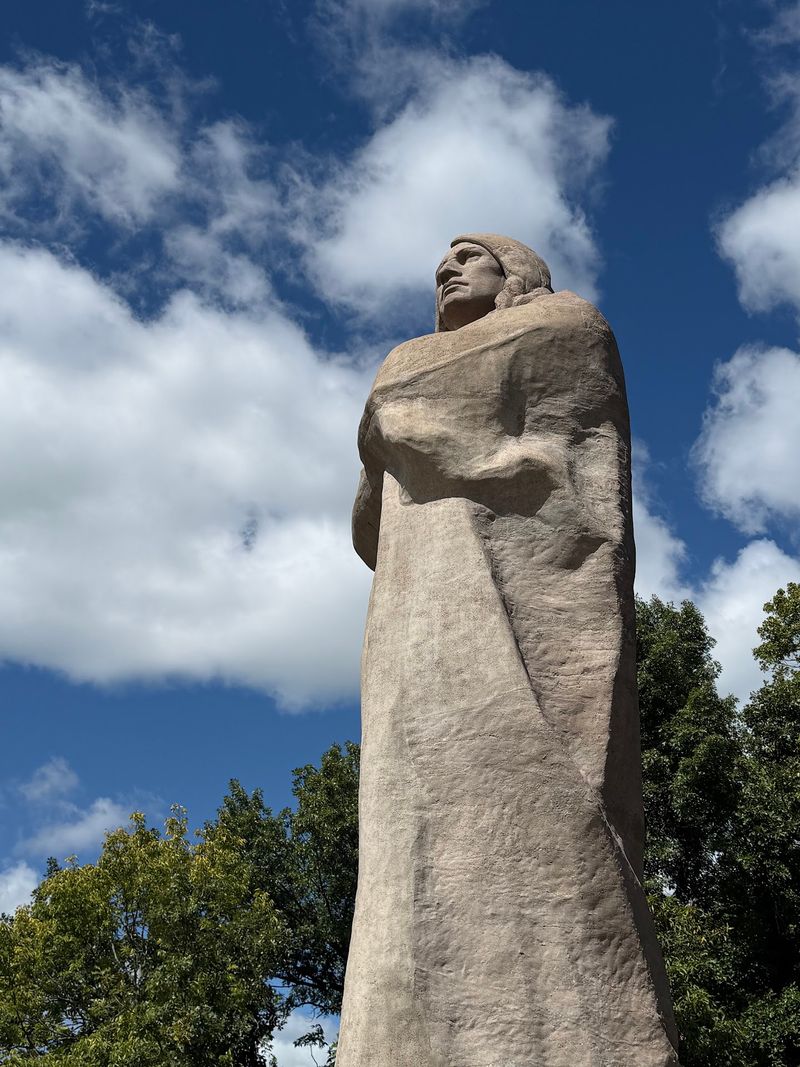
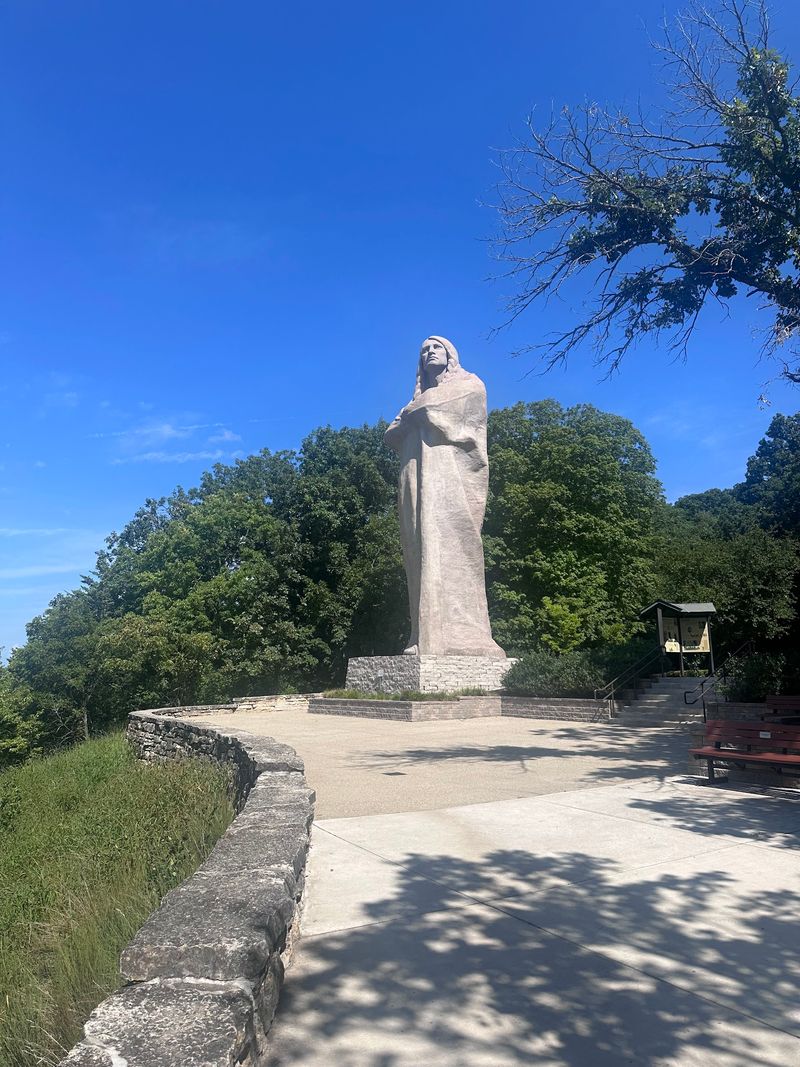
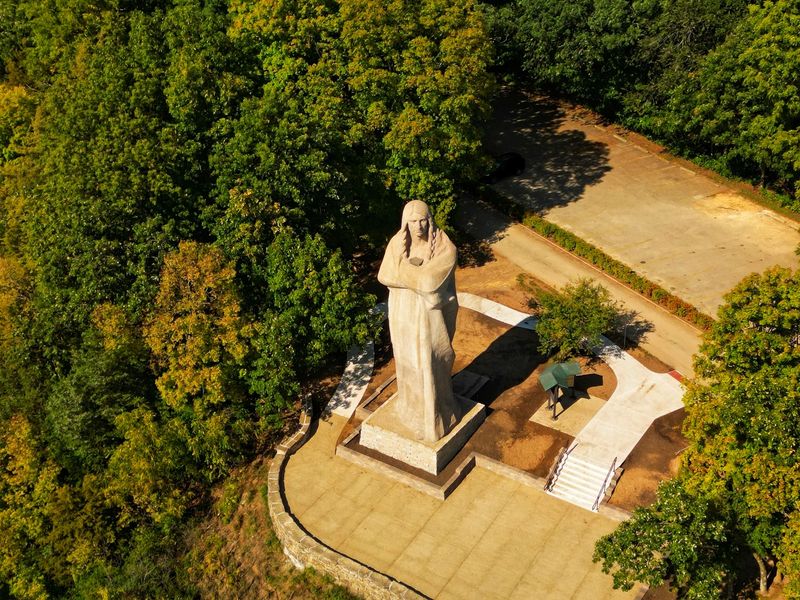
Perched high above the Rock River near Oregon, Illinois, stands The Eternal Indian, a towering concrete figure that many people simply call the Black Hawk Statue. It sits inside Lowden State Park at 1411 N River Rd, where the bluff drops sharply toward the water below.
Arms folded, the figure looks out across the valley as if keeping watch. Locals and travelers often describe it as majestic, and first-timers are usually surprised by its size.
One visitor admitted it was a lot bigger than expected, which is a common reaction once you step out of the car.
Officially listed as a cultural landmark, the statue serves as a tribute to Native American heritage. It anchors a park filled with trails, picnic spots, and overlooks.
Think of it as the main event, with plenty of bonus features waiting just beyond the parking lot for anyone willing to wander a little.
History Written Into the Land
Long before anyone poured concrete on this bluff, the land carried deep stories. Visitors often mention how rich the area feels with history from before 1832, and plenty of people come here simply to sit quietly and soak in that sense of the past.
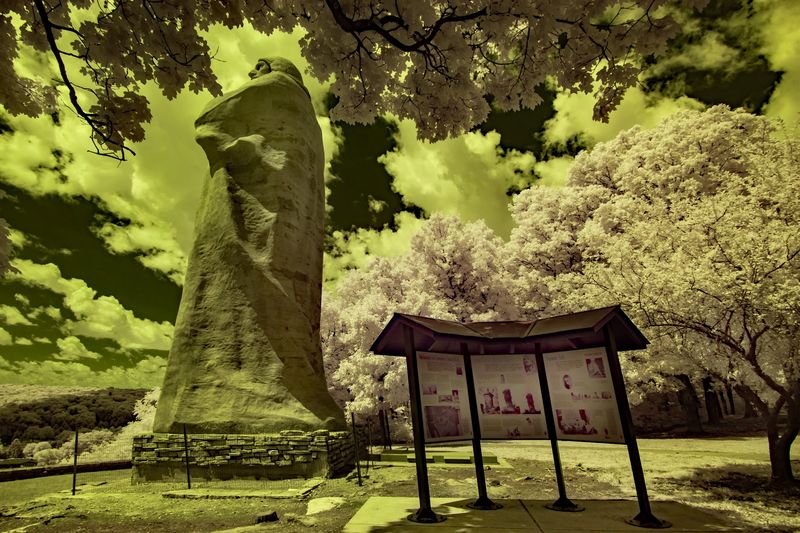
Near the statue, you will find a whole bunch of historical information about the site and the Native peoples connected to the region. Travelers say these displays turn a quick photo stop into a real learning moment.
Families can read together, and kids get a chance to connect the giant figure to the people it honors.
Some guests describe the spot as almost sacred. They talk about breathing the fresh air, looking around, and feeling grateful to the generations who made this place known.
That reflective mood is part of what keeps people returning, sometimes for decades at a time.
The Artist Behind the Sculpture
Here is a fun connection for art lovers. One longtime visitor pointed out that the same artist who created The Eternal Indian also made a well-known fountain sculpture outside the Art Institute of Chicago.
That means a little piece of big-city art history lives out here in the quiet hills of Ogle County.
Up close, the statue feels formidable. Its sheer scale, standing roughly 48 feet tall, is what grabs people first.
Then you start noticing the calm posture and the steady gaze over the river, which gives it a peaceful presence rather than a stern one.
Restoration also comes up often in conversations about the statue. Caring for a concrete giant that has faced Illinois weather for more than a century takes real effort.
Visitors appreciate seeing it looking strong, and that care helps keep it standing proud for future road-trippers to enjoy.
Sweeping Views From the Overlook
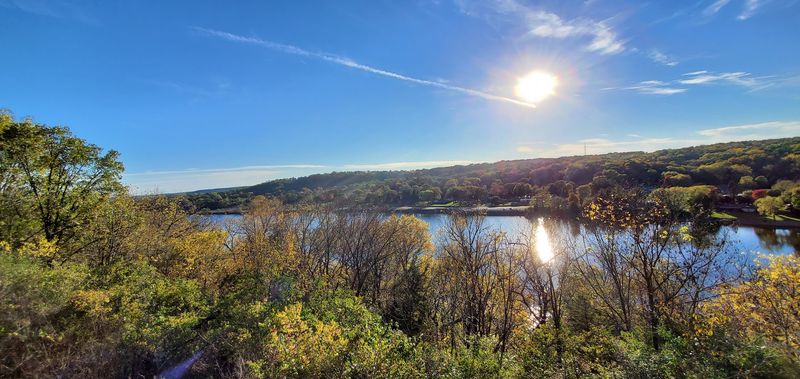
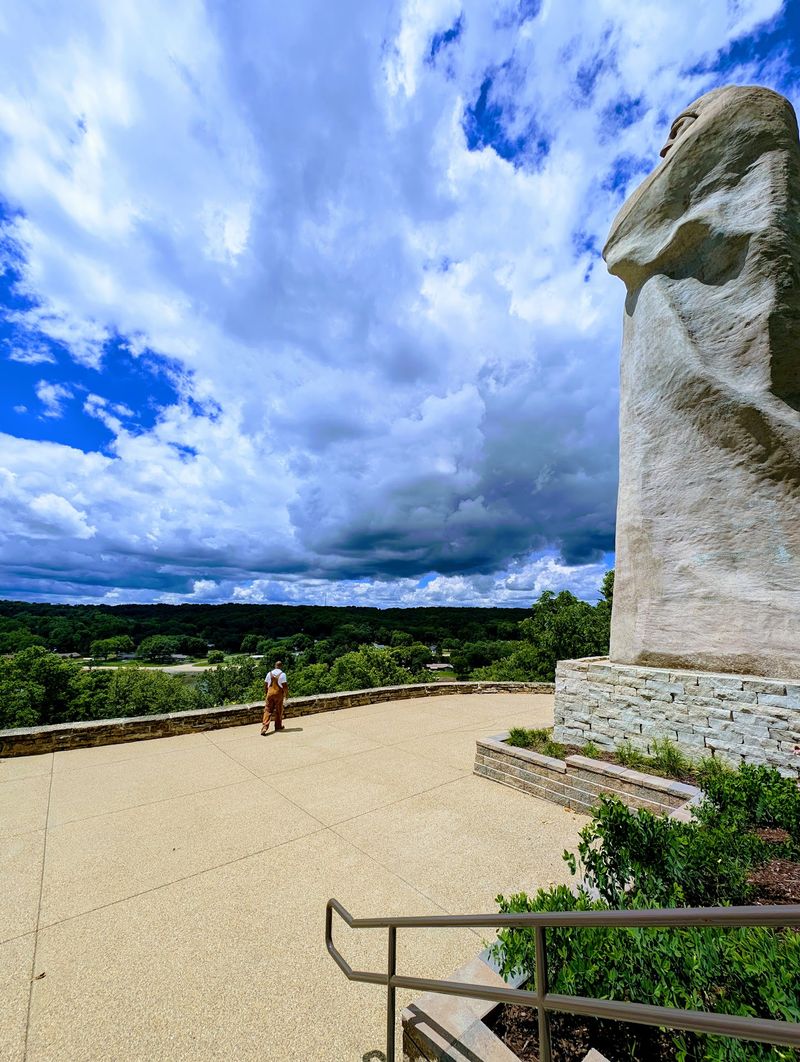
Stand at the edge of the bluff and the Rock River stretches out below like a ribbon. One traveler said it feels like being in the mountains, which is quite a compliment for a state known for flat farmland.
River views and beautiful scenery are two of the things people mention most. You might even spot birds soaring over the valley, as one visitor happily noted.
After heavy rains upstream, the river can swell right up to the top of its banks, creating an especially dramatic scene.
Timing matters a bit here. A visitor shared that in summer, leafy trees can block some of the view, while fall opens things up for clearer sightlines across the water.
Sunset is another favorite moment, when the light softens and the whole valley glows. Bring a camera, or just bring patience and enjoy the show.
Wooden Stairs Down to the Water
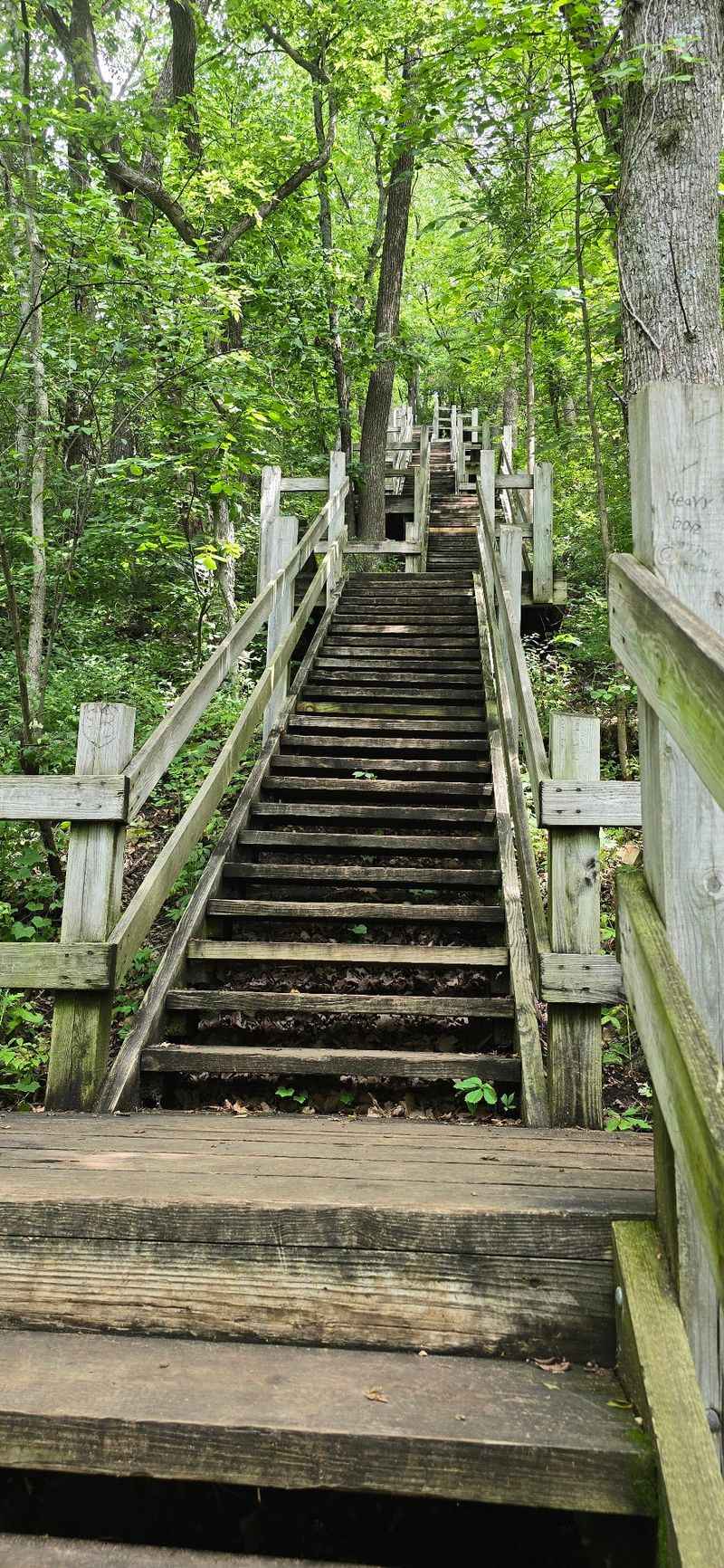
Fair warning: your legs will remember these stairs. A long wooden staircase runs from the statue area down to the riverbank, and visitors joke about how tough the climb back up can be.
One person called the return trip treacherous, while another said it nearly wore them out.
Still, almost everyone agrees the effort pays off. Going down feels fun, and the riverside trail at the bottom is the reward.
Many people choose the stairs instead of the steep, rough dirt trails leading down from the bluff.
Once you reach the bottom, the ground flattens out and gets much easier to walk. Some visitors have even fished along the bank.
Do pack good shoes, though, since the riverside walkway is not gravel and can turn muddy after rain, which sometimes limits how far you can travel along the water.
Trails Through Lowden State Park
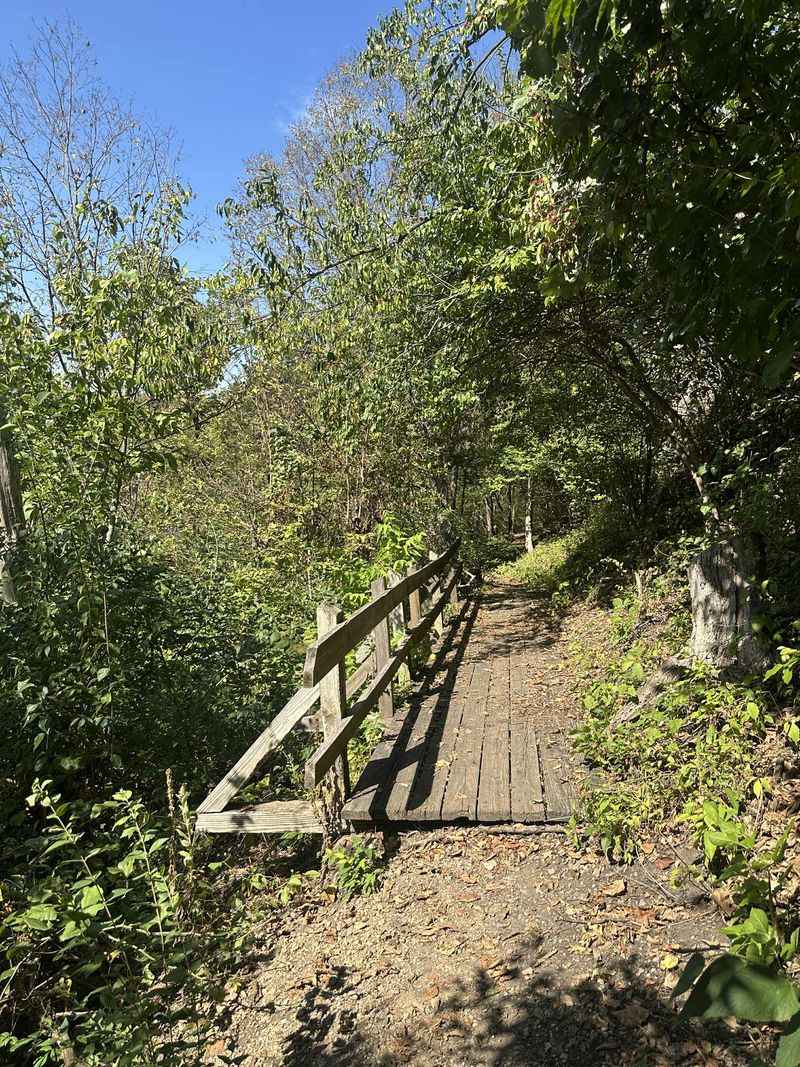
Trails are easily the most talked-about feature here, and for good reason. Lowden State Park offers a network of hiking paths winding through forest, along bluffs, and down by the river.
One hiker who explored with two dogs shared a handy route. Along the water, heading north eventually ends at private property, so they doubled back and walked south.
At a four-way trail intersection, turning right toward the river led to a lush, green area right beside the water.
The forest trail itself is described as easy to walk and well kept, with trail markers to help you along. Upper trails near the bluff are steeper, so choose based on your energy level.
Whether you want a short stroll or a longer ramble, there is a path that fits. Leashed pups seem to love it just as much as their humans do.
Picnic Tables, Play Areas, and Open Space
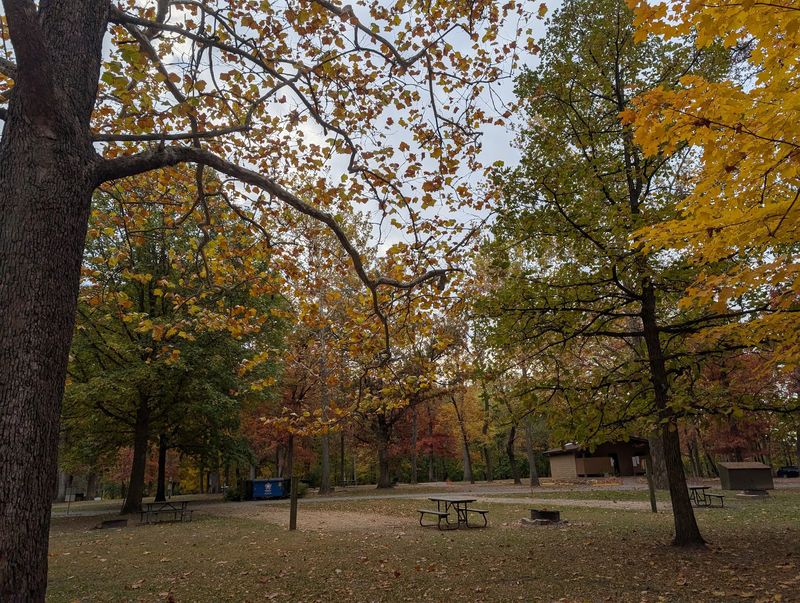
Pack a lunch, because this park practically begs for one. Wide open spaces and picnic tables greet you near the parking lot at the base of the statue, making it easy to settle in for a meal with a view.
Families who have been coming for years mention many picnic areas, play spaces for kids, and restrooms. That combination turns a quick sightseeing stop into a relaxed half-day outing.
The grounds around the statue are nicely landscaped, which adds to the welcoming feel.
Staying longer? The park also has a campground, so some visitors turn their trip into a full weekend getaway.
One guest noted the state park shows its age in spots, but still called the weekend nice and relaxing. Honestly, a sandwich tastes better when you are eating it under a 48-foot statue, high above a river.
Quiet Moments and Who Will Love It
Crowds are rarely a problem. One visitor arrived on a weekday in late August and found only a few cars at the statue and nobody on the trails.
Another came on the Fourth of July and was surprised it still was not that crowded.
Peaceful is a word that keeps popping up. People describe the place as serene, a spot where you can hike or just sit and enjoy the view.
Folks seeking a reflective break often find it here easily.
So who should go? History buffs, casual hikers, dog owners, families with kids, and road-trippers looking for a scenic break will all feel right at home.
It also suits anyone with physical challenges who mainly wants to see the statue, since the area near it is easy to reach. Basically, if you enjoy nature and a little wonder, this spot fits.
Practical Tips for Your Visit
Best news first: there is no fee to enter the park. Visitors repeatedly celebrate this, and it makes the stop an easy yes for budget-friendly day trips.
You will find the statue at 1411 N River Rd in Oregon, Illinois. The parking lot is spacious and sits close to the statue, so accessibility is good for anyone who cannot handle long walks.
Restrooms are available too. For more details, call 815-732-6828 or check the City of Oregon visitor information website.
Getting there is a pleasant drive through the countryside, though one visitor mentioned the road leading in was in rough condition, so take it slow. Wear sturdy shoes if you plan to tackle the stairs or trails, and expect mud near the river after rain.
Bring water, a leash for your dog, and maybe binoculars for spotting birds soaring overhead.
Worth the Drive Across Illinois
Some places earn loyalty slowly, and this statue has done exactly that. Visitors talk about coming back for more than 20 years, climbing those same wooden stairs and soaking in the same stunning river views each time.
Travelers passing through call it a great little side trip, while others say it is absolutely worth the drive on its own. A few even heard about it from a TV program and made the trip just to see it in person.
That says plenty about its quiet pull.
Is it flashy? Not at all.
The park has a few worn edges, and the stairs will test your knees. But a free, century-old giant overlooking the Rock River, surrounded by trails and picnic spots, is hard to beat.
If you are planning an Illinois weekend outing, give this bluff a few hours. It may just become your new favorite tradition.
Share this story