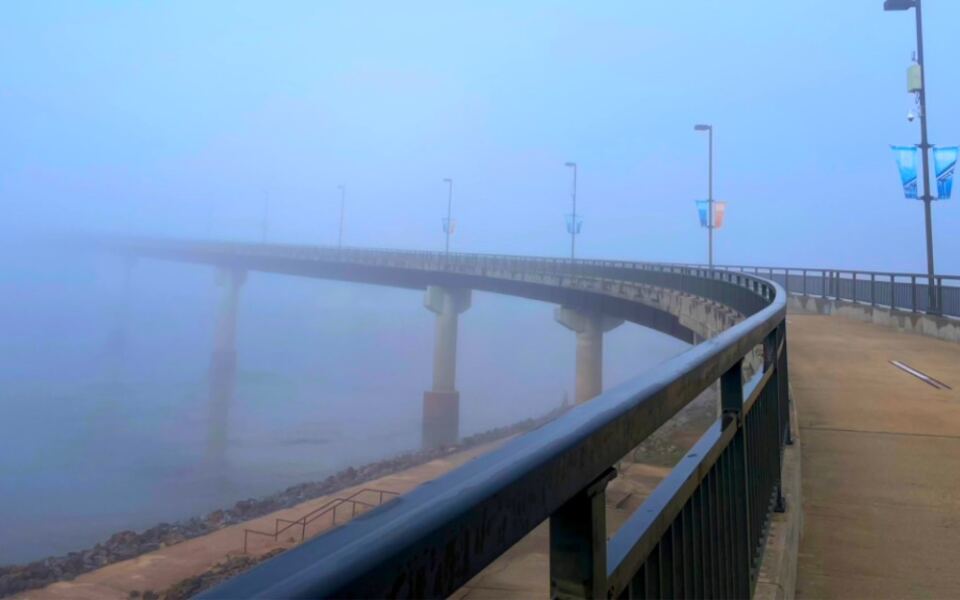
The Big Dam Bridge gives walkers and cyclists a 4,226-foot route across the Arkansas River between Little Rock and North Little Rock. Even more unusual, the pedestrian and bicycle span crosses directly over Murray Lock and Dam.
The bridge is a major link in the Arkansas River Trail and offers elevated views of the river, access to miles of connected trails, and a completely car-free crossing. After dark, lighting along the structure gives visitors another reason to return.
What could have been a simple trail connection has become one of central Arkansas’s most recognizable outdoor landmarks, with plenty to see on both sides of the river.
Where the River Connects Two Vibrant Shores
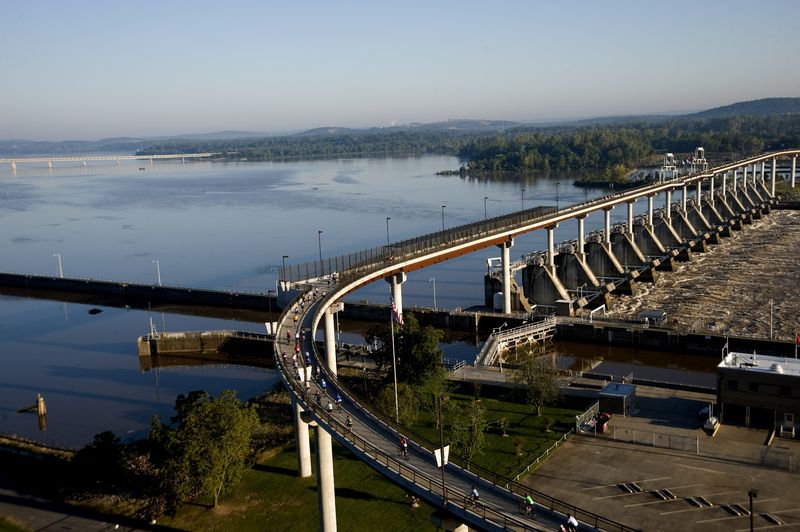
Right at the edge of the Arkansas River, a remarkable pedestrian and bicycle bridge connects two bustling cities in a way that few structures ever could. The Big Dam Bridge spans the water between Little Rock and North Little Rock in Pulaski County, Arkansas, with a primary access point at 4000 Cooks Landing Road, North Little Rock, AR 72118.
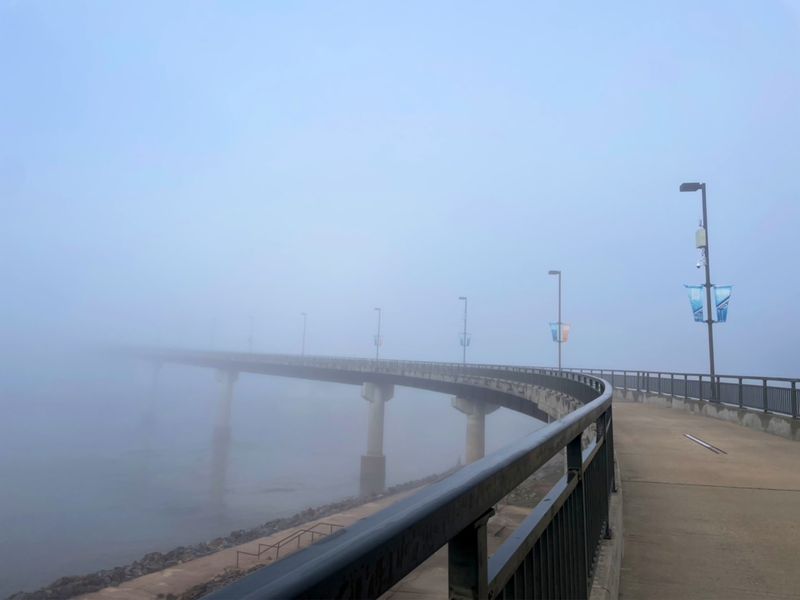
The bridge measures an impressive 4,226 feet from end to end, with 3,463 feet of that length stretching directly over the river itself. It rises 90 feet above the water and sits 30 feet above the Murray Lock and Dam below.
The deck is a generous 14 feet wide, making two-way traffic between cyclists and walkers feel comfortable and safe. Murray Park in Little Rock provides a second convenient entry point for anyone approaching from the south bank.
This structure is proudly the longest pedestrian and bicycle bridge on the North American continent built exclusively for non-vehicular use.
The Bold Vision That Made It All Happen
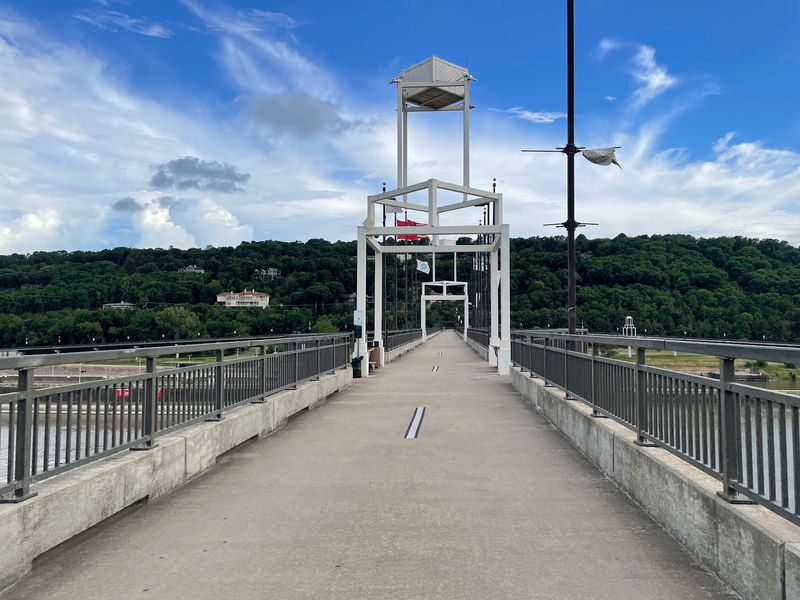
Not every great idea survives its first meeting, but the dream of a pedestrian bridge over a federal dam facility somehow did, and central Arkansas is better for it. Three local leaders, Pulaski County Judge Buddy Villines, Little Rock Mayor Jim Dailey, and North Little Rock Mayor Pat Hays, refused to let federal skepticism kill the plan.
The project took eight years from conception to completion, navigating a complex web of federal approvals and engineering hurdles before finally opening on September 30, 2006. Total costs reached approximately $17 million, with construction itself running around $12.8 million, funded through a combination of local, state, and federal dollars.
Garver Engineering handled the design work, while Jensen Construction served as general contractor, with the U.S. Army Corps of Engineers overseeing the entire effort.
The bridge was originally going to be called Murray Bridge, but Judge Villines reportedly declared in a quorum court session that they were going to build that “damn bridge,” and the name simply stuck from that point forward.
An Engineering Feat Unlike Any Other
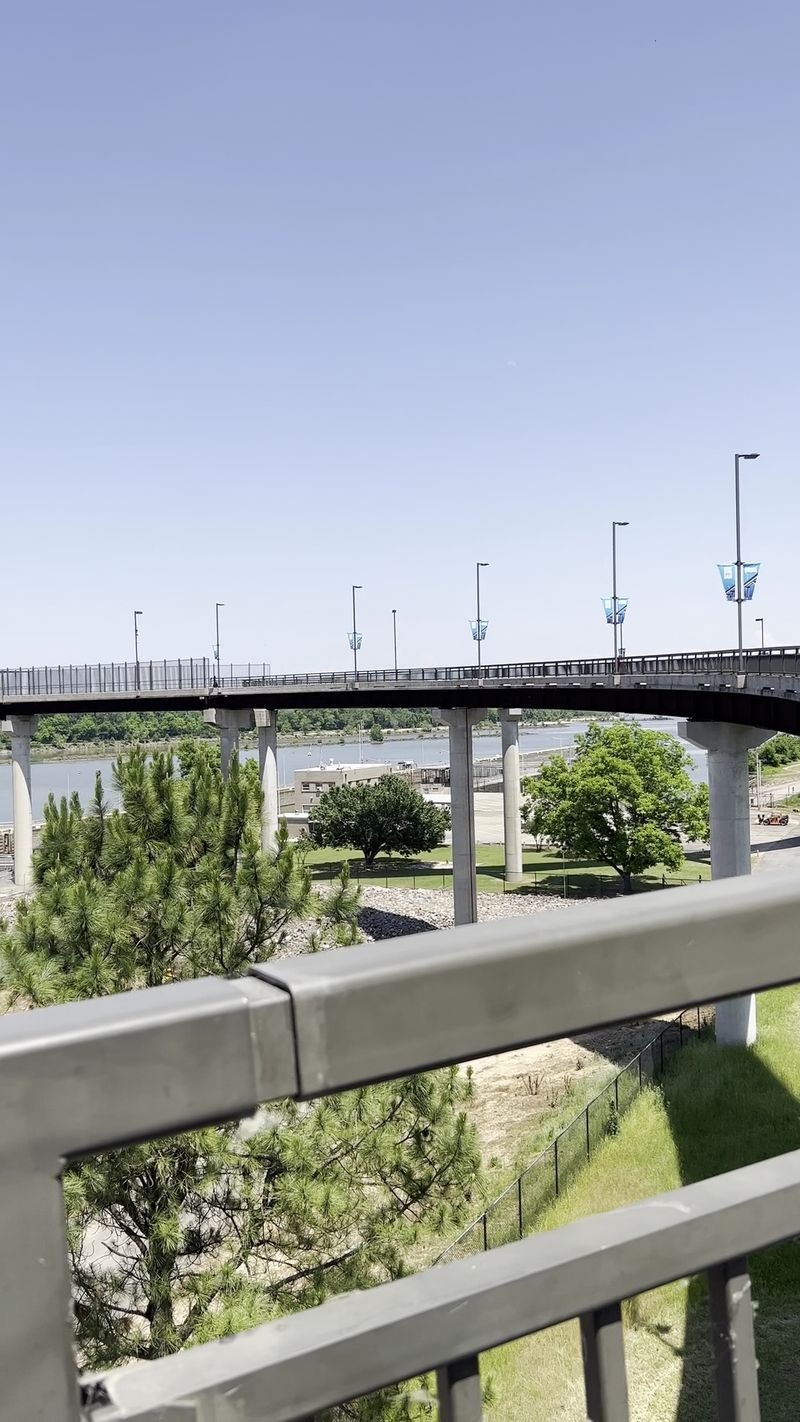
Building a bridge is rarely simple, but constructing one directly into an existing dam takes complexity to an entirely different level. The Big Dam Bridge holds the unique distinction of being the only bridge ever built into a dam, a challenge that required engineers to rethink conventional construction methods from the ground up.
The bridge contains over three million pounds of steel and more than twenty-four million pounds of concrete, supported by fourteen concrete pylons, each weighing a staggering thirty-seven tons. Because traditional piling methods were impossible given the dam’s existing structure, a massive computer-directed diamond saw was used to carve enormous concrete monoliths directly out of the dam itself.
Some of those removed blocks weighed up to eight tons each, and rather than discarding them, designers incorporated them creatively into the decorative plazas at each end of the bridge. Eight steel observation towers rise along the span, and flagpoles representing all eleven cities in Pulaski County line the walkway, adding a layer of regional pride to an already impressive structure.
A Lighting Show That Stops People in Their Tracks
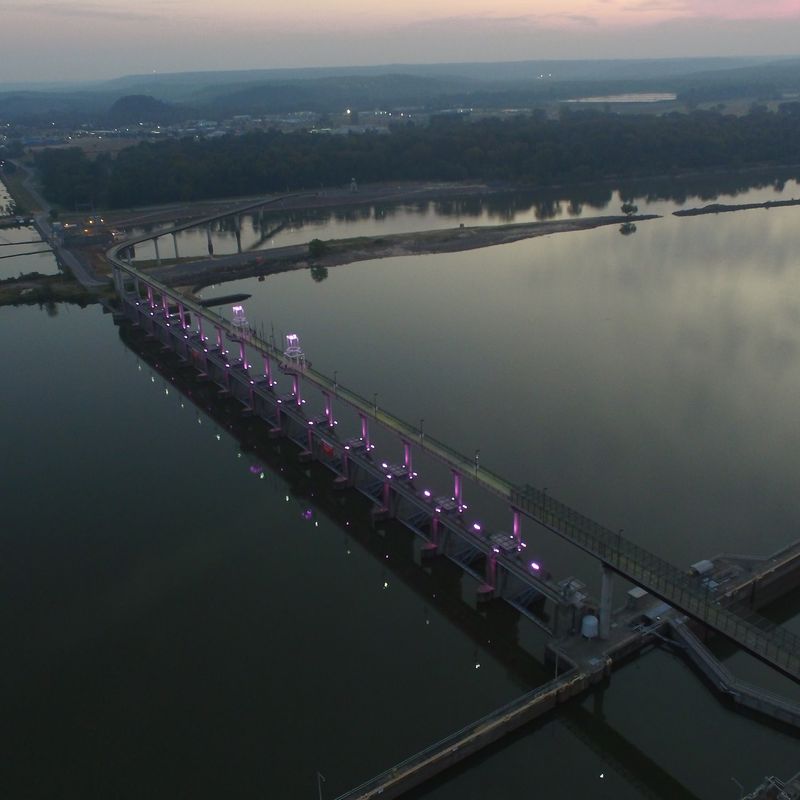
Most bridges look best in daylight, but the Big Dam Bridge saves some of its finest moments for after dark. As the last light fades over the Arkansas River, 160 LED fixtures on the piers, 16 on the towers, and 63 along the walkway itself switch on, flooding the structure with rotating colors in red, green, yellow, and blue.
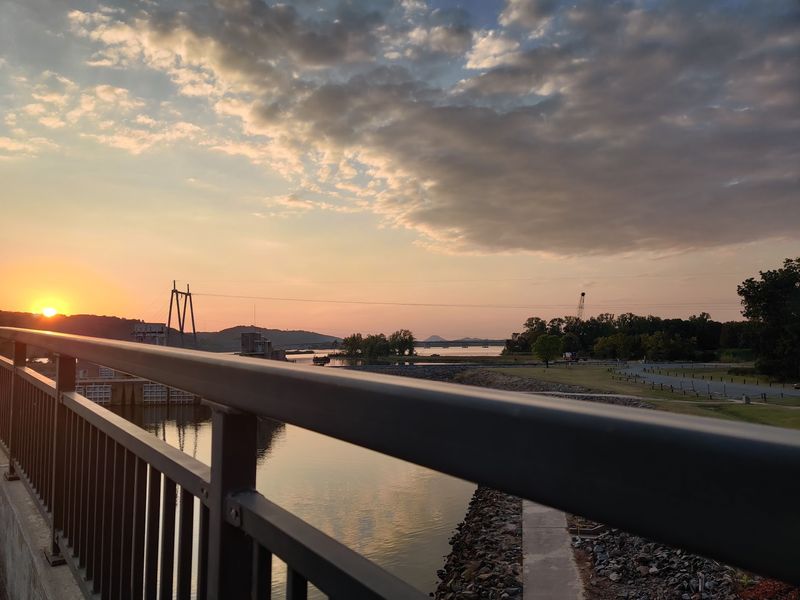
The reflection of those lights dancing across the surface of the river below creates a scene that feels more like a light installation at an art museum than a piece of public infrastructure. Visitors who arrive at dusk get the best of both worlds, first a spectacular sunset painting the sky in fiery tones, then the gradual awakening of the bridge’s colorful glow.
The lighting system earned the bridge an Award of Merit from the Illuminating Engineering Society, recognizing its design as genuinely exceptional on a national level. An evening walk across the bridge at full illumination is the kind of experience that keeps people coming back, camera in hand, long after their first visit.
Views That Stretch All the Way to Pinnacle Mountain
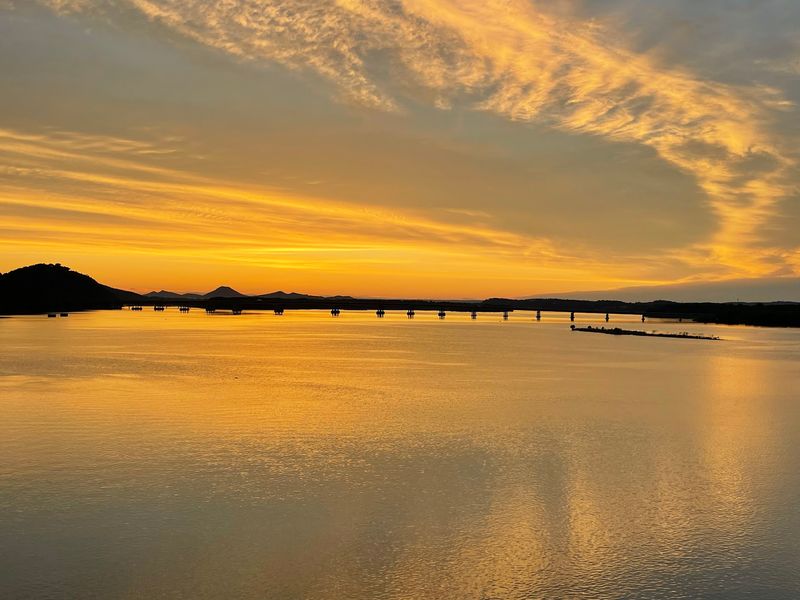
Few walking paths in Arkansas offer the kind of panoramic payoff that this bridge delivers with every single crossing. Eight dedicated observation areas are spaced along the deck, each equipped with benches and coin-operated binoculars that let visitors zoom in on the landscape stretching out in every direction.
On a clear day, the distinctive peak of Pinnacle Mountain rises in the western distance, creating a dramatic natural backdrop against the wide open sky. Below the bridge, the Murray Lock and Dam operates in full view, and on lucky visits, a river barge can be spotted making its way through the lock system, a fascinating reminder that this waterway is still very much a working river.
The Arkansas River itself spreads out in both directions, offering a perspective on the waterway that simply cannot be matched from the banks below. Sunsets viewed from the observation areas are consistently described as breathtaking, with the sky reflecting off the water in ways that make the whole scene feel almost too picturesque to be real.
The Gateway to 40 Miles of Connected Trails
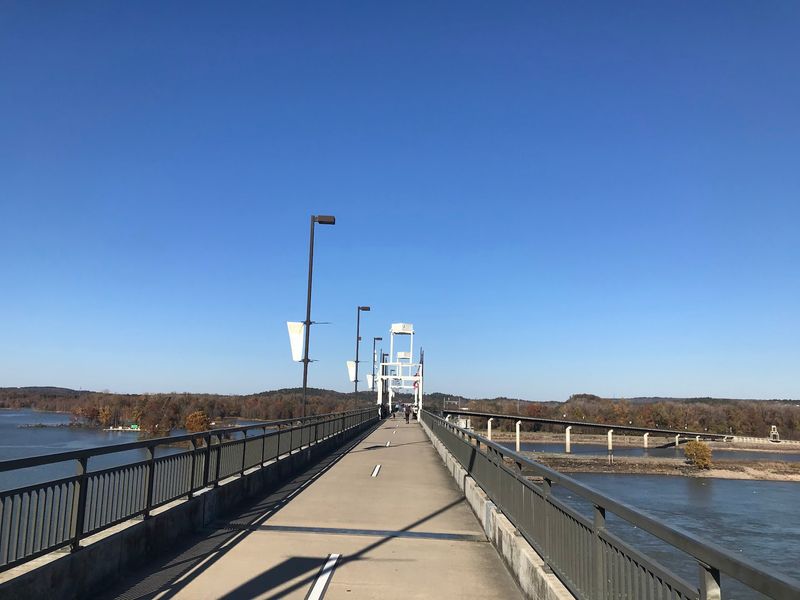
Cross the Big Dam Bridge and you have not simply gone from one bank to the other; you have entered a sprawling network of trails that winds through some of central Arkansas’s most beautiful landscapes. The bridge serves as a centerpiece of the Arkansas River Trail, a system that has grown to connect over 40 miles of paved pathways.
From the bridge, the trail reaches east toward the vibrant River Market District in downtown Little Rock, passing the William J. Clinton Presidential Center and Library along the way.
Head west and the path leads to Two Rivers Park, a broad natural area where additional trails, landscaped gardens, and wildlife sightings await around every bend.
The broader trail system touches approximately 70,000 acres of federal, state, county, and city parkland, making the entire region feel like one giant outdoor playground. Kayak rentals are available at Two Rivers Park for those who want to trade the trail for the water, and the route toward Pinnacle Mountain State Park offers even more options for extending the day’s adventure.
Why Cyclists From Across the Nation Flock Here
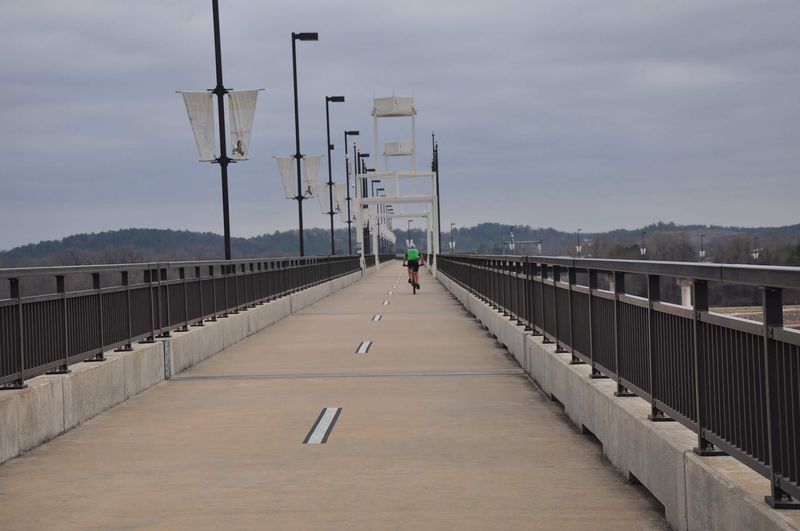
Every September, the Big Dam Bridge transforms from a beloved local landmark into the epicenter of one of Arkansas’s biggest athletic celebrations. The Big Dam Bridge 100, known locally as the BDB 100, is the state’s largest cycling tour, drawing thousands of riders from across the country and beyond to tackle routes ranging from a manageable 15 miles to a demanding 105-mile course.
The routes wind through Little Rock, North Little Rock, Perryville, and Roland, showcasing the varied terrain and scenic beauty of central Arkansas in a single event. Beyond the headline cycling tour, the bridge also hosts the Big Dam Bridge Twilight 5K every July, giving runners a chance to experience the span as the sun sets and the lights begin their nightly show.
These events are more than competitions; they function as community festivals that bring people together around shared enthusiasm for fitness and the outdoors. The BDB 100 in particular has helped establish central Arkansas as a genuinely respected destination on the national cycling circuit, attracting athletes who return year after year.
A Place Where Everyone Is Welcome
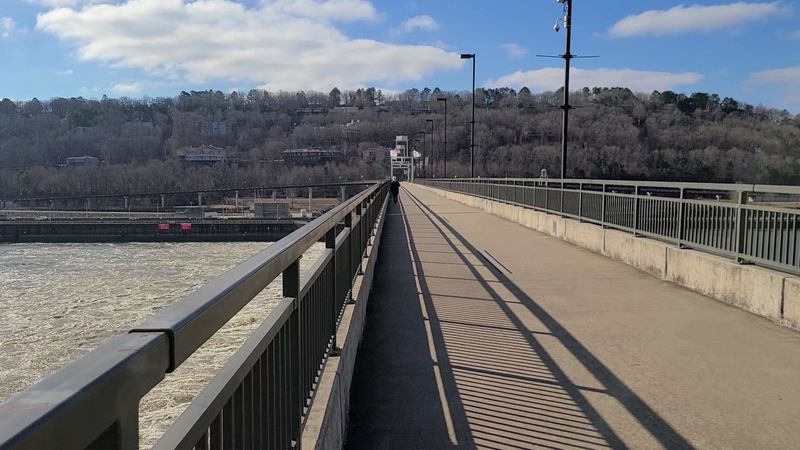
One of the most refreshing things about the Big Dam Bridge is how genuinely inclusive it feels from the moment you arrive. The ramps leading to the deck are fully compliant with Uniform Federal Accessibility Standards, meaning wheelchair users and anyone pushing a stroller can navigate the entire length without encountering a single barrier.
Dog owners will find the bridge particularly welcoming, with leashed pets allowed on the full span and pet-friendly water fountains and designated relief areas conveniently placed near the base. The 14-foot-wide deck means that even on busy weekend mornings, cyclists, joggers, and families walking side by side rarely feel crowded.
Restrooms and ample free parking are available at the access points on both the North Little Rock and Little Rock sides, removing the logistical stress that can sometimes take the fun out of a day trip. The bridge is open 24 hours a day, seven days a week, giving early risers, lunch-break walkers, and evening strollers equal access to everything it has to offer.
Educational Plaques That Tell the River’s Story
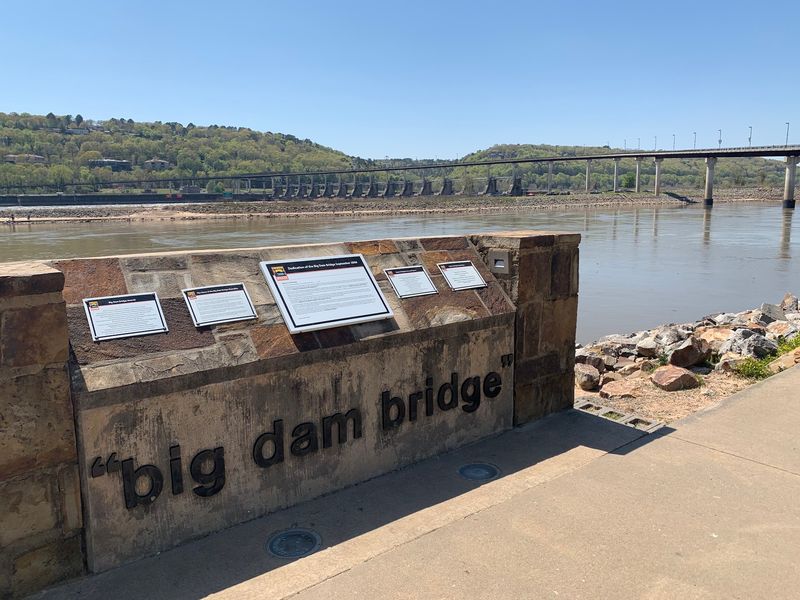
A walk across the Big Dam Bridge is not just a physical experience; it doubles as an informal lesson in the natural and industrial history of the Arkansas River. Informational plaques are mounted at intervals along the railing, covering topics that range from the mechanics of the Murray Lock and Dam to the bird species that make the river corridor their home.
Herons, egrets, and various waterfowl are commonly spotted from the bridge deck, and the plaques help visitors identify what they are looking at rather than simply watching birds pass by without context. The history of the river itself, including its role in commerce and transportation across the region, is woven into the signage in a way that feels engaging rather than dry.
Even visitors who typically skip interpretive signs tend to pause at these, partly because the views from the railing make stopping feel natural anyway. The combination of real-time wildlife observation and accessible written information turns an ordinary crossing into something that genuinely expands what you know about the landscape around you.
Best Times to Visit and What to Expect
Timing a visit to the Big Dam Bridge can genuinely shape the experience, and a little planning goes a long way toward making the most of what the bridge offers. Early mornings on weekdays tend to be the quietest, drawing mostly local joggers and cyclists who move through at a steady pace with practiced trail etiquette.
Weekend afternoons bring a livelier crowd, with families, dog walkers, and tourists mixing comfortably on the wide deck. The bridge can feel breezy at the top regardless of conditions on the ground, which actually makes it a surprisingly comfortable spot during Arkansas summers when the heat would otherwise make outdoor activity feel punishing.
The undisputed sweet spot for a first visit is late afternoon on any day, arriving in time to catch the sunset from one of the observation areas before the LED lights take over as the main attraction. Bicycle rentals are available in downtown Little Rock for visitors who arrive without their own wheels, making it easy to combine a ride along the Arkansas River Trail with a full crossing of the bridge.
A Symbol of What Central Arkansas Can Achieve
Some infrastructure projects do exactly what they were designed to do and nothing more. The Big Dam Bridge did what it was designed to do and then kept going, reshaping how central Arkansas thinks about public space, active transportation, and regional identity.
Its construction helped shift local priorities toward walkable infrastructure and outdoor recreation, sparking continued investment in trail systems and bicycle-friendly development across the state. The Arkansas River Trail network that the bridge anchors now connects communities, parks, and cultural landmarks in a way that would have seemed ambitious even as recently as the late 1990s.
The bridge also carries a quiet but meaningful message about what becomes possible when political leaders from neighboring cities decide to work together instead of competing. Little Rock and North Little Rock, two cities with distinct personalities and separate governments, share this structure equally and benefit from it together.
That collaborative spirit, more than the steel or the concrete or even the remarkable lighting system, may be the most lasting thing the Big Dam Bridge contributes to the region it serves.
Share this story