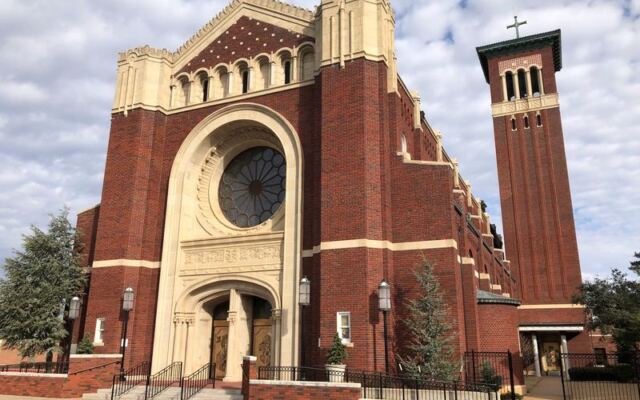
Oklahoma is not the first place that comes to mind when you think of soaring Gothic architecture, but that is exactly what makes the Cathedral of Our Lady of Perpetual Help such a rewarding surprise. Tucked into a quiet neighborhood in Oklahoma City, this cathedral looks like it was lifted straight from a European city square and set down gently on the Great Plains.
People who stumble across it for the first time often do a double take, wondering how something this grand ended up here. Once you walk through its doors, the question shifts from how it got here to why it took you so long to visit.
Where to Find This Hidden Gem in Oklahoma City
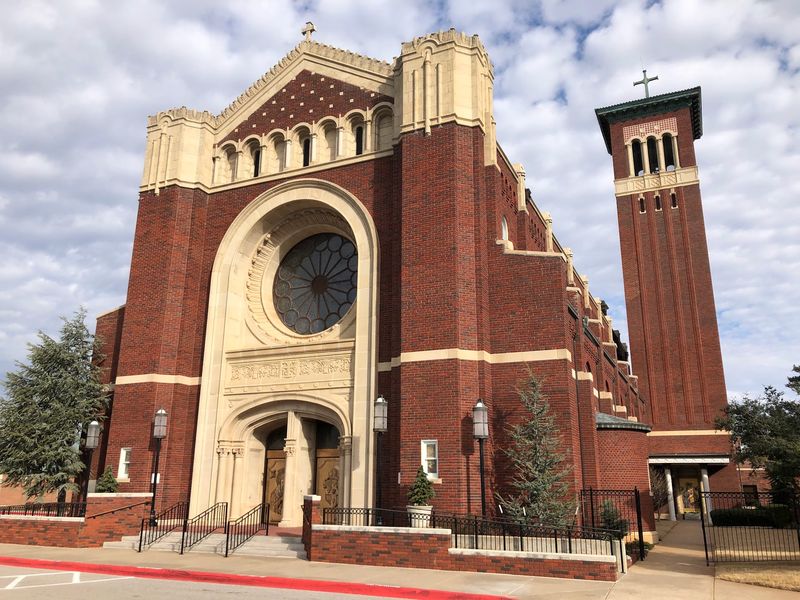
Few buildings in Oklahoma stop you in your tracks quite like the Cathedral of Our Lady of Perpetual Help, located at 3214 N Lake Ave, Oklahoma City, OK 73118. Nestled in a residential stretch of the city, this Catholic cathedral sits in a neighborhood that feels calm and unhurried, which only adds to the sense of discovery when the building comes into view.
The surrounding mature trees frame the Gothic stonework in a way that feels almost theatrical. Their branches arch overhead and cast dappled shadows across the facade, giving the whole scene a distinctly European atmosphere that catches first-time visitors completely off guard.
Oklahoma City is a sprawling, modern metro, and finding something this historically rooted and architecturally refined feels like cracking open a well-kept secret. The cathedral is the mother church of the Archdiocese of Oklahoma City, which tells you something about its importance to the region.
You can reach the parish by phone at 405-525-2349 or explore details ahead of your visit at cathedralokc.org.
A Cathedral That Reads Like a Chapter of Oklahoma History
The Cathedral of Our Lady of Perpetual Help carries the kind of weight that only comes with age and purpose. As the cathedral church of the Archdiocese of Oklahoma City, it has served as a spiritual anchor for the region through decades of growth, change, and renewal.
Generations of families have marked their most significant moments here, from baptisms and first communions to confirmations and weddings.
The building has undergone renovations over the years, and the results speak for themselves. Every surface feels carefully tended, every detail preserved with obvious pride.
Visitors who knew the space before the updates often remark on how the work honored rather than erased what was already there.
The parish also reflects Oklahoma City’s evolving cultural fabric. The cathedral offers Mass in Vietnamese in addition to English, a detail that speaks to the community’s breadth and openness.
That kind of layered identity, rooted in tradition but genuinely welcoming of change, is part of what gives this place its particular character. History here is not just something on a plaque; it lives in the congregation itself.
Gothic Architecture Rising from the Oklahoma Plains
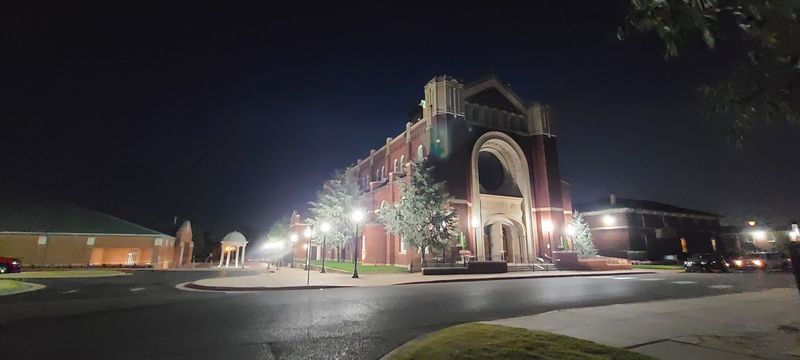
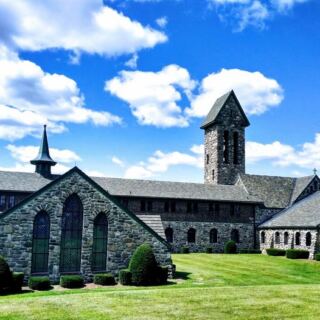
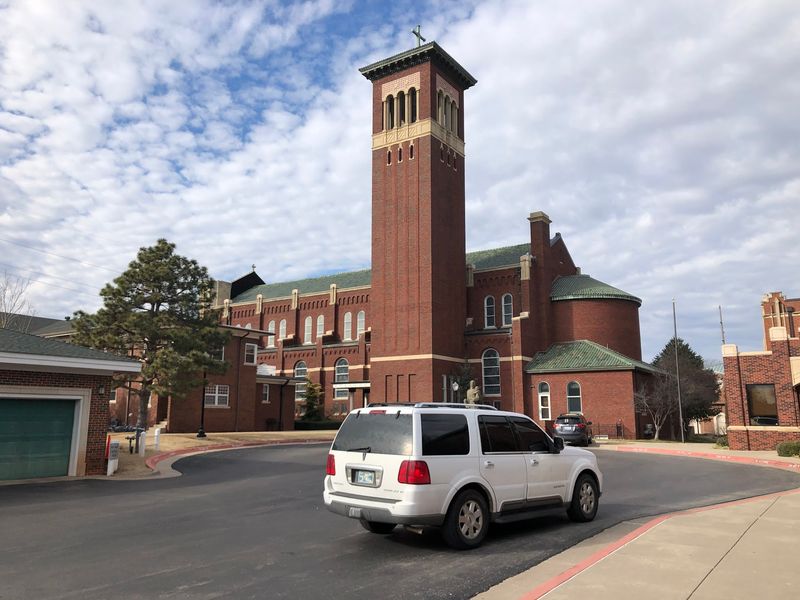
From the outside, the cathedral’s Gothic design commands attention in a way that feels almost confrontational given its surroundings. The pointed arches, stone masonry, and vertical lines draw the eye upward, which is exactly what Gothic architecture was always intended to do.
On the flat Oklahoma horizon, that upward pull feels even more dramatic than it might in a European city already crowded with spires.
The trees surrounding the building do something unexpected: they amplify the Gothic mood rather than soften it. Their canopy frames the stone facade in organic arches that mirror the architectural ones below, creating a layered visual effect that photographers tend to notice immediately.
One visitor put it plainly, noting that the trees outside make the gothic style feel even more perfect.
Up close, the craftsmanship becomes more apparent. The stonework is detailed without being fussy, and the proportions feel confident rather than showy.
For a building in the American heartland, the architectural ambition is genuinely impressive. Standing back and taking it all in, it is easy to understand why some who have visited churches in Italy and France consider this cathedral to be on par with what they found there.
Stained Glass Windows That Transform Natural Light
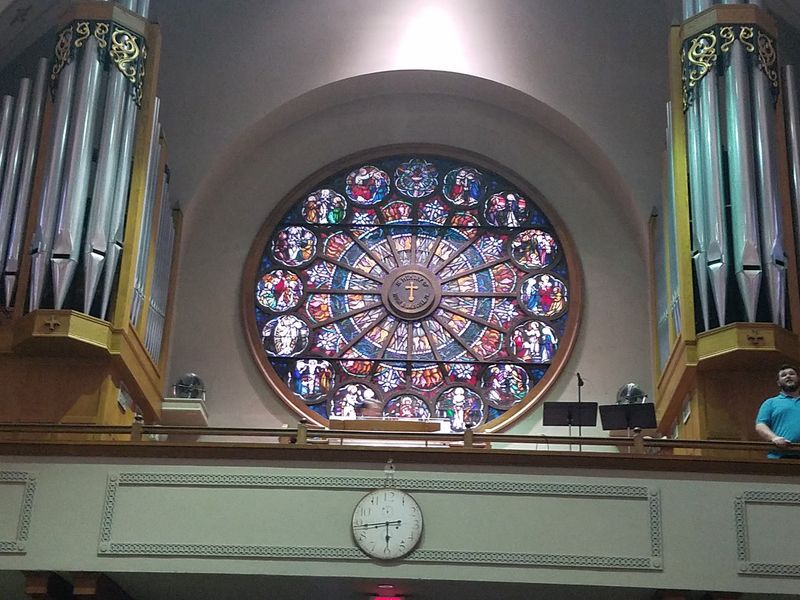
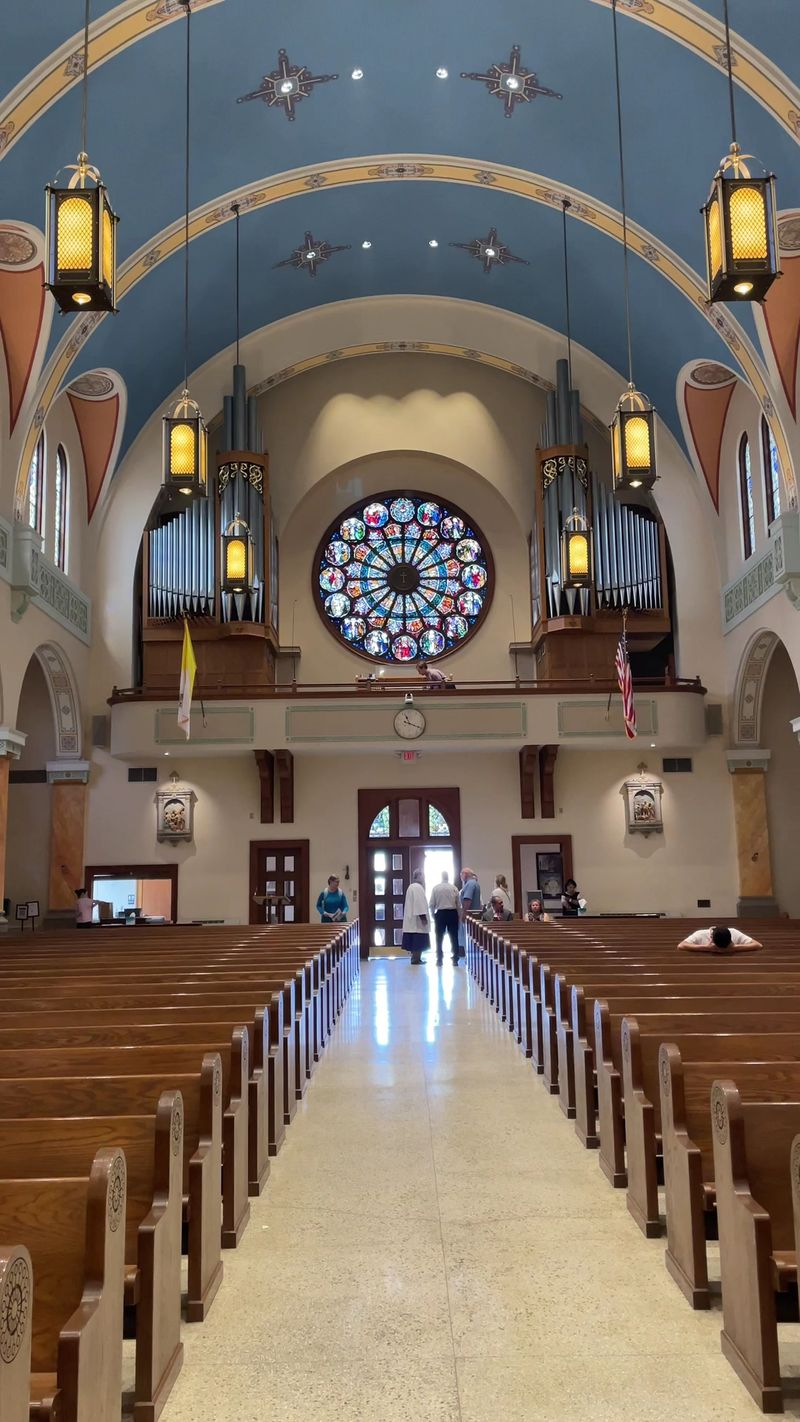
Natural light behaves differently inside this cathedral. The stained glass windows filter the Oklahoma sun into pools of color that shift slowly across the stone floor and wooden pews as the day progresses.
Reds, blues, and golds wash over the interior in a way that feels less like decoration and more like a living element of the space.
The windows are among the most consistently praised features of the cathedral, and it is easy to see why. Each panel tells a story, and the cumulative effect of so many vivid, carefully crafted images creates an interior atmosphere that is genuinely moving even for visitors with no religious connection to the place.
The artistry is the kind that rewards a slow walk along the nave, pausing at each window in turn.
On bright mornings, the light through the glass is especially striking. Colors saturate the air in a way that feels almost surreal, and the contrast between the warm tones inside and the flat prairie light outside only sharpens the effect.
Photographers visit specifically for this quality of light, and even casual visitors find themselves reaching for their phones to capture something that, honestly, a photo rarely does justice.
The Interior Sanctuary and Its Spiritual Atmosphere
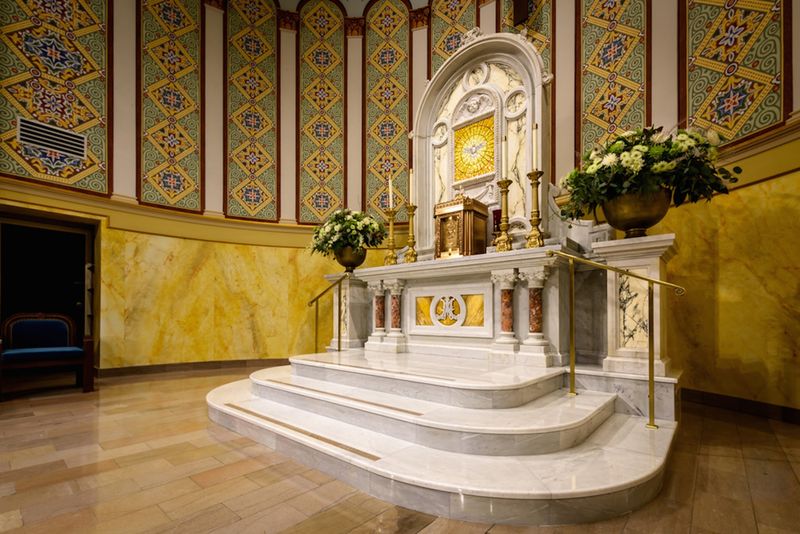
The moment you pass through the side entrance and into the nave, the noise of the city disappears completely. The interior is spacious without feeling cold, and the proportions of the vaulted ceiling create a sense of height that reinforces the contemplative mood.
Everything about the space seems designed to slow you down and encourage stillness.
The altar area is beautifully maintained, with details that reward careful attention. The overall composition of the sanctuary, from the carved woodwork to the arrangement of statuary, reflects a consistent aesthetic vision rather than a patchwork of additions over time.
It reads as a unified whole, which is rarer than you might expect in a building of this age.
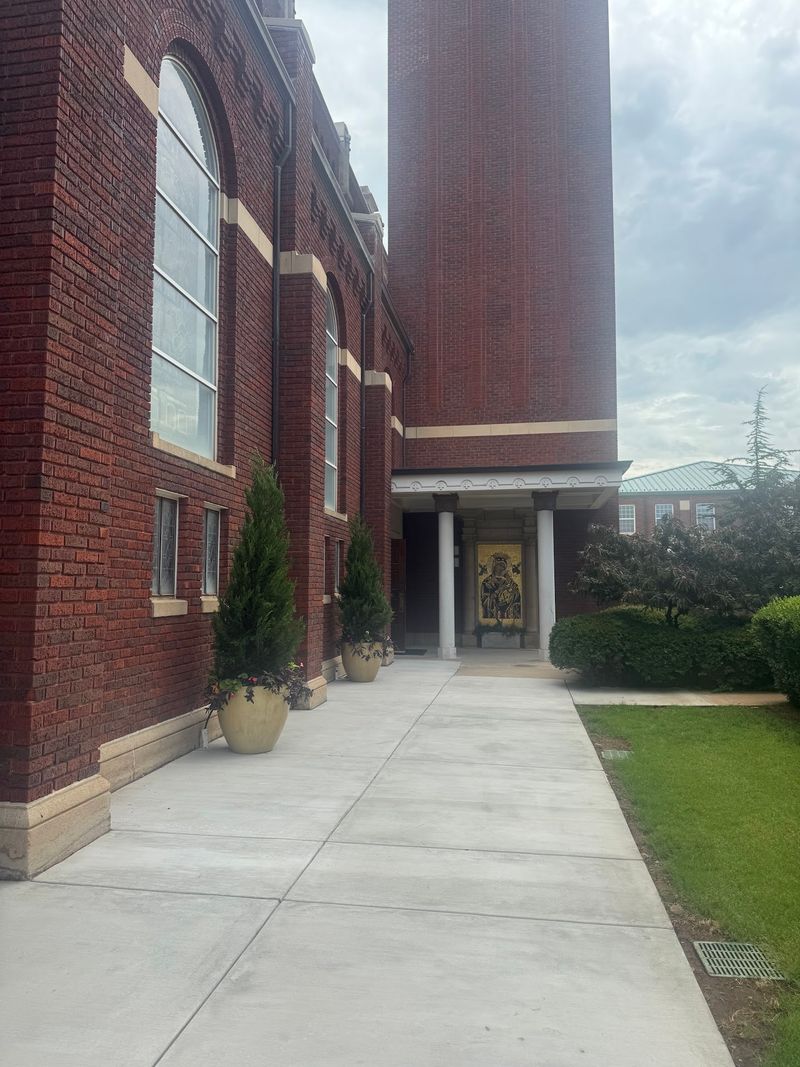
Visitors who arrive outside of Mass hours can explore the interior quietly on their own, which is its own kind of experience. The cathedral is open for self-guided visits during weekday hours, and the side entrance makes access straightforward.
Whether you come for prayer, reflection, or simple architectural curiosity, the atmosphere inside is genuinely welcoming. The space carries a peacefulness that seems to settle over you without effort, the kind that makes you lower your voice instinctively and stay longer than you planned.
Mass, Music, and the Second-Story Balcony Choir
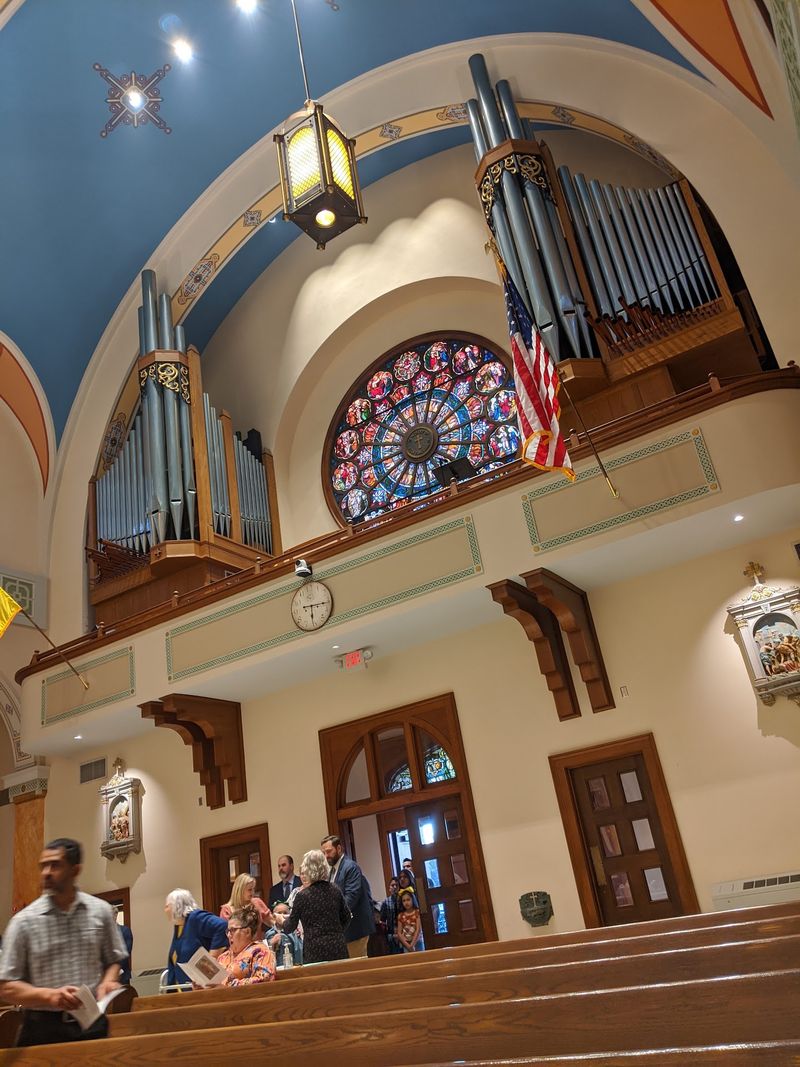
Attending Mass at this cathedral is a different experience from simply visiting during open hours. The liturgy here has a fullness to it that comes from a combination of thoughtful homilies, an engaged congregation, and music that genuinely elevates the service.
The choir, organ, and trumpet ensemble perform from the second-story balcony at the rear of the nave, a placement that sends the sound forward and downward across the entire space in a remarkably enveloping way.
First-time visitors to a Catholic Mass have described the experience here as unexpectedly moving, even without prior familiarity with the liturgy. The music in particular tends to leave an impression.
Closing your eyes during the choral sections, the sound fills the vaulted space completely, bouncing off stone and wood in a way that feels almost architectural in itself.
Special occasions bring the cathedral to life in particularly memorable ways. First communion Masses draw full pews and a palpable sense of community celebration.
The Jubilee year of 2025 brought pilgrims from outside the city specifically to this location, and Adoration services offer a quieter, more meditative counterpoint to the larger Sunday liturgies. The cathedral’s Mass schedule includes weekday services at 7 a.m. and multiple Sunday options in both English and Vietnamese.
A Multilingual Parish Rooted in Community
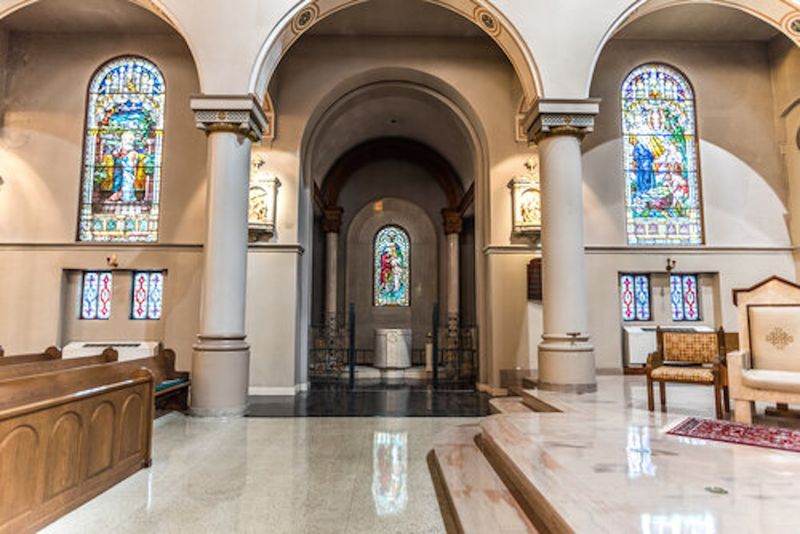
What makes a cathedral more than a beautiful building is the community that fills it, and the congregation here is genuinely worth noting. The parish serves a diverse cross-section of Oklahoma City, and the presence of a Vietnamese-language Mass at 11:30 a.m. on Sundays reflects that diversity in a concrete, practical way.
It is a detail that speaks to the parish’s commitment to being genuinely inclusive rather than just nominally so.
The parishioners who have called this cathedral home for years bring a warmth to the space that visitors tend to notice quickly. Long-term members describe a sense of belonging that builds over time, shaped by the rhythms of the liturgical year and the shared experience of worshipping in such an extraordinary space.
The Lenten and Easter seasons in particular have a reputation for being especially meaningful here.
For newcomers and out-of-town visitors, the welcome tends to feel genuine. People traveling from other states have noted the friendliness of the congregation, and the cathedral’s rating of 4.7 stars across more than 126 reviews reflects a community that, on balance, takes hospitality seriously.
The parish is far more than a landmark; it is a living, active neighborhood institution with real roots in Oklahoma City.
Who Should Make the Trip and What to Expect
The cathedral appeals to a surprisingly wide range of visitors. Architecture enthusiasts make the trip specifically for the Gothic exterior and the stained glass, and they rarely leave disappointed.
Travelers passing through Oklahoma City who want to see something genuinely unexpected tend to add it to their itinerary after a quick search and then end up spending more time there than they anticipated.
People of faith, whether Catholic or from other traditions, often find the space meaningful in ways that go beyond aesthetics. The atmosphere during both Mass and quiet visiting hours carries a spiritual quality that does not require any particular belief to appreciate.
Several visitors from outside the state have described it as one of the most beautiful churches they have encountered anywhere.
Families with children are welcome, and the parish has a tradition of warmth toward younger attendees during Mass. Solo visitors who prefer to explore quietly on their own will find the weekday visiting hours ideal for that kind of unhurried experience.
The side entrance is accessible during the week, and the interior can be viewed without any formal tour or advance arrangement. Comfortable shoes are a good idea; the floors are hard and the temptation to linger is real.
Hours, Access, and Getting to the Cathedral
Planning a visit is straightforward once you know the schedule. The cathedral is open Monday through Friday from 8 a.m. to 4 p.m., making it a practical stop during any weekday itinerary in Oklahoma City.
Sunday hours are more limited, running from 8 to 9 a.m., so weekday visits offer the most flexibility for those who want to explore at their own pace.
Saturday is closed for general visiting, which is worth noting if you are planning a weekend road trip. Mass times follow a separate schedule: weekday Masses are offered at 7 a.m.
Monday through Friday, with Saturday Masses at 8:30 a.m. and 5 p.m. Sunday Masses run at 8 a.m. and 10 a.m. in English, followed by the 11:30 a.m.
Vietnamese-language service.
The address is 3214 N Lake Ave, Oklahoma City, OK 73118, and the location is accessible by car with street parking available in the surrounding neighborhood. The side entrance is the recommended point of entry during weekday visiting hours.
There is no admission charge to visit the cathedral. For any questions before you go, the parish can be reached at 405-525-2349, and the website at cathedralokc.org has additional information about services and events.
Share this story