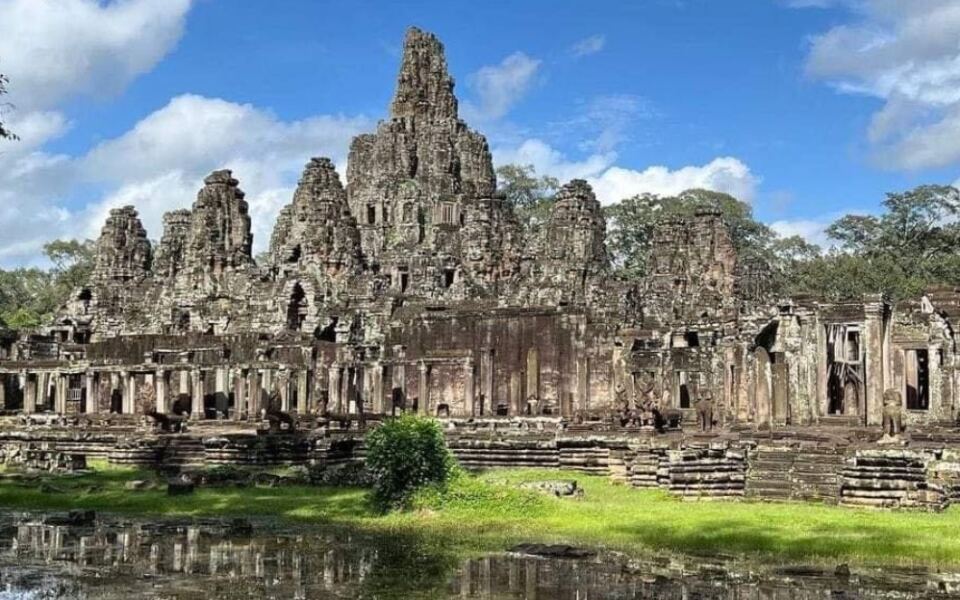
Angkor Wat in Cambodia is so big that many people call it the largest religious monument ever built. Kings of the Khmer Empire raised it in the 12th century, and it still stands proudly today.
Its towers, carvings, and wide moat draw visitors from every corner of the world. Here are ten things that make this giant temple so unforgettable.
A Monument of Record-Breaking Size
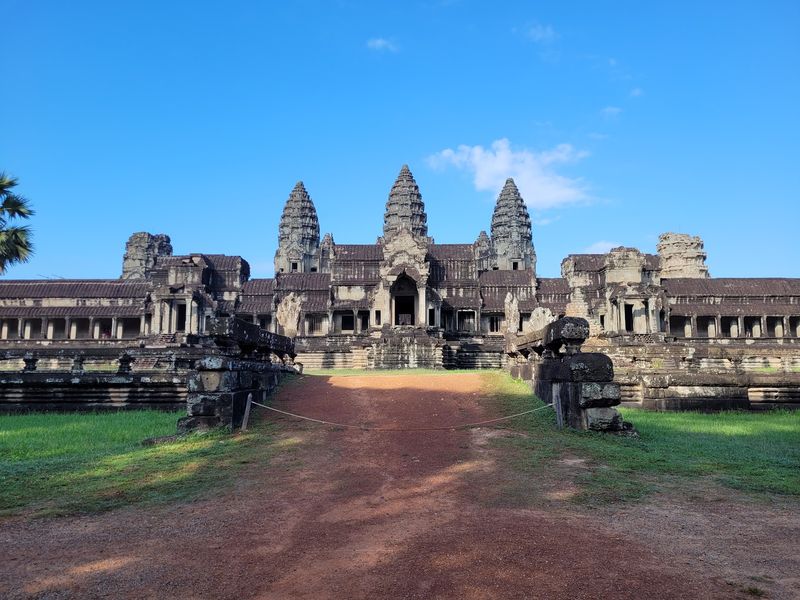
Picture a temple so big that a map makes it look walkable, and then your legs tell you otherwise. Angkor Wat sits on about 160 hectares of land, which is why it is often called the largest religious monument ever built.
One visitor said it was way bigger than expected after studying the map.
The temple was built in the early 12th century under King Suryavarman II. Workers shaped huge sandstone blocks and placed them with amazing skill.
Many of those stones were carried from quarries far away.
Size is not only about length and width. The central tower rises about 65 meters above the ground, and the outer walls stretch for long, long stretches.
Even the entrance path feels like a small journey.
If you want to see it properly, plan on at least two and a half hours inside the main complex. Wear comfortable shoes, because the stone floors and steps add up fast.
Bring a hat too, since shade is rare out in the open courtyards.
Sunrise Over the Five Towers
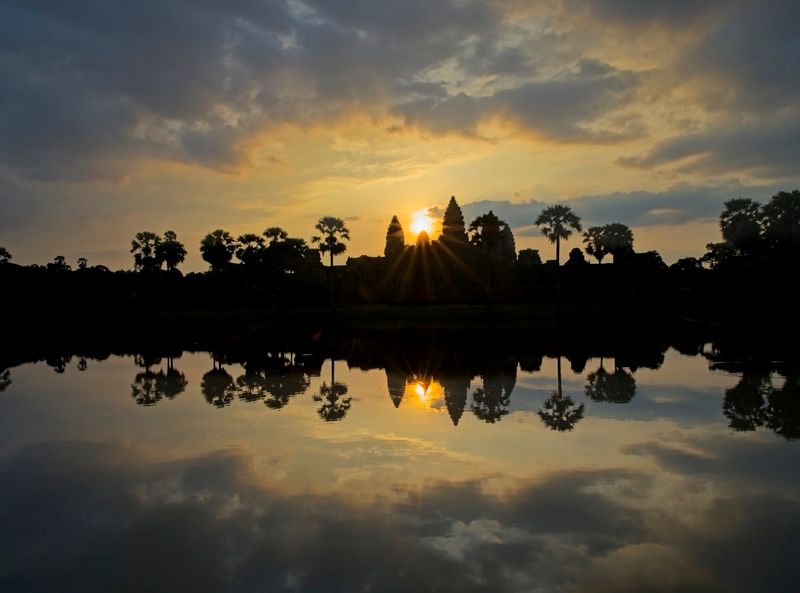
Set your alarm for 4 a.m., because the show starts before breakfast. One traveler rode a motorcycle in the dark and arrived around 5 a.m. to find the temple glowing softly as the sky changed color.
Sunrise is the most famous time to visit. The towers turn into dark shapes, then slowly pick up gold and pink light.
The reflection in the pond makes the scene feel even bigger.
Be ready for company, though. One reviewer joked about battling a hundred thousand tiktokers for a good spot, so arrive early and claim your place by the water.
Clouds can sometimes hide the sun, and that is just luck. Even then, coming early means you beat the worst of the heat.
Bring a tripod if you love photos, and remember a light jacket for the cool dark start.
The Moat That Hugs the Temple
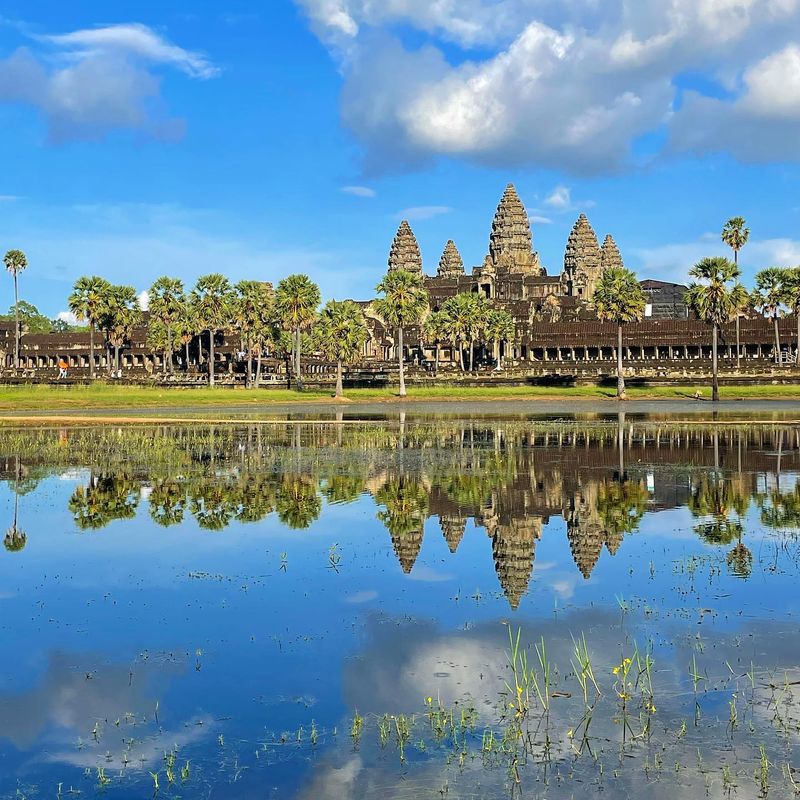
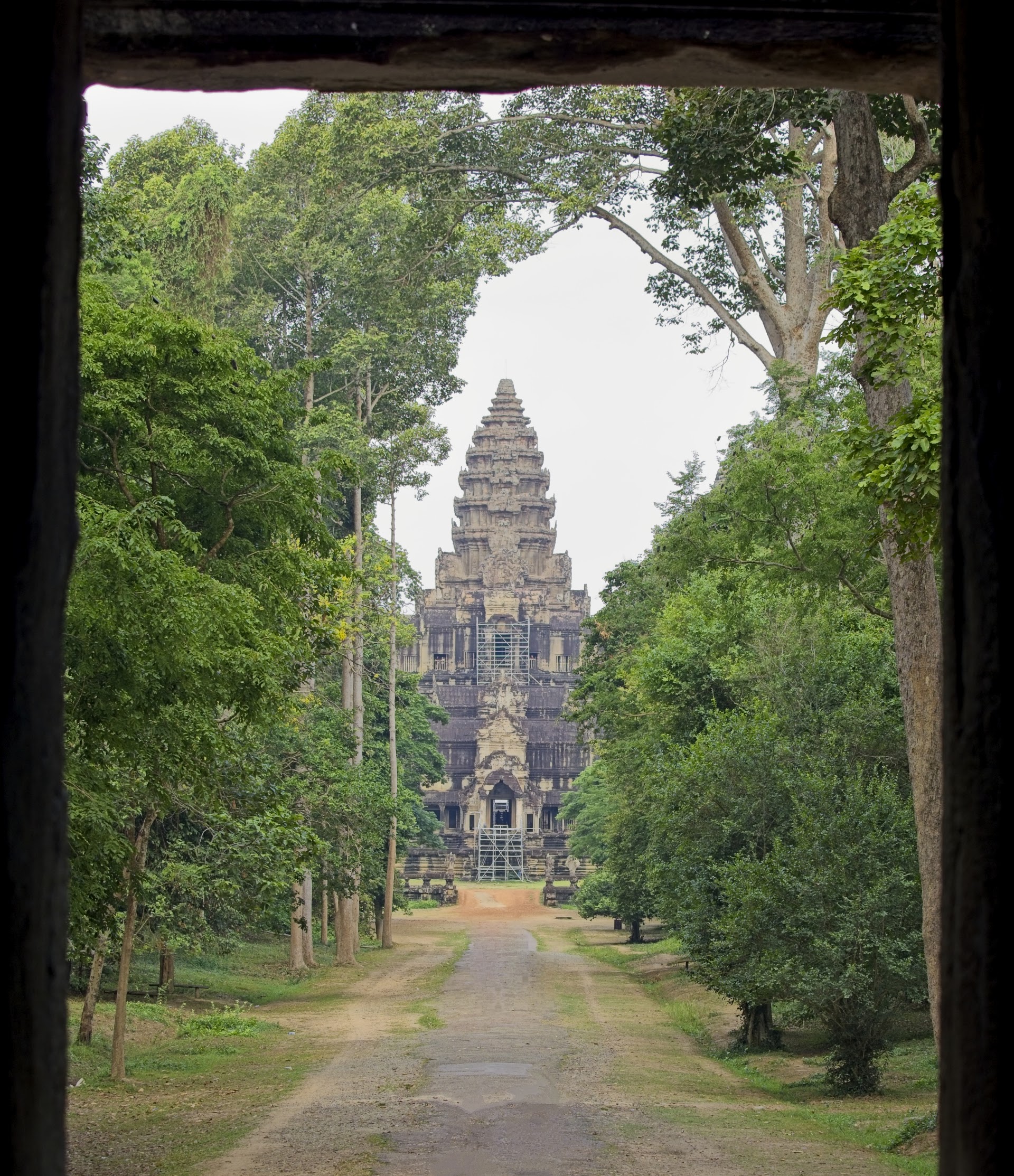
Water is the first thing that greets you. A wide moat wraps around the whole temple, and crossing the stone causeway feels like walking into a story.
Many visitors say the long approach builds real excitement.
The moat is about 190 meters wide. It makes a huge rectangle around the temple grounds.
On calm days, the water works like a mirror for the walls and towers.
One reviewer mentioned that the reflection added extra beauty to the whole scene. Photographers love it because the picture almost frames itself.
Late afternoon can bring soft light and fewer people.
Walk slowly across the causeway and watch the towers grow larger with each step. Look for stone guardians near the entrance and notice how the gateway frames the view.
Take your time here, since the best surprise is the moment the full temple appears.
Carvings That Tell Stories
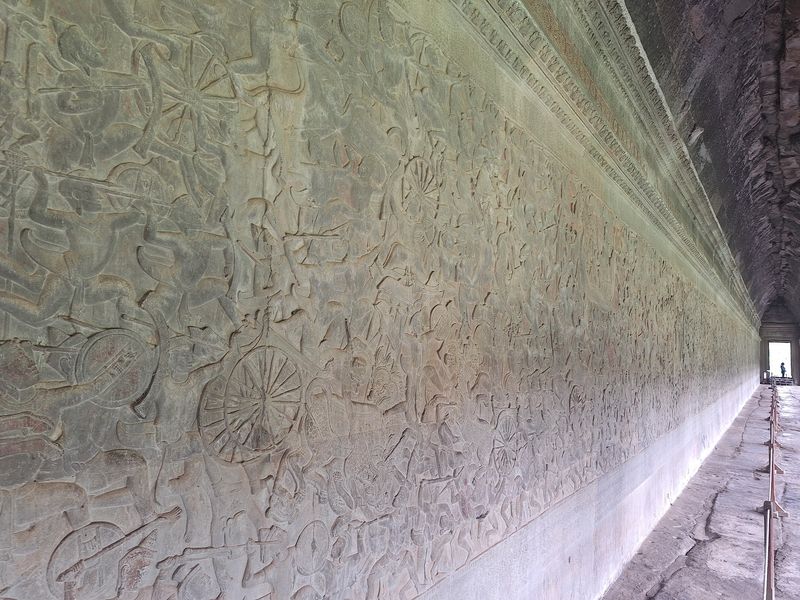
Run your eyes along the walls and the stone starts to talk. Long galleries at Angkor Wat are covered in carvings of battles, gods, and scenes from ancient legends.
Reviewers often mention the incredible detail.
Some panels show armies marching in rows. Others show heavenly dancers called apsaras, each with a slightly different face and hairstyle.
Look closely and you may spot tiny details in jewelry and clothing.
A guide can make these scenes come alive. Without one, the carvings look pretty but confusing, and with one, they become a giant picture book in stone.
Guides are affordable in Siem Reap, so it is a smart choice.
Visit in the morning light if you can. The sun shines along the walls and brings out deep shadows in the carvings.
Please do not touch them, since oils from many hands can slowly damage the old stone.
Dress Code for a Sacred Place
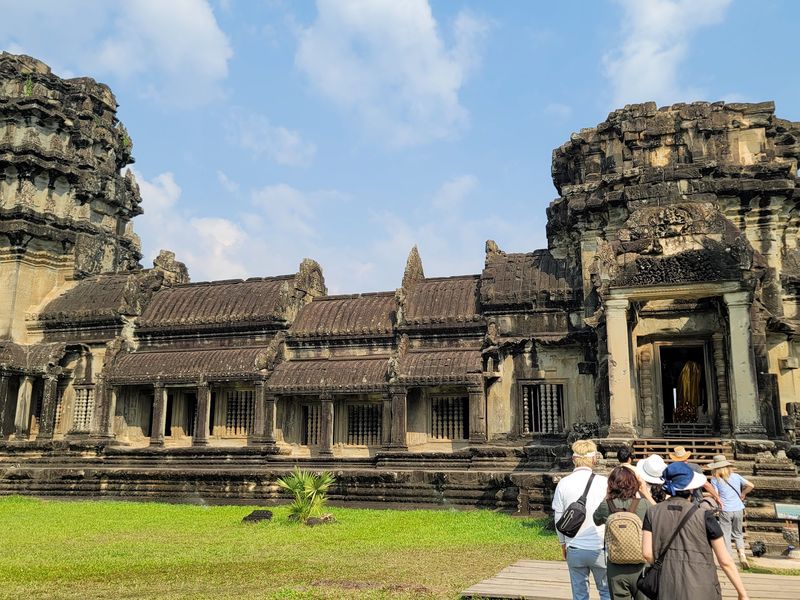
Leave the tank tops at the hotel. Angkor Wat is still an active religious site, so shoulders and knees must be covered for everyone.
Guards at the inner tower check this rule carefully.
A scarf alone may not pass the test. One reviewer warned that real shirts, pants, or long skirts are needed to enter the upper sanctuary.
Light cotton clothing keeps you cool and still follows the rules.
Think of it as part of showing respect. Local people visit to pray and make offerings, so quiet voices and polite behavior matter.
Hats should come off inside sacred areas.
Checking your outfit before leaving saves a lot of hassle. Pack a thin long-sleeve shirt or a loose pair of trousers in your daypack.
That way you can still enjoy the climb without a sad walk back to change.
Beating the Heat and Humidity
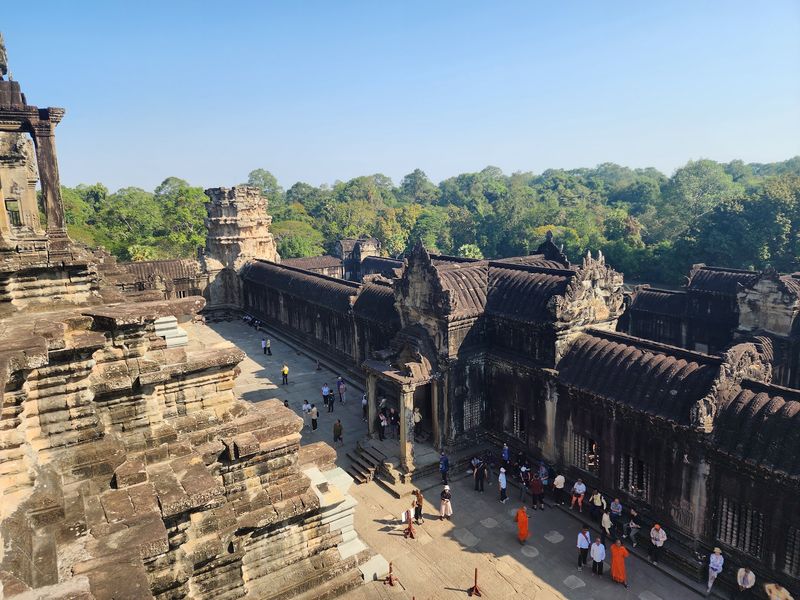
Hot does not even begin to cover it. Temperatures often pass 32 degrees Celsius, and the humidity wraps around you like a wet towel.
One reviewer called it ridiculously hot and humid.
The smart plan is to start early. Mornings are cooler, and the light is lovely for photos.
By midday, many travelers head back for a rest and return in the late afternoon.
Water is your best friend here. Bring more than you think you need, and wear sunscreen and a hat.
Many tuk tuk drivers keep cold water on hand, which feels like a small miracle.
Rainy season is not a deal breaker either. Rain tends to arrive in the afternoon, while mornings are often clear.
After a shower, steam rises from the rainforest and the moss on the stones turns bright green.
Tuk Tuks, Bikes, and Getting Around
Your feet will thank you for hiring wheels. The Angkor area spreads across hundreds of square kilometers, and temples sit far apart.
Reviewers say a tuk tuk for the day makes everything easier.
Drivers often know the best times and routes. They wait while you explore, and you can leave your bag or tripod in the seat.
Some even carry a cooler of chilled water.
Prefer more freedom? Renting a bike or motorbike works well for confident riders, and the roads are easy to follow.
A guide on a bike can also lead you to quieter spots away from the crowds.
Organized small group tours are another smart option. Groups of five or six visit several temples in a day, and the cost is often lower than hiring a tuk tuk inside the park.
You may also make new friends from around the world.
Choosing the Right Pass
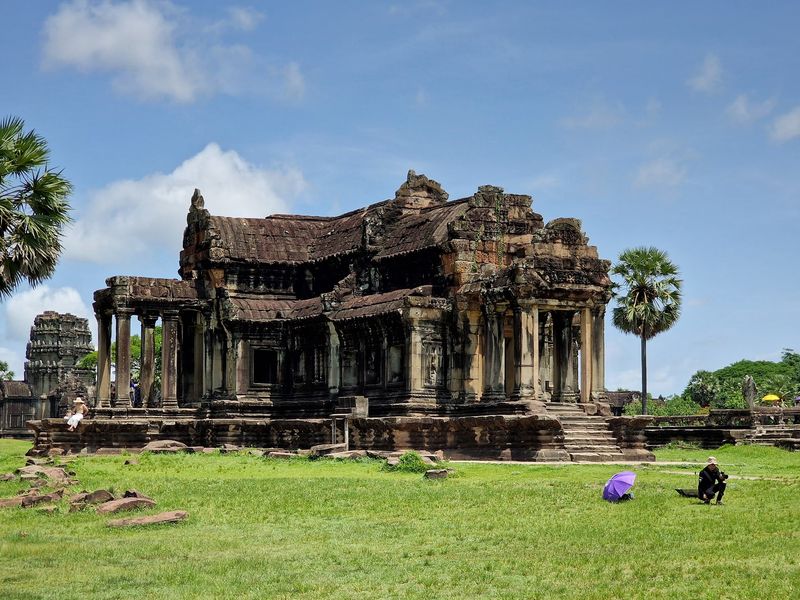
One day sounds tempting, but it usually leaves you tired and wanting more. Many reviewers suggest a three day pass.
One traveler used only two days but loved having the extra one as a backup.
The park holds far more than Angkor Wat. Angkor Thom, Bayon, and Ta Prohm each have their own personality.
Spreading visits over several days keeps the pace relaxed.
A seven day pass exists for people who want to see everything properly. That is a lot of temples, but the choice is nice if your schedule is open.
Spacing out your visits also helps you avoid sore legs.
Some visitors liked Ta Prohm and Bayon even more than Angkor Wat. Part of that came from smaller crowds.
Mix famous stops with quieter ones, and you will get a richer picture of the Khmer Empire.
Monkeys and Other Wild Neighbors
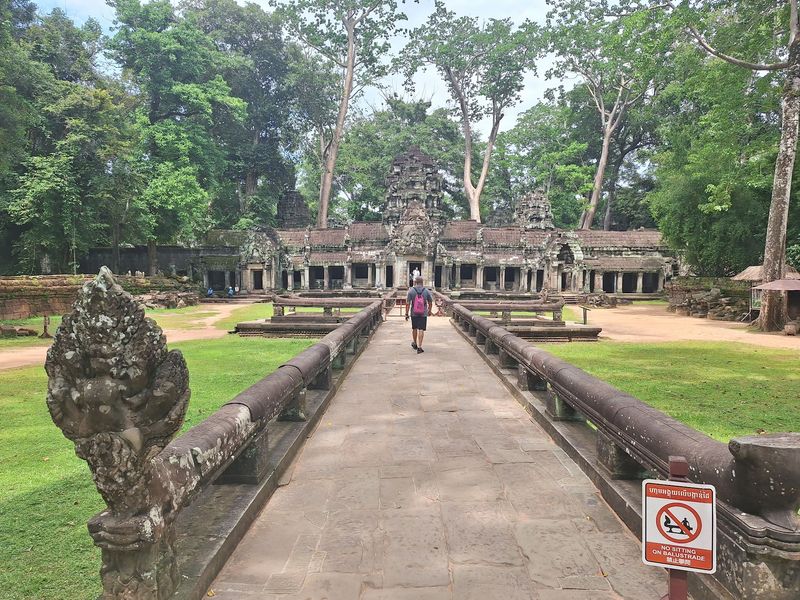
Cute faces, sticky fingers. Macaque monkeys roam around Angkor and they have grown very bold.
They may snatch water bottles or open backpacks if given the chance.
Much of the problem comes from people feeding them for photos. The animals lost their fear and now expect snacks.
Bites and scratches can lead to expensive rabies treatment.
The rule is simple: do not feed, touch, or tease them. Keep food hidden inside a zipped bag.
If a monkey comes close, stay calm and walk away.
Respect extends to the stones, too. Stick to wooden walkways and marked paths, and never climb on loose or unrestored blocks.
Doing so protects both you and the monument, so future travelers can enjoy it as well.
Beyond the Walls: Ta Prohm, Bayon, and More
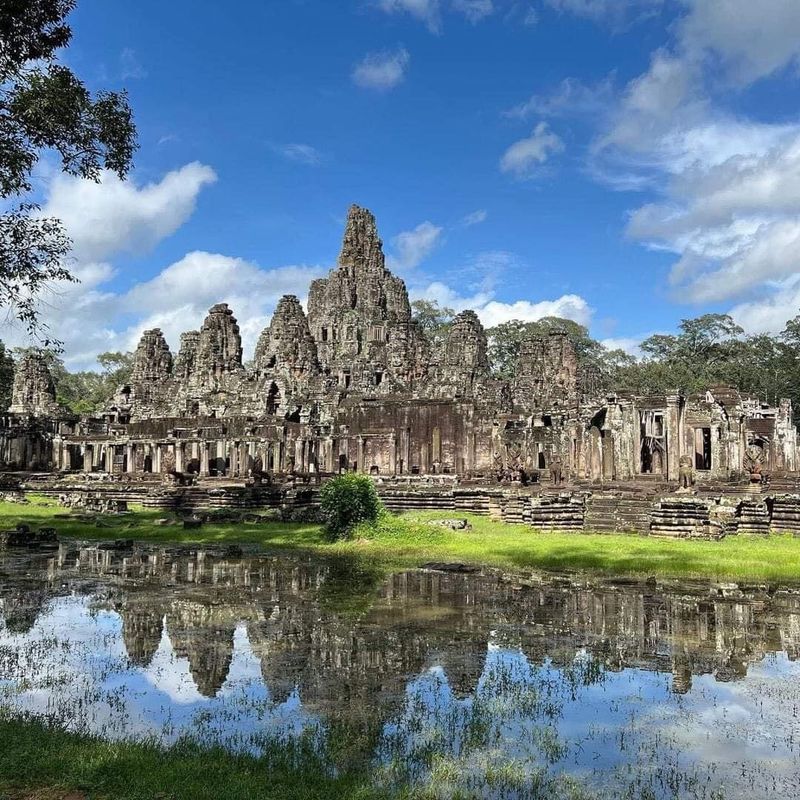
Angkor Wat is the star, but the supporting cast is amazing. Nearby Ta Prohm has giant tree roots slowly swallowing the stones.
Fans of Tomb Raider will recognize the scene right away.
Bayon, in Angkor Thom, is packed with giant smiling stone faces. Walking among them feels playful and a little mysterious.
Many reviewers said they enjoyed it as much as the main temple.
Quieter spots such as Ta Som and Pre Rup reward curious explorers. Ta Som has a banyan tree wrapped around its gateway.
Pre Rup catches lovely light around dawn.
Angkor Wat itself is nearly perfectly restored, so seeing the others gives you a feel for how time changes stone. Plan your route with a driver or guide to save energy.
Pack snacks, water, and patience, and enjoy the adventure.
Share this story