Tulsa has a lot going for it, but tucked along the Arkansas River corridor sits one of the city’s most underappreciated treasures. The Tulsa Botanic Garden is a living, breathing canvas that shifts with every season, drawing in curious walkers, families with strollers, and anyone who just needs a few quiet hours away from the noise.
With floral terraces, a lakeside promenade, woodland trails, and a rotating lineup of art installations, there is always something new to discover here. Whether you are visiting for the first time or returning after years away, the garden has a way of making every trip feel worth the detour.
Where the Garden Grows: Location and Identity
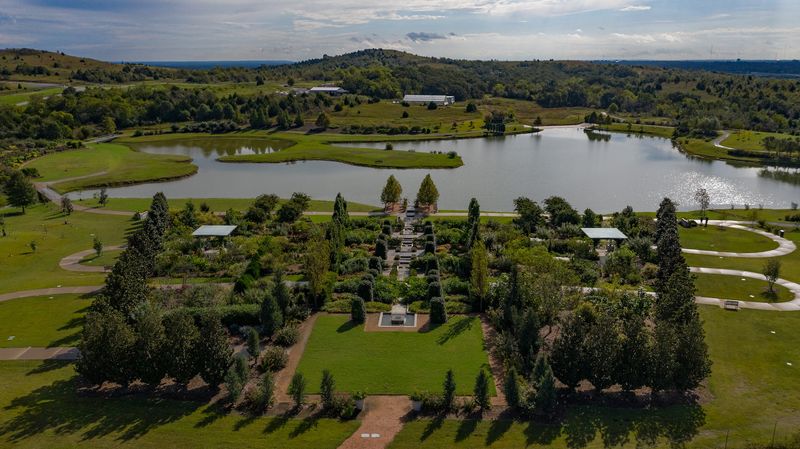
Rooted at 3900 Tulsa Botanic Dr in Tulsa, Oklahoma 74127, the Tulsa Botanic Garden sits within the city’s northwest corridor, not far from the Arkansas River. It is a proper botanical garden in every sense, offering floral terraces, a lakeside promenade, a lotus pool, a prairie trail, and a rotating calendar of events that keeps the grounds feeling alive year-round.
The garden earned a 4.7-star rating from nearly 1,800 Google reviewers, which is the kind of number that reflects genuine repeat visitors rather than one-time curiosity seekers. You can reach the garden by phone at 918-289-0330, and its full schedule of events and memberships lives at tulsabotanic.org.
What makes this place stand out from a typical city park is the intentionality behind every planted bed, every paved path, and every resting spot along the way. Nothing here feels accidental.
The garden was designed to reward slow exploration, and that philosophy shows from the moment you arrive at the front gate.
A Garden Built on Vision: The Story Behind the Space
The Tulsa Botanic Garden did not happen overnight. It grew from a long-held community vision to give Tulsa a world-class horticultural destination, and the result is a garden that feels both ambitious and approachable at the same time.
Rather than mimicking the grand old estates of the East Coast, the garden was shaped around Oklahoma’s own natural character, pulling in native prairie plants, regional wildflowers, and landscapes that feel connected to the surrounding terrain. That regional honesty gives the space a personality that feels genuine rather than borrowed.
Over the years, the garden has expanded its footprint and deepened its programming, adding trails into the surrounding woods, seasonal art installations, and community events that turn the grounds into a gathering space as much as a natural one. Members who visit across multiple seasons often describe watching the garden evolve almost like watching a long, slow conversation between the landscape and the people who tend it.
That ongoing transformation is a big part of what keeps people coming back.
Floral Terraces and the Art of the Planted Bed
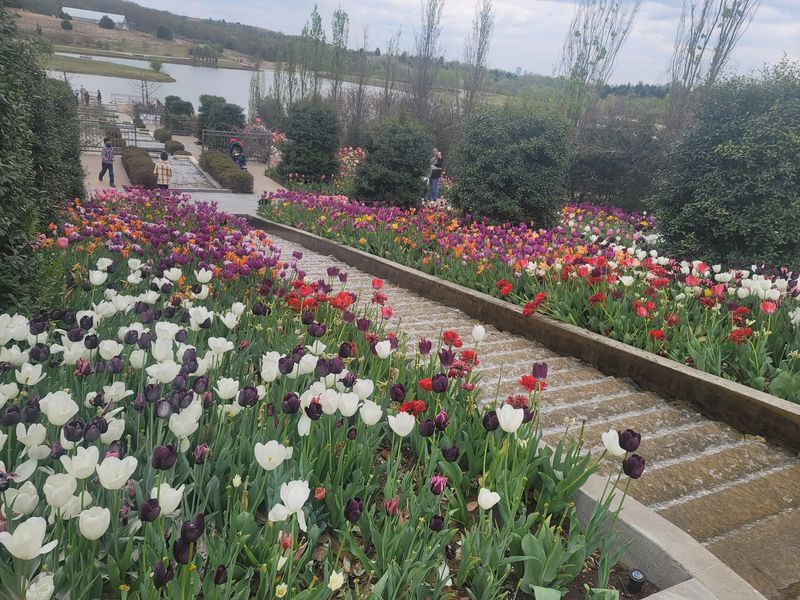
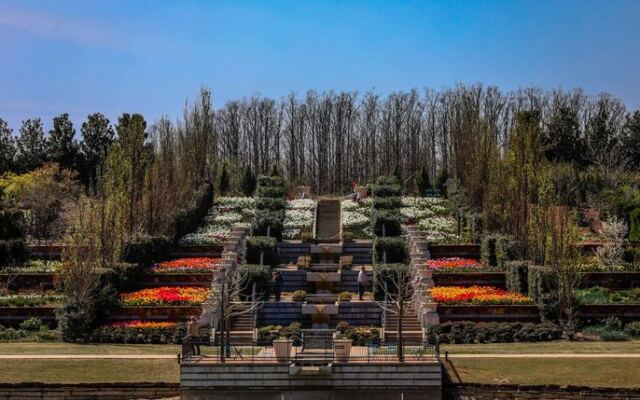
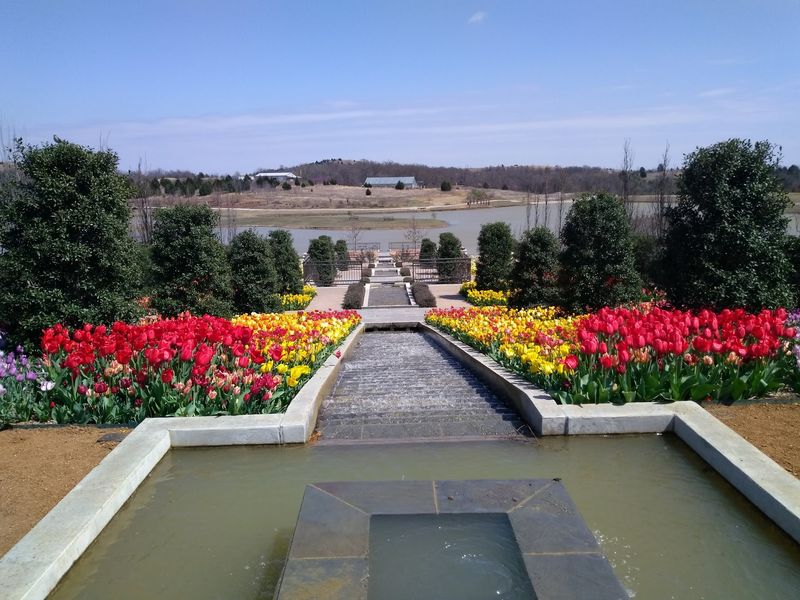
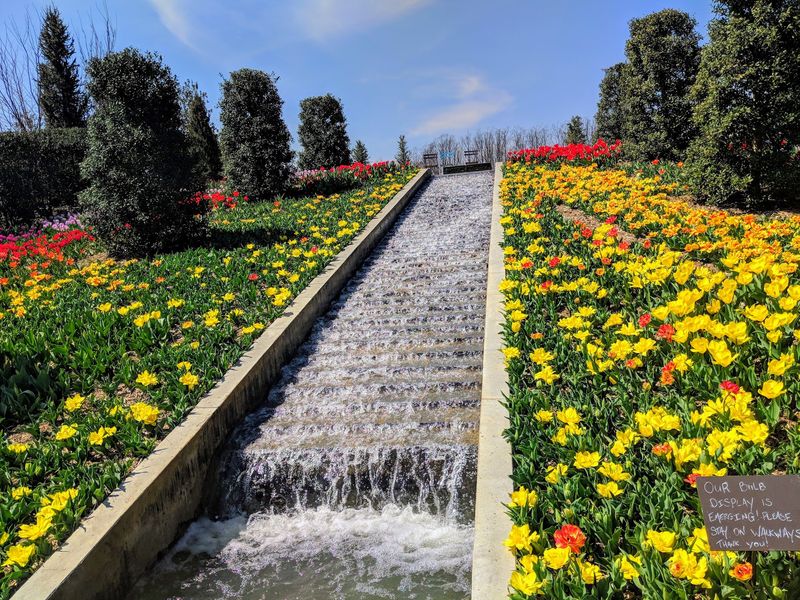
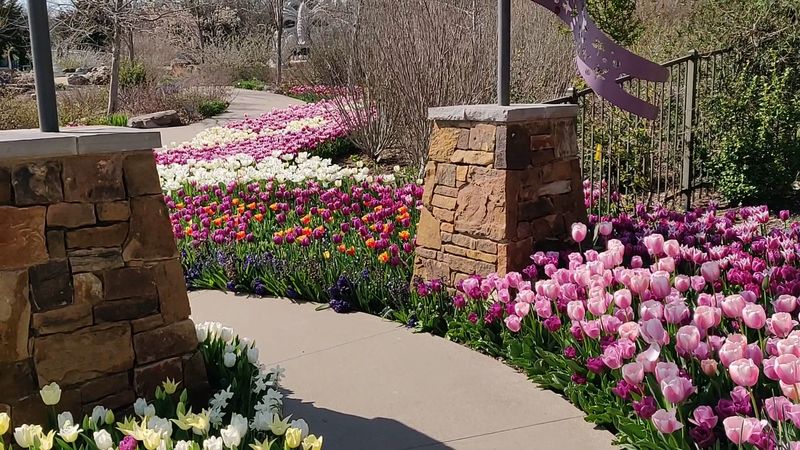
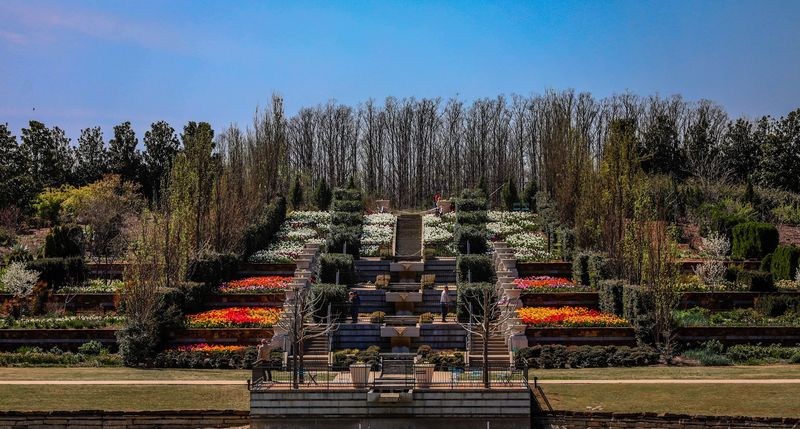
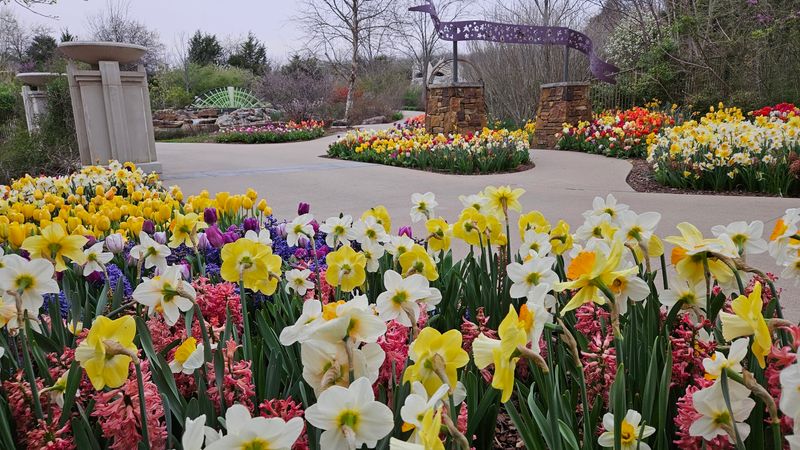
Few things at the garden draw as much attention as the floral terraces, which show up in nearly every photo taken here and account for a significant chunk of the garden’s 38 tulip mentions across visitor reviews. During spring, the terraces erupt in layered color, with tulips named after American First Ladies adding a quiet historical footnote to what might otherwise feel like pure visual pleasure.
Each bed is well-marked with informative plant labels, so curious visitors can actually learn something while they wander. The information is presented clearly without being overwhelming, which makes the terraces feel educational without feeling like a classroom.
Beyond the tulips, the terraces shift across the seasons, swapping in summer bloomers and fall perennials that keep the color rotating rather than fading. The design of the terraces rewards multiple visits because the view genuinely changes.
Photographers tend to linger here longer than anywhere else on the grounds, and it is easy to understand why once you see the layered beds catching morning light from the upper walkway.
The Lake, the Promenade, and the Water Features
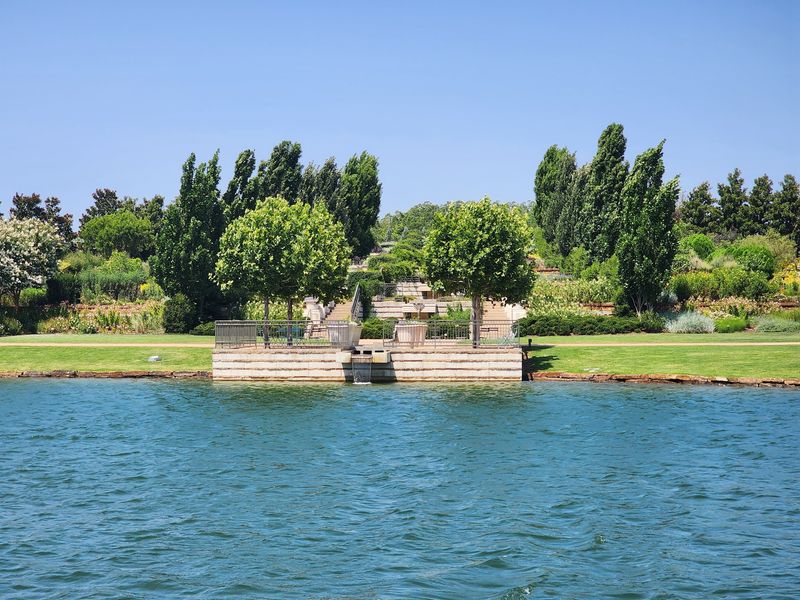
Water has a way of slowing people down, and the Tulsa Botanic Garden uses it well. The lakeside promenade is one of the most calming stretches on the entire property, offering open views across the water that feel surprisingly expansive for a city garden.
The lake and its surrounding features show up in 25 separate mentions across visitor reviews, which speaks to how central this area feels to the overall experience.
Beyond the lake itself, the garden includes multiple water features scattered throughout the grounds, including a lotus pool that adds an almost meditative quality to the eastern section of the property. A waterfall rounds out the aquatic highlights, giving the garden a gentle ambient soundtrack that competes favorably with city noise.
Rocking chairs positioned near the water give visitors an easy excuse to stop moving entirely, which turns out to be one of the better decisions the garden’s designers made. Sitting lakeside with nothing pressing to do is a rare luxury in a busy city, and the garden makes it feel completely natural.
The views from the terraces looking down toward the water are equally worth seeking out.
Trails Into the Trees: The Woodland Walk
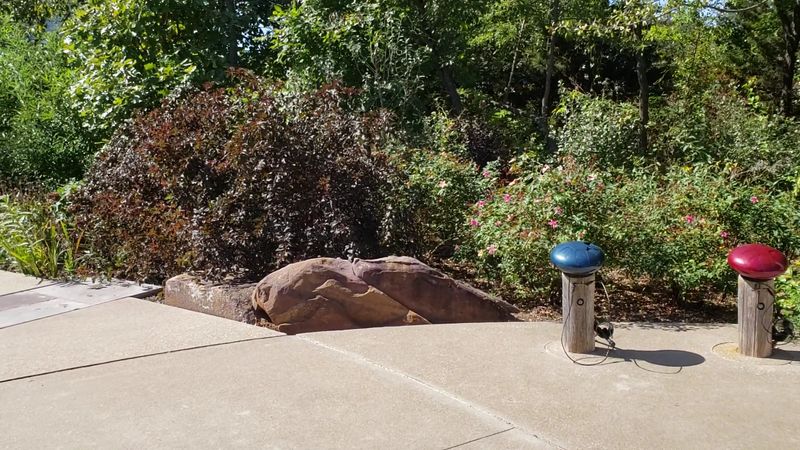
Most visitors come for the flowers, but the garden also offers something wilder just beyond the manicured beds. A trail system extends into the surrounding woods, covering approximately two miles and giving walkers a chance to experience a completely different side of the property.
The shift from cultivated garden to native woodland happens gradually, which makes the transition feel intentional rather than abrupt.
The trail winds through terrain that feels genuinely natural, with native plants lining the path and the kind of quiet that only comes when trees close in overhead. Visitors who make the effort to explore beyond the main garden often describe the woodland section as a pleasant surprise, especially on warm days when the shade becomes a genuine reward.
The paths include both paved and crushed gravel surfaces throughout the garden and trail system, making navigation manageable for a wide range of mobility levels. The woodland trail adds meaningful depth to what could otherwise be a fairly short visit, and it gives the garden a sense of scale that feels bigger than its footprint might suggest.
Bringing water and comfortable shoes is a smart call before heading into this section.
Nature Connects: The LEGO Sculpture Experience
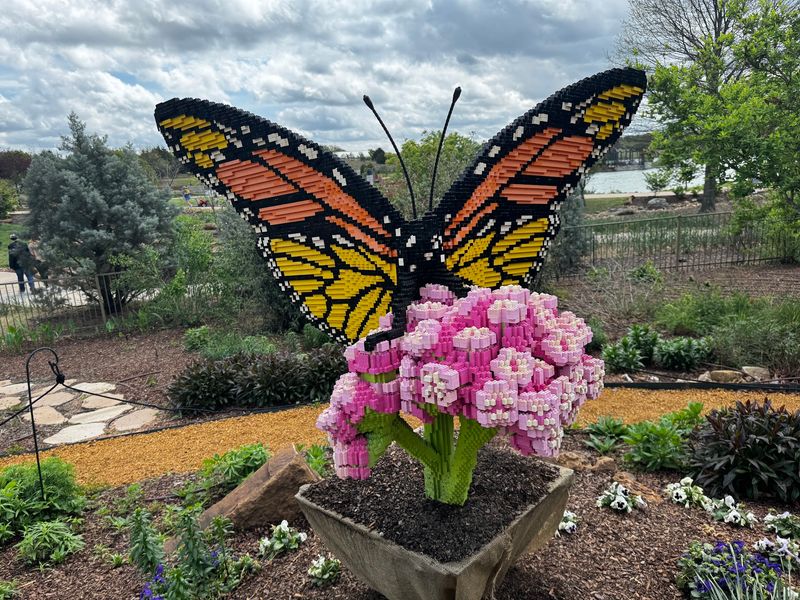
One of the most talked-about events in the garden’s recent history has been the Nature Connects exhibit featuring large-scale LEGO sculptures by artist Sean Kenney. With 29 mentions across visitor reviews, the exhibit clearly made an impression on a wide range of guests, from children hunting for hidden pieces to adults genuinely moved by the craftsmanship on display.
Kenney’s sculptures are built with a sense of joy that reads clearly even without any explanation. A hummingbird feeding from a trumpet flower, a monarch butterfly in full wingspan, and a birdbath rendered entirely in plastic bricks all sit within the garden’s natural settings in ways that feel surprisingly harmonious.
The contrast between the organic surroundings and the geometric sculptures creates a visual tension that works beautifully in person.
A scavenger hunt tied to the exhibit gave younger visitors a structured way to explore the grounds, turning what might have been a passive stroll into an active adventure. Families with children consistently highlighted the scavenger hunt as one of the most memorable parts of their visit.
The exhibit proved that the garden is willing to take creative swings, and this particular one landed well with nearly everyone who saw it.
Sculptures, Art Installations, and Creative Surprises
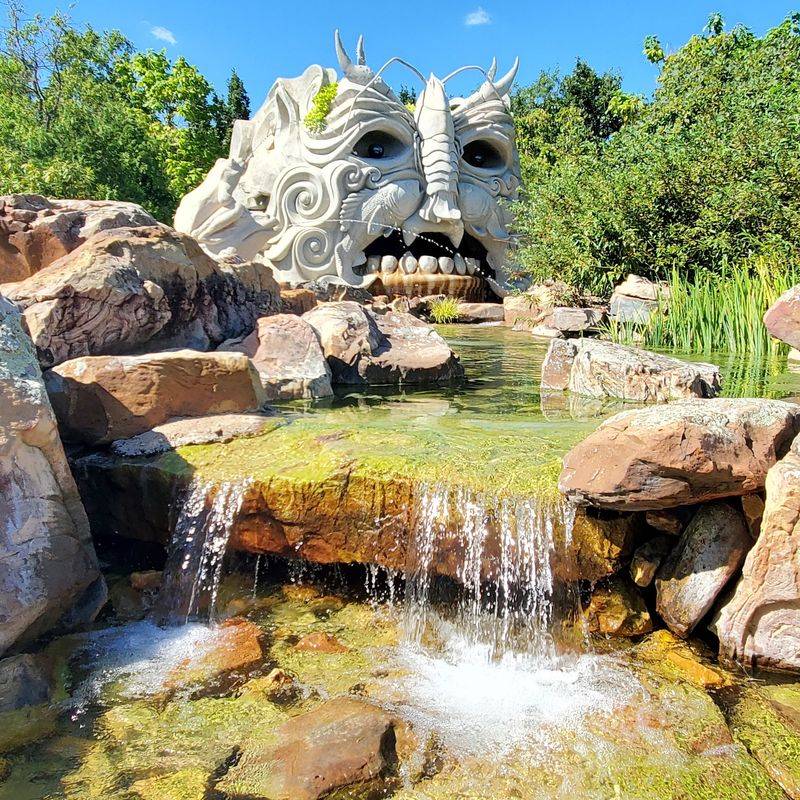
Beyond the LEGO exhibit, the garden maintains a broader commitment to visual art that shows up in 25 sculpture mentions across its visitor reviews. Permanent and rotating installations are woven throughout the grounds, giving the space an artistic layer that enriches the natural one without competing with it.
The placement of sculptures throughout the garden feels considered rather than scattered. A piece tucked beside a water feature reads differently than one positioned at the end of a long terrace walkway, and the garden seems to understand that context shapes how art is received.
Walking from one installation to the next gives visitors a gentle sense of discovery that keeps the grounds feeling fresh even on a second or third visit.
Seasonal art events and new installations arrive throughout the year, which means the garden’s artistic identity is never fully settled. Members who visit regularly mention noticing new pieces or changed arrangements as one of the quiet pleasures of holding a membership.
For casual visitors, the sculptures add an unexpected creative dimension to what might have started as a simple nature walk, making the whole experience feel richer than anticipated.
Seasonal Events That Change Everything
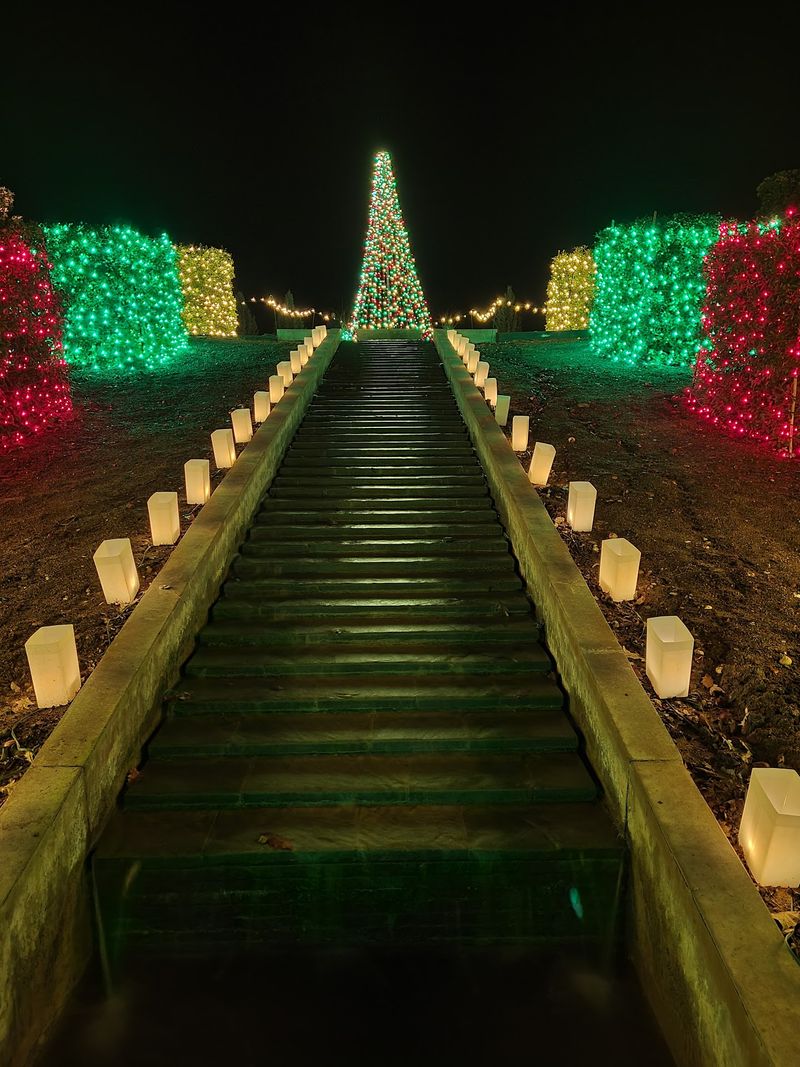
The garden does not hibernate between peak bloom seasons. A full calendar of events keeps the grounds lively from spring through winter, and the seasonal programming is one of the strongest arguments for visiting more than once a year.
The Christmas lights event, called Garden of Lights, draws consistent praise across visitor reviews, with guests describing the illuminated grounds as stunning and worth the trip on its own.
During the holiday event, warming areas are set up throughout the property, hot drinks are available at multiple stations, and Santa and Mrs. Claus make appearances for younger guests. The garden handled a record-warm December day of 85 degrees in 2025 without losing any of the festive atmosphere, which speaks to how well the event is organized regardless of weather conditions.
Spring brings the tulip season and art installations like Nature Connects. Summer offers dog-friendly days when leashed pets are welcome on the grounds.
Fall leans into the natural color of the surrounding landscape. Each season offers a genuinely different experience, and the garden’s event team clearly puts thought into making every visit feel timely rather than generic.
Checking the website before any trip is a smart habit.
The Children’s Garden and Family-Friendly Design

Families with young children will find the garden genuinely welcoming rather than merely tolerant of small visitors. A dedicated children’s area gives kids their own space to explore, and the treehouse feature within the garden earns its own category in visitor mentions with 10 separate references.
The space is designed to engage children without pulling adults out of the experience entirely, which is a balance that not every family destination manages to strike.
Strollers and wheelchairs move through the garden comfortably, thanks to paved walkways, ramp access in key areas, and a layout that avoids excessive stair climbing. The garden’s accessibility was specifically noted by visitors who brought elderly family members, including one guest who brought an 87-year-old aunt and found the ramp access genuinely helpful throughout the visit.
Scavenger hunts tied to seasonal exhibits give children an active role in exploring the grounds, which tends to extend the visit and deepen engagement with the plants and art along the way. The combination of sensory-rich environments, interactive programming, and thoughtful physical design makes the garden one of the more family-friendly outdoor destinations in the Tulsa area.
Even the benches seem placed with tired parents in mind.
Atmosphere and the People Who Love It Here
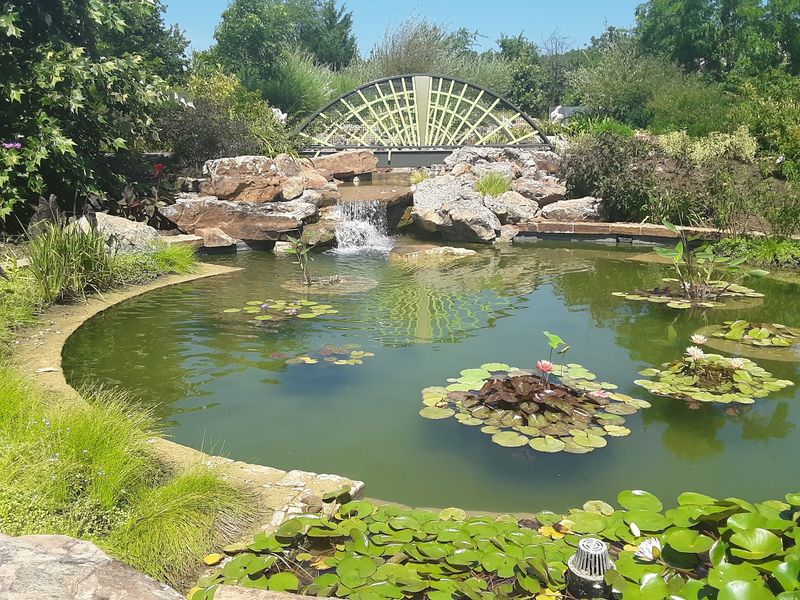
There is a particular kind of quiet that settles over well-designed green spaces, and the Tulsa Botanic Garden has it in abundance. Visitors consistently describe the atmosphere as peaceful and serene, and the physical design of the garden reinforces that feeling at every turn.
Rocking chairs near the water, benches tucked beside planted beds, and shaded spots along the trails all encourage the kind of unhurried pace that most people struggle to find in daily life.
The garden draws a genuinely diverse crowd. Couples on first dates share the paths with retirees, parents with toddlers, photography enthusiasts with tripods, and leashed dogs on designated dog-friendly days.
That mix of visitors somehow never feels crowded or chaotic, partly because the garden’s layout distributes people naturally across multiple zones rather than funneling everyone toward a single focal point.
Regular visitors who hold memberships often describe the garden as a place they return to simply for the mood it creates, not necessarily for a specific event or bloom. That kind of loyalty says something meaningful about how the space makes people feel.
Calm, unhurried, and slightly more connected to the natural world than when they arrived. That is a hard thing to engineer, and the garden pulls it off consistently.
The Gift Shop, Food Options, and On-Site Amenities
A visit to the garden does not have to end at the exit gate. Near the entrance, a gift shop offers seeds, plants, and garden-related items that let visitors take a little piece of the experience home.
For anyone who leaves feeling inspired by a particular plant or flower arrangement, the shop provides a practical outlet for that enthusiasm. Members and first-timers alike tend to browse on the way out.
Food is available on-site, with options that vary depending on the season and the event. During the holiday Garden of Lights event, multiple food stations are set up throughout the grounds, and the s’mores and fire pit setup earns 18 mentions in visitor reviews, making it one of the more memorable seasonal offerings.
Hot drinks are also available at the Christmas event, scattered at stations across the property to keep guests warm during evening visits.
Restrooms on the property are described as clean, parking is manageable without significant congestion even on busy days, and the overall infrastructure of the garden supports a comfortable multi-hour visit. The combination of thoughtful amenities and a natural setting means the garden functions well as a half-day destination rather than a quick stop.
Plan to stay a while and enjoy the pace.
Membership Perks and the Case for Coming Back Often
One visit to the garden is genuinely worthwhile, but a membership turns the place into something closer to a personal retreat. The garden offers memberships that allow unlimited visits throughout the year, which opens up the full seasonal arc of the property rather than locking a visit to a single moment in time.
Members often describe the experience of watching the garden change across months as one of the more rewarding aspects of the membership.
The value calculus is straightforward. With a single adult admission running around $16.92 including tax, a membership pays for itself within a handful of visits.
For Tulsa residents or anyone living within a reasonable driving distance, that math makes the membership an easy argument to make. The garden’s website at tulsabotanic.org handles membership sign-ups and provides current pricing details.
Beyond the financial side, members also get early access to event information, which matters for popular seasonal events that can sell out. The garden also accepts EBT for discounted access, making the space more financially accessible to a broader range of visitors.
That commitment to inclusion adds a layer of community value to what is already a strong local resource. The garden genuinely wants people here, and the membership program reflects that.
Hours, Pricing, and How to Plan Your Visit
Planning a trip to the garden is straightforward, but a few details are worth knowing before you go. The garden is open Tuesday through Sunday from 10 AM to 5 PM and is closed on Mondays.
That Monday closure catches some visitors off guard, so it is worth double-checking the schedule before making the drive, especially if you are visiting from out of town.
Admission runs approximately $16.92 per adult including tax, which most visitors find reasonable given the amount of ground the garden covers and the quality of the experience. The garden’s phone number is 918-289-0330 for anyone with specific questions about pricing, accessibility, or upcoming events.
The website at tulsabotanic.org is the most current source for event calendars and any seasonal changes to hours.
For pacing, a brisk walk through the main garden takes around 90 minutes, but most visitors who want to enjoy the views, rest on benches, and explore the woodland trail should plan on two to three hours. Comfortable shoes are a genuine recommendation rather than a suggestion, especially if the woodland trail is on your agenda.
Arriving closer to opening time on weekdays tends to offer the most relaxed experience with fewer crowds.
A Quiet Verdict on a Garden Worth Your Afternoon
Some places earn their reputation through spectacle, and others earn it through consistency. The Tulsa Botanic Garden belongs firmly in the second category.
Every element of the experience, from the well-labeled plant beds to the accessible pathways to the thoughtfully placed rocking chairs, reflects a genuine care for the visitor that shows up in the details rather than the headlines.
The garden rewards the kind of visitor who is willing to slow down and pay attention. A tulip bed named after First Ladies, a LEGO hummingbird perched beside a real flower, a woodland trail that feels miles away from the city, a lotus pool that asks nothing of you except a moment of stillness.
These are not flashy attractions, but they add up to something meaningful over the course of an afternoon.
With a 4.7-star rating built on nearly 1,800 reviews, the garden’s reputation speaks for itself. Whether you come for spring blooms, holiday lights, a family outing, or simply a few hours of quiet, the garden delivers without overselling itself.
Tulsa has plenty of reasons to visit, and this one belongs near the top of the list for anyone who values a well-spent afternoon outdoors.
Share this story