There is a place on the Delmarva Peninsula where former farmland has been transformed into something so quietly spectacular that it stops you mid-step and makes you reconsider everything you thought you knew about public gardens. Native grasses sway in coastal breezes, bald eagles circle overhead, and over 70,000 perennial plants create a living canvas designed by one of the most celebrated landscape artists in the world.
That last detail tends to surprise people the most. The Delaware Botanic Gardens at Pepper Creek, tucked away in Dagsboro, Delaware, holds a two-acre meadow designed by Piet Oudolf, the Dutch plantsman behind New York City’s High Line.
Beyond that showstopper, the gardens stretch across 37 acres of woodlands, tidal creek frontage, and beautifully curated outdoor spaces that reward every type of visitor. Whether you have two hours or a full afternoon, this place delivers something genuinely memorable at every turn.
A Coastal Plain Address Worth Knowing
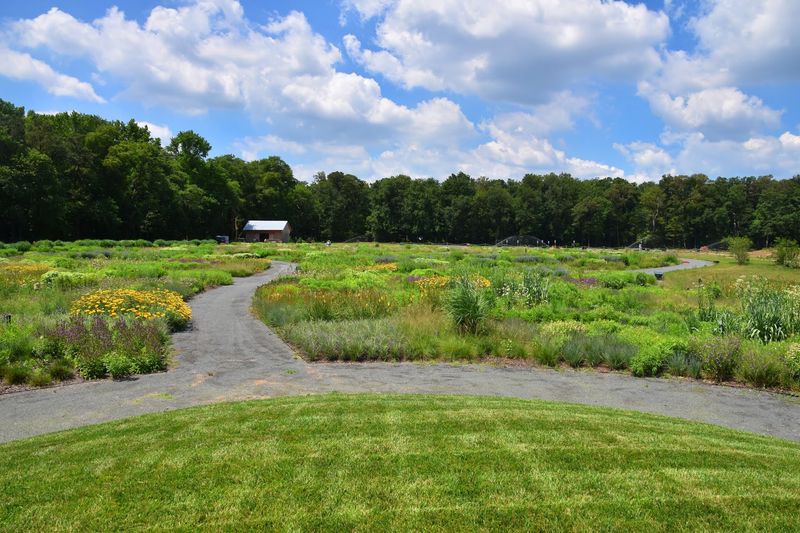
Most garden destinations announce themselves with grand iron gates or towering hedgerows. The Delaware Botanic Gardens at Pepper Creek takes a different approach, greeting visitors with an understated welcome that feels immediately connected to its coastal plain surroundings.
The address is 30220 Piney Neck Road, Dagsboro, DE 19939, and the setting suits the name perfectly. Pepper Creek winds along the property’s edge, and the faint salt-and-pine scent of the Delmarva air hits you the moment you step out of your car.
About 25 to 30 minutes west of the Delaware beaches, this 37-acre property sits on land that was once active farmland, leased from the Sussex County Land Trust for a symbolic one dollar per year. That modest arrangement gave a passionate community the canvas it needed.
The result is a destination that holds its own alongside far better-known public gardens up and down the East Coast, and it keeps getting better with each passing season.
From Farmland to Flourishing Garden: The Origin Story
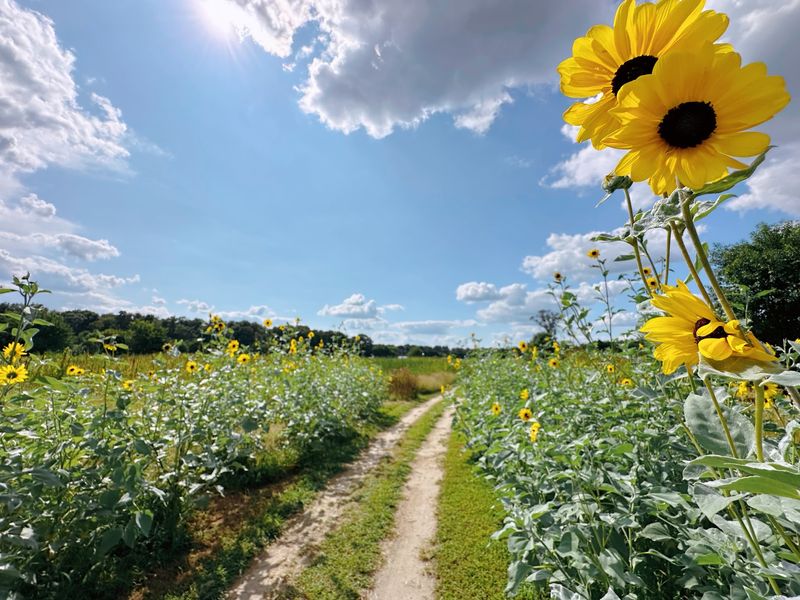
Back in early 2012, a group of garden-loving residents in Sussex County looked at a stretch of coastal plain farmland and saw something most people would have missed entirely: potential. They founded what would eventually become the Delaware Botanic Gardens at Pepper Creek, a volunteer-driven nonprofit with an audacious goal of creating a world-class public garden in southern Delaware.
The Sussex County Land Trust made the vision financially possible by leasing 37 acres for that famous one-dollar-a-year arrangement, renewable for 99 years twice over. That kind of community infrastructure gave the founders room to dream big without the burden of impossible overhead costs.
After years of fundraising, planning, and thousands of volunteer hours spent planting and cultivating, the gardens officially opened to the public in September 2019. From those early grassroots meetings to a destination that earns a 4.8-star rating and national press attention, the origin story is one of genuine collective determination.
The meadow you walk through today was once a plain agricultural field.
Piet Oudolf’s Meadow: A Living Work of Art
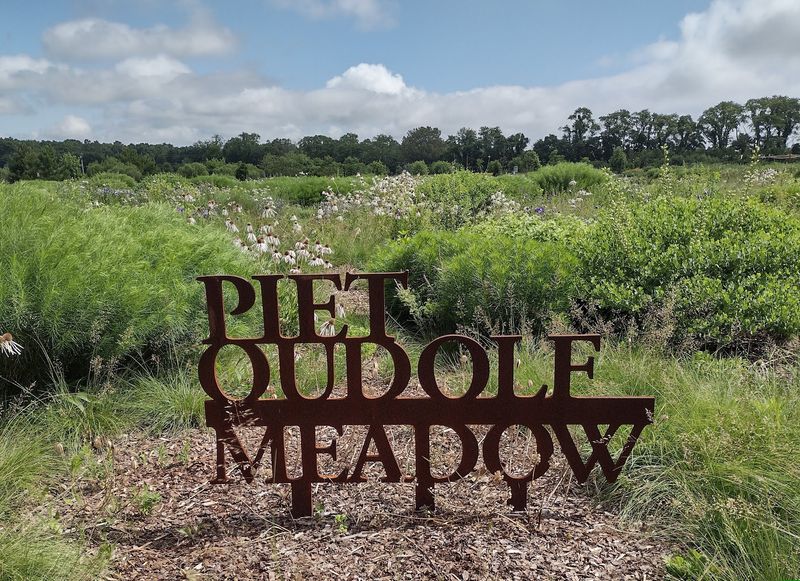
Here is a detail that genuinely catches people off guard: a Dutch landscape designer celebrated for reshaping how the world thinks about public green spaces agreed in 2015 to create a major garden in a small Delaware town. Piet Oudolf, the mind behind New York City’s High Line and Chicago’s Lurie Garden, brought his signature “New Perennial” philosophy to Dagsboro.
The result is a two-acre meadow containing 70,000 perennial plants and grasses, with roughly 85 percent native species. Volunteers placed over 65,000 plants during the initial 2017 and 2018 planting seasons alone.
Oudolf’s design weaves coneflowers, heleniums, milkweeds, phloxes, and liatrises into soft, flowing drifts that shift in color and texture as the seasons change.
Late summer brings the most dramatic display, when pollinators blanket the blooms and the meadow practically hums with activity. Oudolf specifically aimed for year-round visual interest, so even a winter walk through the dried seed heads carries its own quiet beauty.
This meadow alone justifies the trip.
The Rhyne Garden: Where First Impressions Bloom
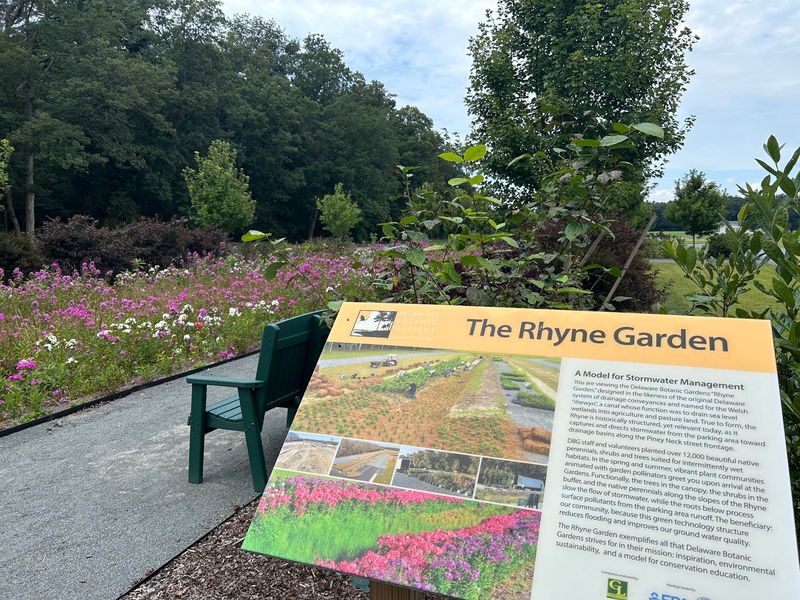
Before you even reach the main trails, the gardens make a statement. The half-acre Rhyne Garden lines the parking area with 12,000 flowering native plants, 300 shrubs, and 34 Brandywine Red Maple trees, turning what could have been a forgettable arrival into a proper botanical welcome.
The design is smarter than it looks at first glance. A central swale runs through the garden, collecting stormwater runoff and allowing the dense root systems of native plants to filter it naturally before it reaches Pepper Creek.
Beauty and ecological function working side by side is a theme you will notice throughout the entire property.
The Rhyne Garden sets the tone for everything that follows: thoughtful, purposeful, and visually generous. Butterflies tend to appear here almost immediately, drawn to the dense plantings near the entrance walkway.
Visitors who arrive expecting a quiet stroll sometimes stop right here for ten minutes, phone cameras out, before they have even purchased their tickets. That says something meaningful about the care invested in every corner of this place.
Woodland Trails That Feel Like a Different World
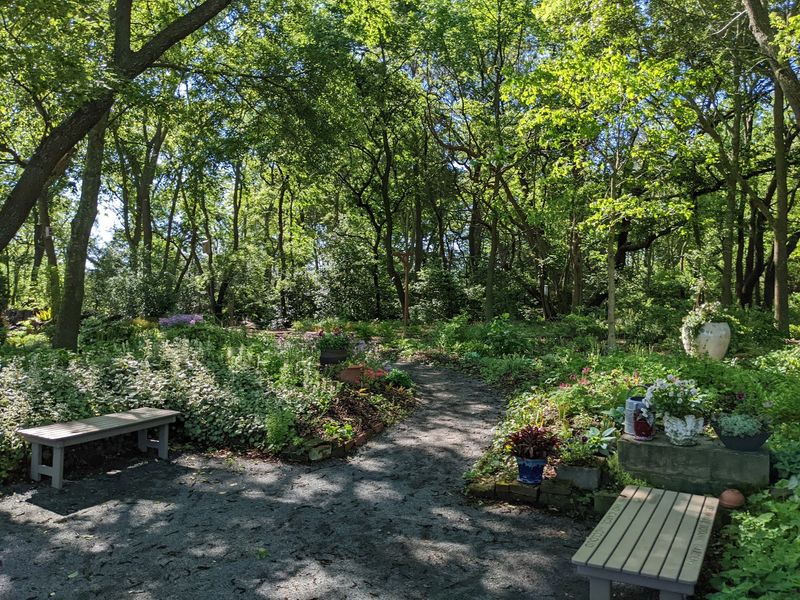
The 12.5-acre Woodlands section of the gardens offers a complete tonal shift from the open meadow, trading sweeping vistas for intimate, canopied quiet. Ancient southern red oaks and sassafras trees form a layered canopy overhead, and the trails beneath them stay noticeably cooler on hot summer afternoons.
Natural log borders line the paths, keeping you immersed in the forest atmosphere rather than pulling you out of it with jarring signage. The trails are gently graded and ADA-compliant, which means visitors of all mobility levels can navigate them comfortably.
Flat stretches with gradual inclines make the mile-and-a-half trail network accessible even for those using canes or walking sticks.
Hawks and other raptors are sometimes spotted soaring above the canopy, and the occasional black rat snake has been known to drape itself over a low-hanging branch, giving startled visitors a memorable story to bring home. The woodlands feel genuinely wild in the best possible way, a quality that takes real restraint and skill to cultivate deliberately.
Sculptures That Turn a Walk Into a Scavenger Hunt
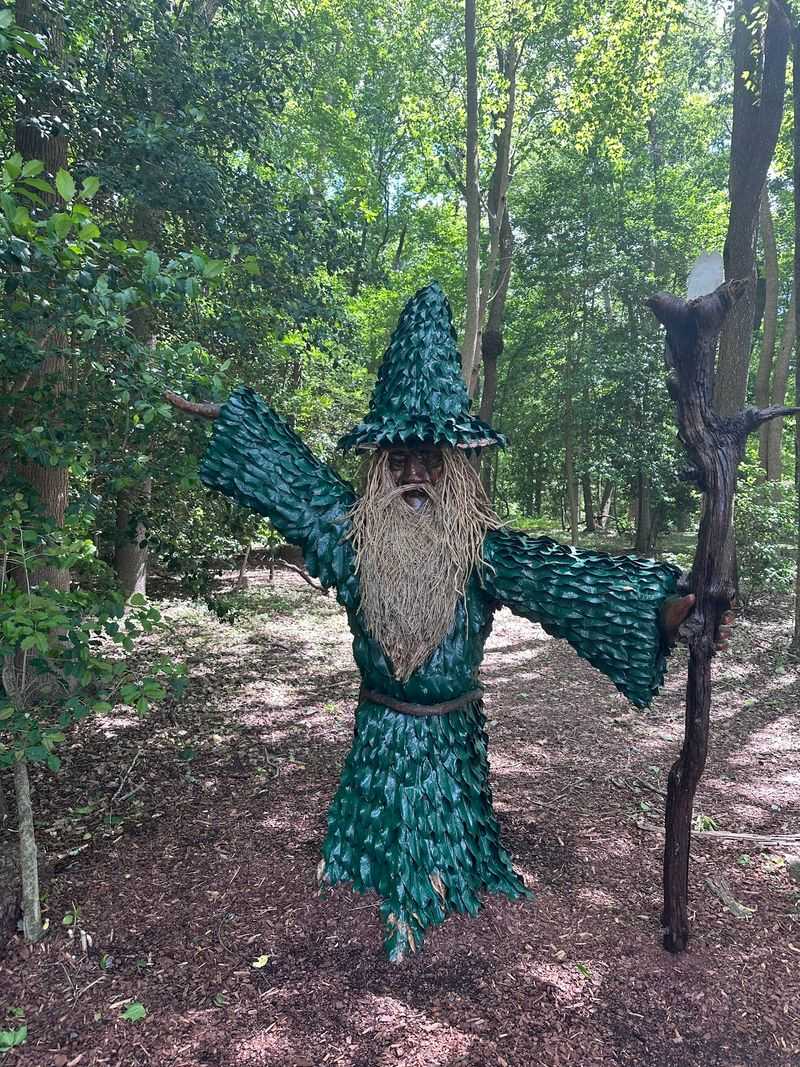
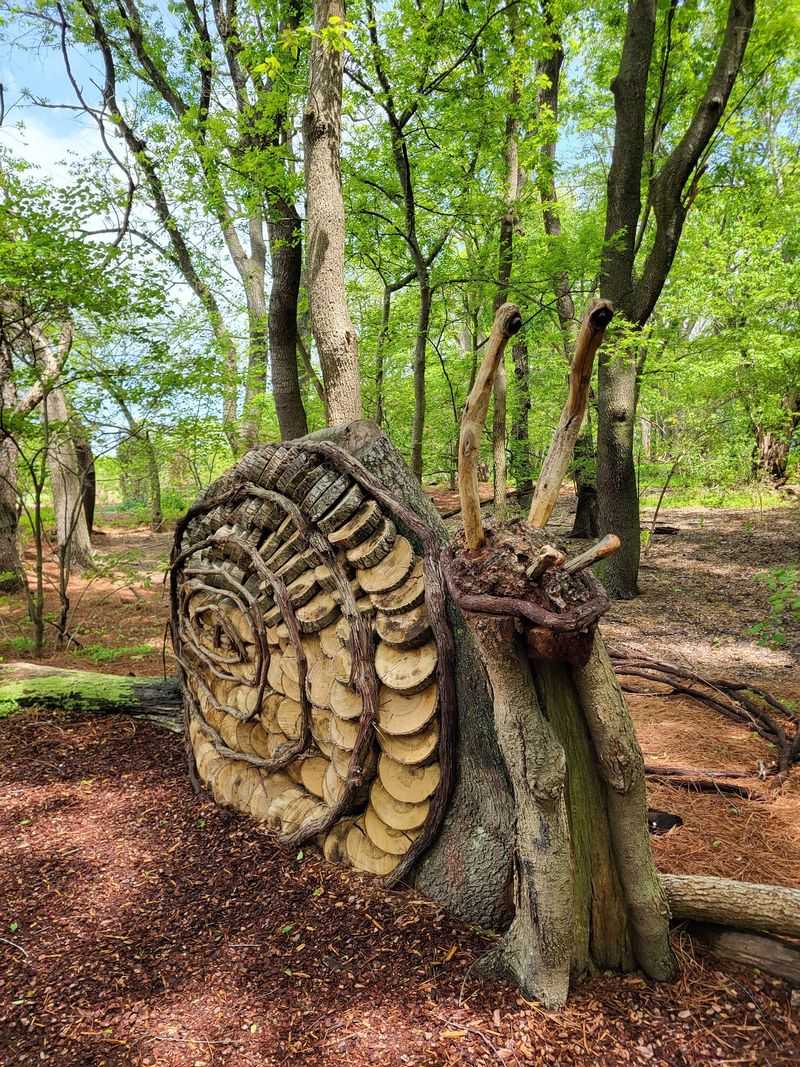
Scattered throughout the Woodlands like a secret the garden keeps just for the curious, a collection of whimsical sculptures transforms a nature walk into something closer to a treasure hunt. Crafted entirely from natural materials, the figures include a toad, a lizard, a sea serpent, a wizard, a snail, a turtle, Medusa, a spider, an octopus, a heron, a fiddler crab, and a troll, among others.
What makes them genuinely fascinating beyond the initial delight of discovery is that over time, these sculptures have begun to develop their own micro-ecosystems. Moss, lichen, and small insects have colonized the surfaces, blurring the line between art installation and living habitat in a way that feels entirely appropriate for a garden with this kind of ecological mission.
Kids absolutely love hunting for each figure along the trail, and adults tend to linger longer than expected, examining the craftsmanship up close. The scavenger hunt quality of the woodland walk adds a layer of playful engagement that makes the gardens feel welcoming to every age group, not just dedicated plant enthusiasts.
Pepper Creek Frontage and the Eagle Watch Experience
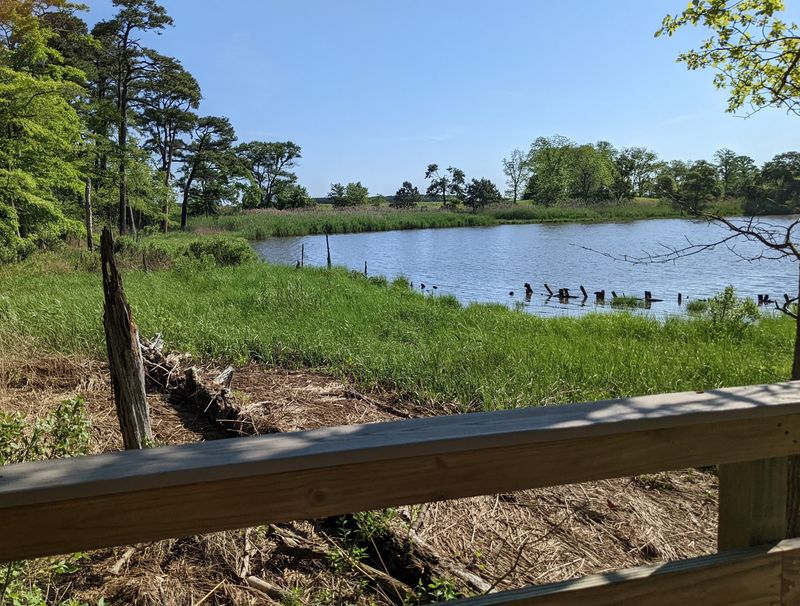
One of the most quietly dramatic features of the gardens is the 1,000-foot frontage along Pepper Creek, a tidal waterway that originates near the Cypress Swamp in southern Delaware and flows into Indian River Bay. The creek is a constant presence as you descend through the woodlands, its briny scent mixing with pine and damp earth.
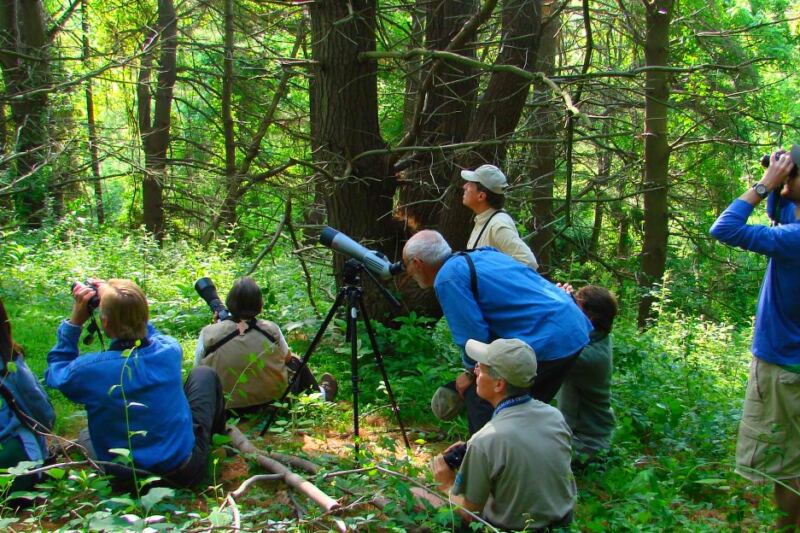
A dedicated observation deck at the water’s edge provides an elevated perch for watching shorebirds, studying marsh vegetation, and simply absorbing the coastal scenery. The gardens sit within the Atlantic Flyway, making this a productive birding location with 85 recorded bird species across the property.
The eagle watch element adds genuine excitement to any visit. A live-streaming Pepper Creek Eagle Cam launched in 2024 to monitor bald eagles in the area, with hopes of documenting a full breeding cycle as the population grows more comfortable with the site.
Spotting a bald eagle from the observation deck is the kind of moment that tends to make visitors reach for their phones and immediately text someone. The creek delivers that kind of surprise regularly.
The Folly Garden and Its Farmhouse Echoes
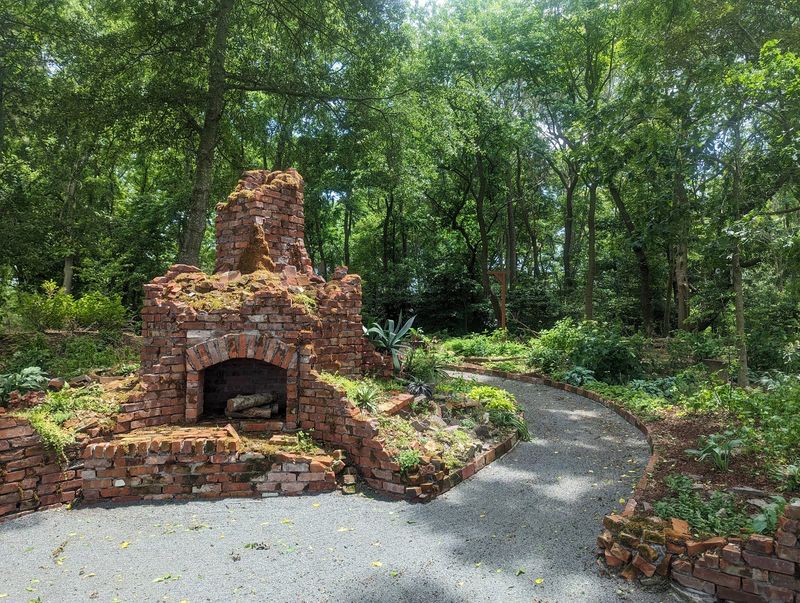
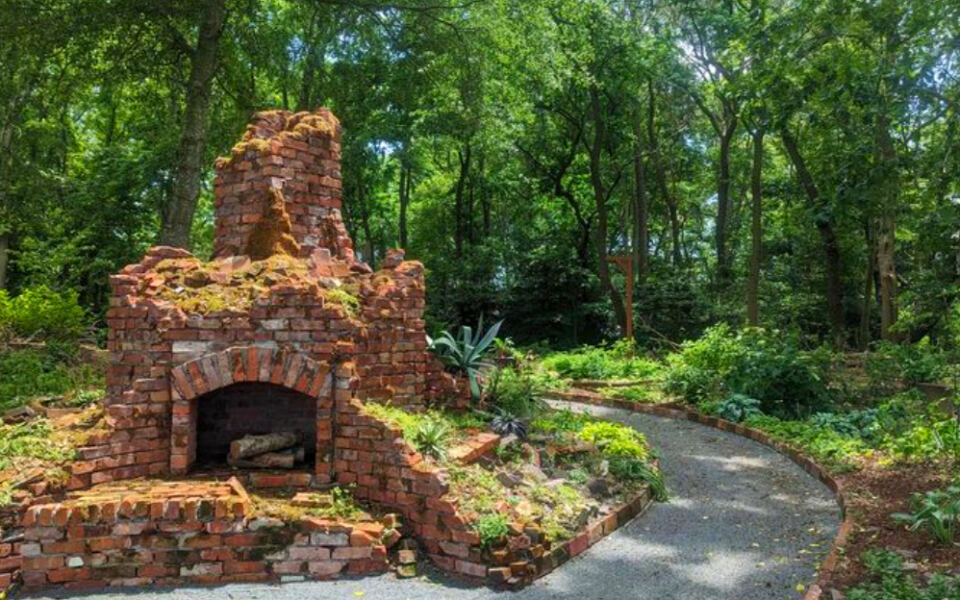
Built on the footprint of a 20th-century farmhouse that once stood on the property, the Folly Garden is one of the most atmospheric spaces in the entire garden. Faux red-brick chimney ruins, old fence remnants, and carefully placed planters evoke the lives of the people who farmed this land before it became a botanic destination.
A reflecting pond anchors the space, surrounded by 37,500 bulbs and plants that thrive in the dappled shade of mature walnut trees. Spring visits reward guests with drifts of hellebores, columbines, ferns, and early bulbs that create a soft, painterly atmosphere unlike anything else on the property.
The Folly Garden has a nostalgic, almost storybook quality that feels intentional rather than accidental. It invites you to slow down and sit for a while, which several well-placed benches make easy.
The contrast between its intimate, sheltered atmosphere and the wide-open sweep of the Oudolf Meadow nearby is part of what makes the overall garden experience feel so richly varied and worth taking your time through.
Native Plants as the Garden’s True North Star
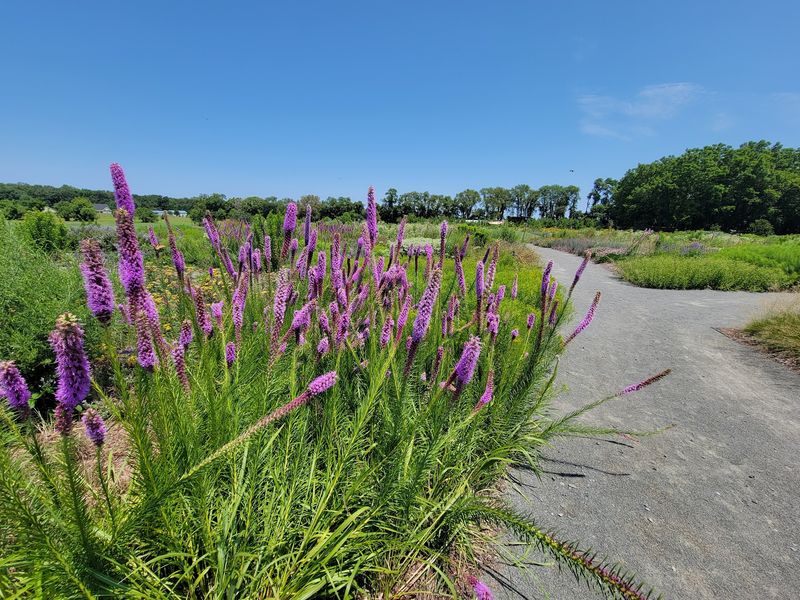
Every design decision at this garden circles back to a single guiding principle: native plants belong here, and the ecosystems that depend on them deserve a fighting chance. The plant collection policy consistently prioritizes species native to the Atlantic coastal plain, adding thousands of trees, shrubs, vines, and herbaceous perennials to what was once monoculture farmland.
Mountain mint, wild indigo, bee balm, rose mallows, soft rush, and phlox are not just decorative choices. Each one provides specific food sources and habitat for pollinators, butterflies, and birds in ways that ornamental non-natives simply cannot replicate.
The meadow pulses with bee and butterfly activity during peak season as a direct result of these intentional planting decisions.
The Learning Garden features a wetlands pond where frogs call from the edges, and the surrounding plantings attract insects that feed the broader food web. Watching a monarch butterfly move through a patch of native milkweed at this garden is not just pleasant.
It is a small, visible proof that thoughtful horticulture can genuinely support ecological health rather than simply coexist alongside it.
Community Volunteers: The Garden’s Real Growing Force
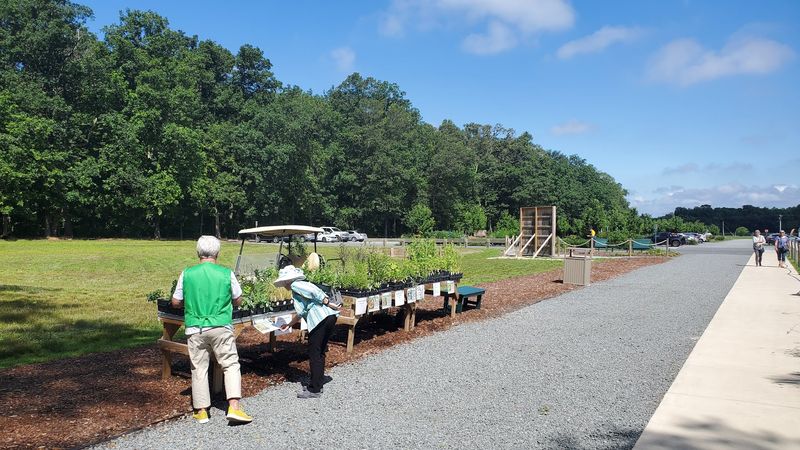
Five paid staff members oversee operations at the Delaware Botanic Gardens, but the real engine powering this place runs on volunteer hours. Hundreds of garden stewards and docents contribute their time, knowledge, and physical labor to maintain and expand the property throughout the year.
Governor John Carney recognized this collective effort in 2021, presenting the Outstanding Volunteer Award to the DBG Garden Stewards. Southern Delaware Tourism named the gardens Best Attraction in 2022, and the Wall Street Journal described the property as an oasis of native grasses and seasonally changing flowers that backs up to woodlands.
Those recognitions did not come from a large budget. They came from people who genuinely care about what this garden represents.
The guided tours, available for an additional fee beyond the base admission, are led by knowledgeable docents who bring real enthusiasm to every stop along the route. Tour groups consistently leave with a far deeper appreciation for what they just walked through.
If you have the time, the guided option transforms a pleasant walk into something genuinely educational and memorable.
Practical Tips for Planning Your Visit
Getting the logistics right makes the difference between a relaxed garden visit and a frustrating one, so a few practical notes are worth keeping in mind before you go. The gardens are open Thursdays through Sundays, with Thursday and Monday hours running from 9 AM to 8 PM and Friday through Sunday from 9 AM to 4 PM.
Tuesdays and Wednesdays are closed.
Adult admission is $15, and children 16 and under enter free. Guided tours are an additional $10 per person for adults, with children still admitted free when accompanied by a ticketed adult.
The gardens also offer several free admission days throughout the year, so checking the website at delawaregardens.org before your trip can pay off.
Bring bug spray during warmer months, comfortable walking shoes, and a picnic lunch if you want to settle in for a longer stay. Parking is free and accessible spaces are available in the front row.
The bathrooms are clean, modern, and even have a view of the woods, which is a detail that tends to genuinely delight first-time visitors. Phone ahead at 302-321-9061 if you have specific questions.
Share this story