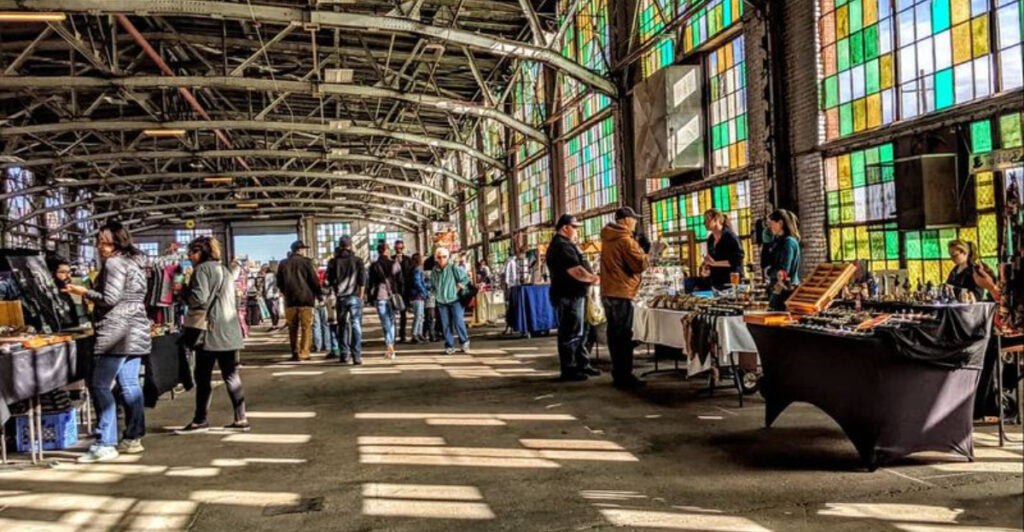
There is a place in Albuquerque, New Mexico, where towering industrial buildings that once echoed with the clang of steel and the hiss of steam now host something far more lively. This place sit on the edge of downtown, a sprawling complex of historic structures that refused to fade quietly into the past.
What started as a working railroad hub has transformed into one of the most unexpected cultural destinations in the American Southwest. Local artists, farmers, craftspeople, and curious travelers all find their way here, drawn by a space that somehow manages to honor its rugged history while buzzing with modern creativity.
A Railroad History That Shaped an Entire City
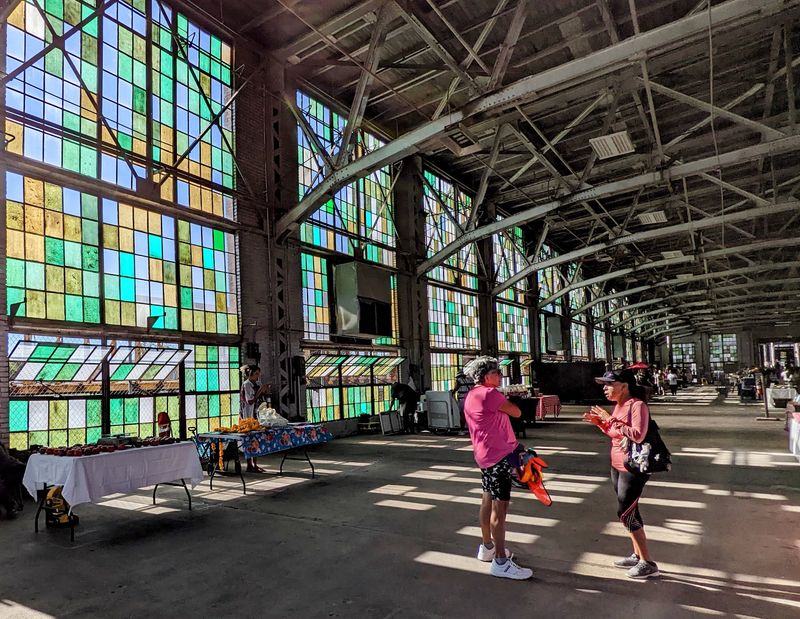
The Rail Yards complex dates back to 1914, when the Atchison, Topeka and Santa Fe Railway built it as a major mechanical repair hub for locomotives and rail cars traveling across the American Southwest.
At its peak, the facility employed thousands of workers, many of them from the surrounding Barelas and South Valley neighborhoods. The work done here kept the entire rail network moving, from routine maintenance to full locomotive overhauls that required serious engineering skill.
For decades, the yards were the economic heartbeat of this part of Albuquerque, supporting families and fueling local commerce in ways that rippled far beyond the property lines. When rail operations eventually declined in the latter half of the twentieth century, the complex fell into disuse and sat largely abandoned for years.
That long dormant chapter is what makes the current revival so striking, because the scale of what was left behind gave the community something genuinely worth restoring.
The Architecture That Refuses to Be Ignored
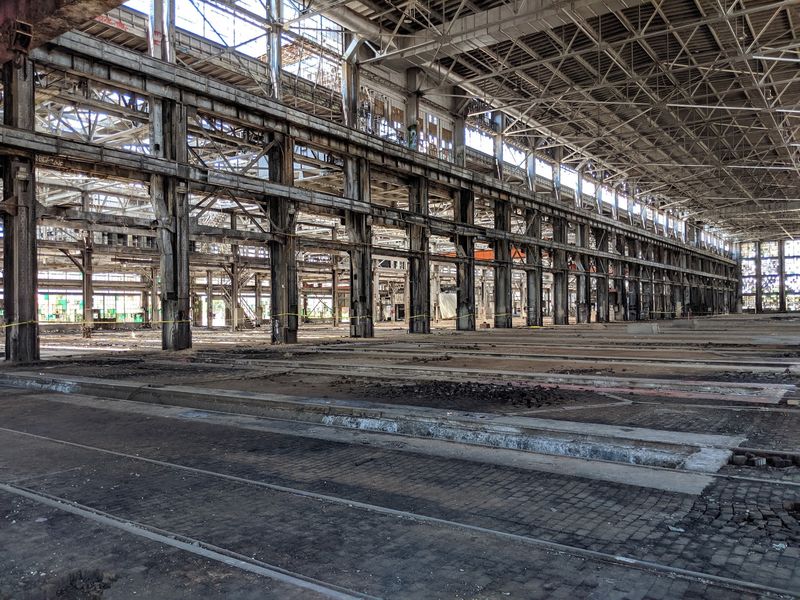
The buildings at the Rail Yards are not subtle. The main machine shop alone covers an enormous area, with steel roof trusses spanning widths that seem almost impossible for structures built over a century ago.
Brick walls rise to dramatic heights, and the large industrial windows that line the upper sections of the buildings let in wide panels of natural light that shift throughout the day. The combination of raw materials, including exposed metal, aged brick, and weathered concrete, gives the complex a texture that modern construction rarely replicates.
Preservation efforts are ongoing, and work crews can often be spotted reinforcing sections of the buildings while carefully maintaining the original character of the structures. The goal has never been to make the Rail Yards look new, but rather to stabilize and celebrate what is already there.
For anyone with an interest in American industrial architecture, this complex is a genuine find that rewards a slow, unhurried walk.
How the Rail Yards Market Brought the Complex Back to Life
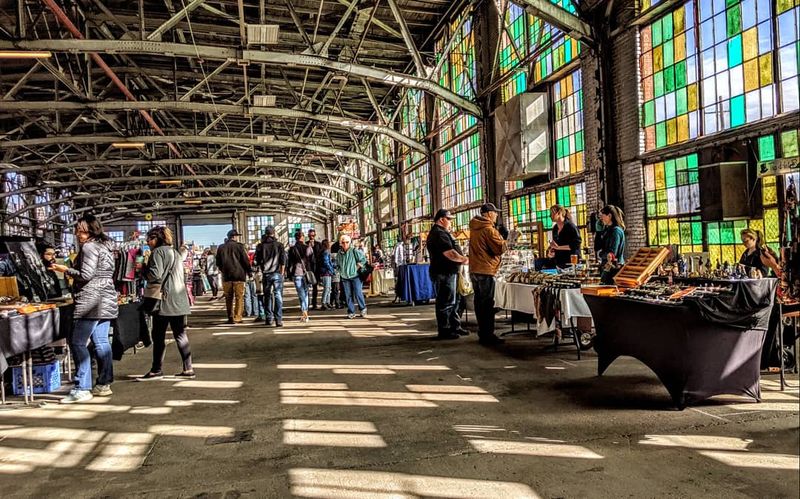
The Rail Yards Market is the event that put this historic complex back on Albuquerque’s radar, drawing thousands of people each Sunday during its operating season to browse an impressive collection of local vendors.
The market runs on Sunday mornings and features a wide mix of offerings, from fresh produce and locally raised meats to handmade crafts, jewelry, woodwork, artwork, and specialty goods that you simply will not find at a standard grocery store or mall.
What makes the market work so well is the setting. The industrial backdrop of the rail yard buildings gives the whole event a completely different energy compared to a typical outdoor market in a parking lot or park.
Vendors set up inside and around the historic structures, and the contrast between the old steel and brick and the colorful, creative displays of local makers creates an atmosphere that feels genuinely unlike anything else in the city. It is easy to spend several hours here without noticing the time.
Local Vendors and the Makers Behind the Booths
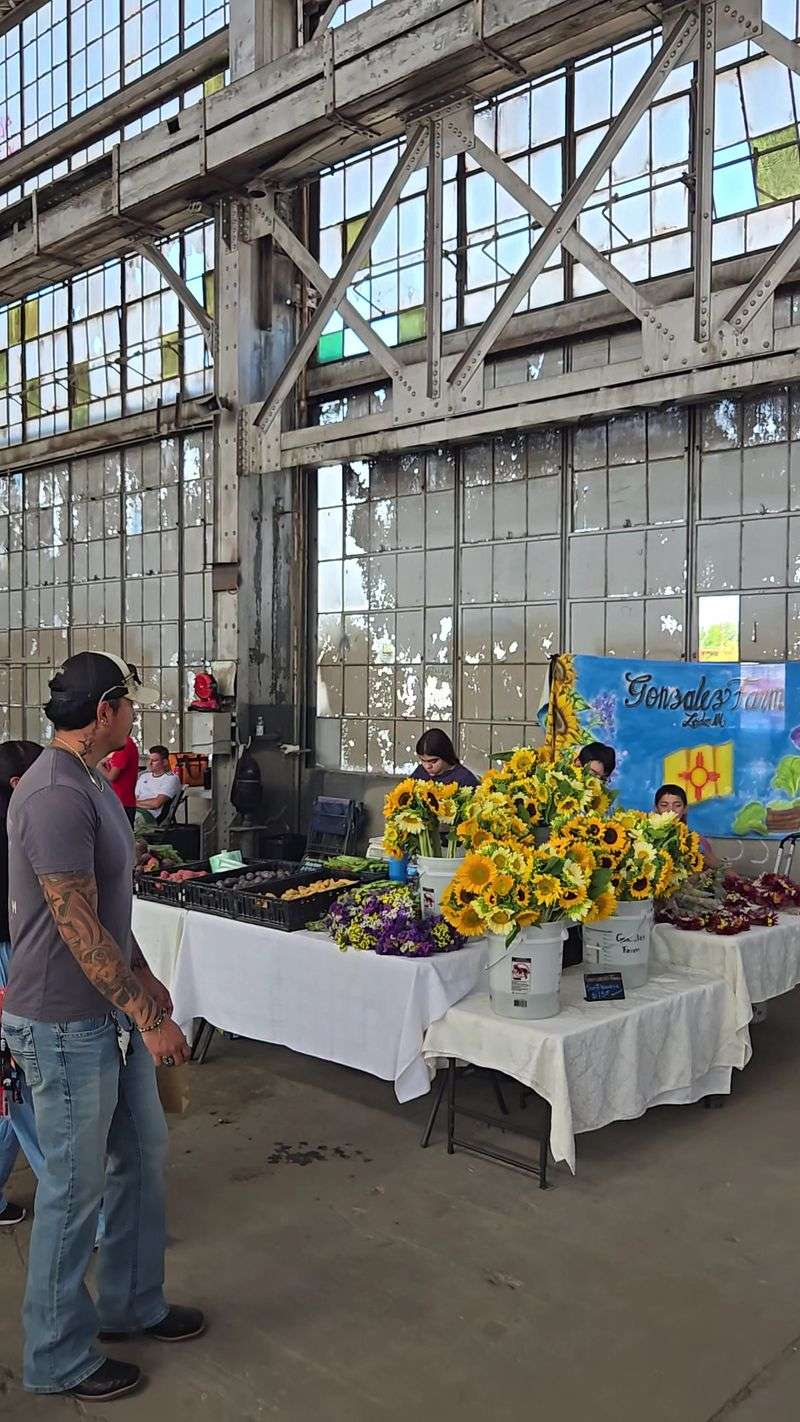
The vendor community at the Rail Yards Market is one of its strongest features, with a roster of local makers, farmers, and small business owners who bring genuine variety to every Sunday gathering.
Shoppers can find everything from microgreens and fresh honey to hand-thrown pottery, original paintings, handwoven textiles, and custom jewelry. The range of offerings means that almost everyone walks away with something, whether it is a bag of fresh produce or a one-of-a-kind piece of art made by someone who lives just a few miles away.
Many of the vendors are regulars who have built loyal followings among the market crowd, and it is common to see people reconnecting with familiar faces at booths they have visited week after week.
The market strongly favors local and regional makers, which keeps the product mix feeling authentic rather than generic. That commitment to local sourcing is part of what keeps people coming back season after season.
Food Trucks and Fresh Flavors on the Grounds
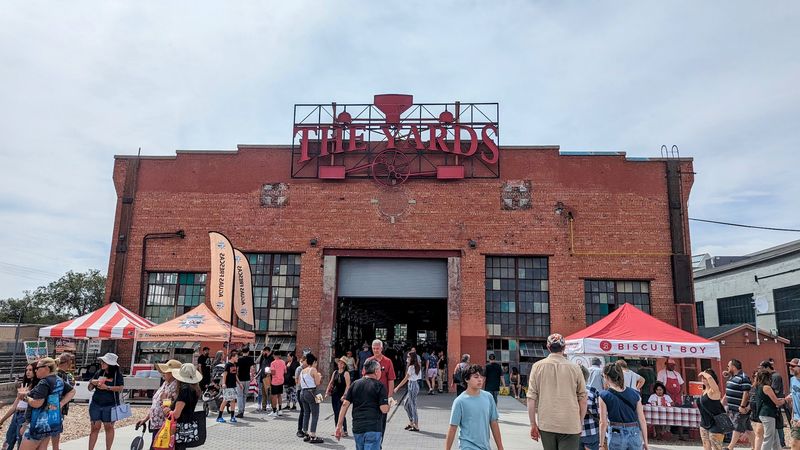
Beyond the produce and craft booths, the Rail Yards Market draws a solid lineup of food trucks that park on the grounds each Sunday and serve a wide range of options to the market crowd.
The food truck selection tends to reflect Albuquerque’s broader culinary identity, with New Mexican flavors well represented alongside other options that cater to different preferences. Tacos, baked goods, specialty drinks, and other grab-and-go options make it easy to fuel up while exploring the market.
The food truck area tends to get busy as the morning progresses, so arriving earlier in the day gives you a better shot at shorter lines and more options before popular items sell out.
Seating near the food trucks is informal, with people spreading out across the grounds and finding spots near the historic buildings to eat and take in the surroundings. The whole setup has a relaxed, festival-like quality that suits the character of the space perfectly.
Art, Film, and the Creative Legacy of the Space
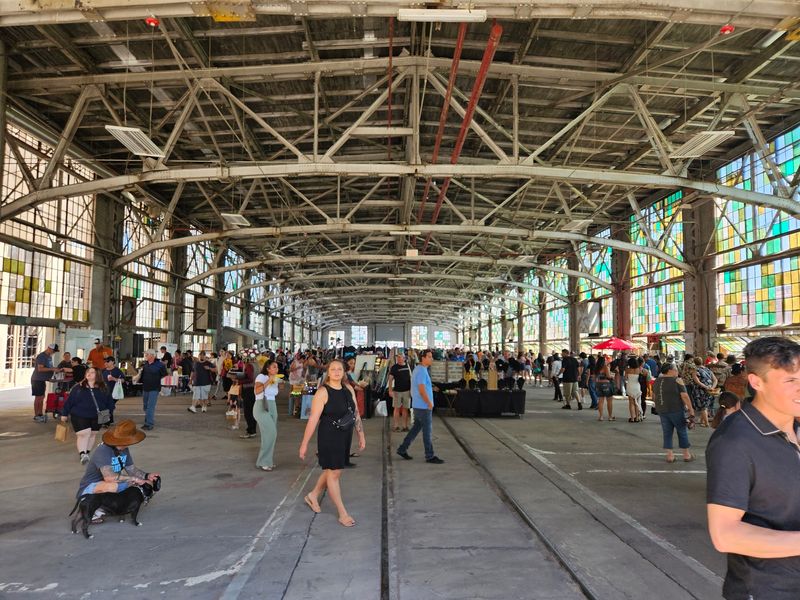
The Rail Yards have served as a backdrop for film and television productions over the years, drawn by the dramatic scale of the buildings and the raw, gritty character that is genuinely difficult to replicate on a set.
New Mexico has become a major hub for film production in the United States, and locations like the Rail Yards offer something that purpose-built studios cannot easily fake. The combination of authentic industrial architecture, open floor space, and striking visual texture makes the complex a natural fit for productions that need a location with real history behind it.
Beyond film, the Rail Yards have become a destination for local artists who use the space for exhibitions, installations, and community art projects that take advantage of the unusual setting.
The relationship between the historic buildings and the creative community feels organic rather than forced, as if the space itself invites people to make something worth remembering inside its walls. That creative energy is palpable every time the market opens its doors.
Bringing the Kids: Family-Friendly Highlights
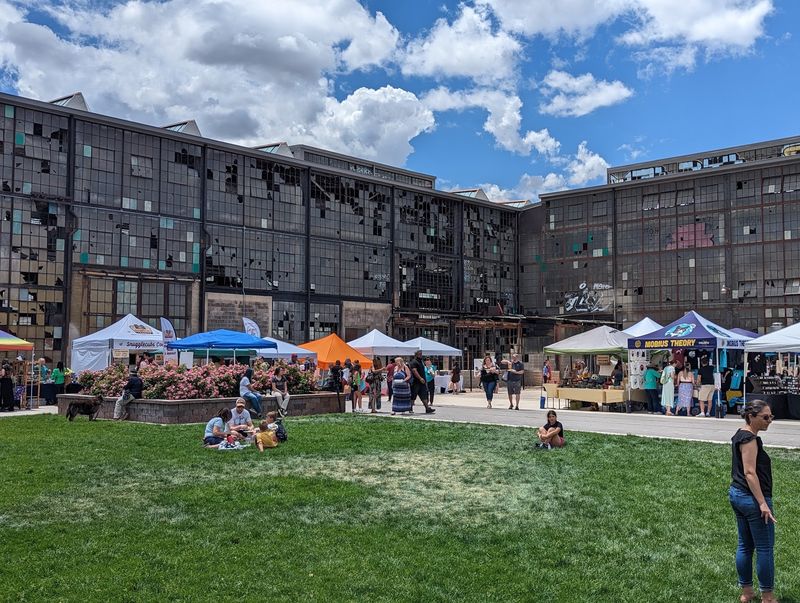
The Rail Yards Market is genuinely welcoming to families, and the open layout of the grounds gives kids plenty of room to move around without feeling cramped or overwhelmed by the crowd.
The mix of vendors offers things that children find interesting, from colorful art and handmade toys to fresh baked goods and food truck options that appeal to younger eaters. The historic buildings themselves tend to spark curiosity in kids who are not used to seeing structures on this scale, and parents often find themselves answering questions about what the place used to be.
Dogs are also welcome on the grounds, which makes the market a popular destination for families who want to bring their four-legged companions along for the outing.
The relaxed pace of a Sunday market suits families well, since there is no set schedule or pressure to see everything in a particular order. You can linger at booths that interest you and move on when you are ready, which is exactly the kind of flexibility that makes outings with kids less stressful.
Special Events and Seasonal Celebrations
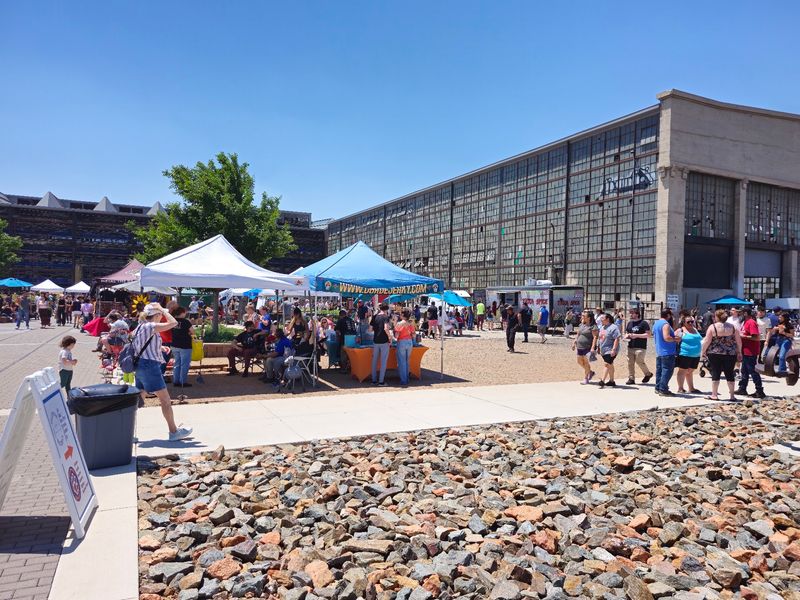
The Rail Yards complex is not just a weekly market destination. It also hosts special events throughout the year that draw larger crowds and add a celebratory energy to the already lively grounds.
Seasonal celebrations, cultural festivals, and community gatherings have all taken place within the historic buildings and open spaces of the complex, taking advantage of the dramatic setting in ways that few other venues in Albuquerque can match.
Events tied to local holidays and cultural traditions tend to be particularly well attended, with the Cinco de Mayo weekend market drawing notable crowds and creating a festive atmosphere that spills across the entire property.
The scale of the buildings means that even large events have room to breathe, and the outdoor areas around the complex provide additional space for activities, performances, and vendor setups that would not fit inside a more conventional venue.
Checking the Rail Yards Market website before planning a visit is a smart move, since special event dates often bring expanded programming and additional vendors to the grounds.
Preservation Work and the Future of the Complex
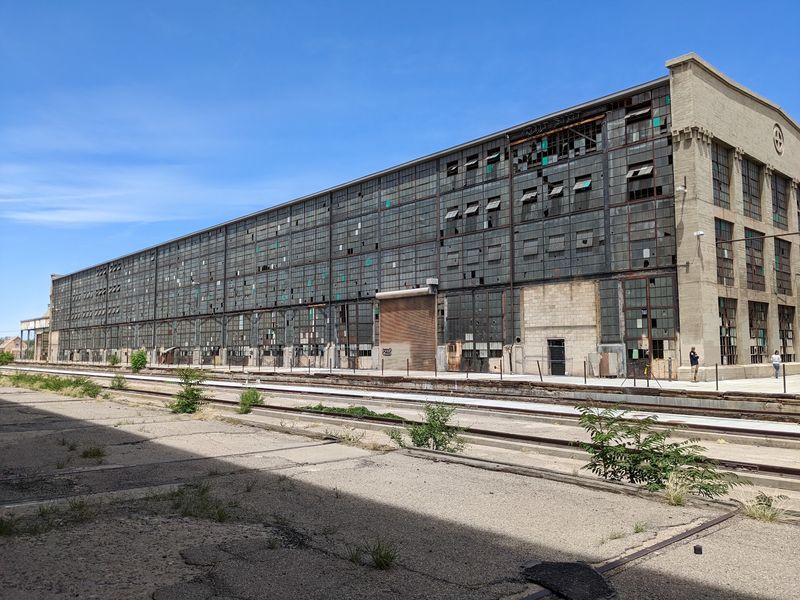
The long-term future of the Albuquerque Rail Yards is a topic that draws genuine passion from the local community, and active preservation and restoration work is already underway across sections of the complex.
The challenge of preserving a site of this size is significant, since the buildings require specialized knowledge and materials to maintain properly without losing the historic character that makes them worth saving in the first place.
Community organizations, city agencies, and private partners have all been involved in the ongoing effort to stabilize and restore the Rail Yards, and the progress made so far represents a meaningful commitment to keeping this piece of Albuquerque’s industrial heritage intact.
The vision for the complex extends beyond a weekly market, with longer-term plans aimed at creating a broader mixed-use destination that honors the history of the site while making it useful and accessible to the public year-round.
Every dollar invested in the Rail Yards is essentially a vote for the idea that old industrial spaces deserve a second life rather than a demolition crew.
Practical Tips for Planning Your Visit
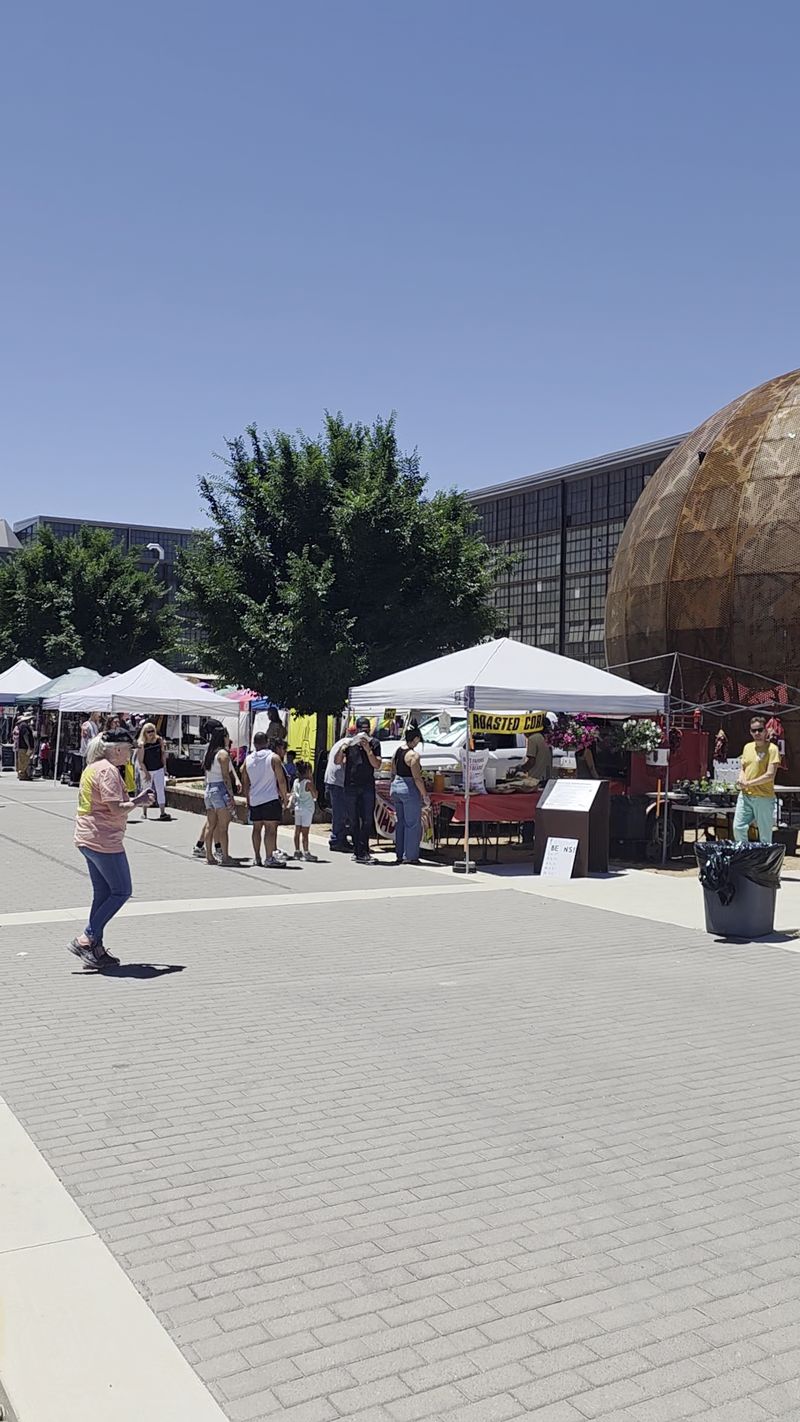
The Rail Yards Market typically runs on Sunday mornings, so planning around that schedule is the first step to making the most of a visit to the complex.
Arriving earlier in the day is generally the better move, since parking fills up as the morning progresses and the most popular vendors tend to sell out of their top items before the afternoon crowd arrives. Street parking along nearby blocks is a reasonable option if the on-site lot is full, and the walk from most street spots is manageable.
Bringing cash is a smart habit at any farmers market, since not all vendors accept card payments, though many do. Wearing comfortable shoes matters here because the grounds are large and the surfaces vary between pavement, gravel, and uneven flooring inside some of the historic buildings.
Checking the Rail Yards Market website at railyardsmarket.org ahead of your visit will give you current information on hours, seasonal schedules, and any special events planned for the day you are considering.
The Neighborhood Context: Barelas and South Valley
The Rail Yards sit within and adjacent to the Barelas neighborhood, one of Albuquerque’s oldest communities, with a history that stretches back centuries and a cultural identity closely tied to the Rio Grande and the city’s deep Hispanic heritage.
Barelas grew up alongside the railroad, and the families who settled here in the early and mid-twentieth century were often directly connected to the work being done at the yards. That history gives the neighborhood a layered character that goes well beyond what a casual drive-through might suggest.
The revitalization of the Rail Yards has brought new attention to Barelas, and the surrounding streets offer additional points of interest for anyone who wants to explore beyond the market grounds.
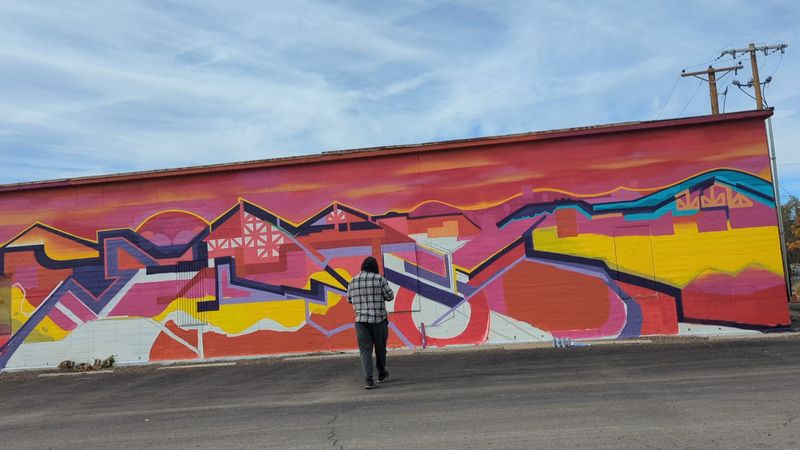
Historic murals, local businesses, and community landmarks are scattered throughout the area, and spending time in the neighborhood before or after a market visit adds meaningful context to the Rail Yards experience. The two are genuinely better together than either is alone.
Why the Rail Yards Keep Drawing People Back
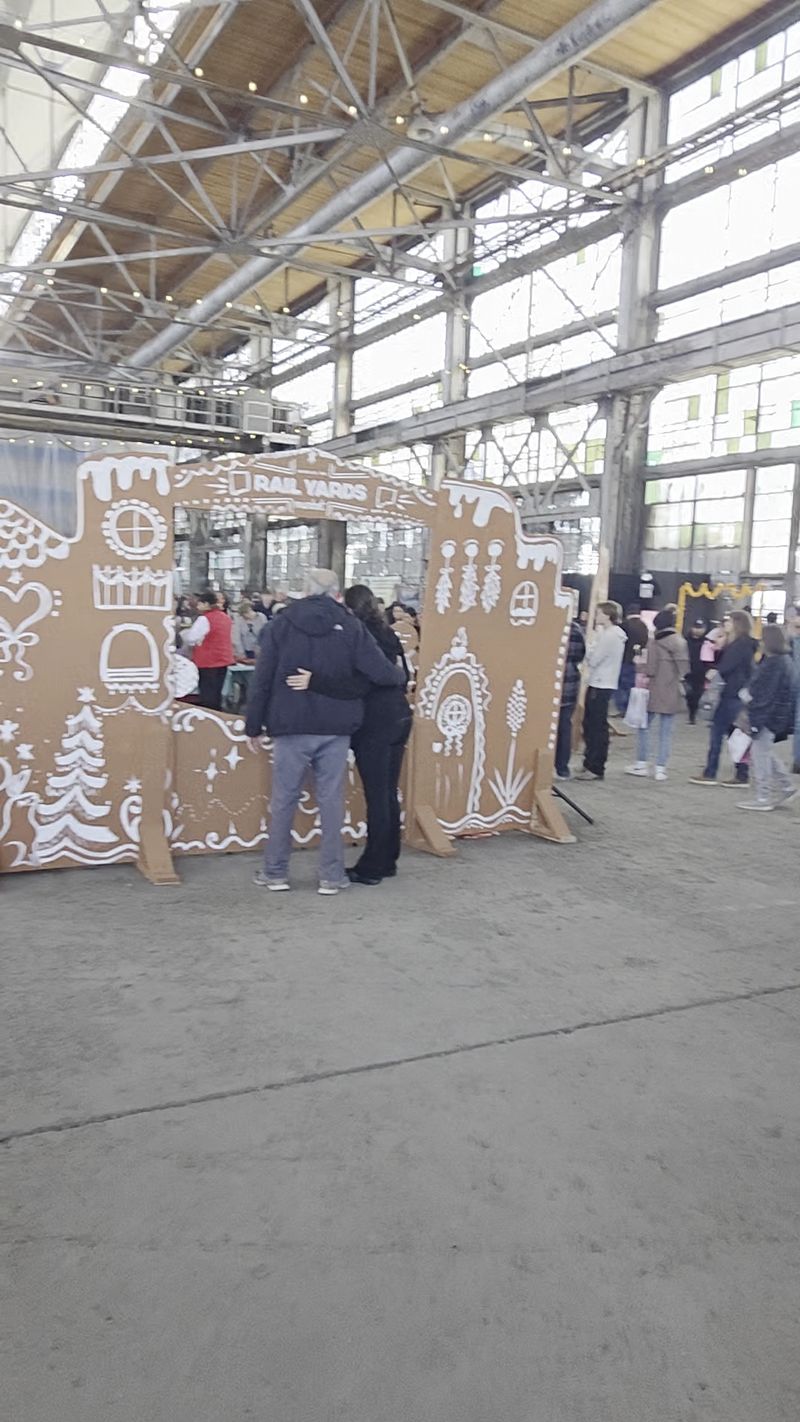
Places that genuinely earn repeat visits tend to have something that is hard to define but easy to recognize when you are standing in the middle of it. The Rail Yards have that quality.
Part of it is the setting, because historic industrial buildings on this scale are rare, and the experience of moving through them while surrounded by the energy of a busy market is unlike anything a purpose-built event space can replicate. Part of it is the community, because the vendors, the regulars, and the casual first-timers all seem to share an appreciation for what the space represents.
Out-of-town visitors often make the Rail Yards Market a planned stop on every trip to Albuquerque, which says something about how the experience stacks up against other things the city has to offer.
The Rail Yards are proof that the best version of a historic site is not a museum with velvet ropes, but a living place where people actually show up and use it every week.
The Address, the Location, and What You Are Walking Into
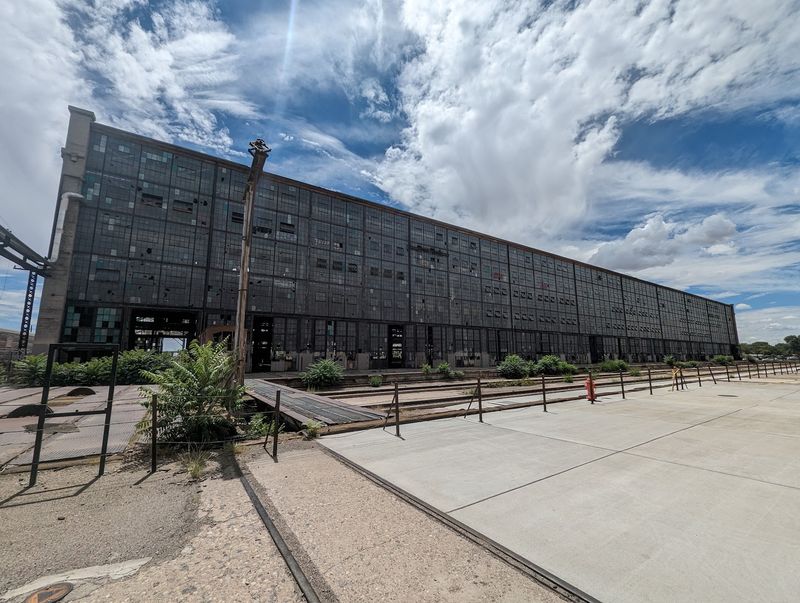
At 777 1st St SW, Albuquerque, NM 87102, the Rail Yards occupy a massive footprint just south of downtown, sitting close to the Rio Grande and the historic Barelas neighborhood.
The complex is part of what was once the Atchison, Topeka and Santa Fe Railway’s main mechanical facility in New Mexico, and the sheer scale of the buildings makes it clear this was never a small operation.
Rows of enormous machine shops, roundhouses, and storage structures stretch across the property, and the architecture alone is worth the trip. The bones of the place are still very much intact, with original ironwork, brick walls, and high ceilings that reflect the industrial ambition of the early twentieth century.
Getting there is straightforward, with street parking available nearby and on-site parking during market days. The Rail Yards are hard to miss once you are in the area, and they tend to stop people in their tracks.
Share this story